Sourcing is the part of recruiting that happens before anyone applies. A recruiter or sourcer finds people who match a role and contacts them directly. Most are passive candidates, meaning they have a job and aren’t looking, but might move for the right offer. The classic method is Boolean search, a query that combines terms with AND, OR, and NOT to narrow a list of profiles. Candidate sourcing software runs these searches across large profile pools and helps recruiters reach the people they find.
Finding a profile is only half the job. Contact details usually cost a contact reveal or credit, a unit the vendor deducts each time it shows an email or phone number. Outreach then runs as a sequence of scheduled messages that stops when someone replies. On LinkedIn, the equivalent is InMail, a paid message sent to a member outside your network. ATS sync sends sourced candidates into the applicant tracking system, so the team works from 1 record. That record later enables talent rediscovery, meaning you can find past applicants already in your database.
What Is the Best Candidate Sourcing Software in 2026?
A candidate sourcing tool searches profiles, finds contact details, and sends outreach to people who have not applied for your job. Some tools search a single network, such as LinkedIn or Indeed. Others search many public sources at once, and a few deliver vetted candidates. Contact data tools sit at the end of the chain and add an email or phone number to a profile you already found. The right choice depends on your roles, your hiring volume, and whether you lack candidates, contact details, or both.
Sourcing matters because the best people for hard roles are rarely applying. Gallup’s employee retention and attraction indicator reports that as of August 2026, 53% of U.S. employees were open to leaving their organization. Most of them will never see your job post, because they are not browsing job boards. A recruiter who waits for applications hears from the active minority. Sourcing reaches the larger group that would listen to a relevant offer but will not go looking for one.

INSIGHT: How many good candidates are not applying?

Many employed people are open to a move but not searching, which is why sourcing exists.
- As of the 2025 Gallup World Poll, 50% of employees globally were watching for or actively seeking a new job.
- In SHRM’s 2026 Talent Trends survey, 53% of HR professionals who struggle to recruit said it had become harder than a year earlier.
- The job post reaches people who are looking. Sourcing reaches the rest.
Sources:
both read October 29, 2026
There is no single winner, because the source of candidates decides the fit. Network and job board tools search their own members, and AI sourcing platforms search many sources and run outreach. Done-for-you services deliver candidates, while contact data tools add emails and phone numbers. The need is steady: SHRM reported in April 2026 that 68% of HR professionals had difficulty recruiting full-time employees. The best software for candidate sourcing matches where your people actually are. Below, I’ve reviewed 12 of the leading tools in A-Z order.
INSIGHT: Network, AI search, done-for-you, or contact data?
The 12 tools here source candidates in 4 different ways, and most teams combine 2 of them.
- Network and job board sourcing (Indeed Smart Sourcing, LinkedIn Recruiter, Wellfound Reach): search the vendor’s own members or candidates.
- AI sourcing and outreach (AmazingHiring, HeroHunt.ai, Pin, RecruitBot): search many sources and run outreach.
- Done-for-you sourcing (Leoforce): candidates delivered with AI and human vetting.
- Contact data tools (ContactOut, Kaspr, Lusha, SignalHire): emails and phone numbers for people you already found.
Best Candidate Sourcing Software Compared
The table sorts all 12 tools by group and by where their candidates come from. Most of them now market themselves as AI-powered candidate sourcing software, so the AI column uses each vendor’s own feature names. Rows follow the same A-Z order as the reviews below, and prices sit in the pricing section.
| Tool | Group | Best for | Candidate source | Outreach | AI features | G2 rating |
|---|---|---|---|---|---|---|
| AmazingHiring | AI sourcing and outreach | Technical recruiting | Many sources (50+ networks) | Email campaigns | None named | 4.5 (25) |
| ContactOut | Contact data | Recruiters who already work in LinkedIn | Own database, LinkedIn via extension | Email campaigns | AI Email Writer, MCP | 4.5 (113) |
| HeroHunt.ai | AI sourcing and outreach | AI search and outreach in 1 tool | Many sources (1B+ profiles) | Email with auto follow-ups | AI Recruiter | 4.5 (12) |
| Indeed Smart Sourcing | Network and job board | High-volume and hourly hiring | Own network (Indeed resumes) | Messages, SMS, video invites | AI summaries, AI Highlighter | N/A |
| Kaspr | Contact data | Contact data for European candidates | Own database, LinkedIn via extension | None built in (export to CRM) | None named | 4.4 (836) |
| Leoforce | Done-for-you | Candidates delivered, not searched | Vendor-vetted candidates, your ATS | Handled by the service | AI with recruiter vetting | N/A |
| LinkedIn Recruiter | Network and job board | Almost any professional hiring team | Own network (LinkedIn members) | InMail | Hiring Assistant | 4.5 (442) |
| Lusha | Contact data | Verified contact data at scale | Own database | Email sequences | AI assistant, MCP | 4.3 (1,671) |
| Pin | AI sourcing and outreach | Small teams and agencies wanting 1 platform | Many sources (850M+ profiles) | Email and multi-channel sequences | AI Agents, AI Evaluation | 4.8 (28) |
| RecruitBot | AI sourcing and outreach | US recruiters filling similar roles | Own database (655M+ profiles) | Drip email campaigns | Machine-learning ranking | 4.6 (18) |
| SignalHire | Contact data | Agencies on a budget | Own database, extension on any site | None built in (export to ATS) | MCP server | 4.0 (70) |
| Wellfound Reach | Network and job board | Startups hiring engineers | Own network plus external profiles | Email from your own inbox | Sourcing agents, Ask Wellfound | N/A |
G2 ratings were read on October 29, 2026.
Key Features in Candidate Sourcing Software
Search comes first. The useful questions are how large the profile pool is, how fresh it stays, and whether candidates opted in or were collected from public sources. Filters should cover skills, titles, seniority, location, and open-to-work signals. Newer tools also search from a pasted job description, which spares recruiters from writing Boolean strings. That matters for generalist recruiters who fill 10 different role types in a month.
Contact and outreach come next. Look for verified emails and phone numbers, and check whether a failed lookup still costs a credit. Sequences should send follow-ups automatically and stop when a candidate replies, while response tracking shows which messages work. Each sourced candidate should automatically land in your ATS recruiting software, so nobody on the team contacts the same person twice.
Analytics and privacy close the list. Reporting should show response and conversion rates by source, role, and recruiter, so spending follows the channels that produce hires. Privacy deserves its own check. Ask how the vendor obtains profiles, how people opt out, and which compliance claims it publishes, such as GDPR, CCPA, or SOC 2. Those answers shape whether your outreach holds up in the countries where you hire, and your own counsel should review them.
How an AI Candidate Sourcing Tool Works
Most AI candidate sourcing software does 4 jobs. It turns a job description into a search, ranks profiles by fit, finds people similar to past hires, and drafts personalized outreach. LinkedIn’s Hiring Assistant searches the network and returns a summarized shortlist, and Pin’s AI Agents source and evaluate candidates. HeroHunt.ai’s AI Recruiter screens and scores profiles, then writes messages and follow-ups. RecruitBot ranks its own database with machine learning, Wellfound Reach runs sourcing agents, and Indeed writes AI candidate summaries and messages.
Sourcing ends when someone decides to contact a candidate. An AI-driven candidate sourcing and screening tool goes further, scoring applicants or running first interviews, which raises the stakes on accuracy and fairness. Products built for that stage belong with AI recruiting tools that cover screening and interviews. In pure sourcing, the AI only decides who appears on a shortlist, and a recruiter still chooses who gets a message.
The limits are practical. Rankings reflect profile data, and profiles go stale when people change jobs without updating them. Vendors publish strong numbers, such as LinkedIn’s claim that Hiring Assistant users review 81% fewer profiles, but those are vendor claims. Even the best AI candidate sourcing software needs a recruiter to read the shortlist before outreach starts. That review takes minutes and prevents messages to people who left the field years ago.
Best Candidate Sourcing Software by Hiring Situation
These groupings follow the hiring situation, not a score. Tools appear in A-Z order inside each group, and a tool named twice is broad rather than better. A 3-person startup hiring its first engineers, an agency with 40 recruiters, and a retailer filling 200 hourly roles all source candidates. They need very different pools, pricing units, and integrations before any tool makes sense.
Best Software for Automating Candidate Sourcing
Automation here means candidates arrive in a queue, and recruiters review rather than search. HeroHunt.ai’s AI Recruiter searches, screens, and messages the candidates you approve, then follows up on its own. Leoforce goes a step further, with in-house recruiters who pre-vet each candidate before delivery. Pin runs AI Agents per role and can take a search from job description to booked interview. Every automation stays optional on Pin’s plans, so recruiters can approve each match by hand. This setup suits teams with more open roles than sourcing hours.
Best Passive Candidate Sourcing Software
Passive candidates need to be found where they already spend time, then given a reason to reply. AmazingHiring searches 50+ networks, including GitHub, Stack Overflow, and Kaggle, which helps with engineers who keep thin LinkedIn profiles. HeroHunt.ai searches 1B+ profiles and writes outreach tied to each person’s background. LinkedIn Recruiter remains the largest single network, and its 40+ filters include signals like Open to Work. Relevance matters more than volume here. A message that mentions real work from someone’s profile gets read, while a template gets archived.
Best Candidate Sourcing Software for Agencies
Agencies need contact data fast, and they need it in the agency system. ContactOut shows personal emails and phone numbers via its Chrome extension. Kaspr focuses on European contact data and works inside LinkedIn Recruiter Lite on its Business plan. Lusha adds timing signals, such as time in role or a new manager, that hint at who may move. RecruitBot searches its own database from a job description, and SignalHire allows unlimited users and exports to JobAdder, Loxo, and Crelate. Most agencies pair 1 of these with recruitment software for staffing agencies that holds client and candidate records.
Top Candidate Sourcing Software With Analytics
Analytics decide whether sourcing spend follows results. AmazingHiring includes market insights and analytics next to its search, which helps when a talent pool turns out smaller than expected. LinkedIn’s Hiring Assistant page cites 66% higher InMail acceptance rates than traditional sourcing, a vendor figure worth testing against your own numbers. Pin includes sourcing and outreach analytics on every plan, with Talent Insights on Professional and Enterprise. The goal is simple. Each month, you should know which source, role, and recruiter produced replies, interviews, and hires.
Best Candidate Sourcing Software for Startups and High-Volume Hiring
Startups and high-volume employers need pools of people who already want to move, plus simple plans. Indeed Smart Sourcing searches resumes from active job seekers. You can reach them by message, video interview invite, or SMS on the US Professional plan. That fits retail, logistics, and care roles with many openings. Wellfound Reach searches 10M+ candidates who joined Wellfound for startup roles, plus 500M+ external profiles, and sends outreach from your own inbox. Very small teams may need recruiting software for small businesses before they need a dedicated sourcing product.
How Much Does Candidate Sourcing Software Cost?
Pricing units vary more than features do. Pin and Wellfound Reach charge per seat per month. ContactOut, Kaspr, Lusha, SignalHire, and Indeed Smart Sourcing meter contact reveals or credits. HeroHunt.ai sells plans by profile and email volume, and Leoforce prices around hiring outcomes. AmazingHiring, LinkedIn Recruiter, and RecruitBot quote. Buyers miss that they spend a credit on every reveal, including emails that bounce and numbers that no longer work. A cheaper tool with weaker data can cost more per hire than a pricier one, so test accuracy on your own searches first.
| Tool | Pricing model | Free plan or trial | Published starting price |
|---|---|---|---|
| AmazingHiring | Quote | Demo | Custom pricing |
| ContactOut | Plan per user, contact limits | Free plan | $49/month (Email) |
| HeroHunt.ai | Profile and email volume | 8-day trial | Custom pricing |
| Indeed Smart Sourcing | Contacts per month | 14-day trial | $120/month (US) |
| Kaspr | Per user, credits | Free plan | €59/user/month |
| Leoforce | Outcome-based quote | Demo | Custom pricing |
| LinkedIn Recruiter | Per license, quote | Free trial (Lite) | Custom pricing |
| Lusha | Credits per year | Free plan (40 credits) | $37.45/month, billed yearly |
| Pin | Per user per month | Free plan | $100/user/month, billed annually |
| RecruitBot | Plans by quote | Demo | Custom pricing |
| SignalHire | Credits, unlimited users | Free plan | $57/month, billed annually |
| Wellfound Reach | Per seat per month | Free Explore plan | $135/seat/month |
As pricing is subject to change, prices are listed as they stand in October 2026.
INSIGHT: What does candidate sourcing software actually cost?
The real cost is per hire, not per seat, because credits are spent on contacts that never answer.
- 7 of the 12 publish a starting price, and 5 quote or hide plan prices. 6 offer a free plan: ContactOut, Kaspr, Lusha, Pin, SignalHire, and Wellfound Reach.
- The pricing units are seats (Pin, Wellfound Reach), credits or contacts (ContactOut, Kaspr, Lusha, SignalHire, Indeed), profile volume (HeroHunt.ai), and outcomes (Leoforce).
- ATS integrations and AI agents often sit on higher plans or cost extra, as with Pin’s ATS add-on below Enterprise.
How to Choose Candidate Sourcing Software
I would start with the roles you struggle to fill and where those people actually spend time. Engineers show up on GitHub, hourly workers on job boards, and executives in a handful of networks. Then decide whether you are short of candidates, contact details, or both, because that splits the field in half. Run a trial with your own searches, not the vendor’s demo, and check how many profiles are current and how many emails bounce.
Next, check outreach and ATS sync, then compare pricing units against your expected monthly volume. A plan with 250 reveals is generous for 1 recruiter and tight for an agency desk. Check the privacy claims for every country you hire in. A candidate sourcing tool for quality of hire should also show which source produced the people who stayed. For senior roles that require research and discretion, executive search software often fits better than a volume tool.
Finally, measure response and hire rates by source for at least a quarter. The most effective candidate sourcing software is the one that produces hires, not the one with the largest profile count. I would cancel anything that fills your pipeline with replies but never reaches an offer.
Top Candidate Sourcing Software for Recruiters in 2026
I built these reviews from each vendor’s product, documentation, and pricing pages, read in October 2026. I pulled G2 ratings from each product profile in October 2026, and labeled vendor figures as vendor claims.
The list runs from networks like LinkedIn Recruiter to AI platforms like Pin and contact finders like Lusha. Every block says where candidates come from and how outreach works. Those 2 facts decide whether a candidate sourcing tool for recruiters fits your desk.
I’m listing all providers in alphabetical order to keep this comparison neutral.
AmazingHiring
Quick Overview
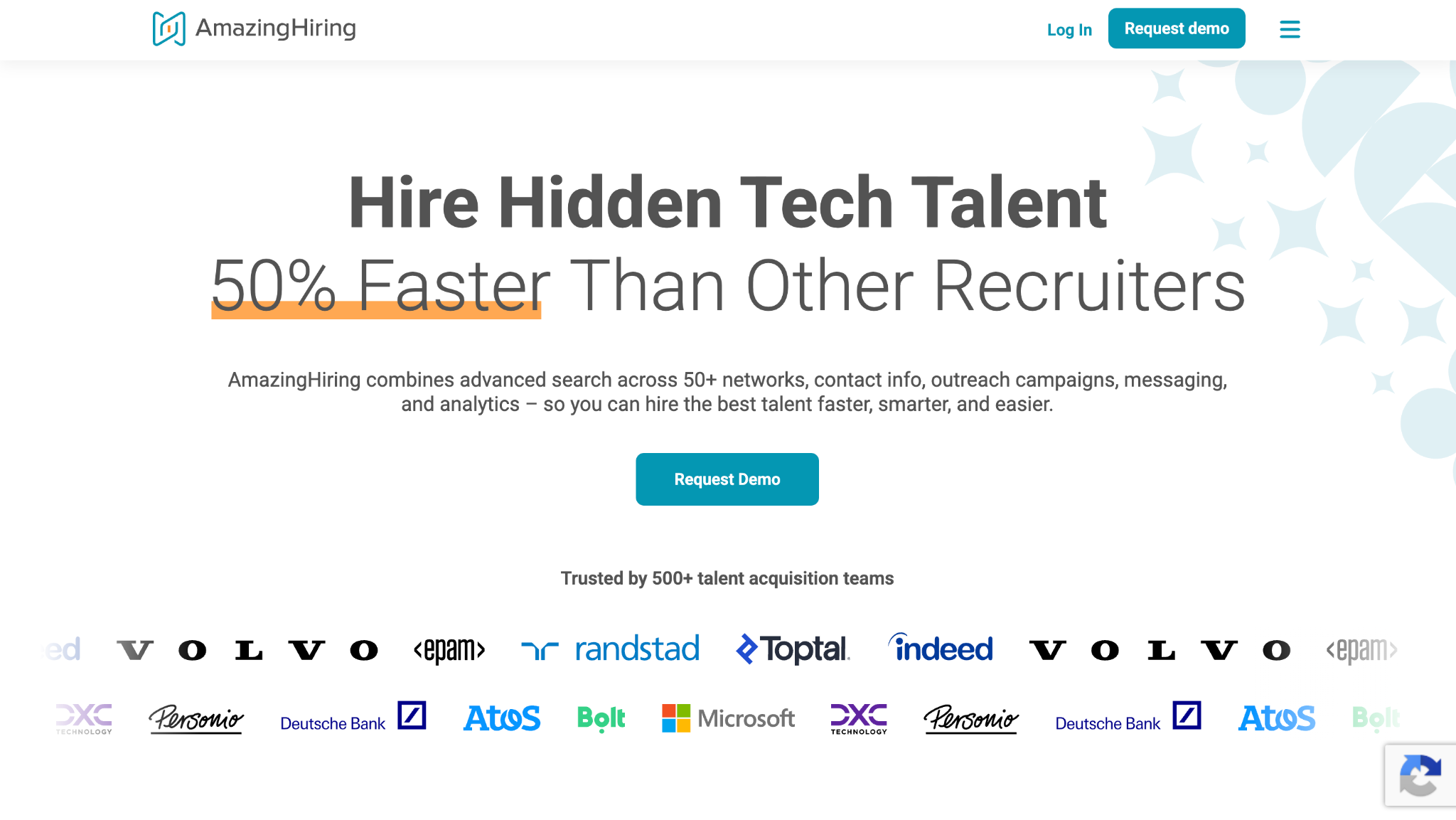
AmazingHiring is an AI sourcing and outreach platform for technical recruiting. It searches 50+ networks, including GitHub, Stack Overflow, Kaggle, and LinkedIn, and sends email campaigns. It adds contact details, market insights, and ATS integrations, plus a free Chrome extension. The vendor names no specific AI feature and says 500+ talent acquisition teams use it.
Software Pros
- Finds engineers outside LinkedIn
- Free Chrome extension links a profile’s other accounts
- Filters for skills, experience, and open-to-work status
Software Cons
- Demo and quote only
- Built mainly for technical roles
- 25 G2 reviews, a thin sample
AmazingHiring Review
Picture a sourcer who fills backend and data roles and keeps hitting the same 200 LinkedIn profiles. AmazingHiring widens that pool to code repositories and technical communities. A typical project starts with a skills search, then contact reveals and an email campaign to the shortlist. The extension shows a candidate’s other accounts while you browse. Non-technical roles get less from it, so it works best alongside a general network.
Our Verdict
Deep Search for Tech Talent
ContactOut
Quick Overview
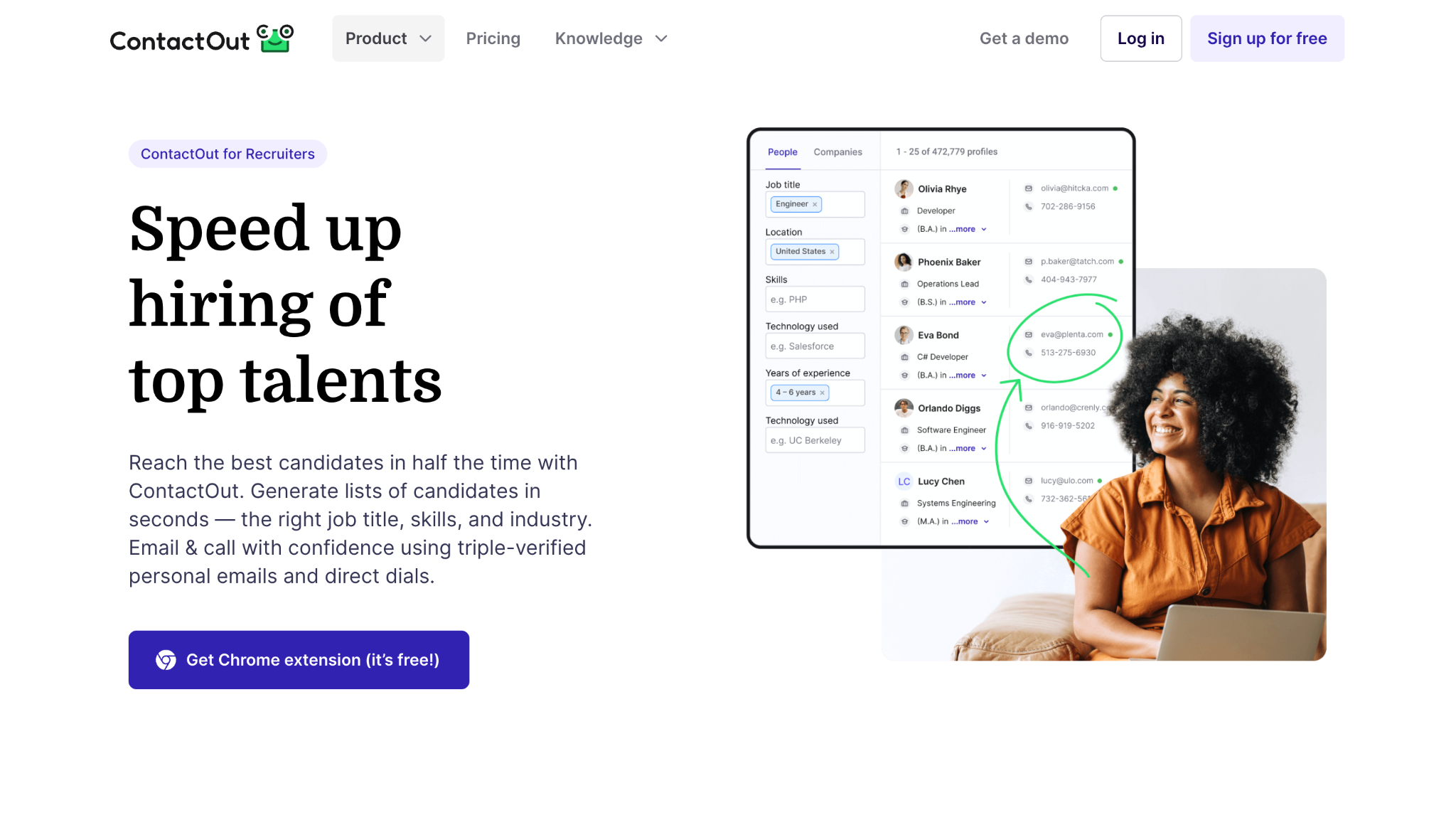
ContactOut is a contact data tool whose Chrome extension shows personal emails and phone numbers on LinkedIn profiles. Its own search portal and email campaigns sit behind the extension. It adds an AI Email Writer and a ContactOut MCP connection. The vendor says 1.4M recruiters use it and lists GDPR, CCPA, and SOC 2 on its data page.
Software Pros
- Works inside the LinkedIn profiles recruiters already open
- Personal emails and direct dials
- Free plan with daily reveals
Software Cons
- Finds contact details, not new candidates
- Self-serve plans allow 1 user per company
- ATS integrations sit on the Team plan
ContactOut Review
I’d reach for this when a recruiter already knows who they want and just needs a way to reach them. The free plan covers 5 emails and 5 phones a day. With US and UK data included, Email costs $49 a month and Email + Phone costs $99 at the current discounted rate. A week here looks like normal LinkedIn searching, with the extension filling in the contact details.
Our Verdict
Contact Finder for LinkedIn Sourcers
*As pricing is subject to change, prices are listed as they stand in October 2026
HeroHunt.ai
Quick Overview
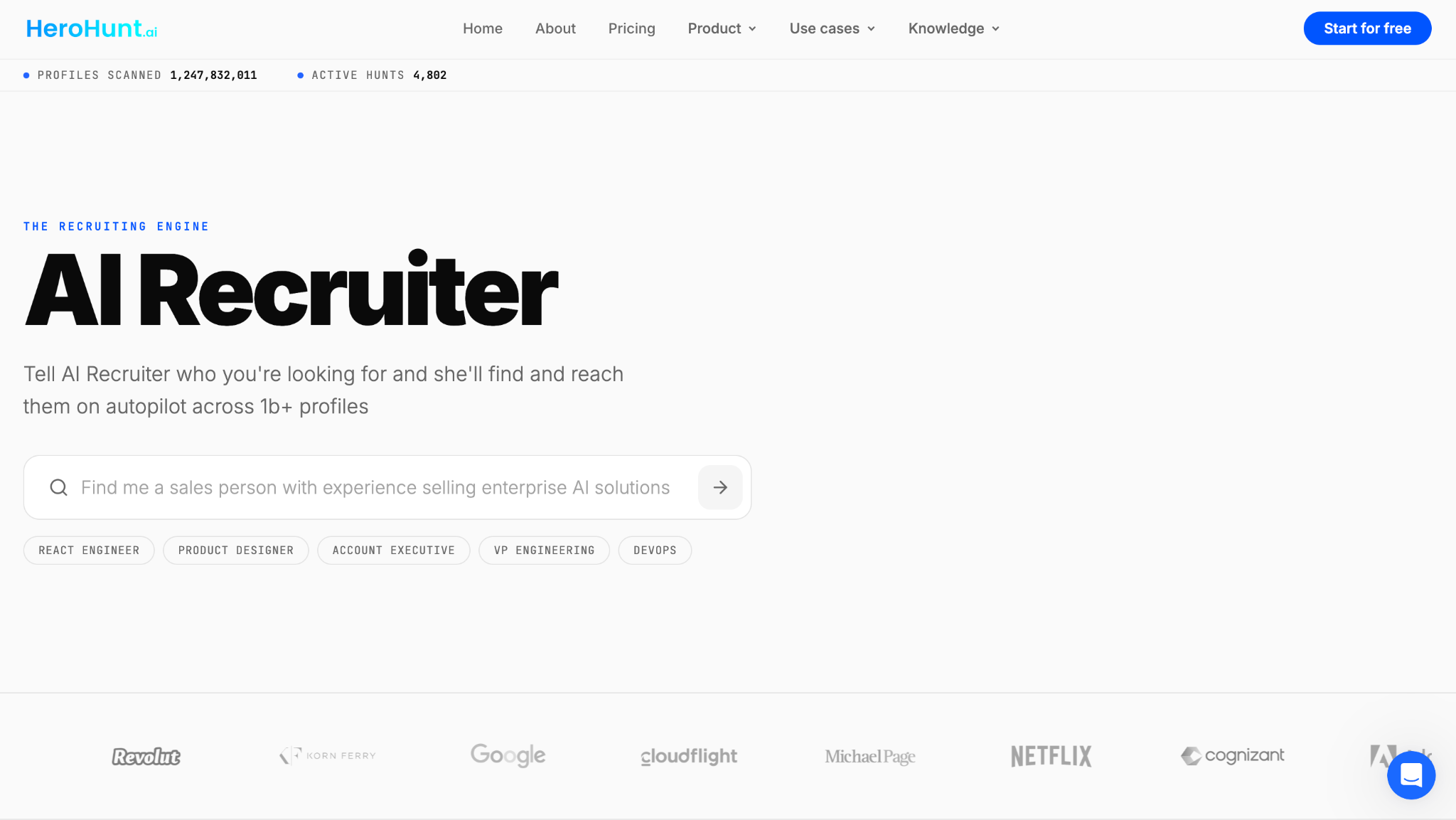
HeroHunt.ai is an AI sourcing and outreach platform. Its AI Recruiter searches more than 1B profiles across the web, screens and scores each match, and emails the candidates you approve. Follow-ups go out automatically, and each position shows people reached and replies. Plans differ by monthly profile and email allowance.
Software Pros
- Natural language search from a job description
- Automatic follow-ups on every sequence
- Unlimited positions and searches
Software Cons
- Prices not shown on the plans page
- Trial converts to a paid plan automatically
- 12 G2 reviews, a thin sample
HeroHunt.ai Review
For a team that has more open roles than sourcing hours, HeroHunt.ai handles the first pass. Starter includes 2,000 screened profiles and 500 emails a month; Pro 5,000 and 1,000; and Team 25,000 and 4,000. The 8-day trial includes 150 profiles and 75 emails. A week here means approving shortlists, editing outreach prompts, and then reading the replies that come in.
Our Verdict
Autopilot Search and Outreach
Indeed Smart Sourcing
Quick Overview
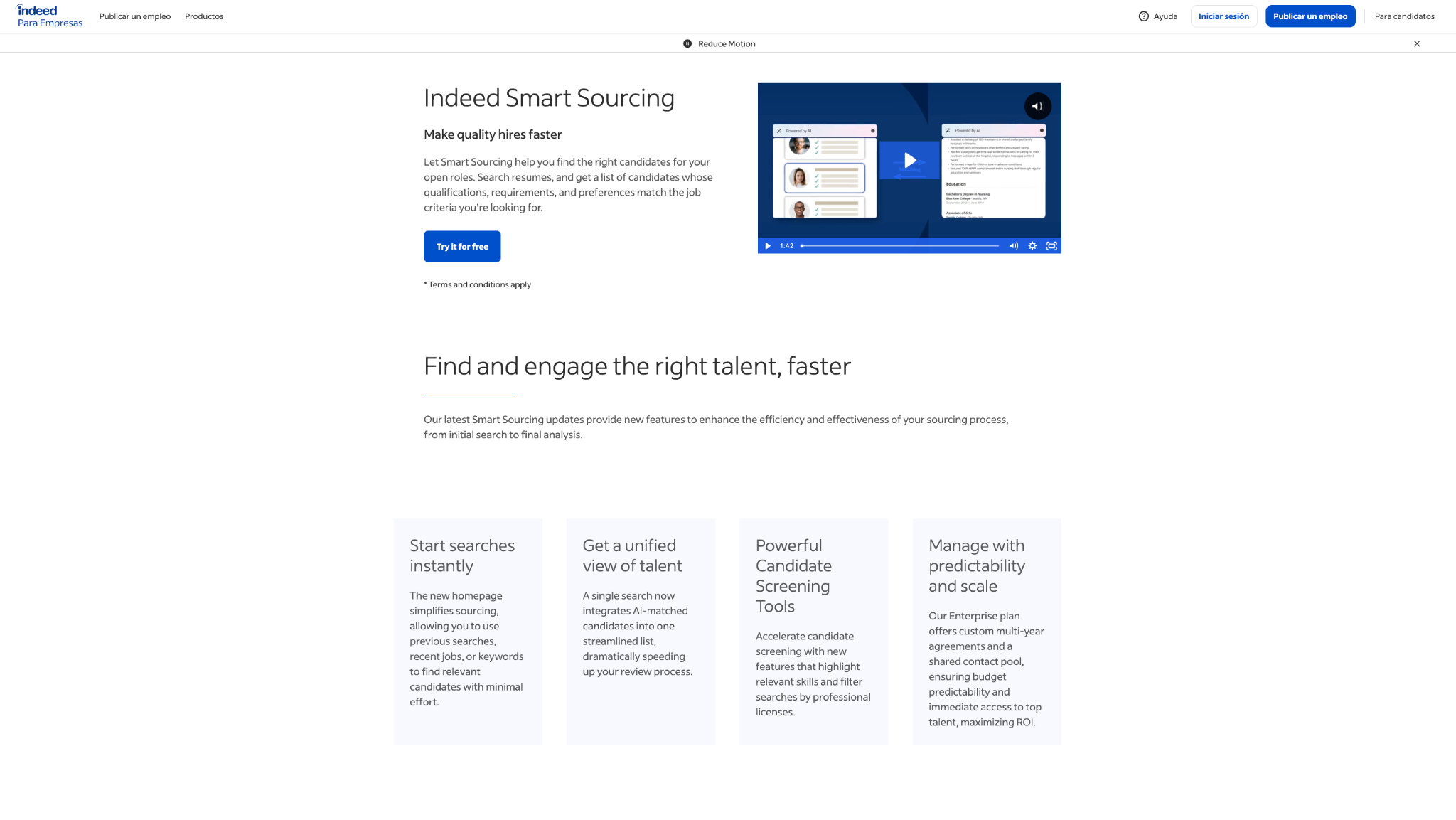
Indeed Smart Sourcing is a network and job-board sourcing tool that searches Indeed’s resumes for active job seekers. You contact them by message, text, or video interview invite. AI writes candidate summaries and personalized messages, and Professional adds an AI Highlighter for relevant skills. Professional also syncs candidates to Workday, iCIMS, iSolved, and Workable.
Software Pros
- Candidates who are actively looking
- Unlimited resume search with Boolean and filters
- 14-day free trial
Software Cons
- Only people on Indeed
- Monthly contact allowances cap your outreach
- No matching G2 product profile
Indeed Smart Sourcing Review
In practice, this is the fastest route to hourly, retail, and care candidates in volume. Standard costs $120 a month in the US, with 30 contacts that roll over for 6 months. Professional costs $400 a month and includes 100 contacts, SMS, and ATS sync. A week here means saved searches, alerts on new resumes, and quick messages to matching candidates.
Our Verdict
Volume Hiring From Active Seekers
*As pricing is subject to change, prices are listed as they stand in October 2026
Kaspr
Quick Overview
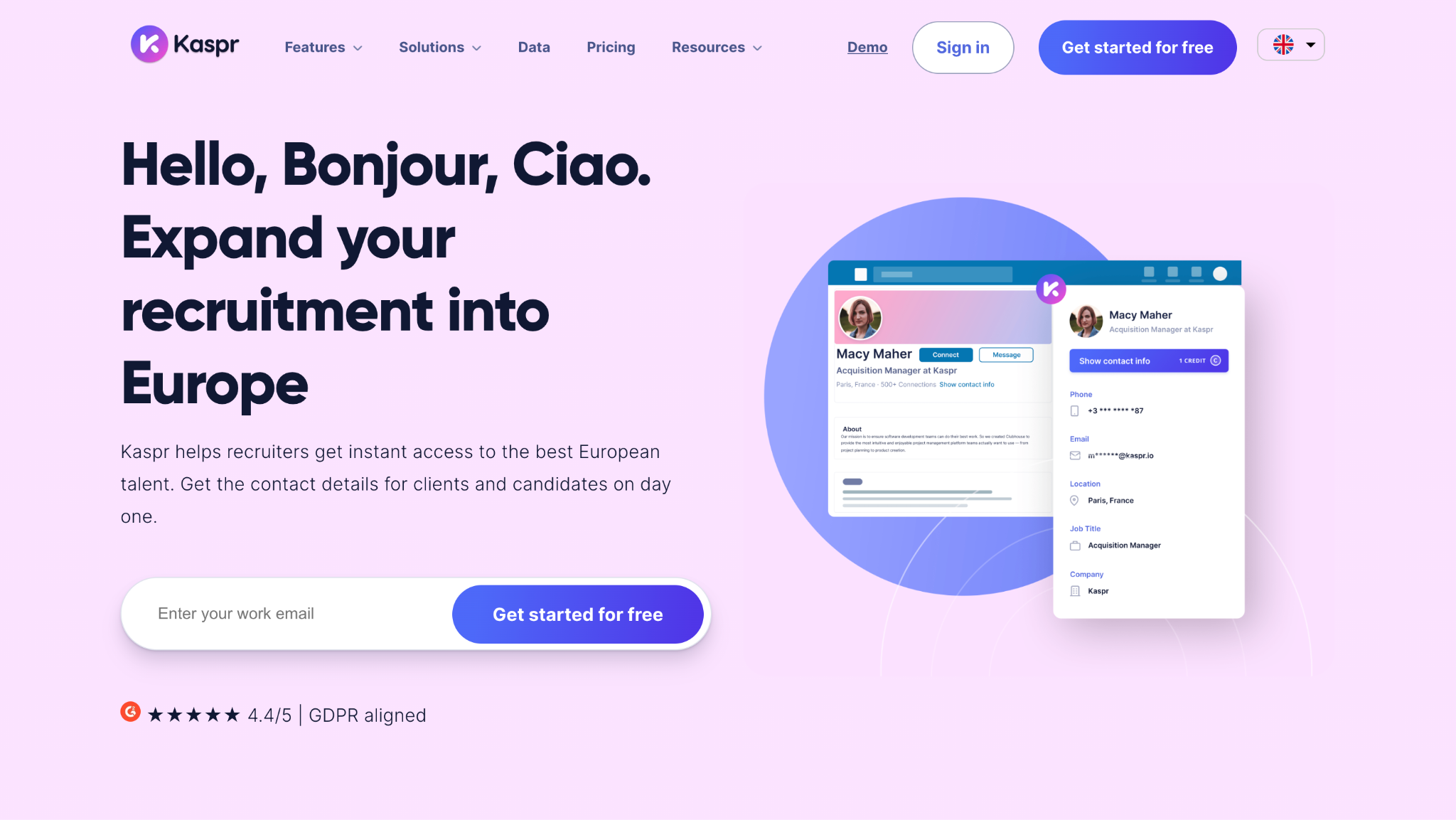
Kaspr is a contact data tool built around a LinkedIn Chrome extension, with a focus on European emails and direct dials. The vendor says it draws 500m+ phone numbers and email addresses from 150+ sources and describes itself as GDPR and CCPA-aligned. Revealed contacts go to a lead list, a CRM, or a dialer.
Software Pros
- Strong European coverage, per the vendor
- Unlimited B2B email credits on paid plans
- Works inside LinkedIn Recruiter Lite on Business
Software Cons
- Finds contact details, not candidates
- Phone credits are capped per plan
- Built mainly for sales teams
Kaspr Review
The recruiter that fits sources candidates in Europe and needs phone numbers that connect. On the EU pricing page, Starter costs €59 per user per month with 100 phone credits, and Business costs €99 with 200. The free plan gives 15 emails and 5 phone credits a month. A week here looks like LinkedIn browsing, with the extension revealing details as you go.
Our Verdict
European Contact Data for Recruiters
*As pricing is subject to change, prices are listed as they stand in October 2026
Leoforce
Quick Overview
Leoforce is a done-for-you sourcing service for staffing firms, mid-size and large employers, and the public sector. Its AI finds candidates, and in-house recruiters pre-vet each one before delivery, so you pay for outcomes rather than seats. The vendor says its AI has learned from 16,000+ recruiters since 2012.
Software Pros
- Candidates arrive pre-vetted
- A Rediscovery product for your existing candidate database
- Pricing tied to hiring outcomes you agree on
Software Cons
- Less control over who is contacted
- Custom pricing only
- No G2 reviews on its profile yet
Leoforce Review
The strongest case for Leoforce is a team that wants qualified people delivered and has no time to search. Pricing is quoted from the products chosen, hiring volume, role types, and locations. Integrations with your ATS and career site are scoped in the proposal. A week here means reviewing vetted candidates and giving feedback, while the vendor’s recruiters handle the sourcing and first contact.
Our Verdict
Outcome-Based Sourcing Service
LinkedIn Recruiter
Quick Overview
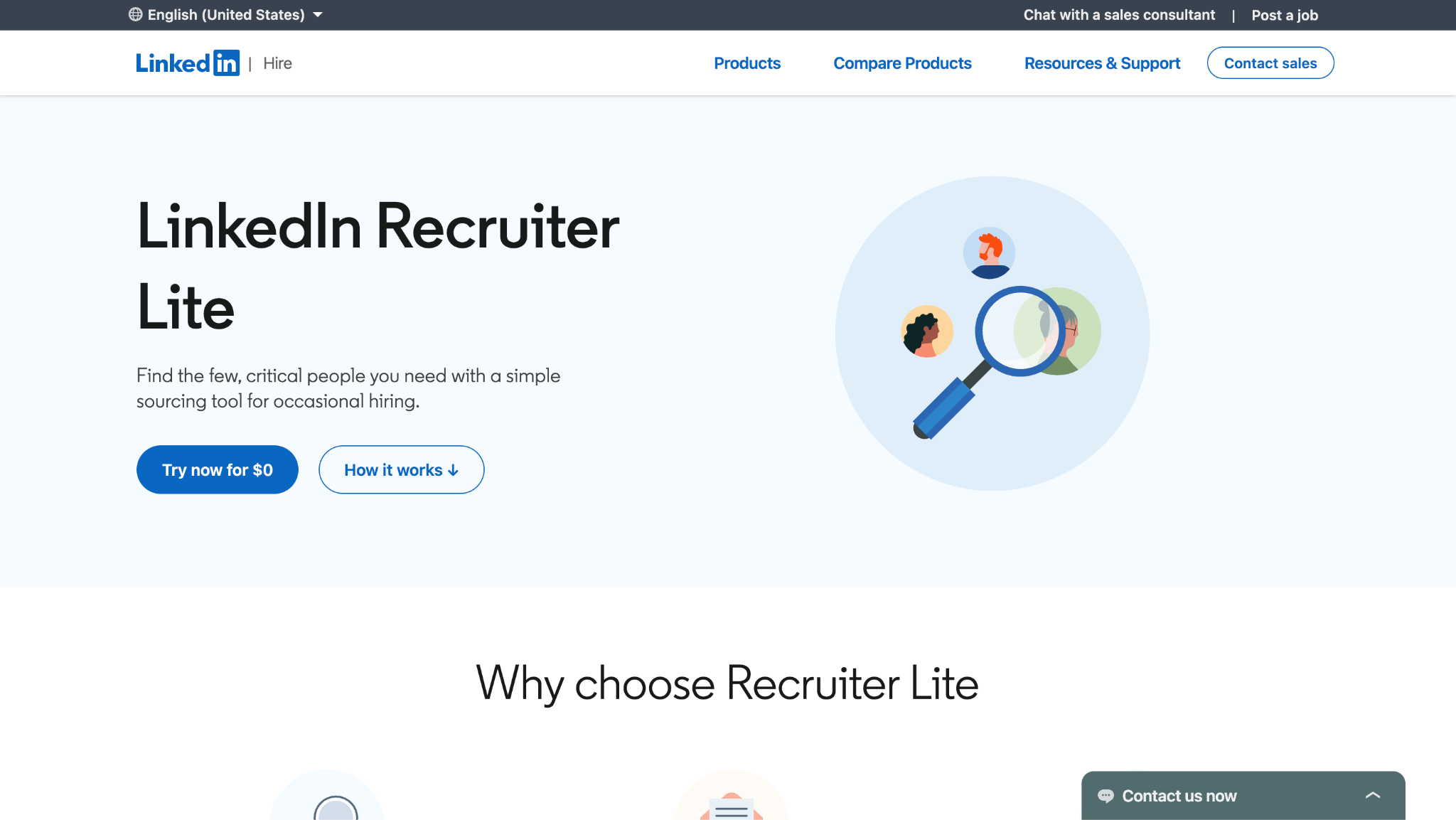
LinkedIn Recruiter is network sourcing on LinkedIn’s own members, sold as Recruiter Lite for occasional hiring and Recruiter for talent acquisition teams. Outreach runs through InMail, and Recruiter adds ATS integration. Hiring Assistant, its AI, searches the network and returns a summarized shortlist, and LinkedIn says users review 81% fewer profiles.
Software Pros
- The largest professional network in 1 search
- 40+ filters on Recruiter, including Open to Work
- Free trial of Recruiter Lite
Software Cons
- Only people on LinkedIn
- Prices not published
- Lite stops at your 3rd-degree network
LinkedIn Recruiter Review
My take is that most professional hiring teams still need some form of LinkedIn access. Recruiter Lite gives 30 InMails a month and 20+ filters across your 1st to 3rd-degree network. Recruiter gives 150 InMails per license, access to every member, and bulk InMail. A week here means saved searches, candidate recommendations, and InMail follow-ups, with Hiring Assistant drafting the first shortlist.
Our Verdict
The Default Professional Network
Lusha
Quick Overview
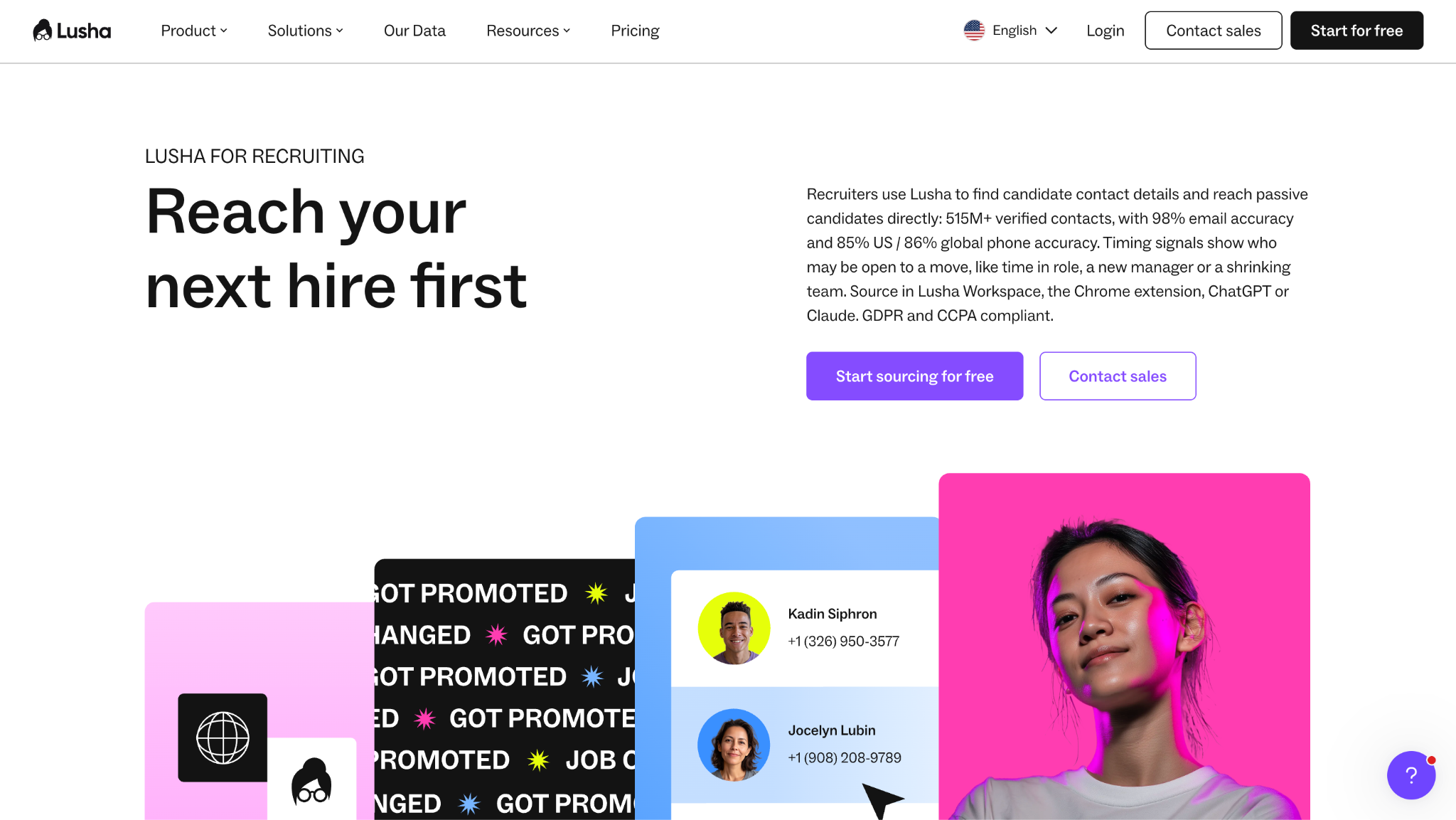
Lusha is a contact data tool mainly sold to sales teams, with a recruiting offer that searches 515M+ verified contacts, according to the vendor. Recruiters reveal emails and phone numbers in Lusha Workspace, the Chrome extension, ChatGPT, or Claude. Timing signals, such as time in role or a new manager, hint at who may be open to a move.
Software Pros
- Signals that point to people likely to move
- Bulk enrichment of candidate lists
- Published GDPR, CCPA, SOC 2, and ISO 27701 claims
Software Cons
- Built mainly for sales teams
- Every reveal spends a credit
- Finds contact details, not candidates
Lusha Review
It earns its place by letting an agency desk call candidates before a competing agency does. The free plan includes 40 credits a month. Starter costs $37.45/month (billed yearly) for 4,800 credits, and Premium adds credit allocation across a team. A week here means enriching lists, revealing numbers, and pushing verified details to the ATS or CRM.
Our Verdict
Verified Contacts With Move Signals
*As pricing is subject to change, prices are listed as they stand in October 2026
Pin
Quick Overview
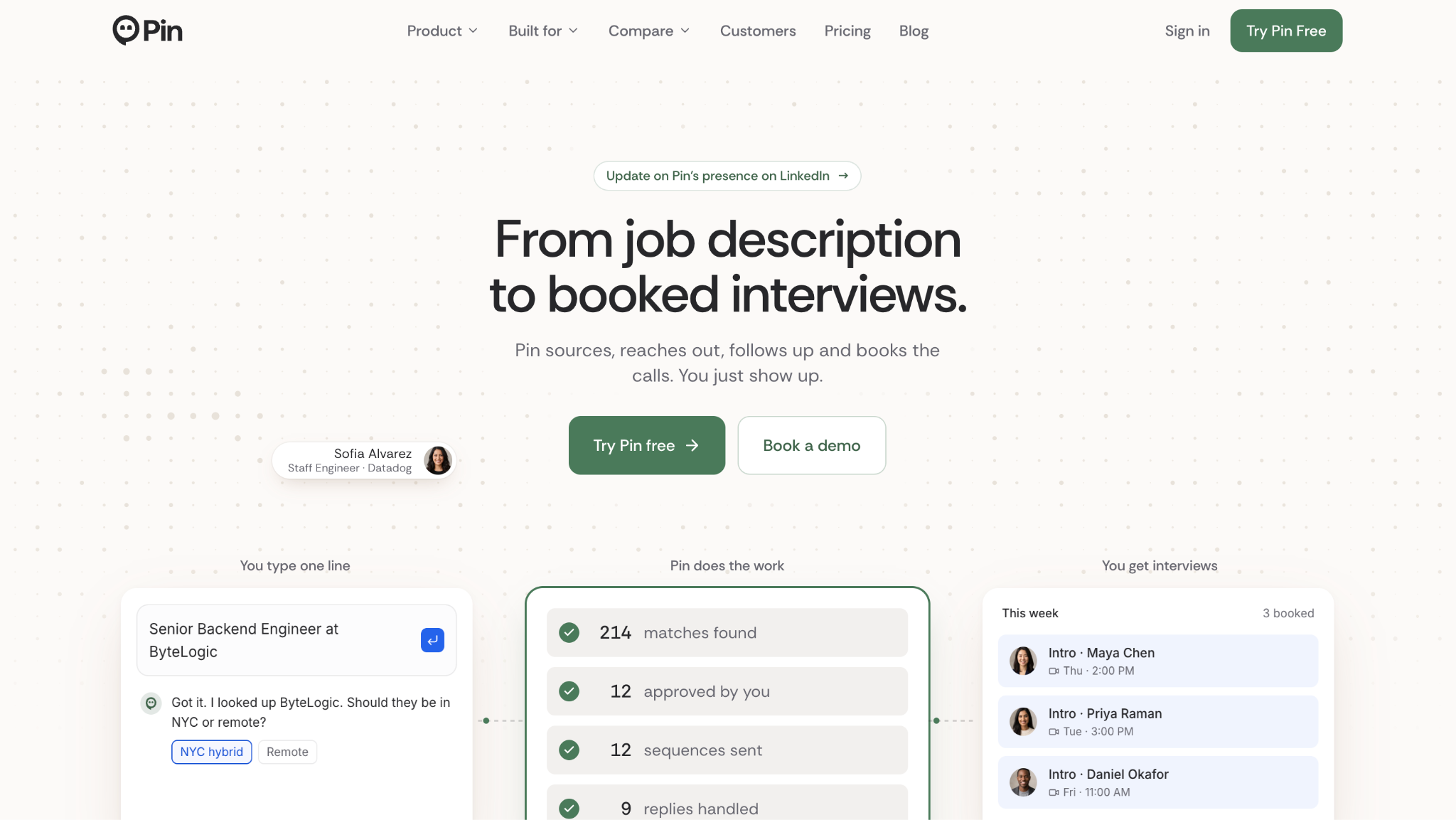
Pin is an AI sourcing and outreach platform that searches 850M+ profiles, according to the vendor, and runs email and multi-channel sequences from your inbox. AI Agents source and evaluate candidates, explain why each one matches, and can book interviews. It also includes a recruiting CRM, a Chrome extension, an MCP server, and 120+ ATS integrations.
Software Pros
- Job description to booked interview in 1 tool
- Free plan with 1 position and 1 agent
- SOC 2 Type 2, per the vendor
Software Cons
- ATS integration is an add-on below Enterprise
- Contact credits cap each seat
- 28 G2 reviews, a thin sample
Pin Review
Think of this as a sourcing assistant for small teams and agencies juggling several roles. Solo costs $100 per user per month billed annually, with 500 contact credits. Professional costs $135 and adds collaboration and 1,000 credits per seat per month. A week here means approving matches, letting sequences run, and joining the calls Pin schedules. Each automation can be switched off.
Our Verdict
All-in-One AI Sourcing Platform
*As pricing is subject to change, prices are listed as they stand in October 2026
RecruitBot
Quick Overview
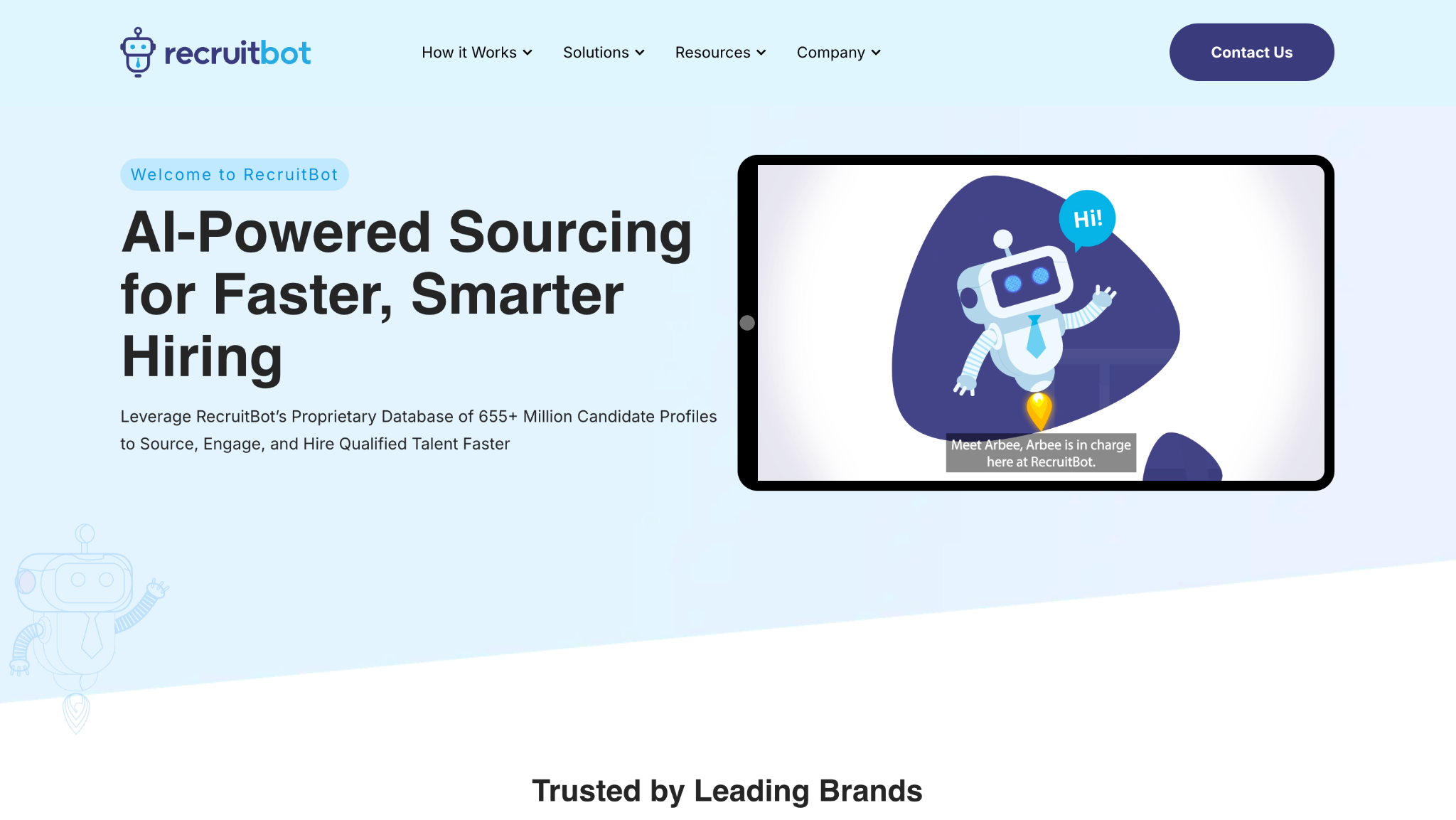
RecruitBot is an AI sourcing and outreach platform with its own database of 655M+ candidate profiles, according to the vendor. Recruiters paste a job description, and machine learning ranks candidates as it learns their preferences. Outreach runs automated drip email campaigns, and its security page says it is SOC 2 certified and GDPR compliant.
Software Pros
- Search starts from a job description
- Ranking adjusts to your feedback
- Drip campaigns built in
Software Cons
- Custom pricing only
- Database limited to its own profiles
- 18 G2 reviews, a thin sample
RecruitBot Review
The recruiter fills many similar roles in the US, such as sales or engineering positions, month after month. Pricing comes through sales, with plans bundled by seat. A week here means feeding in job descriptions, rating suggested candidates, and letting drip emails handle the follow-up. The more feedback recruiters give, the closer the rankings get to their preferences, according to RecruitBot.
Our Verdict
Repeatable Sourcing for Similar Roles
SignalHire
Quick Overview
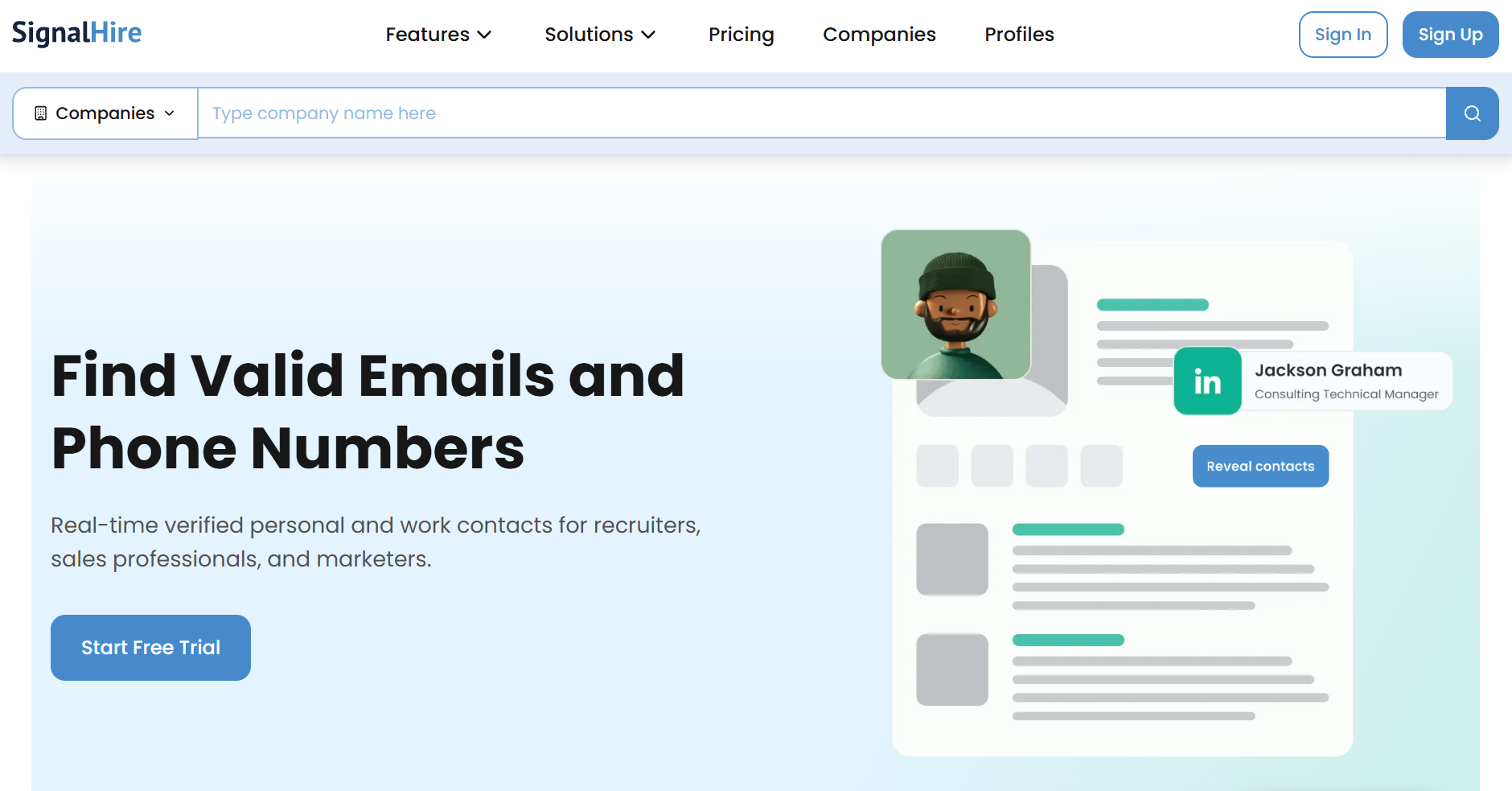
SignalHire is a contact data tool aimed mainly at recruiters, with a database of 900M+ profiles, per the vendor. Its extension works on social profiles and most websites. One credit returns every available contact for a profile and is charged only on success. It offers an MCP server and publishes a GDPR statement.
Software Pros
- Unlimited users on every plan
- Charged only when contacts are found
- Exports to JobAdder, Loxo, Recruiterflow, and Crelate
Software Cons
- Finds contact details, not candidates
- Separate plans for emails and phones
- Accuracy varies by region and profile
SignalHire Review
A typical week here starts with a database search or a profile, then bulk reveals for up to 1,000 people at a time. The Emails plan costs $57/month billed annually or $82/month, and the free plan gives 5 credits, or 10 with the extension. Unlimited seats suit budget-conscious agencies because the whole desk shares 1 subscription.
Our Verdict
Budget Contact Data for Agencies
*As pricing is subject to change, prices are listed as they stand in October 2026
Wellfound Reach
Quick Overview
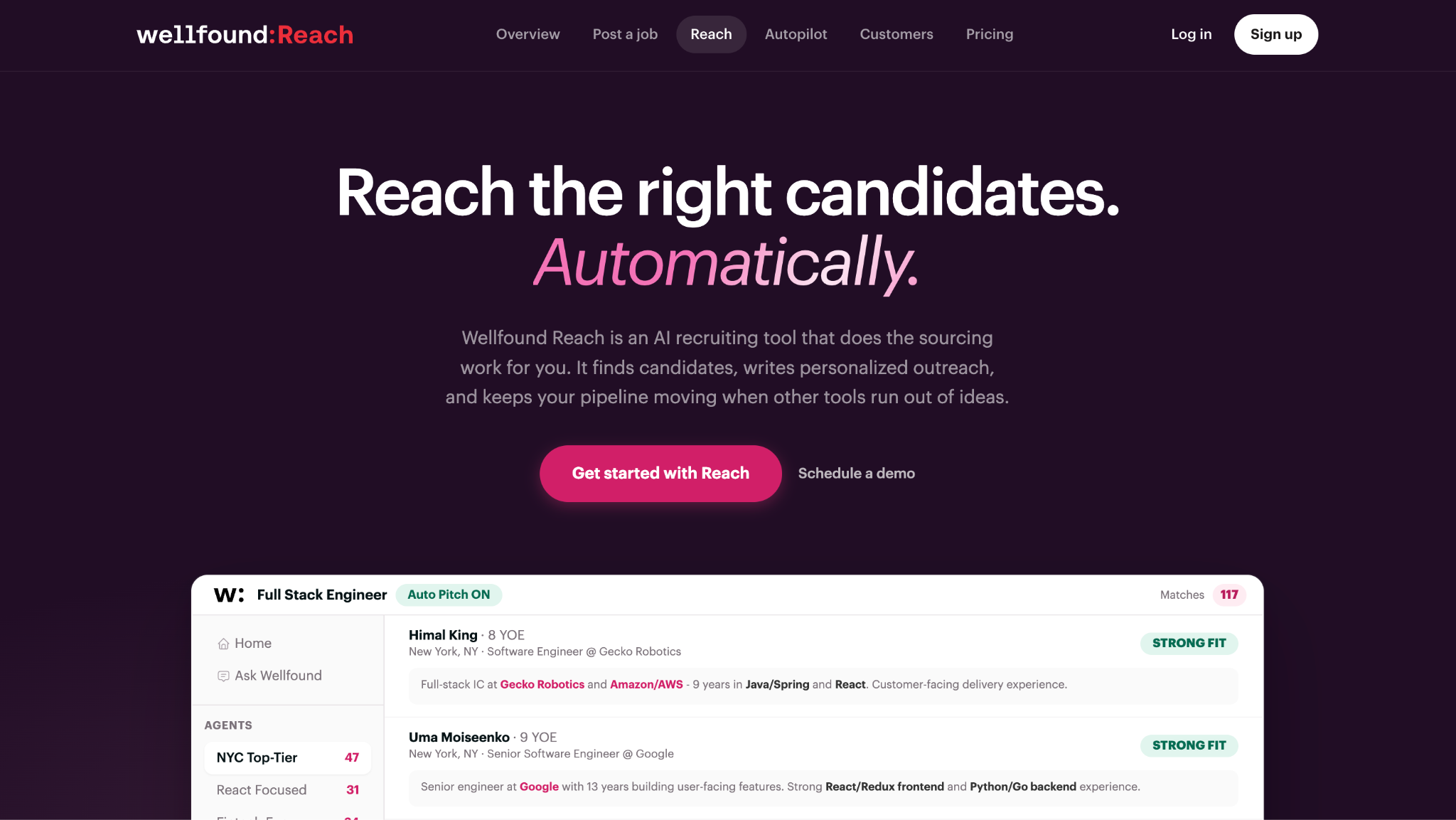
Wellfound Reach is a network sourcing tool for startups that searches 10M+ candidates who joined Wellfound for startup jobs, plus 500M+ external profiles. Its AI sourcing agents write personalized outreach and send it from your own Gmail or Outlook. Ask Wellfound suggests the next search, and the vendor says 27,000+ companies hire on Wellfound.
Software Pros
- Opted-in candidates who want startup roles
- Unlimited agents from Starter up
- ATS sync with Greenhouse, Lever, Ashby, and Workable
Software Cons
- Pool weighted toward startup roles
- Contact reveals are capped per seat
- No G2 reviews on its profile yet
Wellfound Reach Review
I’d reach for this when a startup needs its first engineers or product people and has no recruiter yet. Explore is free with 20 reveals and 3 agents. Starter costs $135 per seat per month with 250 reveals, and Growth costs $199 with 1,000 reveals and ATS integration. A week here means launching agents with different strategies and answering replies from your own inbox.
Our Verdict
AI Sourcing Built for Startups
*As pricing is subject to change, prices are listed as they stand in October 2026
FAQs About Candidate Sourcing Software
What’s the best candidate sourcing tool?
It depends on where your candidates spend time and whether you need profiles, contact details, or both. Network tools suit roles where people keep current LinkedIn or Indeed profiles, while AI platforms search many sources at once. Contact finders help most when you already know who you want to reach. The comparison table above sorts all 12 options by group, candidate source, and outreach channel, so you can narrow the list quickly.
What is the difference between sourcing and recruiting?
Sourcing is the search: finding people who match a role and starting a conversation before anyone applies. Recruiting covers the whole process, from the job post and screening to interviews, the offer, and the start date. In many teams, a dedicated sourcer hands interested candidates to a recruiter who runs the rest. In smaller teams, one person does both jobs, which is why saving time on search matters so much.
Is it legal to email candidates found through sourcing tools?
Rules differ by country, and in the EU, data protection law covers both candidate data and outreach. You need a lawful basis and must offer people a clear way to opt out. Check the compliance claims each vendor publishes, how it collects profiles, and whether it honors removal requests. For your situation, ask a lawyer, because this is general information, not legal advice.
Do I still need LinkedIn if I use another sourcing tool?
Many recruiters keep both, at least for professional roles. LinkedIn gives current, self-maintained profiles for most professional roles, while other tools add contact details, technical communities, or opted-in job seekers. Dropping LinkedIn makes sense mainly for hourly hiring or for roles where candidates rarely keep a profile. For everyone else, the real question is which LinkedIn plan fits your volume and which second tool you pair with it.
How accurate is contact data from sourcing tools?
Accuracy varies by vendor, country, and contact type. Work emails, personal emails, and mobile numbers can all score differently within the same product. Treat published accuracy rates as vendor claims, and test them during a trial with 50 of your own searches. Count bounced emails and wrong numbers, then divide the plan price by the contacts that actually worked for you.
What is the most accurate AI candidate sourcing tool?
There is no universal answer, because accuracy depends on the roles and the data each product uses. A tool trained mostly on engineering profiles may rank developers well and sales candidates poorly. The fair test is to run the same open role through 2 products during their trials. Compare the top 20 matches from each, and count how many you would actually contact without hesitation.
How many sourcing tools does a recruiting team need?
Often 2: 1 source of candidates and 1 source of contact details, both connected to the ATS. Agencies and technical recruiters sometimes add a 3rd for a specific community, such as developers or nurses. Beyond that, overlap grows quickly, and recruiters lose time copying candidates between systems. Review usage every quarter and cancel any tool that did not produce interviews in that period.
What response rate should sourced outreach get?
It varies widely by role, market, seniority, and message, so any single benchmark will mislead you. Track replies by source, role, and recruiter, then compare each month against your own baseline. Short, specific messages that mention real details from a profile usually do better than generic templates. Treat vendor response rates as claims, since they come from the vendor’s own customer mix and may not match your own market.

Helen is Anywherer’s Market Analyst & Content Researcher, with extensive experience in analyzing global employment markets and HR technology trends. She is skilled at turning complex market data into clear, well-researched insights that inform every piece of content. With a strong grasp of the EOR, PEO, and international hiring space, Helen plays a key role in keeping Anywherer’s research accurate, up to date, and genuinely useful for readers.