Hiring at a ten-person company is a job somebody does between other jobs. The tools on this page are the ones a founder or an office manager can set up in an afternoon and run without a recruiter. I compared all 11 on the three things that drive purchase decisions at this size. What the free plan really covers, what the published price is, and how many job boards one posting reaches.
What Is the Best Recruiting Software for Small Business in 2026?
At this scale, the category is narrower than the enterprise version. The best recruiting software for small business does four things. It gives you one pipeline for every applicant and a careers page you can update yourself. It posts to the boards where your candidates already are, and it schedules interviews without six emails. Everything else is optional.
That shortlist has a single test behind it. Recruiting software for small companies is judged on whether one non-specialist can run it end to end. That is exactly who will be running it.
This matters more in 2026 because hiring has not gotten easier. SHRM’s 2026 Talent Trends research found that nearly 7 in 10 HR professionals reported difficulty recruiting for full-time roles. Just over half said it had become harder than a year earlier. A small company feels that in a specific way: there is no recruiting team to absorb the extra work.
So what separates these 11? Four things, in this order: published price, what the free tier actually includes, how long setup takes, and posting reach. The list itself splits into three groups. There are general small-business applicant tracking systems, frontline platforms built for hourly and multi-location hiring, and European-first tools priced in euros. Getting the group wrong costs more than getting the tool wrong, and the numbers explain why. SHRM benchmarking data puts the average cost per hire at nearly $4,700, which is real money when you are making four hires a year.

INSIGHT: Does a 10-person company actually need recruiting software?

The tool pays for itself in candidate replies and posting reach, not in features a small team will never open.
- SHRM’s 2026 Talent Trends research reports that nearly 7 in 10 HR professionals (68%) had difficulty recruiting for full-time positions, and 53% of them said it had become more difficult than the year before.
- SHRM benchmarking data puts the average cost per hire at nearly $4,700, and the same reporting notes that many employers estimate the full cost of a hire at three to four times the salary of the role.
- What changes day to day is smaller and more useful than either figure suggests. Candidates stop falling out of a shared inbox, replies go out the same week rather than the next one, and one form pushes a role to every board at once.
Below, I’ve reviewed 11 of the leading platforms in A to Z order. None is right for every small company. The comparison table comes first, and the reviews explain the trade-offs behind each row.
INSIGHT: General ATS, frontline platform, or EU-first tool?
The 11 tools here do three different jobs, and most disappointment at this size comes from buying for the wrong one.
- General small-business applicant tracking (100Hires, AvaHR, Breezy HR, JazzHR, Manatal): a pipeline, job board posting and scheduling for desk and mixed roles, all at published prices.
- Frontline and hourly platforms (Hireology, Homebase, Workstream): text-based applications, screening built for high turnover, and hiring across several locations at once.
- European-first tools (Factorial, Homerun, JOIN): EU job boards, pricing in euros and GDPR-shaped defaults, with Factorial adding core HR around the hiring module.
Sources:
Small Business Recruiting Software Compared
Prices sit in this table rather than in a separate section because, at this size, price is the shortlist. Choosing the best small business recruiting software usually comes down to the second and third columns.
| Tool | Free plan | Published starting price | Posting reach | Best for |
|---|---|---|---|---|
| 100Hires | Trial only, 14 days | €42 per month, billed annually | Not stated | Budget-conscious first ATS |
| AvaHR | Trial only, 7 days | Custom pricing | 100+ boards (vendor claim) | Wide posting, lean teams |
| Breezy HR | Yes, one active position | $157 per month, billed annually | 50+ boards (vendor claim) | First ATS after spreadsheets |
| Factorial | No | $8 per user/month, HR core only | Not stated | HR plus hiring together |
| Hireology | No | Custom pricing | Not stated | Multi-location frontline teams |
| Homebase | Yes, one location | $24 per location/month, billed annually | Major boards (vendor claim) | Hourly teams running scheduling and payroll |
| Homerun | Trial only, 15 days | €89 per month, billed annually | Not stated | Employer branding, EU hiring |
| JazzHR | No | $1,000 per year | Not stated | Structured US hiring |
| JOIN | Trial only, 14 days | €17 per job/month, billed annually | 10+ organic, 250+ paid (vendor) | EU multiposting |
| Manatal | Trial only, 14 days | $15 per user/month, billed annually | Not stated | High inbound volume |
| Workstream | No | Custom pricing | Not stated | Hourly and frontline roles |
As pricing is subject to change, prices are listed as of September 2026.
INSIGHT: Why does published pricing matter for a small business?
A sales call before a price is a real cost for a 10-person company, and the quote tends to reflect what the call revealed.
- 8 of the 11 publish a usable figure: 100Hires, Breezy HR, Factorial, Homerun, Homebase, JazzHR, JOIN and Manatal. AvaHR, Hireology and Workstream quote privately, and Factorial’s published rate covers the HR core rather than hiring.
- Only one genuine free tier exists here. Breezy HR’s Bootstrap plan runs free forever with one active position at a time. Five others offer trials of 7 to 15 days, and three offer neither.
- Quote-only vendors are not weaker products. They are built for a buying process that involves a demo, a proposal, and a follow-up call, which is a process this audience does not have the hours to run.
Top Recruiting Software for Startups
Venture-backed hiring has its own shape. You hire in bursts after a round, and nobody has time for an implementation call. Four of these fit that pattern. Breezy HR lets you start free and pay only when a second role opens. JOIN prices per job rather than per seat, which suits a team that hires three roles hard and then stops. Manatal charges per user at a rate a seed-stage company can absorb, a common pick among the best recruiting software for small startups. Homerun makes the careers page look like the company you are trying to become, which matters when candidates have never heard of you.
What links those four is speed of adoption. The top recruiting software for startups is usually whichever one you can switch on the same day the round closes.
Something changes around 100 employees, and it is worth naming in advance. Interviews need structure so two managers score the same candidate the same way. Approvals need to exist before a headcount plan means anything. Reporting has to answer where candidates drop out, and the tool has to talk to payroll and your HR system. At that point, the best recruiting software for startup scaling stops being the cheapest option. It becomes the one with an audit trail. Teams past that line usually move to a mid-market applicant tracking system, which a broader guide covers in detail.
How to Choose Recruiting Software for a Small Business
I would start with a rule that sounds petty and is not. If the price is not on the website, treat that as information. A demo call, a proposal, and two follow-ups cost a small company hours it does not have.
Read the free tier properly before you rely on it. Free almost always means one active position at a time, or a cap on stored candidates. Open a second role, and you are on a paid plan. Treat it as a way to try the product, not a way to run hiring for a year.
Then check posting reach against your actual market. A tool that pushes to 50 boards is worth nothing if none of them is where your candidates look. Ask which boards specifically, not how many.
Think about who will open this thing every morning. It will be a founder between meetings or an office manager who also handles payroll. For the best recruiting software for small teams, setup time matters more than feature depth, because features nobody finds are features nobody uses.
Keep screening and evaluation separate in your head. A pipeline narrows the pool; deciding whether somebody can do the work is a different job, and that is where pre-employment assessment tools come in. Expecting an applicant tracking system to test skills is a common and expensive mistake.
Last, the cheapest channel at this size is not a job board at all. Your team already knows people who would fit, and employee referral program software turns that into a process rather than an accident. Most small companies fill more roles this way than through any posting.
Top 11 Recruiting Software for Small Businesses
These small business recruiting software reviews come from working through each vendor’s own material. I read the pricing page, the free-tier terms, the job board claims, and what the product asks a first-time user to do. Where a vendor publishes a customer or board count, I say so and link it rather than repeating it as fact.
The mix runs from free-tier and low-cost applicant tracking like Breezy HR and JOIN, through frontline platforms like Workstream, to design-led European tools like Homerun. Picking the best recruiting software for small businesses means matching one of those three shapes to how your company actually hires.
I’m listing all providers in alphabetical order to keep this comparison neutral.
100Hires
Quick Overview
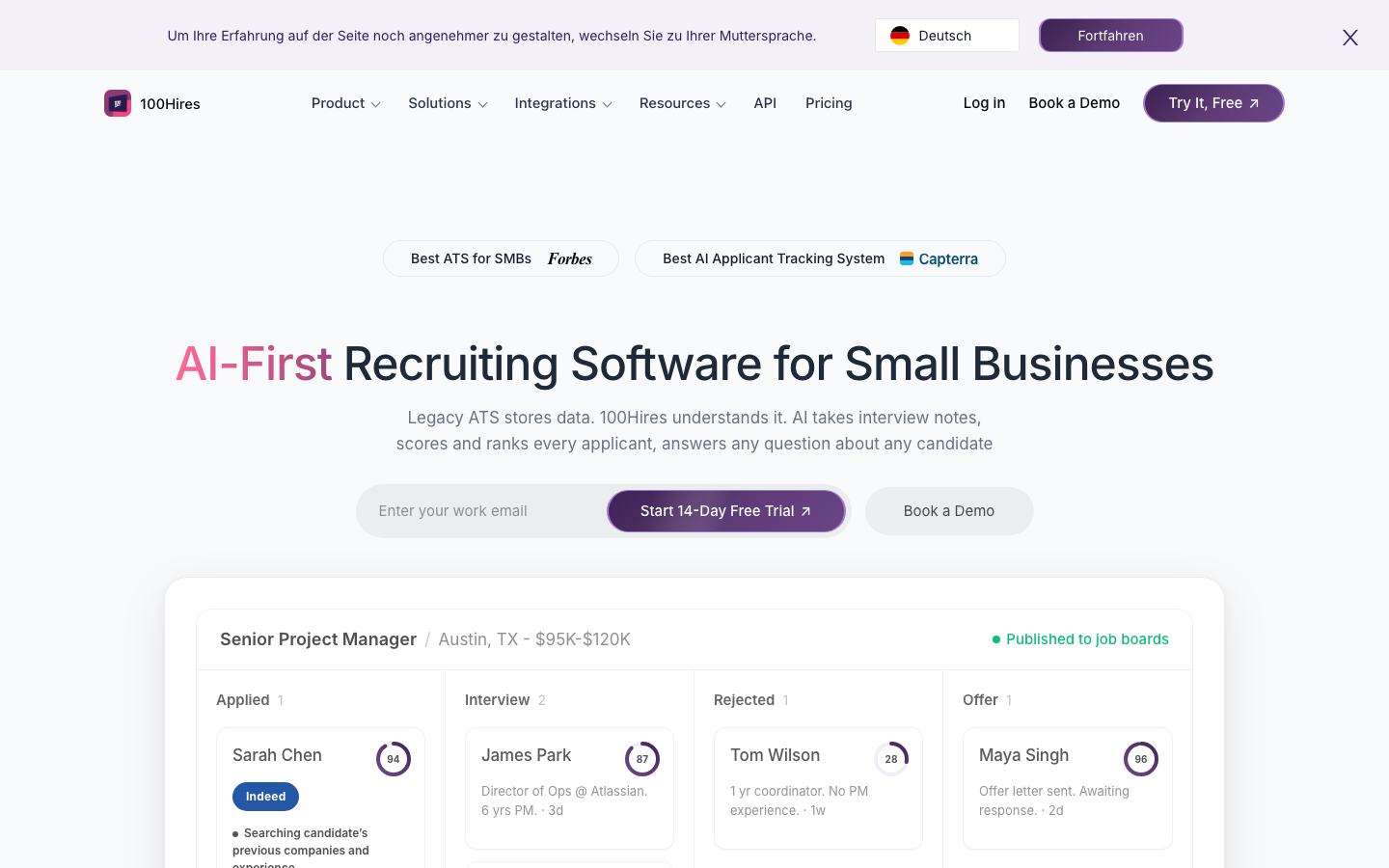
100Hires is a budget applicant tracking system aimed at teams leaving spreadsheets behind. Pricing is published in euros per plan rather than per seat, from €42 a month billed annually. The Start tier covers three jobs, 100 candidates and one user.
Software Pros
- Published pricing, so you can budget without a sales call
- Higher tiers lift the limits on jobs, candidates and users
- A plain interface that does not hide the basics
Software Cons
- A 14-day trial is the only free access, with no permanent free tier
- The Start tier’s single user rules out a two-person hiring team
- No published job board count, so posting reach is hard to compare
100Hires Review
While reviewing 100Hires, I appreciated how little it tries to be. It holds candidates, moves them through stages, and lets you post a job, and it charges less than most for doing that. The Start tier is genuinely limited to one user, so most companies move to Advanced sooner than the entry price suggests.
Our Verdict
Budget ATS With EUR Pricing
*As pricing is subject to change, we are listing prices as they stand in August 2026
AvaHR
Quick Overview
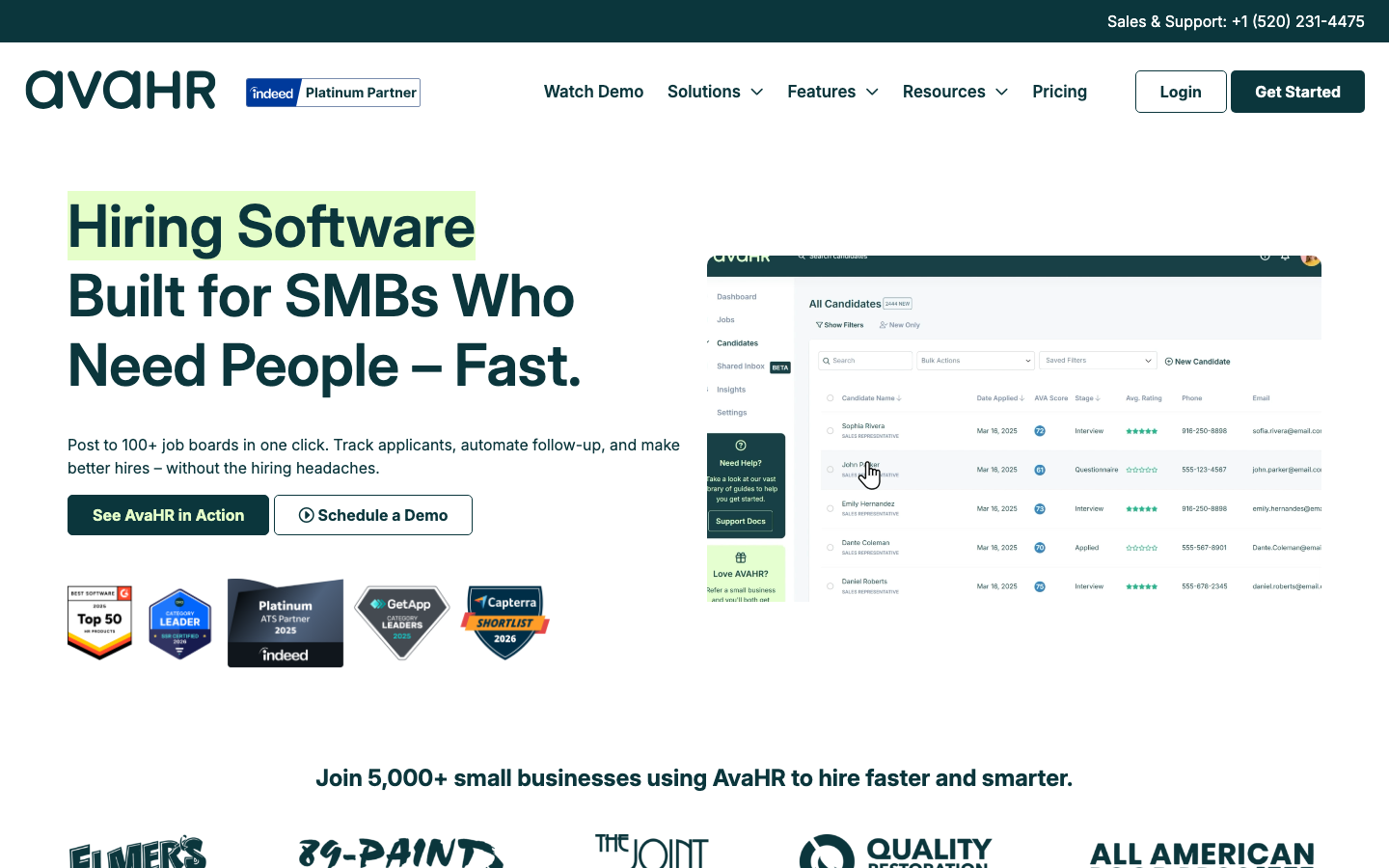
AvaHR, the platform formerly known as VIVAHR, builds its pitch around posting reach and culture profiles. Those profiles show candidates what it’s like to work for a company. The vendor states that a job post goes to 100+ job boards in one click and that 5,000+ customers use it. Tier names are published; the rates are not.
Software Pros
- Vendor-documented posting to 100+ job boards from one form
- Culture profiles let small employers compete on more than salary
- Four tiers, from a first hire to steady hiring
Software Cons
- No published rates, so every tier needs a conversation
- A 7-day trial is short for testing a real hiring cycle
- Posting breadth matters less in one narrow, specialized market
AvaHR Review
What stood out to me about AvaHR is the culture profile. Most tools at this price help you manage candidates. This one helps you persuade them, which is the harder problem when nobody has heard of your company. The missing prices are the real friction here, since this audience shortlists on published numbers.
Our Verdict
Wide Posting For Lean Teams
Breezy HR
Quick Overview
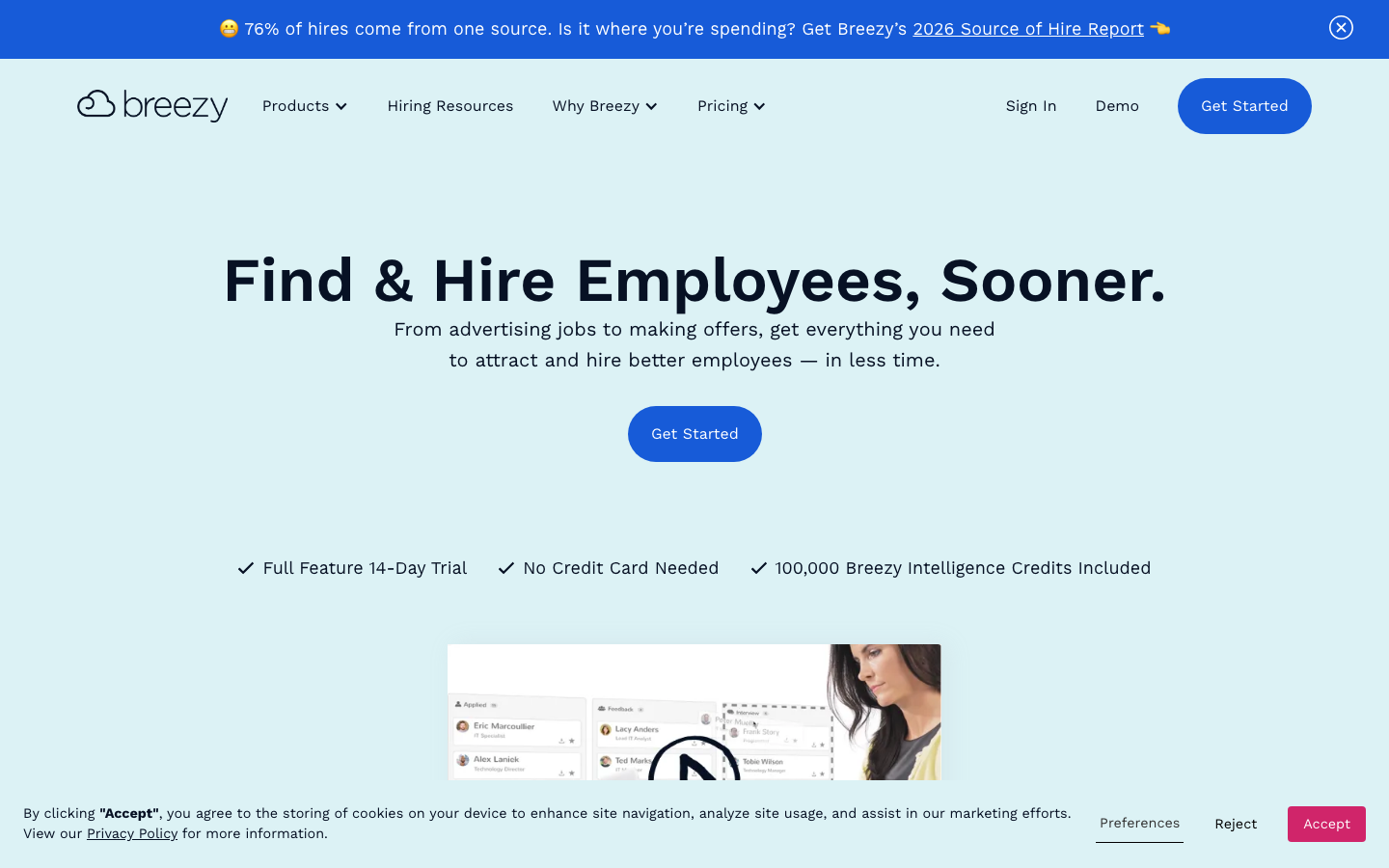
Breezy HR runs hiring as a drag-and-drop pipeline. The Bootstrap plan stays free, and the paid Startup tier costs $157/month, billed annually. The vendor states that a posting distributes to 50+ job boards, and Bootstrap allows unlimited users on one active position.
Software Pros
- A free forever plan, not a trial, with unlimited users
- Vendor-documented distribution to 50+ job boards
- The easiest visual pipeline here for a non-recruiter
Software Cons
- The free plan caps you at one open role at a time
- The jump from free to $157 a month is a large step
- Reporting is thin next to mid-market systems
Breezy HR Review
During my evaluation, Breezy HR was the one I would hand to somebody who has never used an applicant tracking system. Candidates are cards, stages are columns, and moving one to the next step takes a drag. The free tier is genuinely free rather than a countdown, though one active position is a real ceiling.
Our Verdict
Free Tier Worth Using
*As pricing is subject to change, we are listing prices as they stand in August 2026
Factorial
Quick Overview
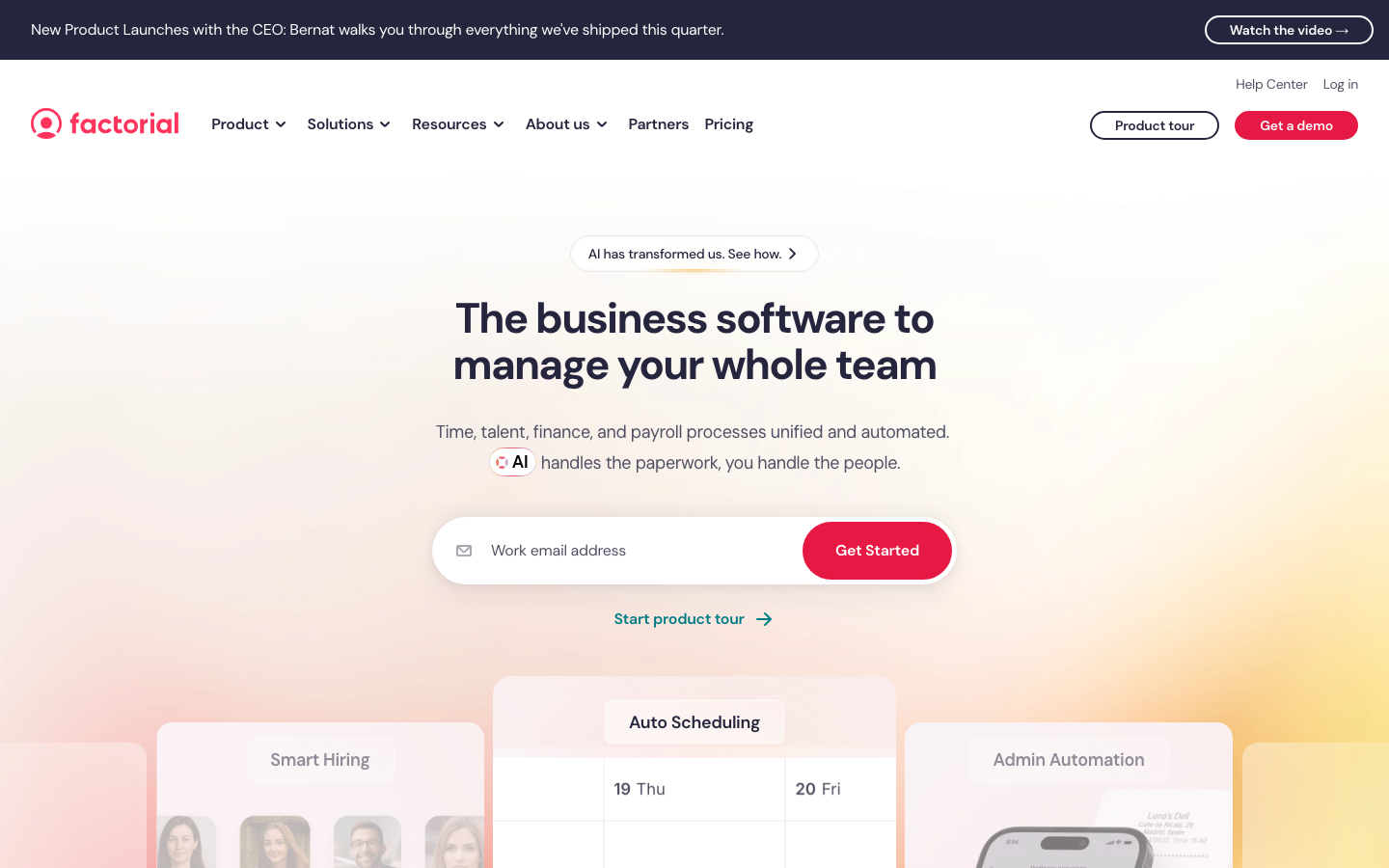
Factorial is a European HR platform where recruiting sits beside time off, documents, and payroll preparation rather than standing alone. The site advertises pricing from $8 per user each month, but that rate covers the HR core. Recruitment is an add-on module with a tailored quote.
Software Pros
- Hiring data and employee records live in one system
- Multi-job posting and CV parsing inside the recruiting module
- Strong fit for EU small businesses needing HR admin too
Software Cons
- The advertised entry price does not include the hiring module
- Buying HR software to fix hiring means paying for much more
- Module pricing makes the real total hard to work out
Factorial Review
I spent time with the packaging here, because it is the part that trips people up. The $8 figure is genuinely published and genuinely does not buy you recruiting, which is a distinction worth catching before a budget conversation. Factorial earns its place with companies that need an HR system anyway and would rather not run hiring somewhere separate.
Our Verdict
HR Core With Hiring Attached
*As pricing is subject to change, we are listing prices as they stand in August 2026
Hireology
Quick Overview
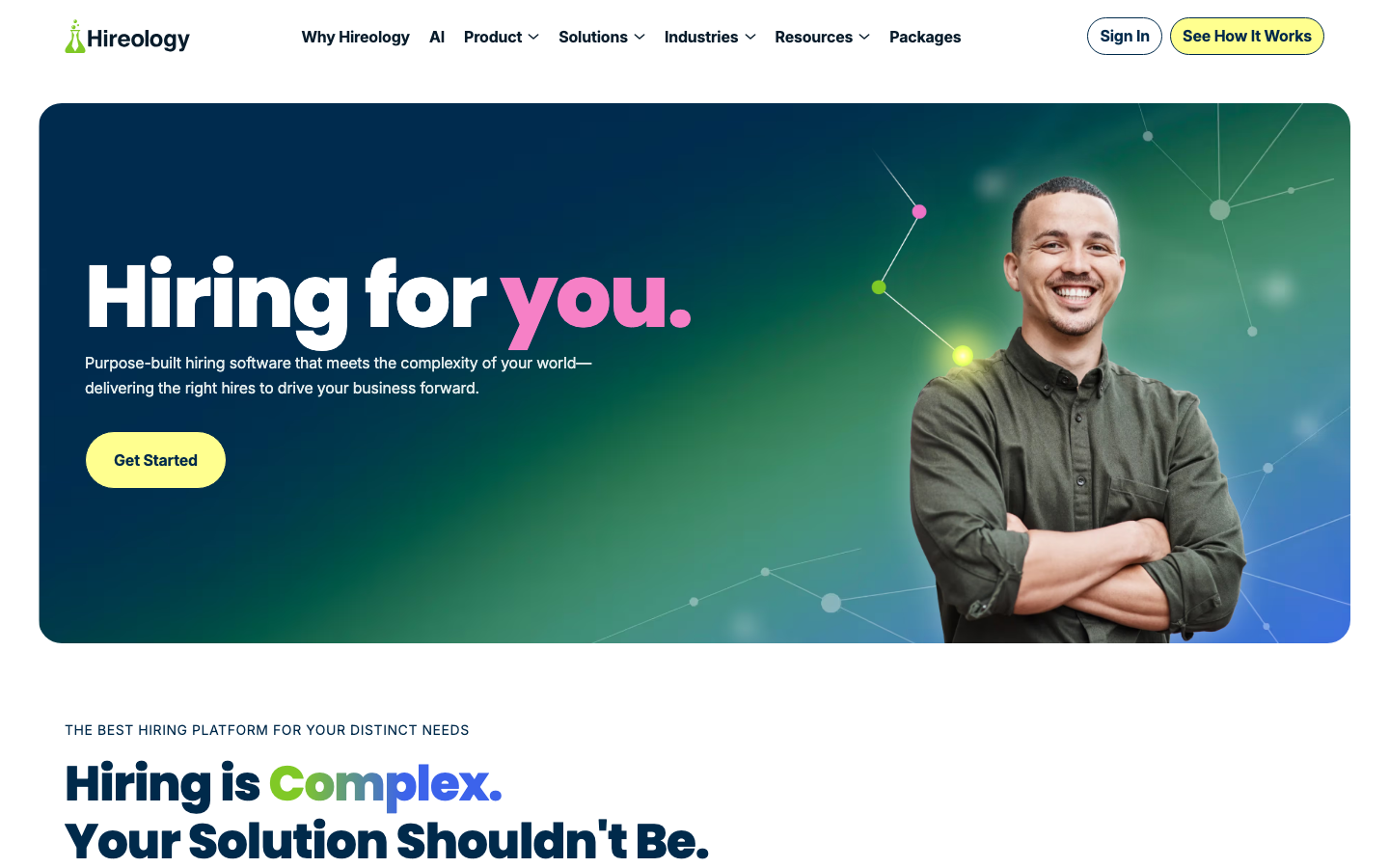
Hireology is built for small businesses that hire across several physical locations, particularly dealerships, healthcare practices and home services. It combines sourcing, applicant tracking and onboarding in one flow, and publishes no pricing, so a quote is the only way to learn the cost.
Software Pros
- Multi-location hiring is built in, not a workaround
- Sourcing, tracking, and onboarding in one product
- Built for frontline compliance and turnover
Software Cons
- No published pricing at all, which slows a small buyer down
- Fits desk-job and startup hiring far less well
- Industry focus means features you will not use outside those sectors
Hireology Review
The feature I kept coming back to is the location handling. Running one pipeline across four sites is a genuinely different problem from running one in a single office. Most tools at this price treat locations as a text field. If you run three clinics or two dealerships, that’s why you should look here.
Our Verdict
Multi-Location Frontline Hiring
Homebase
Quick Overview
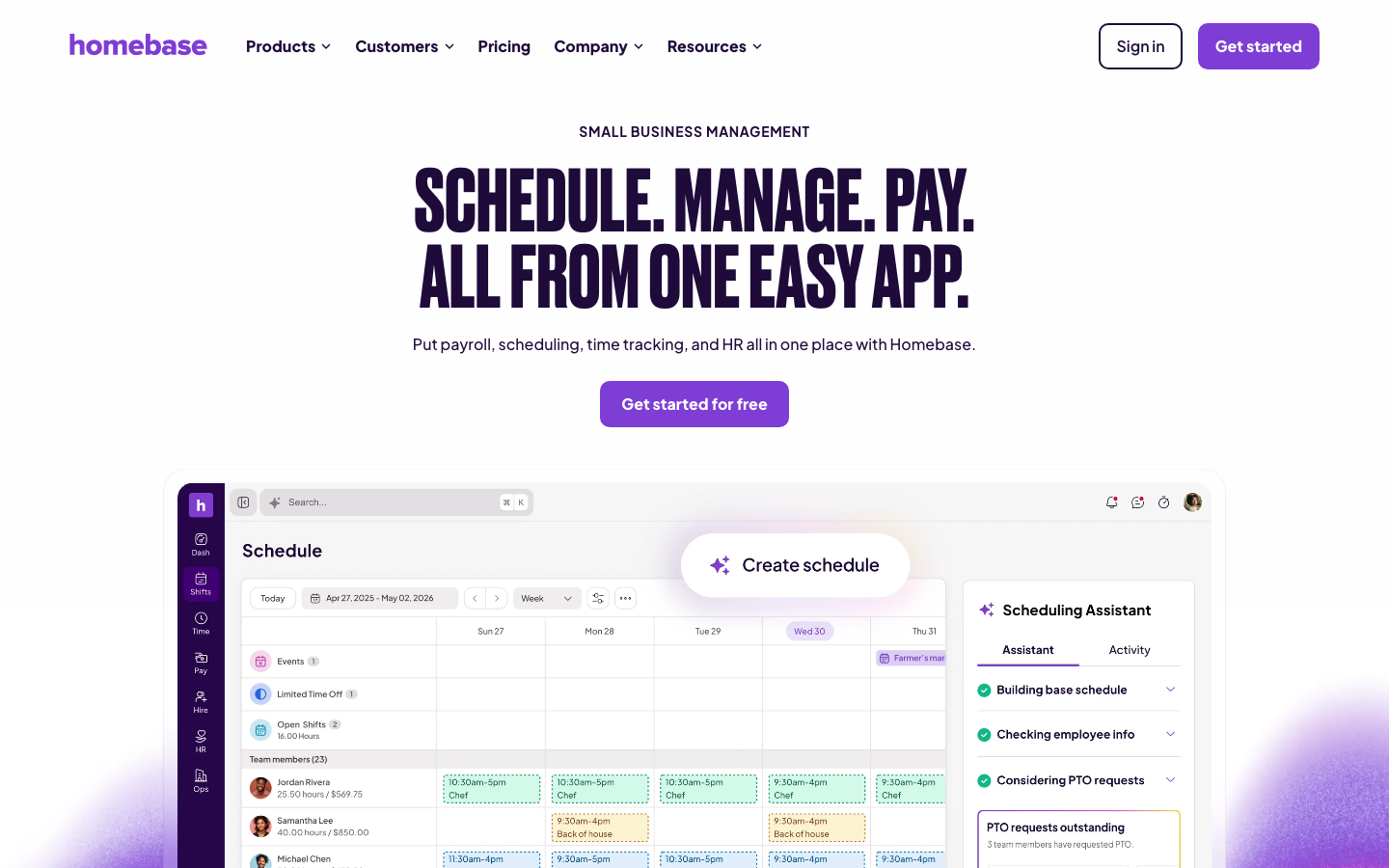
Homebase brings hiring into the platform where hourly teams already run scheduling, time tracking, and payroll. Job postings push to major boards from one form, applicants land in a shared pipeline, and screening and interview coordination run over text, which is how hourly candidates actually communicate. A free Basic plan covers a single location, and paid tiers are priced per location, not per user.
Software Pros
- Hiring, onboarding, scheduling, and payroll share one system, so a hired candidate becomes a scheduled employee without rekeying
- Text-based messaging keeps response times inside the window where hourly candidates are still available
- Per-location pricing with a free entry point, so a single-site business starts without a budget conversation
Software Cons
- Built for hourly and frontline teams; desk-role and salaried startup hiring fits the general ATS group better
- Hiring is one module of a broader team-operations platform rather than a standalone product
- Posting reach beyond the major boards is worth confirming against your specific market
Homebase Review
While reviewing Homebase, the integration is what earns its place in the frontline group. Workstream wins on the text loop and Hireology on multi-location structure, but Homebase closes the loop after the hire: the person you hired on Tuesday is on the schedule Wednesday and in payroll by Friday, inside one system. For a restaurant, shop, or clinic already running Homebase for shifts, adding hiring there is the shortest path from opening a role to a first worked shift.
Our Verdict
Hiring Inside Team Operations
*As pricing is subject to change, we are listing prices as they stand in September 2026
Homerun
Quick Overview
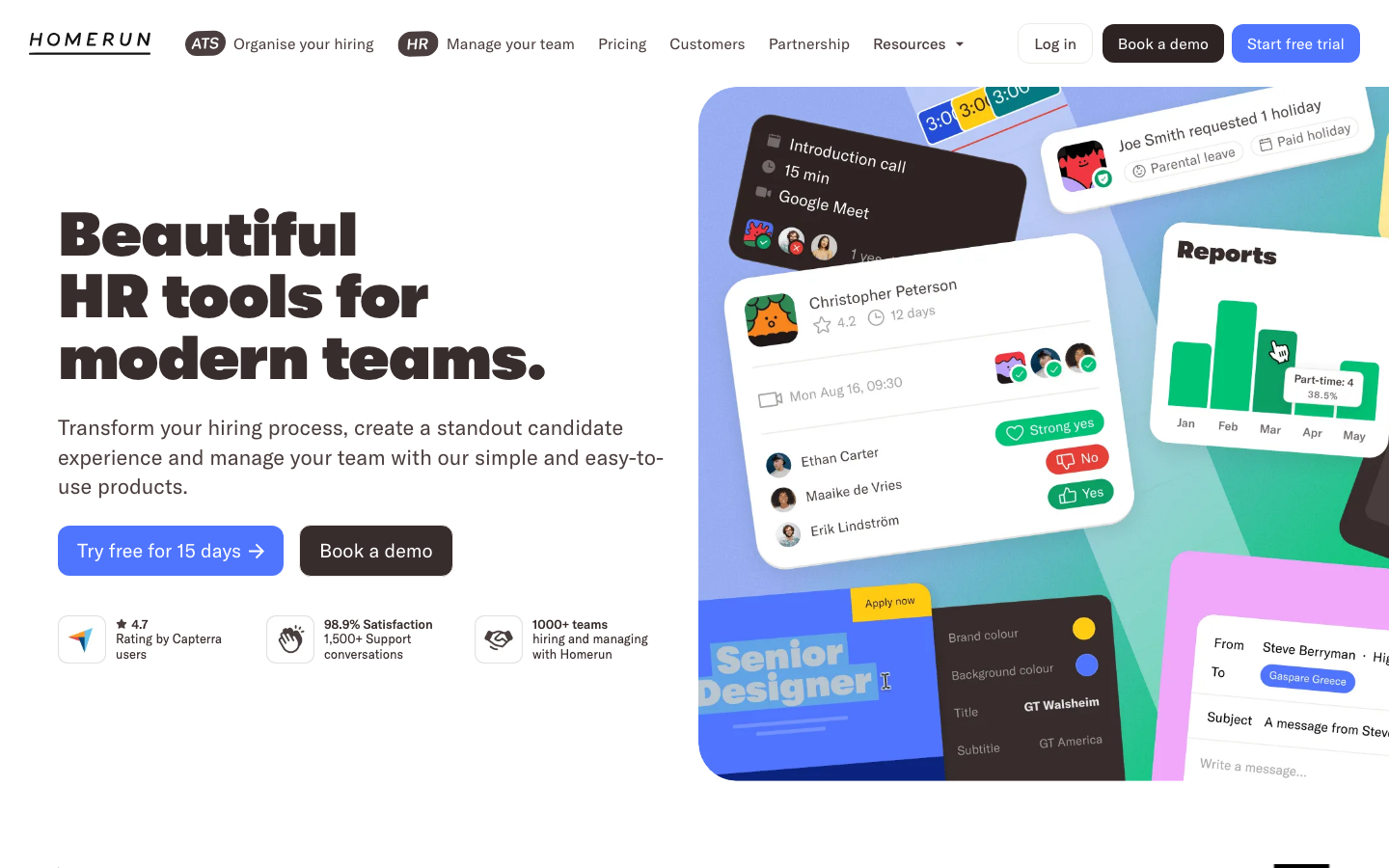
Homerun is an Amsterdam-built applicant tracking system that treats the careers page as the product rather than an afterthought. Plans are published in euros from €89 a month, billed annually, with a 15-day trial. It targets small teams that need to look credible to strangers.
Software Pros
- Careers pages and job posts are designed, not templated
- Published euro pricing suits companies budgeting in euros
- The 15-day trial is the longest here
Software Cons
- No permanent free tier after the 14-day trial
- Design matters little if you hire mainly through referrals
- No published job board count, so posting reach needs checking
Homerun Review
While reviewing Homerun, the careers page builder stood out. A small company competing against better-known employers is selling as much as it is selecting. Most tools in this bracket produce a page that looks like a form. This one produces something a candidate might actually read. For a startup building a name, that is a narrow advantage worth paying for.
Our Verdict
Careers Page As Employer Brand
*As pricing is subject to change, we are listing prices as they stand in August 2026
JazzHR
Quick Overview
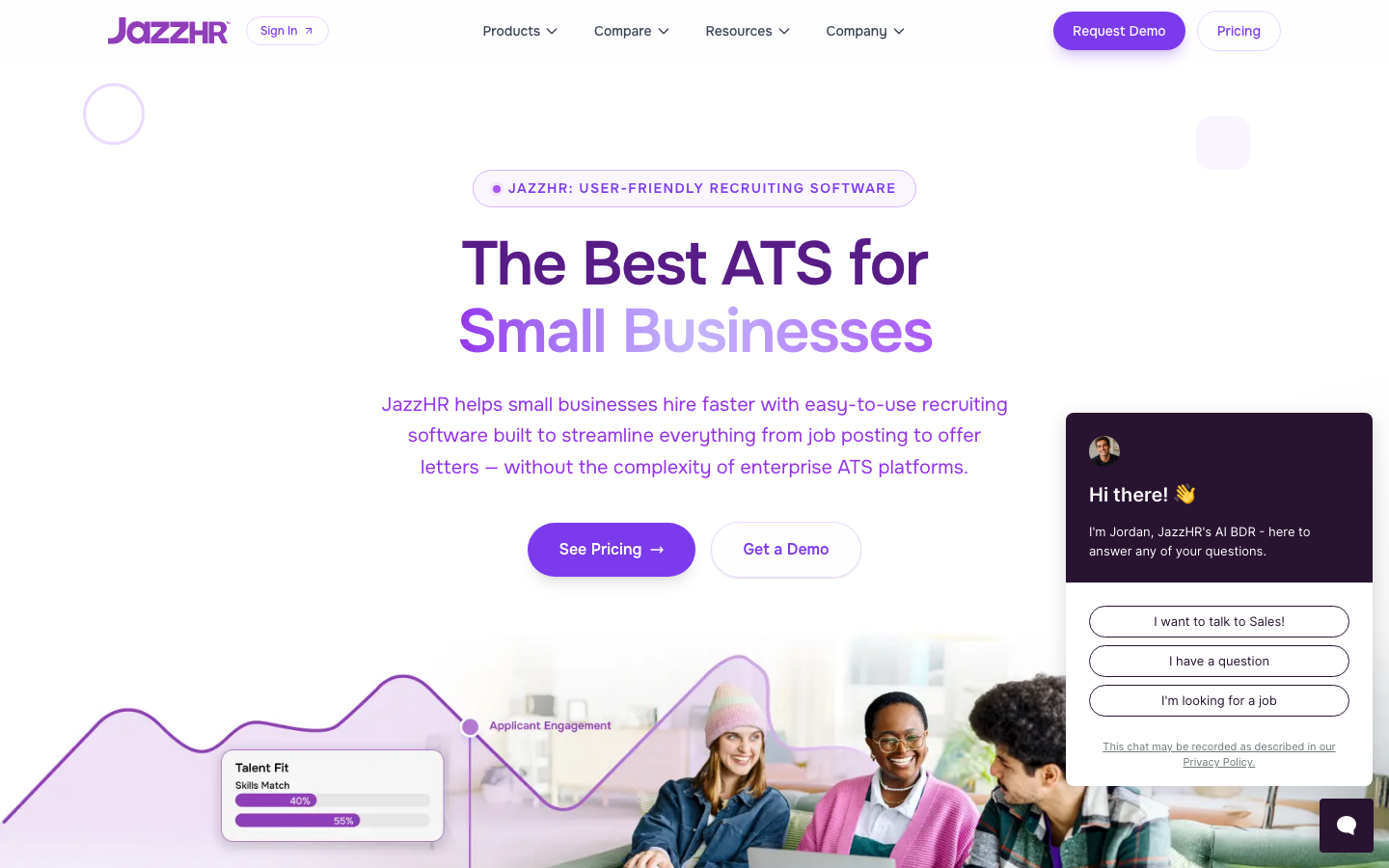
JazzHR is a purpose-built small-business applicant tracking system and, for many US companies, the first real one they own. Plans are published annually at $1,000, $3,480, and $5,508 a year, and it is part of Employ, a group of recruiting software companies.
Software Pros
- Annual pricing published in full, with no per-seat math
- Workflows and stages that hold up as hiring becomes routine
- US compliance reporting handled properly, not bolted on
Software Cons
- No free plan or trial listed, so the first commitment is a year
- The Hero tier is limited, and the step up to Plus is steep
- US-centric, so a weaker fit for European hiring
JazzHR Review
What stood out to me about JazzHR is how conventional it is, and I mean that as praise. It does the standard things a company needs on its tenth hire: consistent stages, notes everybody can see, offers that leave a record. Paying for a year up front is the honest catch, but for steady US hiring it is easy to justify.
Our Verdict
First Structured ATS After Spreadsheets
*As pricing is subject to change, we are listing prices as they stand in August 2026
JOIN
Quick Overview
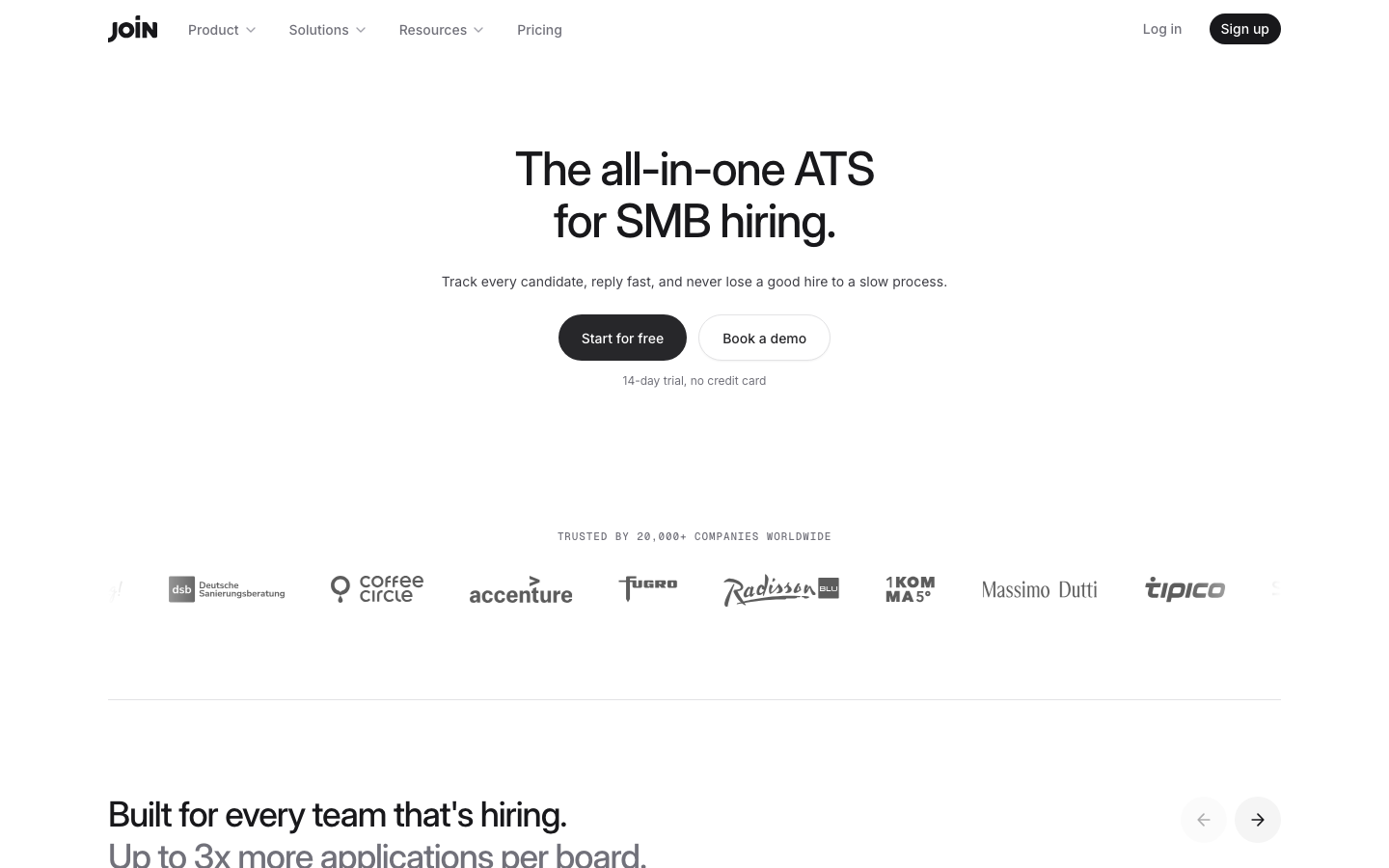
JOIN approaches the problem from the posting side: write a job once and push it out widely. Pricing is per job rather than per user, starting at €17 per job per month, billed annually. The vendor documents multiposting to 10+ boards, with a paid add-on reaching 250+.
Software Pros
- Per-job pricing fits companies that hire in bursts
- One posting reaches 10+ boards, with a paid route to more
- Strong European job board coverage, where rivals are thin
Software Cons
- No permanent free plan, only a 14-day trial
- Per-job pricing turns expensive with many roles open at once
- The tracking side is lighter than the dedicated systems here
JOIN Review
During my evaluation of JOIN, the pricing model was the most interesting part. Everything else here charges for people; this charges for roles, which matches how a small company actually spends. Hire two people in March and nothing in April, and you pay accordingly. The trade-off is thinner pipeline tooling, so this suits teams whose problem is reach rather than process.
Our Verdict
One Posting, Many Boards
*As pricing is subject to change, we are listing prices as they stand in August 2026
Manatal
Quick Overview
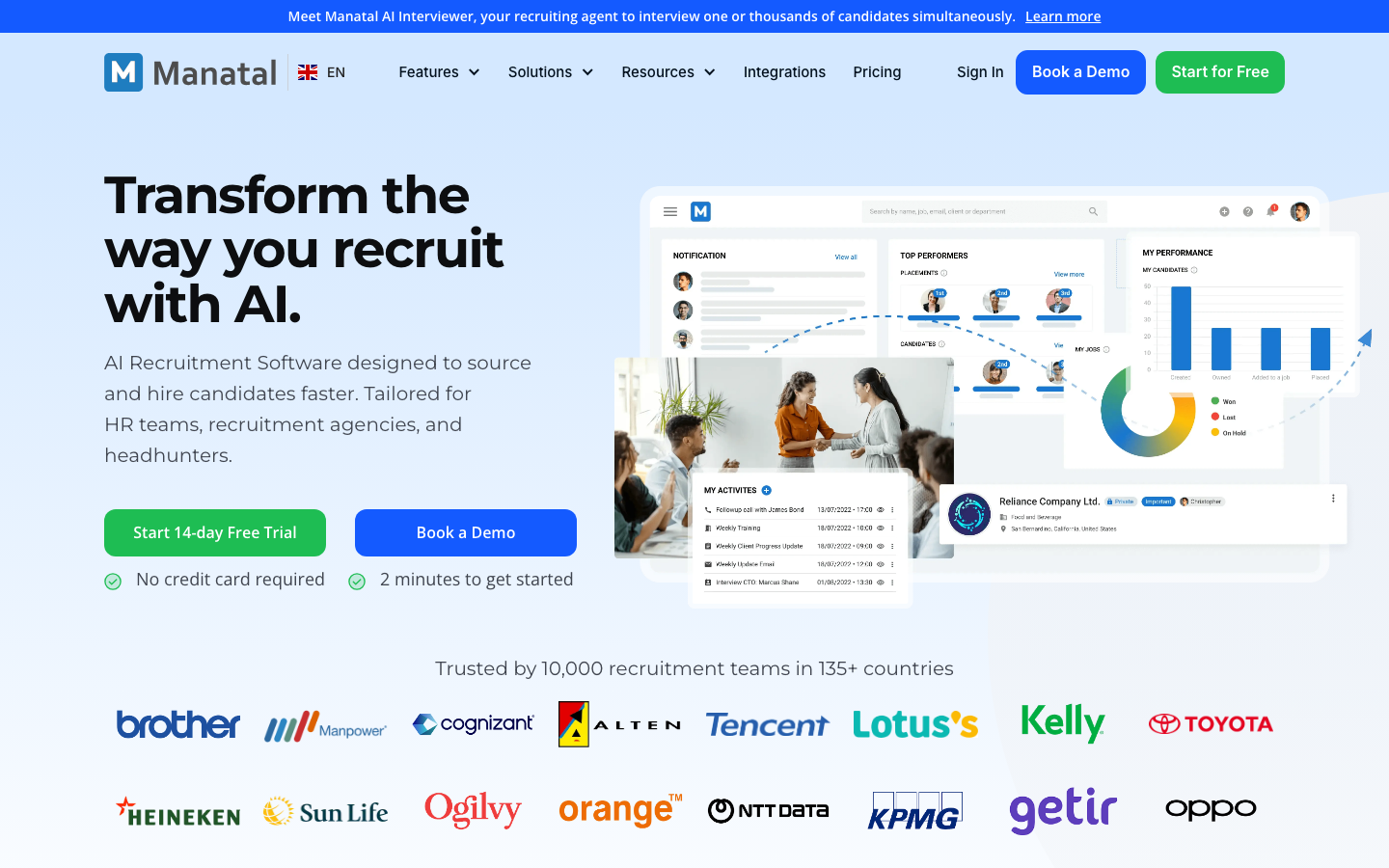
Manatal is a low-cost applicant tracking system that includes candidate scoring and profile enrichment. Professional is published at $15 per user each month, billed annually, covering 15 jobs and 10,000 candidates, and Enterprise at $35 lifts both limits.
Software Pros
- Among the cheapest published per-user rates here
- Candidate scoring helps when a posting draws hundreds of applications
- Profile enrichment fills the gaps a thin resume leaves
Software Cons
- No permanent free tier once the trial ends
- The Professional cap of 15 jobs binds on a company hiring fast
- Scoring is a helper, not a substitute for reading the shortlist
Manatal Review
I spent time with the scoring, and the honest read is that it is a useful filter rather than a decision-maker. Where it earns its keep is volume. A job that draws 400 applications is unmanageable by hand at this size, and an ordered list beats a reverse-chronological one. Treat it as an affordable pipeline with a sorting aid attached.
Our Verdict
Low-Cost Pipeline With Scoring
*As pricing is subject to change, we are listing prices as they stand in August 2026
Workstream
Quick Overview
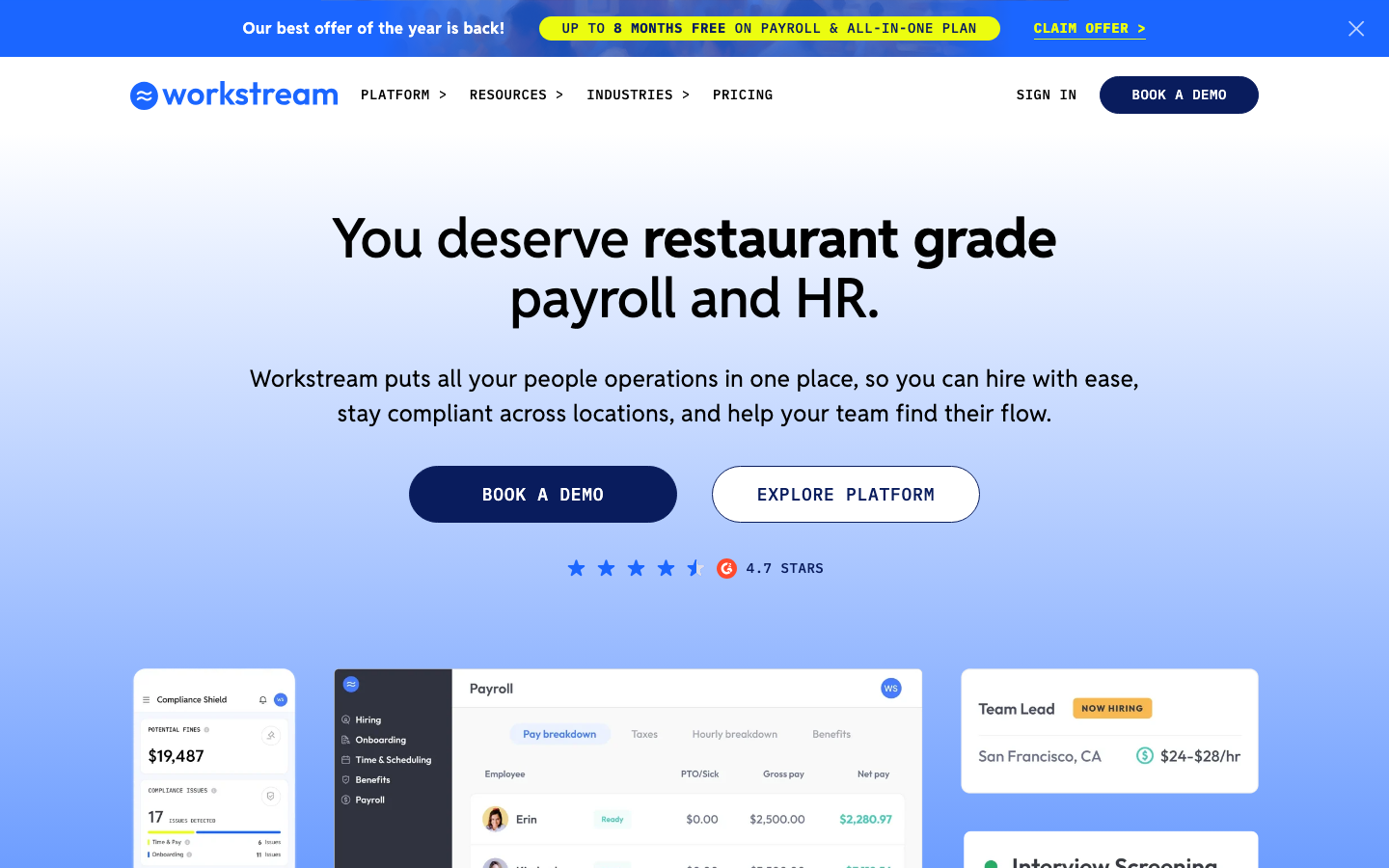
Workstream is built for hourly hiring, where candidates apply from a phone and the winner is often whoever replies first. Applications, screening, and interview scheduling run over text messages, and pricing isn’t published, so the cost comes as a quote.
Software Pros
- Text-based applications match how hourly candidates apply
- Automated screening and scheduling cut the delay that loses hires
- Built for high turnover, so repeat hiring is fast
Software Cons
- No published pricing, and no free plan or trial listed
- A poor fit for salaried, desk-based startup roles
- The feature set assumes volume you may not have
Workstream Review
The feature I kept coming back to is the speed of the text loop. In hourly hiring, the candidate who answers within an hour gets the job, and email simply does not move that fast. If you are staffing a restaurant or a warehouse, this is the right shape. If you are hiring engineers, it is not.
Our Verdict
Text-First Hourly Hiring
FAQs About Small Business Recruiting Software
What Is the Best Recruiting Software for Startups?
There is no single winner, because startups differ on how they hire. The deciding factors are the same three every time. What the tool costs without a sales call, how fast a founder can set it up, and how far a posting travels. Name your own constraint first, then use the comparison table above and keep only the two or three rows that answer it.
How Much Does Recruiting Software Cost for a Small Business?
Published rates run from roughly $15 a user each month at the low end to around $1,000 a year for an entry annual plan. All figures are as of August 2026. Some vendors charge per job instead of per user, which suits companies that hire in bursts. 3 of the 11 reviewed here publish nothing at all and quote instead, so budget an extra week for those conversations.
What Are the Benefits of Recruiting Software for a Small Business?
Four benefits show up almost immediately. Every applicant sits in one pipeline instead of scattered across a shared inbox, and one form pushes a role to many job boards at once. Candidates hear back in days rather than weeks, which matters when they are interviewing elsewhere. You also get basic numbers on where applicants come from and where they drop out.
Is There Free Recruiting Software for Small Businesses?
Genuinely free, yes, but only one option on this list. Breezy HR’s Bootstrap plan is free with no time limit, allowing unlimited users but only one active position at a time. Several other vendors advertise free access that turns out to be a 7- to 15-day trial. Read the wording carefully, because the two are very different commitments.
When Should a Small Business Upgrade to a Bigger Recruiting Platform?
Four signals usually arrive together. Interviews need a fixed structure so different managers score candidates consistently, and hiring approvals need to exist as a real workflow. Someone starts asking for reporting the tool cannot produce, and the system needs to exchange data with payroll and HR. That combination points to a mid-market platform.
Do Small Business Recruiting Tools Use AI?
Most do now, as a feature rather than as the product. Common uses include parsing a resume into structured fields, ranking applicants against the job description, and drafting a first version of a job post. That is different from the AI-native category, where a model conducts the interview or sources candidates on its own. At this price point, expect assistance, not autonomy.
Does Brex Offer Small Business Recruiting Software?
No. Brex is a corporate card and spend management platform, and it does not offer hiring software. The confusion is understandable, since many early-stage companies run Brex for company cards and expenses while hiring their first employees. For hiring, you need an applicant tracking system, which every tool reviewed above provides.
Does Expensify Have Small Business Recruiting Software?
No. Expensify handles expense reports, receipt capture and reimbursements, and it has no hiring or applicant tracking product. The product belongs to the finance stack, not the HR one. Small companies commonly run it alongside a dedicated hiring tool. Pair it with one of the platforms reviewed above rather than expecting it to cover both jobs.

Helen is Anywherer’s Market Analyst & Content Researcher, with extensive experience in analyzing global employment markets and HR technology trends. She is skilled at turning complex market data into clear, well-researched insights that inform every piece of content. With a strong grasp of the EOR, PEO, and international hiring space, Helen plays a key role in keeping Anywherer’s research accurate, up to date, and genuinely useful for readers.