This guide to the best AI recruiting software reviews 12 platforms in A to Z order. Each review covers what the AI actually does, what the tool costs, and where it falls short. Pick the one that fits the stage of hiring slowing you down.
What Are the Best AI Recruiting Tools in 2026?
Every tool here shares one trait: take the AI out and nothing usable remains. These are engines that read the open web, models that run the first interview by voice, and systems that infer skills a resume never lists. What puts a platform on this list of the best AI recruiting tools 2026 is that it owns a stage of hiring. It doesn’t simply store candidates who arrived on their own. The audience is talent acquisition leads, recruiters, HR managers, and founders.
That draws a hard line. Search for best recruiting software with AI features, and you land on pipeline products that bolted a summarizer and a match score onto manual workflows. Those are a different purchase on a different budget. Both sit in the same stack, and usually should. This page covers only the layer where the model does the work.
Why now? SHRM, citing its own Talent Trends research, reports that 51% of organizations now use AI in recruitment. Recruiting is where AI landed first inside HR, and the first place regulators looked. Annex III of the EU AI Act classifies systems that filter applications and evaluate candidates as high-risk. Adoption and obligation arrived together.
That attention is not a footnote. It decides which vendors publish bias audits, which show a score breakdown, and which just return a ranking. Anyone comparing this category against AI tools across HR will find recruiting carries the heaviest disclosure burden of any people function.

INSIGHT: How many recruiting teams actually use AI in 2026?

Recruiting is the HR function where AI adoption moved fastest, mostly because of application volume.
- SHRM, reporting its Talent Trends research, states that 51% of organizations now use AI in recruitment.
- LinkedIn’s Future of Recruiting research put 37% of organizations at actively integrating or experimenting with generative AI in hiring, up from 27% a year earlier, and found those teams save roughly 20% of a work week.
- What changes in practice is narrower than the headlines suggest. These tools are bought to interview everyone or to find people who never applied. The final decision stays with a person.
So which one wins? None of them. The best AI tools for recruiting split into three jobs. Sourcing engines find people, AI interviewers screen everyone who applies, and intelligence platforms model skills across a workforce. A team drowning in applicants and a team with none need opposite products.
Below, I’ve reviewed 12 of the leading platforms in A to Z order. If you are scanning for the best AI-powered recruiting software 2026, jump straight to the family that matches your problem and skip the other two.
INSIGHT: Sourcing, interviewing, or intelligence?
The best AI-powered recruiting software for one team is the wrong tool for another, because the 12 platforms here do three different jobs.
- AI sourcing engines (Findem, hireEZ, Juicebox, SeekOut) find and engage people who never applied. They price per seat and push candidates into whatever system you already run.
- AI interviewers and screeners (Alex, Braintrust AIR, HireVue, Hubert) interview every applicant and return a ranked, explainable shortlist. Candidate experience is the risk you manage here.
- Talent intelligence platforms (Eightfold AI, Phenom) model skills and potential across internal and external pools, on enterprise contracts with long implementations.
Sources:
Best AI Recruiting Tools 2026 Comparison Table
Read the second column first. It names the job each model is built to do. That matters more than any score when you compare the best AI-powered recruiting software against your own hiring problem.
The last column serves anyone hunting the best-rated AI recruiting tools, but treat four scores carefully. Alex, Findem, Hubert, and especially Juicebox have small samples, and an average of three reviews carries no weight.
| Tool | What the AI does | Hiring stage owned | Works with your ATS | G2 rating |
|---|---|---|---|---|
| Alex | Voice and video AI interviews | Screening, interviewing | Yes, 33 documented ATS integrations | 4.8 (29) |
| Braintrust AIR | AI-led first interview and resume ranking | Matching, interviewing | Yes, 50+ ATS integrations claimed | 4.5 (889) |
| Eightfold AI | Skills-inference matching | Matching, intelligence | Yes, enterprise HCM and ATS | 4.2 (209) |
| Findem | Attribute-based talent search | Sourcing | Yes, feeds your existing ATS | 4.7 (35) |
| HireVue | AI-scored structured interviews | Interviewing, assessment | Yes, enterprise ATS and HCM | 4.1 (255) |
| hireEZ | Agentic open-web sourcing | Sourcing, engagement | Yes, layers on Workday, iCIMS, SAP | 4.6 (264) |
| Hubert | Deterministic interview scoring | Screening | Yes, 20+ ATS integrations | 4.7 (29) |
| Juicebox | Natural-language people search | Sourcing | Yes, 41 ATS and 21 CRM integrations | 3.7 (3) |
| Noon AI | Autonomous sourcing calibrated by feedback | Sourcing, engagement | Yes, 40+ ATS integrations | No reviews yet |
| Phenom | Applied AI agents and ontologies | Engagement, matching | Yes, enterprise ATS and HCM | 4.3 (430) |
| SeekOut | AI search across technical sources | Sourcing, intelligence | Yes, feeds your existing ATS | 4.5 (792) |
| ZoomInfo | AI-assisted sourcing on a verified contact database | Sourcing, engagement | Yes, exports to ATS and CRM | 4.5 (8,895) |
Each rating belongs to that tool’s individual G2 product profile, pulled in September 2026.
Best AI Recruiting Tools by Use Case
Team size decides how much of this you can absorb, and the stage that is breaking decides which product fixes it. A five-person startup cannot run a six-month implementation, and one self-serve seat will not clear 40,000 applications. Every group below runs A to Z, and position implies nothing.
Best AI Recruiting Tools for Small Businesses and Startups
Braintrust AIR and Juicebox are the two you can start using this week. Both sell to companies with no talent acquisition function. Juicebox runs a free tier and a published seat price; Braintrust AIR handles the first interview, so a founder never sits through 40 screening calls. Anyone searching for the best AI recruiting tools for startups is solving for time, not volume.
The best AI recruiting software for small businesses does not replace your warmest channel. Referrals stay the cheapest source of hire, so employee referral program software belongs beside AI sourcing rather than under it.
Best AI Recruiting Software for Enterprise
Eightfold AI, Findem, HireVue, and Phenom are built for this scale. You are buying coverage across internal and external talent, deep HCM integration, and scoring documentation you can hand to legal. Expect an implementation measured in months. The best AI recruiting software for enterprise trades speed for defensibility and reporting depth.
Best AI Tools for High-Volume Hiring
Alex, HireVue, and Hubert exist because no human screens 8,000 applicants for 200 warehouse roles. All three interview or assess every applicant and return a scored shortlist, with scheduling automated. The best AI tools for high-volume recruiting are judged on completion rate and consistency. An interview half your applicants abandon has made the funnel worse.
Best AI Sourcing Tools for Tech Recruiting
Findem, hireEZ, Juicebox and SeekOut all index far past a job board. SeekOut reads GitHub, patents and publications, which is why it appears in shortlists for cleared and scientific roles. Juicebox takes a plain-language brief; hireEZ and Findem handle outreach. The best AI sourcing tools for tech recruiting earn their price when the person you need never opens a careers page.
Best AI Recruiting Tools for Staffing Agencies
Alex, hireEZ, and Hubert fit agency economics because agencies carry the screening cost for somebody else’s role. Interview automation converts into margin per placement, and both interview tools write scores back to the agency record. Firms choosing between the best AI recruiting tools for staffing agencies and hiring another consultant should price both per placement. It helps to see how recruitment agencies in different countries staff their delivery teams.
AI Recruiting Software Pricing
Four different units get sold here, and confusing them is how budgets go wrong. Sourcing tools charge per recruiter seat. AI interviewers charge per interview or as a platform fee. Enterprise intelligence platforms quote for the deployment, with implementation billed separately. Braintrust AIR adds a fourth shape: candidates from its talent network carry a per-hire fee on top of the license.
| Tool | Pricing model | Free plan | Starting price |
|---|---|---|---|
| Alex | Platform fee, quote-based | No | Custom pricing |
| Braintrust AIR | Platform fee plus per hire from the network | No | Custom pricing |
| Eightfold AI | Quote-based enterprise contract | No | Custom pricing |
| Findem | Quote-based, per seat | No | Custom pricing |
| HireVue | Platform fee, quote-based | No | Custom pricing |
| hireEZ | Per seat | Trial only, 7 days | $494 per month, solo recruiter |
| Hubert | Per interview, volume tiers | No | Custom pricing |
| Juicebox | Per seat | Yes | $99 per seat monthly |
| Noon AI | Flat plan, quote-based, unlimited seats | Trial only | Custom pricing |
| Phenom | Quote-based enterprise contract | No | Custom pricing |
| SeekOut | Per seat | Trial only, 14 days | $149 per month, paid annually |
| ZoomInfo | Quote-based, per seat | No | Custom pricing |
As pricing is subject to change, prices are listed as of August 2026.
INSIGHT: Why is AI recruiting software priced so differently?
Because the tools sell different units: a recruiter seat, an interview, a platform, or a hire.
- 8 of the 12 name no figure whatsoever. The exceptions: hireEZ at $494 a month for a solo recruiter, Juicebox at $99 a seat monthly with a free tier below it, and SeekOut Recruit Core at $149 a month paid annually.
- Per seat: Findem, hireEZ, Juicebox and SeekOut. Per interview or per candidate: Hubert, with Alex and HireVue charging a platform fee instead. Per hire on top of the platform: Braintrust AIR, when candidates come from its network.
- The trade-off decides who overpays. Seat pricing scales with the number of recruiters, interview pricing scales with applicant volume, so an identical contract can be cheap for a five-recruiter team hiring 2,000 people and expensive for a twenty-recruiter team hiring 200.
How to Choose AI Recruiting Software
I would name the bottleneck out loud first, because it splits this list in half. Too few candidates means a sourcing engine. Too many applicants means a screening tool. Slow decisions mean an intelligence platform.
Next, decide whether the AI should act or recommend. An agent that sends outreach and books interviews unprompted is a bigger commitment than a ranking a recruiter reviews each morning. My rule when shortlisting the best AI recruiting software for 2026 is simple. Start with recommendation, and hand over autonomy once the output earns it.
Then ask the two questions vendors dislike. Can you show me why this candidate scored what they scored, and has the model been bias-audited? New York City requires an annual bias audit and advance notice to candidates. The EU AI Act puts candidate evaluation in its high-risk tier. Vendors vary widely in what they hand over.
Candidate experience deserves the same scrutiny. Will applicants be told they are speaking to an AI, can they ask for a human, and what share finish? A completion rate below your current phone screen is a warning.
Two practical checks close it out. The integration has to run both ways, so the tool either replaces your pipeline system or writes scores back into it. And screening is not assessment: narrowing a pool differs from measuring ability, which is what pre-employment assessment tools are validated to do. Last, ask about geography, since several sourcing products carry much better data in the United States.
Top 12 AI Recruiting Tools and Software for 2026
I worked through each platform directly: vendor documentation, pricing pages, G2 profiles, and the AI capability each one is built around. The mix runs from AI interviewers like Alex and Hubert, to sourcing engines like Juicebox and SeekOut, to talent intelligence like Eightfold AI and Phenom. The best AI recruiting software 2026 has to offer is not one product but three families sharing a category page.
I’m listing all providers in alphabetical order to keep this comparison neutral.
Alex
Quick Overview
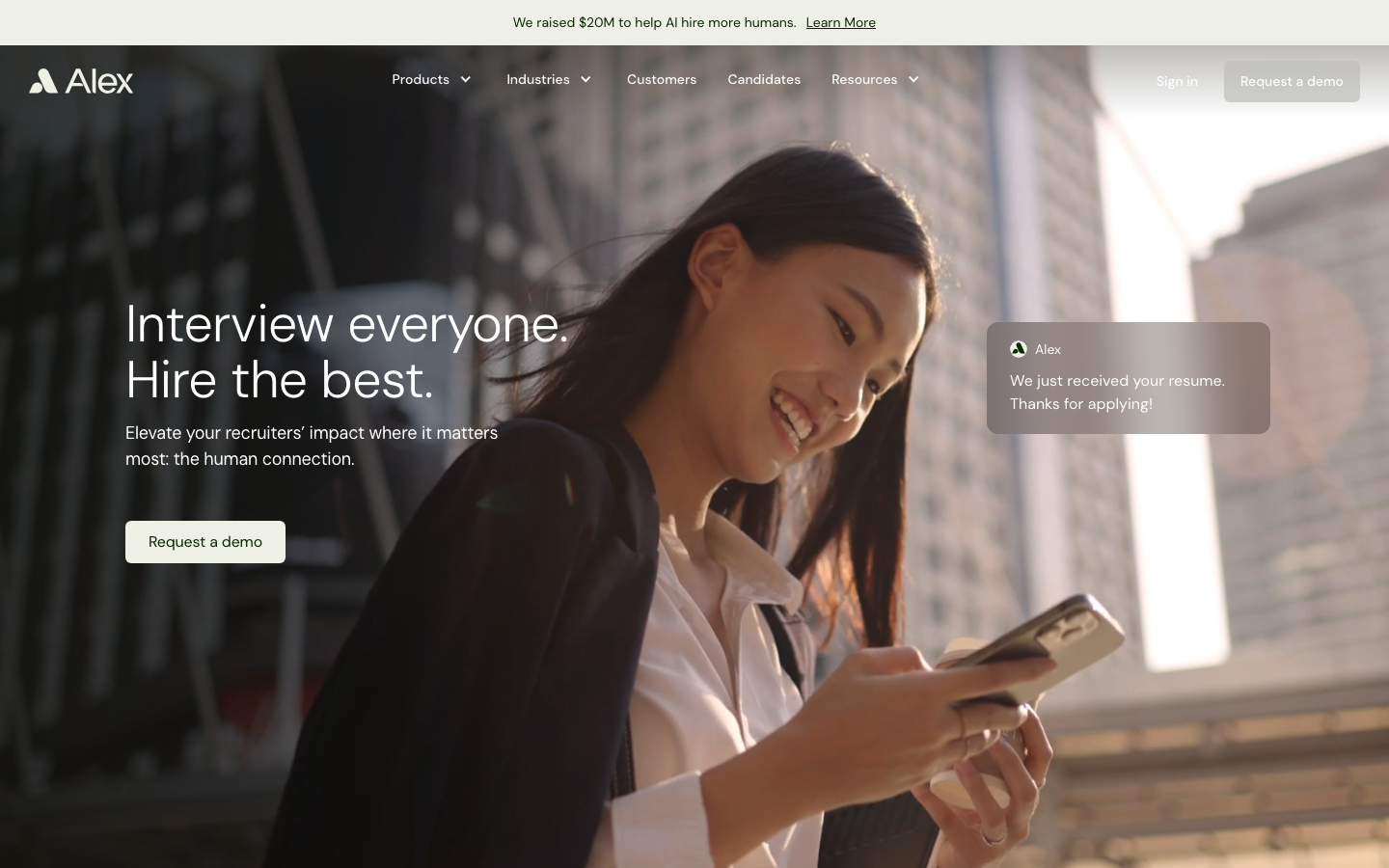
Alex, the product of Apriora, is an autonomous AI recruiter. It interviews by voice or video, screens resumes, verifies identity, and books the next step without a coordinator. The vendor reports interviewing one million candidates and supporting 33 ATS integrations.
Software Pros
- Adaptive conversational interviews by voice, video, phone, SMS or WhatsApp
- Verify handles identity checks and fraud detection on every candidate
- Coordinator schedules the follow-up automatically, removing the slowest step in volume hiring
Software Cons
- Candidates expecting a human-first conversation may disengage from a voice interview
- Nothing is published on cost, so any budget starts with a demo call
- Outcome claims such as faster time-to-hire are unconfirmed vendor figures
Alex Review
While reviewing Alex, the fraud detection separated it from the rest of the interview group. Confirming that the person interviewing is the person applying has quietly become a real problem. Strip the AI out, and no product remains: Alex is the interviewer, not a place to store interviews.
Our Verdict
Autonomous Voice Interview Recruiter
Braintrust AIR
Quick Overview
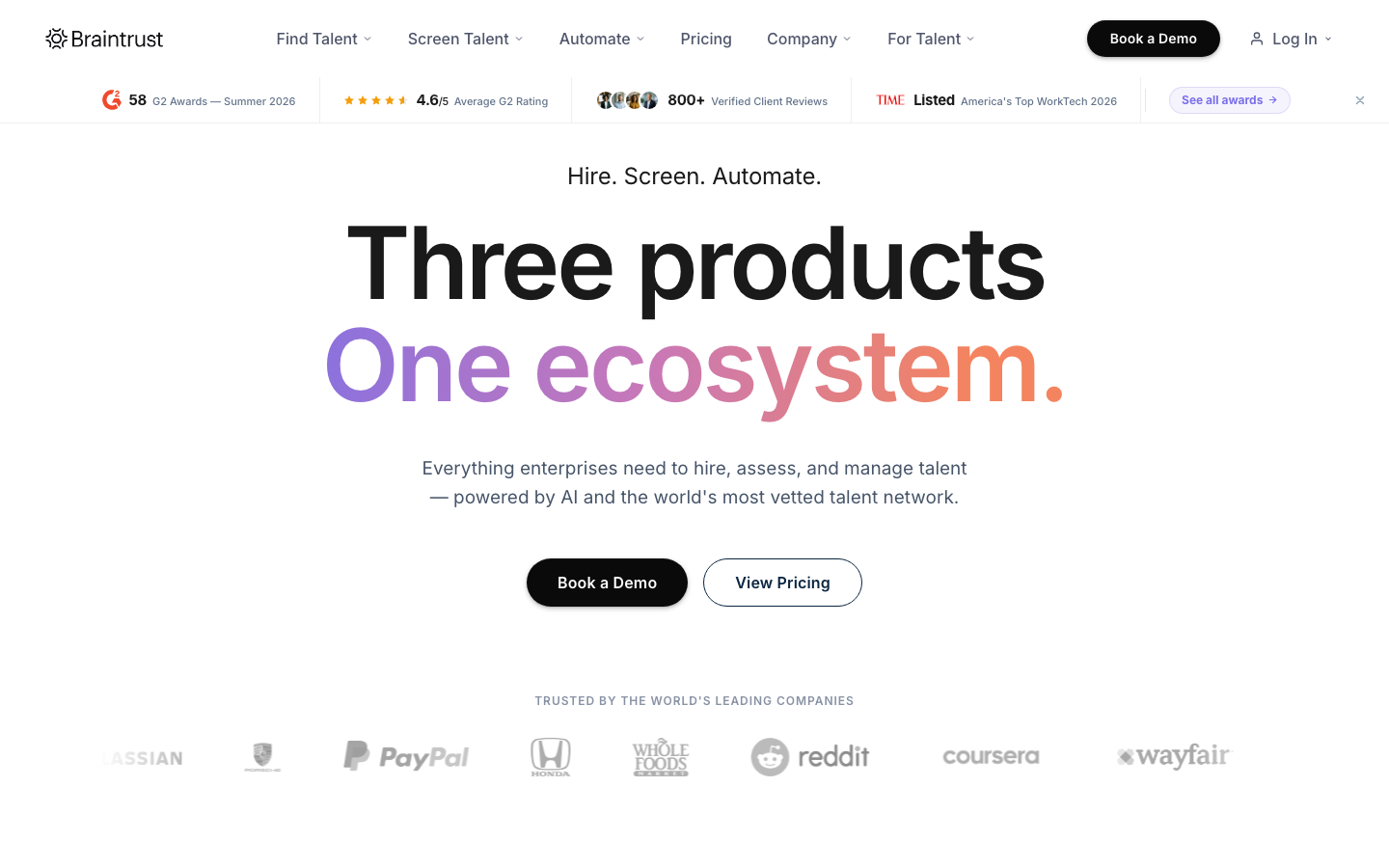
Braintrust AIR is the AI recruiting platform built by Braintrust, a talent network. It ranks applicants by skills and career trajectory, runs an adaptive first-round voice interview, and returns a composite score. The vendor claims 16+ languages and 50+ ATS integrations.
Software Pros
- Semantic resume matching surfaces adjacent skills that a keyword search would miss
- Asynchronous AI voice interviews run around the clock, on the candidate’s schedule
- Works on your own applicants or on Braintrust’s pre-vetted network
Software Cons
- Some candidates find an AI-led first round impersonal and drop out
- License and talent network are two separate commercial arrangements
- Published outcome claims, including large time-to-hire reductions, are vendor figures
Braintrust AIR Review
What stood out to me is that this product wears two hats. Most tools here work only on applicants you already have; Braintrust AIR can also supply people from its own network. Those are two separate commercial arrangements, so clarify which you are buying. Without its scoring and interview models, it would be a marketplace.
Our Verdict
AI Interviews Plus Talent Network
Eightfold AI
Quick Overview
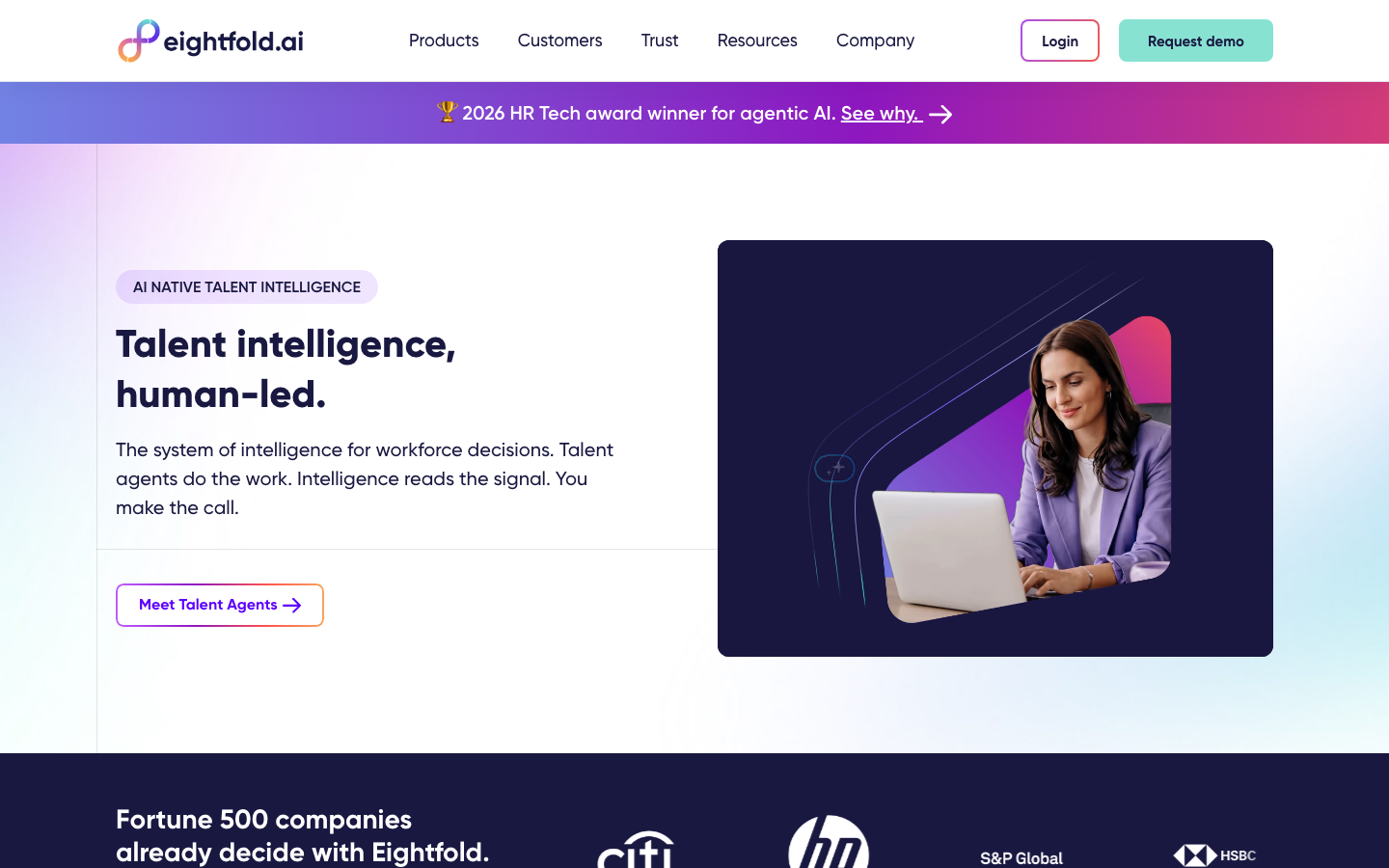
Eightfold Talent Acquisition applies a deep-learning model to career data, inferring skills and potential rather than reading keywords off a resume. It owns matching and talent intelligence, ranking external applicants and rediscovering internal people for the same role. The recruiting product now includes AI Interviewer and Talent Agents.
Software Pros
- Skills inference reads capability from career history, not from a self-reported list
- Talent rediscovery surfaces past applicants already sitting in your database
- Talent Agents automate steps of the recruiting workflow under recruiter oversight
Software Cons
- Model quality depends on how much clean career data you supply
- Contract size and a months-long rollout rule it out below enterprise scale
- The breadth of the wider suite makes the recruiting-only scope harder to price
Eightfold AI Review
During my evaluation of Eightfold, the inference layer is what justifies the contract. It reads a career path and proposes what someone could do next, a different question from what they have done. That output feeds straight into skills gap analysis software on the workforce planning side. Remove the model, and you have an expensive database.
Our Verdict
Skills Inference at Enterprise Scale
Findem

Quick Overview
Findem builds what it calls 3D data on candidates, assembling attributes from career context rather than resume text. A recruiter can search for someone who scaled a team through Series B. It owns sourcing and talent analytics, with agents for screening and scheduling layered on top.
Software Pros
- Attribute-based search answers questions a keyword query cannot express
- Agentic features handle job posting, application boosting, screening, and scheduling
- Market and competitor talent analytics support workforce planning, not just requisitions
Software Cons
- Attribute quality varies by role type and by market outside the United States
- No published pricing, and the platform is aimed at enterprise budgets
- Findem publishes comparison content about rivals, so its own material is not neutral
Findem Review
I spent time with the search syntax, and that is the real differentiator. Describing a career shape rather than a job title changes what comes back, especially for leadership roles where a title says nothing. Take the attribute model away, and Findem is another profile aggregator.
Our Verdict
Attribute-Based Talent Search
HireVue
Quick Overview
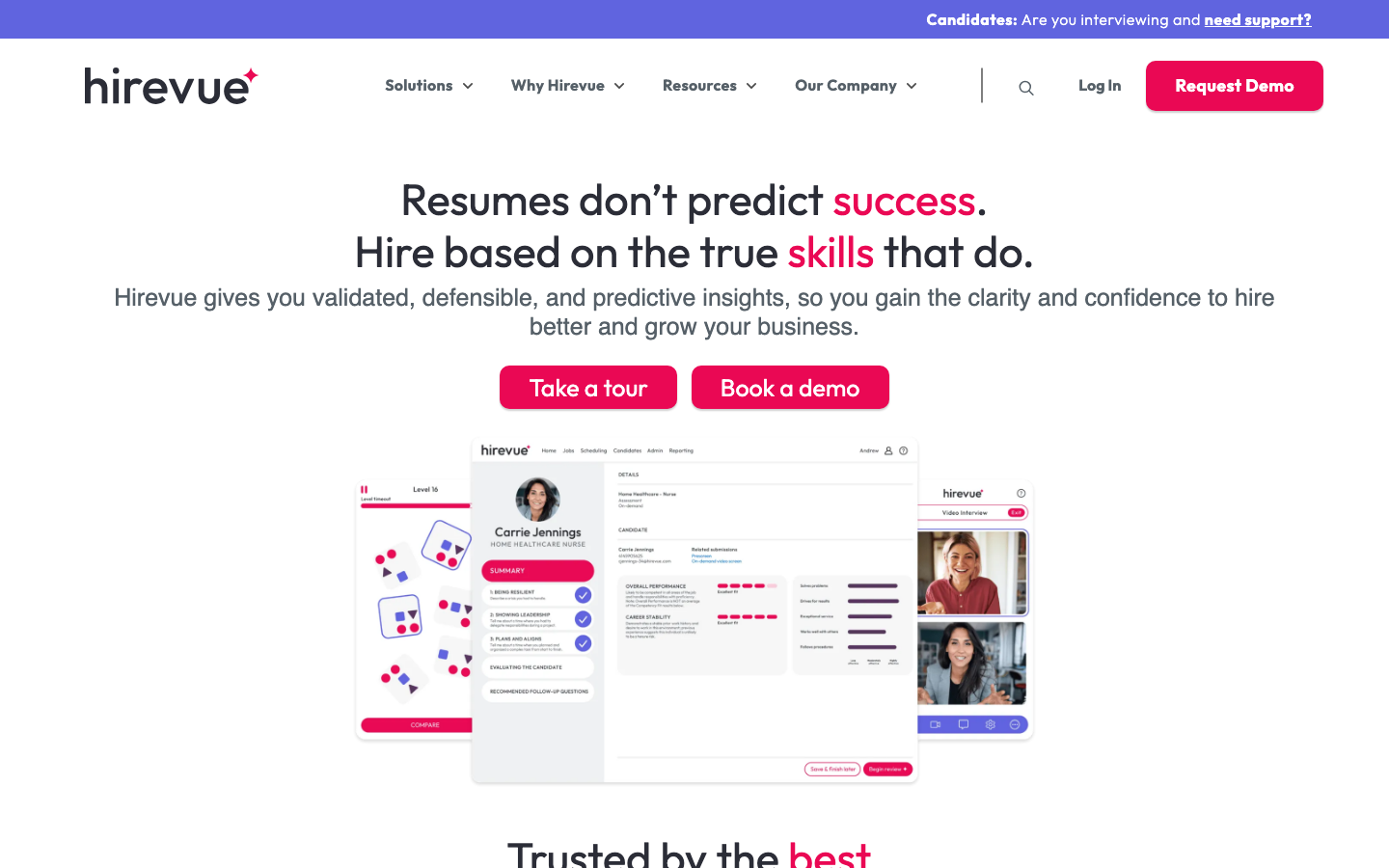
HireVue runs structured, AI-scored interviews and skills assessments at scale. Its platform documents an AI Interviewer, Match and Apply, Virtual Job Tryout, and game-based and technical assessments. The vendor states an assessment and interview can be finished in under 20 minutes.
Software Pros
- Validated assessments sit alongside the interview, so scoring rests on measured ability
- Structured formats apply the same questions and the same scoring to every candidate
- Scheduling automation and workflow tooling handle enterprise interview logistics
Software Cons
- Recorded, AI-scored interviews still feel impersonal to a share of candidates
- The platform stops at interviewing and assessment, so it needs a pipeline beside it
- Essential and Premium packages are named on the site with no prices attached
HireVue Review
The feature I kept coming back to is the assessment library, which separates this from the conversational interviewers. HireVue measures something with published validation behind it, rather than scoring how an answer was phrased. The company moved away from facial analysis in 2021. Without the scoring models, it is a video recorder.
Our Verdict
Skills Assessment at Hiring Volume
hireEZ
Quick Overview
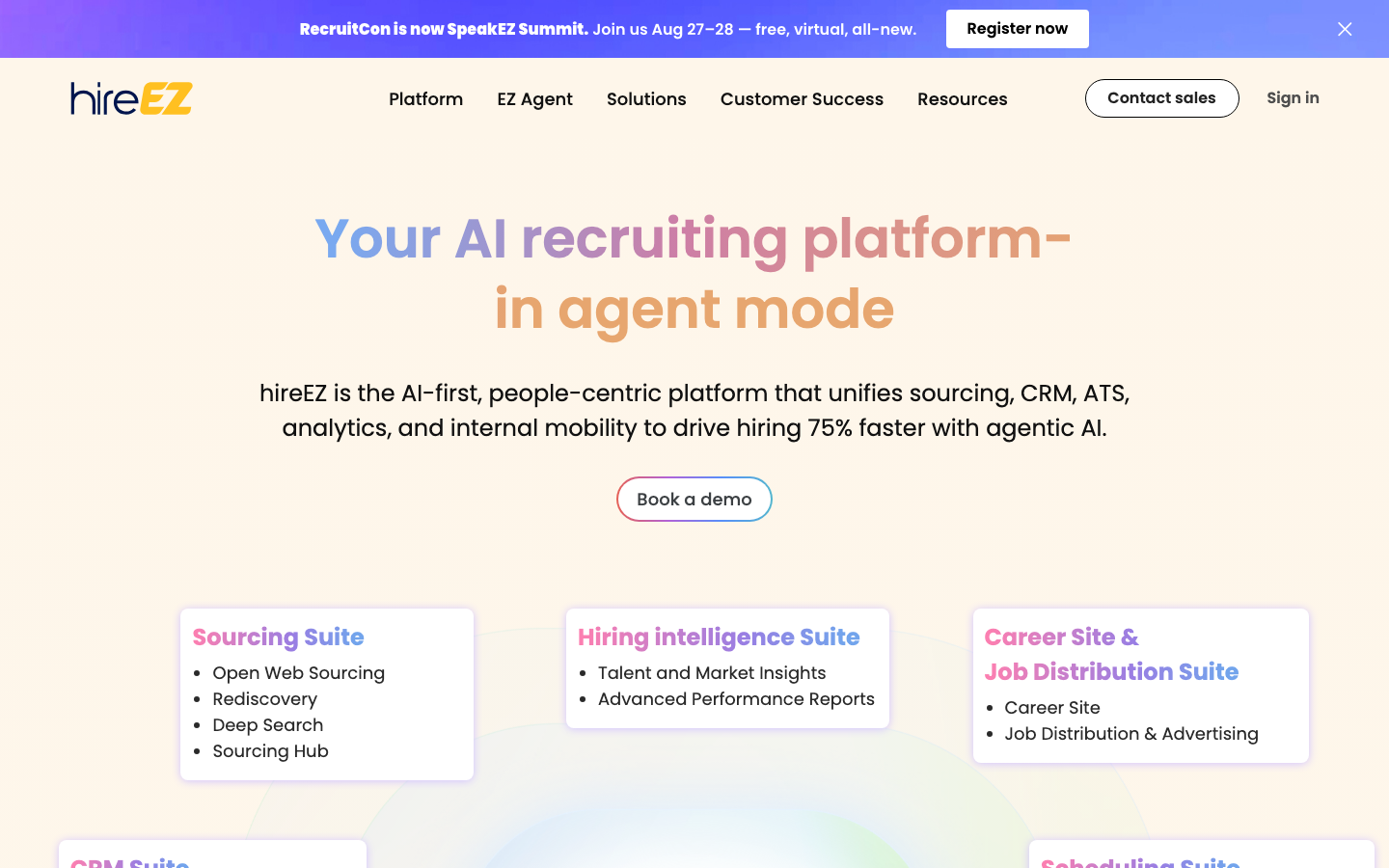
hireEZ, formerly Hiretual, is an agentic sourcing and outbound platform. EZ Agent works the open web to build and rank candidate lists, then runs email, SMS, and InMail sequences from the same place. The vendor states sourcing across 45 or more platforms. It layers on your existing pipeline.
Software Pros
- EZ Agent sources and ranks autonomously instead of returning a raw result list
- Outreach sequences, conversational AI screening, and an AI scheduler sit in one workflow
- Solo Recruiter pricing is published at $494 a month, rare in this category
Software Cons
- Enterprise pricing is configured per deployment, so $494 is not a guide
- Autonomous outreach needs review, since the agent is writing in your company’s name
- hireEZ publishes alternatives content about rivals, so its comparisons are not neutral
hireEZ Review
While reviewing hireEZ, the published price for a single recruiter stood out in a category that quotes everything. Beyond that, the agent model is the product: it runs searches continuously, not only when somebody remembers to run it. Take the agent away, and you have a Boolean builder and a mail merge.
Our Verdict
Agentic Open-Web Sourcing Platform
*As pricing is subject to change, we are listing prices as they stand in August 2026
Hubert
Quick Overview
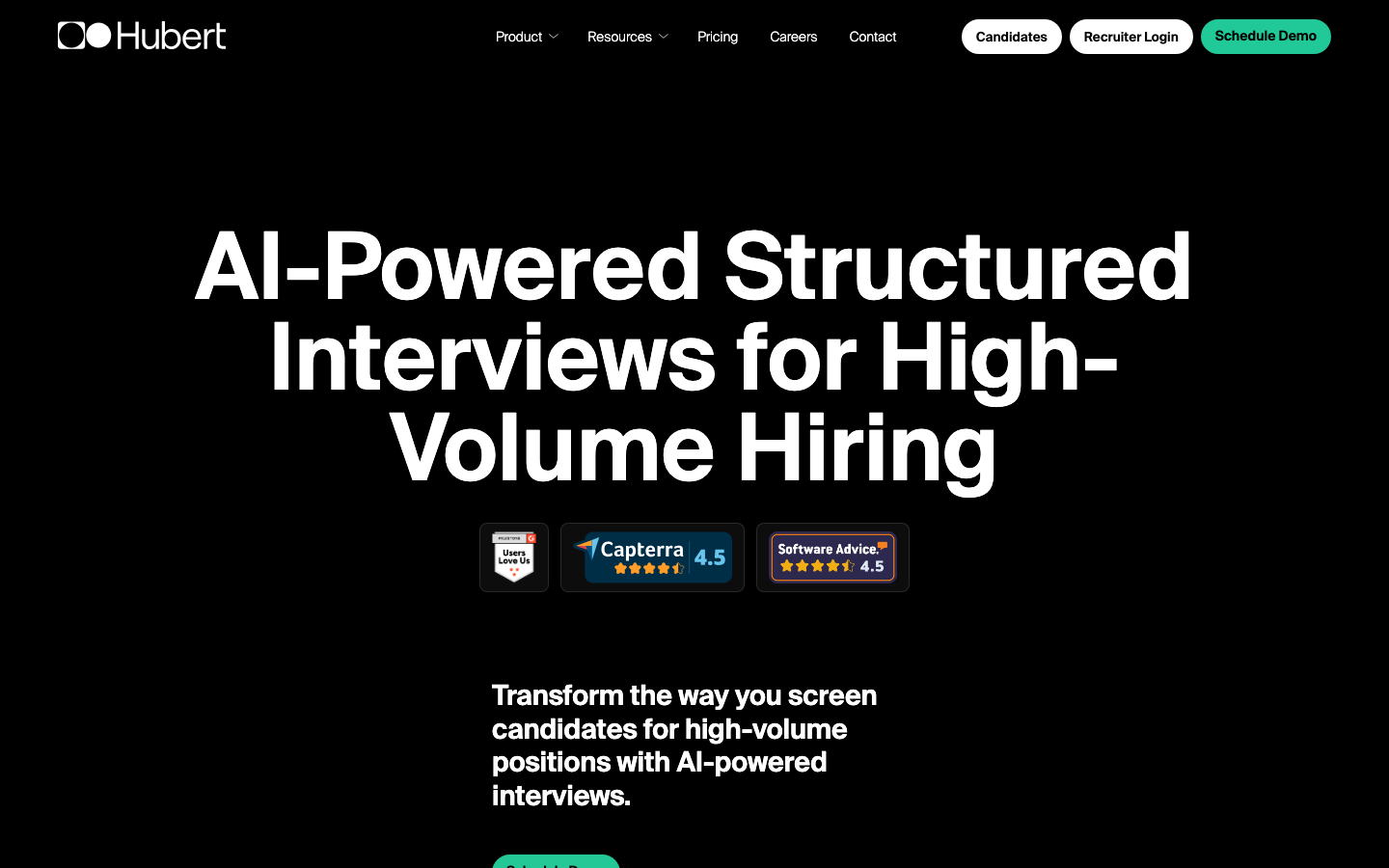
Hubert runs structured, competency-based screening interviews by text or voice, around the clock. Two layers do the work: a conversational interview layer and a deterministic scoring layer, so the same answer always earns the same score. The vendor reports 96 percent average completion and states GDPR and EU AI Act compliance.
Software Pros
- Deterministic scoring makes results reproducible, which is precisely what an audit asks for
- European hosting and explicit EU AI Act framing suit non-US buyers
- Integrates with 20+ pipeline systems, so shortlists land where recruiters work
Software Cons
- Some applicants still prefer a person for a first screen, whatever the completion rate says
- Pricing starts at 5,000 interviews a year, too much volume for a small employer
- Structured screening is deliberately narrow and does nothing for sourcing
Hubert Review
What stood out to me about Hubert is that it refuses, by design, to improvise. A model that scores one interview differently on two runs cannot be defended to a regulator. The deterministic layer prevents exactly that, which makes this the clearest European answer here. Without it, Hubert is a chatbot nobody can rank.
Our Verdict
Deterministic AI Screening Interviewer
Juicebox
Quick Overview
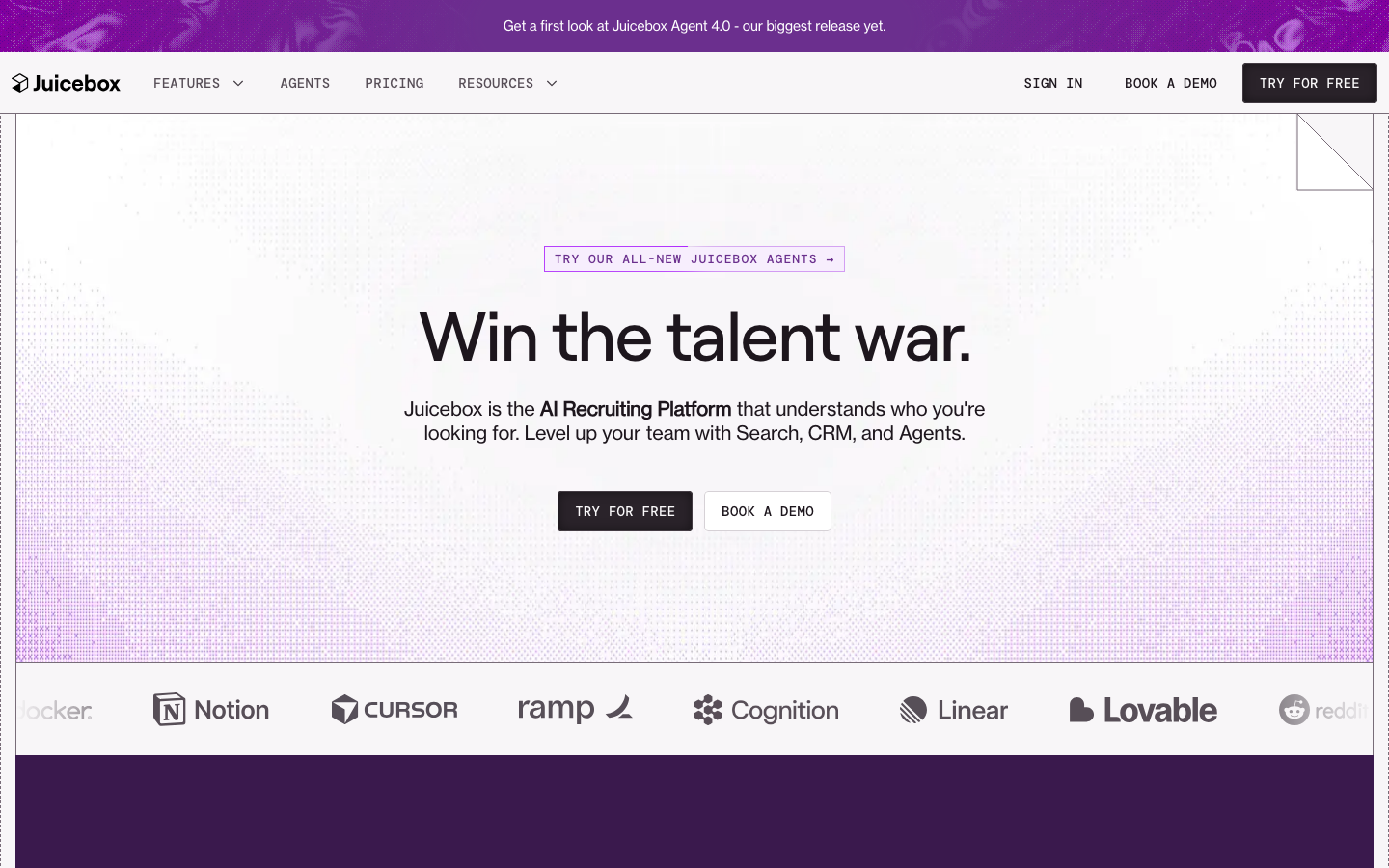
Juicebox lets a recruiter describe the person they want in plain English and returns matches. The vendor states a reach of 800M+ profiles across 30+ sources, plus 41 ATS and 21 CRM integrations. AI Agents then run outreach and follow-ups. It is the only tool here with a self-serve entry point.
Software Pros
- Natural-language search removes Boolean syntax from the sourcing workflow entirely
- A free tier and a published $99 seat price make it testable today
- AI Agents run sourcing and outreach continuously, as a paid add-on
Software Cons
- Its G2 profile carried only three reviews, so the score means little
- Agents are priced separately at $199 each, which changes the arithmetic quickly
- Coverage is strongest for technical and startup hiring, thinner in other markets
Juicebox Review
During my evaluation of Juicebox, typing a sentence and getting a usable shortlist back was the moment the category clicked. That is an interface change, not a feature. The caveat is evidence: three reviews is not a track record. Without the language model, there is no search, only an index.
Our Verdict
Natural-Language Sourcing Engine
*As pricing is subject to change, we are listing prices as they stand in August 2026
Noon AI
Quick Overview
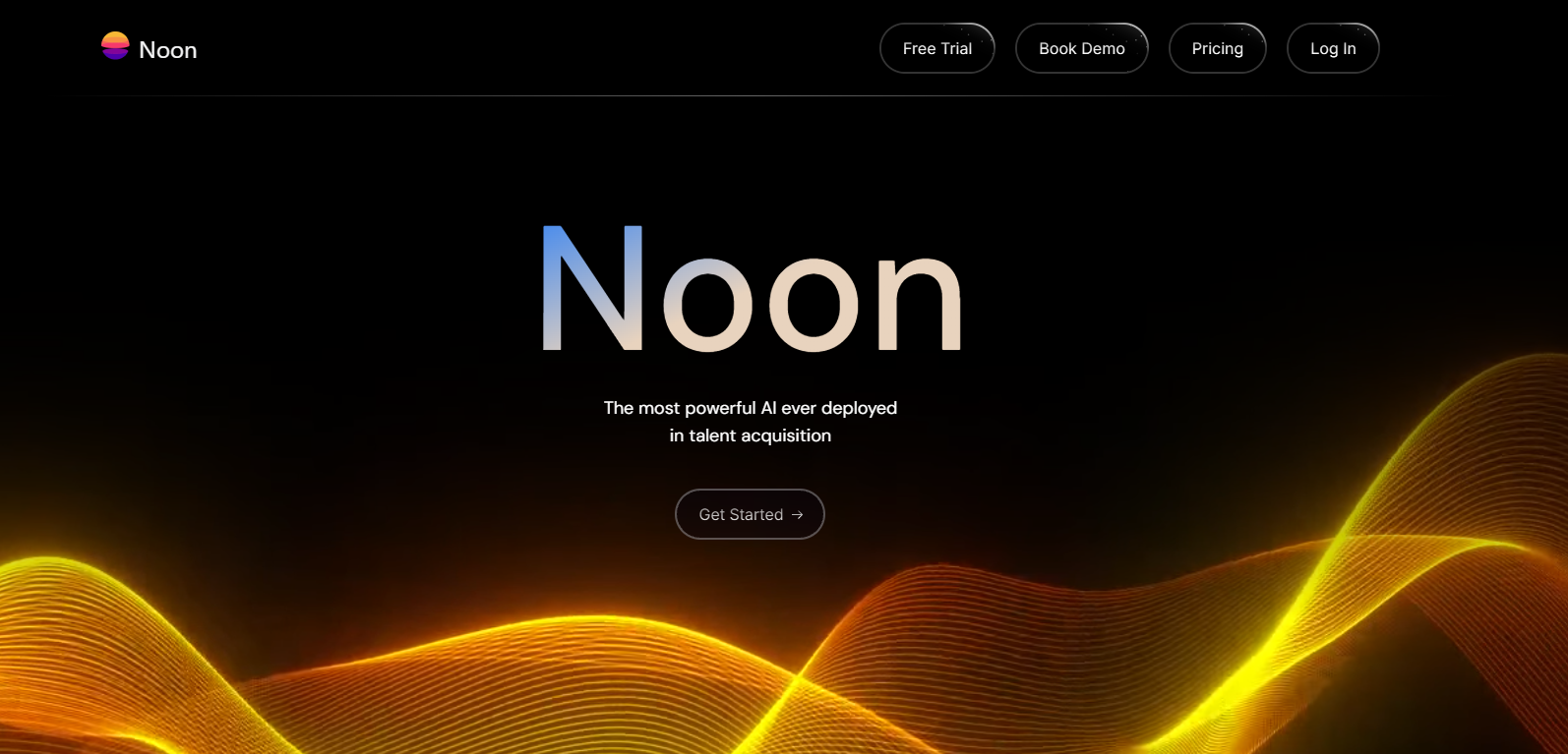
Noon AI is an autonomous AI sourcing agent that does the full job of a talent sourcer. It searches the open web, scores every profile against your role criteria, and recalibrates from hiring manager feedback. Personalized email and SMS outreach follows, and the vendor states 40+ ATS integrations.
Software Pros
- Searches the whole web rather than LinkedIn alone, and keeps sourcing as new candidates enter the market
- Per-role feedback calibrates the agent, and changed criteria re-score candidates already in the pipeline
- One plan with unlimited seats, contacts, and sourcing, so cost does not grow with the recruiting team
Software Cons
- No published price, so a quote requires a demo call
- No G2 reviews yet and three on Trustpilot, so independent evidence is thin
- The claim that it outperforms human sourcers is a vendor statement without a published benchmark
Noon AI Review
While reviewing Noon AI, the pricing model stood out as much as the agent. Every other sourcing tool here charges per recruiter seat; Noon sells one plan with unlimited seats and refunds annual contracts if saved recruiter time falls short of ten times the fee. Network Sourcing, which mines your team’s connections for referral candidates, is worth testing too. It is built for teams whose bottleneck is finding people, not screening them.
Our Verdict
Autonomous AI Sourcing Agent
Phenom
Quick Overview
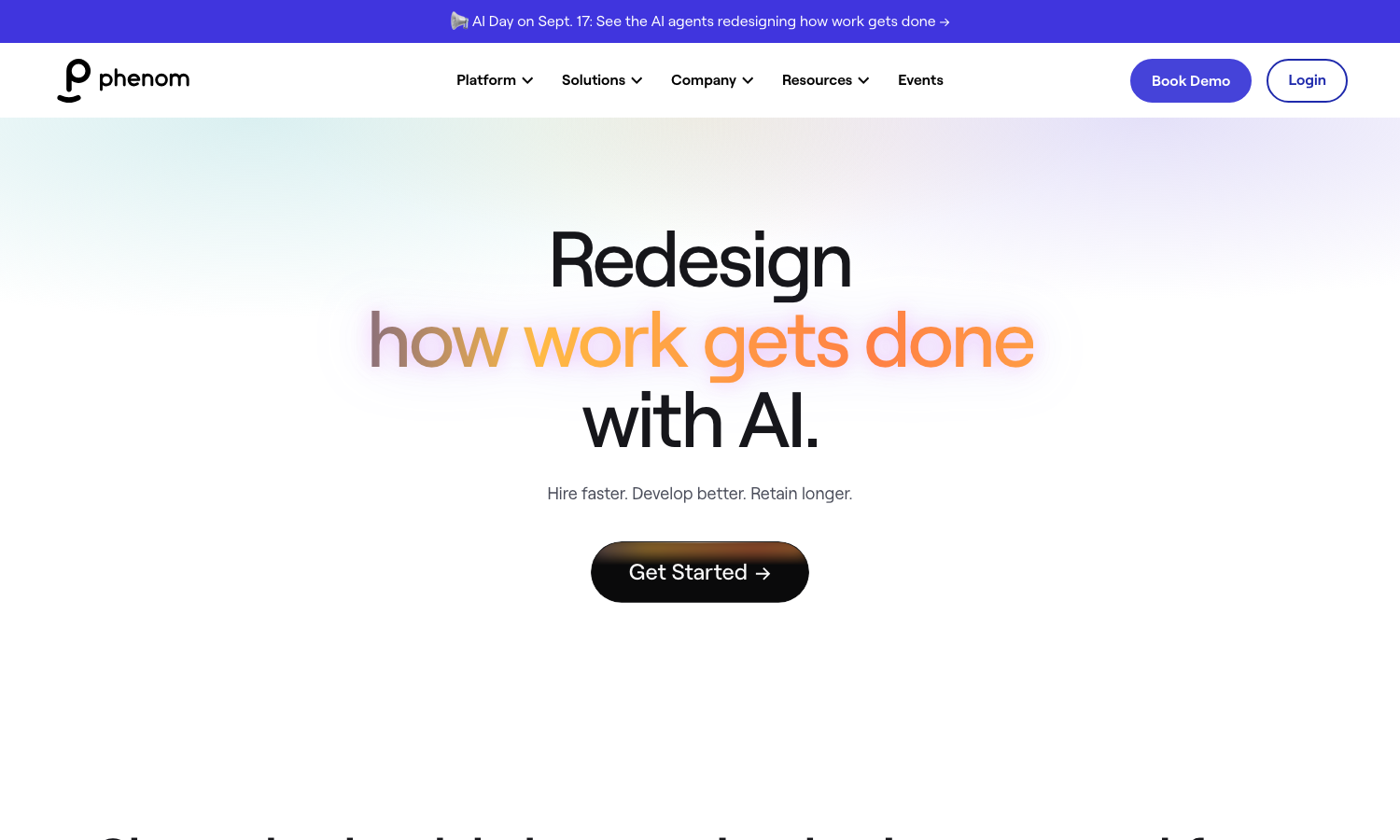
Phenom is an enterprise talent experience platform built on Applied AI. Engines, ontologies, explainable AI, and agents automate screening, scheduling, and engagement across career sites and a talent CRM. It owns engagement and matching, with high-volume hiring a documented use case.
Software Pros
- Industry-specific ontologies mean the matching understands sector vocabulary
- The conversational career site and CRM keep candidates engaged before they apply
- Agents automate screening and scheduling steps across a large requisition load
Software Cons
- A recruiting-only buyer pays for platform reach they may never use
- Enterprise deployment is a project involving IT, not a recruiting purchase alone
- No published pricing, and configuration depth drives the real cost
Phenom Review
I spent time with the engagement side, where Phenom differs from the matching platforms. It works on people before they apply, running a career site that behaves like a conversation, which shifts the problem from filtering to attracting. Take the ontologies and agents out, and it is a career site with a chat widget.
Our Verdict
Enterprise Candidate Engagement Automation
SeekOut
Quick Overview
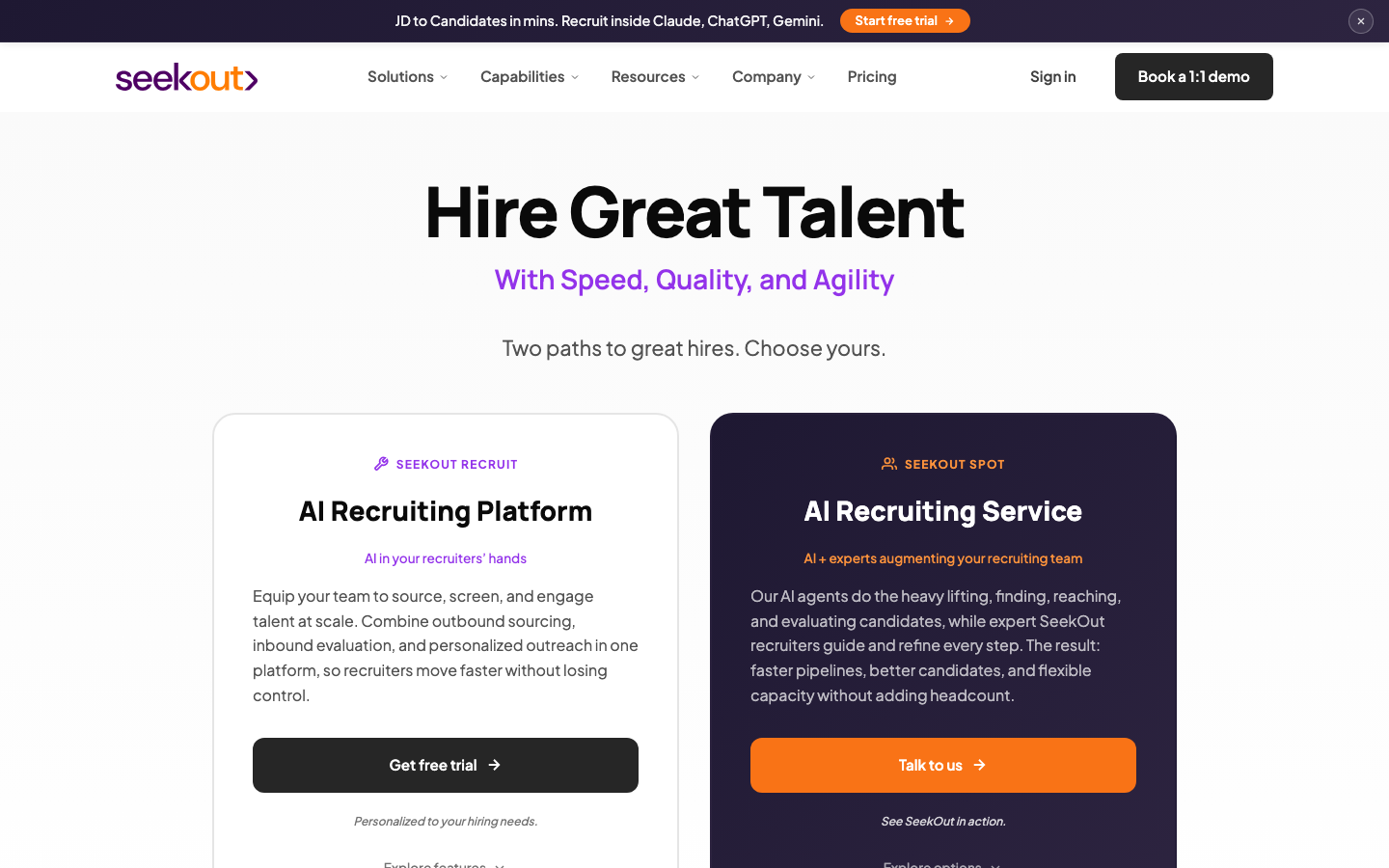
SeekOut is a talent intelligence and sourcing platform for hard-to-find technical, scientific, and cleared talent. It indexes GitHub, patents and publications, with the vendor stating 1B+ candidate profiles. SeekOut Spot is a hybrid service: AI agents do the searching, and SeekOut’s own recruiters guide and refine the work.
Software Pros
- Code repositories and publications reach far past any job board
- Recruit Core is published at $149 a month annually, with a 14-day trial
- Spot supplies human recruiters alongside the agents for teams without capacity
Software Cons
- Data coverage is strongest in the United States, thinner elsewhere
- Spot is partly a service, so it is not a like-for-like software comparison
- The deeper Recruit tiers are quote-based, so $149 is an entry point only
SeekOut Review
The feature I kept coming back to is the code review inside a candidate profile. Public repositories tell a technical recruiter what no resume does, which is why SeekOut holds its place in engineering hiring. Be clear-eyed about Spot: people do part of that work. Without the search model, it is an index nobody can navigate.
Our Verdict
Technical Talent Intelligence Platform
*As pricing is subject to change, we are listing prices as they stand in August 2026
ZoomInfo
Quick Overview
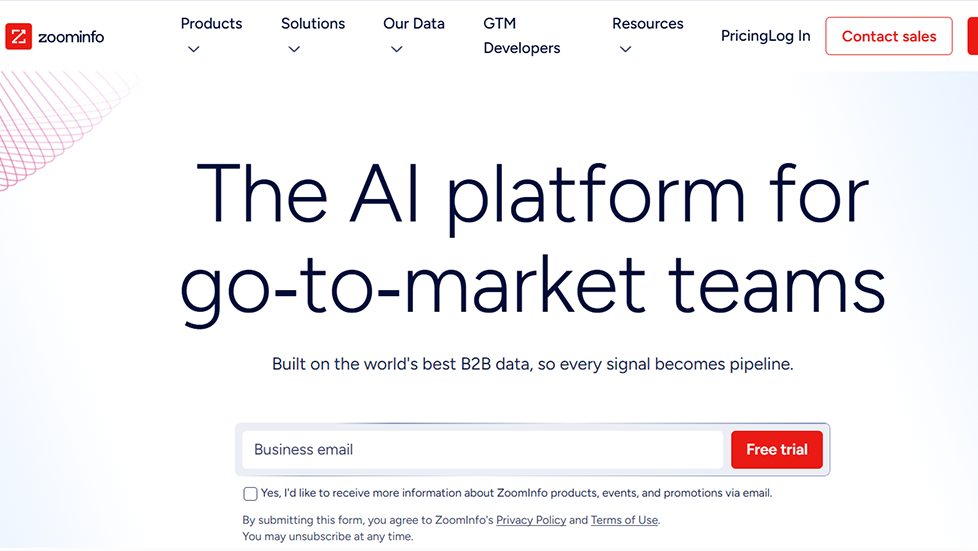
ZoomInfo brings its B2B intelligence database to sourcing: a professional graph of verified profiles, direct contact data, and company signals that recruiters query the way sales teams query accounts. AI-assisted search builds candidate lists from role, company movement, and skills context, and verified emails and direct dials remove the step where outreach dies. It feeds candidates into whatever pipeline system you already run.
Software Pros
- A verified professional database with direct contact data, so sourced candidates are reachable, not just findable
- Company-level signals (funding, layoffs, leadership changes) show when the right person becomes approachable
- Exports into existing ATS and CRM workflows rather than replacing them
Software Cons
- Quote-based pricing, so budgeting starts with a sales conversation
- A sourcing and intelligence layer rather than a pipeline system; it sits beside an ATS, not instead of one
- Deepest for business, sales, and corporate roles, with the strongest data coverage in the United States
ZoomInfo Review
What stood out to me about ZoomInfo in a recruiting context is the contact data. Most sourcing engines find profiles; the outreach then goes to a guessed email and dies quietly. Verified direct contacts change the conversion math of every sequence sent, and the company signals an answer sourcing tools usually can’t provide: not just who fits, but when they are likely to listen. For teams hiring go-to-market and corporate roles, that timing layer is the differentiator.
Our Verdict
B2B Database Sourcing Engine
FAQs About AI Recruiting Software
What is the best AI recruiting software?
No one tool takes the title, because these platforms own three separate jobs. Sourcing engines find people who never applied, AI interviewers screen everyone who did, and talent intelligence platforms model skills across your whole workforce. Work out which of the three is breaking down for you, then read the comparison table above and shortlist inside that family.
What is AI-assisted recruiting software and how is it different?
In a tool covered here, the model does the work itself: it conducts the interview, runs the search, or produces the match. In an assisted product, a traditional pipeline system adds AI helpers such as summaries or suggested replies on top of manual workflows. The two coexist happily. Most teams keep their pipeline system and feed candidates and scores into it from an AI layer sitting alongside.
How much does AI recruiting software cost?
It depends entirely on the unit being sold, and eight of the 12 quote privately per deployment. Three publish a rate, all as of August 2026. HireEZ starts at $494 a month for one recruiter, and Juicebox is $99 a seat monthly, with a free tier below it. SeekOut Recruit Core is $149 paid annually. Interview-based products are priced by volume, not seats.
Is AI recruiting software legal, and does it have to be bias-audited?
It is legal, but obligations differ by jurisdiction, and this is not legal advice. New York City requires an annual bias audit and advance notice to candidates. The EU AI Act places systems that filter applications and evaluate candidates in its high-risk tier. Vendors publish audit and explainability documentation to very different depths, so ask for it.
What’s the best recruiting software for HR teams?
Most HR teams need an applicant tracking system as the foundation, then add an AI product for whichever stage is breaking. The tracking system holds requisitions, candidates, and compliance records; the AI layer sources, screens, or interviews. This article covers only the AI layer. A separate guide compares tracking systems, which are a different purchase with different evaluation criteria.
Do candidates accept AI interviews?
Acceptance is mixed and depends on how the interview is introduced. Vendors publish strong completion rates, with Hubert reporting a 96 percent average completion rate, while reviews of AI interview products regularly call the experience impersonal. Two things move the number reliably. Tell candidates in advance they will speak to an AI, and offer a human alternative on request.
Can AI recruiting tools work with my existing ATS?
Almost always, and integration depth belongs on your shortlist criteria. Common targets across these vendors include Workday, SAP SuccessFactors, Greenhouse, Lever, iCIMS and Bullhorn. Sourcing and interview tools push candidates and scores back into the tracking system; intelligence platforms mostly read from it. Check the sync runs both ways before signing.

Helen is Anywherer’s Market Analyst & Content Researcher, with extensive experience in analyzing global employment markets and HR technology trends. She is skilled at turning complex market data into clear, well-researched insights that inform every piece of content. With a strong grasp of the EOR, PEO, and international hiring space, Helen plays a key role in keeping Anywherer’s research accurate, up to date, and genuinely useful for readers.