Safeguard Global is an EOR (Employer of Record) and workforce services provider founded in 2008, with coverage in 187 countries. In simple terms, what an Employer of Record does is legally employ workers for companies that do not have their own entity in that country. In March 2025, it sold its enterprise payroll division to Deel and focused its business on SMB and mid-market companies. Among Safeguard Global competitors, Deel offers a broader platform and published pricing. Remote uses a fully owned entity (a local company owned by the EOR provider) network, while RemoFirst has the lowest published EOR rate here at $199 per employee per month.
This guide compares each provider with Safeguard Global, showing where competitors offer more and where Safeguard Global still has an advantage. Safeguard Global has worked in global employment since 2008, so credibility is not the issue. The question is whether its managed service model (a service where the provider handles employment tasks for the client) and focus on SMB and mid-market companies fit your needs. The best Safeguard Global alternative depends on what you want from your EOR provider.
Safeguard Global still has clear strengths. Its 187-country coverage is one of the widest in this comparison. It also combines EOR with recruiting, contractor management, HR, benefits, accounting, legal, and tax services. Platform-first providers may offer more control through software, but few match this range of services. The table below shows how the alternatives compare.

INSIGHT: What changed at Safeguard Global in 2025?

Safeguard Global sold its enterprise payroll division to Deel and narrowed its focus to smaller companies. If you came for enterprise payroll, that team is now at Deel.
- Safeguard Global sold only its enterprise payroll division, not the company. The transaction took effect on March 11, 2025. Safeguard Global says the sale lets it focus its resources on SMB (small and medium-sized business) and mid-market customers. In its announcement, the company says it is now “fully concentrating our efforts on global workforce enablement for SMBs.”
- Deel took on the enterprise payroll team and customers. Deel says the entire Safeguard Global payroll team joined its business, bringing its enterprise payroll experience and tools. Deel also says it would continue supporting Safeguard Global’s existing and future international payroll customers under an agreement between the companies.
Safeguard Global vs Competitors: Side-by-Side Comparison
Safeguard Global is the reference point for this comparison. The clearest differences are in pricing transparency and entity model. Some providers publish their EOR prices and explain whether they use their own entities, local partners, or both. Safeguard Global does not publish a standard EOR price or a full breakdown of its owned entities and partners.
| Provider | EOR /ee/m | Transparency | Entity Model | Best for | G2 |
|---|---|---|---|---|---|
| Safeguard Global | Custom pricing | Low, quote only | Not disclosed | Service-led SMB and mid-market EOR | 4.6 |
| Deel | $599 per employee/month | High, published | Owned plus partner | Platform depth and faster onboarding | 4.8 |
| Globalization Partners (G-P) | From $599 per employee/ month | High, published | 100% owned | Enterprise EOR and compliance depth | 4.4 |
| Multiplier | From $459 per employee/month, billed annually | High, published | Owned plus partner | Published-price mid-tier EOR | 4.7 |
| Oyster HR | $699 per employee/month | High, published | 100% partner | Employee experience and clear disclosure | 4.4 |
| Papaya Global | Starting from $499 per employee/month | High, published | Owned plus partner | Multi-country payroll and payments | 4.5 |
| RemoFirst | From $199 per employee/month | High, published | 100% partner | Lowest published EOR rate | 4.5 |
| Remote | $699 per employee/month | High, published | 100% owned | Owned entities and clear pricing | 4.5 |
| Rippling | Custom pricing | Low, quote only | Owned plus partner | Self-serve HR and EOR platform | 4.8 |
As pricing is subject to change, we are listing prices as they stand in August 2026
Why Teams Shop Safeguard Global Alternatives
The biggest change came in March 2025, when Safeguard Global sold its enterprise payroll division to Deel. Since then, Safeguard Global has focused on SMB and mid-market customers across EOR and other workforce services. For companies considering Safeguard Global today, the decision often comes down to pricing, entity structure, and whether they want a managed service or more control through software.
- The payroll divestiture (the sale of a payroll business) and what it signals. Safeguard Global sold its enterprise payroll division to Deel on March 11, 2025. The payroll team moved to Deel, while Safeguard Global shifted its focus to SMB and mid-market workforce services. Deel also confirmed the acquisition and transfer of the payroll team. For buyers considering a long-term agreement, the transaction shows how Safeguard Global has changed its business focus.
- Quote-only pricing. Safeguard Global does not show a standard EOR rate on its main service page, so buyers may need a sales conversation to get a country-specific quote. That makes early cost comparisons harder. Four providers in this comparison publish starting prices, which gives buyers a clearer benchmark before contacting sales.
- Undisclosed entity split. Safeguard Global says it owns EOR entities in more than 70 countries and supports workers across 187 countries. However, it does not publish a full breakdown of where it uses its own entities and where it works through local partners. This leaves the exact entity structure unclear for some markets.
- Service model fit. Safeguard Global takes a managed approach, with more support around international employment. That can suit companies that want a provider to handle more of the process. Other teams prefer to manage more through software. Rippling, Deel, and Remote sit closer to that platform-led, self-service end of the market.
- Segment repositioning. Safeguard Global now focuses on SMB and mid-market companies. This makes smaller businesses a clear part of its target market. Larger companies, however, may want to check whether the company’s current focus fits their needs before signing a long-term agreement.
Safeguard Global has operated since 2008, making it one of the oldest providers in this comparison. Its 187-country coverage is also one of the widest. This can matter when you need to hire in a country other EOR providers don’t cover. Safeguard Global also offers EOR, recruiting, HR, benefits, accounting, legal, tax, and contractor services. Few platform-led providers offer all these services in one place. Its move toward SMB and mid-market companies was a deliberate choice after the payroll sale. For smaller companies, working with one provider for several services can make international hiring easier. Safeguard Global also suits companies that prefer a managed service rather than handling more work through software.
How I Compared These Safeguard Global Alternatives
I compared these Safeguard Global alternatives based on what companies need to know about cost, employment structure, and the level of support they receive.
- Pricing: Whether the provider publishes an EOR price or requires a custom quote
- Entity model: Whether it uses owned entities, local partners, or both, and how clearly it explains that structure
- Country coverage: The number of countries each provider currently states on its own website
- Service model: Whether companies get hands-on support or manage more of the process through the platform
- What the price covers: Which EOR services come with the standard fee and which cost extra
- Cost of leaving: Contract notice periods, deposits, and other costs or requirements that may apply when switching providers
Best Overall Safeguard Global Alternative: Deel
Deel combines EOR, payroll, and contractor management in one platform. It suits companies that want published pricing, broad country coverage, and more control through software. Its network includes both owned entities and local partners, with the model clearly disclosed.
1. Deel
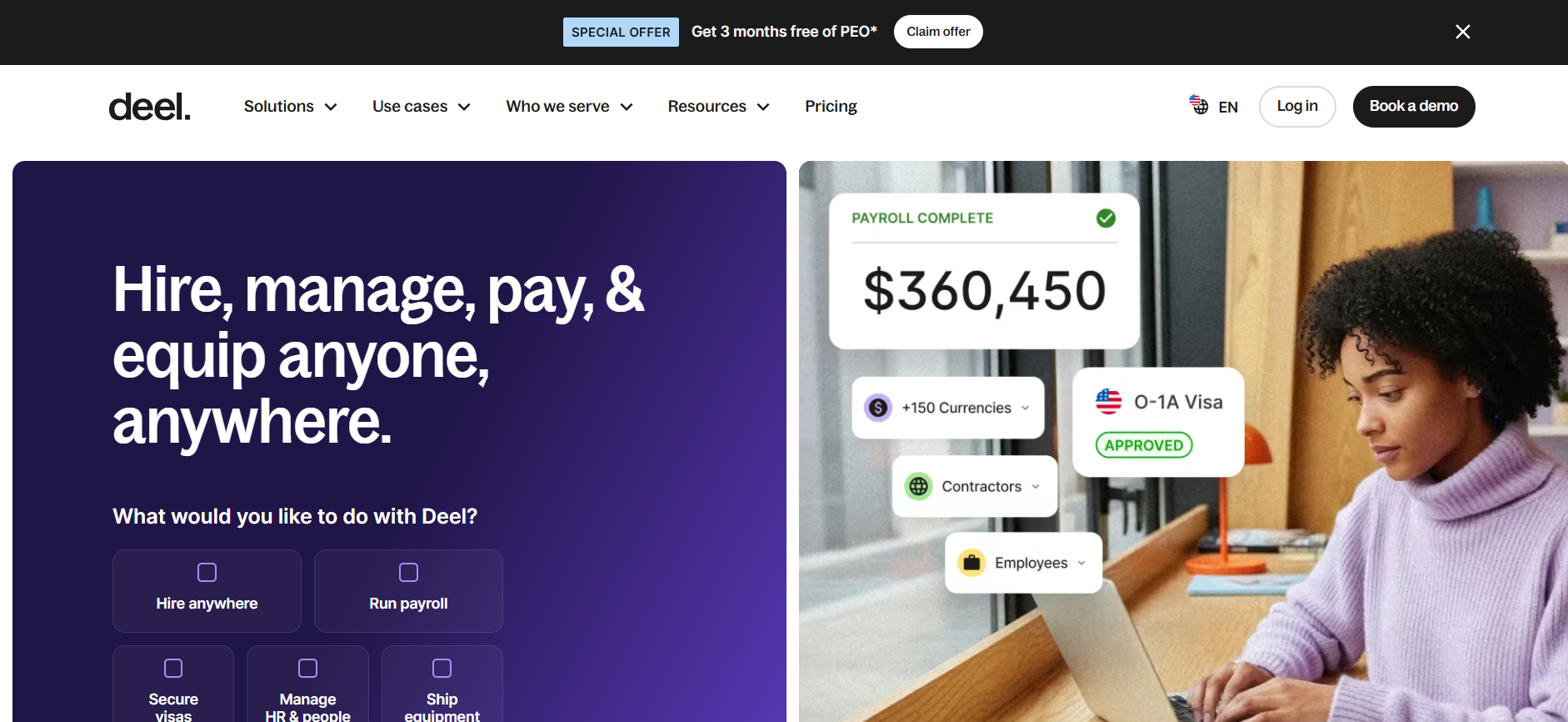
Deel bought Safeguard Global’s enterprise payroll division in March 2025, so it is not an unrelated competitor. Its EOR model combines owned entities with partners, and Deel publishes a $599 monthly EOR rate. Its platform also covers payroll, HR, contractor management, and other workforce tools, making it a broader technology option for global teams.
Deel
What it does better than Safeguard Global:
- Publishes its $599 monthly EOR rate
- Operates 120+ owned legal entities
- Brings more workforce tools into one platform
- Offers 24/7 support across several channels
Where Safeguard Global still wins:
- Supports a larger overall country footprint
- Takes a more managed, service-led approach
- Focuses specifically on SMB and mid-market clients
- Offers accounting, legal, and tax services beyond EOR
EOR price:
$599 per employee/month
Transparency:
High
Countries:
EOR in 130+ countries; 120+ owned entities
Entity model:
Owned plus partner
Best for:
Platform depth and global hiring
G2:
4.8
Pick it over Safeguard Global if:
You want published EOR pricing, more platform automation, and a large owned-entity network
Stick with Safeguard Global if:
You prefer a service-led model or need its broader 187-country reach
*As pricing is subject to change, we are listing prices as they stand in September 2026
Owned-Entity Safeguard Global EOR Alternatives: Globalization Partners and Remote
Globalization Partners and Remote both use 100% owned entities for their EOR services. For companies looking for a Safeguard Global EOR alternative, they offer a clearly disclosed entity structure. Both employ workers through their own local entities rather than partners and clearly explain how their entity networks work.
2. Globalization Partners
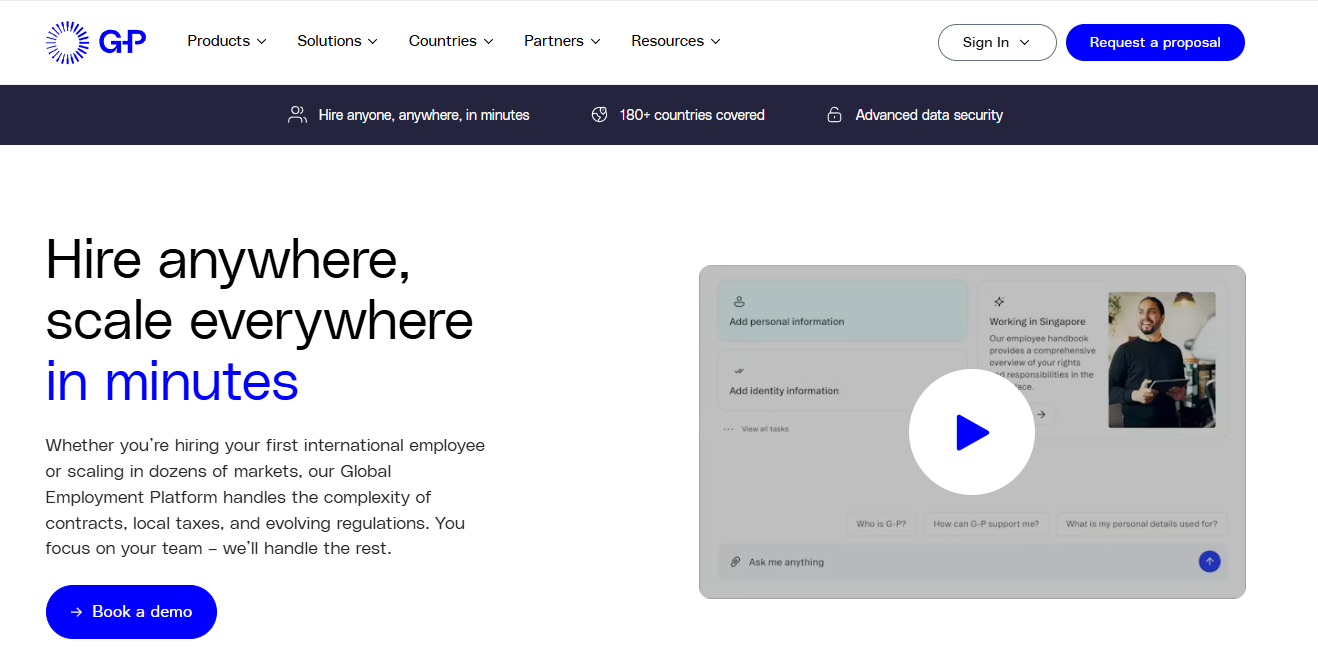
Globalization Partners (G-P) makes its employment structure clear with a 100% owned-entity model for EOR hiring. It publishes EOR pricing starting at $599 per employee per month, while Safeguard Global does not publish a standard rate. Among Globalization Partners competitors, Safeguard Global takes a more service-led approach and offers a broader range of workforce and business services.
Globalization Partners
What it does better than Safeguard Global:
- Discloses a fully owned EOR network
- Removes uncertainty around local entity structure
- Builds its EOR service around enterprise needs
- Provides dedicated support for complex global hiring
Where Safeguard Global still wins:
- Covers more countries overall
- Targets SMB and mid-market companies directly
- Extends into recruiting and contractor management
- Provides accounting, legal, and tax services
EOR price:
From $599 per employee/ month
Transparency:
High
Countries:
180+ countries; 100% owned EOR entities
Entity model:
100% owned
Best for:
Enterprise hiring through owned entities
G2:
4.4
Pick it over Safeguard Global if:
You want the entity behind each EOR hire to be part of a disclosed, fully owned network
Stick with Safeguard Global if:
You want broader business services and a provider now focused specifically on SMB and mid-market companies
*As pricing is subject to change, we are listing prices as they stand in September 2026
3. Remote
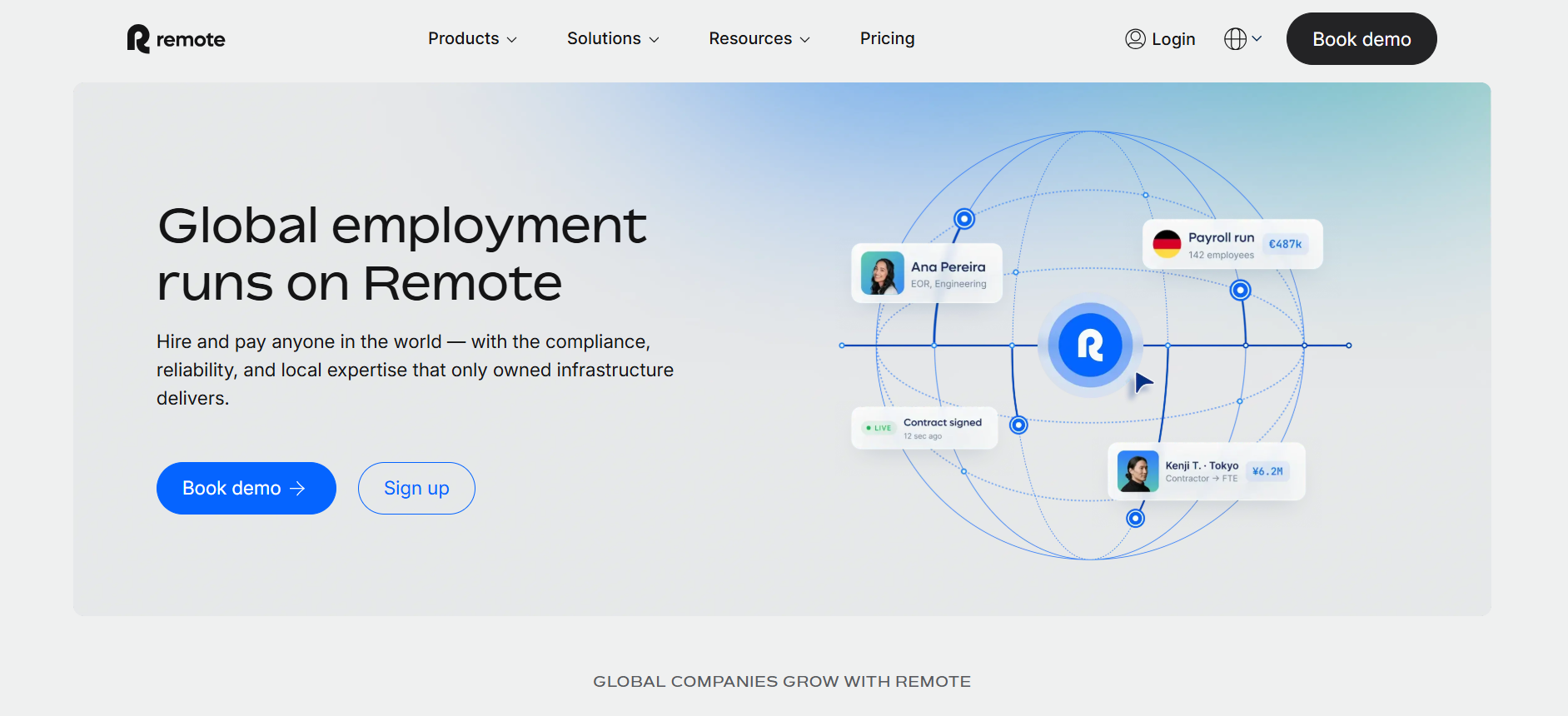
Remote uses a 100% owned-entity model, so it directly controls the local entities that employ workers through its EOR service. It publishes EOR pricing starting at $699 per employee per month, while Safeguard Global does not publish a standard rate. For companies comparing Remote alternatives, this gives a clear benchmark for both entity structure and cost, although Remote covers fewer countries than Safeguard Global.
Remote
What it does better than Safeguard Global:
- Uses only its own EOR entities
- Publishes its EOR starting price
- Clearly explains its entity structure
- Provides a more software-led user experience
Where Safeguard Global still wins:
- Reaches 187 countries overall
- Offers a wider geographic footprint
- Provides a more service-led employment model
- Extends into legal, tax, and accounting services
EOR price:
Starting at $699 per employee/month
Transparency:
High
Countries:
100+ countries; 100% owned entities
Entity model:
100% owned
Best for:
Transparent owned-entity EOR hiring
G2:
4.5
Pick it over Safeguard Global if:
You want published pricing and a clearly disclosed owned-entity model
Stick with Safeguard Global if:
You need its larger country footprint or prefer more hands-on support around international employment
*As pricing is subject to change, we are listing prices as they stand in September 2026
Published-Pricing Safeguard Global Alternatives: Multiplier and RemoFirst
Multiplier and RemoFirst publish their EOR starting prices, while Safeguard Global requires a quote. Both suit companies that want to know the starting cost before speaking with sales. They differ mainly in price and how they provide EOR services.
4. Multiplier
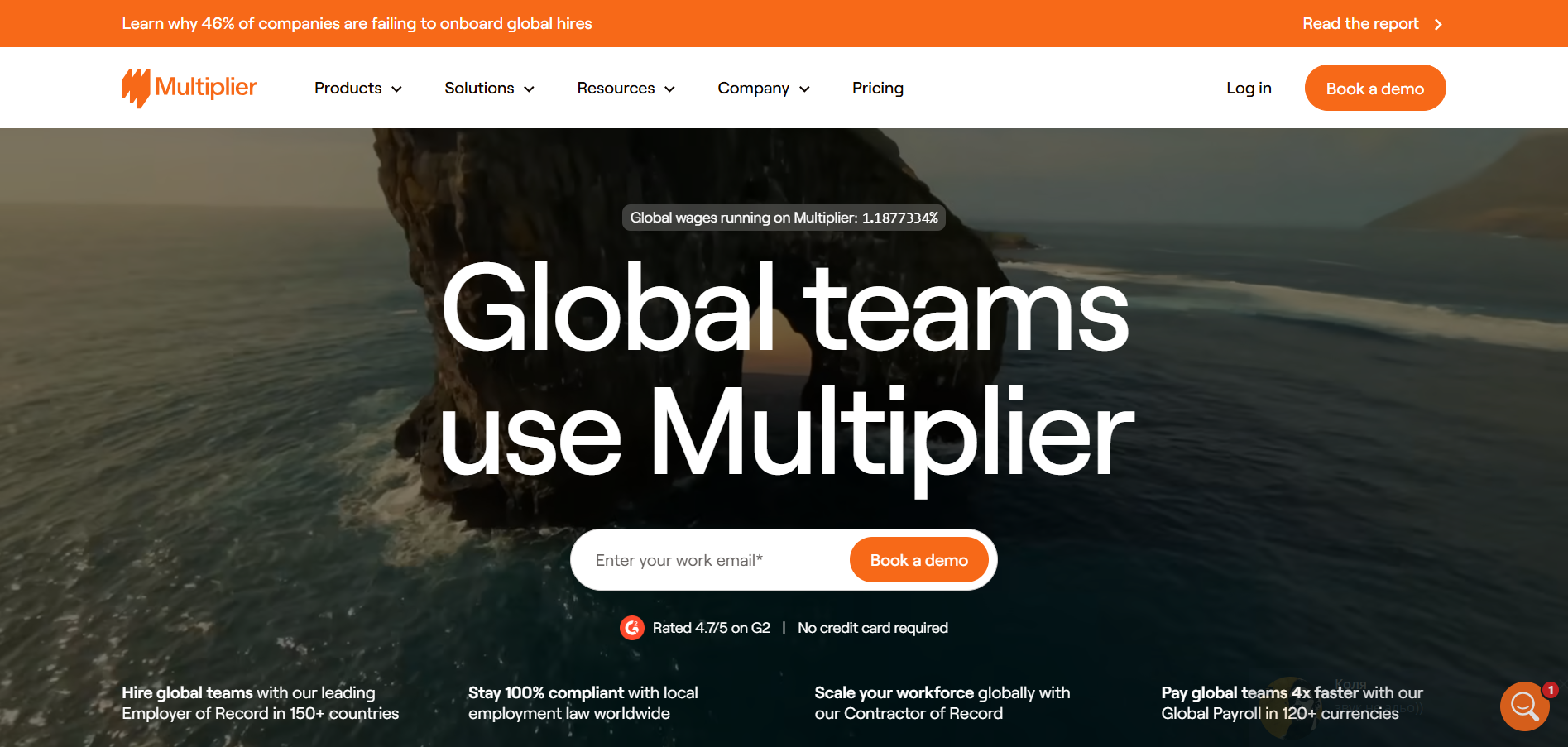
Multiplier uses a mix of owned entities and local partners for its EOR coverage. Unlike Safeguard Global, it publishes a starting price, so companies can see the basic cost before speaking with sales. Its EOR service starts at $459 per employee per month, positioning it as a more price-transparent option for small and mid-sized international teams.
Multiplier
What it does better than Safeguard Global:
- Publishes EOR pricing from $459
- Shows costs before the sales process
- Offers a more platform-led EOR experience
- Combines EOR and contractor management
Where Safeguard Global still wins:
- Supports 187 countries overall
- Takes a more service-led approach
- Covers recruiting alongside global employment
- Adds accounting, legal, and tax services
EOR price:
From $459 per employee/month
Transparency:
High
Countries:
160+ countries
Entity model:
Owned plus partner
Best for:
Published-price global employment
G2:
4.7
Pick it over Safeguard Global if:
You want to see a starting EOR price before entering the sales process
Stick with Safeguard Global if:
You value hands-on workforce services beyond EOR and contractor management
*As pricing is subject to change, we are listing prices as they stand in September 2026
5. RemoFirst
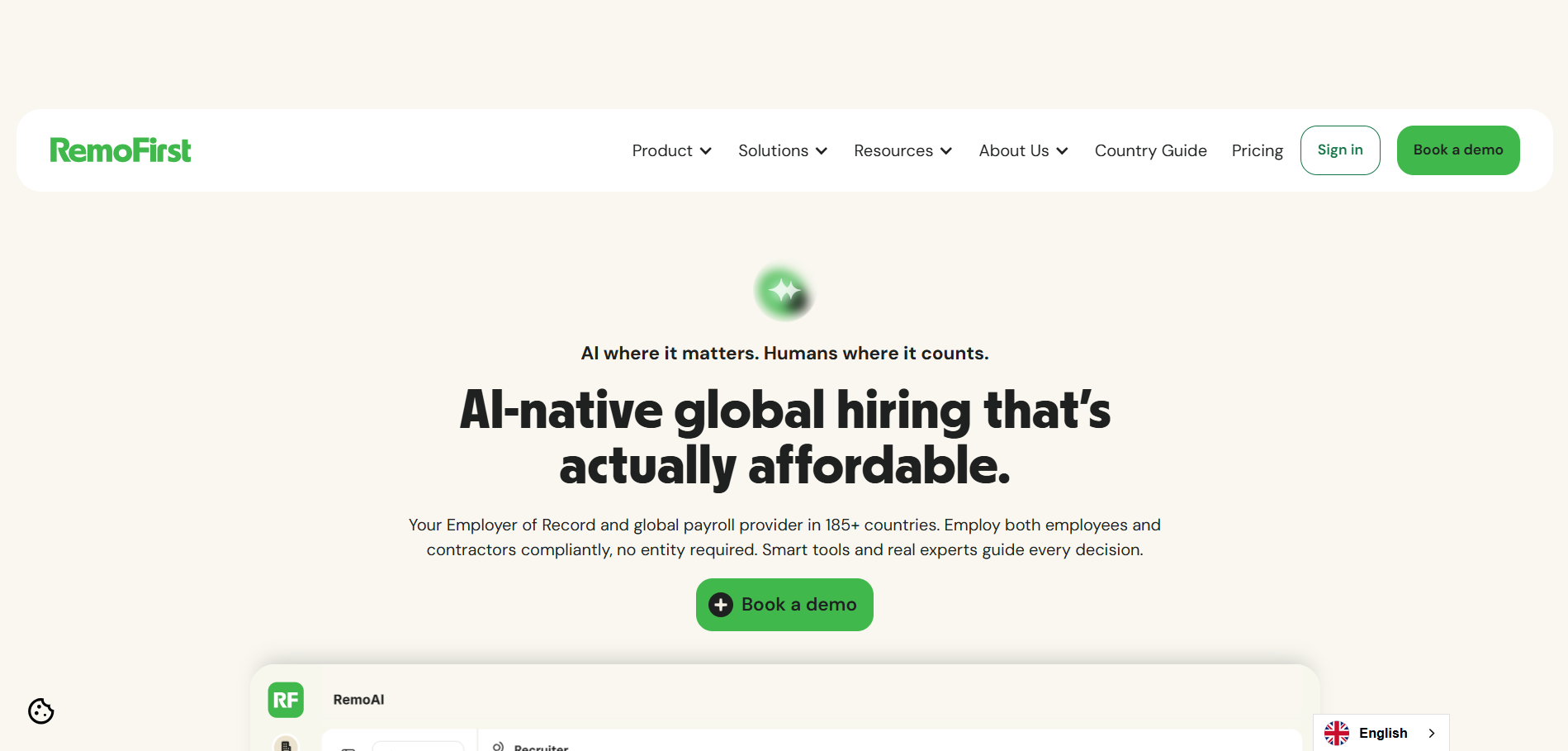
RemoFirst runs its EOR service through a partner-only network rather than its own entities. It publishes pricing from $199 per employee per month, the lowest starting rate in this comparison. The trade-off is clear: companies get a much lower starting price, but local employment is handled through partners rather than entities RemoFirst owns directly.
RemoFirst
What it does better than Safeguard Global:
- Starts at $199 per employee monthly
- Publishes its EOR price upfront
- Offers a lower-cost entry into EOR
- Keeps its service focused on global employment
Where Safeguard Global still wins:
- Provides a more service-led model
- Covers recruiting and broader HR support
- Adds accounting, legal, and tax services
- Brings longer experience in global employment
EOR price:
From $199 per employee/month
Transparency:
High
Countries:
185+ countries
Entity model:
100% partner
Best for:
Lower-cost international EOR hiring
G2:
4.5
Pick it over Safeguard Global if:
Published pricing and a low starting EOR rate are your main priorities
Stick with Safeguard Global if:
You prefer a more service-led relationship with access to business services beyond EOR
*As pricing is subject to change, we are listing prices as they stand in September 2026
Platform-Led Safeguard Global Alternatives: Oyster HR, Papaya Global, and Rippling
Oyster HR, Papaya Global, and Rippling give companies more control through their platforms. They suit teams that prefer to manage international employees through software instead of relying mainly on a managed service. Each combines EOR with different payroll, HR, and workforce tools.
6. Oyster HR
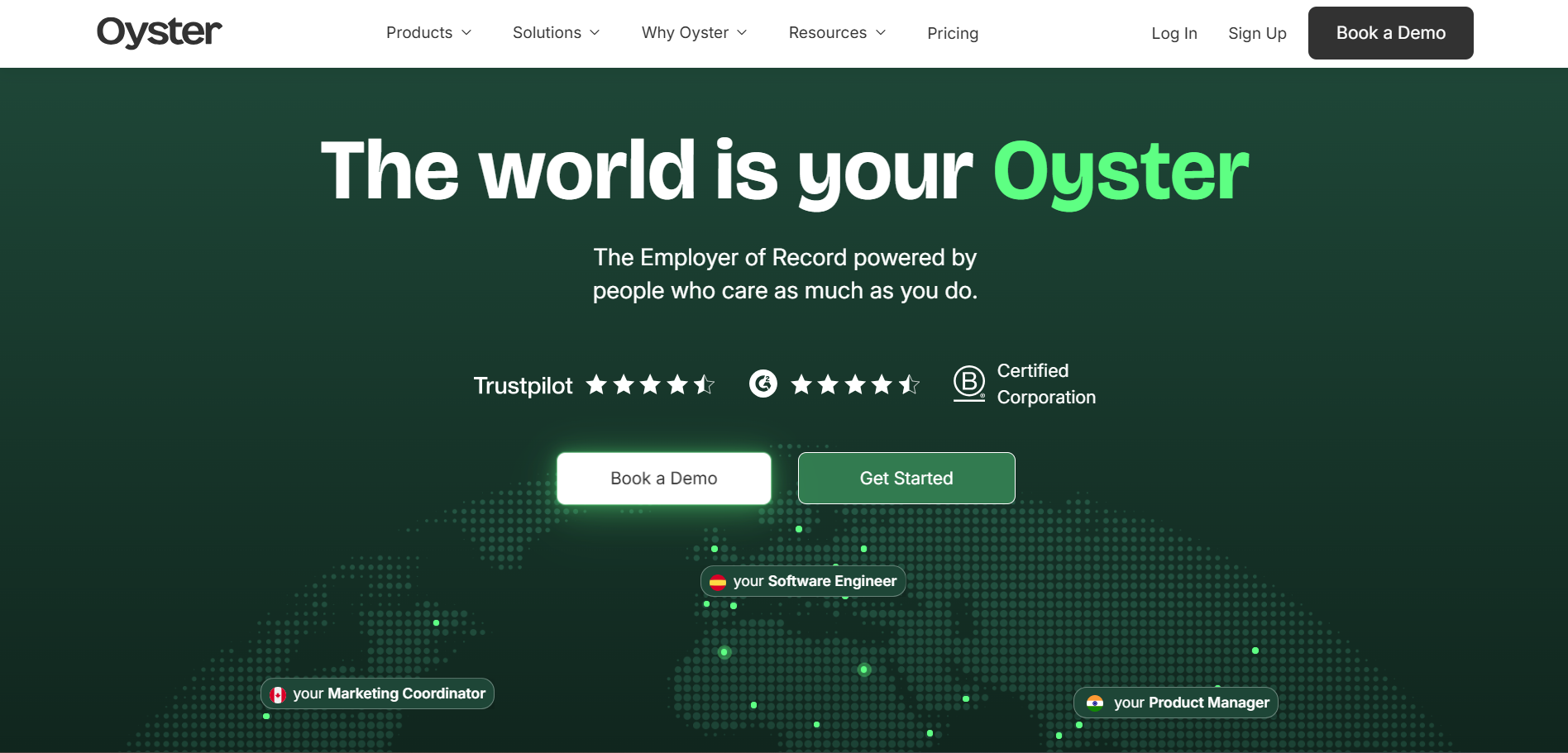
Oyster HR uses a 100% partner-based EOR model and clearly discloses that structure. It publishes its EOR service at $699 per employee per month. Safeguard Global requires a quote and does not disclose its owned-versus-partner split. The difference is transparency: using partners is a known entity model, while Safeguard Global’s entity mix remains undisclosed.
Oyster HR
What it does better than Safeguard Global:
- Clearly discloses its partner-based entity model
- Publishes its standard EOR rate
- Focuses strongly on international employee experience
- Provides a more platform-led hiring process
Where Safeguard Global still wins:
- Supports 187 countries overall
- Offers a more hands-on service model
- Covers recruiting and contractor management
- Adds accounting, legal, and tax services
EOR price:
$699 per employee/month
Transparency:
High
Countries:
180+ countries
Entity model:
100% partner
Best for:
International employee experience
G2:
4.4
Pick it over Safeguard Global if:
You want published pricing and clear disclosure of how the EOR network operates
Stick with Safeguard Global if:
You prefer broader managed services around your international workforce
*As pricing is subject to change, we are listing prices as they stand in September 2026
7. Papaya Global
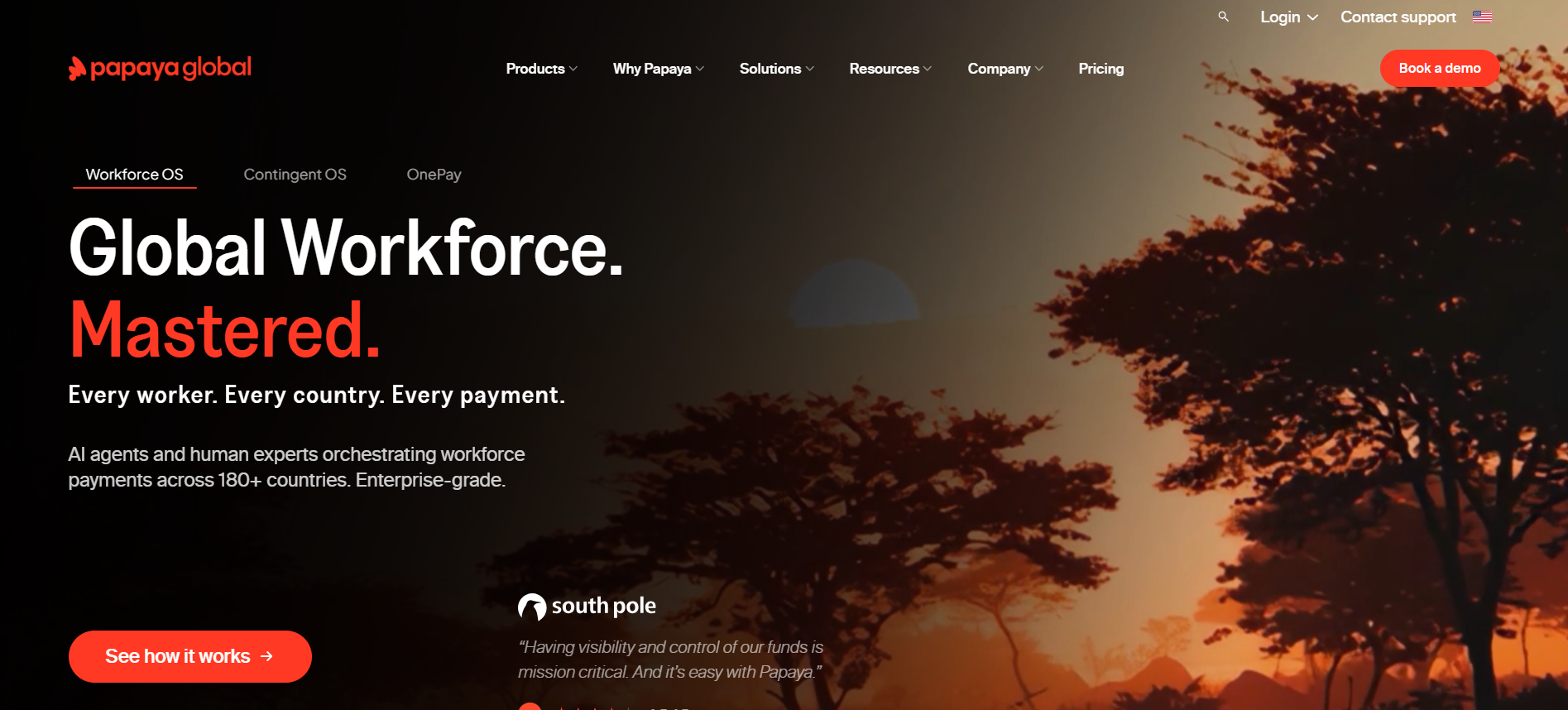
Papaya Global combines owned entities with local partners for its EOR service and publishes a starting rate of $499 per employee per month. Among Papaya Global alternatives, Safeguard Global offers a more service-led model, while Papaya stands out for payroll. Its platform combines multi-country payroll, EOR, contractor management, and workforce payments, which suits companies that previously used Safeguard Global for enterprise payroll consolidation.
Papaya Global
What it does better than Safeguard Global:
- Still supports multi-country payroll consolidation
- Publishes its starting EOR price
- Connects payroll with global workforce payments
- Provides consolidated reporting across countries
Where Safeguard Global still wins:
- Supports a broader mix of business services
- Puts more emphasis on managed workforce support
- Covers recruiting, legal, and tax services
- Focuses directly on SMB and mid-market needs
EOR price:
Starting at $499 per employee/month
Transparency:
High
Countries:
180+ countries
Entity model:
Owned plus partner
Best for:
Multi-country payroll and EOR
G2:
4.5
Pick it over Safeguard Global if:
You need multi-country payroll, and EOR managed through the same platform
Stick with Safeguard Global if:
You need broader managed services around international hiring, HR, legal, tax, and accounting
*As pricing is subject to change, we are listing prices as they stand in September 2026
8. Rippling
Rippling uses both owned entities and local partners for its EOR service. It does not publish a standard EOR price, so companies need a custom quote. The main difference from Safeguard Global is the service model: Rippling puts more control in the platform and connects EOR with HR, payroll, IT, and spend management.
Rippling
What it does better than Safeguard Global:
- Connects EOR with HR and IT
- Gives teams more self-service control
- Manages devices and software access
- Brings workforce data into one platform
Where Safeguard Global still wins:
- Covers a larger country footprint
- Provides more hands-on workforce support
- Offers recruiting as a managed service
- Extends into accounting, legal, and tax
EOR price:
Custom pricing
Transparency:
Low
Countries:
80+ countries
Entity model:
Owned plus partner
Best for:
Platform-led global workforce management
G2:
4.8
Pick it over Safeguard Global if:
You want EOR connected directly with the systems that manage your employees, devices, apps, and company spend
Stick with Safeguard Global if:
You prefer a more managed service model and need wider geographic coverage
Which Safeguard Global Alternative Fits Your Use Case
The best choice depends on your priorities and how you plan to use the EOR service. Providers differ in pricing, entity models, payroll capabilities, employee support, and technology. The comparisons below show which options fit specific business needs.
Cheapest Safeguard Global Alternative
For companies looking for a Safeguard Global pricing alternative, RemoFirst has the lowest published starting rate here at $199 per employee per month. It uses a partner-only EOR network, so the lower price comes without direct entity ownership. Multiplier starts at $459 per employee per month with annual billing and uses both owned entities and local partners. Both publish starting prices, while Safeguard Global requires a custom quote.
Best Safeguard Global Alternative for Owned Entities
Remote and Globalization Partners (G-P) both use 100% owned entities for their EOR services, while Safeguard Global does not disclose its owned-entity count. Remote starts at $599 per employee per month and suits companies that want published pricing and direct entity ownership. G-P also starts at $599 but focuses more on enterprise companies with complex international employment needs. Both make their entity structure clear before a company signs a contract.
Safeguard Global Services Alternatives
For companies comparing Safeguard Global services alternatives, Globalization Partners and Papaya Global are closer to its managed approach. G-P combines EOR with hands-on support for international employment, while Papaya Global brings payroll and workforce payments into the relationship. More tech-first providers can give companies greater control through software, but they are not direct replacements for businesses that value a managed service relationship.
Best Safeguard Global Alternative for Global Payroll
Papaya Global and Deel suit companies that need to manage payroll across several countries. Papaya Global focuses strongly on multi-country payroll, workforce payments, and reporting, while Deel combines global payroll with EOR and contractor management. Safeguard Global sold its enterprise payroll division to Deel in March 2025, so companies looking for that former enterprise payroll service are now evaluating a business that sits within Deel.
Best Safeguard Global Alternative for All-in-One HR and IT
Rippling fits companies that want global employment, HR, and IT in one system. Its platform covers EOR, payroll, employee records, devices, software access, and spend management. Unlike Safeguard Global’s managed approach, Rippling gives companies more control through its software.
Best Safeguard Global Alternative for Benefits and Employee Experience
Oyster HR focuses on international employees, from onboarding to benefits and ongoing support. It helps companies provide benefits that fit local requirements in different countries. Oyster also publishes its pricing and clearly states that it uses a partner-based EOR model. Safeguard Global, by comparison, offers a more managed service.
Safeguard Global vs Competitors on Country Coverage
Safeguard Global supports 187 countries, giving it one of the widest footprints in this comparison. Remote covers 100+ countries, but uses a 100% owned-entity model across its EOR network. The trade-off is straightforward: Safeguard Global offers wider geographic reach, while Remote offers a smaller network with direct ownership of every EOR entity.
When Safeguard Global Is Still the Right Choice
Safeguard Global can still work well for SMBs that want several services from one provider. Along with EOR, it offers recruiting, accounting, legal, and tax services. Its 187-country coverage can also help when you need to hire someone in a country that other EOR providers do not support.
How to Switch From Safeguard Global
Switching EOR providers means moving employees from one legal employer to another. The process can differ by country, so review the employment details as carefully as the contract and costs.
- Review your Safeguard Global contract. Check the notice period, minimum contract term, and any rules for ending the service. Review these terms before signing with a new EOR provider, so you know when the switch can happen.
- Confirm who employs each worker. Write down the legal entity that currently employs each person in each country. This matters because that entity determines what must happen before the employee can move to the new provider.
- Check the local termination rules. An EOR switch usually means ending employment with one legal entity and starting employment with another. Depending on the country, this may involve statutory notice, severance, or other requirements. This is general information, not legal or tax advice.
- Check your deposit. Confirm how much Safeguard Global holds, when it should be returned, and what conditions apply. You may need to account for this money when planning the cost of the switch.
- Review benefits and equity. Check whether health coverage, pensions, leave, and other benefits will continue without gaps. If employees have equity or stock options, confirm what happens when their legal employer changes.
- Confirm the new provider’s local entities. Check whether the provider has its own entity in each country involved or uses a local partner. This tells you who will actually employ each worker after the switch.
INSIGHT: Who is the legal employer, and why does it matter at exit?
The provider you pay is not always the entity named on the employment contract. That difference can affect how an EOR switch works and what it costs.
- All nine providers in this comparison disclose at least some information about their entity model as of August 2026. Remote and G-P state that they use owned EOR entities, while Deel, Multiplier, Papaya Global, Rippling, RemoFirst, and Oyster describe their respective owned-and-partner or partner models. Safeguard Global says it owns entities in 70+ countries, but does not publish the full split across its 187-country coverage.
- Local employment rules can make switching legal employers more complicated. In Germany, for instance, an employer generally must give at least four weeks’ notice when ending employment. The required notice period increases with the employee’s length of service and can reach seven months after 20 years. Collective agreements may set different rules.
FAQs on Safeguard Global Alternatives
What are the best Safeguard Global alternatives?
The answer depends on why you are considering a switch. Deel offers more platform depth, while Remote uses a fully owned EOR entity network. Multiplier publishes a mid-range starting price of $459 per employee per month with annual billing, while RemoFirst has the lowest published rate in this comparison at $199. Safeguard Global remains a stronger fit for companies that prefer a service-led model.
Did Safeguard Global sell its payroll business?
Yes, Safeguard Global sold its enterprise payroll division to Deel on March 11, 2025, rather than selling the company itself. The enterprise payroll team moved to Deel as part of the transaction. Safeguard Global says the sale allows it to focus on SMB and mid-market clients through EOR, recruiting, HR and benefits, accounting, legal and tax services, and contractor management.
What are the alternatives to Safeguard Global software?
Safeguard Global provides managed employment and workforce services rather than software that companies install themselves. For a more software-focused option, Deel, Rippling, and Remote give companies more control through their platforms. The comparison above shows how they differ in pricing, services, and entity models.
What are the best alternatives to Safeguard Global for EOR?
The best alternatives to Safeguard Global for EOR differ mainly in how they employ workers. Remote and G-P use their own entities, while Deel and Multiplier use both owned entities and local partners. RemoFirst and Oyster rely on partners and state this clearly. Safeguard Global covers 187 countries but does not publish its owned-versus-partner split.
How much does Safeguard Global cost?
Safeguard Global does not publish a standard EOR rate, so third-party prices are only estimates. The cost depends on the employee’s country, salary, benefits, statutory contributions (required employer payments), contract length, and service fees. Before contacting sales, prepare the employee’s country, role, salary, benefits, and planned start date to get a more accurate quote.
Does Safeguard Global own its entities?
Yes, Safeguard Global says it owns EOR entities in more than 70 countries, but it does not publish how many of its remaining markets use partners. If you plan to hire in a specific country, ask which entity will employ your professional.
Can I switch EOR providers mid-year?
Yes, but the process depends on your current contract and local employment rules. Check the provider’s notice period, identify the legal entity that employs each worker, and account for any statutory notice or severance required in that country. The How to Switch section explains these steps in more detail and can help you prepare for the process, although it does not replace legal advice.
Verdict: The Best Safeguard Global Alternative for You
Deel suits companies that want more platform features, while Remote and G-P offer fully owned entity networks. Multiplier publishes a mid-range price, while RemoFirst has the lowest starting rate. Papaya Global fits multi-country payroll, Oyster HR focuses on employee experience, and Rippling connects EOR with HR and IT. The right Safeguard Global alternative depends on your needs. Safeguard Global still works well for small companies that want EOR and other back-office services from one provider. Its 187-country coverage can also help with hires in less common markets. Another provider may be a better fit when you need published pricing, a clear entity model, or more control through software.

Helen is Anywherer’s Market Analyst & Content Researcher, with extensive experience in analyzing global employment markets and HR technology trends. She is skilled at turning complex market data into clear, well-researched insights that inform every piece of content. With a strong grasp of the EOR, PEO, and international hiring space, Helen plays a key role in keeping Anywherer’s research accurate, up to date, and genuinely useful for readers.