The best career pathing software maps skills-based routes between roles, surfaces the internal opportunities an employee might not spot, and turns a vague career chat into a structured plan. Some buyers know it as a career path tool, and the job is always the same: show people a credible next step and what it takes to get there. The audience is HR, People and Talent, and L&D leaders who are trying to grow and retain their best staff.
This matters more each year because development drives retention. The LinkedIn Workplace Learning Report has consistently found that employees stay far longer when employers invest in their growth. Modern platforms lean on AI skills inference, visual path maps, and readiness scoring to make that investment concrete. The same AI behind AI HR software now infers skills and suggests next-best roles, which is why the best career pathing software for employees 2026 feels far more personal than the static ladders of the past.
Choosing Career Pathing Software in 2026
The tools here span dedicated pathing and talent-marketplace platforms, HCM suites, people-and-performance tools, and assessment or mentorship specialists. A path is only credible if it rests on clean skills data, so the strongest options pull role and employee information from your cloud HR software and learning systems. To find the best employee career pathing software 2026 offers, I reviewed 13 of the leading platforms in alphabetical order below.
Top 13 Career Pathing Software Platforms for 2026
I researched and compared each of these platforms, testing how they map routes between roles, score readiness, and connect people to real opportunities. I am listing all providers in alphabetical order to keep this comparison neutral, so numeral-named brands sort first and no brands are ranked. The field runs from talent marketplaces like Fuel50 and Gloat to assessment and mentorship specialists like iMocha and MentorcliQ. My picks for the top career pathing software for staff cover every setup, from a mid-market people platform to a global talent marketplace, so read each verdict against your size, your skills data, and whether mobility or mentoring is your priority.

365Talents
Quick Overview
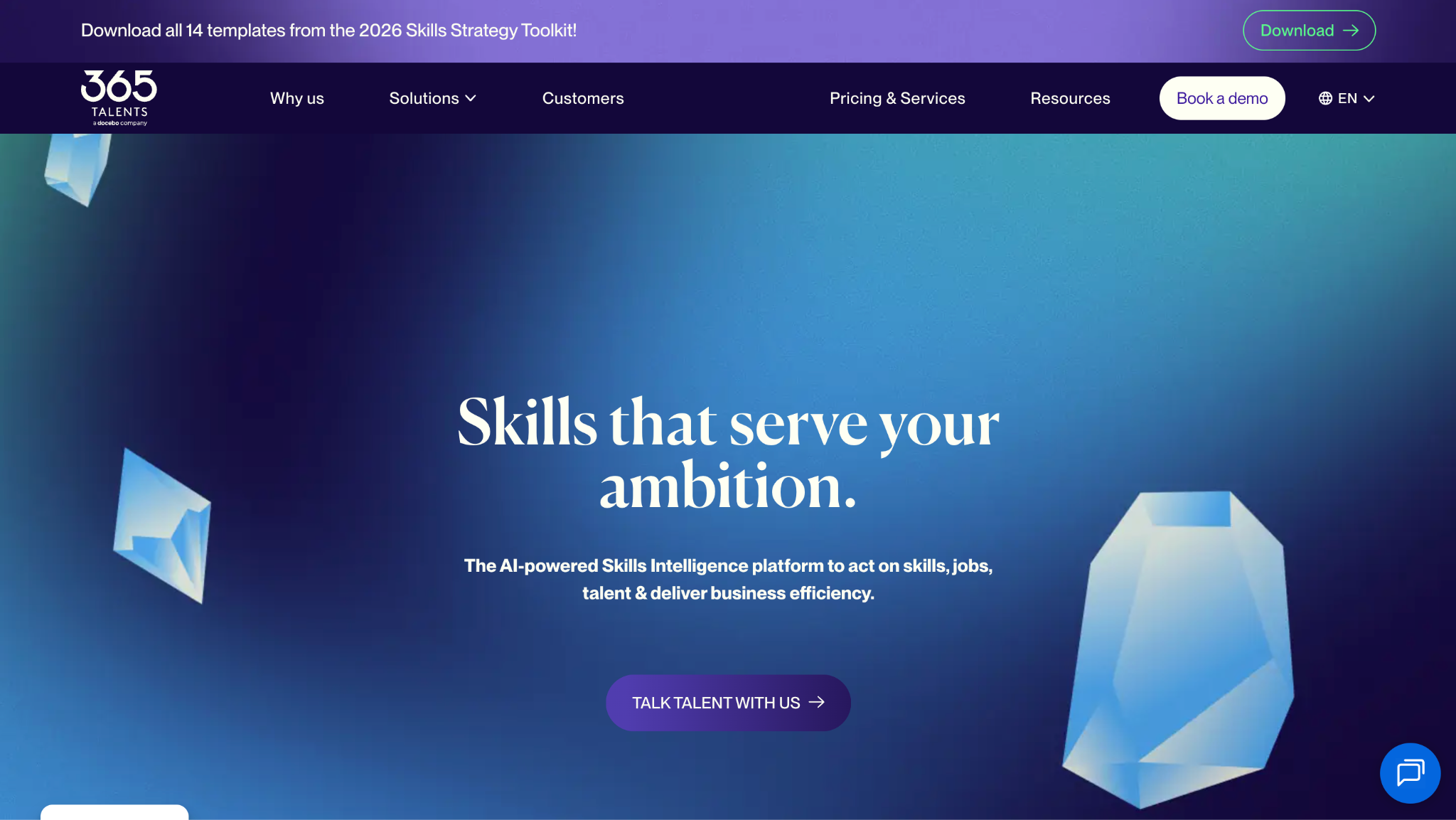
365Talents is an AI skills-intelligence and internal-mobility platform that maps employee skills and recommends career paths, with real strength across multilingual European workforces. The career pathing platform leans on inference rather than surveys.
Software Pros
- AI skills inference for paths
- Recommends next-best roles
- Strong multilingual coverage
- Ties mobility to skills
Software Cons
- Inference needs clean data
- Best value at some scale
- Setup takes integration
365Talents Review
While reviewing 365Talents, its inference model shaped the pathing: it read real skills to suggest moves rather than asking people to self-select from a menu. For a multilingual, data-rich employer that keeps recommendations relevant. It depends on solid source data, so an organization with thin skills records should invest in the foundation first before expecting sharp path suggestions from it. For a large European employer, cross-language reading skills are genuinely uncommon.
Our Verdict
AI Skills-Based Mobility
Cornerstone
Quick Overview
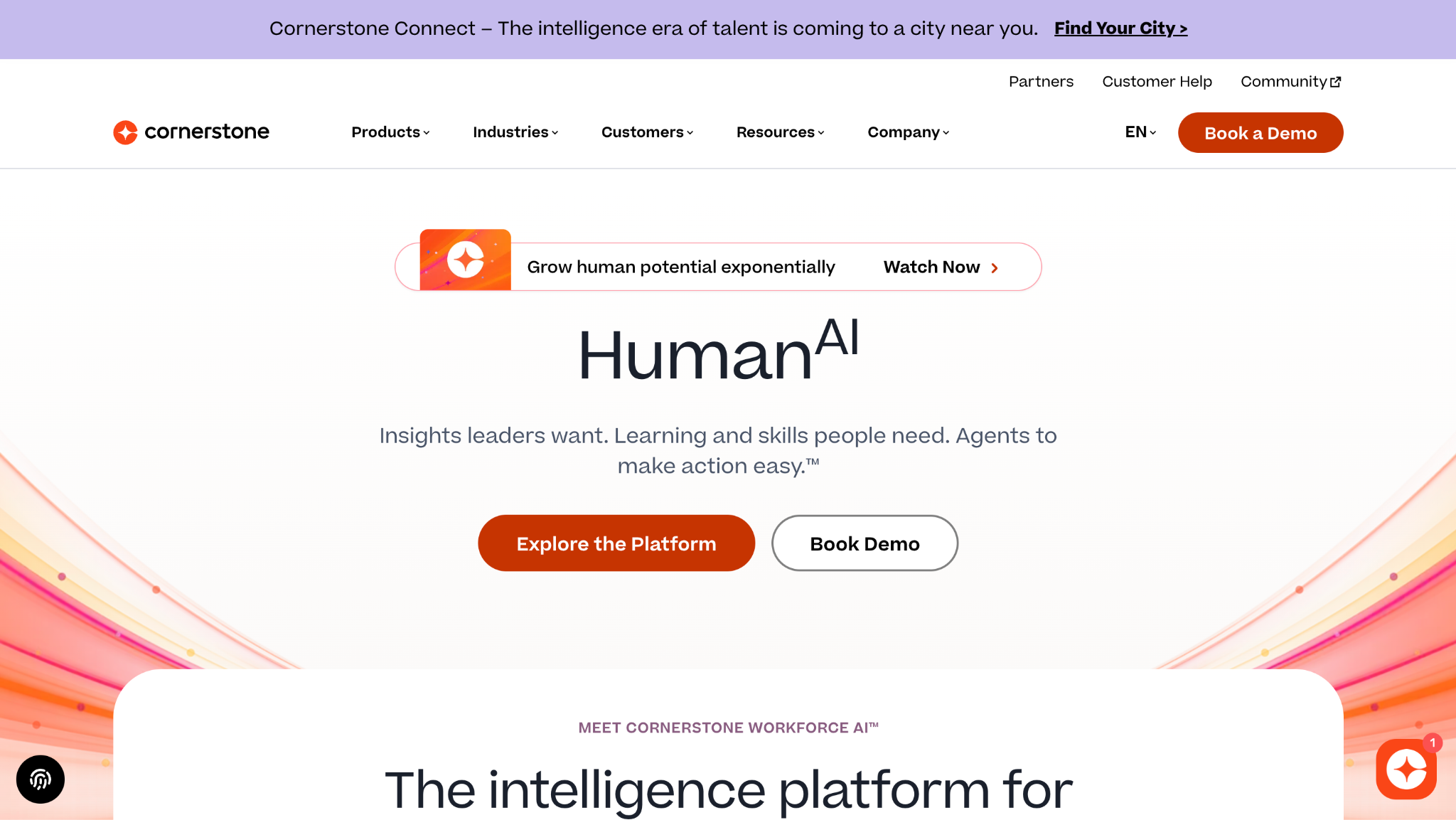
Cornerstone is an enterprise talent-management suite with skills-graph career pathing tied to learning, performance, and succession. The career pathing platform sits inside a full talent ecosystem.
Software Pros
- Pathing inside a full suite
- Skills-graph route mapping
- Ties to learning and succession
- Enterprise-scale depth
Software Cons
- Value grows with the suite
- Heavier implementation
- More than small teams need
Cornerstone Review
During my evaluation, Cornerstone made the most sense for an enterprise that wants career pathing woven into learning, performance, and succession rather than bolted on. Its skills graph connected roles sensibly. The payoff depends on adopting the wider suite, so a company wanting a focused, standalone pathing tool would carry a platform it may not use, and a lighter specialist could serve it faster. For an organization already on Cornerstone, keeping pathing in one suite avoids another integration.
Our Verdict
Enterprise Talent-Suite Pathing
Degreed
Quick Overview
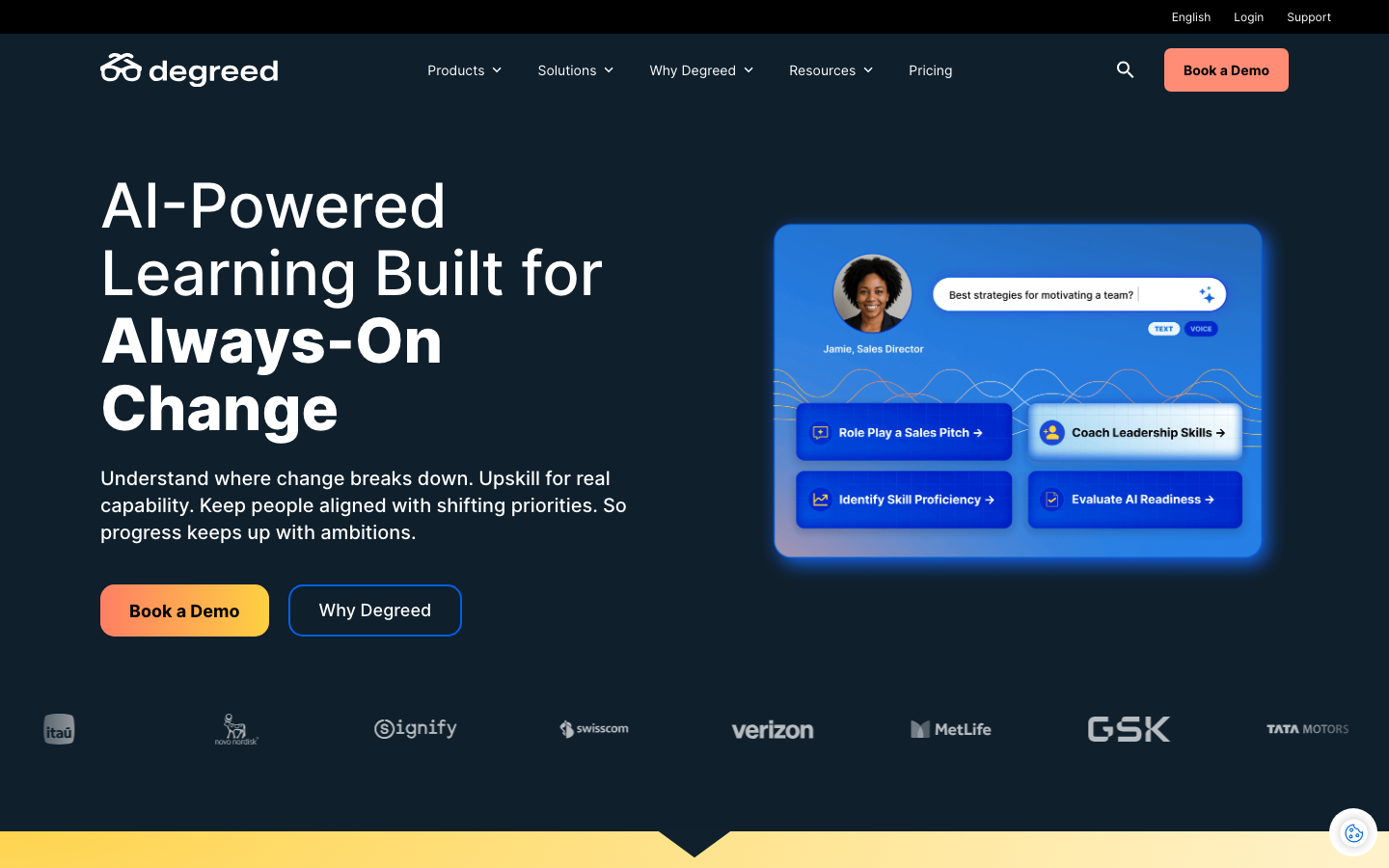
Degreed is a learning experience platform that ties aggregated content to a skills taxonomy and career-aligned development paths. As a learning-first career development tool, it prioritizes growth over marketplace matching.
Software Pros
- Learning-first development paths
- Aggregates content to skills
- Ties growth to a taxonomy
- Strong upskilling focus
Software Cons
- Lighter on mobility matching
- Not a full marketplace
- Depends on the content strategy
Degreed Review
What stood out to me about Degreed is that it starts from learning: paths were built around the skills someone needed to develop, with content mapped to close the distance. For an organization that leads with growth and upskilling, that emphasis fits. It is lighter on internal opportunity matching than a talent marketplace, so a company whose main goal is filling roles internally may want to pair it with one. For a learning-led culture, though, building paths around real content is exactly the right instinct.
Our Verdict
Learning-First Development Paths
Eightfold
Quick Overview
Eightfold is an AI talent-intelligence platform that uses great skills inference to predict career trajectories and match employees to internal opportunities. The career pathing platform is built for the deepest AI inference.
Software Pros
- Deep AI skills inference
- Predicts career trajectories
- Matches internal opportunities
- Enterprise-scale intelligence
Software Cons
- Enterprise implementation effort
- Best on unified data
- Heavier than mid-market needs
Eightfold Review
In my assessment of Eightfold, the inference depth drove the pathing: it predicted plausible next roles from a rich skills model and matched people to openings they would not have found on their own. For a large enterprise chasing the most data-driven mobility, that is compelling. It expects real implementation and a unified data foundation, so a mid-sized team without that groundwork would not quickly see its full strength. For a data-rich enterprise, the quality of its trajectory predictions is hard to rival.
Our Verdict
AI Trajectory Prediction
Fuel50
Quick Overview
Fuel50 is a skills-based career pathing and talent marketplace platform with AI-driven career journeys, visual career path maps, and gap analysis. As a career path mapping tool, it makes routes easy to see and follow.
Software Pros
- Visual career path maps
- AI-guided career journeys
- Talent marketplace built in
- Gap analysis for readiness
Software Cons
- Enterprise-oriented pricing
- Set up around skills data
- Broad scope to configure
Fuel50 Review
While reviewing Fuel50, the visual mapping stood out: an employee could see routes to future roles and the skills each demanded, laid out clearly rather than buried in a form. For an enterprise anchoring mobility around pathing, that clarity drives engagement. It carries enterprise pricing and rewards good skills data, so a small team without that foundation would not get its full value at first. For an enterprise ready to invest, seeing routes and skills laid out visually is what finally makes pathing stick.
Our Verdict
Skills-Based Career Mapping
Gloat

Quick Overview
Gloat is an internal AI talent marketplace that matches employees with roles, gigs, projects, and mentors to drive mobility and growth. The career pathing platform is built for mobility at large scale.
Software Pros
- AI talent marketplace
- Matches roles, gigs, and projects
- Mentor matching included
- Drives internal mobility
Software Cons
- Enterprise scale and pricing
- Needs an opportunity culture
- Heavier implementation
Gloat Review
During my evaluation, Gloat treated career growth as a live marketplace: employees were matched not just to roles but to gigs and projects that built experience toward a path. For a large enterprise serious about internal mobility, that dynamism is powerful. It needs a genuine culture of opening opportunities, so an organization not ready to post internal work would not tap its full potential. For a mobility-minded enterprise, matching people to gigs and projects keeps growth moving between formal roles.
Our Verdict
Enterprise Talent Marketplace
iMocha
Quick Overview
iMocha is a skills assessment and intelligence platform that builds a skills taxonomy, validates skills, and informs career path decisions. As a career path assessment tool, it grounds pathing in measured evidence.
Software Pros
- Validates skills by testing
- Readiness grounded in evidence
- Skills taxonomy for pathing
- Reduces self-rating bias
Software Cons
- Assessment takes time
- Not a full marketplace
- Best where proof matters
iMocha Review
In my assessment of iMocha, its role in pathing is evidence: rather than assuming readiness, it tested skills so a move rested on measured proof of capability. For a team that must justify promotions or transfers, that rigor helps. It is an assessment specialist rather than a talent marketplace, so a company wanting end-to-end mobility matching would use it alongside a pathing platform, not instead of one. For promotion decisions that must hold up, though, its tested evidence is hard to beat.
Our Verdict
Evidence-Based Path Readiness
Lattice
Quick Overview
Lattice is a people-management platform with career frameworks, growth plans, and performance tools that connect development to progression. The career pathing platform ties growth to reviews and goals.
Software Pros
- Career frameworks built in
- Growth plans linked to reviews
- Ties development to performance
- Approachable for the mid-market
Software Cons
- Lighter AI skills inference
- Frameworks need defining
- Less enterprise mobility depth
Lattice Review
What stood out to me about Lattice is how naturally career growth sat beside performance: growth plans linked to reviews and goals, so progression felt like part of the everyday rhythm. For a mid-market team wanting structure without heavy enterprise tooling, that fit is appealing. Its skills inference is lighter than the AI marketplaces, so a company chasing deep, data-driven mobility may find it less advanced there. For a team that already lives in reviews and goals, though, growth feels like a natural extension.
Our Verdict
Performance-Linked Career Growth
Leapsome
Quick Overview
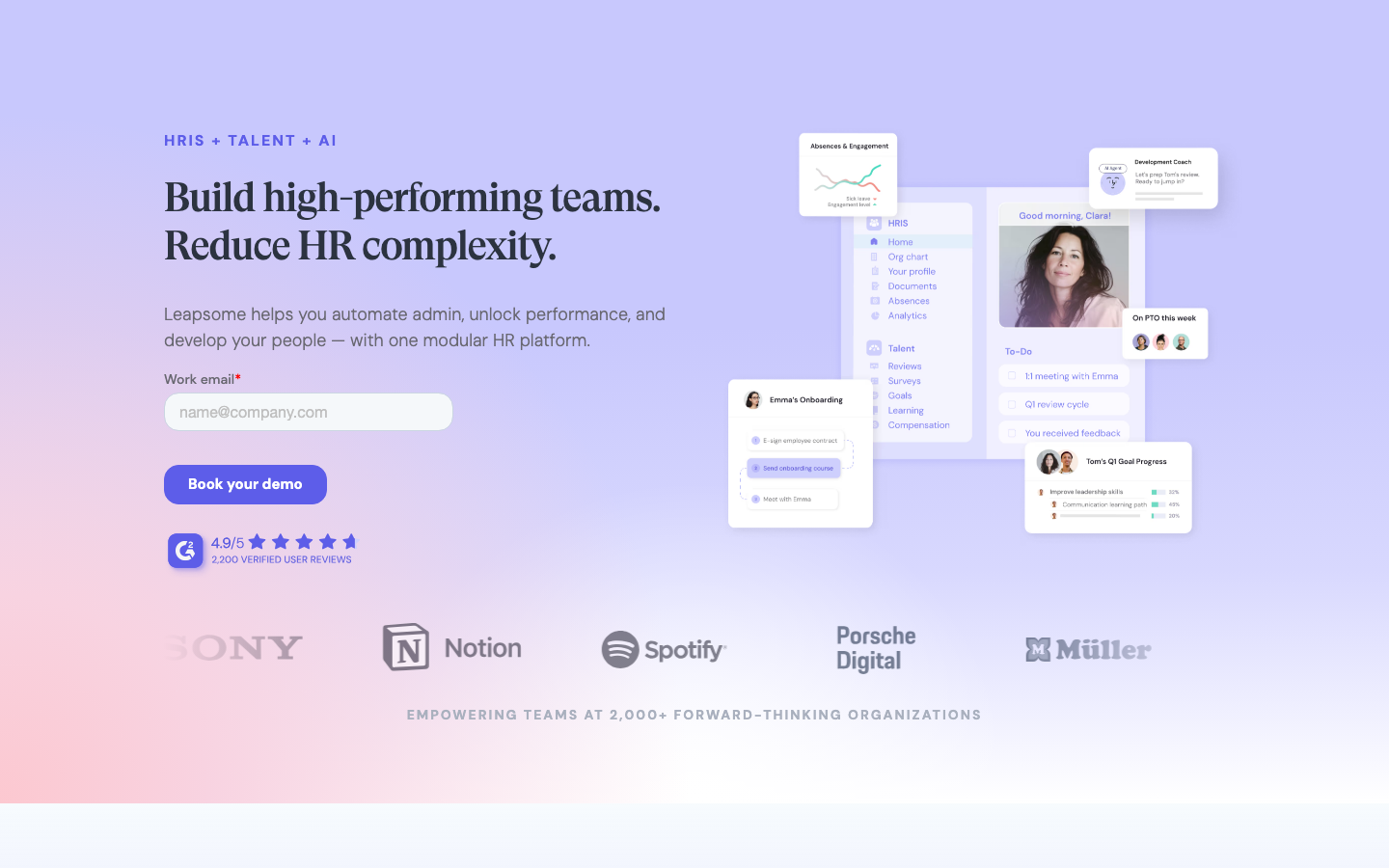
Leapsome is a people-enablement platform that integrates competency frameworks, career paths, and development plans with reviews and goals. The career pathing platform suits teams building structured frameworks.
Software Pros
- Competency-based career paths
- Development plans and goals
- Linked to reviews
- Good for structured frameworks
Software Cons
- Frameworks take setup
- Lighter enterprise inference
- Mid-market rather than global scale
Leapsome Review
During my evaluation, Leapsome appealed to a team that wants competency frameworks and career paths defined clearly and tied to development plans. Progression rested on visible competencies rather than guesswork. Building those frameworks takes effort up front, so an organization wanting instant AI-inferred paths with little setup might prefer a marketplace, while structure-minded teams will value the clarity here. For a company formalizing how people progress, the competency backbone is a real asset.
Our Verdict
Framework-Based Career Paths
MentorcliQ
Quick Overview
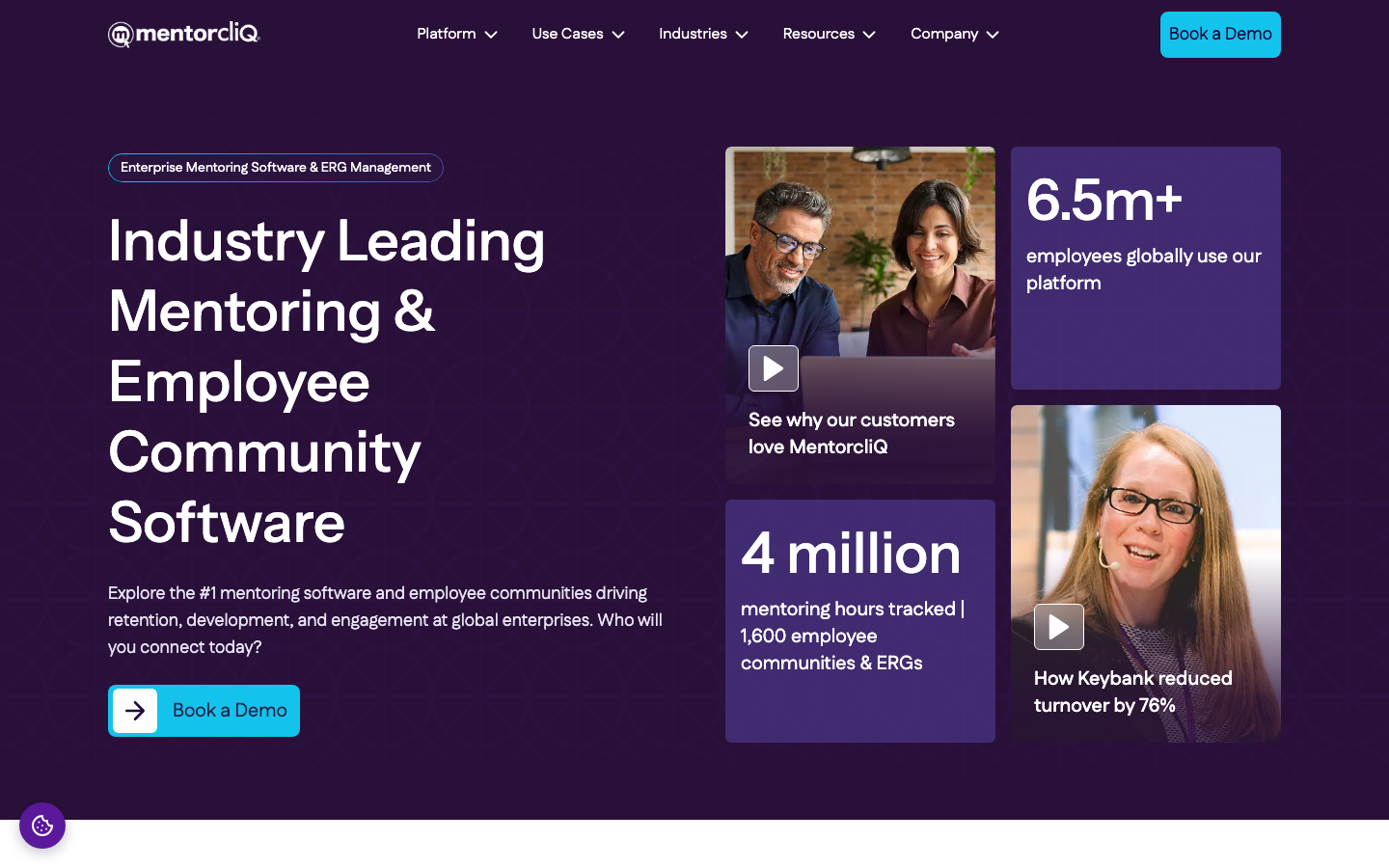
MentorcliQ is a mentoring-led career development platform that includes mentor matching, program management, and analytics that tie mentoring to advancement. It is a mentorship program software for career pathing rather than a marketplace.
Software Pros
- Structured mentor matching
- Program management built in
- Analytics on advancement
- Mentoring drives growth
Software Cons
- Mentoring focus, not mapping
- Less skills-graph pathing
- Pairs best with a path tool
MentorcliQ Review
While reviewing MentorcliQ, its angle on pathing was human: careers advanced through structured mentoring, with matching, program management, and analytics tying relationships to real progression. For a company that grows people through mentoring, that focus is the draw. It is not a skills-graph mapping tool, so an organization wanting visual path maps would pair it with a pathing platform for the routes themselves.
Our Verdict
Mentoring-Led Career Development
Phenom
Quick Overview
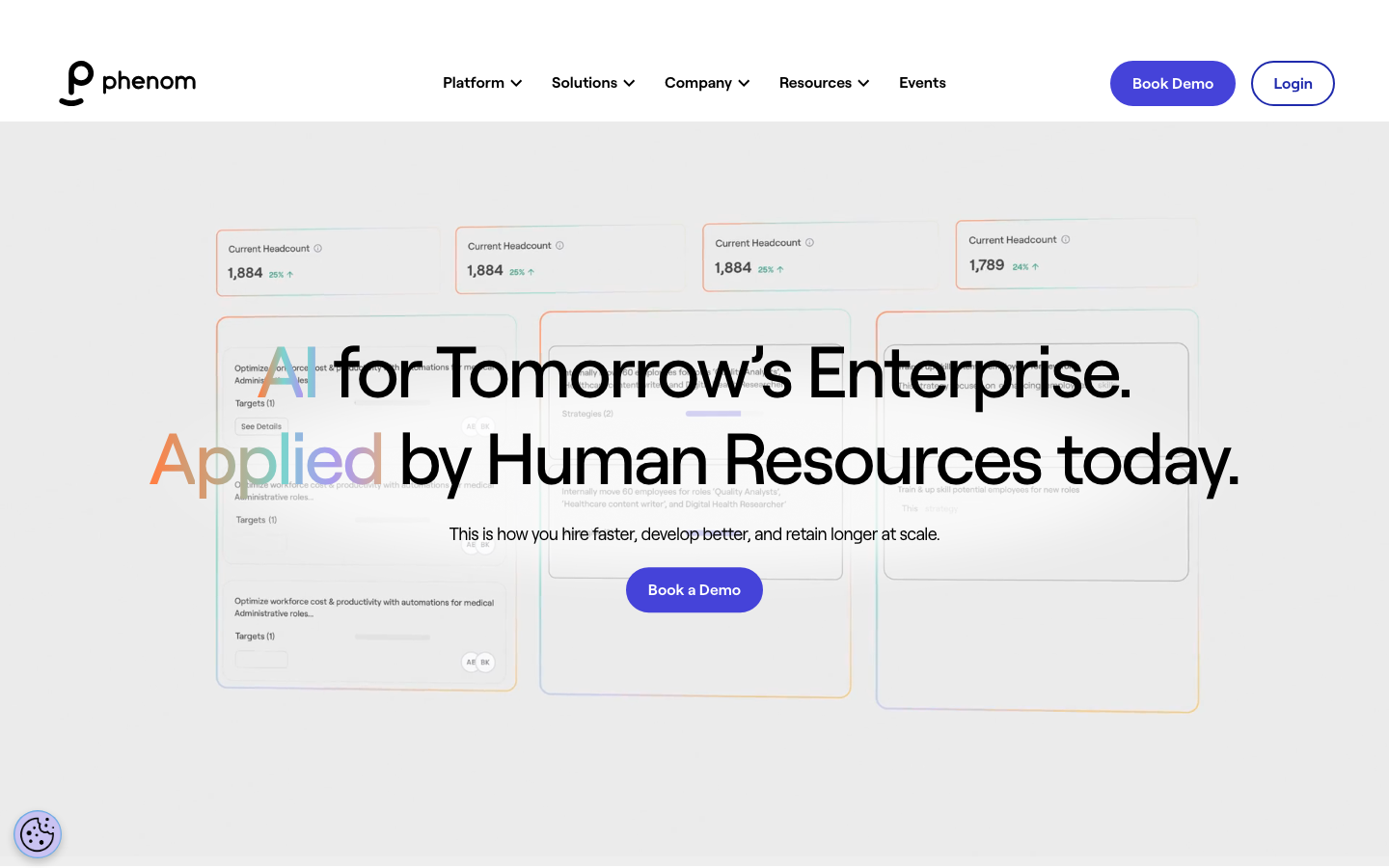
Phenom is a talent-experience platform that extends to internal mobility, surfacing roles, projects, and mentorship through AI-driven matching. The career pathing platform links mobility to recruiting data.
Software Pros
- AI internal opportunity matching
- Surface roles and projects
- Mentorship inside mobility
- Ties to recruiting data
Software Cons
- Broad talent-experience scope
- Value grows with the suite
- Enterprise-oriented
Phenom Review
In my assessment of Phenom, the strength is continuity between hiring and growing: the same AI that powers candidate experience surfaced internal roles, projects, and mentors for existing staff. For a company unifying recruiting and internal mobility, that shared engine helps. Its scope is broad, so a team wanting only a focused pathing tool may find more on the platform than the single job requires. For a company already running Phenom for recruiting, extending it inward is a natural step.
Our Verdict
Mobility Meets Talent Experience
TalentGuard
Quick Overview
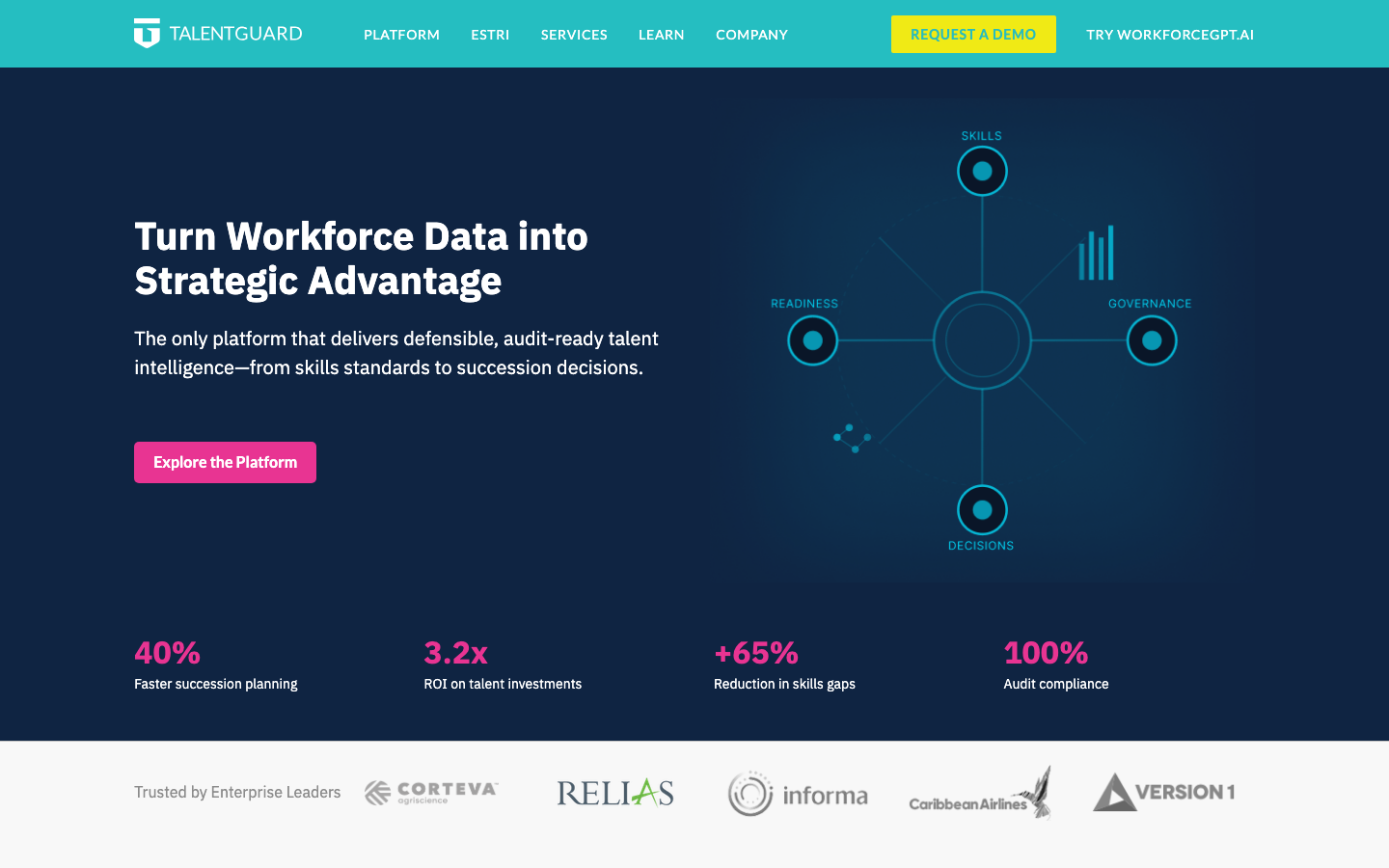
TalentGuard is a skills-based career pathing and succession platform with Career Canvas mapping, readiness scoring, and an audit trail. The career pathing platform suits governed, auditable programs.
Software Pros
- Career Canvas visual mapping
- Readiness scoring built in
- Audit trail for governance
- Ties pathing to succession
Software Cons
- Competency setup takes effort
- Heavier for small teams
- Less real-time AI inference
TalentGuard Review
During my evaluation, TalentGuard combined mapping and governance: its Career Canvas laid out routes, readiness scoring judged fit, and an audit trail recorded decisions for compliance. For an enterprise that needs a pathing to be defensible, that structure fits. Building competency models takes effort, so a small team wanting a quick, low-setup start might find a lighter, more AI-driven tool easier to adopt.
Our Verdict
Governed Career-Path Mapping
Workday
Quick Overview
Workday, through Skills Cloud and its Career and Growth modules, supports skills-based pathing, opportunity matching, and succession planning on a single data model. The career pathing platform is native to the Workday ecosystem.
Software Pros
- Skills Cloud powers pathing
- Opportunity matching built in
- One data model with HCM
- Succession tied to paths
Software Cons
- Best value inside Workday
- Enterprise implementation
- Depends on Workday adoption
Workday Review
While reviewing Workday’s Career and Growth, it made the most sense for organizations already on Workday, where Skills Cloud could infer skills and match people to internal moves without a separate system. That unity is genuinely useful. Outside the Workday world, its advantage narrows, and it carries an enterprise rollout, so it rewards committed Workday customers more than teams shopping for a standalone pathing tool. For a committed Workday shop, though, adding career growth without another system is a clear advantage.
Our Verdict
Workday-Native Career Growth
FAQs About Career Pathing Software
What is career pathing software?
It is software that maps skills-based routes between roles, surfaces internal opportunities, and turns career conversations into structured plans. People often call it a career path tool when they mean the mapping, or a career development tool when they mean the growth side, but both point to the same goal: helping employees see a credible next step and grow toward it inside the company.
What is the difference between a career path mapping tool and a career path assessment tool?
A career path mapping tool visualizes the routes between roles and the skills each one needs, which is where Fuel50, TalentGuard, and Gloat shine. A career path assessment tool measures where someone stands today by scoring current skills and readiness, which is a strength of iMocha and TalentGuard. Mapping shows the destination; assessment shows how ready you are to reach it, and strong programs use both.
What is the best career path mapping tool?
For visual routes, the best career path mapping tool is usually Fuel50, with its clear career path maps, TalentGuard, with its Career Canvas, or Gloat, which maps trajectories through its talent marketplace. The right pick depends on whether you want a dedicated pathing view, a governed and auditable canvas, or mobility driven by a live internal marketplace.
What is the best career path assessment tool?
When readiness must rest on evidence, the best career path assessment tool tends to be iMocha, which validates skills by testing, or TalentGuard, which applies readiness scoring against competency models. Fuel50 also adds self-assessment inputs to its journeys. The choice comes down to how rigorous your proof of readiness needs to be before you move someone.
Is there a mentorship program software for career pathing?
Yes. Dedicated mentorship program software for career pathing, such as MentorcliQ, matches mentors to mentees, manages the program, and links mentoring to advancement. Several marketplaces also fold mentoring in, with Fuel50 and Gloat matching mentors alongside roles and projects. If mentoring is your main growth lever, a mentoring-led tool fits; if it is one part of mobility, a marketplace may suffice.
How does career pathing software support internal mobility and retention?
It makes growth visible. By showing employees credible next steps, matching them to internal openings, and backing plans with development, it turns retention from a hope into a process. Research consistently links investment in career development to employees staying longer, so a clear path is one of the more reliable ways to keep good people rather than lose them to an outside offer. Making the next step visible often matters more than the size of the raise attached to it.
How much does career pathing software cost?
Pricing is usually per employee per month and often custom-quoted. Enterprise talent marketplaces can start at around $50 per employee per month or more, reflecting their scale and AI capabilities, while mid-market people platforms sit at lower levels. Factor in implementation and the skills-data work underneath, since a path is only as good as the data it rests on, and a cheap tool on poor data helps no one.

Yaryna is our lead writer with over 8 years of experience in crafting clear, compelling, and insightful content. Specializing in global employment and EOR solutions, she simplifies complex concepts to help businesses expand their remote teams with confidence. With a strong background working alongside diverse product and software teams, Yaryna brings a tech-savvy perspective to her writing, delivering both in-depth analysis and valuable insights.