Contract lifecycle management (CLM) software manages an agreement throughout its entire life cycle: create, negotiate, approve, sign, store, track, and renew. That end-to-end scope is what separates a true lifecycle platform from a signing app or a shared drive. Answering what is contract lifecycle management software really means is naming those stages and the control that ties them together. The buyers are the legal, legal ops, procurement, sales, and finance teams who live with contracts every day. For any of them, the promise is fewer manual handoffs and a single, reliable record of every commitment the business has made.
The stakes are large. World Commerce and Contracting, drawing on its research, has long estimated that weak contract management drains close to a tenth of an organization’s revenue through missed obligations, leakage, and slow cycles. That is why AI now sits at the center of the category, drafting language, extracting clauses, and flagging obligations automatically. The same AI wave behind modern AI software now reads and redlines contracts, and the strongest contract lifecycle management software features increasingly lean on it.
Choosing Contract Lifecycle Management (CLM) Software in 2026
The market splits into enterprise governance platforms, Salesforce and e-signature-led tools, and lighter options built for scaling teams. CLM enforces contract obligations much the way policy management software enforces internal rules, turning documents into controlled, auditable workflows. To find the best contract lifecycle management software 2026 across budgets, I compared the leading platforms in A-Z order below.
Top 14 Contract Lifecycle Management Software Platforms for 2026
I researched and compared each of these tools hands-on, running sample contracts through drafting, redlining, approval, and renewal to see where each one held up. I am listing all providers in alphabetical order to keep this comparison neutral, so position on the page means nothing. This contract lifecycle management software comparison runs from enterprise leaders like Icertis and Sirion to modern, AI-forward tools like Ironclad and lighter options like PandaDoc. My shortlist of the top contract lifecycle management software for 2026 has emerged, blending governance heavyweights with nimble newcomers. The right pick depends on whether legal or procurement drives the buy, since a platform that fits one team can be overkill for another. Read each verdict as a fit test rather than a ranking.

Agiloft
Quick Overview
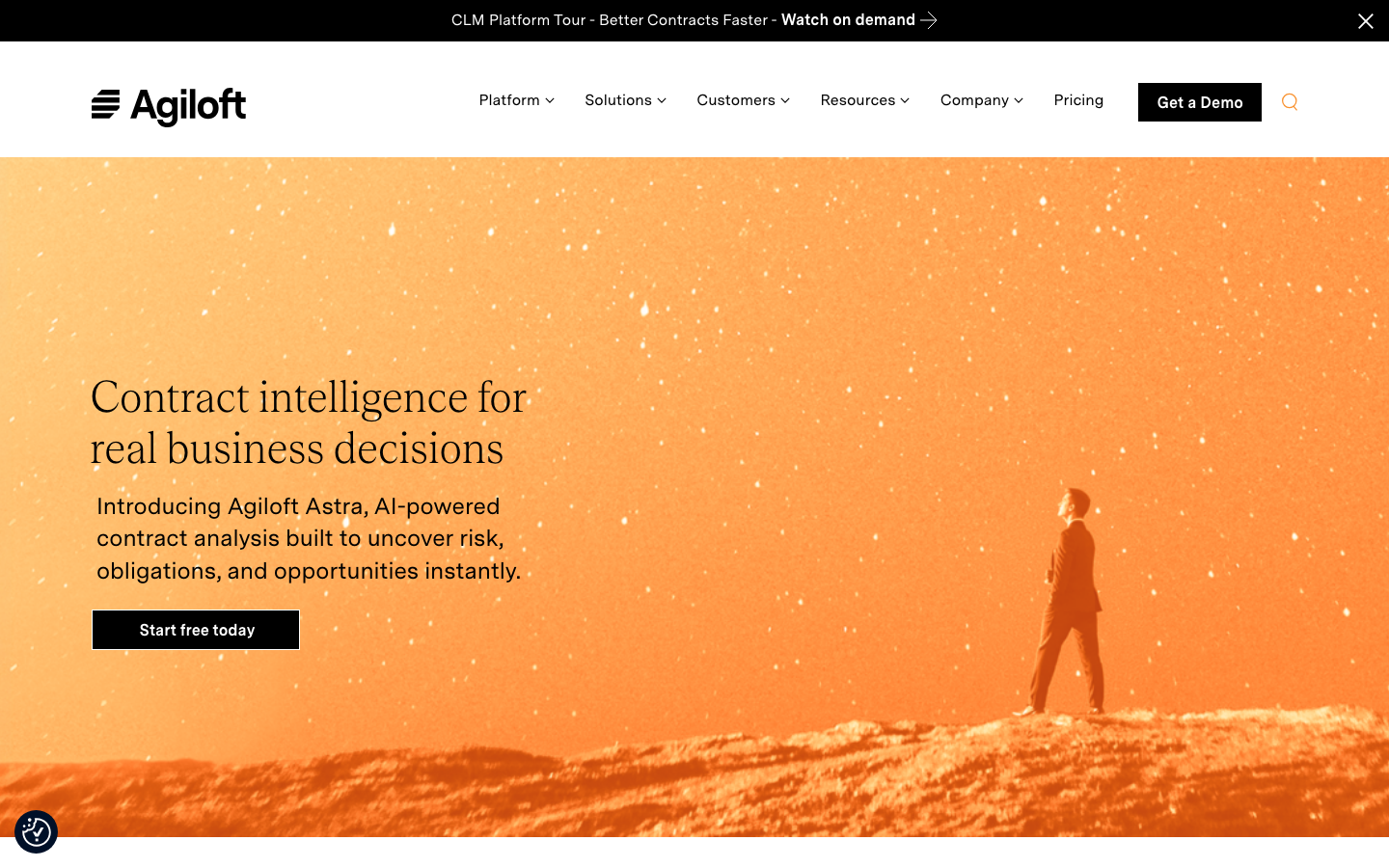
Agiloft is a no-code, highly configurable CLM platform that automates authoring, approval workflows, obligation tracking, and renewals across the full lifecycle. The system is built for teams that want to shape their own process without waiting on developers.
Software Pros
- No-code, deeply configurable workflows
- Strong obligation and renewal tracking
- Flexible authoring and approvals
- Well rated for support
Software Cons
- Configuration takes time to master
- UI feels dated next to newer tools
- Admin skills are needed to tune it
Agiloft Review
While reviewing Agiloft, the standout is how far you can bend it without code. I built a custom approval path and an obligation reminder in the sandbox without touching a script. That flexibility rewards teams with a clear process for encoding, but it requires an owner willing to configure. Out of the box, it is less polished than Ironclad, yet few tools match its adaptability across the lifecycle. For a legal ops lead who enjoys designing processes, the effort is repaid many times over.
Our Verdict
No-Code Configurable CLM
CobbleStone
Quick Overview
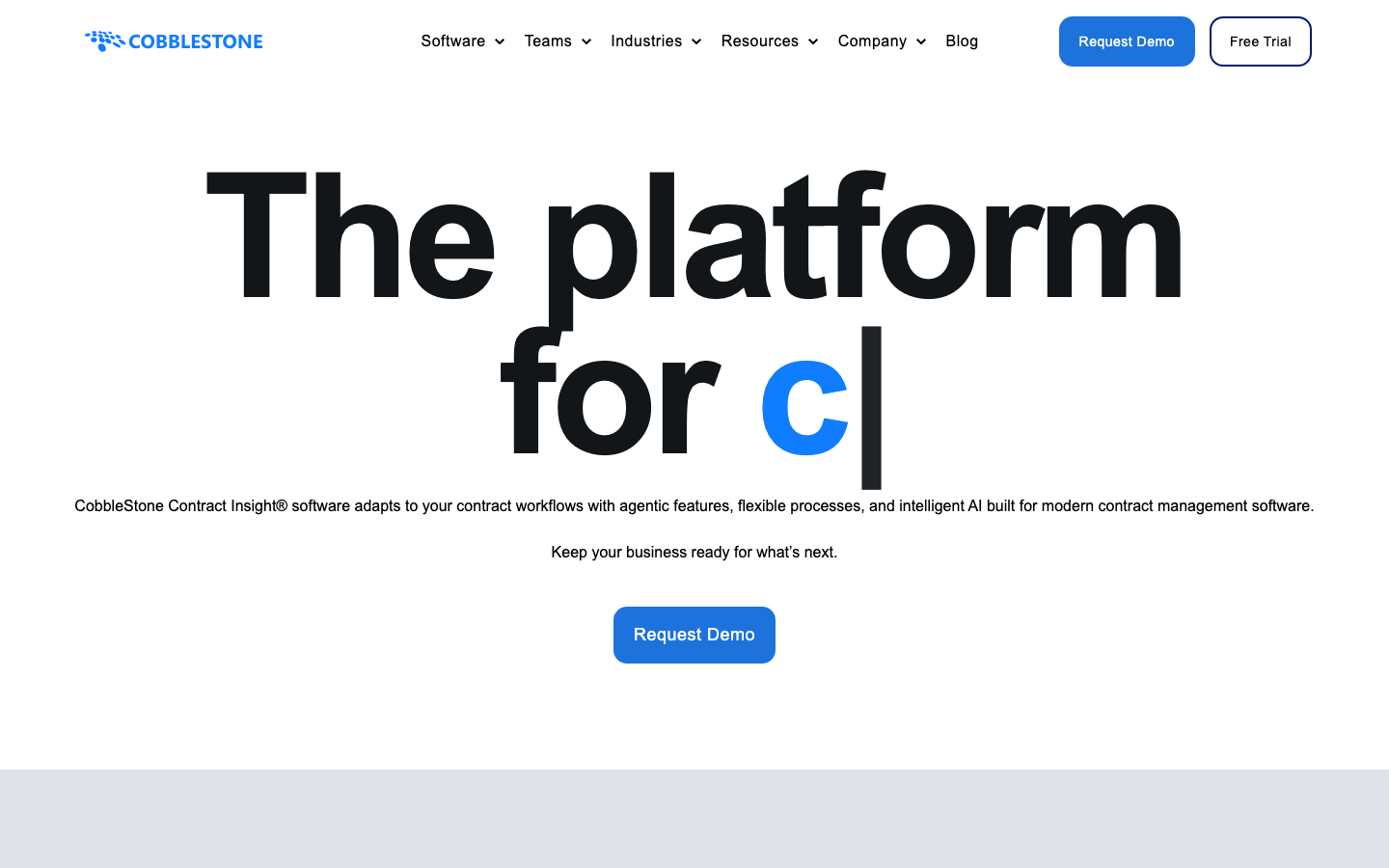
CobbleStone is a feature-rich contract management platform offering unlimited contract storage, e-signature, financial tracking, and its VISDOM AI for risk and opportunity insights. It packs depth aimed at mid-market and enterprise teams.
Software Pros
- Unlimited contract storage
- Built-in e-signature
- VISDOM AI risk insights
- Financial and spending tracking
Software Cons
- Interface has a learning curve
- Breadth can overwhelm small teams
- Setup benefits from vendor help
CobbleStone Review
During my evaluation, CobbleStone impressed me with how much it bundles for the price, from unlimited storage to AI risk scoring. I ran a value-heavy agreement through its financial tracking, and the reporting was genuinely useful. The depth is the double-edged sword: a small legal team may find the menus dense. For a mid-market buyer wanting enterprise features without an enterprise invoice, it is a serious contender. Its VISDOM scoring gave me a quick read on where a portfolio’s risk was concentrated.
Our Verdict
Feature-Rich Value CLM
Concord
Quick Overview
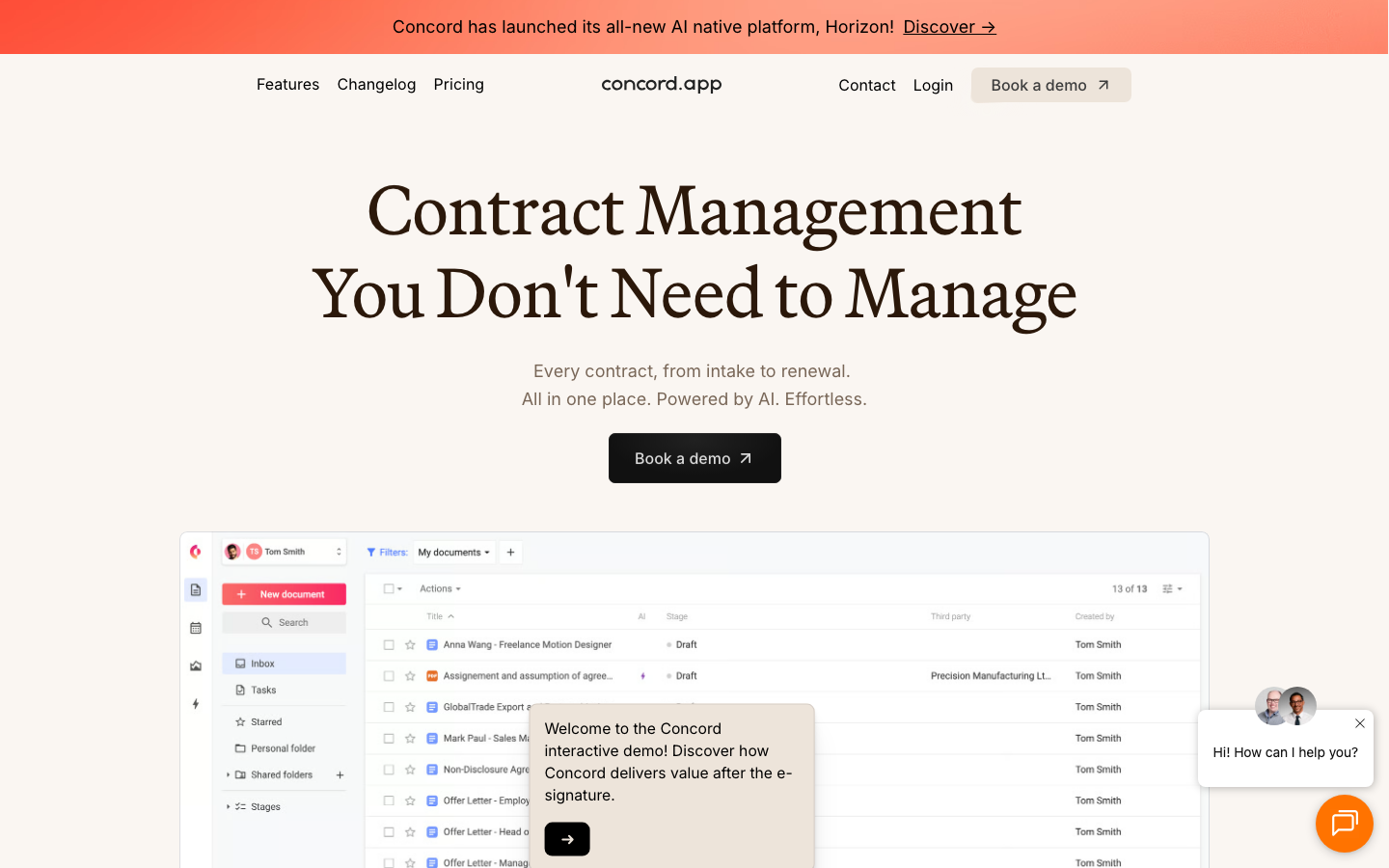
Concord is a simplicity-driven contract management system that lets teams draft, negotiate, sign, and store agreements in one place with minimal setup. It targets growing teams that want the lifecycle without the implementation project.
Software Pros
- Fast, low-friction setup
- Drafting and negotiation in one place
- Built-in e-signature
- Approachable for non-lawyers
Software Cons
- Lighter on deep automation
- Fewer enterprise governance controls
- Analytics are basic
Concord Review
What stood out to me about Concord is how quickly a non-specialist can get productive. I drafted, sent for redlines, and signed inside a single window with almost no configuration. For a scaling company that wants an easy, all-in-one CLM, that low barrier is the whole point, and as a best contract management lifecycle software pick for smaller teams, it earns its place. It will not match Icertis in governance, but many teams do not need that level of weight yet.
Our Verdict
Easy All-In-One CLM
Conga CLM
Quick Overview
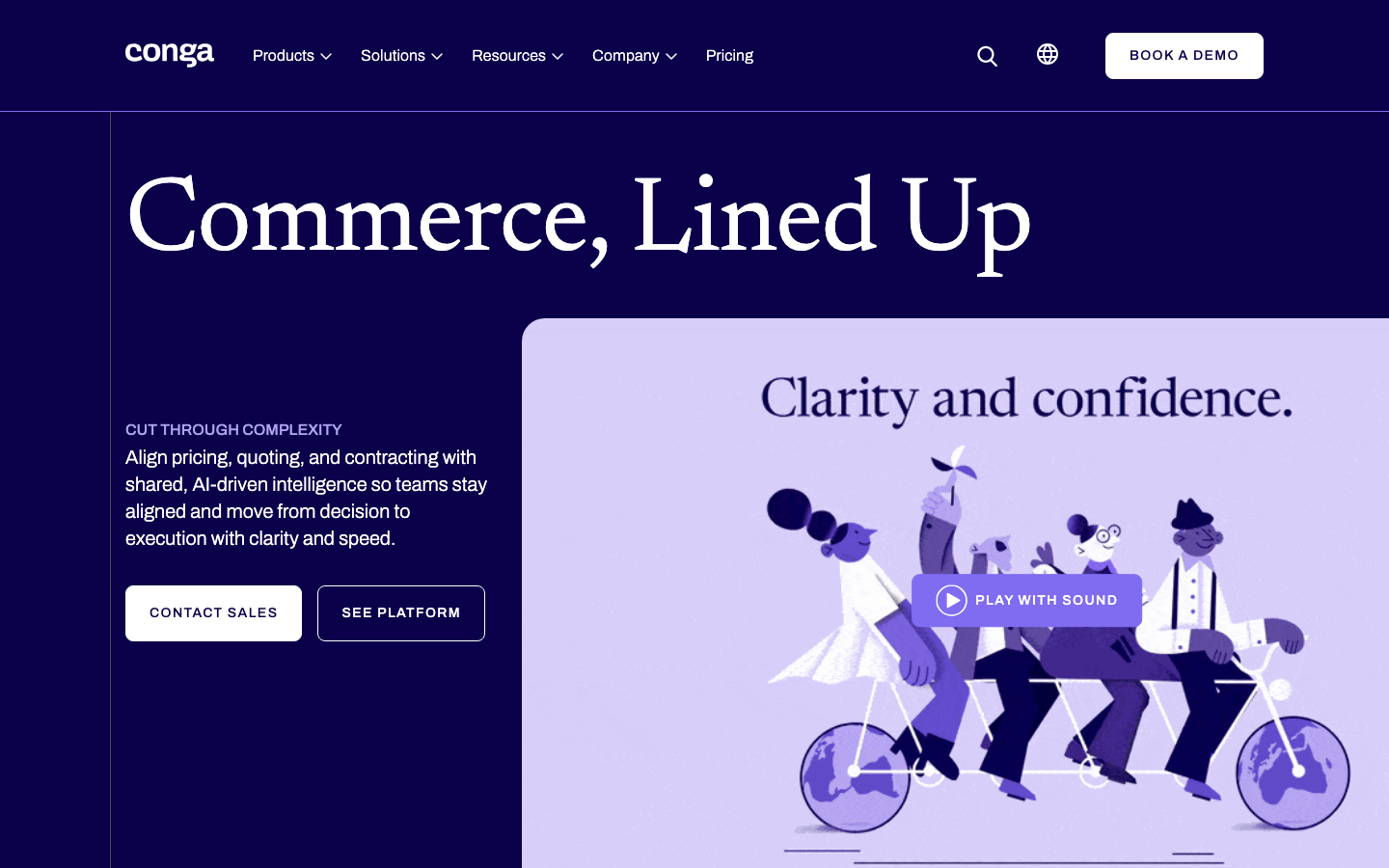
Conga CLM is a Salesforce-native CLM solution, formerly Apttus, offering clause management, version control, workflow automation, and e-signature. It is built for revenue teams that run on Salesforce.
Software Pros
- Native Salesforce integration
- Strong clause and version control
- Workflow automation for approvals
- Ties contracts to CRM data
Software Cons
- Value depends on Salesforce use
- Implementation can be complex
- Pricing skews enterprise
Conga CLM Review
In my assessment of Conga CLM, its home turf is obvious: for a sales org living in Salesforce, keeping quotes, orders, and contracts in a single data model eliminates constant swivel-chairing. I linked a contract to an opportunity, and the fields carried across cleanly. The catch is that its appeal fades outside Salesforce; setup is a project rather than an afternoon; and non-Salesforce teams gain little from its core strength.
Our Verdict
Salesforce-Native Contract Automation
ContractSafe
Quick Overview
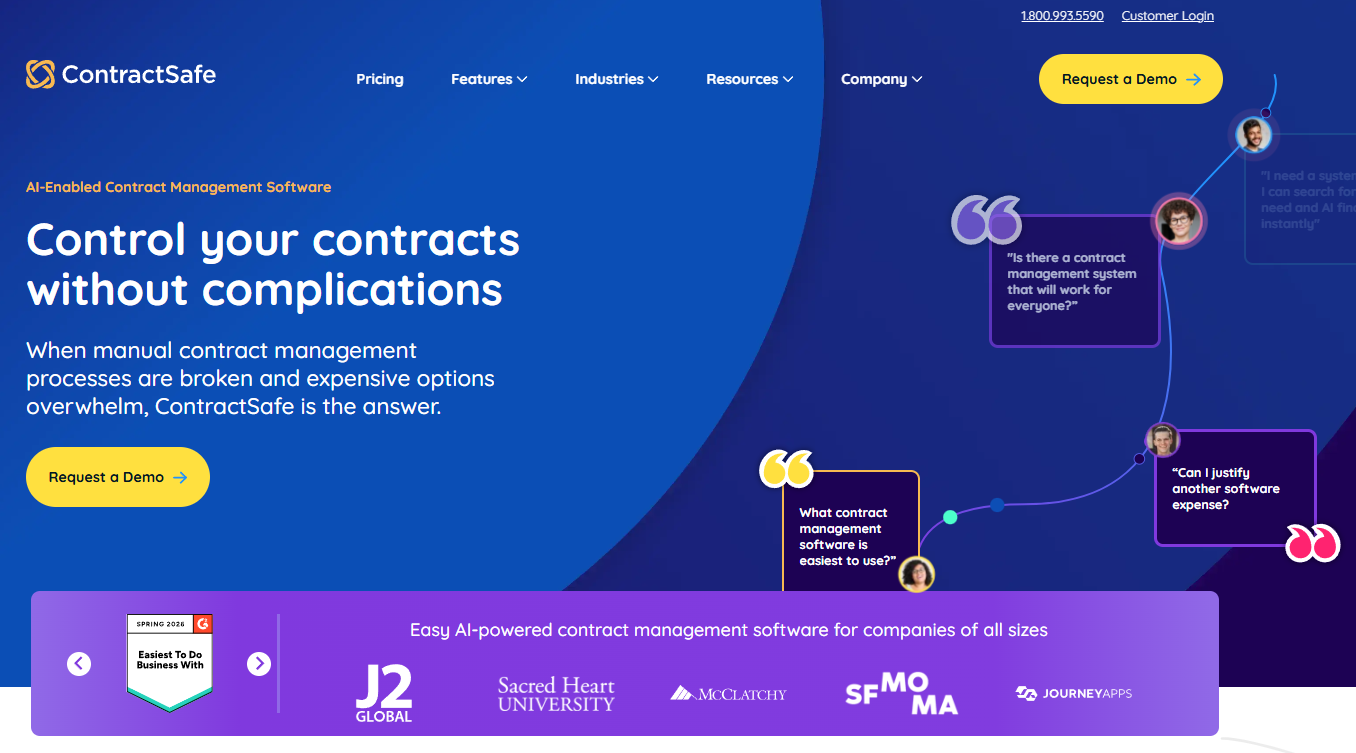
ContractSafe is a full-lifecycle CLM platform covering intake, approvals, e-signature, secure storage, AI-powered data extraction, renewal alerts, permissions, and reporting. It is built for legal, finance, procurement, sales, and operations teams that want CLM without a long enterprise rollout.
Software Pros
- Unlimited users on every plan
- AI data extraction and smart search
- Intake, approvals, and e-sign in one flow
- Renewal alerts and full date tracking
Software Cons
- Full lifecycle sits on the top plan
- Lighter for heavy procurement governance
- Redlining depth trails enterprise tools
ContractSafe Review
In my hands-on time with ContractSafe, the emphasis is adoption rather than configuration depth. I uploaded a batch of agreements, and the AI pulled key dates and terms into a searchable record without a setup project, then renewal alerts took a couple of clicks. The unlimited-user pricing is the quiet advantage, since business users outside legal can be given access without a seat-by-seat budget conversation. Buyers should note that the full lifecycle capability sits on the top tier, and teams running complex procurement governance or constant redlining will find Icertis or Sirion deeper. For a lean legal or operations team that wants contracts under control quickly, it is one of the easier systems to roll out.
Our Verdict
Unlimited-User Lifecycle CLM
DocuSign CLM
Quick Overview
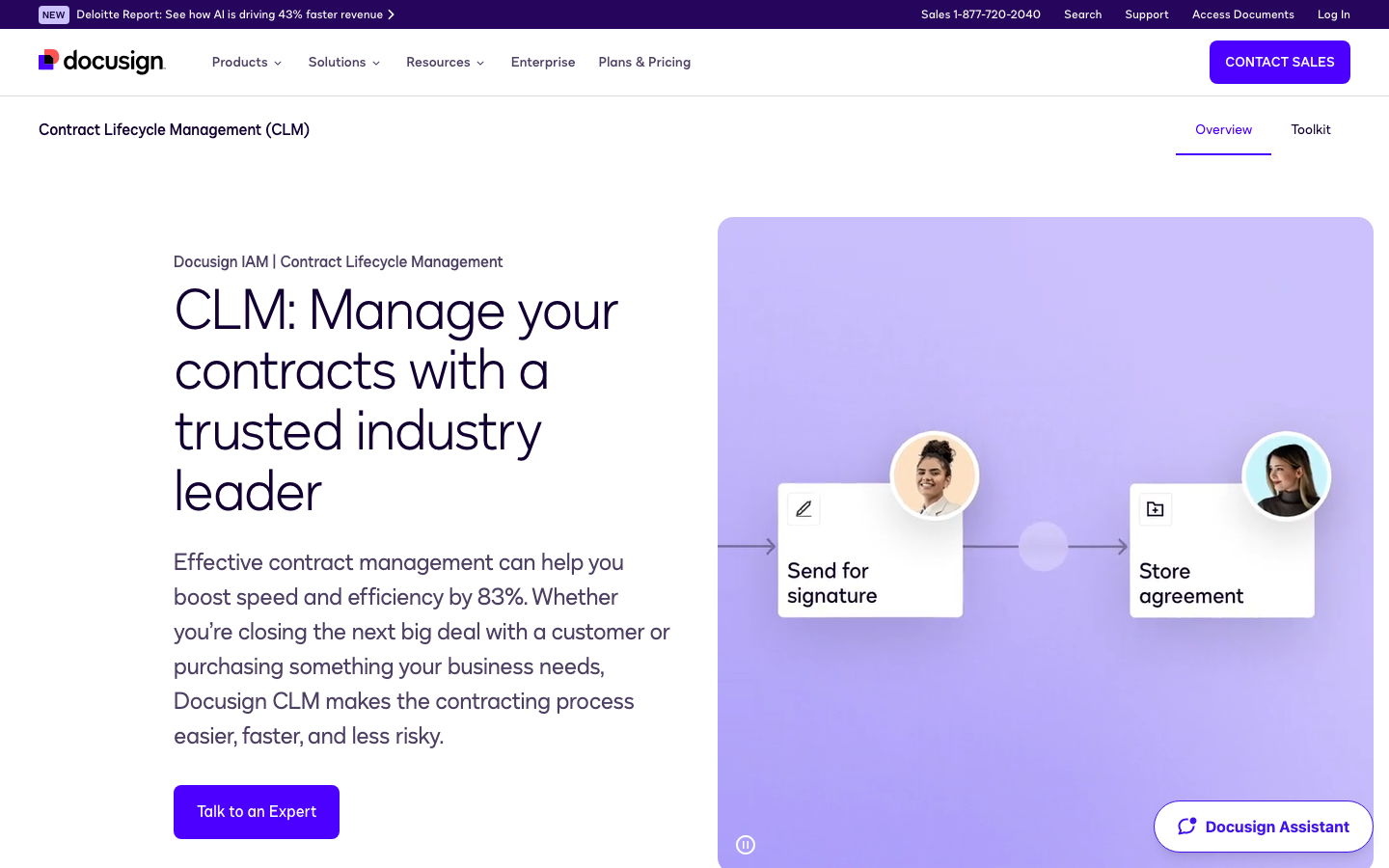
DocuSign CLM extends DocuSign’s e-signature into a full contract automation platform, formerly SpringCM, adding configurable approval routes, audit trails, and a central repository. It suits teams already standardized on DocuSign for signing.
Software Pros
- Signing-to-lifecycle continuity
- Configurable approval routing
- Strong audit trails
- Familiar to DocuSign users
Software Cons
- Analytics lighter than Sirion or Icertis
- Full CLM costs well beyond e-sign
- Can feel bolt-on in places
DocuSign CLM Review
While reviewing DocuSign CLM, the natural pull is continuity: if your signatures already run through DocuSign, extending into approvals and storage is a short step. I moved a signed agreement into its repository, and the audit trail was thorough. The honest note is that its post-signature intelligence is lighter than that of enterprise leaders, so analytics-heavy teams may want more. Still, for signing-led organizations, it is the most natural path to upgrade.
Our Verdict
E-Signature-Led Lifecycle CLM
Icertis
Quick Overview
Icertis is enterprise contract intelligence with deep ERP integration into SAP and Dynamics, obligation management, and governance built for scale. It is one of the most recognized enterprise contract lifecycle management software vendors.
Software Pros
- Deep SAP and Dynamics integration
- Enterprise-grade governance
- Rich obligation management
- Gartner-recognised leader
Software Cons
- Heavy, lengthy implementation
- Cost suits large budgets only
- Needs cross-functional alignment
Icertis Review
Icertis is one of the best software for contract lifecycle management, built for the largest, most regulated organizations, where contract data must reconcile with ERP and audit demands are constant. Its obligation intelligence was the deepest I tested. That governance comes at a price: implementation is a program, not a purchase, and a mid-sized team would drown in capability it cannot staff. For a global enterprise, though, it is a benchmark, and its ERP alignment removes a whole class of reconciliation work.
Our Verdict
Enterprise Contract Intelligence
Ironclad
Quick Overview
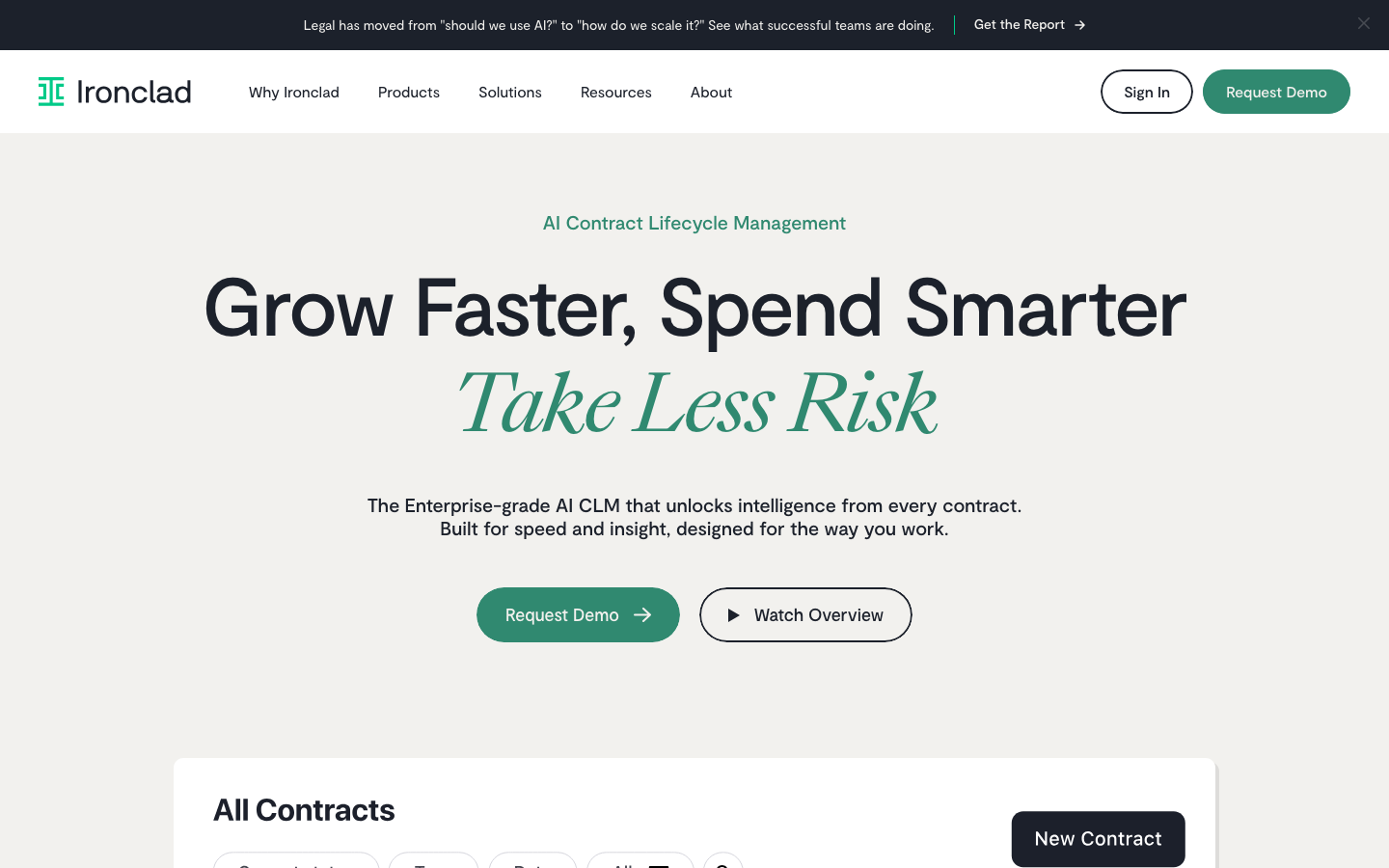
Ironclad is a modern, AI-forward CLM platform with real-time redlining, native e-signature, and a strong Salesforce integration serving both legal and sales. It is built for digital-first teams that want to move quickly.
Software Pros
- Polished, modern interface
- Real-time collaborative redlining
- Native e-signature
- AI-assisted drafting and review
Software Cons
- Pricing is enterprise-tier
- Deeper features need onboarding
- Less procurement-specific depth
Ironclad Review
What stood out to me about Ironclad is speed without feeling flimsy. I redlined a draft collaboratively, and the AI surfaced risky clauses as I went, shortening a review that normally drags on. For a fast-moving legal or procurement team, it balances usability and depth well. The trade is budget, since its polish and AI sit firmly in enterprise pricing rather than SMB territory.
Our Verdict
AI-Forward Modern CLM
Juro
Quick Overview
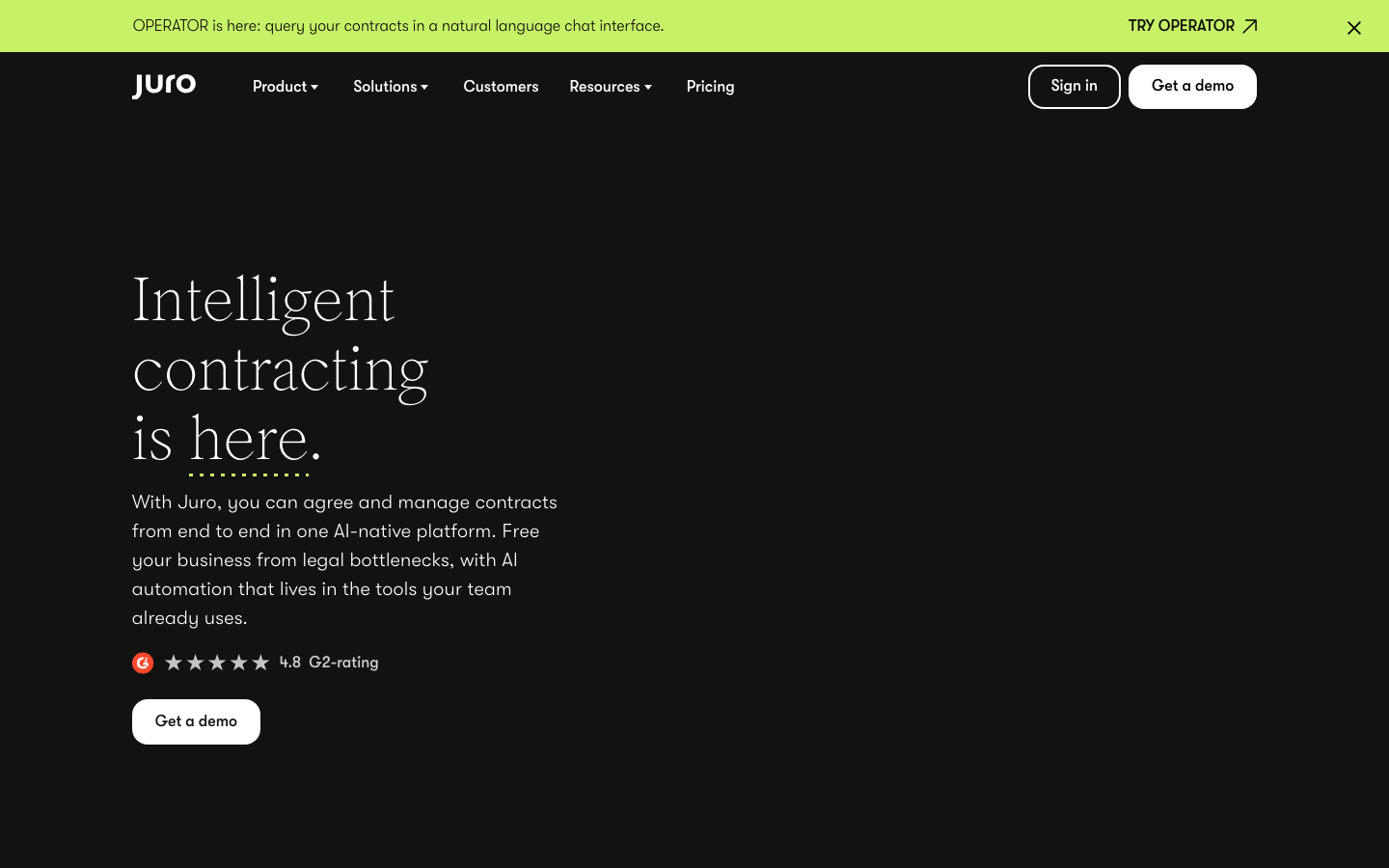
Juro is an intelligent contract automation platform for scaling businesses, built to enable legal and commercial teams to draft, agree, and manage contracts in a single collaborative workspace. It aims to keep contracting at a fast pace as a company grows.
Software Pros
- Unified drafting and collaboration
- Clean, modern editor
- AI assistance for routine contracts
- Good for legal plus commercial
Software Cons
- Lighter for complex procurement
- Fewer deep ERP integrations
- Enterprise governance is limited
Juro Review
In my assessment of Juro, the appeal is that it is a single workspace where a commercial user and a lawyer collaborate on the same document. I created a templated agreement, and a colleague commented in real time without a separate tool. For a scaling company that wants collaborative, fast contracting, it fits neatly. It is less suited to heavy procurement governance, where an enterprise platform would win, so match it to commercial rather than procurement-heavy work.
Our Verdict
Collaborative Contract Automation
LinkSquares
Quick Overview
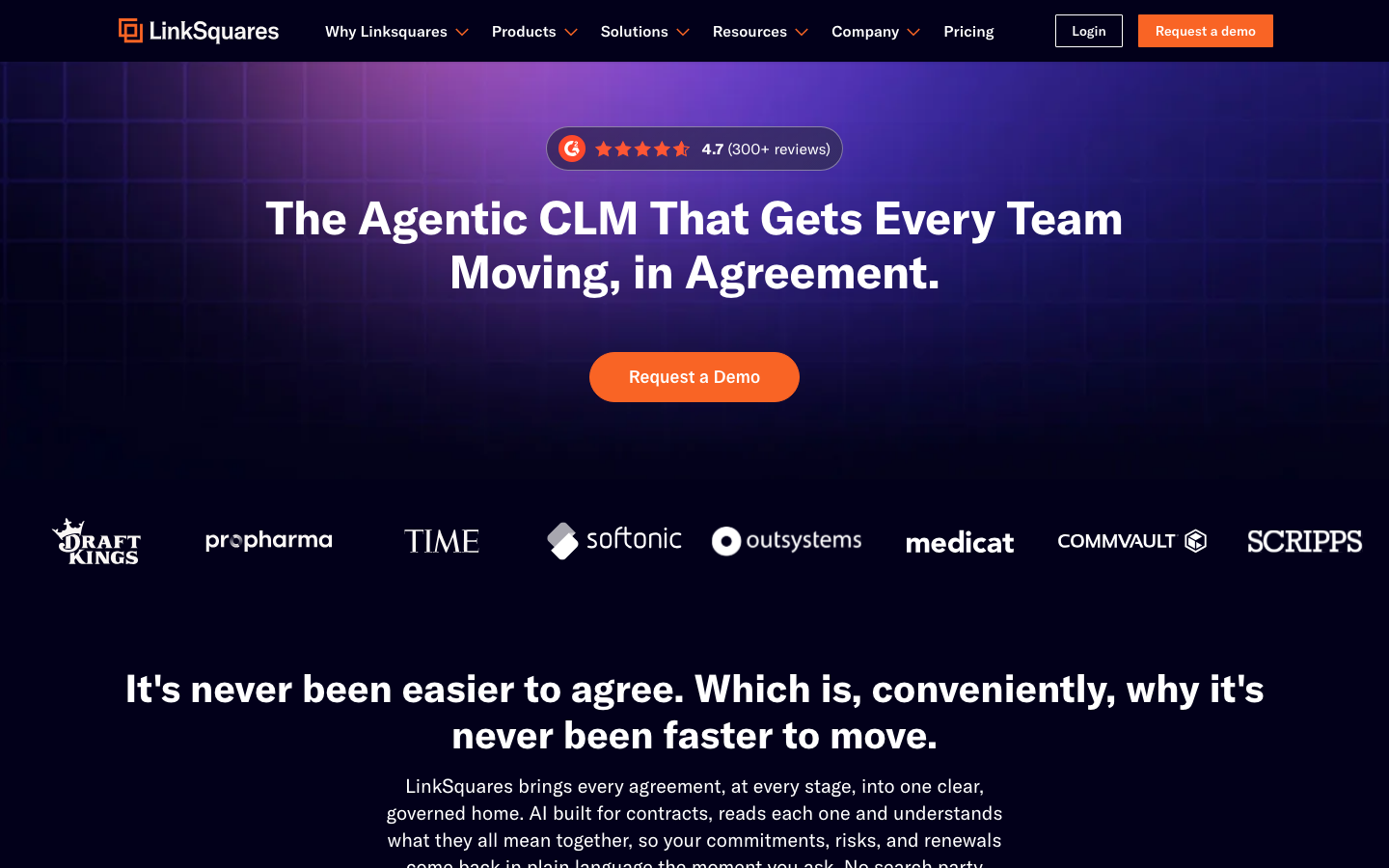
LinkSquares is an in-house legal CLM system with AI-driven clause extraction, a centralized repository, and analytics for obligations and performance. It leans toward what happens after signing.
Software Pros
- Strong AI clause extraction
- Centralized searchable repository
- Post-signature analytics
- Built for in-house legal
Software Cons
- Pre-signature drafting is lighter
- Best value for legal-led teams
- Reporting has a learning curve
LinkSquares Review
While reviewing LinkSquares, its post-signature focus stood out: I uploaded a batch of agreements, and its AI pulled key clauses and dates into a searchable view quickly. For an in-house legal team drowning in existing contracts, that visibility is the draw. The pre-signature side is less developed than Ironclad, so teams that live in negotiation may want to pair it or look elsewhere, since its strength is clearly the post-signature repository.
Our Verdict
Analytics-Led In-House CLM
PandaDoc
Quick Overview
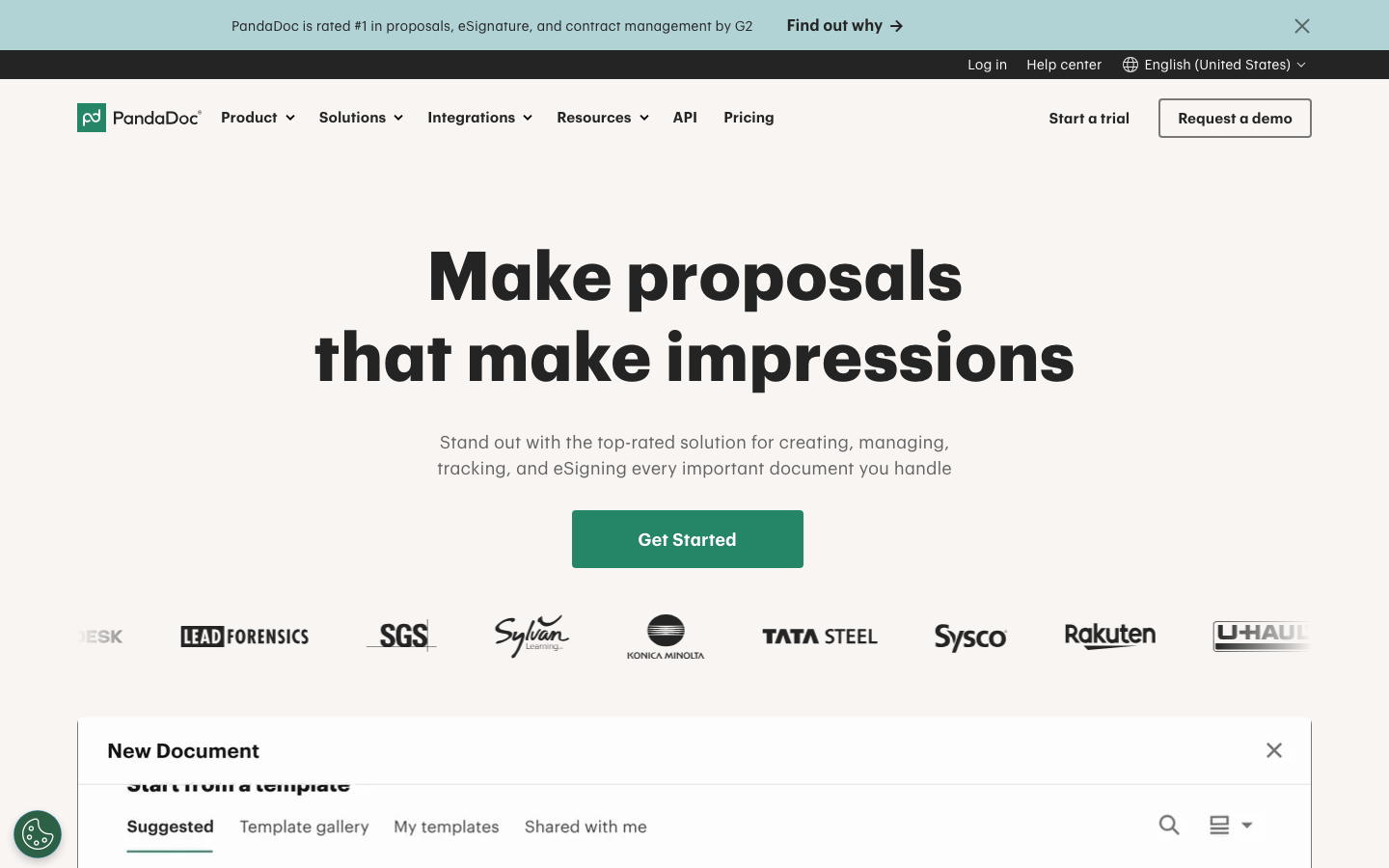
PandaDoc is an affordable, all-in-one document and contract platform for building, tracking, and signing agreements, with lighter lifecycle automation than a pure CLM. It is aimed at SMBs and sales teams.
Software Pros
- Low, transparent pricing
- Easy document building and templates
- Built-in tracking and e-sign
- Fast for sales quotes and proposals
Software Cons
- Lighter lifecycle automation
- Limited enterprise governance
- Not built for deep procurement
PandaDoc Review
During my evaluation, PandaDoc felt more like document automation with signing than a heavyweight CLM, and that is the point. I built a proposal from a template and tracked when the recipient opened it, all at an SMB price. For a small sales team that wants simple, low-cost contracting, it is a comfortable fit. Buyers needing obligation governance at scale should look to the enterprise names instead. For proposals and quotes, though, its tracking and templates move a deal along quickly.
Our Verdict
Lightweight All-In-One Contracting
SAP Ariba
Quick Overview
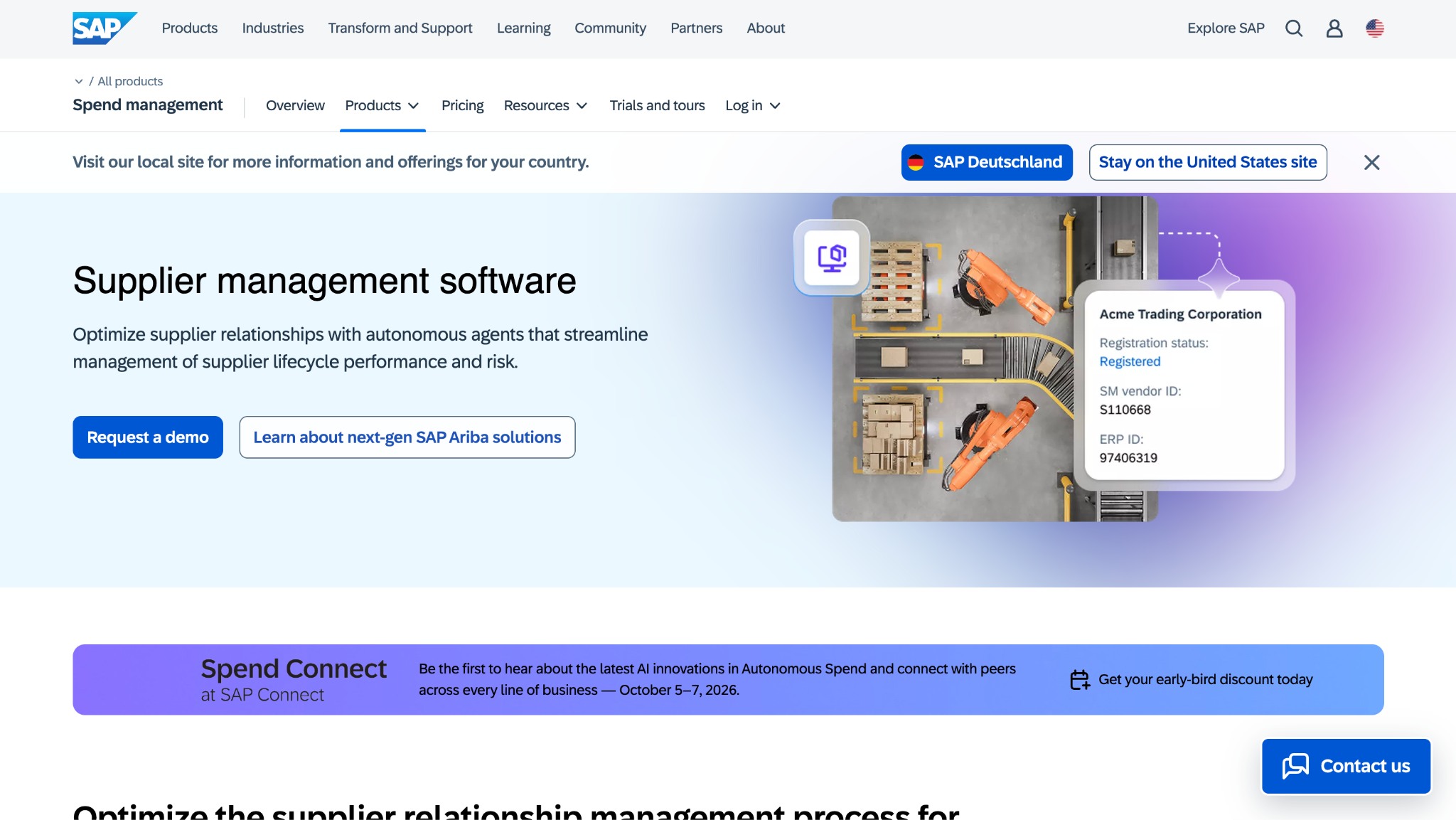
SAP Ariba delivers a procurement-focused CLM, specializing in post-signature workflows, spend visibility, and supplier compliance. It is enterprise contract lifecycle management software built around the buying process.
Software Pros
- Deep procurement integration
- Strong supplier compliance
- Spend visibility across contracts
- Fits the SAP ecosystem
Software Cons
- Procurement-first, not legal-first
- Heavy for lightweight teams
- Best value inside SAP
SAP Ariba Review
In my assessment of SAP Ariba, its center of gravity is procurement, not legal drafting. For a large enterprise managing supplier contracts and spend, tying agreements to sourcing and compliance in one system is powerful, and my test supplier record linked cleanly to its contract. The flip side is that a commercial or legal team wanting a nimble, flexible tool will find it heavy and buying-centric.
Our Verdict
Procurement-First Enterprise CLM
Sirion
Quick Overview
Sirion is an AI-native CLM platform and a Gartner Magic Quadrant leader, with agentic extraction, drafting, redlining, and obligation and invoice management for buy-side and sell-side contracts. It is built for large, regulated enterprises.
Software Pros
- AI-native, agentic capabilities
- Deep obligation and invoice management
- Buy-side and sell-side coverage
- Gartner MQ leader
Software Cons
- Enterprise implementation effort
- Priced for large organizations
- More than smaller teams need
Sirion Review
What stood out to me about Sirion is how central the AI is rather than bolted on. I watched it extract obligations and reconcile them against invoices in a way lighter tools cannot. For a large, regulated enterprise that needs post-signature intelligence across thousands of agreements, it ranks among the top contract lifecycle management CLM software for that job. The cost of that depth is a real implementation and a matching budget, which rules it out for smaller teams. In a regulated sell-side operation, its obligation and invoice reconciliation is genuinely rare.
Our Verdict
AI-Native Enterprise CLM
Workday CLM
Quick Overview
Workday CLM, powered by Evisort, is AI-driven contract intelligence, built on the Evisort engine Workday acquired, that centralizes contracts with no migration, auto-extracts metadata, and self-populates dashboards. It aims at fast ROI, especially for Workday customers.
Software Pros
- Fast setup with no migration
- AI metadata extraction
- Self-populating dashboards
- Strong fit for Workday shops
Software Cons
- Newer as a unified Workday product
- Deepest value inside Workday
- Enterprise-oriented pricing
Workday CLM Review
During my evaluation, Workday CLM, still known to many as Evisort, leaned most heavily on quick time-to-value. I pointed it at a set of existing agreements, and it extracted metadata and built dashboards without a migration project. For an enterprise, especially a Workday customer, that fast ROI is the selling point. As a freshly unified product, it is evolving, and its best fit is clearly inside the Workday world, where the shared data model pays off quickly.
Our Verdict
Fast-ROI AI Contract Intelligence
FAQs About Contract Lifecycle Management Software
What is contract lifecycle management (CLM) software?
Contract lifecycle management CLM software manages an agreement end-to-end, from creation and negotiation through approval, signing, storage, obligation tracking, and renewal. That is the line between it and simpler tools: a storage folder holds documents, and an e-signature app signs them, but neither runs the whole process. A true CLM platform turns contracts into a controlled, searchable, auditable workflow with reporting across every stage. In short, the best contract lifecycle management CLM software runs the whole process, not just one slice of it.
What features should contract lifecycle management software have?
The core contract lifecycle management software features are a clause library and templates, approval workflows, e-signature, and a central repository. Beyond those, look for obligation and renewal tracking to ensure deadlines are not missed, AI-driven review that extracts clauses and flags risks, analytics on cycle time and performance, and integrations with your CRM, ERP, or storage. The mix you need depends on whether you are a legal, sales, or procurement lead.
What is the best enterprise contract lifecycle management software?
For governance and scale, the usual enterprise contract lifecycle management software names are Icertis, Sirion, SAP Ariba, Conga CLM, DocuSign CLM, and Workday CLM. Each handles high contract volumes, deep integrations, and strict audit needs. Icertis and Sirion lead in obligation intelligence, SAP Ariba in procurement, and Conga in Salesforce-centric revenue teams, so the best fit follows your existing systems.
Who are the leading CLM software vendors, and how do they compare?
The 14 contract lifecycle management software vendors here span the market, and analyst reports help sort them. Gartner and Forrester have recognized Sirion, Icertis, and Ironclad among the leaders. When you compare contract lifecycle management software, the split is roughly enterprise governance, such as Icertis and Sirion, versus modern usability, such as Ironclad and Juro, versus lightweight value, such as PandaDoc and Concord.
How much does contract lifecycle management software cost?
Contract lifecycle management software pricing spans a wide range. A few lighter tools offer per-user subscriptions that suit smaller teams, while enterprise platforms are almost always custom-quoted based on contract volume and modules, often ranging from the low tens of thousands to well over sixty thousand dollars a year. Expect implementation and training to add to the first-year total.
How big is the contract lifecycle management software market?
The contract lifecycle management software market has grown steadily into the low billions of dollars and is forecast to keep expanding at a double-digit annual rate through the decade. AI is the main driver, as automated drafting, extraction, and obligation tracking attract buyers who once managed contracts via email and spreadsheets. Analyst houses such as Gartner and Forrester track the category closely, and their reports remain a useful sanity check for buyers.
How is the CLM software market growing in the GCC and Middle East?
The GCC contract lifecycle management software market is expanding as Gulf enterprises in the UAE and Saudi Arabia digitize procurement and tighten compliance under national transformation programs. Large public and private buyers are adopting CLM to control supplier agreements at scale. Regional considerations matter too, including data-residency requirements and Arabic-language support, so buyers there should confirm both with any vendor.
How is CLM different from basic contract management or e-signature tools?
Basic contract management stores and organizes signed files, and an e-signature tool captures signatures, but each covers only one slice. A CLM platform runs the full lifecycle and adds intelligence, workflow, and reporting on top of it. Teams consolidate onto CLM to stop stitching together a drive, an inbox, and a signing app, and to gain the obligation-tracking and analytics that point tools lack, all within one auditable system of record.

Yaryna is our lead writer with over 8 years of experience in crafting clear, compelling, and insightful content. Specializing in global employment and EOR solutions, she simplifies complex concepts to help businesses expand their remote teams with confidence. With a strong background working alongside diverse product and software teams, Yaryna brings a tech-savvy perspective to her writing, delivering both in-depth analysis and valuable insights.