Corporate entity management software is the single source of truth for a company’s legal entities: their records, directors and officers, ownership, statutory registers, filings, and compliance obligations across jurisdictions. Where spreadsheets scatter that information across teams and inboxes, a proper platform brings it into one governed place and keeps it accurate as structures change. The teams that depend on it are legal, corporate secretarial, compliance, and finance, and choosing the best corporate entity management software begins with the size and spread of your entity portfolio.
The pressure to get this right has grown. EY research on the general counsel agenda finds legal departments prioritizing legal technology and reliable data over manual, spreadsheet-bound processes. Missed filings and stale registers carry real penalties, so AI insights, automated filings, and interactive org charts have become standard expectations. In that sense, entity management enforces statutory compliance much as policy management software enforces internal rules, turning scattered records into auditable, controlled workflows.
Choosing Corporate Entity Management Software in 2026
The platforms below split into enterprise governance suites, modern cloud-native tools, and software-plus-services providers that pair a system with registered-agent and filing help. Running your own entities is the flip side of outsourcing headcount, so the tools here matter most once you have committed to incorporation rather than a lighter arrangement. To map the best corporate entity management software 2026 has produced, I reviewed 12 of the leading platforms in alphabetical order below.
Top 12 Corporate Entity Management Software Platforms for 2026
I researched and reviewed each of these platforms, checking how they hold entity records, generate org charts, drive filings, and track compliance across jurisdictions. I am listing all providers in alphabetical order to keep this comparison neutral, so nothing here is ranked first. The mix ranges from enterprise leaders such as Diligent Entities and CSC to modern cloud platforms such as Athennian and Klea. These corporate entity management software reviews stay balanced on every tool, and the top corporate entity management software 2026 buyers should shortlist spans budgets from lean SMB tools to global governance suites, so read each verdict against your entity count and your appetite for managed services.

Athennian
Quick Overview
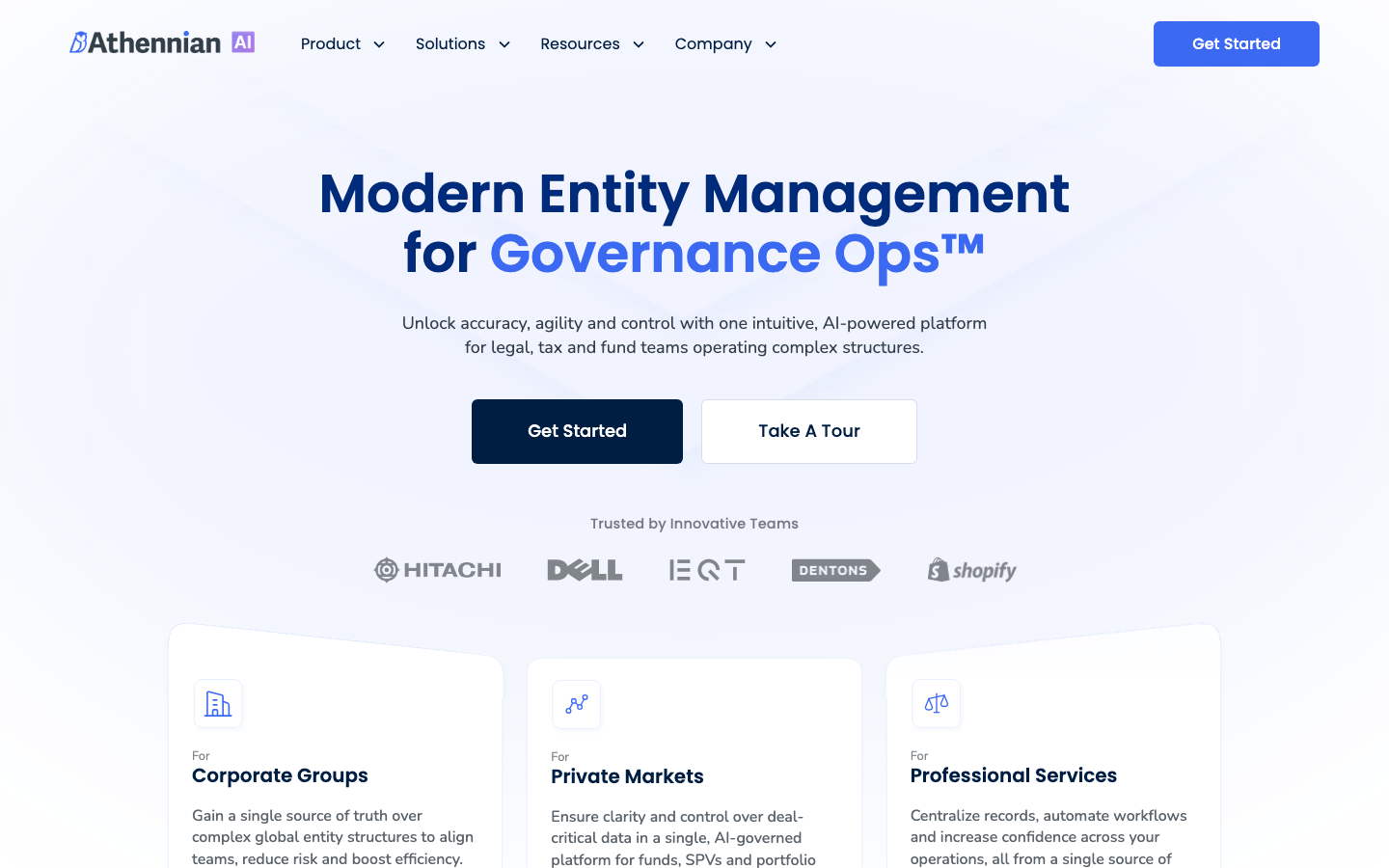
Athennian is a cloud-native entity management platform that automates corporate records, minute books, cap tables, filings, and real-time entity org charts for legal and finance teams. It is built for teams, replacing spreadsheets with a modern system.
Software Pros
- Real-time entity org charts
- Automated minute books and records
- Cap table and filing automation
- Modern, well-liked interface
Software Cons
- Priced for firms, not micro teams
- Depth takes time to configure
- Newer than legacy incumbents
Athennian Review
While reviewing Athennian, its cloud-native feel stood out: records, minute books, and org charts updated together, so a subsidiary change did not leave three systems out of sync. For a law firm or in-house legal team leaving spreadsheets behind, that coherence is the draw. It carries a professional price and rewards proper setup, so a company with only a handful of entities may find it more platform than it needs. For a firm juggling many entities across offices, though, the shared, always-current view quickly pays for itself.
Our Verdict
Modern Cloud Entity Platform
Computershare GEMS
Quick Overview
Computershare GEMS runs a Global Entity Management System for large multinationals, centralizing entity data, statutory records, and compliance across many jurisdictions. As enterprise-grade corporate entity data management software, it is built for scale.
Software Pros
- Built for global entity portfolios
- Strong statutory record depth
- Multi-jurisdiction compliance
- Backed by a large provider
Software Cons
- Aimed at big multinationals
- Heavier onboarding
- Less nimble than cloud upstarts
Computershare GEMS Review
During my evaluation, Computershare GEMS read as a system for the largest, most jurisdictionally complex portfolios, in which hundreds of entities must remain reconciled and audit-ready. Its statutory record handling was thorough. That heft suits a global corporate group, but a mid-market team with a dozen entities would carry capability and onboarding effort well beyond what its structure actually calls for. For a true multinational, however, its reach across jurisdictions is exactly what a fragmented portfolio needs.
Our Verdict
Global Enterprise Entity System
ContractZen
Quick Overview
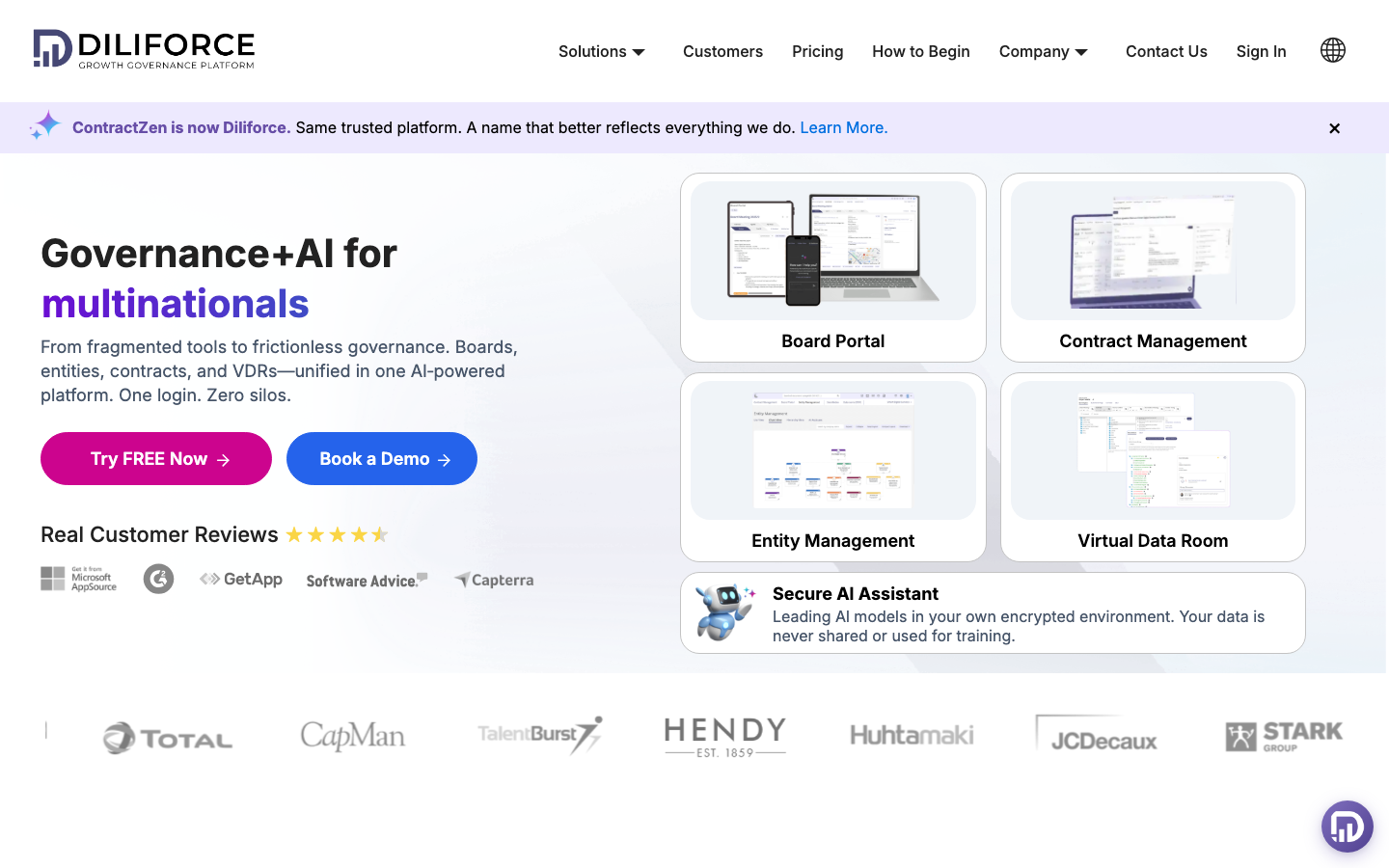
ContractZen is a governance cloud that unifies entity management, a board portal, contract management, and virtual data rooms, with dynamic ownership tree views. The entity management solution suits teams wanting governance in one place.
Software Pros
- Entity, board, and contracts together
- Dynamic ownership tree views
- Virtual data rooms included
- Approachable for the mid-market
Software Cons
- Entity is one of several modules
- Less entity depth than specialists
- Broad scope adds learning
ContractZen Review
In my assessment of ContractZen, the appeal lies in its breadth: entity records sat alongside board materials and contracts, so a smaller governance team could run much of its work from one login. The ownership tree views were genuinely useful. Because entity management is one of several modules, a large multinational needing the deepest statutory tooling may prefer a dedicated specialist over a broader suite. For a lean team that values a single place for entity, board, and contract work, the consolidation is the main appeal.
Our Verdict
All-In-One Governance Cloud
CSC Entity Management

Quick Overview
CSC Entity Management pairs entity management software with registered-agent and managed-compliance services worldwide, from a leading corporate-services provider. The entity management platform is built for teams wanting software and filing help in one place.
Software Pros
- Software plus registered-agent services
- Global managed compliance
- Deep corporate-services expertise
- Filing support included
Software Cons
- Services model, less pure software
- Enterprise pricing
- Less self-serve than cloud tools
CSC Entity Management Review
During my evaluation, CSC made the software-plus-services model concrete: rather than only tracking obligations, it could handle filings and registered-agent work across many jurisdictions. For a team that would rather delegate the legwork, that is the point. A company seeking a purely self-serve platform, without the managed-services layer and its associated costs, may find a lighter tool a better fit. For a group filing in dozens of jurisdictions, though, handing the legwork to one provider removes a real operational headache.
Our Verdict
Software-Plus-Services Compliance
CT Corporation
Quick Overview
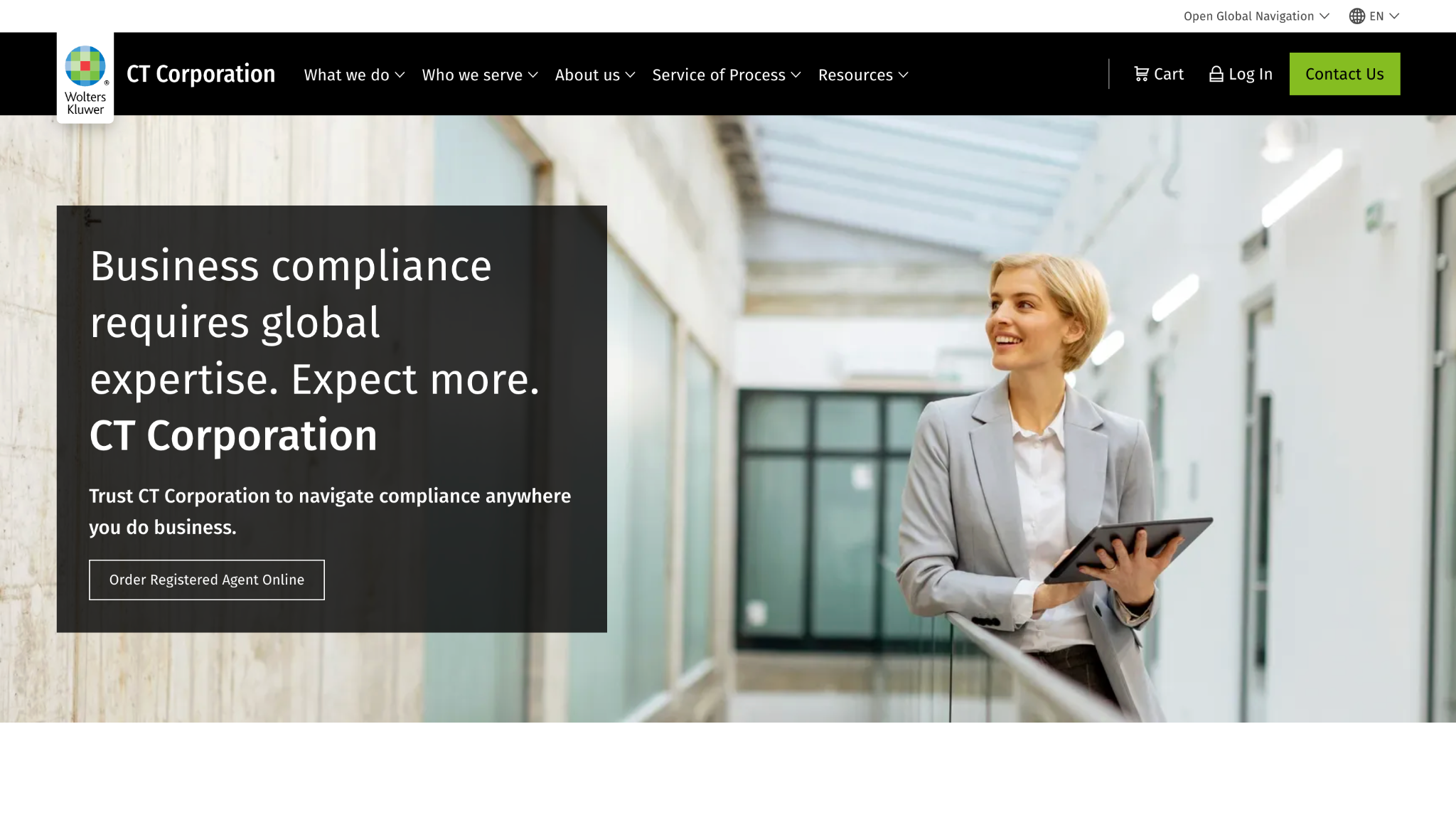
CT Corporation, part of Wolters Kluwer, offers entity management through My CT Corporation, combining centralized entity data, compliance calendars, and the largest US registered-agent network. The entity management tool leans strongly toward US compliance.
Software Pros
- Largest US registered-agent network
- Centralized entity data
- Compliance calendars built in
- Trusted US compliance brand
Software Cons
- US-centric focus
- Less global than rivals
- Services-led pricing
CT Corporation Review
In my assessment of CT Corporation, its strength is its US reach: its registered-agent network and compliance calendars covered domestic obligations with authority. For a US-focused corporate group, that depth is reassuring. Its center of gravity is North America, though, so a business with a heavily international entity footprint would weigh it against a more globally spread platform before committing. For a company whose entities sit mostly in the United States, its authority there is hard to match.
Our Verdict
US Registered-Agent Compliance
Diligent Entities
Quick Overview
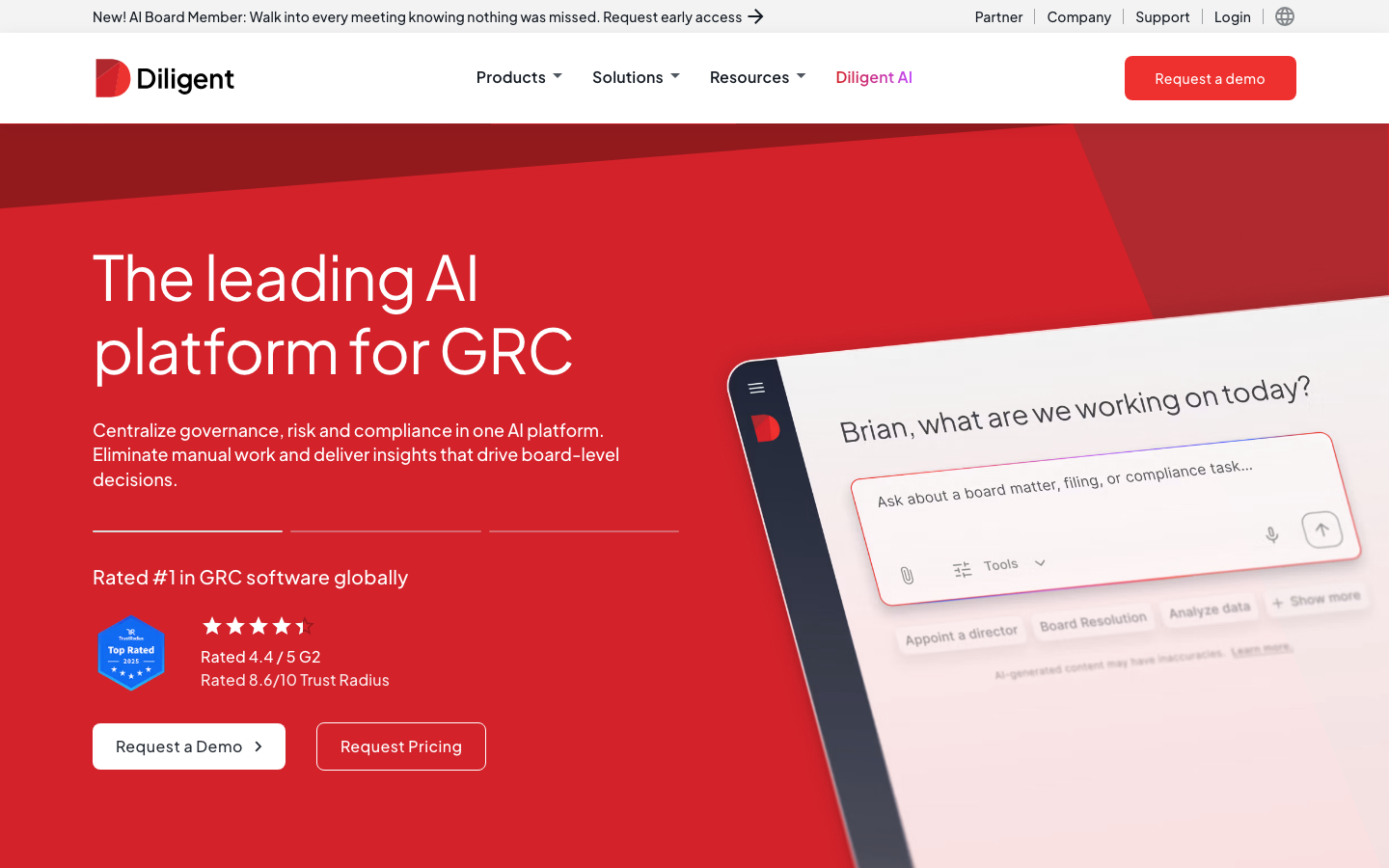
Diligent Entities, formerly Blueprint OneWorld, is a market-leading legal entity and subsidiary management inside Diligent’s governance and GRC suite, with AI insights and org charts. It is enterprise governance at scale.
Software Pros
- Enterprise-grade governance depth
- AI insights and org charts
- Sits in a broad GRC suite
- Strong subsidiary management
Software Cons
- Enterprise pricing and scope
- Implementation is substantial
- More than small teams need
Diligent Entities Review
While reviewing Diligent Entities, its position at the enterprise end was clear: subsidiary management, AI insights, and org charts sat within a broader governance and GRC ecosystem that large regulated groups value. The depth was impressive. That reach comes with enterprise pricing and a real implementation, so a mid-market team with simpler needs would find much of the suite beyond its day-to-day use. For a large regulated group, however, that depth of governance is precisely what auditors and boards expect.
Our Verdict
Enterprise Governance Leader
DiliTrust
Quick Overview
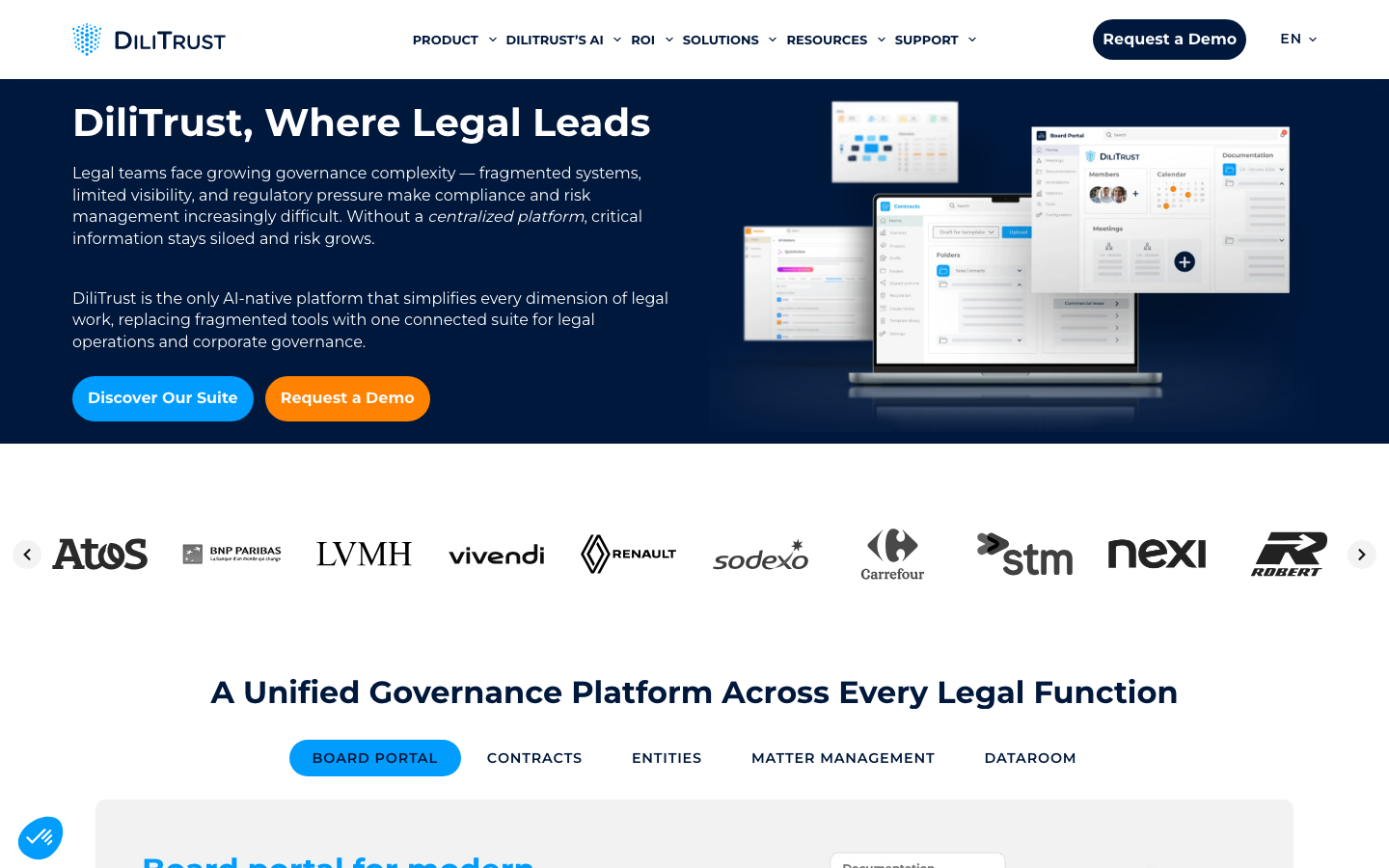
DiliTrust is a governance suite with integrated subsidiary and holding management, board portal, contract, and litigation modules for legal teams. The entity management platform is one pillar of a broad legal-operations offering.
Software Pros
- Subsidiary and holding management
- Board, contract, and litigation modules
- Unified legal-operations suite
- Well rated by legal teams
Software Cons
- Entity is part of a wider suite
- Broad scope raises complexity
- Enterprise-oriented pricing
DiliTrust Review
During my evaluation, DiliTrust suited a legal department wanting entity management to sit alongside board, contract, and litigation work in a single governed suite. Its subsidiary and holding views were solid. As with any broad platform, the value grows with how many modules you adopt, so a team that only needs entity records may pay for surrounding capability that it will not fully use. For a busy legal department, though, one governed home for everything is a real time-saver.
Our Verdict
Integrated Legal Governance Suite
EntityKeeper
Quick Overview
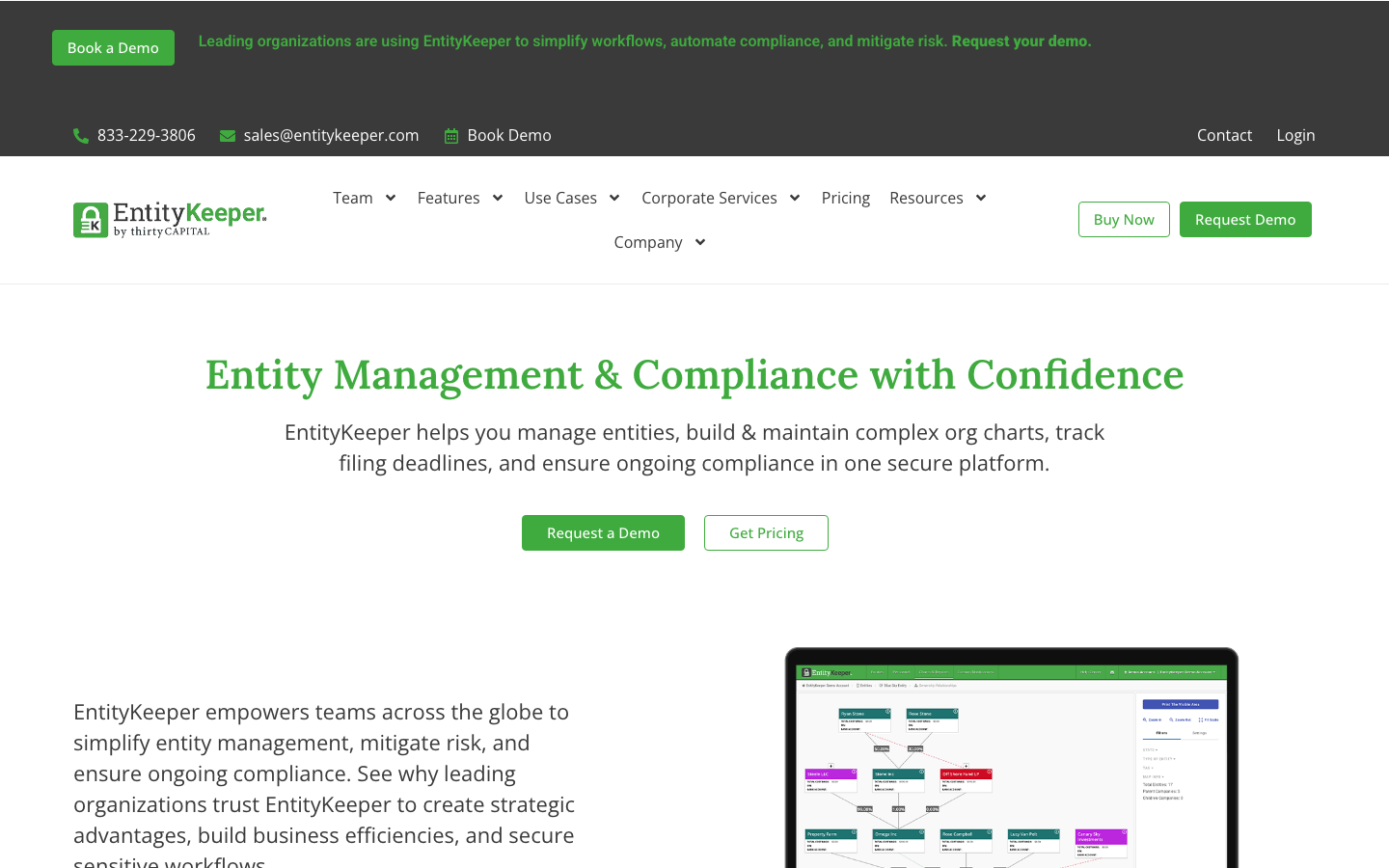
EntityKeeper centralizes entity data, documents, and compliance dates, generating automated org charts for complex structures. As a focused corporate entity information management software targets mid-market teams that want clarity fast.
Software Pros
- Automated org charts
- Centralized documents and dates
- Straightforward entity tracking
- Approachable for the mid-market
Software Cons
- Lighter enterprise governance
- Fewer managed services
- Less depth than global suites
EntityKeeper Review
What stood out to me about EntityKeeper is how quickly it turned a tangle of subsidiaries into a clear org chart with compliance dates attached. For a mid-market team wanting straightforward visibility, that simplicity is the appeal. It is lighter on enterprise governance and managed filing than the largest suites, so a sprawling multinational would likely outgrow it as complexity climbs. For a mid-market team that just wants clean structure and dates, it hits the mark without fuss.
Our Verdict
Mid-Market Entity Tracking
Harbor Compliance
Quick Overview
Harbor Compliance combines an entity-lifecycle and compliance platform with registered-agent services, license tracking, and annual-report filing. The entity management solution is built for compliance-led teams that want the filing handled.
Software Pros
- Registered-agent services included
- License tracking built in
- Annual report filing handled
- Strong compliance workflow
Software Cons
- The services model raises the cost
- US compliance emphasis
- Less pure-software flexibility
Harbor Compliance Review
In my assessment of Harbor Compliance, the draw is delegation: alongside tracking obligations, it handled registered-agent work, licenses, and annual reports directly. For a compliance-led team that wants filings off its plate, that is valuable. Its emphasis is US compliance and managed services, so a company wanting a lean, global, software-only tool would look at a different kind of platform. For a team that wants filings delivered rather than merely tracked, though, the bundled services are the whole value.
Our Verdict
Compliance-Led Managed Filing
hCue by Wolters Kluwer
Quick Overview
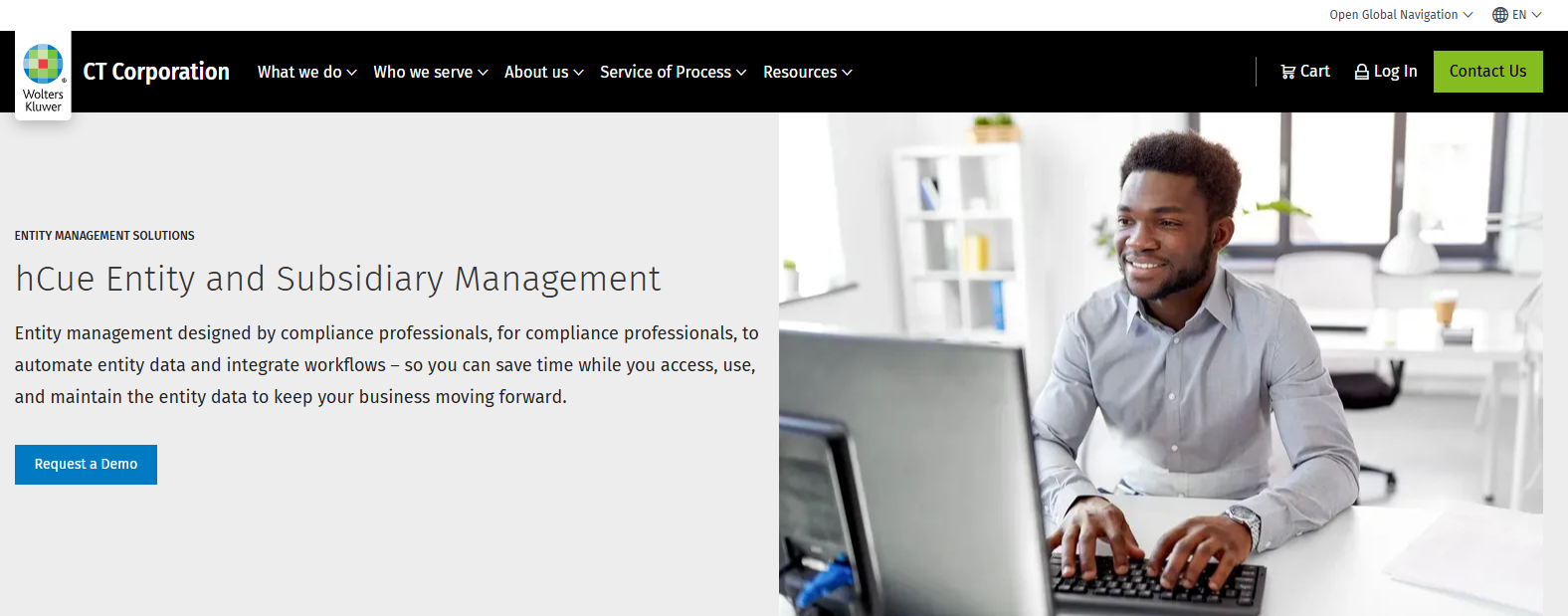
hCue is a centralized entity management platform for handling legal entity data, statutory records, and compliance at local, state, and national levels. The entity management tool is designed for teams seeking a focused, centralized database.
Software Pros
- Centralized entity database
- Statutory record handling
- Local to national compliance
- Focused, no-frills scope
Software Cons
- Smaller, less-known vendor
- Lighter ecosystem and integrations
- Limited managed services
hCue Review
During my evaluation, hCue read as a focused entity database that gathers legal-entity data and statutory records in one place across compliance levels. For a team wanting a straightforward central register, that focus is sensible. It is a smaller player with a lighter ecosystem than the global suites, so a buyer should confirm the integrations and support it offers before relying on it.
Our Verdict
Focused Centralized Entity Database
Klea

Quick Overview
Klea is an AI-powered entity management platform that replaces spreadsheets by centralizing corporate data and automating corporate housekeeping workflows. The entity management platform is built for teams wanting a smart, scalable, AI-first tool.
Software Pros
- AI-driven corporate housekeeping
- Centralizes scattered corporate data
- Automates routine workflows
- Modern, scalable design
Software Cons
- Younger, growing vendor
- Depth still maturing
- Best for AI-forward teams
Klea Review
What stood out to me about Klea is its bet on automation: routine corporate housekeeping tasks that usually eat up legal ops time were handled by the platform rather than by hand. For a team keen to leave spreadsheets behind, that is appealing. As a newer vendor, its depth is still growing, so an enterprise with the most demanding governance needs should test it against established suites first. For a scaling company keen to retire spreadsheets, its automation is a genuinely fresh take.
Our Verdict
AI-First Entity Automation
Traact
Quick Overview
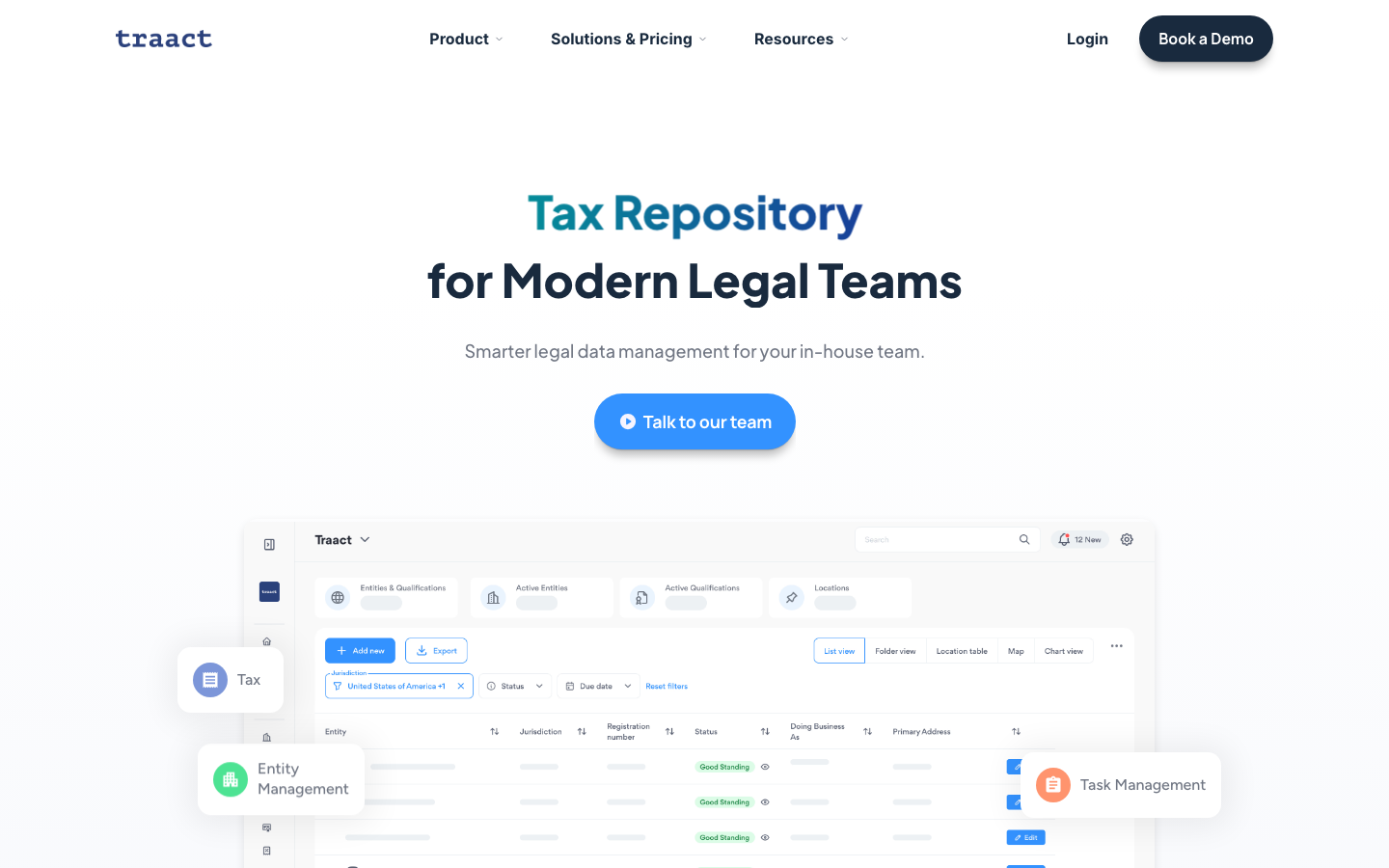
Traact is a SaaS legal-operations platform that automates entity management, registered-agent handling, and franchise-tax and annual filings across more than 130 countries. The corporate entity management tool aims at automating global entity administration affordably.
Software Pros
- Filings across 130-plus countries
- Automates franchise tax and reports
- Registered agent handling
- Competitive pricing
Software Cons
- Broad legal-ops scope
- Younger than incumbents
- Depth varies by country
Traact Review
In my assessment of Traact, the pitch is affordable global automation: entity admin, registered-agent work, and franchise-tax and annual filings run across a wide country list without enterprise-suite pricing. For a lean team managing entities in many places, that reach is attractive. Coverage depth can vary by jurisdiction, so a company concentrated in a few complex markets should confirm the specifics for each jurisdiction. For a lean legal-ops team spread thin across borders, the breadth at this price is unusual.
Our Verdict
Affordable Global Entity Automation
FAQs About Corporate Entity Management Software
What is corporate entity management software?
It is a centralized system that holds every legal entity’s records in one place: incorporation details, directors and officers, ownership, statutory registers, filings, and compliance dates across jurisdictions. Instead of chasing documents through email and shared drives, teams get one reliable, auditable source. In practice, the best software for corporate entity management also generates org charts and automates filings, turning static records into a living governance workflow. The aim is fewer surprises at filing season and a register a board or auditor can trust on demand.
What features should corporate entity management software have?
Look first for a clean entity data model with ownership and org-chart visualization, then compliance calendars and automated statutory filings so deadlines are not missed. Document generation, cap-table tracking, and role-based access round out the core. Beyond those, AI insights and strong integrations with your systems separate a modern platform from a digital filing cabinet, so match the feature depth to your entity count and jurisdictions. A tool that fits a five-entity startup will look very different from one built for a two-hundred-entity group.
How much does corporate entity management software cost?
Corporate entity management software pricing scales with the number of entities, users, and modules, and most vendors quote custom pricing. Mid-market tools often start around $15,000 per year, while enterprise governance suites commonly begin near $50,000 per year and rise from there. Software-plus-services providers add registered-agent and filing fees, so compare the full cost of ownership rather than the license alone.
What are the best-reviewed corporate entity management software platforms?
On sites like G2 and Capterra, corporate entity management software reviews consistently rate Diligent Entities, Athennian, and DiliTrust among the leaders, with several others praised for specific strengths. Ratings reflect fit rather than a single winner, so a modern cloud tool may score highest for a law firm, while an enterprise suite may win for a global group. Read reviews against your own use case.
What is the difference between entity management, cap table, and board management software?
The three overlap but solve different problems. Cap-table tools such as Carta focus on equity and ownership, board portals focus on meetings and materials, and entity management centralizes the full legal-entity record, from registers to filings. Some governance suites bundle all three, but an equity or board tool alone will not give you complete statutory entity management. If registers and filings are the priority, the entity platform is the anchor, and the others are add-ons.
Should a company set up a legal entity or use an employer of record instead?
It depends on control and overhead. A legal entity gives full control but brings incorporation, tax, and ongoing compliance obligations. In markets where you would rather not run an entity, Employer of Record companies let you hire without incorporating, which is the flip side of entity management. Entity management software is for when you run your own entities and need to govern them properly.
How does entity management software help with multi-jurisdiction compliance?
It centralizes the moving parts that span borders: compliance calendars flag deadlines, statutory filings can be automated or delegated, beneficial ownership and statutory registers stay current, and an audit-ready history records every change. For a group operating in many countries, that single view is what keeps filings on time and registers accurate, jurisdiction by jurisdiction. It also leaves a defensible paper trail, which matters when regulators or investors ask how a decision was recorded.

Yaryna is our lead writer with over 8 years of experience in crafting clear, compelling, and insightful content. Specializing in global employment and EOR solutions, she simplifies complex concepts to help businesses expand their remote teams with confidence. With a strong background working alongside diverse product and software teams, Yaryna brings a tech-savvy perspective to her writing, delivering both in-depth analysis and valuable insights.