Skills gap analysis software builds an inventory of the skills your people actually have, compares it to what each role requires, and surfaces the gaps so you can target learning, hiring, and planning. Its value is a clear, current picture rather than a hunch. The buyers are HR, People and Talent, L&D, and workforce-planning leaders, which is why so many skills gap analysis tools for HR now sit at the center of talent strategy rather than off to one side.
The urgency is real in 2026. The World Economic Forum’s Future of Jobs research projects that a large share of core skills will change within a few years, yet many organizations still lack reliable data on what their workforce can do. That is why leading AI-driven skills gap analysis tools now infer skills from real work rather than self-reported surveys, drawing on the same AI used by modern AI HR software to keep the picture honest and current.
Choosing Skills Gap Analysis Software in 2026
The tools here fall into four camps: assessment platforms that test skills, AI engines that infer them, matrix tools that map them, and HCM or analytics suites that fold gaps into wider data. A gap analysis is only as good as its inputs, so the strongest options pull role and employee data from your cloud HR software and learning systems. Among the benefits of skills gap analysis tools are targeted training and sharper planning. To sort them, I reviewed the leading platforms in alphabetical order below.
Top 12 Skills Gap Analysis Software Platforms for 2026
I researched and compared each of these platforms, testing how they build a skills picture, how they measure gaps, and how trustworthy their evidence is. I am listing all providers in alphabetical order to keep this comparison neutral, so numeral-named brands sort first and no brands are ranked. The field runs from assessment tools like iMocha to AI skills engines like TechWolf and skills matrices like AG5. My shortlist of the leading software for skills gap analysis spans evidence models, and several are among the top skills gap analysis software HR tools by adoption, so read each verdict against how much rigor your gap data really needs.

365Talents
Quick Overview
365Talents is an AI skills-intelligence platform that infers skills from real work and profiles, then maps them against role needs to surface gaps and inform planning. The skills gap analysis platform leans on inference rather than surveys.
Software Pros
- AI skills inference from work
- Maps skills to role needs
- Strong multilingual coverage
- Feeds workforce planning
Software Cons
- Inference needs good source data
- Best value at some scale
- Setup takes integration work
365Talents Review
While reviewing 365Talents, its inference model stood out: instead of asking staff to rate themselves, it read real work and profiles to build a skills view, then flagged where roles were short. For a multilingual, data-driven team that keeps the gap picture up to date. Inference depends on clean inputs, though, so an organization with thin or messy source data should invest in integration before trusting the results. For a large, multilingual employer, though, its ability to read skills across languages is rare.
Our Verdict
AI Skills-Inference Platform
Acorn
Quick Overview
Acorn is a skills-and-development platform built to close the loop: it maps role skills, assesses with evidence, surfaces gaps, then routes people to learning and re-measures closure. The skills gap analysis tool is unusual in that it proves the gap actually shrank.
Software Pros
- Closes and re-measures gaps
- Connected learning routing
- Evidence-based assessment
- Clear before-and-after view
Software Cons
- Broader than pure analysis
- Value grows with the LMS
- Setup involves learning content
Acorn Review
During my evaluation, Acorn’s differentiator was proof of closure: most tools surface a gap and provide a route to training, but Acorn remeasured afterward to show the gap had actually narrowed. For a team held to development outcomes, that loop is valuable. It reaches beyond pure analysis into learning, so a company wanting only a measurement layer may find more platform here than the narrow task requires. For a team judged on whether people actually improved, that proof of closure is the whole point.
Our Verdict
Gap-Closing Development Loop
AG5
Quick Overview
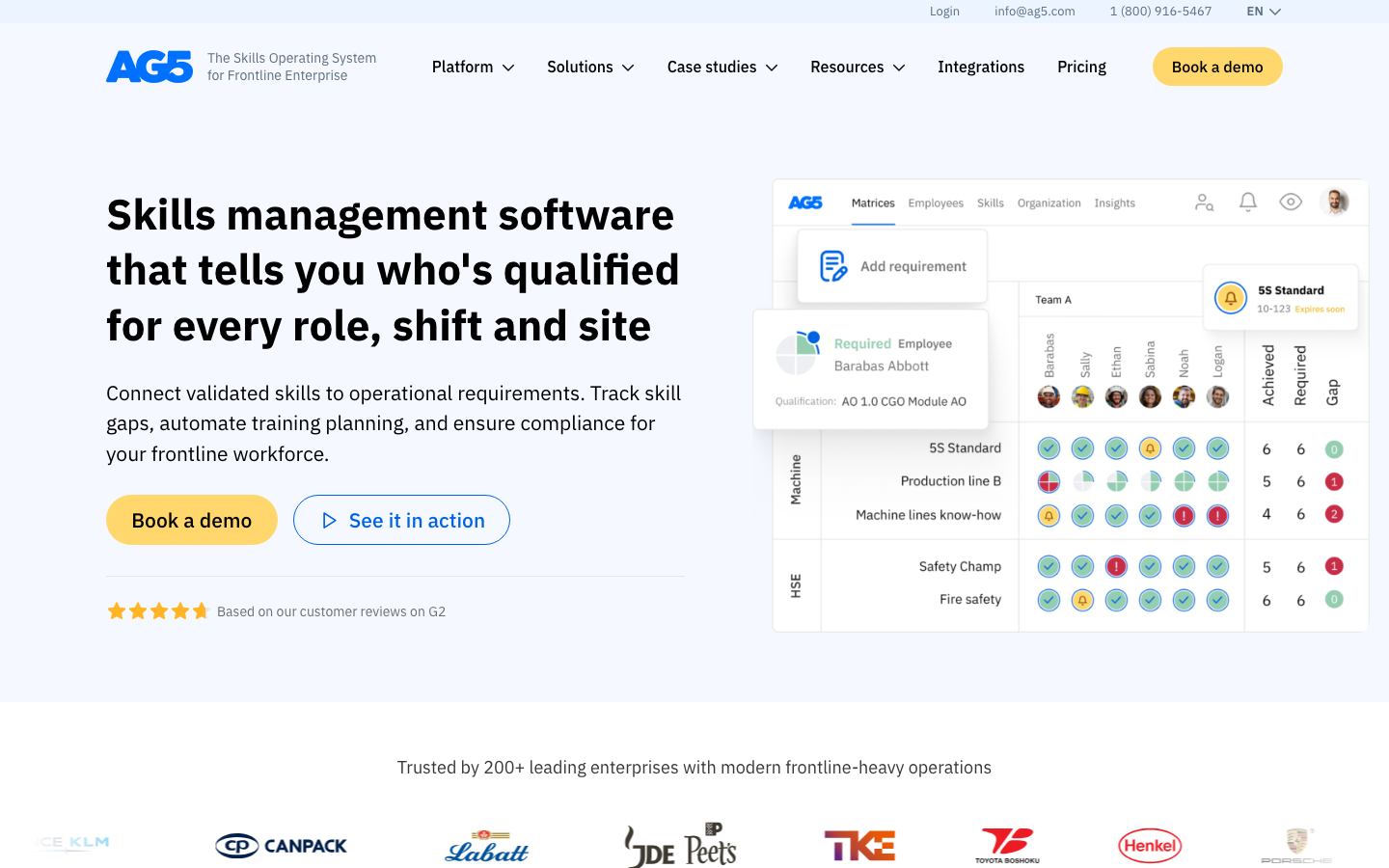
AG5 is skills-matrix software that visualizes who holds which skills and certifications across teams, purpose-built for frontline and operations tracking. The skills gap analysis solution is matrix-first and practical.
Software Pros
- Clear visual skills matrix
- Tracks certifications and expiry
- Built for frontline operations
- Quick to read at a glance
Software Cons
- Largely self- and manager-rated
- Less AI inference
- Lighter strategic analytics
AG5 Review
What stood out to me about AG5 is how legible it makes a shop floor’s capability: a color-coded matrix showed at a glance who was certified for what and where cover was thin. For manufacturing and operations, that clarity is exactly the point. Its ratings are largely self- and manager-entered, so a team wanting tested or AI-inferred evidence should weigh the data-quality trade-off against the simplicity. For a plant manager who just needs to see cover at a glance, few tools are as immediately useful.
Our Verdict
Frontline Skills Matrix
Crunchr
Quick Overview
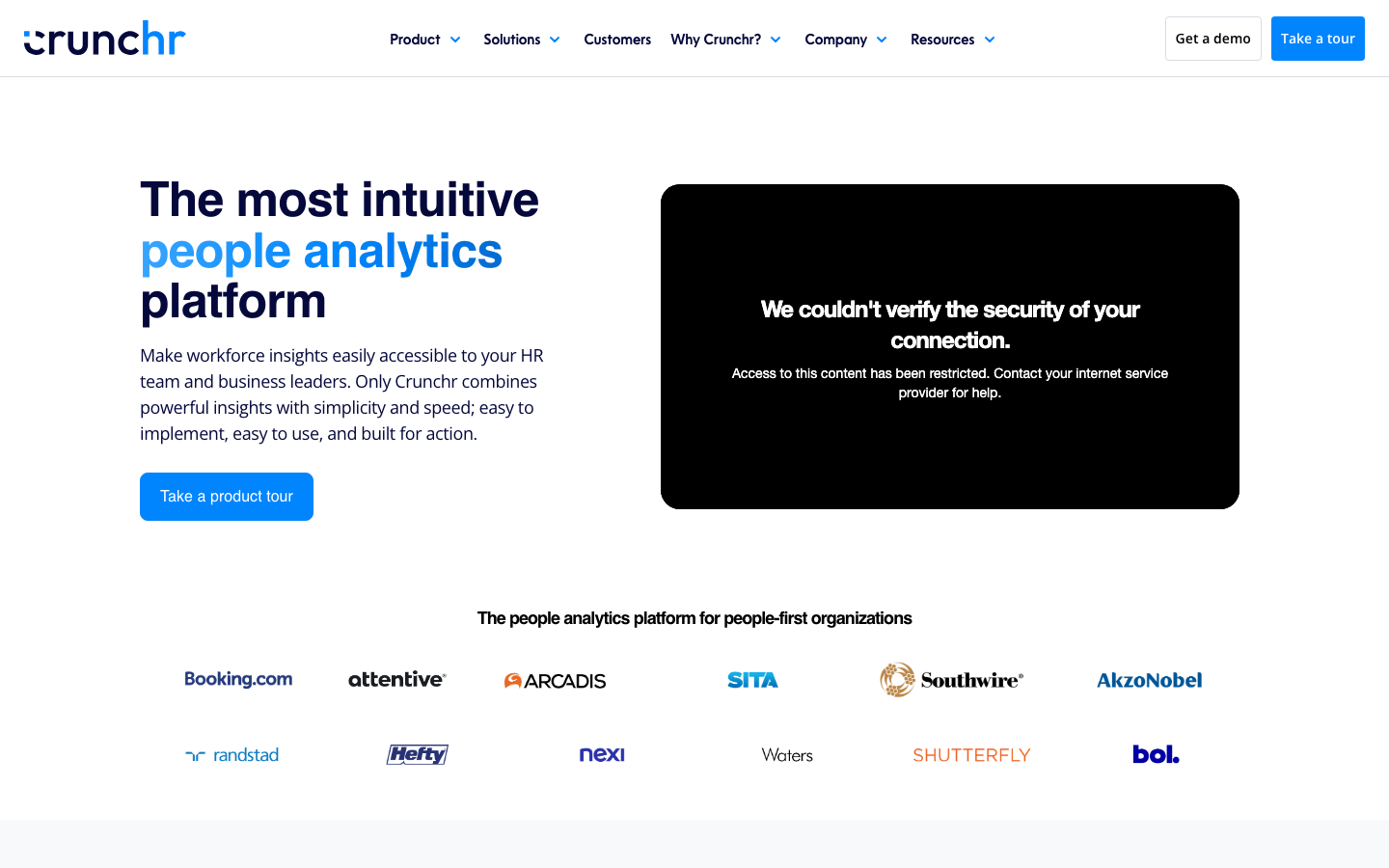
Crunchr is a people-analytics platform that unifies HR, finance, and operations data to visualize skill distribution and surface gaps in configurable dashboards. The skills gap analysis platform sits inside broader workforce analytics.
Software Pros
- Gaps inside workforce analytics
- Configurable dashboards
- Unifies HR and finance data
- Strong reporting for planning
Software Cons
- Analytics-led, not assessment
- Depends on data integrations
- Learning curve for dashboards
Crunchr Review
In my assessment of Crunchr, the appeal lies in the context: skill gaps sat alongside headcount, cost, and movement data, so a planning team saw the shortage and its business impact together. Its dashboards were flexible and clear. It analyses data you already hold rather than assessing skills directly, so a team wanting to test proficiency will pair it with an assessment or inference tool to gather the underlying evidence. For a planning team that already trusts its people data, though, seeing gaps besides cost is genuinely powerful.
Our Verdict
Analytics-Led Gap Visibility
Eightfold
Quick Overview
Eightfold is an AI talent-intelligence platform with a very large skill ontology that infers workforce skills and analyses gaps for hiring, development, and planning. The skills gap analysis platform is built for the deepest AI inference.
Software Pros
- Very large skill ontology
- Deep AI skills inference
- Gaps across hire and develop
- Enterprise-scale analysis
Software Cons
- Enterprise implementation effort
- Best value on unified data
- Heavier than smaller teams need
Eightfold Review
During my evaluation, Eightfold’s inference depth was the headline: its large ontology pieced together workforce skills from scattered signals and mapped gaps across hiring and development. For a large enterprise wanting the most comprehensive AI view, that is compelling. It expects real implementation and a unified data foundation, so a mid-sized team without that groundwork would not quickly see its full value. For a global enterprise with rich data, however, the breadth of its inference is hard to match.
Our Verdict
Enterprise AI Skills Inference
iMocha
Quick Overview
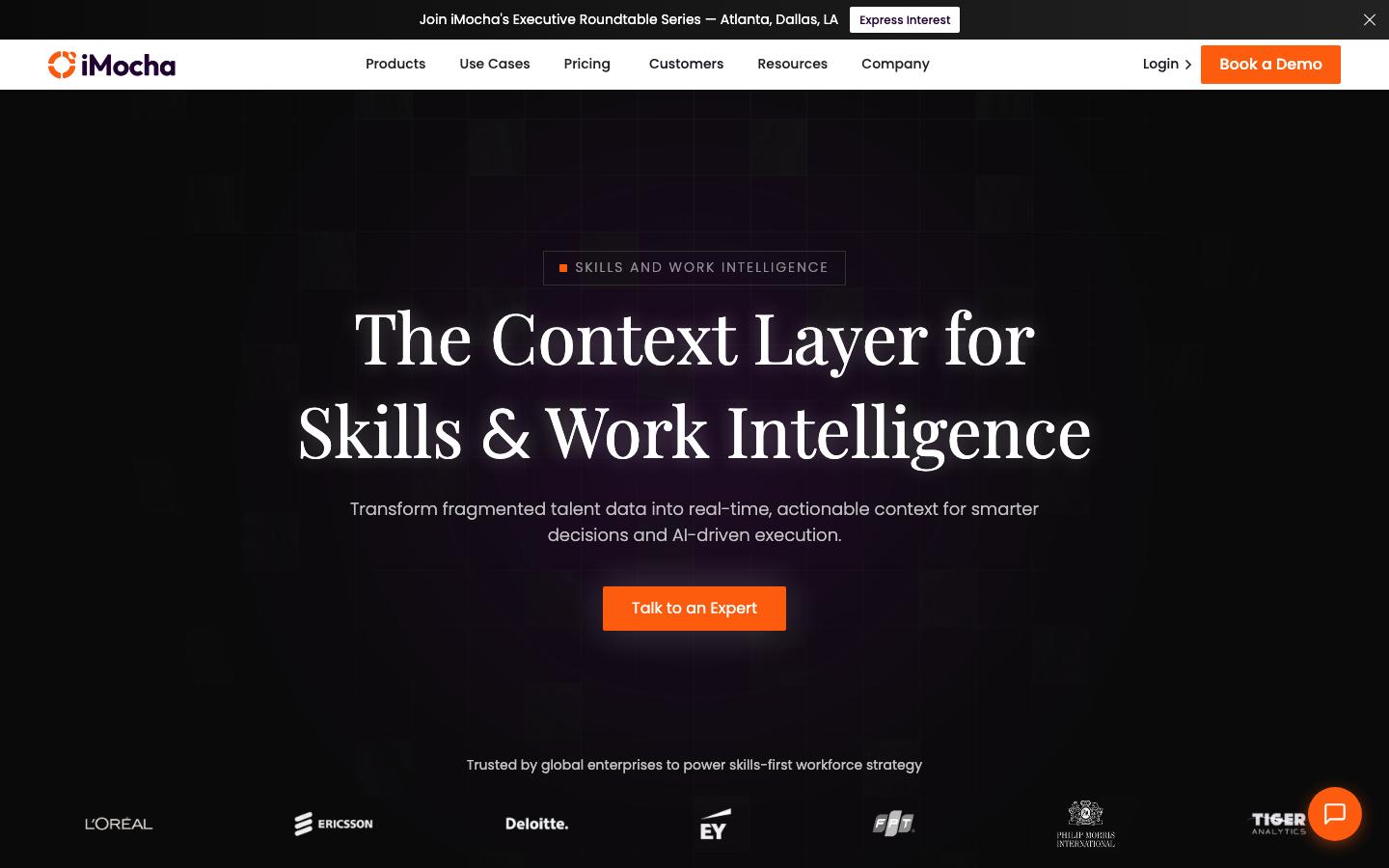
iMocha is a skills-assessment and intelligence platform that validates skills by testing rather than self-reports, benchmarks capabilities, and pinpoints gaps by role. The skills gap analysis tool is evidence-first.
Software Pros
- Validates skills by testing
- Benchmarks against role needs
- Pinpoints gaps precisely
- Large assessment library
Software Cons
- Testing takes employee time
- Heavier than a matrix
- Best where proof matters
iMocha Review
While reviewing iMocha, its evidence model set it apart: rather than trusting self-ratings, it tested skills and benchmarked the results, so any reported gap rested on measured evidence. For a team that must defend its numbers, that rigor is the draw. Testing asks for the time of employees, so an organization wanting a quick, lightweight snapshot may prefer a matrix or inference tool over a formal assessment. For hiring or promotion calls that must hold up to scrutiny, though, tested evidence is worth the time it costs.
Our Verdict
Evidence-Based Skills Assessment
Kahuna
Quick Overview
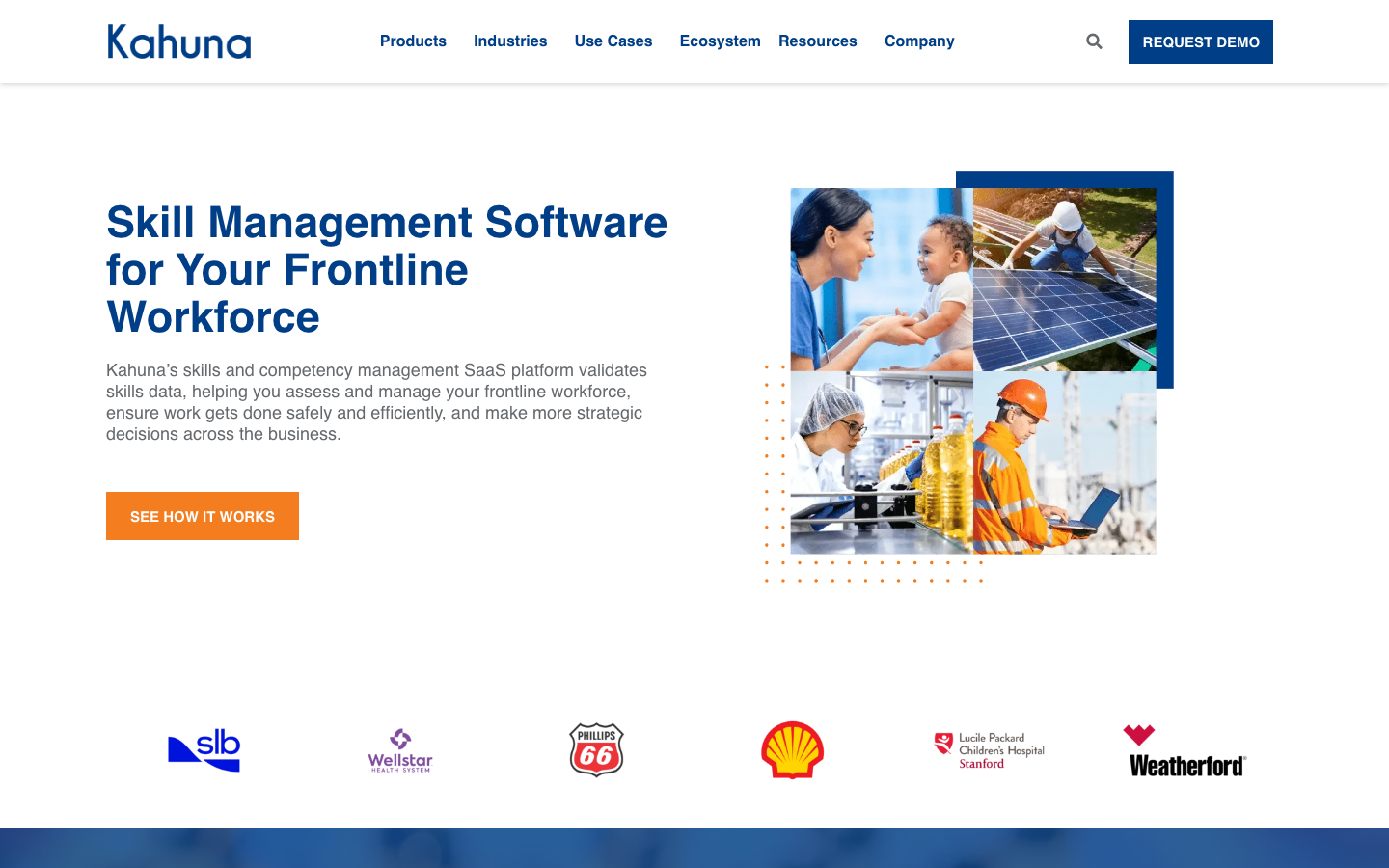
Kahuna is a skills-management platform for deskless and technical workforces that tracks competencies, certifications, and gaps against operational requirements. The skills gap analysis solution suits field and technical teams.
Software Pros
- Built for technical workforces
- Tracks competencies and certs
- Gaps against operational needs
- Strong for regulated work
Software Cons
- Niche to deskless and technical
- Less fit for office roles
- Set up around operations data
Kahuna Review
In my assessment of Kahuna, its focus on technical and deskless work was clear: it measured competencies and certifications against the operational requirements a plant or field team must meet. For safety- and compliance-driven work, that alignment matters. Its center of gravity is technical operations, so a knowledge-worker office wanting to map soft or digital skills would likely find a more general platform a closer fit. For safety-critical operations, though, tying skills to certifications is exactly what keeps audits clean.
Our Verdict
Technical Workforce Skills Management
MuchSkills
Quick Overview
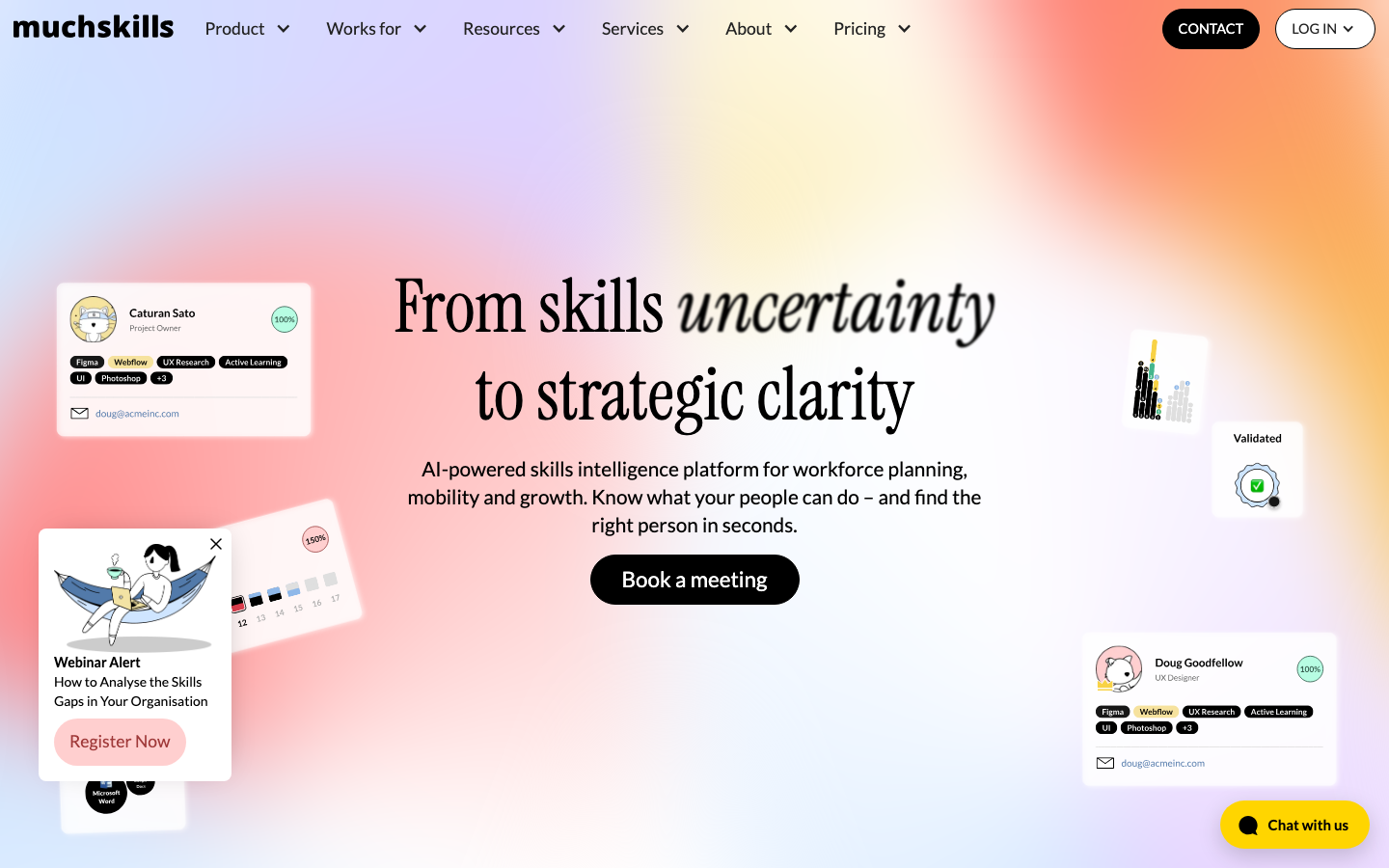
MuchSkills is a lightweight, visual skills-mapping tool with a free tier that lets teams quickly self-assess and surface skill gaps and overlaps. The skills gap analysis tool is built for a fast start.
Software Pros
- Free tier to begin
- Fast visual skills mapping
- Surfaces gaps and overlaps
- Easy for small teams
Software Cons
- Largely self-assessed data
- Lighter enterprise depth
- Limited planning analytics
MuchSkills Review
What stood out to me about MuchSkills is how quickly a small team got a visual read on its strengths and gaps, starting on a free tier with no heavy rollout. For a startup finding its feet, that speed is the appeal. Its data is largely self-assessed, so a company needing tested or inferred evidence for high-stakes decisions should treat it as a starting point rather than the final word. For a small team that just wants to see its strengths on a page, it removes every barrier to starting.
Our Verdict
Fast Visual Skills Mapping
Skills Base
Quick Overview
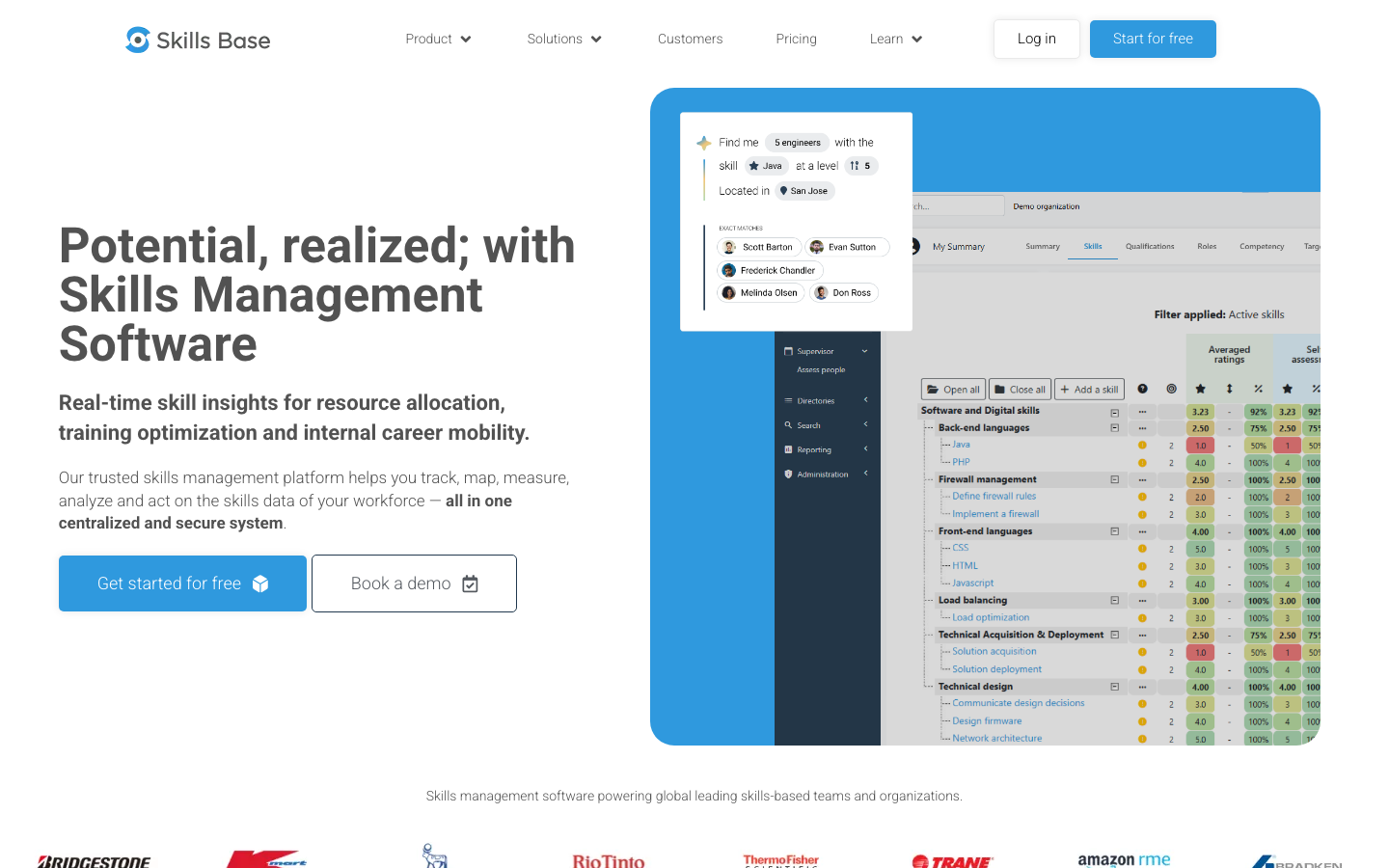
Skills Base is a focused skills intelligence and inventory tool that builds a live picture of workforce skills and assessments, with robust gap reporting. The skills gap analysis platform is a dedicated inventory, not a broad suite.
Software Pros
- Dedicated skills inventory
- Live picture of capability
- Solid gap reporting
- Approachable for SMB and mid-market
Software Cons
- Self- and manager-rated inputs
- Lighter AI inference
- Fewer planning integrations
Skills Base Review
During my evaluation, Skills Base did one job well: it maintained a clean, living inventory of workforce skills and clearly reported gaps, without the weight of a full HCM. For an SMB or mid-market team wanting a dedicated skills record, that focus is welcome. Its inputs lean on self- and manager ratings, so a buyer who needs tested proof should pair it with an assessment layer. For a mid-market team wanting a single, tidy skills record without an HCM, it is refreshingly focused.
Our Verdict
Dedicated Skills Inventory Tool
TalentGuard
Quick Overview
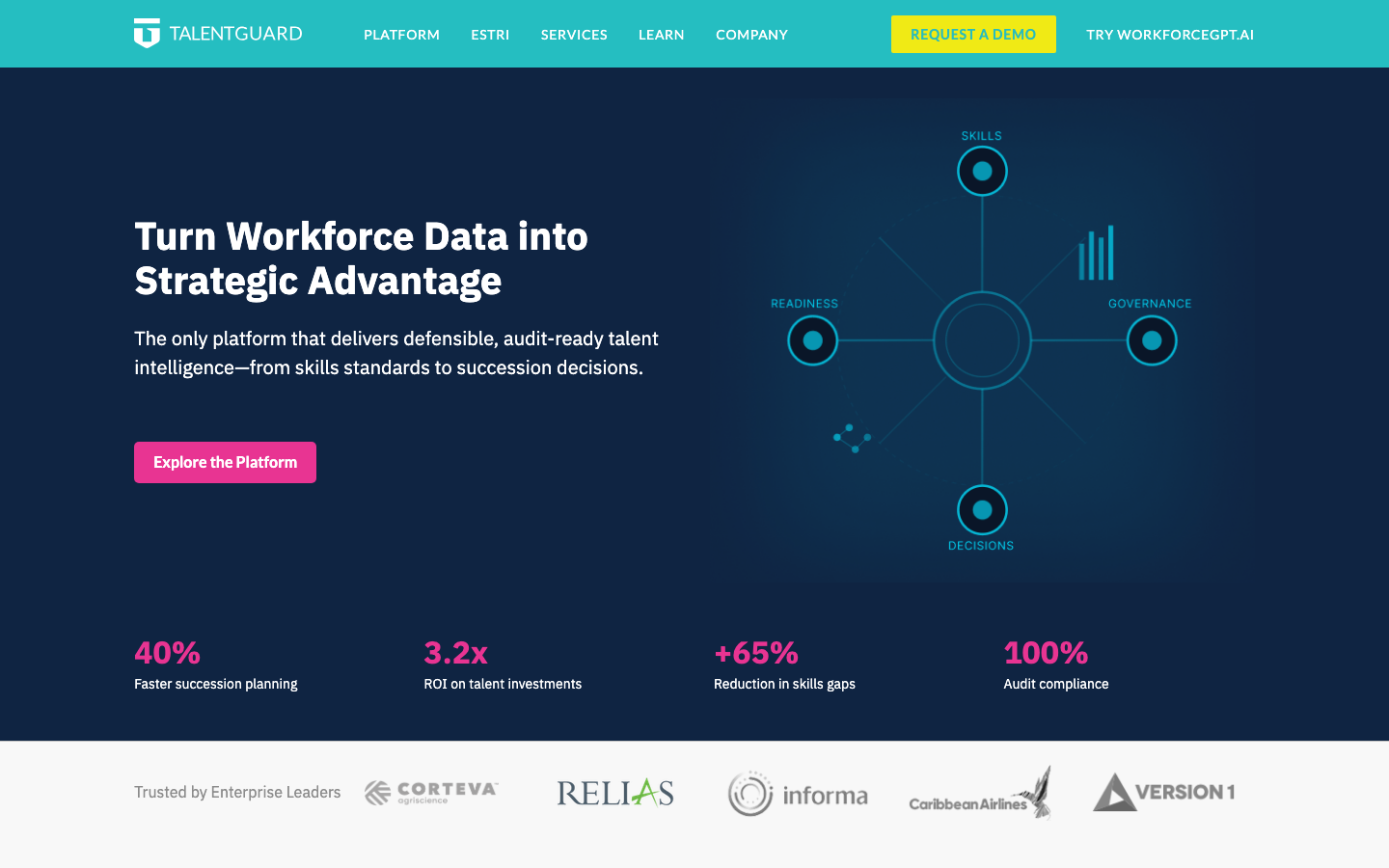
TalentGuard is a competency and skills-matrix platform that maps role requirements, tracks proficiency, and surfaces gaps for structured workforce and succession planning. The skills gap analysis platform is built around competency models.
Software Pros
- Structured competency models
- Maps roles to proficiency
- Gaps feed workforce planning
- Good for succession needs
Software Cons
- Competency setup takes effort
- Heavier for small teams
- Less real-time AI inference
TalentGuard Review
In my assessment of TalentGuard, its strength is its structure: formal competency models enable it to map role requirements to measured proficiency and surface gaps that inform planning and succession. For an organization that runs on competencies, that rigor fits. Building and maintaining those models takes effort, so a small team wanting a quick, low-setup snapshot may find a lighter matrix or inference tool easier to adopt. For an organization already running competency frameworks, however, its structure slots in naturally.
Our Verdict
Competency-Based Gap Planning
TechWolf
Quick Overview
TechWolf is an AI skills inference engine that builds and continuously updates a skills taxonomy from work data, providing a real-time view of skill supply, demand, and gaps. The skills gap analysis tool keeps the picture up to date.
Software Pros
- Continuous AI skills inference
- Real-time supply and demand
- Taxonomy built from work data
- Low manual maintenance
Software Cons
- Inference needs rich data
- Enterprise-oriented
- Less visual than matrices
TechWolf Review
While reviewing TechWolf, the consistently high quality stood out: it inferred skills from work data and kept the taxonomy up to date, so the gap view did not go stale between annual reviews. For a large enterprise chasing real-time skills data, that is the draw. It needs rich underlying data and a suitable scale, so a small team with limited systems would not feed it enough signal to shine. For a data-rich enterprise, though, never facing a stale skills picture again is a genuine shift.
Our Verdict
Real-Time AI Skills Engine
Workday
Quick Overview
Workday is an enterprise HCM whose Skills Cloud infers skills from employee data, benchmarks them, and analyses gaps across the workforce on one data model. The skills gap analysis platform is native to the Workday ecosystem.
Software Pros
- Skills Cloud inference
- Gaps in one data model
- Benchmarks across the workforce
- Native to Workday HCM
Software Cons
- Best value only inside Workday
- Enterprise implementation
- Depends on Workday adoption
Workday Review
During my evaluation, Workday’s Skills Cloud made the most sense for organizations already on Workday, where skills were inferred from the same data that runs HR and analyzed for gaps without a separate system. That unity is powerful. Outside the Workday world, its advantage narrows, and it carries an enterprise implementation, so it rewards existing Workday customers far more than teams shopping fresh. For a committed Workday shop, however, getting skills analysis without another system is a clear win.
Our Verdict
Workday-Native Skills Analysis
FAQs About Skills Gap Analysis Software
What is skills gap analysis software?
It is a tool that builds an inventory of the skills your workforce holds, compares it to what roles require, and surfaces the gaps so you can act. From there, teams target learning, guide hiring, and shape workforce plans. Because people use skills gap analysis tools to mean the same thing, the terms are interchangeable, and the best ones make the gap visible and current rather than a once-a-year guess.
What are the benefits of skills gap analysis tools?
The benefits of skills gap analysis tools are practical. You can target upskilling where it actually matters, plan the workforce with real data, hire against genuine shortages, and support internal moves with evidence. Clear skills data also strengthens the case for the training budget. In short, decisions shift from opinion to measurement, which is why leaders increasingly treat this as core infrastructure.
What are the leading AI-driven skills gap analysis tools?
The leading AI-driven skills gap analysis tools infer skills from real work rather than surveys. TechWolf, Eightfold, and 365Talents build and update skills taxonomies automatically, while iMocha adds AI to validate skills through assessment. Inference keeps the picture current and reduces self-rating bias, though its accuracy still depends on how rich and clean the underlying work data is.
What are the best skills gap analysis tools for HR teams?
The right skills gap analysis tools for HR depend on your evidence needs and the scale of your organization. For focused needs, iMocha, Skills Base, and AG5 are practical, while Workday and Eightfold are better suited to large enterprises. Among the top skills gap analysis software hr tools, the deciding factor is usually whether you want tested proof, AI inference, or a simple matrix your managers can maintain.
What are the best tools for skills gap analysis and workforce planning?
When gaps must feed planning, the best tools for skills gap analysis and planning tie capability to headcount and strategy. TalentGuard, Workday, Crunchr, and 365Talents all connect gaps to workforce plans. Choosing among these HR skills gap analysis and planning tools comes down to whether planning lives in your HCM, your analytics stack, or a dedicated competency platform.
How do tools identify a skills gap: assessment, AI inference, or a matrix?
There are three evidence models. Assessment tools like iMocha test skills, providing strong evidence but requiring employee time. AI engines like TechWolf and 365Talents infer skills from work data, staying current with low effort but depending on data quality. Matrix tools like AG5 and Skills Base rely on self- and manager ratings, which are quick to set up but softer as evidence. Match the model to your stakes.
How much does skills gap analysis software cost?
Pricing spans a wide range. Lightweight tools are cheap or free to start, with MuchSkills offering a free tier and Skills Base priced for smaller teams. Enterprise AI platforms are custom-quoted, often ranging from $10 to $25 per employee per month, depending on scope. Factor in integration and rollout, since the analysis is only as good as the data feeding it.

Yaryna is our lead writer with over 8 years of experience in crafting clear, compelling, and insightful content. Specializing in global employment and EOR solutions, she simplifies complex concepts to help businesses expand their remote teams with confidence. With a strong background working alongside diverse product and software teams, Yaryna brings a tech-savvy perspective to her writing, delivering both in-depth analysis and valuable insights.