This content was reviewed and updated in September 2026 to ensure all information remains accurate and up to date.
Goal setting software gives a company one place to write goals, assign an owner to each, and track progress between planning meetings. It replaces the slide deck shown once a quarter and the spreadsheet nobody touches after the third week.
The case for clear goals predates any of these products. A 2011 meta-analysis in the Journal of Applied Psychology by Kleingeld, van Mierlo, and Arends found that specific, difficult goals produced considerably higher group performance than vague ones.
Feedback matters as much as the goal itself. A 2024 study in the Journal of the Academy of Marketing Science found that employees turn manager feedback into their own goals, which helps explain why check-ins sit at the center of most tools on this list.
Goal Setting Software in 2026: Why Teams Rely on It
The benefits of goal-setting software for business are practical: goals become assignable, progress becomes visible without a status meeting, and leaders can see which priorities have stalled before the quarter ends.
Goals also say little about how people feel while chasing them, so some teams pair a goal platform with employee survey tools that surface morale problems and blockers early.
What Goal Setting Software Is, and What It Replaces
Company goal setting software connects goals at every level, from the annual objectives leadership sets down to the targets an individual owns this quarter, so anyone can trace their work back to strategy.
Frameworks differ. OKRs pair an ambitious objective with measurable key results, while SMART goal setting software is built around goals that are specific, measurable, achievable, relevant, and time-bound, usually reviewed alongside performance.
Every product reviewed here is online goal setting software, so goals, check-ins, and reports live in the cloud rather than on a shared drive.
The category also splits by whether goal setting is the product or a module inside something larger. Review cycles, appraisals, and feedback programs belong to performance management platforms, which our separate guide covers, while this page judges every tool by its goal features.

INSIGHT: Does goal setting software change results, or just record them?

The research supports clear goals and regular feedback, not any particular product, and a software guide should be upfront about that.
- Specific, difficult group goals produced considerably higher group performance than nonspecific goals (d = 0.80, 23 effect sizes), according to the 2011 meta-analysis.
- Across all group goals studied, the overall effect was d = 0.56 (49 effect sizes).
- In interdependent groups, individual goals aimed only at personal performance hurt group performance (d = -1.75, 6 effect sizes), a warning for tools that cascade goals down to individuals without shared team objectives.
- In day-to-day terms, software gives each goal an owner, a visible status, and a report, so a plan written in January is still being worked on in June.
Sources:
- Kleingeld
- van Mierlo
- and Arends
- The effect of goal setting on group performance: a meta-analysis
- Journal of Applied Psychology (2011)
(accessed September 2026)
Best Goal Setting Software Comparison: Types, Frameworks, and G2 Ratings
The table below lays out the best goal setting software on this list by type, typical buyer, and supported frameworks, with each tool’s G2 rating.
Start with the Type column. Several of these best goal setting software platforms are strategy reporting tools, HR suites, or work apps with a goals layer, and that difference matters more than any single feature.
| Tool | Type | Best for | Frameworks | Rating (G2) |
|---|---|---|---|---|
| 15Five | Performance suite with goals | Weekly check-ins tied to goals | OKRs, goals | 4.6/5 (1,927) |
| AchieveIt | Strategy execution and scorecard platform | Government, healthcare, and education plans | Strategic plans, initiatives, KPIs | 4.4/5 (199) |
| Asana | Work management tool with goals | Goals above existing projects | Goals, OKRs | 4.4/5 (13,952) |
| Betterworks | Performance suite with goals | Enterprise OKR programs | OKRs, goals | 4.4/5 (258) |
| Cascade Strategy | Strategy execution and scorecard platform | Multi-division strategy models | OKRs, Balanced Scorecard, custom | 4.8/5 (257) |
| ClearPoint Strategy | Strategy execution and scorecard platform | Board and council reporting | KPIs and scorecards | 4.6/5 (177) |
| ClickUp | Work management tool with goals | Targets inside sprints and tasks | Goals and targets, custom | 4.6/5 (14,225) |
| Culture Amp | Performance suite with goals | Goals read against engagement data | Goals | 4.5/5 (1,617) |
| Engagedly | Performance suite with goals | Goals linked to learning | OKRs, SMART goals | 4.3/5 (545) |
| Lattice | Performance suite with goals | Cascading goals with Jira and Salesforce | OKRs, goals | 4.6/5 (4,124) |
| Leapsome | Performance suite with goals | Goals that lead to development | OKRs, goals | 4.8/5 (2,570) |
| Monday.com | Work management tool with goals | Visual boards for team goals | OKR templates, custom | 4.7/5 (17,208) |
| Mooncamp | Dedicated goal and OKR platform | OKRs reported up to the board | OKRs, KPIs | 4.8/5 (298) |
| Notion | Workspace and templates | Build-your-own goal tracker | Custom | 4.6/5 (13,839) |
| Peoplebox | Performance suite with goals | OKRs synced from work tools | OKRs, KRAs, KPIs | 4.5/5 (369) |
| Perdoo | Dedicated goal and OKR platform | Strategy maps for OKRs and KPIs | OKRs, KPIs | 4.4/5 (548) |
| PerformYard | Performance suite with goals | SMART goals in HR reviews | SMART goals | 4.7/5 (1,261) |
| Profit.co | Dedicated goal and OKR platform | Highly configured OKR programs | OKRs, KPIs | 4.7/5 (495) |
| Rhythm Systems | Strategy execution and scorecard platform | Mid-size company quarterly planning | Quarterly priorities, SMART goals, KPIs | 4.4/5 (423) |
| Spider Impact | Strategy execution and scorecard platform | Balanced Scorecard reporting | KPIs and scorecards | 5.0/5 (1) |
| Tability | Dedicated goal and OKR platform | Weekly OKR check-in habits | OKRs | 4.6/5 (164) |
| Teamflect | Performance suite with goals | Microsoft Teams shops | OKRs, goals | 4.5/5 (191) |
| Weekdone | Dedicated goal and OKR platform | Small teams planning weekly | OKRs, weekly plans | 4.2/5 (36) |
| Workboard | Strategy execution and scorecard platform | Enterprise OKRs and strategy | OKRs, strategy, portfolios | 4.6/5 (308) |
| Workpath | Strategy execution and scorecard platform | European enterprise operating rhythms | OKRs, KPIs, initiatives | 4.9/5 (12) |
Rating column: average score out of 5 and number of reviews, as shown on G2 in September 2026.
INSIGHT: Why vendor durability belongs on your checklist
A goal history only has value if the tool still exists at the next renewal, and this category has already lost products.
- Microsoft retired Viva Goals on December 31, 2025, after ending new feature development on December 5, 2024, and advised customers to export their data and plan a move to other OKR solutions.
- WorkBoard acquired Quantive, formerly GTM Hub, in 2025; Quantive customers are moving to the WorkBoard platform, and quantive.com now redirects to workboard.com.
- Questions worth asking any vendor: how goal history exports, in which formats, and what the contract says if the product is discontinued.
Sources:
(as of September 2026)
Quick Picks by Goal Setting Need
These shortlists group goal setting software for teams by the job it needs to do, with tools in alphabetical order inside each group.
- Running OKRs for the first time: Mooncamp, Perdoo, Tability, and Weekdone keep setup light and make the check-in habit the product’s center.
- Company strategy with board or council reporting: AchieveIt, Cascade Strategy, ClearPoint Strategy, and Spider Impact turn goals into scorecards and reports for leadership.
- Goals that feed performance reviews: 15Five, Lattice, PerformYard, and Teamflect connect objectives to review cycles.
- Goals where the work already lives: Asana, ClickUp, and Monday.com work as software for collaborative goal setting, because goals sit on top of shared projects.
- Small teams that want a weekly rhythm: Notion, Tability, and Weekdone suit groups that want a light weekly routine rather than a formal program.
- Microsoft Teams and Slack-centric teams: Mooncamp, Perdoo, and Teamflect bring goal updates into Microsoft Teams or Slack.
Reaching a goal is also a moment worth marking. If your program needs that side covered, our roundup of employee recognition platforms compares tools built for praise, rewards, and peer shout-outs.
INSIGHT: Goal system, HR module, or work tool?
The 25 products here fall into 4 families, and choosing a family that doesn’t match your company’s plans is the costliest error a buyer can make in this category.
- Dedicated goal and OKR platforms (for example Mooncamp, Perdoo, Tability, Weekdone): goal setting is the product, and everything else is secondary.
- Strategy execution and scorecard platforms (for example AchieveIt, Cascade Strategy, ClearPoint Strategy, Spider Impact, Workboard, Workpath): goals sit inside a strategy, with reporting aimed at leadership, boards, and councils.
- Performance suites with goals (for example 15Five, Betterworks, Lattice, Leapsome, PerformYard): goals feed reviews, feedback, and development, and are rarely bought on their own.
- Work management tools with a goals layer (for example, Asana, ClickUp, Monday.com, Notion): goals sit above the tasks you already track, with no HR process attached.
AI in Goal Setting
Most vendors on this list now advertise AI, and the useful features fall into 3 groups. The first drafts goals: Peoplebox lists AI-powered goal creation, Rhythm Systems generates SMART goals with success criteria inside a 13-week plan, and WorkBoard offers agent-assisted OKR creation.
The second summarizes progress, as with Cascade’s AI-powered updates and Tability’s assistant and AI retrospectives. The third helps with writing, such as 15Five’s AI-assisted performance reviews and ClearPoint Strategy’s assistant, which suggests KPIs for a goal.
Treat AI goal setting software as a drafting partner rather than a decision-maker, and check which features sit on higher plans before counting on them. On most pricing pages, AI means summarizing or suggesting, and a drafted objective still needs an owner who agrees to be measured against it.
Goal Setting Software Pricing
Mid-market goal and performance tools mostly publish a per-user monthly price billed annually, often with a seat minimum: Mooncamp starts at 5 users and AchieveIt at 20, so the published rate isn’t always what a small team can buy. Strategy execution platforms usually quote after a demo. Where goals sit inside a wider people platform, the goal module may be priced as part of a bundle rather than on its own. Several tools here offer free plans capped by user count, which makes a pilot easy but says little about the cost of a company-wide rollout.
| Tool | Pricing model | Free plan or trial | Starting price |
|---|---|---|---|
| 15Five | Per user, billed annually | No (demo) | $11/user/month (Perform, includes OKRs and goals) |
| AchieveIt | Quote-based, 20-user minimum | No (demo) | Custom pricing |
| Asana | Per user | Yes (Personal, up to 2 users) | €10.99/user/month billed annually (Starter, EU pricing) |
| Betterworks | Per user | No (tour and quote) | $8/user/month (Performance, includes goals and OKRs) |
| Cascade Strategy | Platform pricing | Yes (up to 2 users) | Custom pricing |
| ClearPoint Strategy | Quote-based, by scorecard count | No (demo) | Custom pricing |
| ClickUp | Per user | Yes | $7/user/month billed yearly (Unlimited) |
| Culture Amp | Quote-based, billed annually | No (demo) | Custom pricing |
| Engagedly | Per user by module, $7,500/year minimum | No (demo) | $5 to $8/user/month billed annually (Goals and OKRs) |
| Lattice | Per seat by product | No (tour) | $8/seat/month (Goals and OKRs) |
| Leapsome | Quote-based by module | Trial only (14 days) | Custom pricing |
| Monday.com | Per seat | Yes (up to 2 seats) | €9/seat/month billed annually (Basic, EU pricing) |
| Mooncamp | Per user, 5-user minimum | Trial only | €7/user/month billed annually (Essential) |
| Notion | Per member | Yes | €9.50/member/month (Plus, EU pricing) |
| Peoplebox | Per employee, billed annually | No (demo) | $8/employee/month (Performance Management, includes OKRs) |
| Perdoo | Per user, lower rates at volume | Yes (up to 5 users) | $7.20/user/month billed annually (Premium, 100 users) |
| PerformYard | Per seat, billed annually | No (demo) | $5 to $15/seat/month |
| Profit.co | Quote-based by module | Trial only | Custom pricing |
| Rhythm Systems | Quote-based | No (free assessment) | Custom pricing |
| Spider Impact | Tailored plan | Trial only (30 days after demo) | Custom pricing |
| Tability | Per user | Trial only (14 days) | $6/user/month billed yearly (Basic) |
| Teamflect | Per user | Yes (up to 10 users) | $11/user/month (Professional) |
| Weekdone | User packages | Yes (up to 3 users) | $108/month for a 10-user package, billed monthly |
| Workboard | Quote-based | No (demo) | Custom pricing |
| Workpath | Quote-based | Trial only (14 days after demo) | Custom pricing |
As pricing is subject to change, prices are listed as they stand in September 2026.
How to Choose Goal Setting Software
My first question is whether I am buying a goal system or switching on a goal module in something the company already pays for. If reviews already run in Lattice or 15Five, or projects in Asana, the built-in option often wins before any demo.
Next comes the framework. OKRs, SMART goals, KPIs and scorecards, and quarterly priorities pull toward different tools on this list more than any other factor, so I pick the framework first, then the vendor. I also decide whether goals need to reach every employee or only the leadership team, since reporting-led platforms such as ClearPoint Strategy are built for the second case.
Then I look at what keeps a program alive. Good goal setting support software pulls progress from the tools where work happens instead of relying on typed updates, sends reminders before a check-in is due, and reports without an export step.
I also check what a manager actually sees at the end of a cycle, because completion percentage isn’t evidence of an outcome. Where goals feed evaluations, our guide to employee evaluation tools covers the review side in more depth.
When managers want peer perspectives next to goal scores, our comparison of 360-degree feedback platforms explains how multi-rater input fits into that picture.
Finally, I ask about durability: how goal history exports and what happens if the product is discontinued, a question Viva Goals customers had to answer in 2025.
Best Goal Setting Tools: 25 Platforms I Reviewed
This guide to the best goal setting software 2026 covers 25 tools, from lightweight OKR trackers to strategy platforms that report to boards and councils.
All tools are listed in A-to-Z order, numerals first. The sequence says nothing about quality, preference, or ranking.
These best goal setting software reviews draw on each vendor’s product pages, pricing pages, and documentation checked in September 2026, with ratings taken from G2 in the same month.
Each block is written around goal features rather than review cycles, because that is what matters when you compare the best goal setting and tracking software 2026 options side by side.
15Five
Quick Overview:
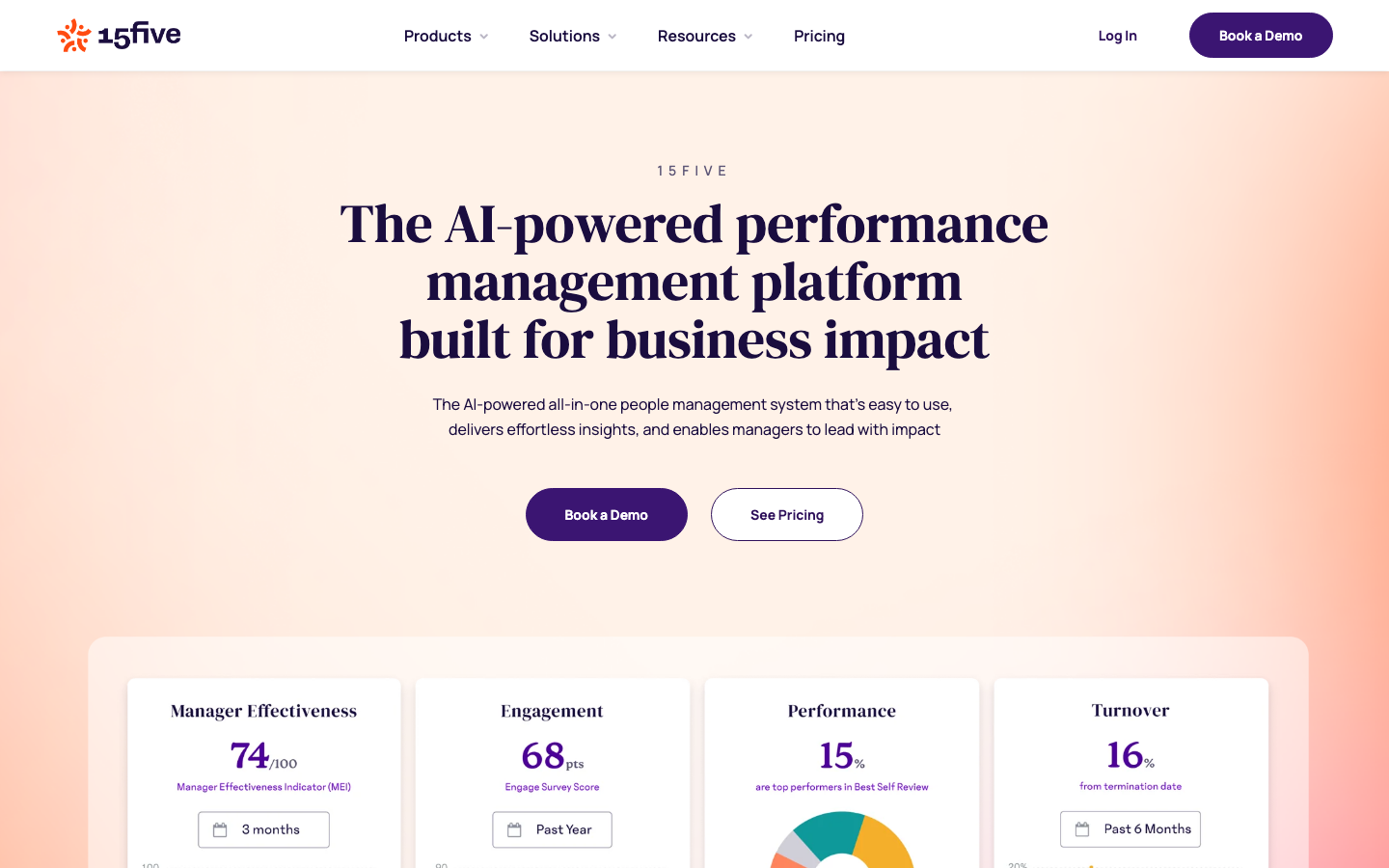
15Five is a performance platform whose goal module links weighted OKRs to weekly check-ins and 1:1 agendas. Teams use it as employee goal setting software when they want goals discussed every week rather than only at review time.
Software Pros:
- Weighted OKRs and goal management on the Perform plan
- Goals surface in weekly check-ins and 1:1s
- Manager views of progress across a team
Software Cons:
- Heavier than needed for a goals-only rollout
- Value drops quickly if weekly check-ins lapse
15Five Review:
Weekly check-ins are where 15Five earns its place on a goals list. Each update asks what moved and what is stuck, and the answers sit next to the related objectives, so a manager walks into a 1:1 already knowing where to push. The goal module is solid rather than elaborate, which suits teams that care more about the conversation around a goal than about complex alignment trees.
Our Verdict
Goals Kept Alive Through Weekly Check-Ins
AchieveIt
Quick Overview:
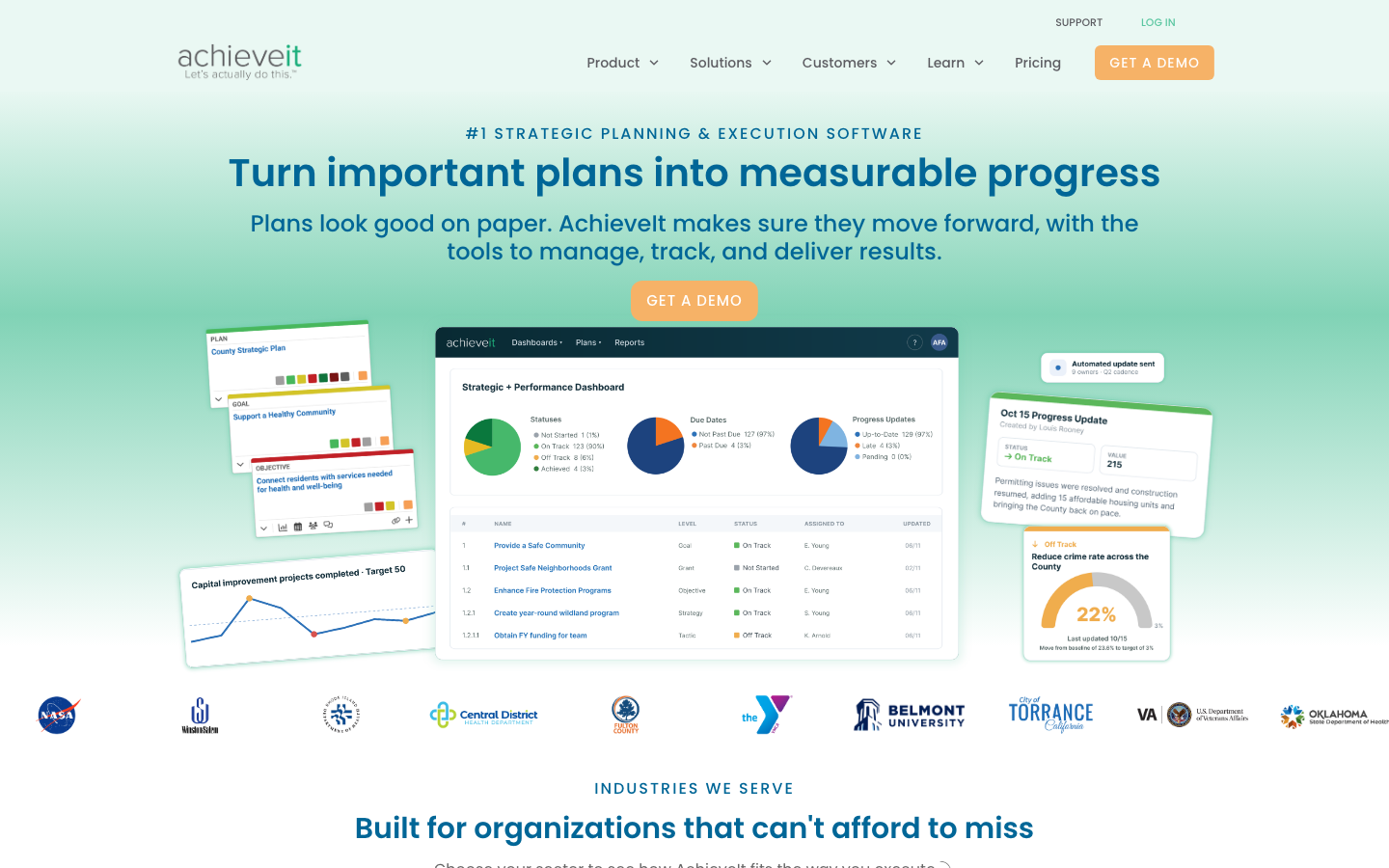
AchieveIt is a strategy execution platform for governments, health systems, universities, and other organizations that run a single plan across many departments. It connects strategic plans, initiatives, and measures, then turns progress into dashboards for executives, councils, and boards.
Software Pros:
- Multi-plan view across departments and units
- Public dashboards that support transparency with citizens
- Reporting designed for boards, councils, and regulators
Software Cons:
- All plans include a 20-user minimum
- No public price list, so every deal starts with a call
AchieveIt Review:
Public agencies and health systems rarely struggle to write a strategic plan; they struggle to prove progress to a council or board every quarter. AchieveIt is built for that reporting burden, rolling initiative updates from many departments into dashboards that executives can read without a spreadsheet. It is far too structured for a startup, but for an organization answerable to citizens or regulators, that structure is exactly the point.
Our Verdict
Plan Reporting for the Public Sector
Asana
Quick Overview:
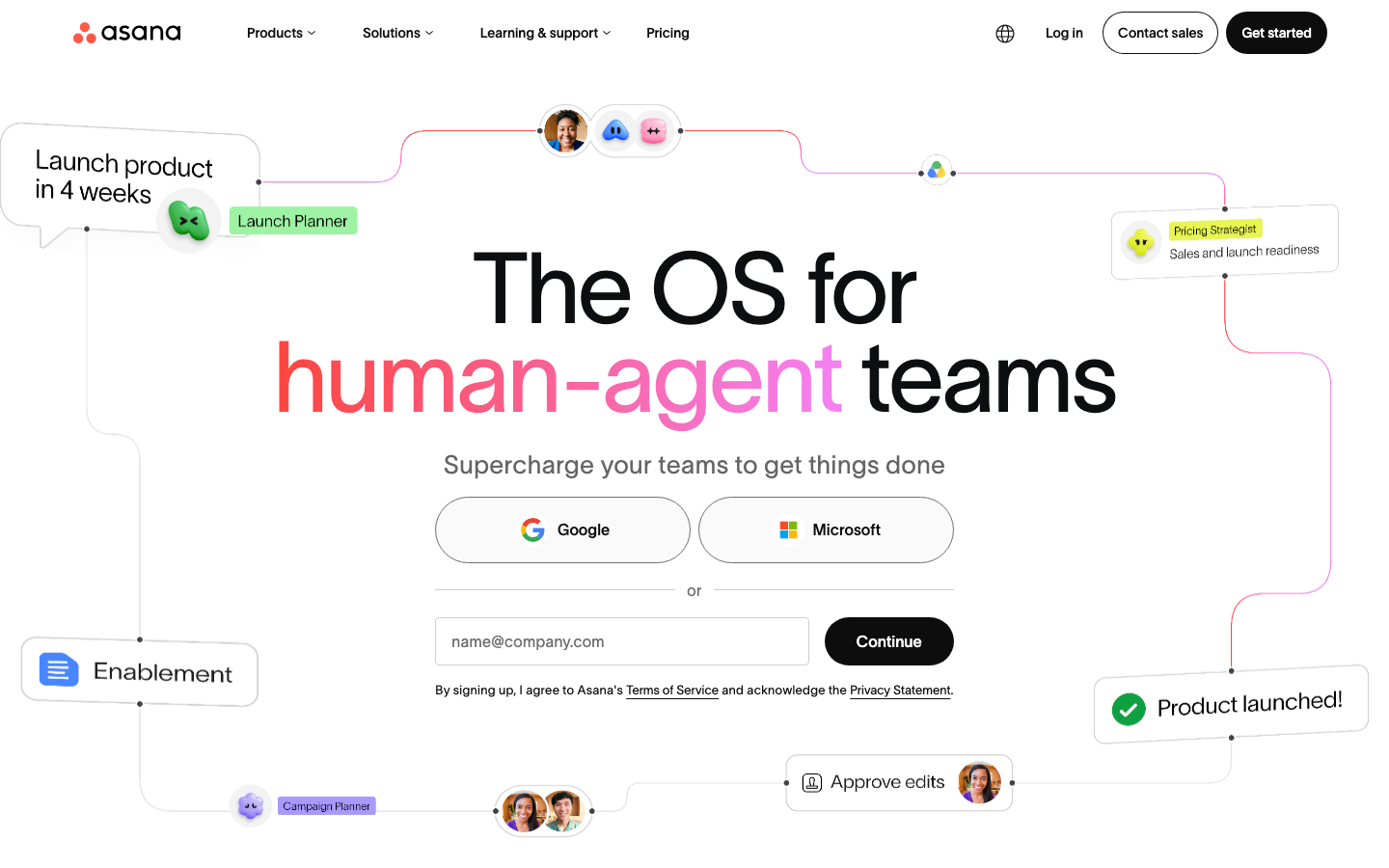
Asana is a work management platform with a goals layer that sits above portfolios, projects, and tasks. It suits teams that already plan work in Asana and want objectives connected to that work rather than tracked in a separate app.
Software Pros:
- Goals linked directly to projects and portfolios
- Goal status can update from connected work
- Unlimited free guests for outside collaborators
Software Cons:
- Not a dedicated goal product, with no HR process attached
- Advanced reporting sits on higher plans
Asana Review:
Asana treats a goal as the reason a project exists, and that framing works well for delivery-focused teams. When a project attached to a goal slips, the goal’s status reflects it, which spares a manager from chasing a separate update. I would not use it to run company-wide OKRs with review cycles, but for teams whose work already lives in Asana, adding goals costs very little effort.
Our Verdict
Goals on Top of Existing Projects
Betterworks
Quick Overview:
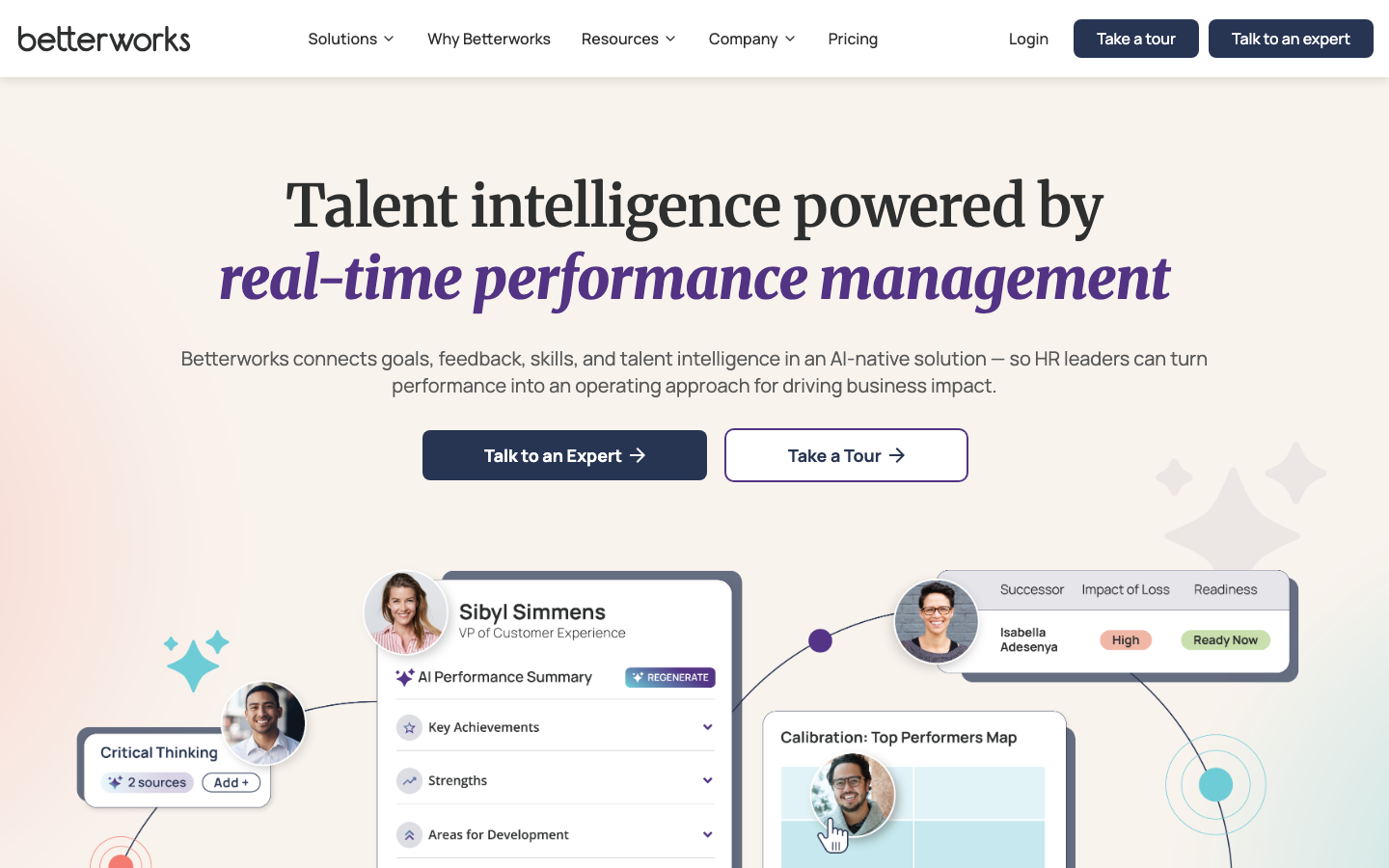
Betterworks is performance goal setting software for large organizations, built around OKRs, check-ins, and alignment between company and team goals. Its Performance plan bundles goals and OKRs with feedback, conversations, and AI assistance.
Software Pros:
- Company, team, and individual goals aligned in one view
- Check-ins built into the goal cycle
- AI assistance included in the Performance plan
Software Cons:
- Rollout needs planning and executive sponsorship
- Best fit for companies committed to an OKR process
Betterworks Review:
Betterworks is designed for enterprises that have decided OKRs are how it runs, and it shows in how much of the cycle the product guides. Check-ins, progress updates, and alignment views keep goals active between planning sessions. In June 2026, Betterworks announced its acquisition of Rypple, an AI platform that supports managers in their daily work, which hints at where the product is heading. Smaller companies are likely to find the structure demanding.
Our Verdict
Structured OKR Cycles at Scale
Cascade Strategy
Quick Overview:
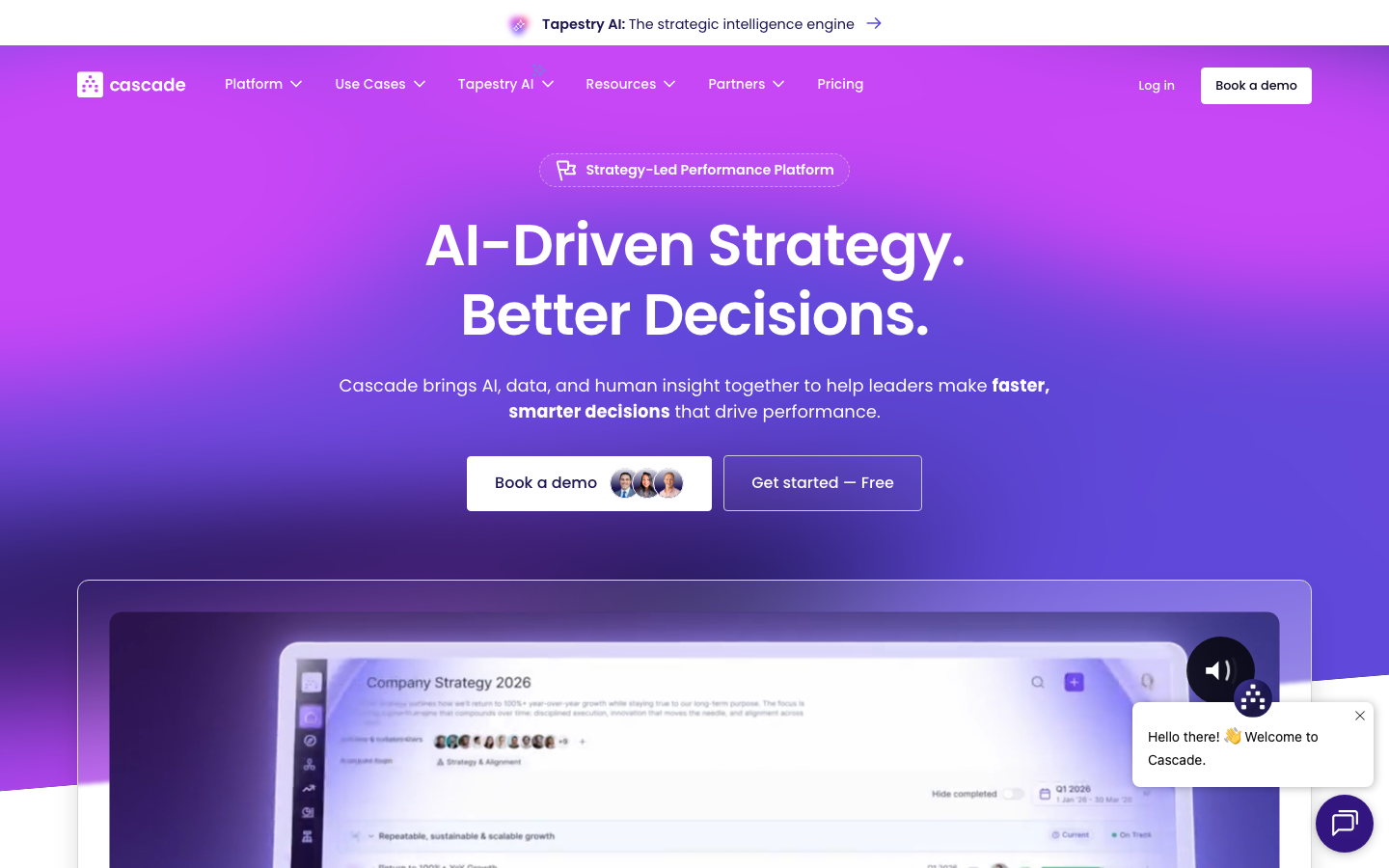
Cascade Strategy is a strategy execution platform that connects company strategy, team plans, and individual goals in one model. It supports OKRs, the Balanced Scorecard, and custom frameworks in the same account, which makes it a practical corporate goal setting software choice for multi-division companies.
Software Pros:
- OKRs, Balanced Scorecard, and custom strategy models side by side
- Tapestry AI for planning, alignment, and updates on higher plans
- Free plan for up to 2 users
Software Cons:
- Paid plans are quoted rather than published
- The strategy model takes time to design well
Cascade Strategy Review:
Most goal tools push a single framework, and Cascade Strategy is unusual in letting one business unit run OKRs while another reports on a Balanced Scorecard. Leaders still see both inside a single strategy model. The flexibility comes with a design job at the start, so I would bring a clear picture of the strategy to the first workshop rather than expect the software to supply one.
Our Verdict
Mixed Frameworks in One Strategy Model
ClearPoint Strategy
Quick Overview:
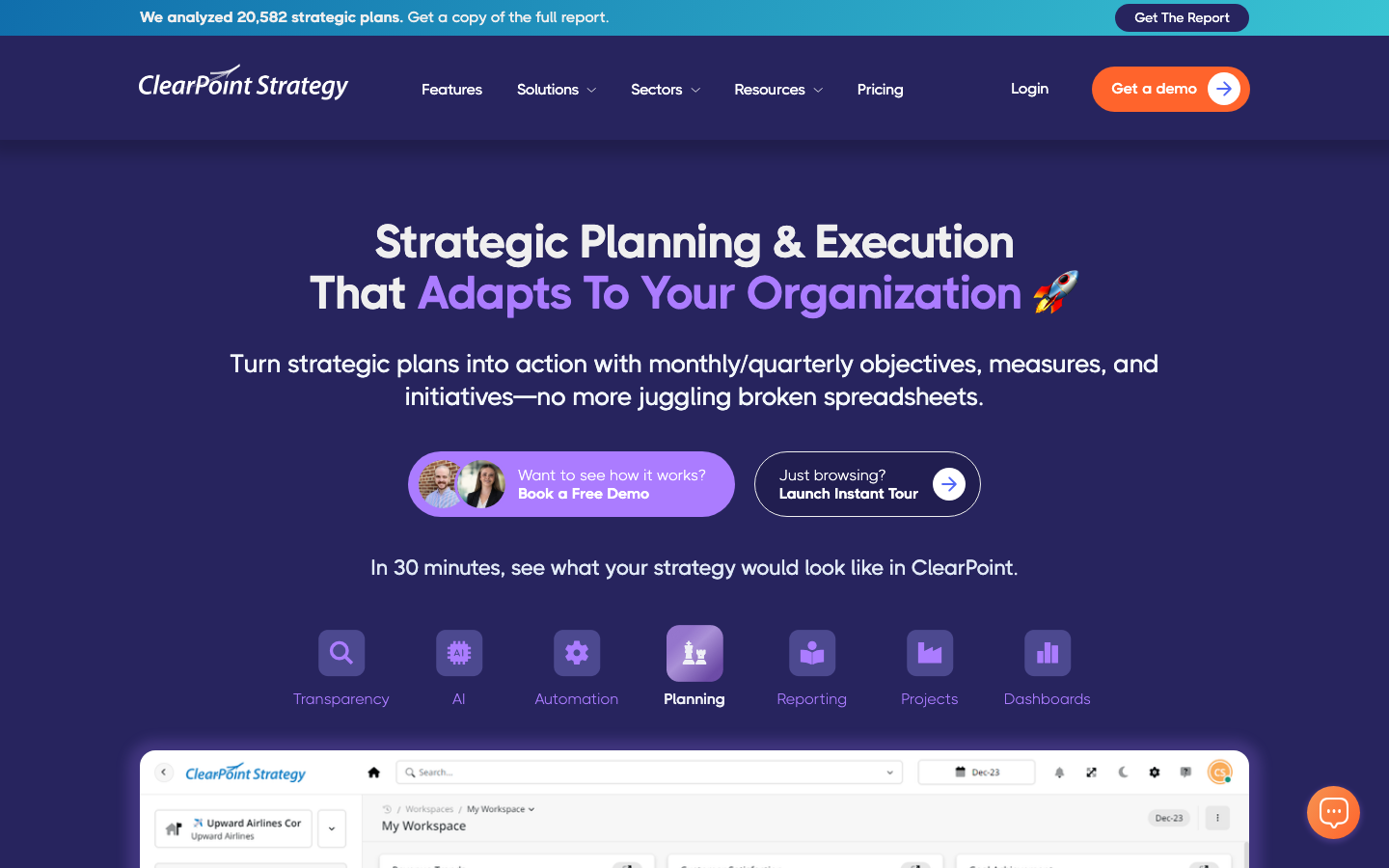
ClearPoint Strategy is a strategy and KPI reporting platform for organizations that report progress to a board, a council, or a regulator. It turns strategic plans into monthly or quarterly objectives, measures, and initiatives, and packages them into scorecards and dashboards.
Software Pros:
- Scorecards and dashboards built for formal reporting
- AI assistant that drafts plans and suggests KPIs
- Help moving strategy data out of spreadsheets
Software Cons:
- Built for leadership reporting, not every employee’s goals
- An exact price comes only after a demo
ClearPoint Strategy Review:
Where most tools on this list focus on getting goals written, ClearPoint Strategy concentrates on the report at the end. Measures and initiatives roll into scorecards that can go straight to a board or council, which removes the week of copying numbers into slides before each meeting. It is the wrong tool for individual employee goals and the right one when reporting is the part of strategy that keeps slipping.
Our Verdict
Scorecard Reporting for Boards and Councils
ClickUp
Quick Overview:
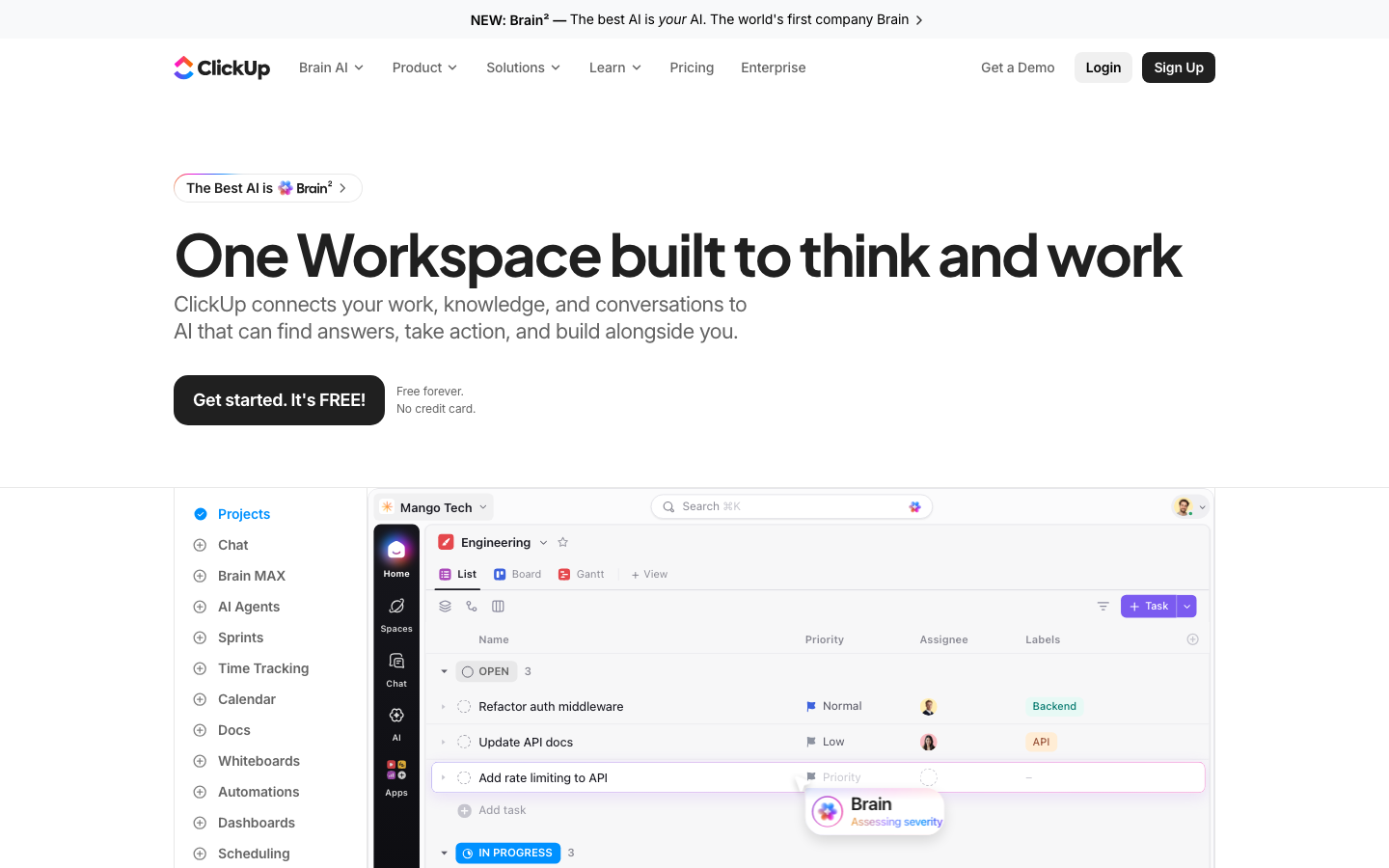
ClickUp is a work management platform with goals and targets that sit alongside tasks, sprints, and dashboards. Goals and portfolios are available from the Unlimited plan.
Software Pros:
- Targets tied to lists, tasks, and sprints
- Dashboards that show goal progress next to delivery
- Free Forever plan for getting started
Software Cons:
- Feature-dense interface can feel busy
- Needs a clear owner to keep goal structures simple
ClickUp Review:
Flexibility defines ClickUp, and its goals feature follows suit. A product team can track a sprint target while marketing uses the same goal setting tool for a revenue number, each with its own structure. That freedom is also the risk, because without someone setting conventions, goals multiply as fast as lists do. Teams that already plan their work in ClickUp get the most from it.
Our Verdict
Targets Inside the Task Workspace
Culture Amp
Quick Overview:
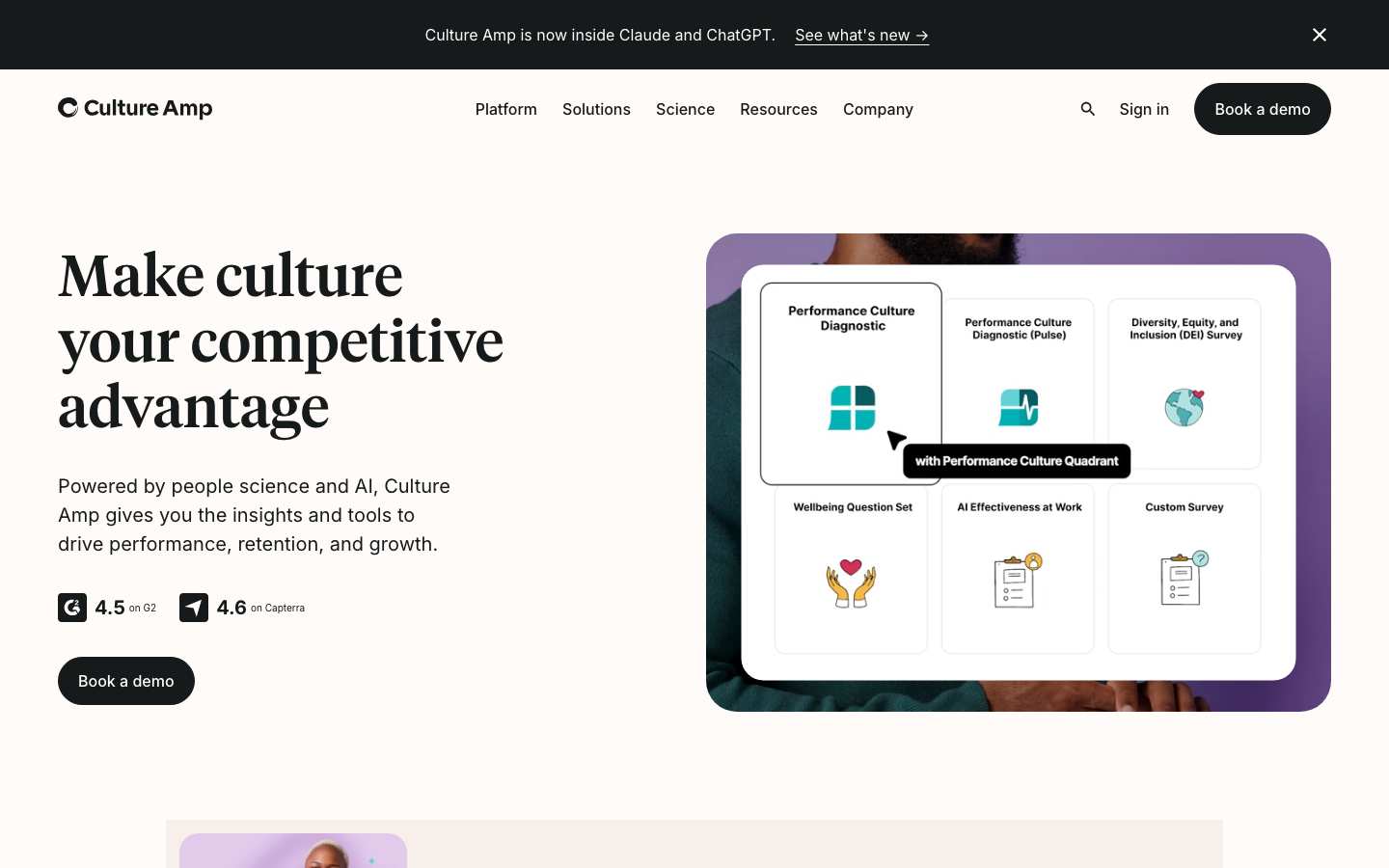
Culture Amp is an employee experience platform whose Perform product adds goals to engagement surveys, feedback, and reviews. Its goal features make the most sense when leaders want to read progress alongside engagement data.
Software Pros:
- Goals viewed next to engagement survey results
- AI Coach helps managers write reviews and prepare conversations
- Deep people analytics for HR teams
Software Cons:
- Goals are one part of a much larger suite
- Priced by headcount and product, with annual contracts
Culture Amp Review:
A missed goal can mean a bad plan or a burned-out team, and Culture Amp is one of the few places where both explanations sit on the same screen. As software for goal setting it is fairly standard; the real value is comparing a team’s progress with how that team answered the last engagement survey. Companies that only want goal tracking will pay for far more than they use.
Our Verdict
Goals Read Against Engagement Data
Engagedly
Quick Overview:
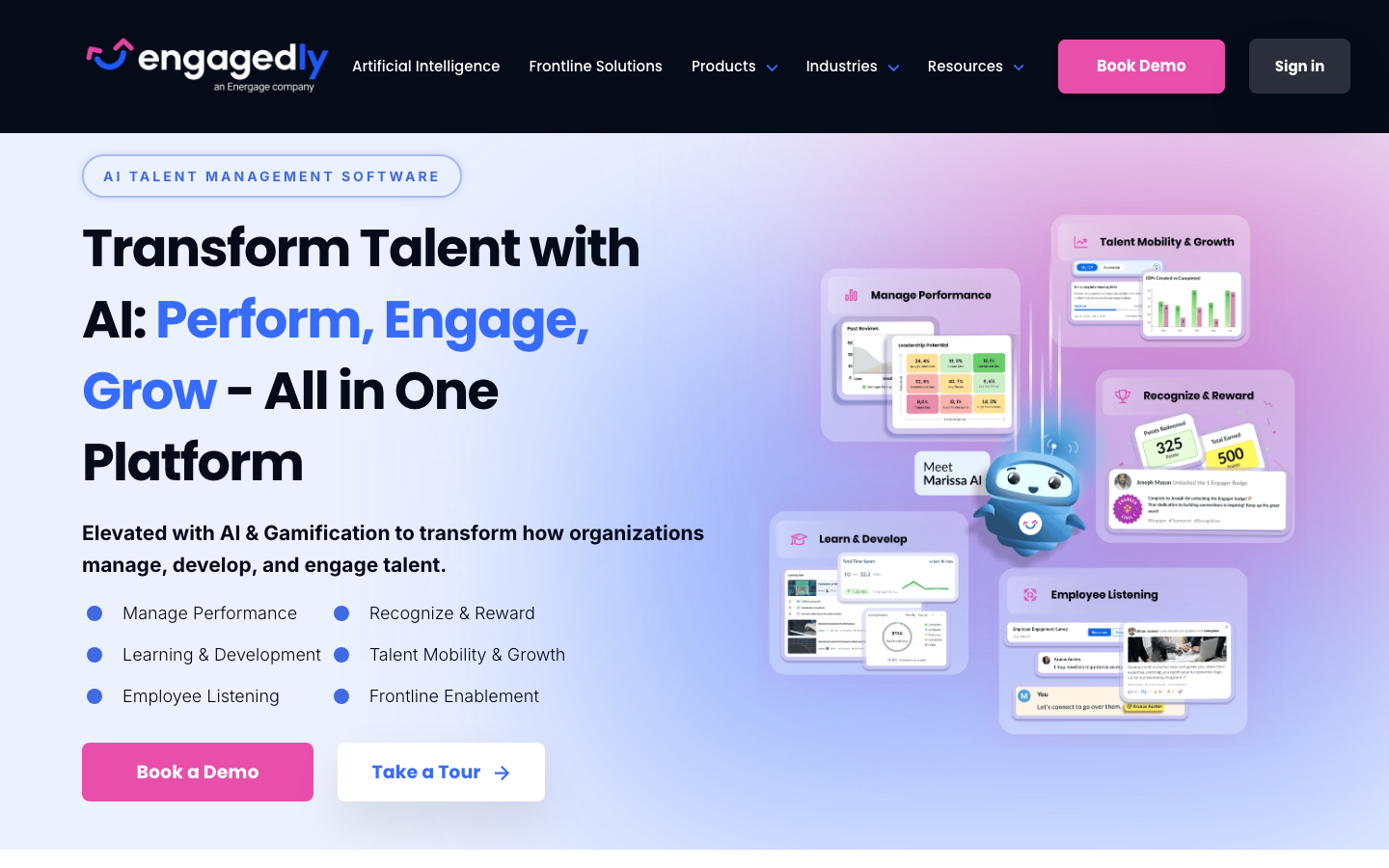
Engagedly is a talent management suite with a Goals and OKRs module that connects objectives to feedback, recognition, and learning. It supports both OKRs and SMART goals.
Software Pros:
- Goals and OKRs can be bought as their own module
- Objectives link to learning and development
- Optional Marissa AI coach module
Software Cons:
- Minimum spend applies across the suite
- The interface takes time to feel orderly
Engagedly Review:
Engagedly’s modular pricing is its most practical feature for a goals buyer, because the Goals and OKRs module is priced on its own rather than bundled into a full suite. Objectives then connect to feedback and learning paths once you add those modules. The annual minimum rules it out for very small teams, and the interface needs a session or 2 before it settles into a clear routine.
Our Verdict
Modular Goals Within a Talent Suite
Lattice
Quick Overview:
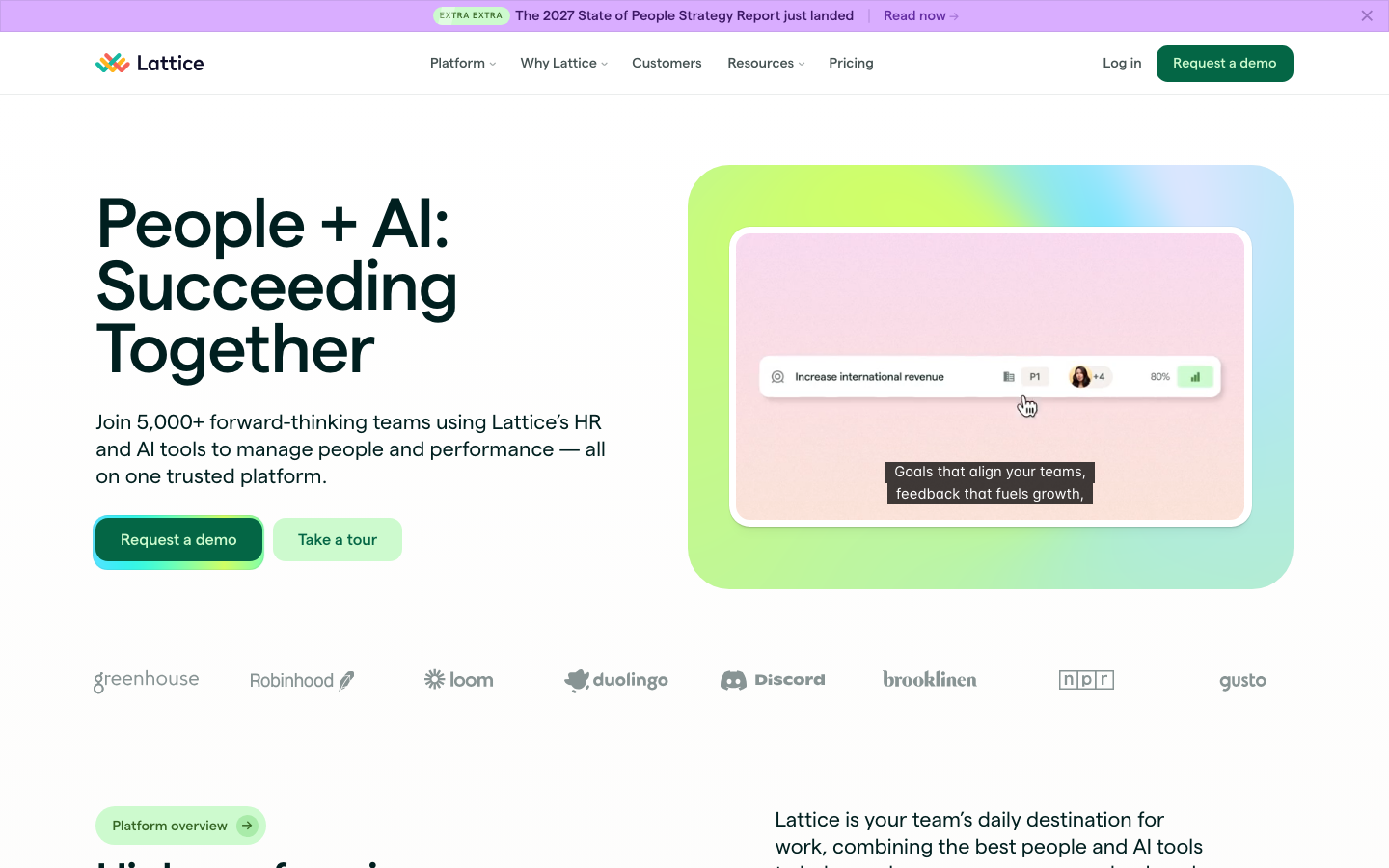
Lattice is a people platform whose Goals and OKRs product supports cascading goals, progress updates, reminders, and integrations with Salesforce and Jira. Many companies run it as employee goal setting software alongside reviews and 1:1s.
Software Pros:
- Cascading goals with configurable fields
- Progress updates from Salesforce and Jira
- Goals and OKRs available as a standalone product
Software Cons:
- Configuration takes time at the start
- Full value comes from adding other Lattice products
Lattice Review:
I judged Lattice purely on its goals product, and it holds up well on its own. Cascading goals keep team objectives tied to company priorities, reminder notifications prompt owners before updates go stale, and the Jira and Salesforce integrations reduce manual progress entry. It becomes more compelling when reviews also run in Lattice, but a company can start with goals and decide on the rest later.
Our Verdict
Cascading Goals With Work Integrations
Leapsome
Quick Overview:
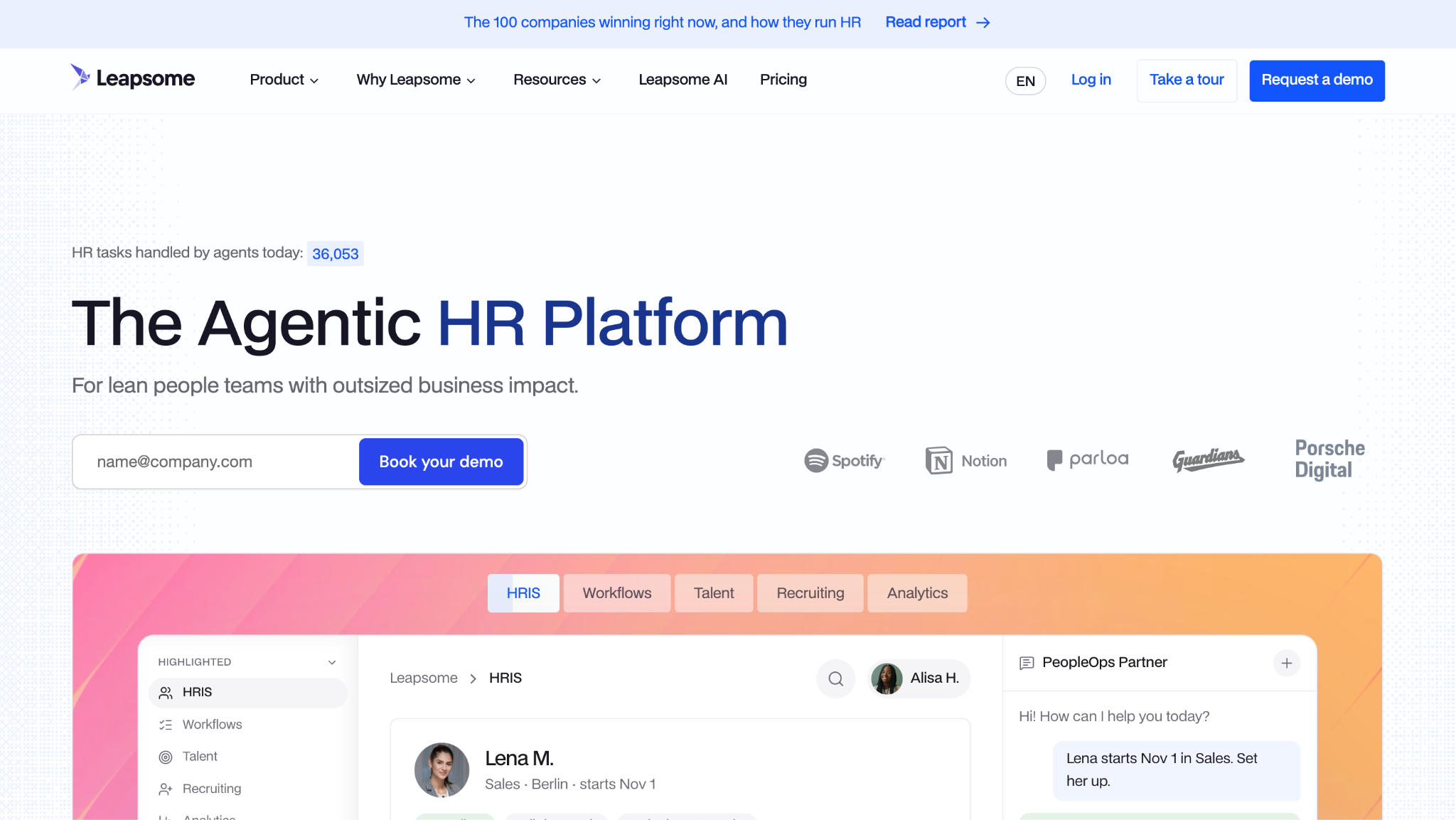
Leapsome is a people platform that connects individual, team, and company OKRs to reviews, learning, and engagement. Goals can follow a full OKR structure or simpler targets.
Software Pros:
- Company, team, and individual OKRs in one hierarchy
- Goals connect to learning paths and development
- 14-day free trial without a credit card
Software Cons:
- Works best when managers are active in the tool
- Pricing is quoted across modules
Leapsome Review:
Leapsome approaches a goal as the start of a development conversation rather than the end of a scoring exercise. When an objective is missed, the platform makes it easy to connect the gap to a learning path, which is more useful than a red status bar. It rewards companies with engaged managers and a people team willing to configure automation, and it can feel empty without them.
Our Verdict
Goals That Lead to Development
Monday.com
Quick Overview:
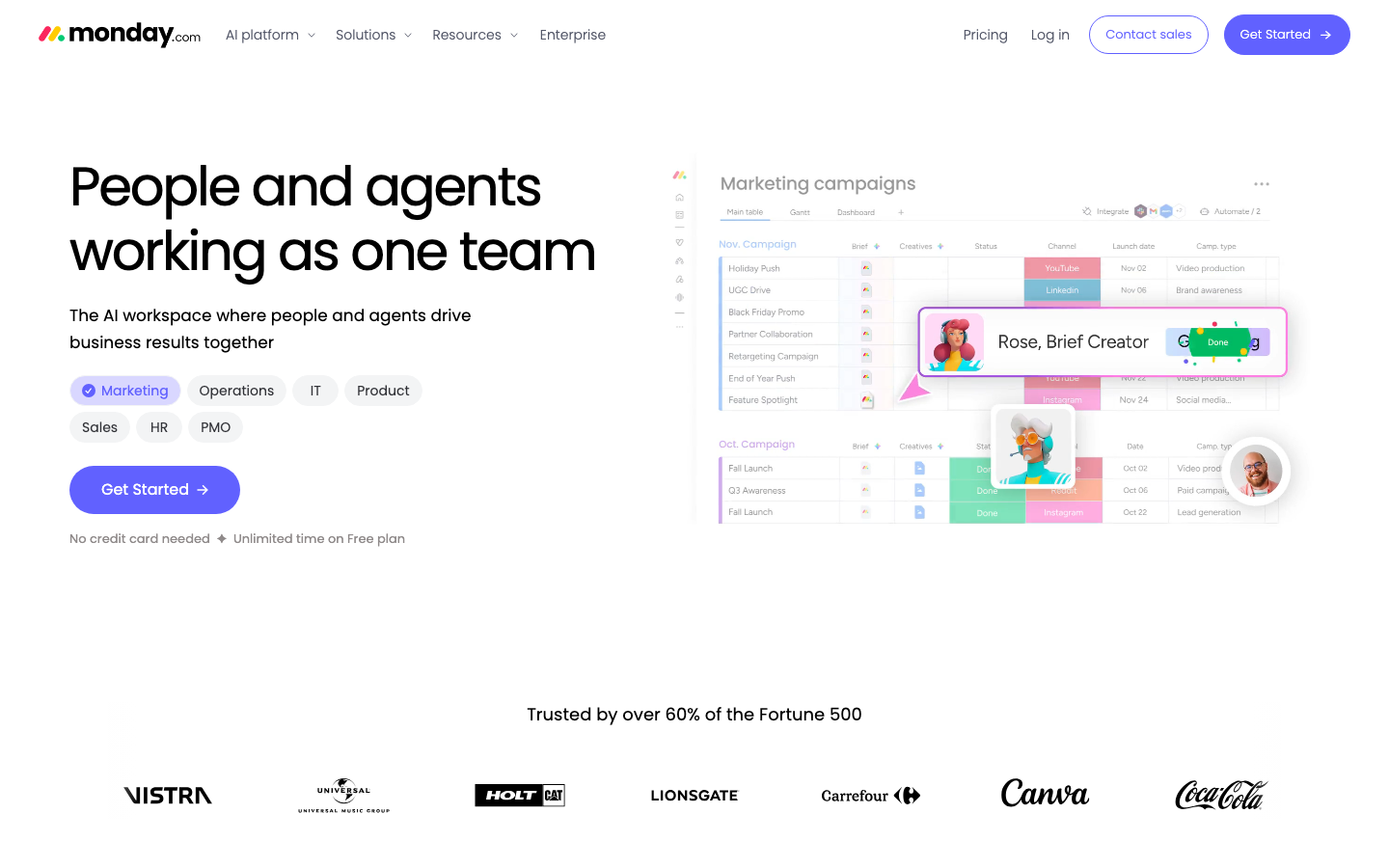
Monday.com is a work management platform where teams build goal and OKR boards from templates and track them on dashboards alongside projects. Goals here organize work rather than serving as a separate module.
Software Pros:
- OKR templates that are quick to adapt
- Dashboards that summarize progress across boards
- Free plan for up to 2 seats
Software Cons:
- No built-in goal hierarchy or review process
- Boards multiply if nobody sets conventions
Monday.com Review:
Setting up an OKR board in Monday.com takes minutes, and the result is easy to read for people who never open an HR tool. Automations can nudge owners when a status has not changed, and dashboards pull several team boards into a single view for leadership. It lacks a built-in goal cycle, so teams must create their own review rhythm.
Our Verdict
Visual Boards for Team Goals
Mooncamp
Quick Overview:
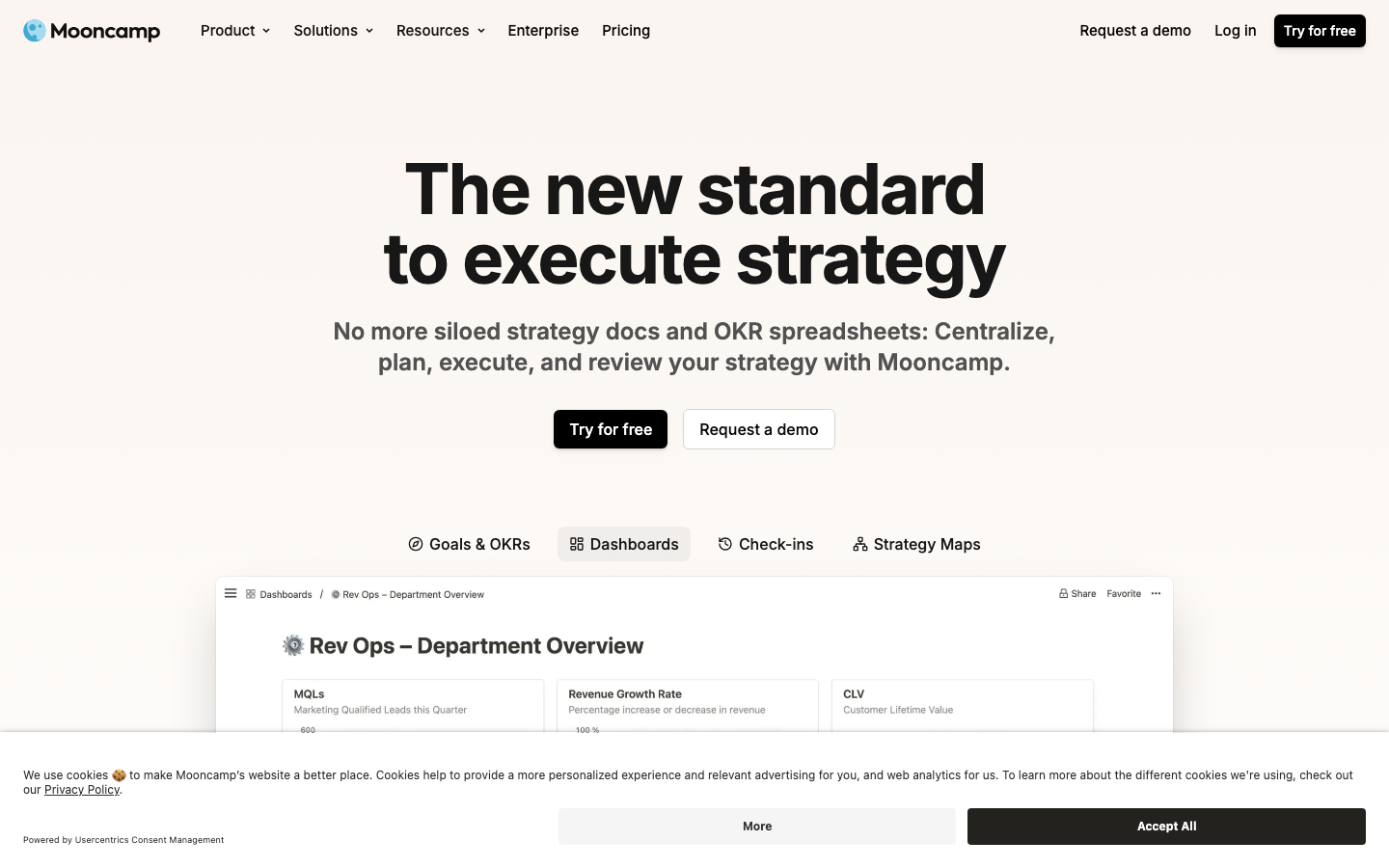
Mooncamp is goal setting software built around OKRs, strategic themes, and check-ins, with KPI dashboards that can report up to board level. It integrates with Microsoft Teams and Jira.
Software Pros:
- Strategic themes linked to goals and initiatives
- Customizable dashboards for business reviews
- Free trial without a credit card
Software Cons:
- Paid plans require at least 5 users
- No performance reviews or HR features
Mooncamp Review:
Mooncamp keeps the core loop short: set goals, align them to strategy, and update them in regular check-ins. Its dashboards go further than most lightweight OKR tools, and one customer quoted on its site uses them for OKR reporting to the board. For a company that wants to run strategy and OKRs without adopting an HR suite, it offers a clean middle ground.
Our Verdict
OKRs and Strategy Without the HR Suite
Notion
Quick Overview:
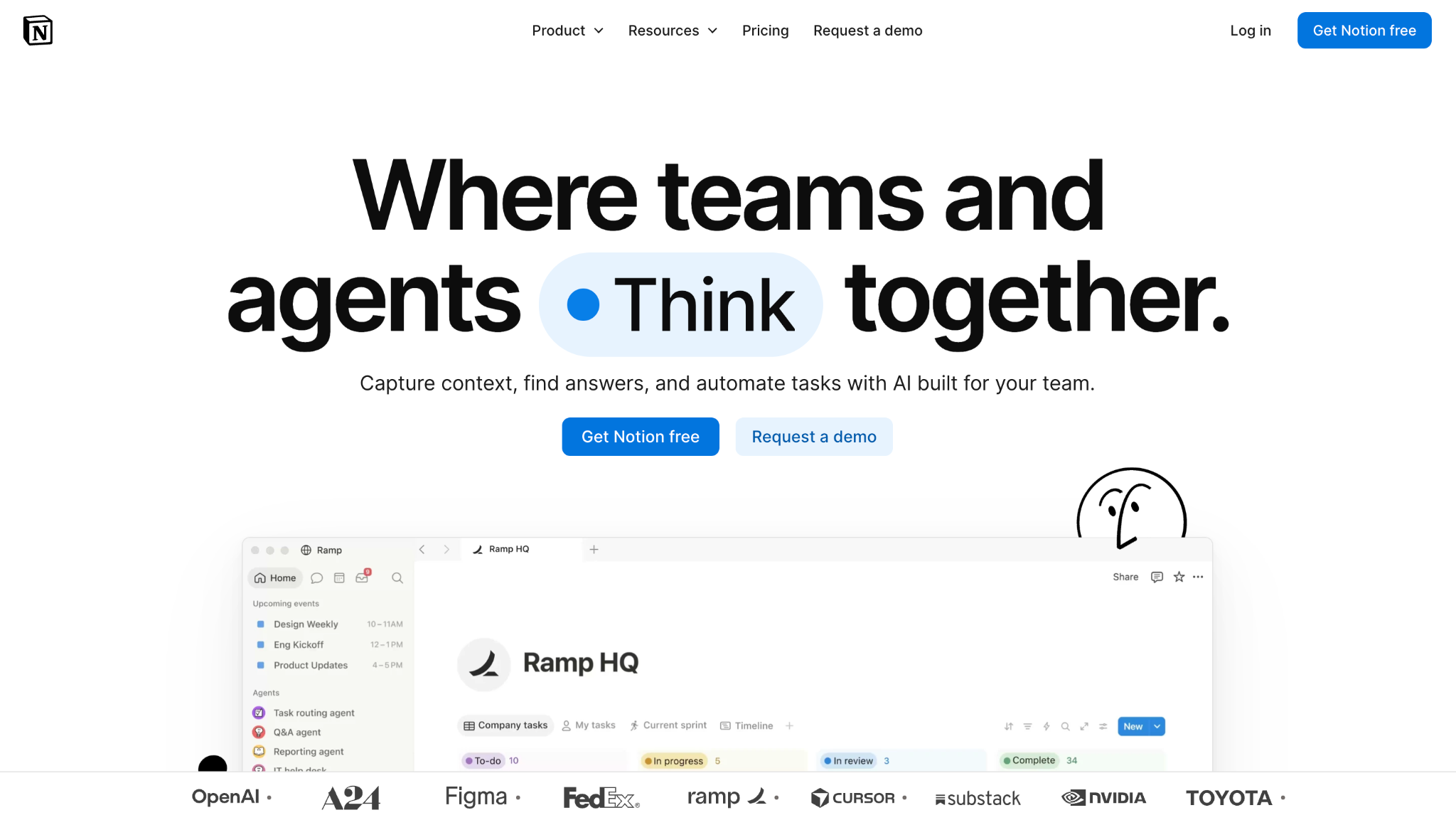
Notion is a flexible workspace that teams adapt into a goal tracker with databases, templates, and linked views. There is no goal engine, so every structure, reminder, and report is something the team builds itself.
Software Pros:
- Freedom to model any goal framework
- Goals can link to docs, projects, and meeting notes
- Free plan for trying the approach
Software Cons:
- No native check-ins, scoring, or alignment logic
- Needs an owner to keep databases consistent
Notion Review:
Notion is on this list as the build-it-yourself option, and it works best for small groups with someone who enjoys designing systems. A goals database can link each objective to the project docs and meeting notes behind it, which dedicated tools rarely do. Everything a goal platform automates, from reminders to roll-up reporting, has to be built by hand here, so the upkeep grows with the team.
Our Verdict
Build-Your-Own Goal Workspace
Peoplebox
Quick Overview:
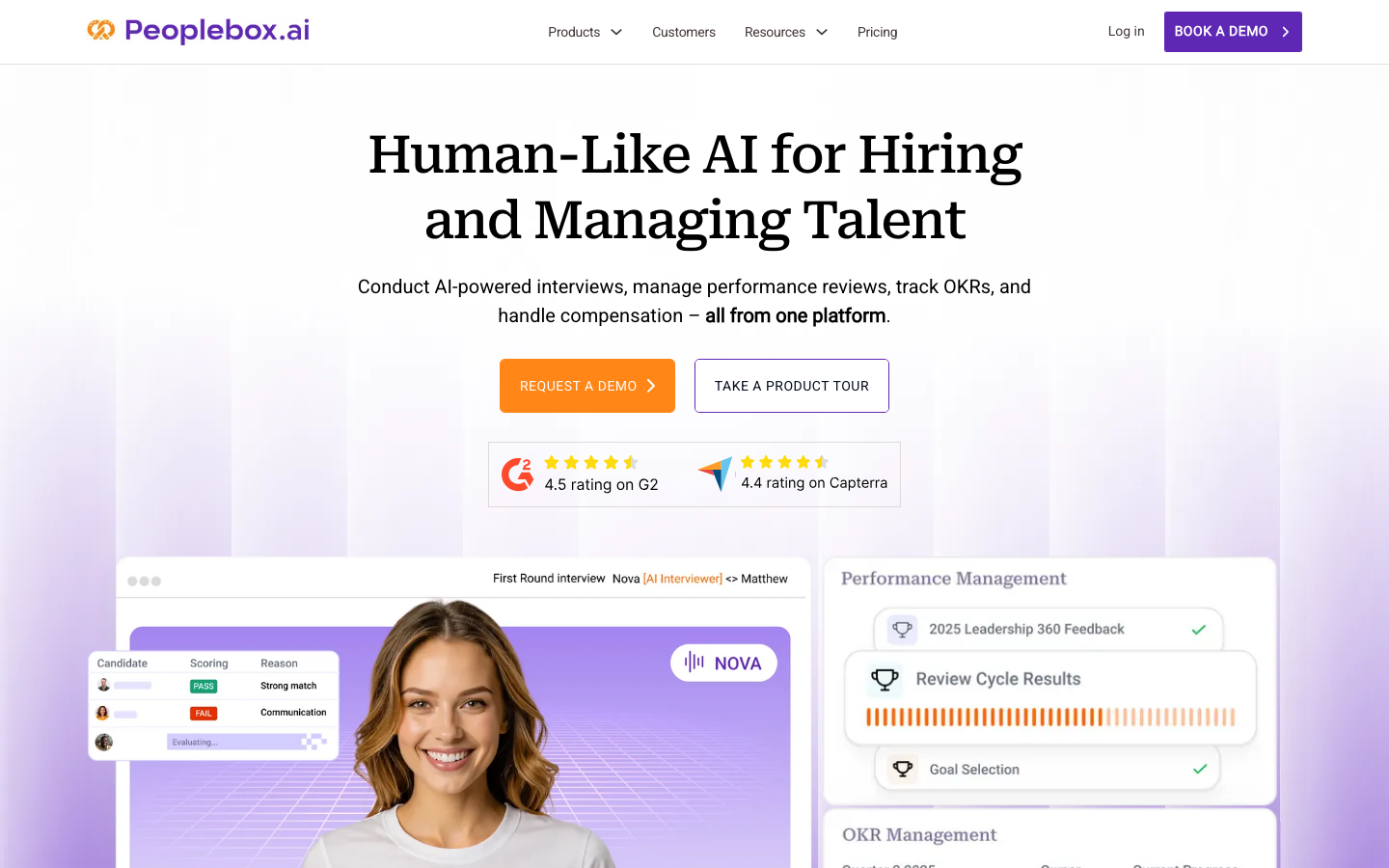
Peoplebox.ai is a talent platform that now leads with AI recruiting but still offers OKRs and goals inside its Performance Management plan. Goals can be set as OKRs, KRAs, or KPIs, and progress can be updated from connected work tools.
Software Pros:
- AI-powered goal creation and summaries
- Project tracking through work tool integrations
- Cascaded company, team, and individual goals
Software Cons:
- Goals are no longer the company’s lead product
- Recruiting features add weight if you only need goals
Peoplebox Review:
Before shortlisting Peoplebox, it is worth knowing that the company’s homepage now leads with AI hiring. The OKR product remains part of the Performance Management plan, with cascaded goals, business reviews, and integrations that update key results from sales and engineering tools. Before signing a multi-year contract, I would ask the vendor how the goal roadmap fits the recruiting focus.
Our Verdict
OKRs Inside an AI Talent Platform
Perdoo
Quick Overview:
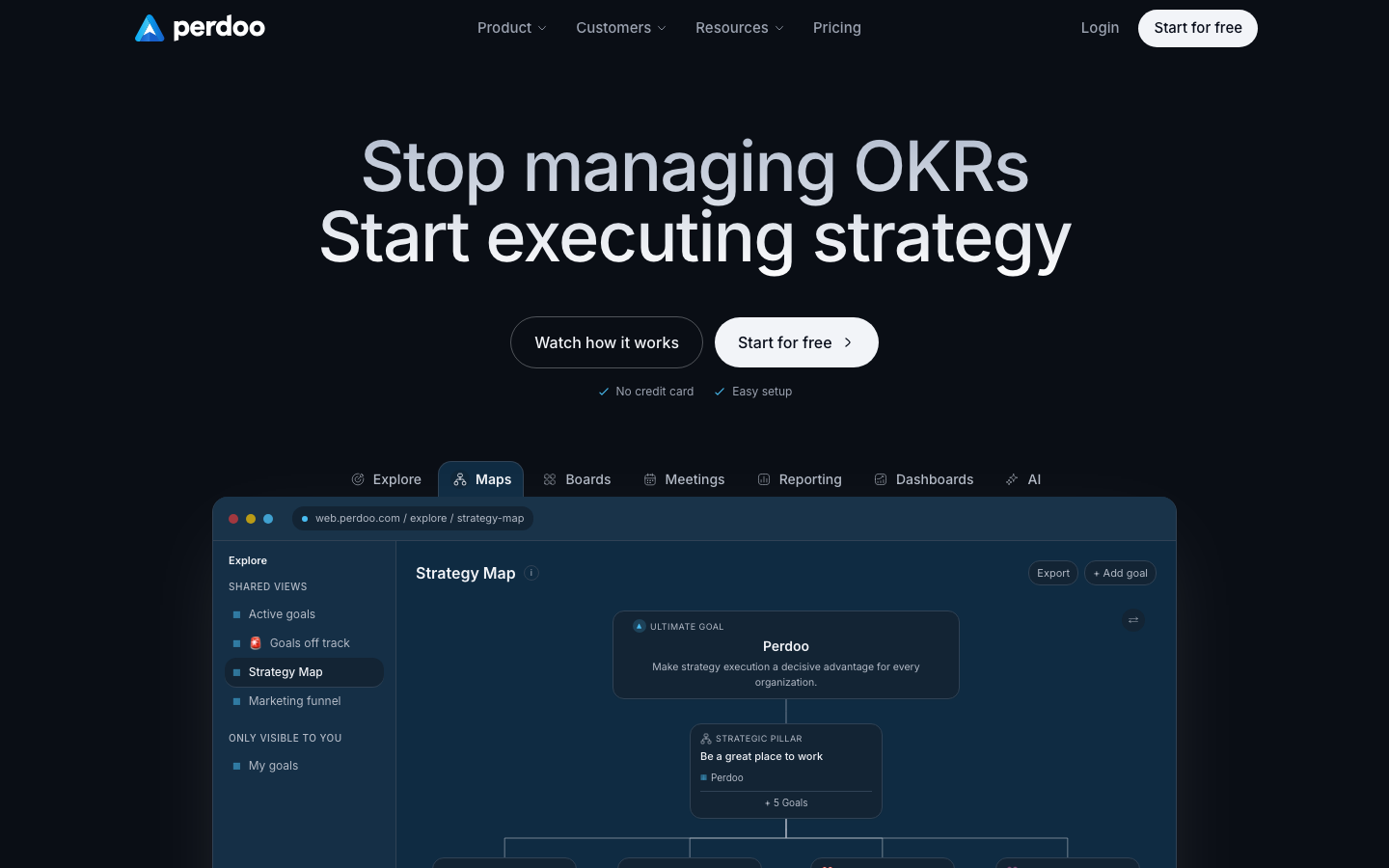
Perdoo is goal setting software that links OKRs, KPIs, and initiatives through a strategy map. Its free plan covers up to 5 users and includes OKR and KPI tracking, meetings, and an AI assistant.
Software Pros:
- Strategy map linking KPIs and OKRs
- Free plan that includes the AI assistant and coach
- Slack and Microsoft Teams integrations
Software Cons:
- Narrower scope than all-in-one HR tools
- Dashboards require a paid plan
Perdoo Review:
The strategy map is Perdoo’s clearest advantage. Instead of a flat goal list, it shows which KPIs keep the business healthy and which OKRs move them, so alignment gaps stand out. The free plan is generous enough for a real pilot, and Perdoo’s site quotes a customer that switched after Viva Goals. It suits organizations that want strategy and goals linked without HR processes on top.
Our Verdict
Strategy Maps for OKRs and KPIs
PerformYard
Quick Overview:
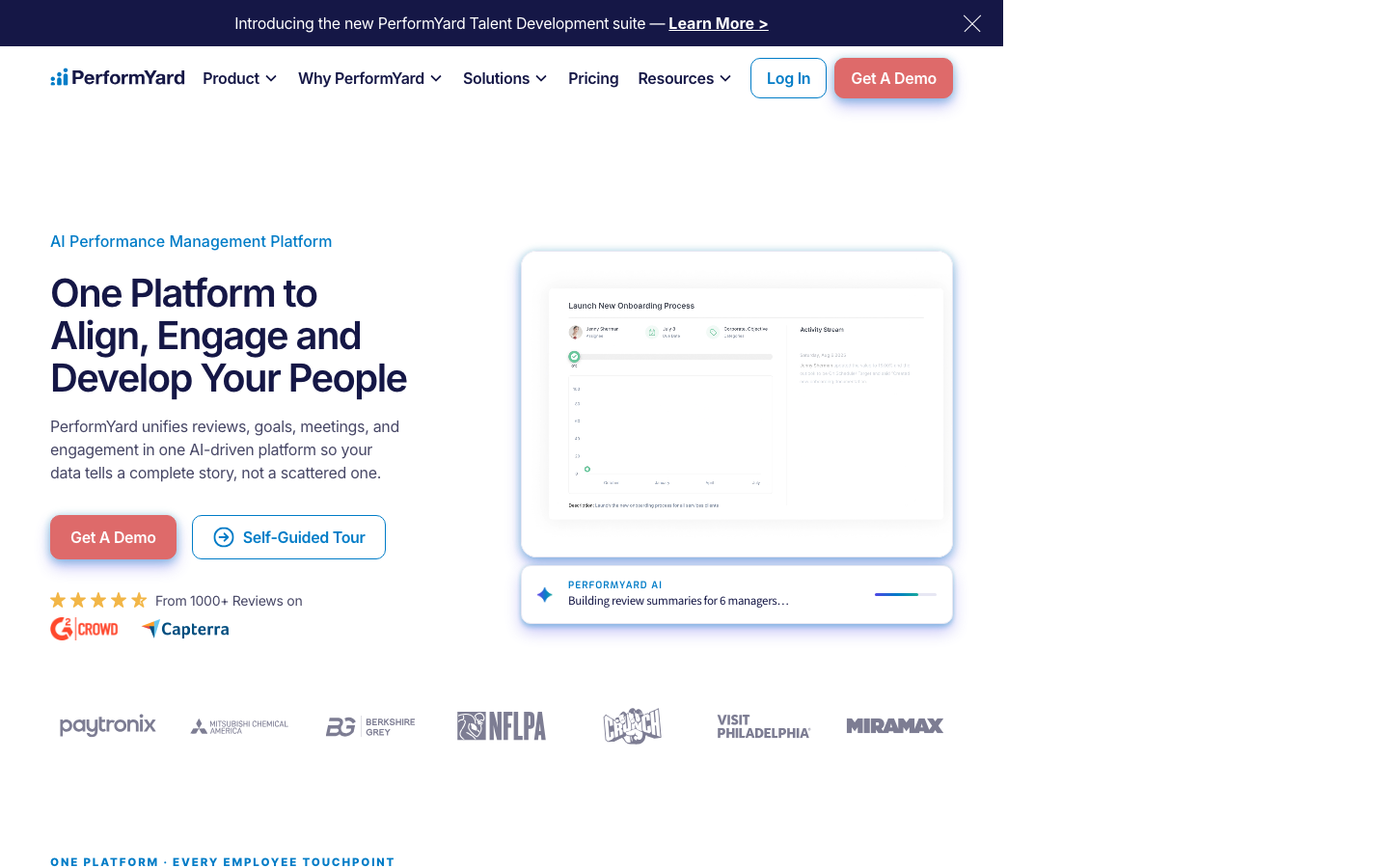
PerformYard is a performance management platform for HR teams, with goal management that supports SMART goals, quarterly check-ins, and AI-backed goal insights. It fits companies that set SMART goals and discuss them inside formal reviews.
Software Pros:
- SMART goals built into the review process
- AI insights that surface themes across check-ins
- Free support for every customer
Software Cons:
- Per-seat pricing with annual billing only
- Less suited to company-wide OKR alignment
Perdoo Review:
Many companies don’t run OKRs at all; they set SMART goals at the start of the year and discuss them in reviews. PerformYard is built for that reality, keeping goals, quarterly check-ins, and review forms in one process that HR can configure without heavy setup. Teams chasing ambitious, cascading OKRs will find other tools on this list more natural.
Our Verdict
SMART Goals Inside Reviews
Profit.co
Quick Overview:
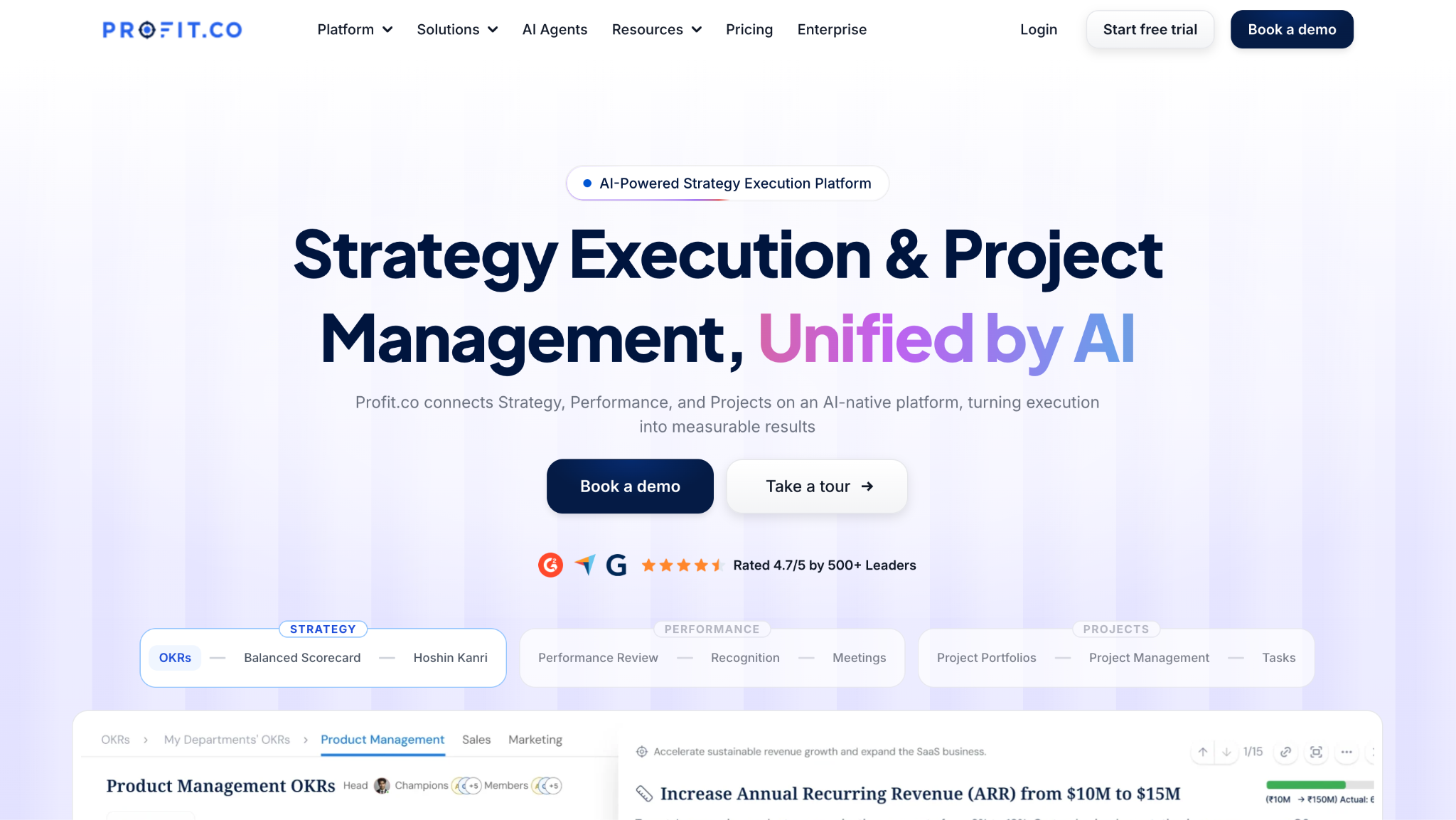
Profit.co is an OKR and strategy execution platform with detailed settings for creating, aligning, and weighting objectives. It includes 300+ built-in KPIs and connects OKRs to tasks and initiatives.
Software Pros:
- Custom priority weights and cascading alignment
- 300+ built-in KPIs for progress tracking
- Free trial before a sales conversation
Software Cons:
- Configuration depth can overwhelm new admins
- Enterprise pricing through sales only
Profit.co Review:
Profit.co gives an OKR administrator more settings than almost any other product here, from priority weights to automated notifications. That depth makes it strong goal setting management software for a company with a dedicated OKR owner and a defined process. Without that owner, the options can slow a rollout, so piloting it with a single department first is the safer route.
Our Verdict
Deep OKR Configuration
Rhythm Systems
Quick Overview:
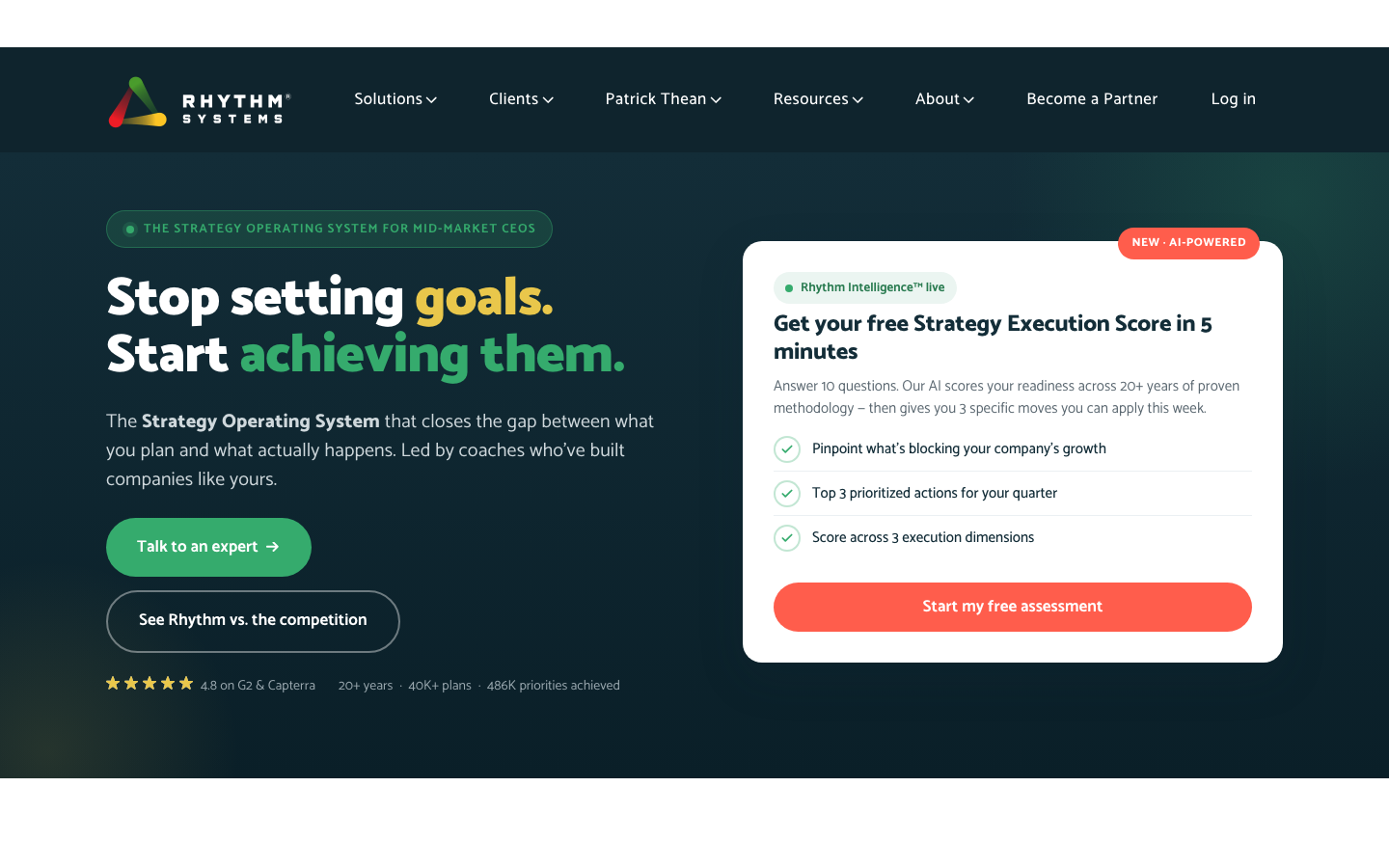
Rhythm Systems is a strategy execution platform and coaching method for mid-size companies, built around an annual plan, quarterly priorities, and weekly KPIs. Rhythm describes its market as companies in the $10 million to $500 million range.
Software Pros:
- AI Plan Builder drafts a quarterly plan with named owners
- Auto-generated SMART goals with success criteria
- Human coaches for annual and quarterly planning
Software Cons:
- Tied closely to the Rhythm methodology
- Costs are shared only through a sales conversation
Rhythm Systems Review:
Rhythm Systems sells a way of running a company as much as software, and that’s the appeal for a CEO-led business. The platform turns strategy into a 13-week plan with owners and weekly KPIs, and coaches help leadership teams hold the quarterly reviews that keep it honest. As business goal setting software it fits companies willing to adopt the method, less so those that want a neutral tool.
Our Verdict
Quarterly Planning for Mid-Size Companies
Spider Impact
Quick Overview:
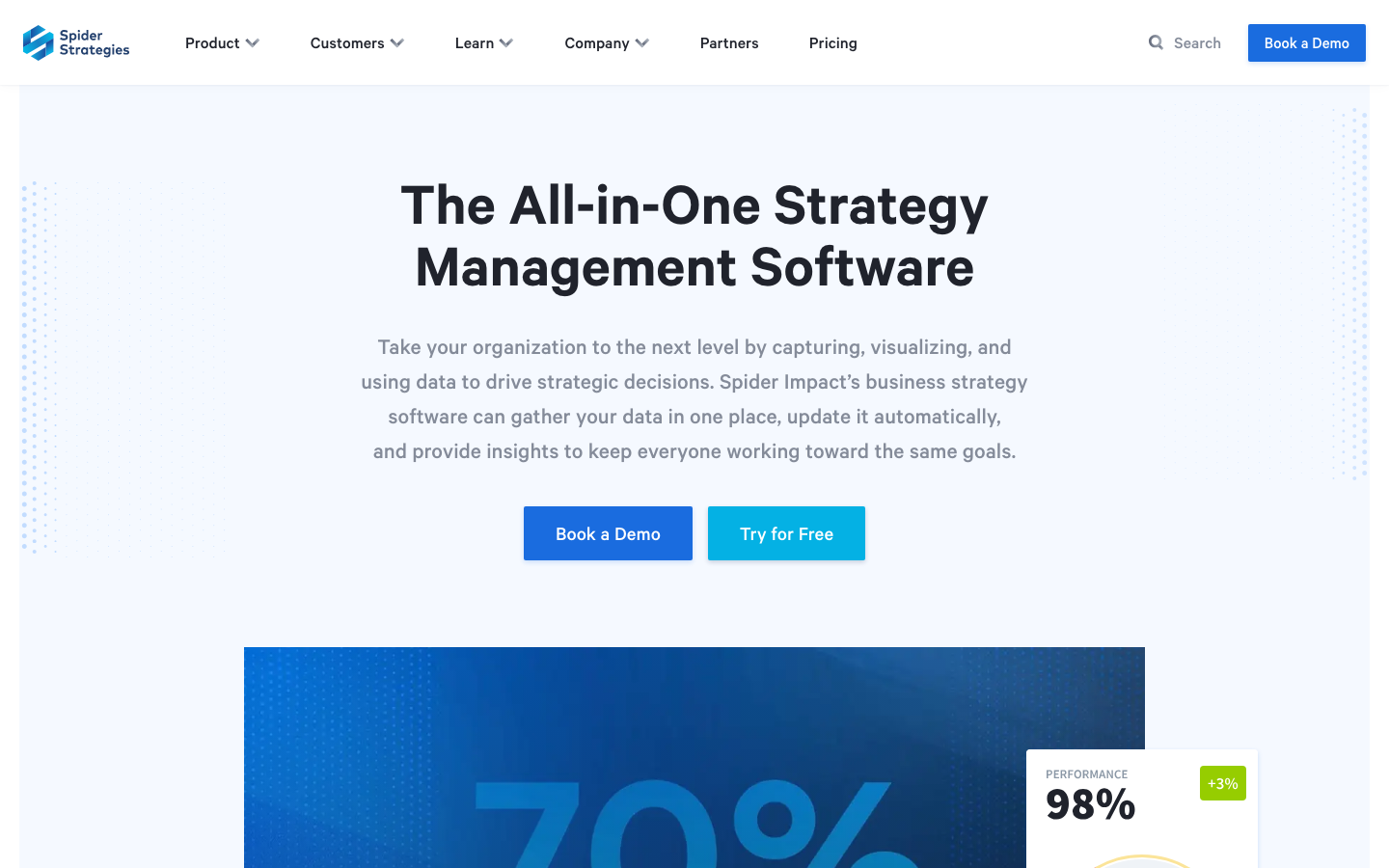
Spider Impact, made by Spider Strategies, is Balanced Scorecard and KPI software built around scorecards, dashboards, and strategic initiatives. It is the most visual goal setting software on this list, turning measures and targets into views leaders can read at a glance.
Software Pros:
- Balanced Scorecard support built in
- KPI dashboards with automated insights
- 30-day free trial with your own data after a demo
Software Cons:
- Aimed at strategy offices rather than employee goals
- Pricing is tailored after a consultation
Spider Impact Review:
Spider Impact is built for whoever owns the scorecard, whether that is a strategy office or a performance team reporting to leadership. Measures, targets, and initiatives come together in dashboards that make it obvious which objectives are off track. I like that the trial runs on your own data after the demo, because a scorecard only becomes convincing once it shows real numbers.
Our Verdict
Scorecards and KPI Dashboards
Tability
Quick Overview:
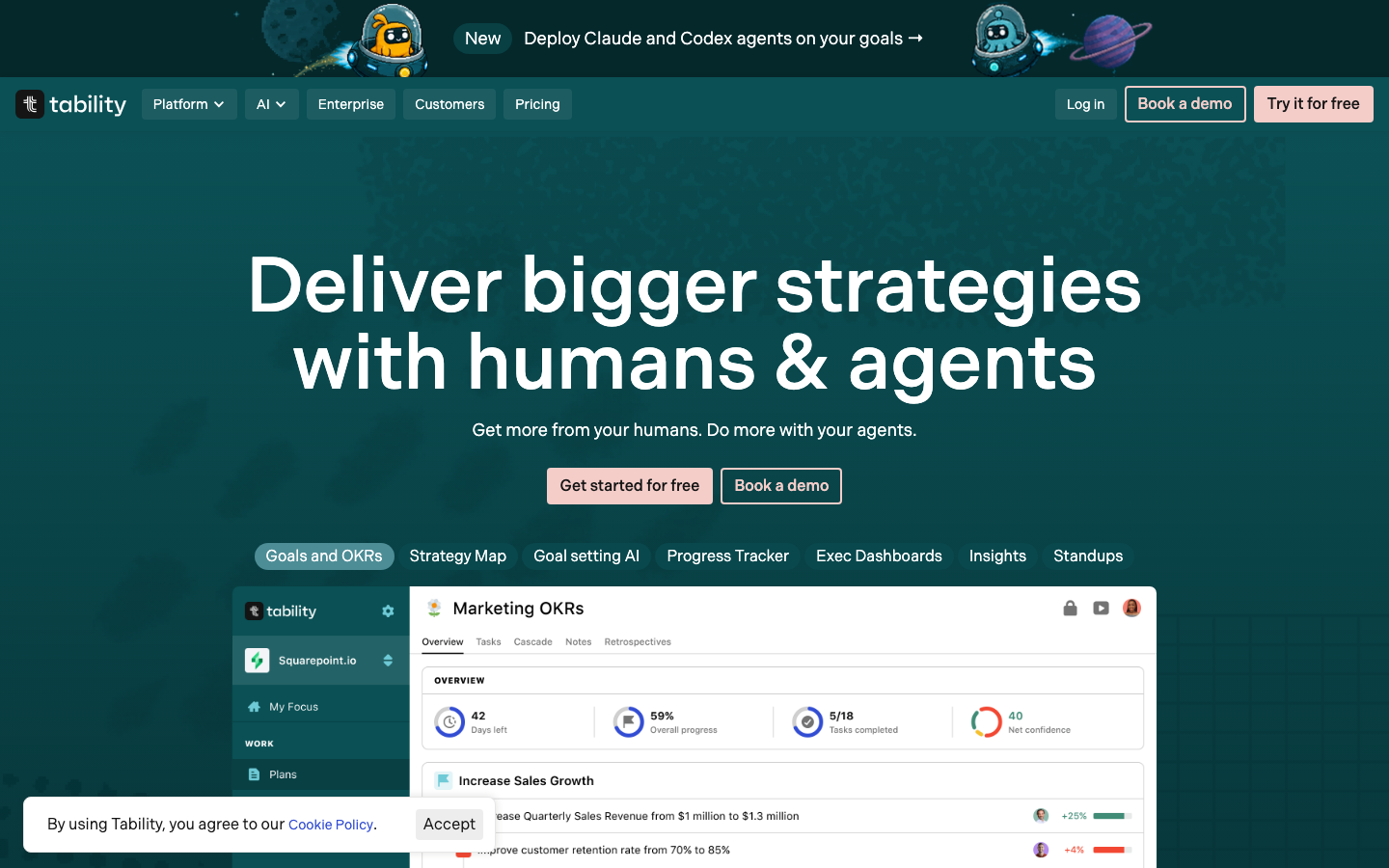
Tability is goal setting software centered on weekly OKR check-ins, with AI features that include an assistant, an OKR agent, and AI retrospectives. Every plan starts with a 14-day trial, and there is no user minimum.
Software Pros:
- Weekly check-in prompts that build a habit
- AI features included from the Basic plan
- No user minimum, so pilots can start small
Software Cons:
- No free plan beyond a read-only seat
- Not a performance management system
Tability Review:
Tability bets that goals fail from neglect rather than bad formatting, so the product is organized around the weekly check-in. Owners get a short prompt, answer in seconds, and the AI assistant can summarize what changed across a whole plan. The absence of a user minimum makes it easy to prove the habit with 1 team before a company-wide rollout.
Our Verdict
Check-In Habits for OKR Teams
Teamflect
Quick Overview:
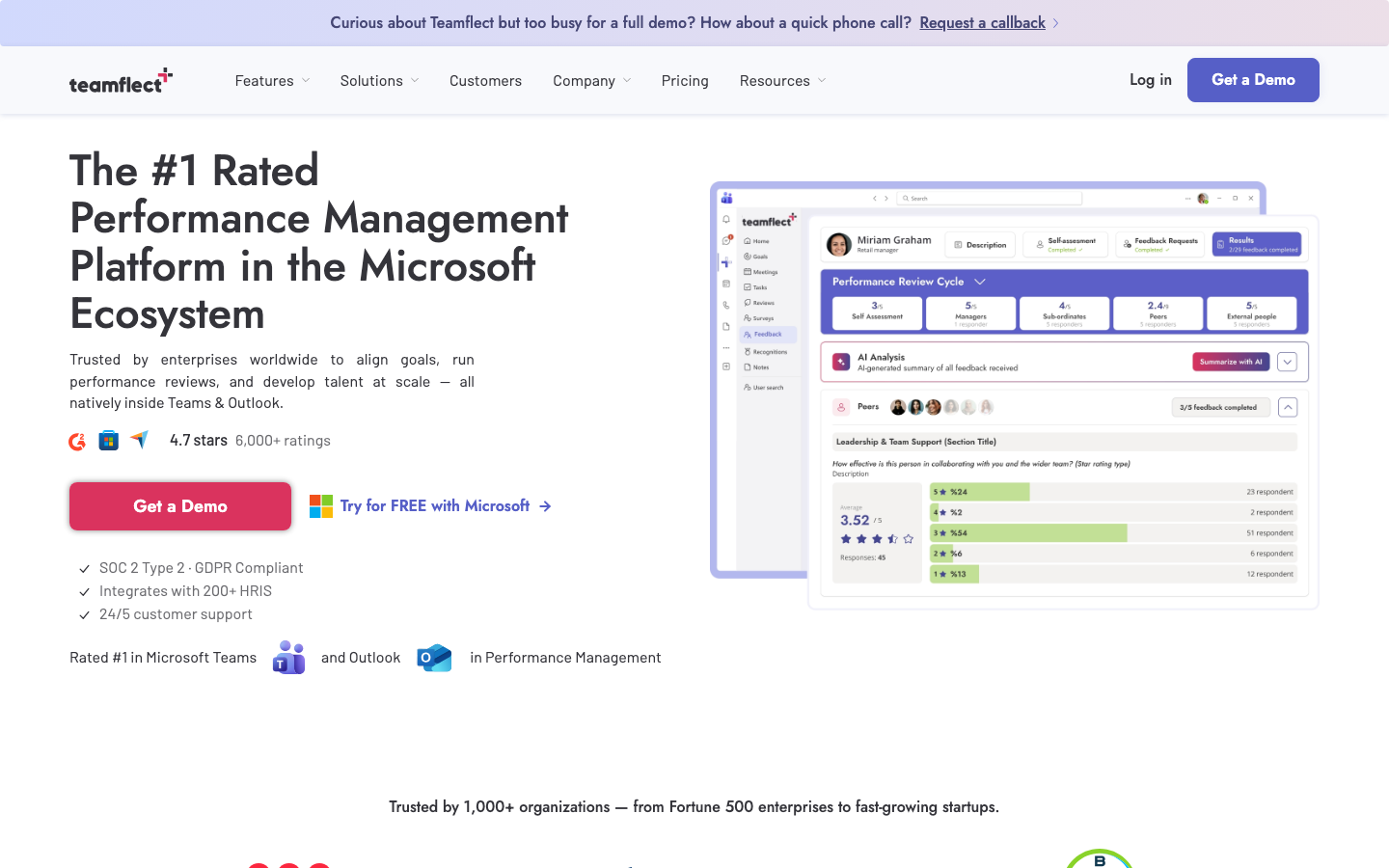
Teamflect is a performance and goals app that runs inside Microsoft Teams, with OKR tracking, check-ins, and development goals. Its free Starter plan covers up to 10 users.
Software Pros:
- Goals, check-ins, and reviews inside Microsoft Teams
- Outlook integration and tasks synced with Planner and To Do
- Free plan for up to 10 users
Software Cons:
- Little reason to choose it outside Microsoft 365
- Layout depends on the Teams interface
Teamflect Review:
With Viva Goals retired, Teamflect is the Teams-native option left on this list, and that alone makes it worth a trial for Microsoft 365 organizations. OKR check-ins and goal updates happen inside the app people already have open all day, which removes the extra login that sinks many goal programs. Companies built around Slack or Google Workspace will find better fits elsewhere.
Our Verdict
Goals Inside Microsoft Teams
Weekdone
Quick Overview:
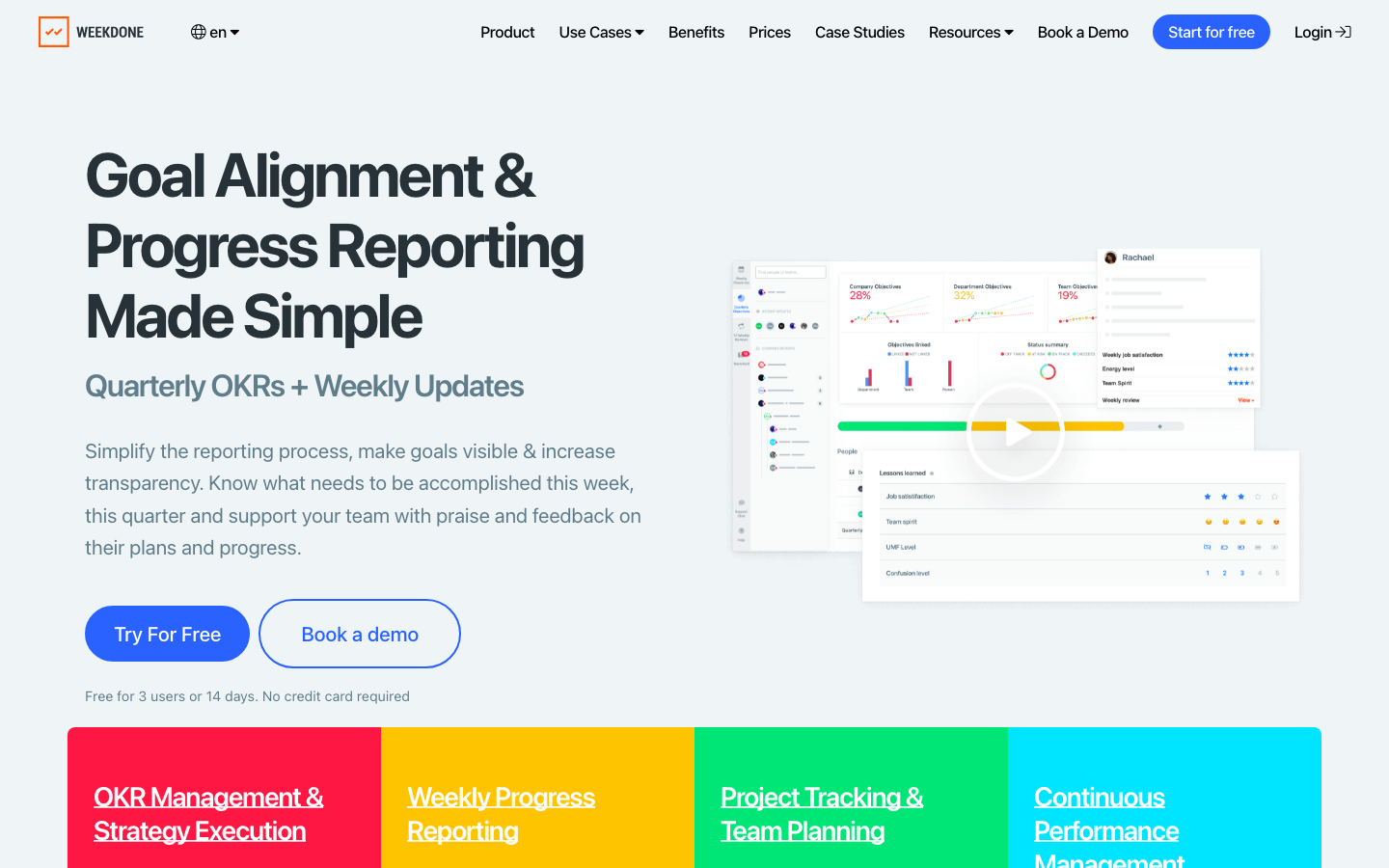
Weekdone is goal setting software that pairs quarterly OKRs with weekly reports on plans, progress, and problems. It is free for up to 3 users, with a 14-day trial for larger teams.
Software Pros:
- Weekly plans tied to quarterly OKRs
- Dedicated OKR coach included in paid packages
- Free for teams of up to 3 users
Software Cons:
- Priced in user packages rather than per seat
- Limited depth for large enterprises
Weekdone Review:
Weekdone’s weekly report format sets it apart from other OKR trackers. Each person lists plans, progress, and problems for the week, and the link to quarterly objectives shows whether that effort points anywhere useful. The included coaching is a real benefit for teams new to OKRs, although growing companies may outgrow the package-based pricing.
Our Verdict
Weekly Reports Linked to OKRs
Workboard
Quick Overview:
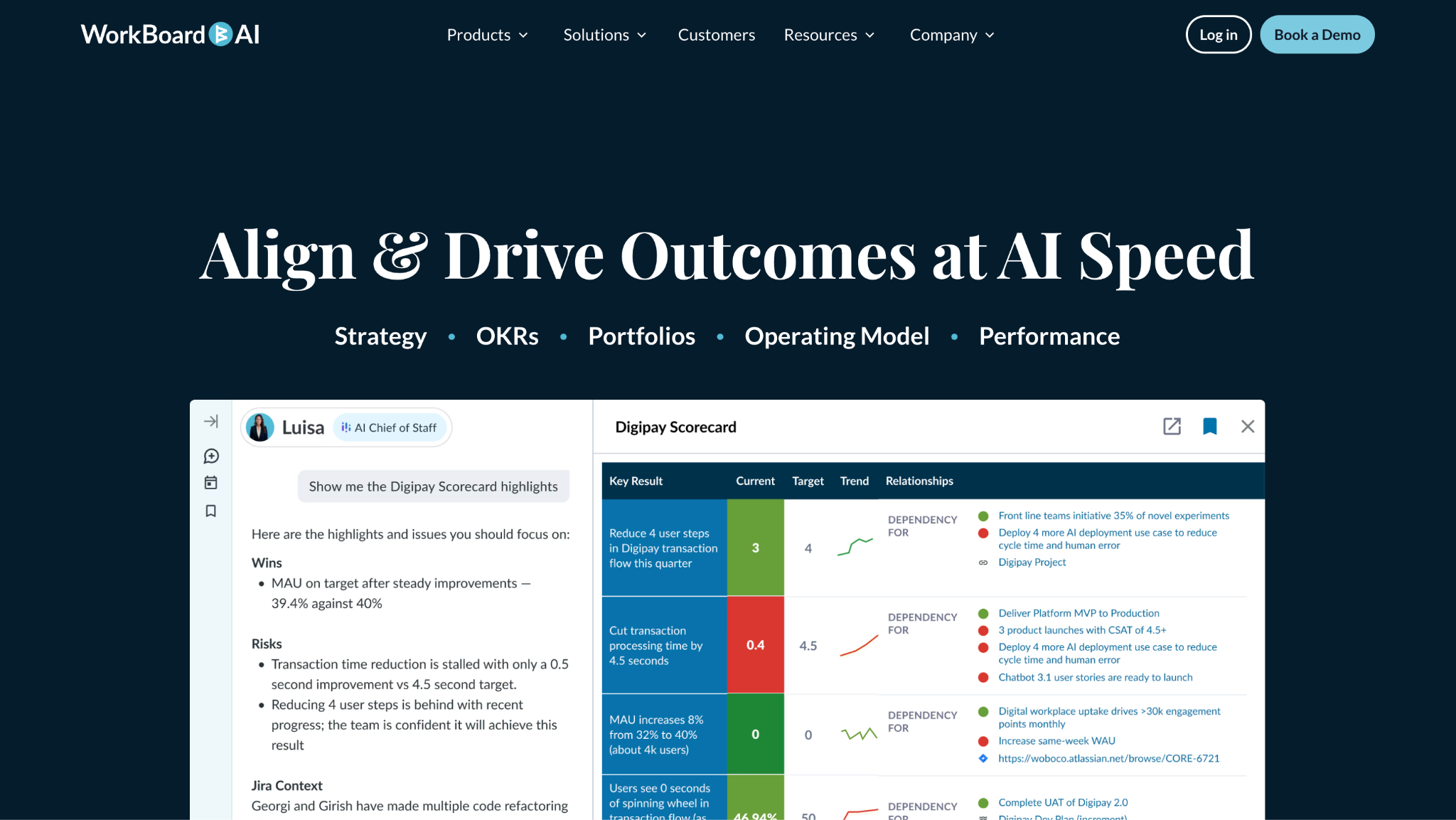
WorkBoard is an AI strategy execution and OKR platform for large organizations. After acquiring Quantive, formerly GTM Hub, in 2025, it now serves customers of both former product lines, and quantive.com redirects to workboard.com.
Software Pros:
- AI agent-assisted OKR creation and team retros
- Portfolio, operating model, and performance views
- Handles complex enterprise goal trees
Software Cons:
- Designed for mid-size and enterprise rollouts
- Pricing only through a demo and quote
Workboard Review:
WorkBoard is enterprise goal setting software in the fullest sense, connecting long-range strategy, OKRs, initiatives, and operating cadence. The Quantive deal matters for buyers: former Quantive customers are moving onto the WorkBoard platform, so evaluating either name now means evaluating 1 product. Its AI agents help draft OKRs and run team retrospectives, but a rollout still needs executive sponsorship to stick.
Our Verdict
Enterprise OKRs After the Quantive Deal
Workpath
Quick Overview:
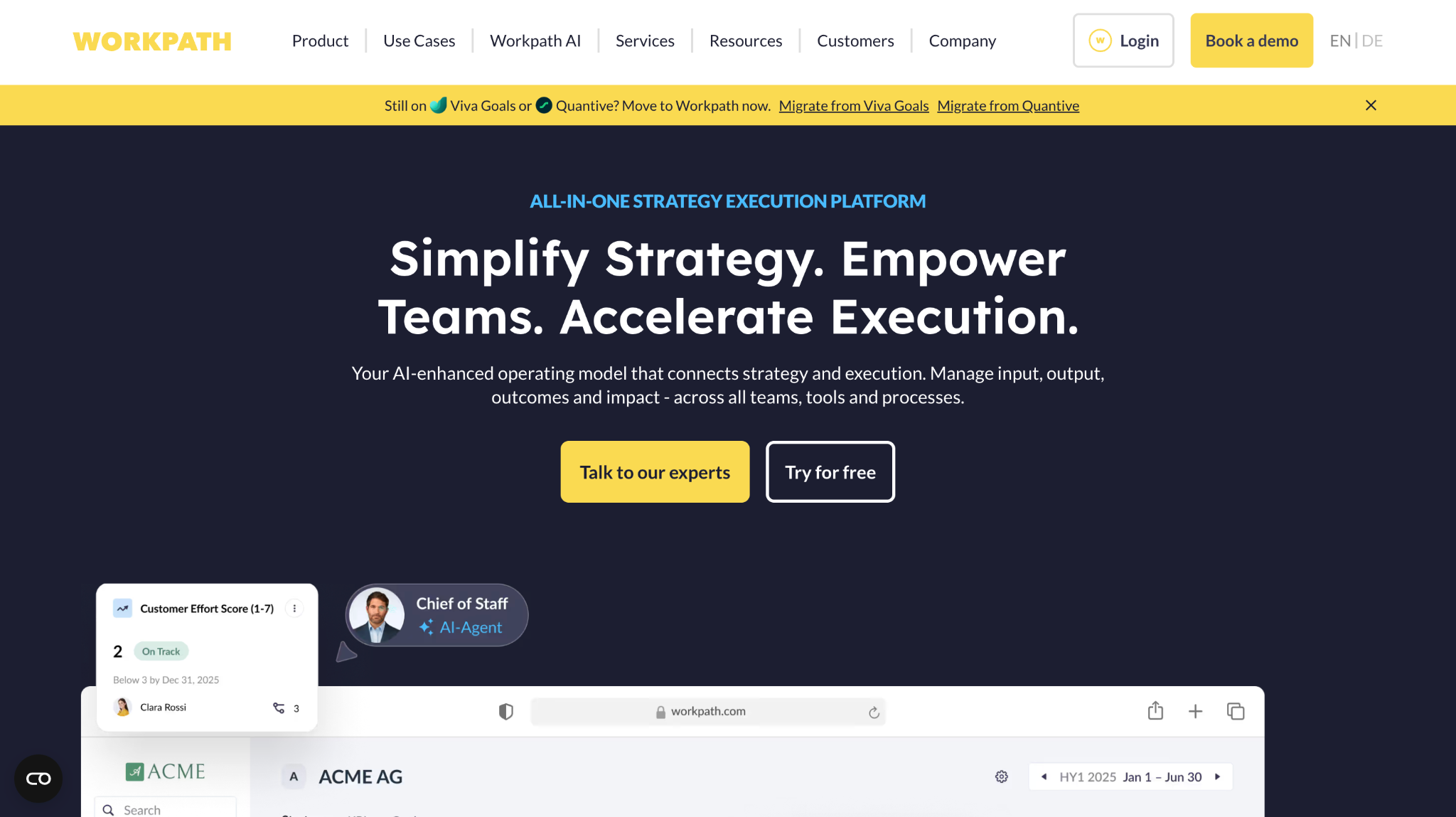
Workpath is a strategy execution platform for large European companies that combines OKRs, KPIs, initiatives, and operating rhythms such as check-ins and quarterly business reviews. Its AI features include a Workpath AI companion with a chat interface in Workpath and Microsoft Teams.
Software Pros:
- OKRs, KPIs, and initiatives in one operating model
- AI companion inside Workpath and Microsoft Teams
- 14-day test after a demo, plus a proof-of-value phase
Software Cons:
- More than a small team needs
- Requires visible sponsorship from leadership
Workpath Review:
Workpath treats goals as one part of an operating model, which is how DB Schenker used it to scale OKRs across a large organization. Check-ins, KPI tracking, and quarterly reviews share one rhythm, and the AI companion answers questions about that data inside Teams. For a mid-size company, it is a lot of machinery, but for a group with many business units, that steering capability is the reason to buy it.
Our Verdict
Operating Rhythm for European Enterprises
FAQs about Employee Goal Setting Software
How does goal setting software help teams stay aligned?
It gives everyone the same view of what matters, who owns each objective, and how far it has progressed. Because goals link from company level to teams and individuals, people can see how their own work contributes. Regular check-ins keep that picture current instead of frozen at the planning meeting.
What features should goal setting software include in 2026?
Look for a goal hierarchy from company to individual, simple progress updates, and support for your framework, whether that is OKRs, SMART goals, or KPIs. Integrations that update progress automatically, reminders before check-ins, and leader dashboards matter just as much. Data export is worth checking too, in case you ever change vendors.
How is goal setting software different from task or project management tools?
Project tools track tasks, deadlines, and workloads, while goal platforms track outcomes. A task might be launching a campaign, while the related goal is increasing qualified leads by 20% this quarter. Some products on this list combine both, but the goal layer is what connects daily work to results.
Who typically uses goal setting software within an organization?
Executives set direction, managers translate it into team objectives, and employees update their goals and check in. HR, people operations, or a strategy office usually administers the system and keeps the cycle running on schedule.
What is the best software for goal setting?
No single product fits every company, because the right choice depends on your framework and on where goals need to show up. Dedicated OKR platforms suit teams starting out, strategy platforms suit leadership reporting, and performance suites suit companies that link goals to reviews. Use the Type column in the comparison table to find the family that matches your planning style.
What is the best team goal setting tool?
It depends on where the team already works. Teams that plan in Asana, ClickUp, or Monday.com can add goals there, while teams without a shared work app usually get more from a dedicated goal platform with check-ins. The comparison table shows which of those 2 camps each product belongs to.
What is the best employee goal setting software?
Start by deciding whether you need a goal platform or a performance suite with goals. A goal platform keeps objectives and check-ins at the center, while a performance suite connects goals to reviews, feedback, and development. The comparison table above marks each tool’s type, so you can shortlist within the right group.

Yaryna is our lead writer with over 8 years of experience in crafting clear, compelling, and insightful content. Specializing in global employment and EOR solutions, she simplifies complex concepts to help businesses expand their remote teams with confidence. With a strong background working alongside diverse product and software teams, Yaryna brings a tech-savvy perspective to her writing, delivering both in-depth analysis and valuable insights.