Incentive compensation management software calculates variable pay: commissions, bonuses, accelerators, and SPIFFs, meaning one-off spot bonuses for a specific push. It pulls closed deals from the CRM, applies the plan rules, and produces an auditable payout. That is a different job from compensation management software, which handles base salary, merit cycles, and equity for the whole workforce.
Buyers include sales operations, revenue operations, finance, and compensation teams. Companies here run from 50 reps to tens of thousands of payees, meaning anyone eligible to earn under a plan. Incentive management software is the shorter name for the same category, and both terms turn up in the same procurement documents.
The reason it matters is that a wrong payout costs trust twice: once when the statement is wrong, and again when it is corrected. Varicent’s 2026 Market Spotlight, research the vendor ran itself, reports that teams using AI for revenue planning are 46 percent more likely to exceed target. Sales incentive management software is bought after a quarter where the spreadsheet broke, and somebody spent 3 weeks explaining why.

INSIGHT: How much do commission errors really cost?

The direct cost is the overpayment. The higher cost is the time comp teams spend reconciling and the trust reps lose when a statement is wrong.
- Xactly states on its own product page that Incent increases accuracy up to 99 percent by eliminating payout errors and raises compliance efficiency by 65 percent. Those are the vendor’s figures for its own customers, not an independent measurement of the category.
- Varicent’s 2026 Market Spotlight, research the vendor ran across 1,000+ revenue leaders, reports that teams using AI for revenue planning are 46 percent more likely to exceed target.
- Turnover keeps the arithmetic moving. US employers recorded 5.1 million total separations during July 2026, a rate of 3.2 percent, in the Bureau of Labor Statistics Job Openings and Labor Turnover Survey published 1 September 2026. Every leaver mid-quarter is a plan to prorate and a credit to reassign.
- The clearest sign the current process has failed is shadow accounting. When reps keep their own spreadsheet because they don’t trust the statement, the platform already isn’t working.
So there is no single winner, and the shortlist is set before any feature comparison. Plan complexity and payee count decide it. A flat 10 percent on closed revenue for 12 reps needs a different product from tiered accelerators with splits across 4 regions. Churn in the payee list compounds it. The Bureau of Labor Statistics recorded 5.1 million total separations across the US in July 2026, a rate of 3.2 percent. The best incentive compensation management software for you is the one that handles the edge cases that broke your last process. 2 of the 12 platforms below run a different kind of program altogether. Below, I’ve reviewed 12 of the leading platforms in A-Z order.
INSIGHT: Paying your reps, or paying your partners?
10 of these platforms pay employees for what they sold. 2 settle programs between companies, and the 2 jobs share a name but almost nothing else.
- Sales incentive compensation (CaptivateIQ, Everstage, Forma.ai, Performio, Qobra, QuotaPath, Salesforce Spiff, Varicent, Visdum, Xactly Incent) handles quota, crediting, accelerators, and a payout statement for each individual payee.
- Channel and rebate programs (Enable, Vistex) cover agreements between manufacturers, distributors, and partners. Enable describes turning pricing and rebate agreements into enforceable programs from pricing through settlement, which is accrual logic rather than quota attainment.
- The buyer differs too, which is the practical reason the distinction matters. Sales or revenue operations owns the first family, and finance or channel management owns the second.
- A team that buys across the line finds the vocabulary wrong from the first demo. Rebate software has no concept of a quota, and commission software has no concept of a trading agreement.
Incentive Management Software Comparison
6 columns carry the argument of this page. Incentive management software gets compared on features in most roundups. The columns that actually decide a purchase are program type, who the product is sized for, and how a plan gets built.
Plan build model deserves particular attention. The best incentive management software solutions let the person who owns comp change a plan without filing a ticket. Heavier platforms need an expert every time a rule changes.
| Tool | Program type | Company fit | Plan build model | Published pricing | G2 rating |
|---|---|---|---|---|---|
| CaptivateIQ | Sales ICM | Mid-market, Enterprise | No-code modeling | No, quote-based | 4.7 (3,489) |
| Enable | Channel and rebate | Mid-market, Enterprise | Guided configuration | No, quote-based | Not shown |
| Everstage | Sales ICM | Mid-market, Enterprise | No-code modeling | No, quote-based | 4.8 (2,152) |
| Forma.ai | Sales ICM | Enterprise | Rule templates | No, quote-based | 4.7 (63) |
| Performio | Sales ICM | Mid-market, Enterprise | No-code modeling | No, quote-based | 4.4 (1,071) |
| Qobra | Sales ICM | Mid-market | No-code modeling | No, quote-based | 4.8 (1,071) |
| QuotaPath | Sales ICM | SMB, Mid-market | Guided configuration | Yes, $35 per user per month plus a platform fee | 4.8 (381) |
| Salesforce Spiff | Sales ICM | Mid-market, Enterprise | Guided configuration | Yes, $75 per user per month | 4.6 (3,068) |
| Varicent | Sales ICM | Enterprise | Consultant-led | No, quote-based | Not shown |
| Visdum | Sales ICM | SMB, Mid-market | Guided configuration | No, quote-based | 4.8 (678) |
| Vistex | Channel and rebate | Enterprise | Consultant-led | No, quote-based | 4.3 (64) |
| Xactly Incent | Sales ICM | Enterprise | Consultant-led | No, quote-based | Not shown |
Ratings reflect the G2 product profile in September 2026.
What an ICM Platform Actually Does
An ICM platform, short for incentive compensation management, runs a 4-stage pipeline. Deal and pipeline data arrives from the CRM. The plan rules are applied. A payout comes out the other end, with a statement showing each payee how the number was reached. Finance gets a journal entry it can reconcile, and an auditor can follow.
Plan design is where comp teams spend most of their time, and the models differ sharply. No-code modeling gives you spreadsheet-style logic you can edit yourself, which CaptivateIQ describes as a no-code calculation engine built to adapt without services. Rule templates start from a library and shorten the build. Consultant-led configuration hands the work to a specialist. Incentive compensation plan management software is judged on how a plan changes in February, not on how it looked at launch.
Edge cases break spreadsheets, and they are worth naming. Crediting decides who gets counted for a deal, and splits divide it between them. Overlays credit a specialist alongside the owning rep. Ramps phase a new hire toward full quota. Clawbacks reverse a payment when a customer churns. Then come retroactive adjustments, multi-currency, and true-ups, meaning the correction applied when actuals land differently from estimates.
Compliance is the fourth job. Sales incentive compensation management software has to leave an audit trail showing what changed, when, and on whose authority. ASC 606 requires the costs of obtaining a contract to be capitalized and amortized rather than expensed on payment. Commission accounting is no longer a payroll question. Salesforce documents ASC 606 and IFRS 15 support with audit-ready expense reports. None of this is accounting advice.
Best Incentive Management Software by Team Type
Payee count and plan complexity determine this shortlist. A 40-rep team with 2 plan types and a global enterprise with 6,000 payees are not shopping in the same market, whatever the grids suggest. Below, 5 sections cover 1 buying situation apiece, listing the platforms alphabetically and implying no order of merit.
Enterprise Incentive Management
At thousands of payees, the work is governance rather than calculation. Enterprise incentive management software has to survive an audit and handle crediting across regions and legal entities. It also has to respect local approval chains and produce numbers a controller will sign. Implementations run in quarters rather than weeks. The ERP-native suites compete here too, bundling incentive compensation into a platform a company may already own.
Forma.ai unifies territories, quotas, and plans on 1 data foundation and builds from a template library rather than from scratch. Varicent handles the heaviest crediting logic on this page, with territory and quota planning alongside it. Xactly Incent states it provides a complete audit trail and claims accuracy up to 99 percent by eliminating payout errors. All 3 assume somebody senior owns compensation full time.
Mid-Market Revenue Teams
The mid-market pattern is plans that change every quarter and comp operations owned by 1 or 2 people who also do something else. Speed of change matters more than depth of configuration. A platform needing a services engagement for every tweak becomes the bottleneck it was bought to remove.
CaptivateIQ builds around logic-based workbooks and a no-code engine, which suits a team that thinks in spreadsheets. Everstage puts rep-facing visibility first and states go-live in 4 to 6 weeks. Performio aims at finance-led comp operations and says on its own site that it suits organizations with 70 or more commissionable employees. Deployment here is measured in weeks, not quarters.
Moving Off Spreadsheets for the First Time
The first platform purchase is usually triggered by a specific failure: a missed clawback, a disputed split, or a quarter-end that took 3 weeks. Before buying, apply the honest test. If your plan is a flat rate on closed revenue with no splits and no ramps, a spreadsheet and a careful reviewer still work.
Qobra offers modern configuration aimed at fast adoption without heavy edge-case depth. QuotaPath publishes its rate openly, which makes it the only platform here a small team can evaluate before booking a call. Visdum targets recurring revenue structures and says it takes around 3 weeks to go live. All 3 trade some configuration ceiling for speed, which is the correct trade at this stage.
Salesforce-Native Teams
If the CRM is the system of record and reps live inside it, keeping commission there removes a login and a reconciliation. Salesforce Spiff calculates against CRM data and surfaces statements where reps already work. The published rate is $75 per user per month on annual billing. Everstage is a neutral alternative for teams that want the same CRM sync without committing comp to one ecosystem.
The trade-off deserves stating plainly. Native integration is genuinely smoother, and it also means your compensation data follows your CRM decisions. A company weighing a CRM change in 2 years is tying 2 decisions together, and that is a strategic choice rather than a technical one.
Channel and Partner Incentives
This is the other family, and it does not calculate commissions for employees. Channel incentive management software settles agreements between companies: a manufacturer and a distributor, or a supplier and a buying group. The logic is accrual and settlement, not quota attainment.
Growth incentive rebate management software adds the volume dimension, where a partner earns a better rate for hitting a tier over a period. Enable turns pricing and rebate agreements into enforceable programs running from pricing through settlement. Accruals finance needs to land on the balance sheet before money moves.
Partner incentive management software at enterprise scale is Vistex territory, covering trade programs, pricing, royalties, and channel incentives as one estate. Neither platform belongs on a shortlist for paying sales reps, and neither of the 10 sales platforms models a rebate agreement. The vocabulary diverges in the first demo.
Incentive Management Software Pricing
Incentive management software pricing splits the market cleanly. A small minority publish a per-user monthly rate, which makes them the only platforms a buyer can size up before a sales call. Everyone else quotes against payee count, plan complexity, and modules, because a vendor cannot price crediting logic it has not seen.
Subscription is rarely the whole bill. Implementation, data integration, and plan build are quoted separately, and at the enterprise end they can approach the first-year license. QuotaPath is unusually direct about this, folding implementation into a monthly platform fee rather than charging it as a project.
| Tool | Pricing model | Free trial | Published starting price |
|---|---|---|---|
| CaptivateIQ | Per seat, quote-based | Demo only | Custom pricing |
| Enable | Program-based, quote-based | Demo only | Custom pricing |
| Everstage | Quote-based | Demo only | Custom pricing |
| Forma.ai | Quote-based | Demo only | Custom pricing |
| Performio | Quote-based | Demo only | Custom pricing |
| Qobra | Quote-based | Demo only | Custom pricing |
| QuotaPath | Per user plus platform fee | Yes | $35 per user per month plus $525 per month |
| Salesforce Spiff | Per user | Demo only | $75 per user per month, billed annually |
| Varicent | Quote-based | Demo only | Custom pricing |
| Visdum | Per payee, quote-based | Demo only | Custom pricing |
| Vistex | Program-based, quote-based | Demo only | Custom pricing |
| Xactly Incent | Per payee, quote-based | Demo only | Custom pricing |
As pricing is subject to change, prices are listed as of September 2026.
INSIGHT: Why do only some incentive platforms publish pricing?
Per-user pricing works while plans look alike. Once crediting gets complicated, the vendor has to see your plan before it can quote.
- Exactly 2 of the 12 platforms here put a usable rate in public. QuotaPath lists its Growth plan at $35 per user per month plus a $525 monthly platform fee, and Salesforce lists Spiff at $75 per user per month billed annually. The other 10 quote.
- QuotaPath’s platform fee covers the first 5 users along with the core subscription, implementation, and ongoing support, and the vendor states an implementation averaging 45 to 60 days. That is a rare published number in this category.
- Visdum publishes the shape without the number, describing exactly 2 invoice lines: a per-payee license and a one-time setup fee, with no platform surcharge or usage meter. Every figure above comes from a vendor pricing page, because third-party articles quote conflicting rates for the same vendors.
- The hidden line is plan build. At the enterprise end, configuring and validating the plans is quoted separately and can approach the first-year subscription, which surprises buyers in year 1.
Sources:
as of September 2026
How to Select an ICM Platform
I would start from the edge cases that broke your spreadsheet, because those are what a demo has to survive. Write down the 3 hardest calculations you ran last year, then make every shortlisted vendor build them during the demo or a paid trial. A vendor demonstrating its own tidy example plan has told you nothing about yours.
Count payees rather than users, since that is what enterprise pricing tracks and the 2 numbers diverge quickly. Then work out who changes plans each quarter, and whether that person can do it without engineering. Check CRM and payroll integrations in both directions, because reading deals is only half of it and approved payouts have to land somewhere.
Check the audit trail and ASC 606 treatment if finance or an external auditor will review payouts. Look hard at what a rep sees, since disputes are the cost the platform exists to remove. A statement nobody understands generates more of them. Then keep the shortlist to 3 to 5 vendors, because a longer list usually means the requirements are not written down yet.
1 detail gets missed until it bites. If reps sit in countries where you have no entity, they are often employed through a partner. That adds a payout step the platform does not own. Our roundup of employer of record companies covers who actually pays that person once your platform has calculated what they earned.
Top 12 Incentive Compensation Management Platforms for 2026
I read each vendor’s own product, customer, and pricing pages looking for 1 thing above all: how a plan actually gets built and changed. Ranking the top incentive compensation management software on feature counts is easy and useless, because every platform on this page calculates a commission. What differs is who can edit the rules on a Tuesday.
I’m listing all providers in alphabetical order to keep this comparison neutral.
Varicent and Xactly Incent represent the enterprise incumbents, with CaptivateIQ and Everstage on the modern end. 2-channel and rebate platforms do a different job entirely. Anyone shortlisting the best incentive management software should sort by program type before reading a single feature list.
Every vendor claim below is attributed, which matters more here than in most categories. Almost every incentive compensation management software 2026 roundup circulating online is published by one of these vendors about its competitors. I treated it all as marketing and verified it on primary pages.
Incentive compensation management software is bought roughly once every 5 years, and the cost of choosing wrong is measured in quarters. The blocks below name the program type and the plan build model in the first sentence, so elimination happens early.
CaptivateIQ
Quick Overview
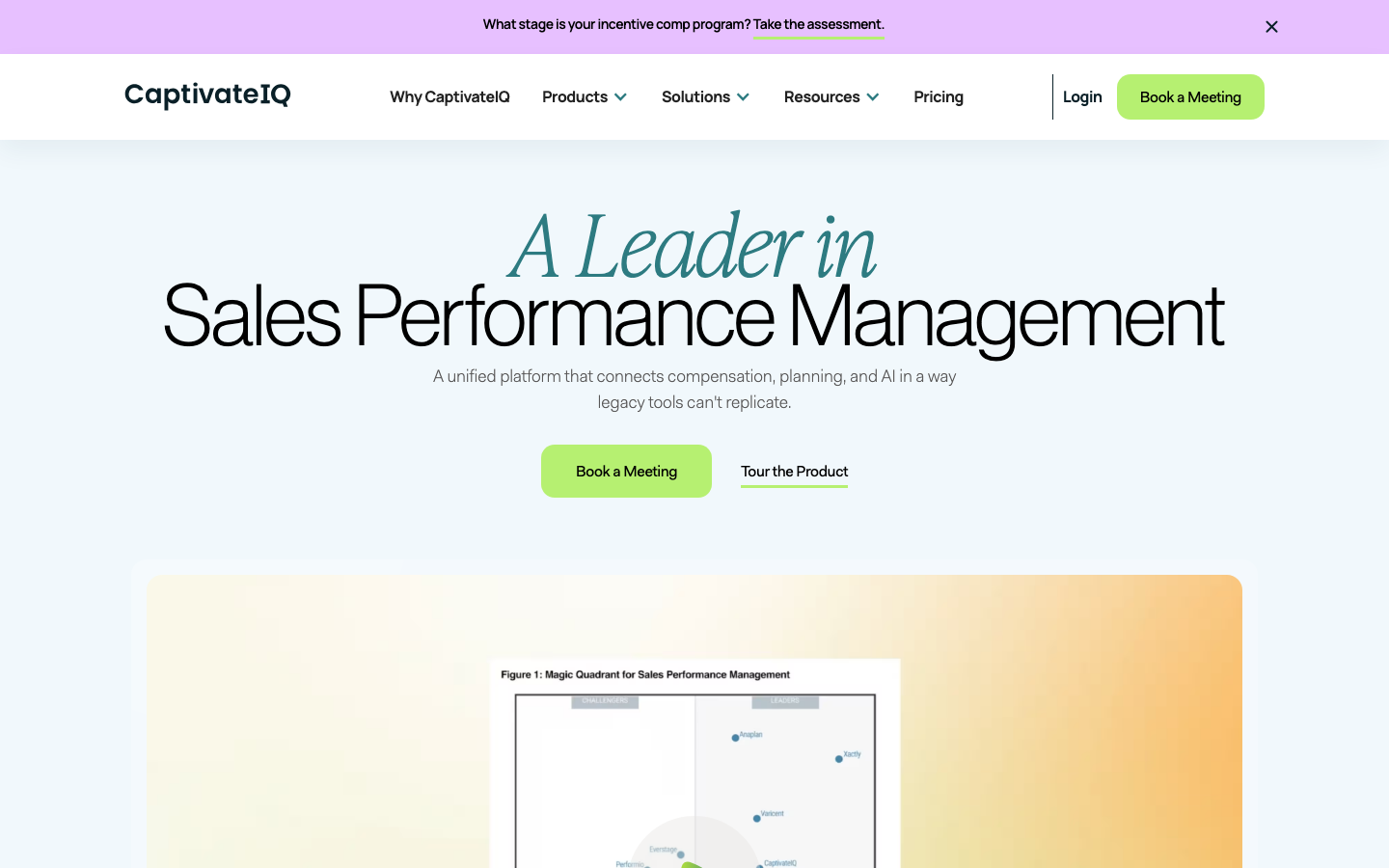
CaptivateIQ is a sales ICM tool built on no-code modeling. Logic-based workbooks sit on a calculation engine the vendor describes as designed to build and adapt without services. Guided plan-building and scenario modeling sit alongside it. The vendor states 1,000+ companies use it for sales planning and incentive compensation.
Software Pros
- Spreadsheet-style logic that a comp analyst can edit unaided
- Scenario modeling before a plan change is committed
- Quota, territory, and capacity planning in the same platform
Software Cons
- Quote-based pricing with a separate one-time setup fee
- Workbook flexibility becomes its own maintenance burden over time
- More platform than a team running 2 simple plans needs
CaptivateIQ Review
The comp team this fits is one that already thinks in spreadsheets and is tired of the fragility. Keeping that mental model while removing the broken references and version chaos is a genuine advantage. The flexibility cuts both ways, though. A workbook built by somebody who has since left the company becomes its own kind of legacy system, and nobody wants to touch it.
Our Verdict
No Code Plan Modeling
Enable
Quick Overview
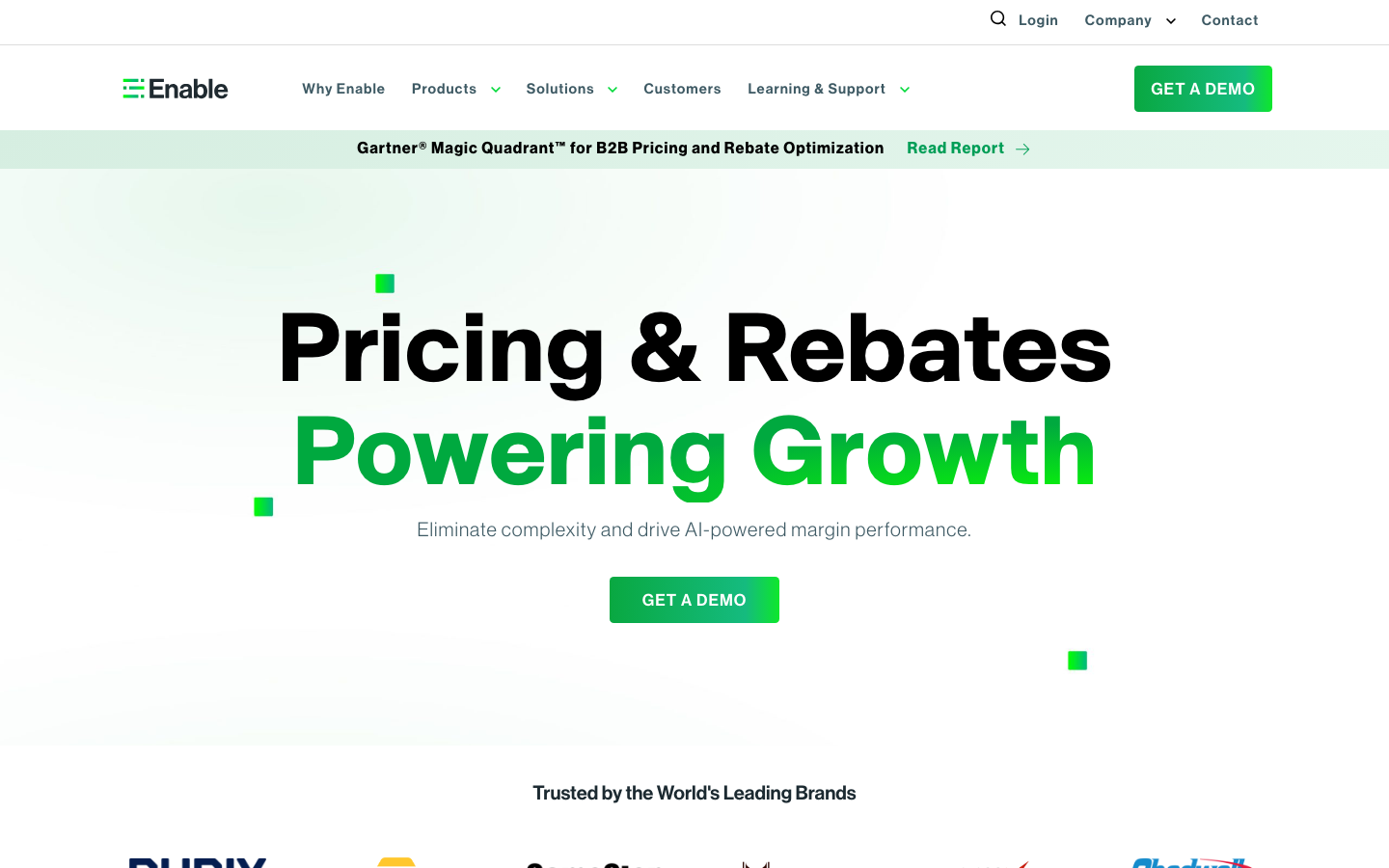
Enable is a channel and rebate platform, not a commission tool. It turns pricing and rebate agreements into enforceable programs running from pricing through settlement. It runs on guided configuration rather than open-ended rules. The vendor cites customer outcomes including 400 percent ROI and 83 percent year-over-year rebate growth.
Software Pros
- Accrual logic finance can put on the balance sheet before settlement
- Full visibility of every trading agreement in 1 place
- Pricing and rebate management handled as a single estate
Software Cons
- Does not calculate commissions for individual sales reps
- The buyer is finance or channel management, not sales operations
- Quote-based pricing with no published rate
Enable Review
Buyers reach for this when rebate agreements are being tracked in email threads and nobody can say what is accrued this quarter. Distribution and manufacturing finance teams recognize that problem instantly. It has no business at all on a shortlist for paying a sales team, whatever the category name suggests. Confusing the 2 families wastes a quarter of demos before anybody notices the mismatch.
Our Verdict
Rebates Under Finance Control
Everstage
Quick Overview
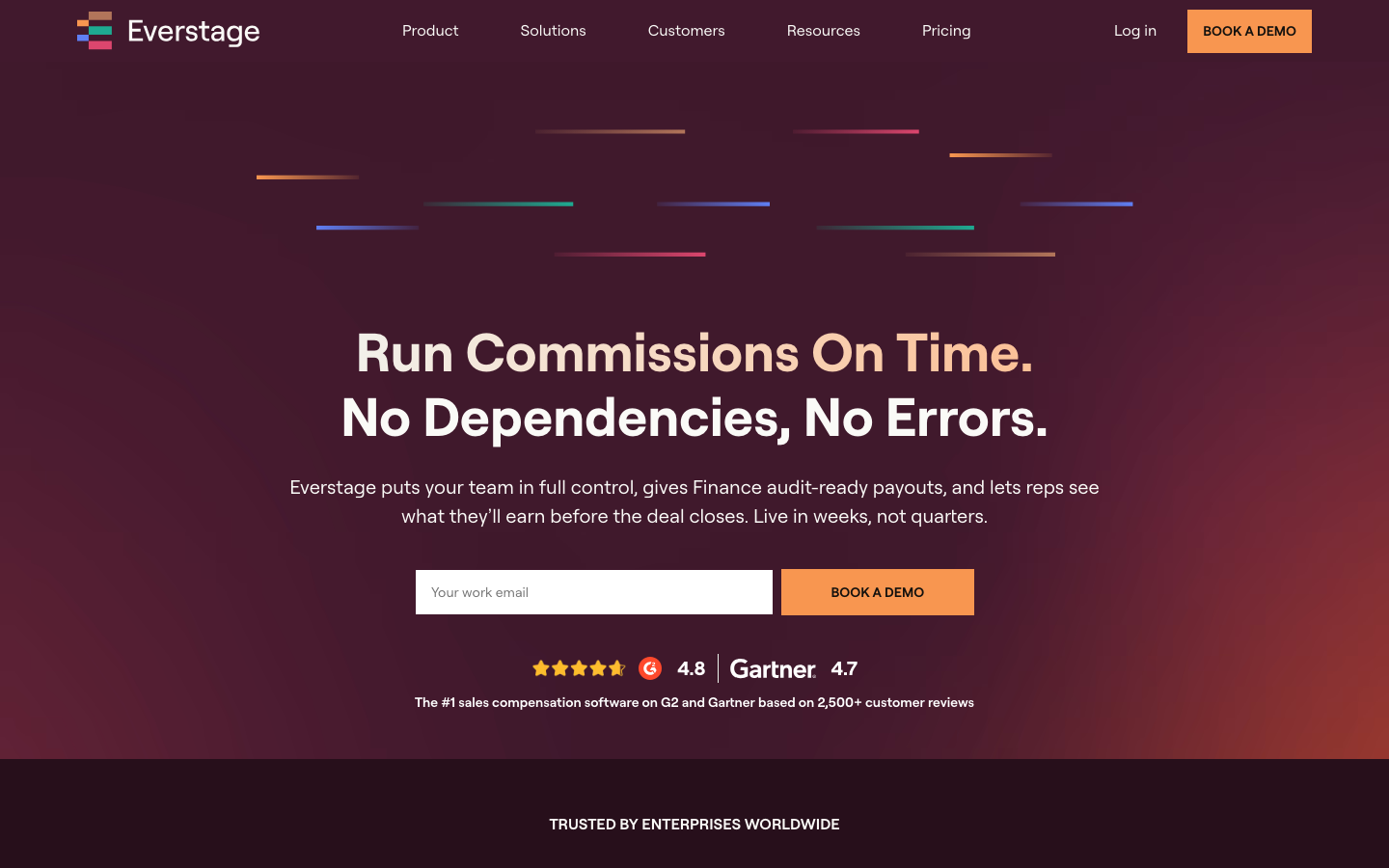
Everstage sits in the sales ICM family, built on no-code plan configuration and weighted toward rep-facing transparency. Live earnings, quota visibility, and commission forecasting sync from the CRM. The vendor states 100 percent no-code and a go-live in 4 to 6 weeks, and cites 2,500+ customer reviews across G2 and Gartner.
Software Pros
- Rep-facing visibility that reduces disputes before they start
- Commission forecasting so reps can model their own upside
- Documented 4- to 6-week go-live, quick for this category
Software Cons
- Quote-based pricing with no rate published anywhere
- Enterprise crediting depth is thinner than the incumbents offer
- Rep transparency only helps where plans are already fair
Everstage Review
The strength here is trust. Most commission disputes come from reps who cannot see the working. Putting live earnings in front of them removes the argument rather than winning it. In a large team, that is worth real money in recovered comp-op hours every single quarter. A company whose actual problem is complex crediting should look at the enterprise platforms first.
Our Verdict
Transparency For The Reps
Forma.ai
Quick Overview
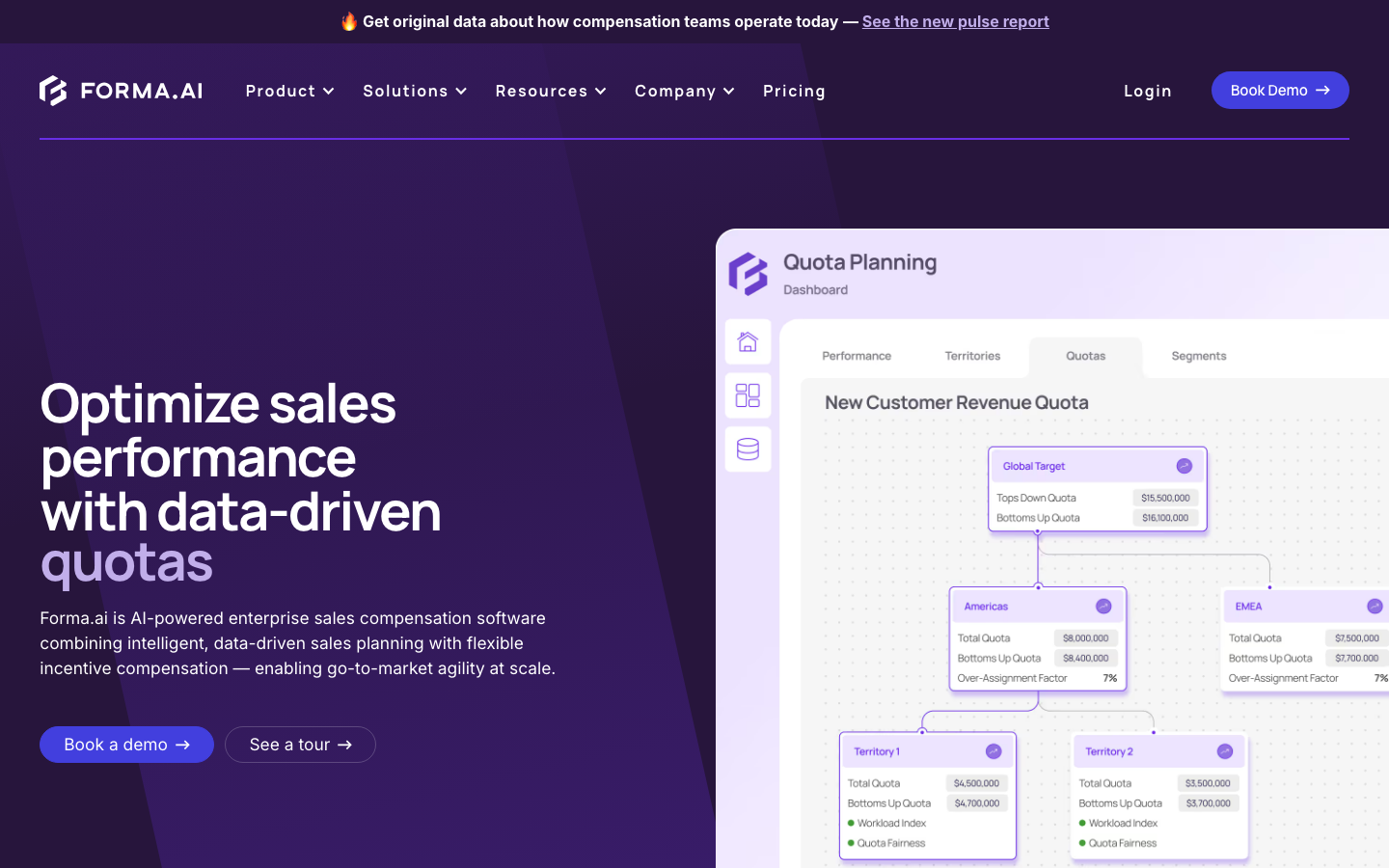
Forma.ai is a sales ICM product for enterprises, unifying territories, quotas, and incentive plans on 1 data foundation. Plans are built from a template library rather than from a blank configuration. Its ICM product is named Forma Operator. The vendor states 600+ pre-built integrations.
Software Pros
- A template library that shortens enterprise plan build significantly
- Territories, quotas, and incentives modeled on the same data
- 600+ pre-built integrations, per the vendor
Software Cons
- 63 G2 reviews, modest for an enterprise purchase decision
- Enterprise positioning makes it heavy for a 50-rep team
- Quote-based pricing against payee count and complexity
Forma.ai Review
I would put this in front of an enterprise that redraws territories and quotas as often as it changes plans. Modeling all 3 together avoids the classic enterprise failure, where compensation is calculated against a territory map that nobody remembered to update. A mid-market team with stable territories and 2 plans is buying planning depth it will never switch on.
Our Verdict
Templates At Enterprise Scale
Performio
Quick Overview
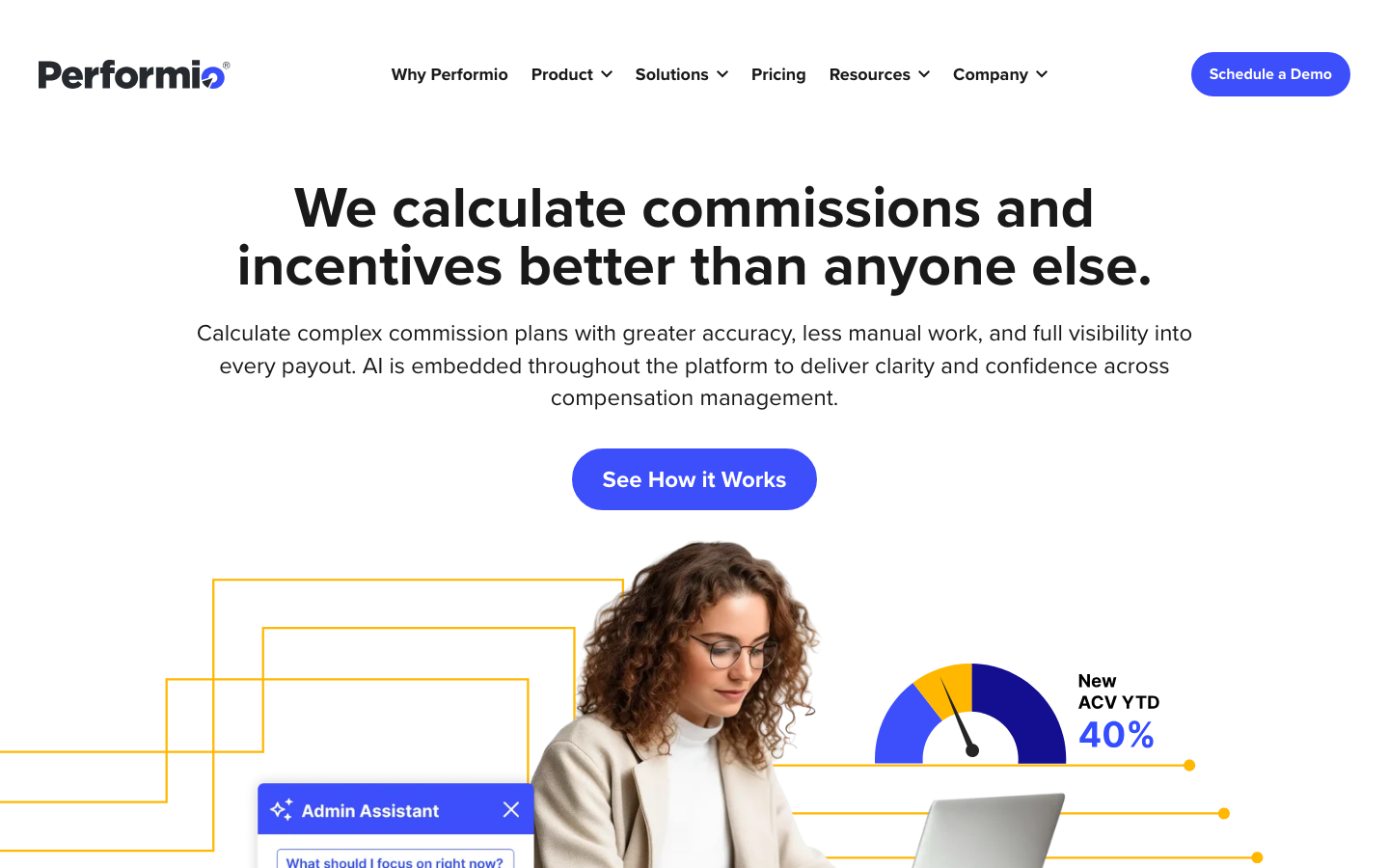
Performio is a sales ICM built for finance-led compensation operations. No-code plan changes and reporting are aimed at the team owning the payout. The vendor states on its own site that it suits organizations with 70 or more commissionable employees and complex commission plans.
Software Pros
- Operational control aimed at the team accountable for accuracy
- No-code plan changes without a services engagement each quarter
- A published view of the size of company it is built for
Software Cons
- Rep-facing experience is secondary to the finance workflow
- Below roughly 70 payees, the vendor’s own sizing works against it
- Quote-based pricing requiring a tailored estimate
Performio Review
The comp team this fits is one sitting inside finance, where accuracy and audit matter more than a motivational dashboard. Performio is unusually clear on its own site about who it is for, and that honesty saves everybody a run of wasted demos. A sales-led organization that wants reps living in the product daily will find the emphasis elsewhere.
Our Verdict
Finance Owned Comp Operations
Qobra
Quick Overview
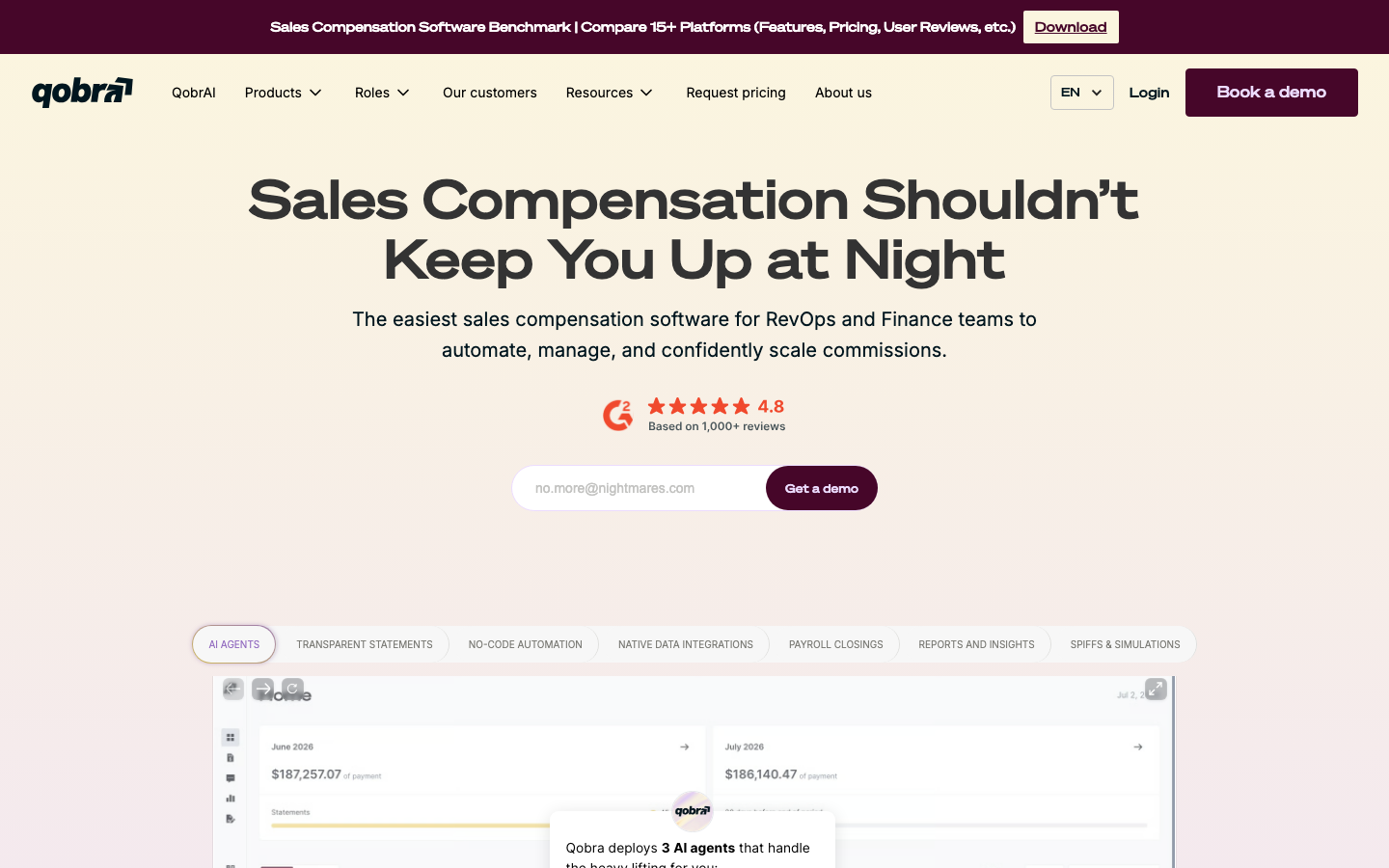
Qobra is a sales ICM from Europe, built on no-code configuration. Real-time commission visibility comes with a validation workflow running through managers, HR, and finance. The vendor states 30,000+ users and an average 15 percent uplift in sales performance among its customers.
Software Pros
- Validation workflow that routes approvals before anybody is paid
- Real-time visibility for reps without a services build
- European coverage and multi-language support for regional teams
Software Cons
- Weaker on deep edge cases than the enterprise incumbents
- Center of gravity in Europe shows in references and support hours
- Quote-based pricing with no published rate
Qobra Review
My honest read is that Qobra suits a European mid-market revenue team that wants the problem solved this quarter. The approval workflow is the underrated part here. Most commission disputes turn out on inspection to be approval failures wearing a different name. A US enterprise with 4,000 payees and layered overlays is not the buyer this was designed around.
Our Verdict
European Mid Market Pick
QuotaPath
Quick Overview
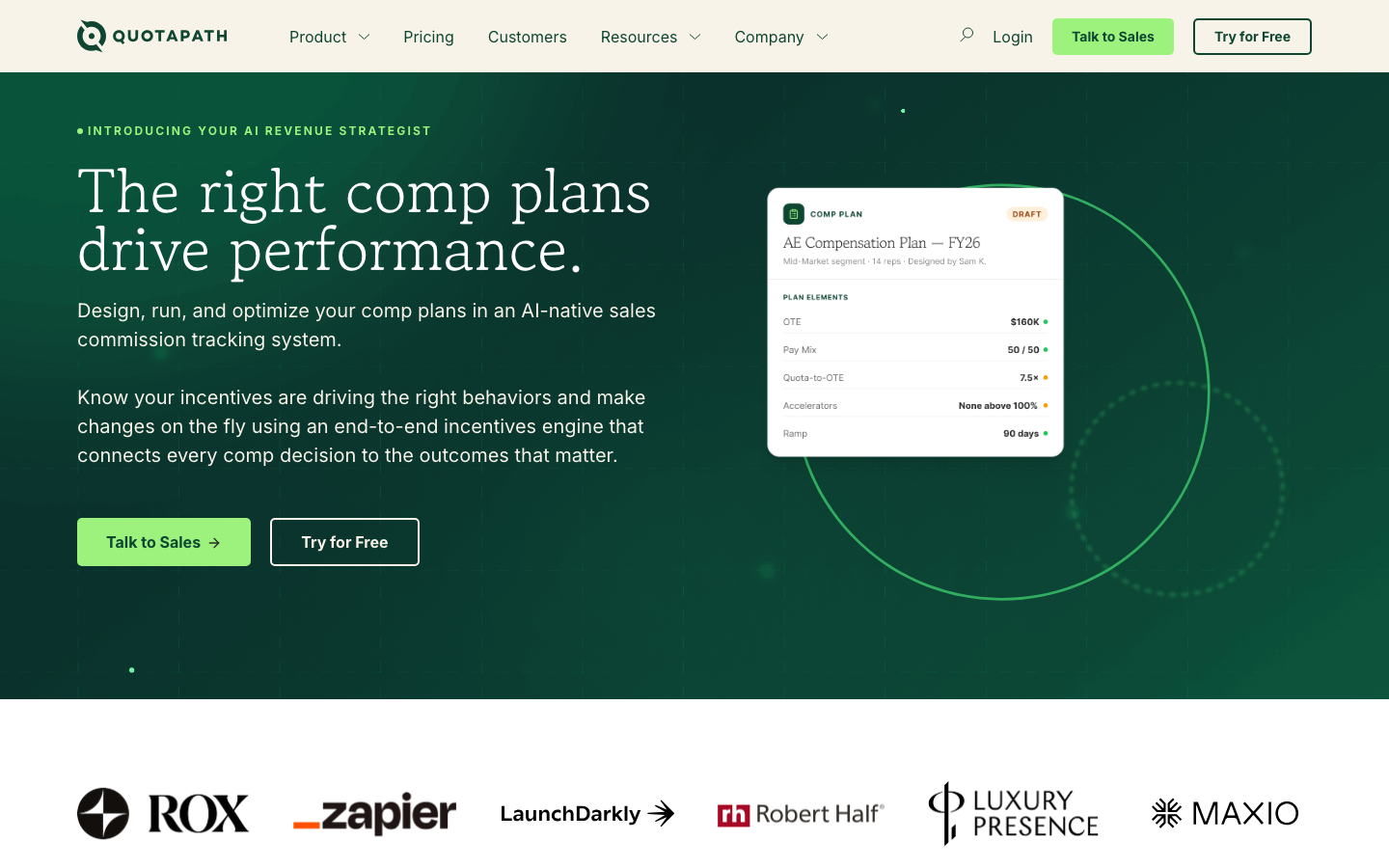
QuotaPath is a sales ICM product aimed at teams leaving spreadsheets, using guided configuration and publishing its rate openly. The vendor lists a Growth plan at $35 per user per month plus a $525 monthly platform fee. That fee covers the first 5 users, implementation, and support, and implementation averages 45 to 60 days.
Software Pros
- A published rate, which almost nobody else in this category offers
- Implementation and support folded into the platform fee
- Ledger and ASC 606 support documented on the pricing page
Software Cons
- Per-user pricing gets expensive as the payee count climbs
- Built for straightforward plans rather than layered crediting
- Integration list is shorter than the enterprise platforms carry
QuotaPath Review
My honest read is that QuotaPath earns its place by being the platform a small team can actually evaluate. Publishing the rate removes the discovery call that most vendors in this category insist on before they will say anything useful at all. A company with splits, overlays, and 4 currencies will hit the ceiling faster than it expects.
Our Verdict
Published Price, Quick Start
*As pricing is subject to change, we are listing prices as they stand in September 2026
Salesforce Spiff
Quick Overview
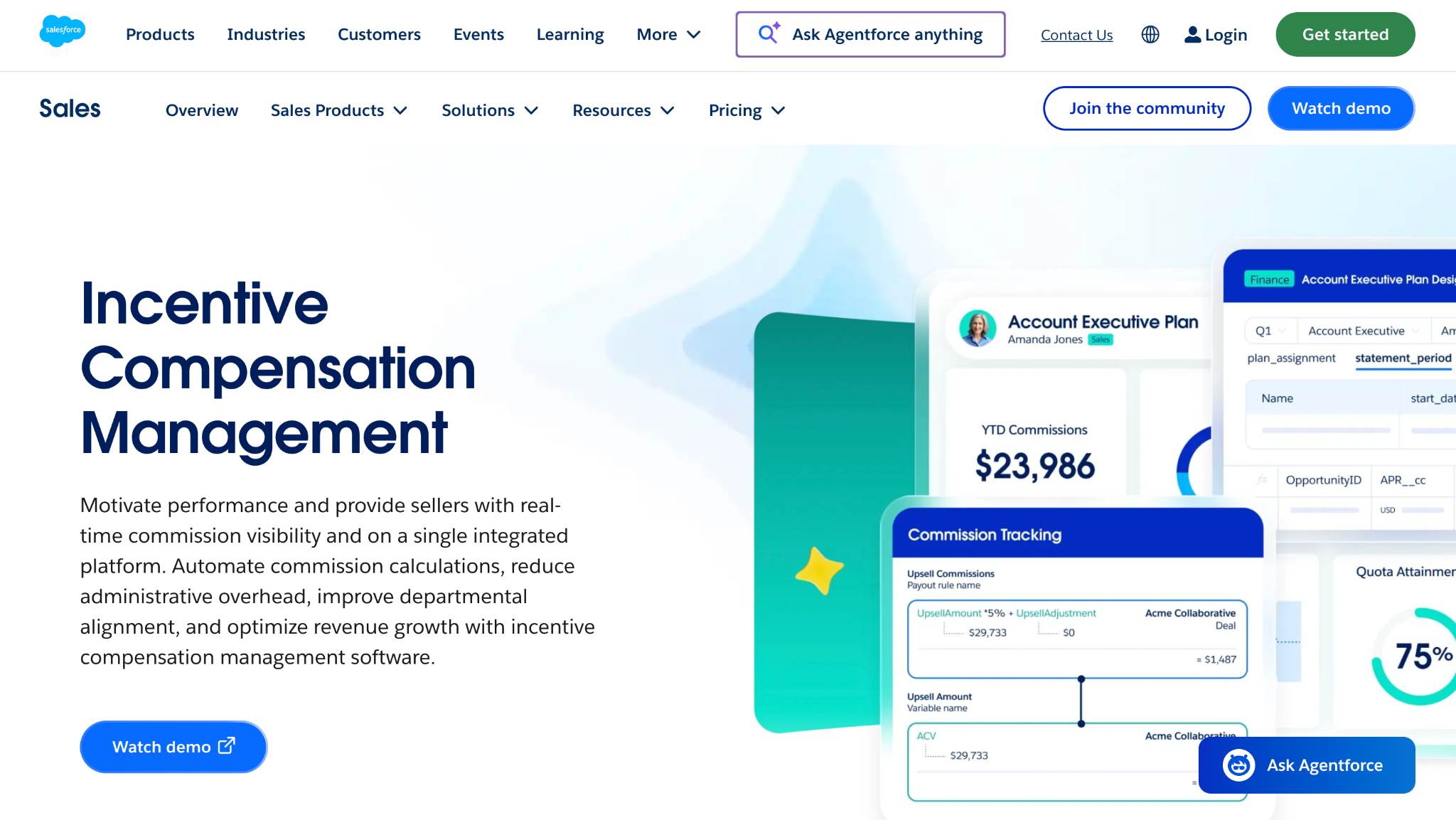
Salesforce Spiff, formerly Spiff before Salesforce acquired it, is a sales ICM native to the CRM. Guided configuration runs through Spiff Designer, calculating against Salesforce data in real time as deals close. Salesforce lists it at $75 per user per month billed annually and documents ASC 606 and IFRS 15 support with audit-ready reports.
Software Pros
- Statements surfaced inside the system reps already use daily
- A published per-user rate, unusual for a platform at this level
- ASC 606 and IFRS 15 handling documented on the vendor page
Software Cons
- Value drops sharply outside the Salesforce ecosystem
- Ties compensation data to a future CRM decision
- $75 per user per month adds up quickly across a large team
Salesforce Spiff Review
The deciding factor here is whether Salesforce is your system of record and likely to stay that way. If it is, real-time statements inside the CRM remove a login and an argument at once. If a CRM review sits anywhere on the roadmap, tying compensation to that decision deserves a much longer conversation than any demo allows.
Our Verdict
Native To The CRM
*As pricing is subject to change, we are listing prices as they stand in September 2026
Varicent
Quick Overview
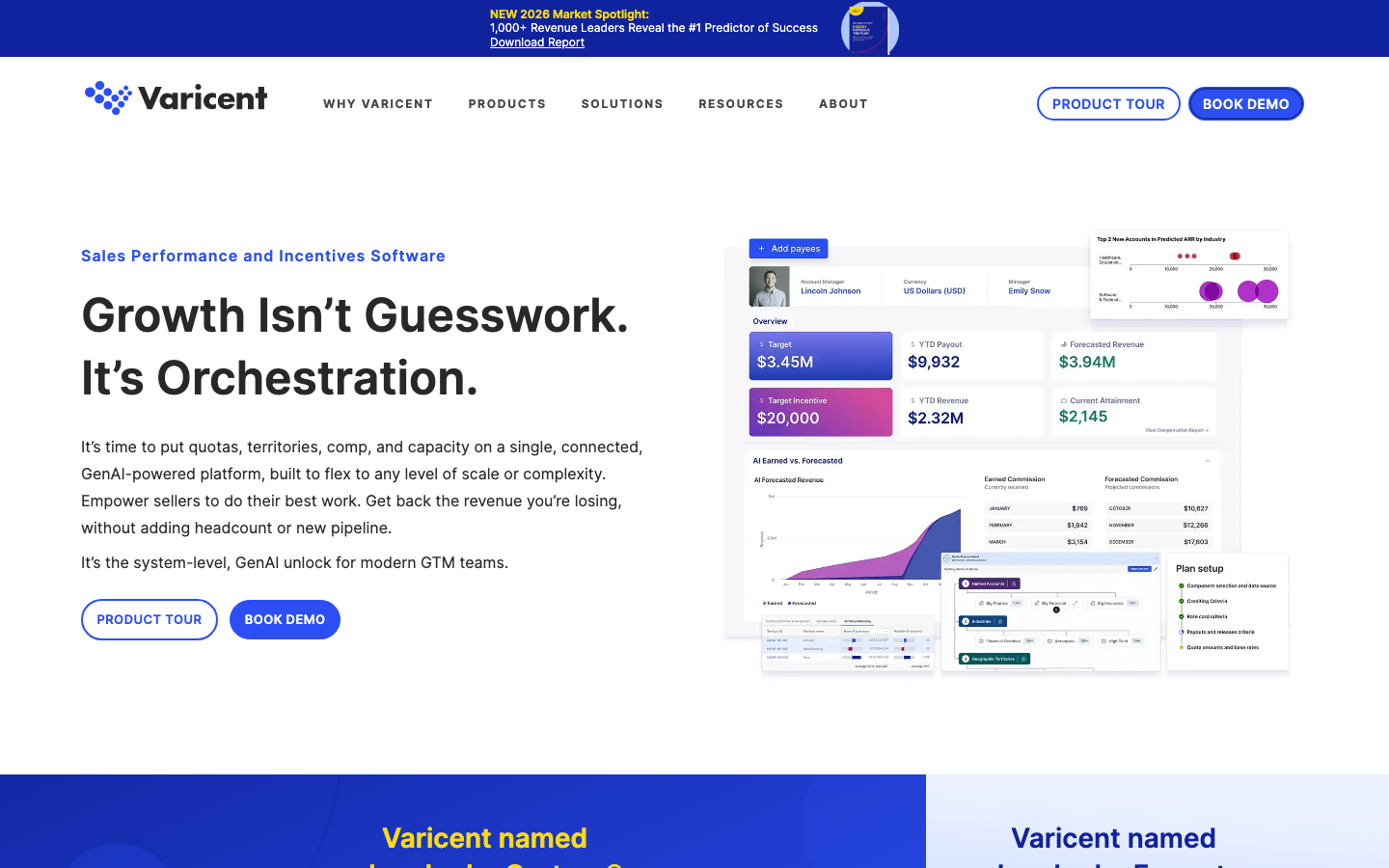
Varicent is a sales ICM for large organizations, built for the heaviest crediting complexity through consultant-led configuration. Territory and quota planning sit alongside incentives. The vendor cites a customer reducing administrative headcount by 70 percent after implementation.
Software Pros
- Crediting, splits, and overlays handled at genuine enterprise depth
- Territory and quota planning modeled with compensation, not apart
- Audit capability built for regulated and multi-region programs
Software Cons
- Rule changes need a trained administrator or vendor services
- Implementation runs in quarters, not weeks
- Quote-based pricing sized against payee count and modules
Varicent Review
The deciding factor is whether someone owns this platform as their job. Varicent will model crediting rules that defeat most competitors on this page, and it expects a trained expert to write them. A company hoping a generalist can maintain it between other duties will find that assumption expensive by the second quarter.
Our Verdict
Complexity With Expert Hands
Visdum
Quick Overview
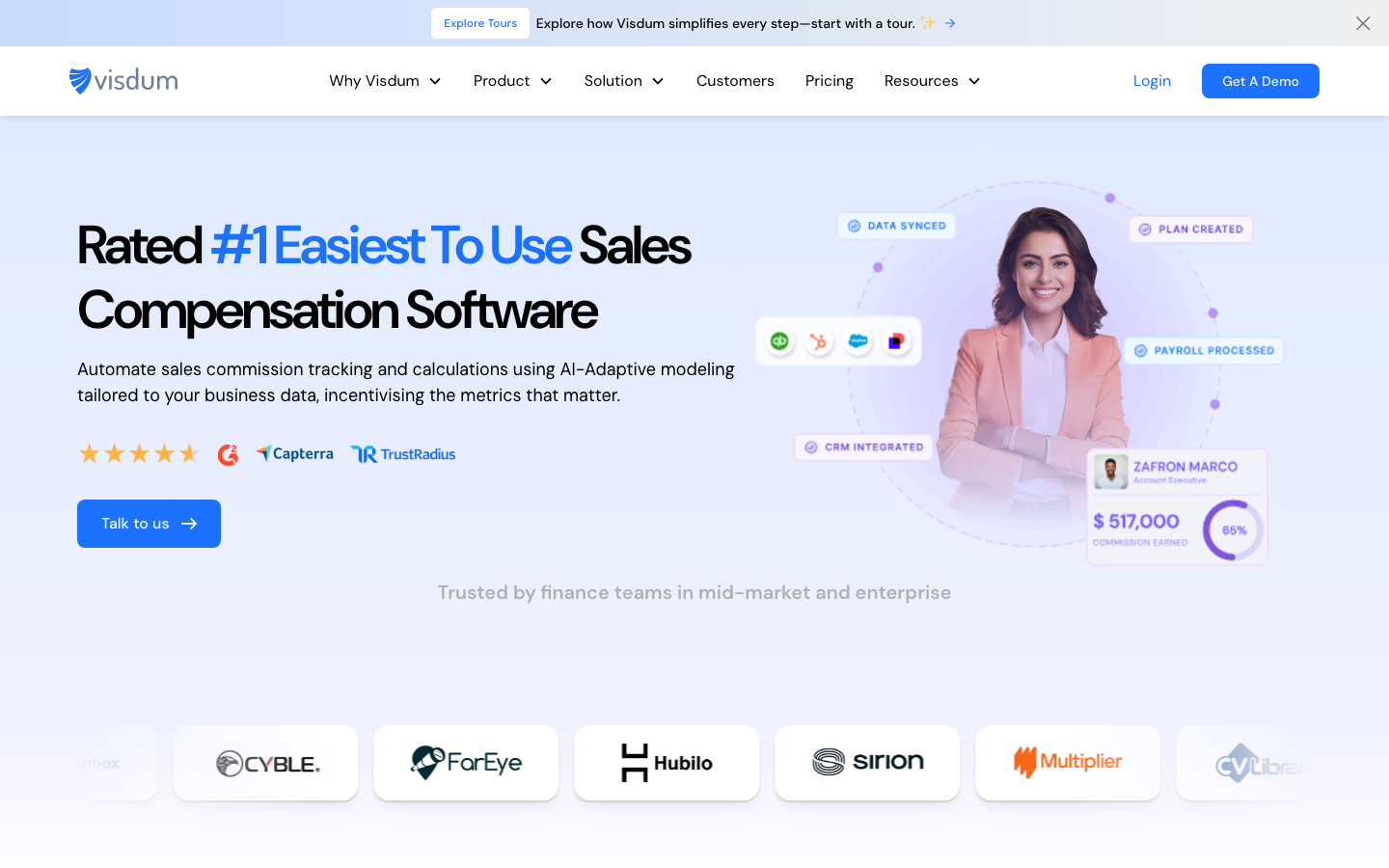
Visdum is a sales ICM product built around SaaS revenue models, handling recurring revenue structures natively through guided configuration. The vendor states it serves 30,000+ payees, processes $1.5 billion in commissions, offers 100+ integrations, and averages around 3 weeks to go live.
Software Pros
- Recurring revenue structures modeled natively rather than adapted
- A pricing structure of exactly 2 lines: license plus one-time setup
- Around 3 weeks to go live, per the vendor
Software Cons
- No published rate despite the transparent pricing structure
- SaaS focus makes it a poor fit for other revenue models
- Smaller vendor than the incumbents, which procurement will weigh
Visdum Review
The strength here is fit. Subscription revenue breaks plans in specific ways, through renewals, expansions, and churn-driven clawbacks. A platform that models those natively saves an expensive custom build. Publishing the pricing structure without the actual number is only a half-step toward transparency. A company selling hardware or professional services gains nothing at all from the specialization it is paying for.
Our Verdict
SaaS Revenue Models Native
*As pricing is subject to change, we are listing prices as they stand in September 2026
Vistex
Quick Overview
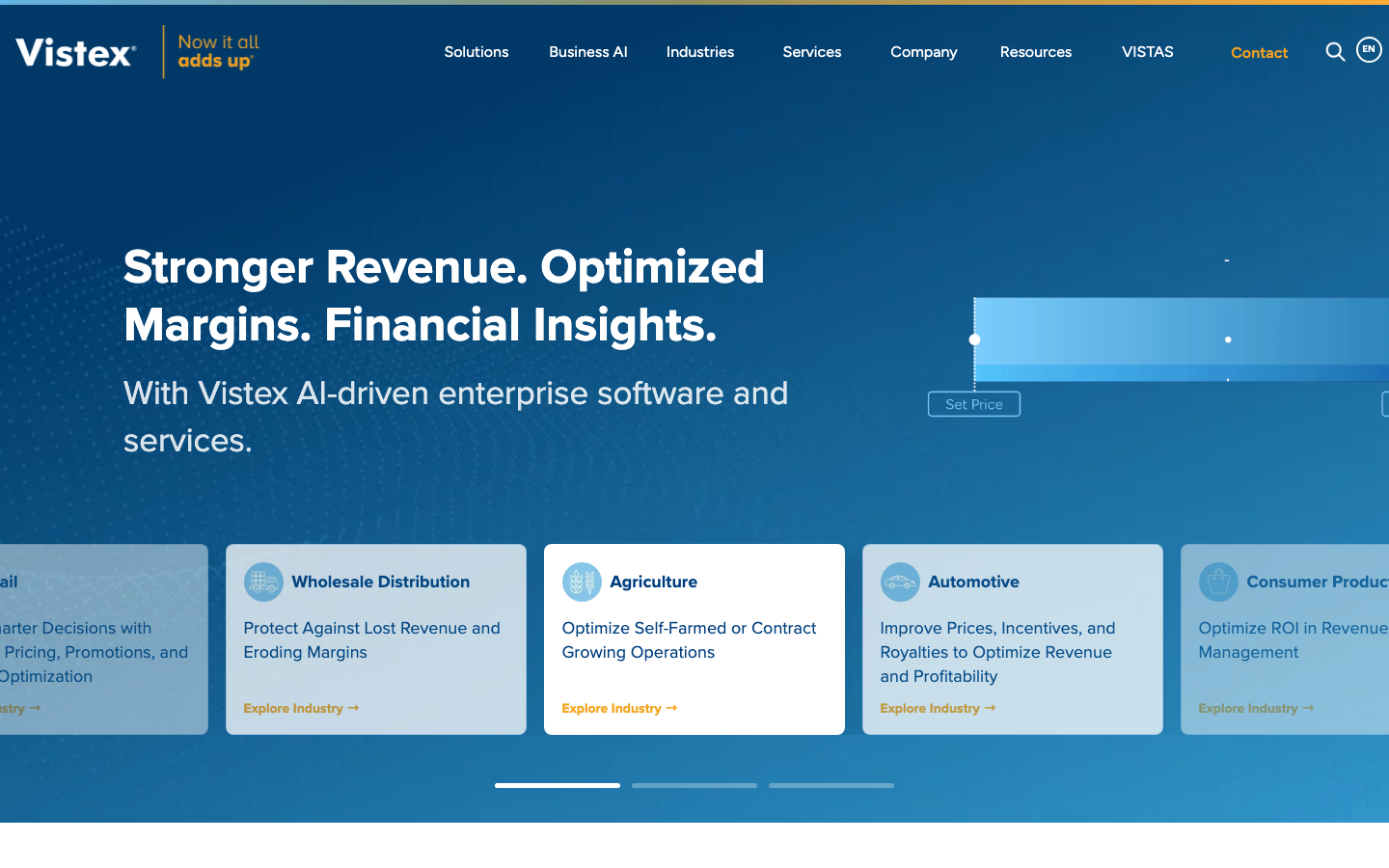
Vistex is a channel and rebate platform rather than a commission tool, configured with consultant involvement. It runs go-to-market programs across partners: channel incentives, rebates, pricing, and royalties. The vendor positions it as a way to gain control of revenue-generating programs that determine net margin.
Software Pros
- Trade programs, pricing, and royalties managed as one estate
- Built for enterprise partner networks rather than internal teams
- Gross-to-net visibility that finance can actually reconcile
Software Cons
- Not a platform for paying commissions to sales employees
- Enterprise implementation with consultant-led configuration
- Quote-based pricing shaped by program scope
Vistex Review
Buyers reach for this when partner programs, rebates, and royalties have grown into a margin problem nobody can see whole. That is an enterprise condition, and very few platforms anywhere address the whole of it at this breadth. A revenue leader looking for commission software has landed in the wrong category and should read the sales entries above instead.
Our Verdict
Trade Programs At Scale
Xactly Incent
Quick Overview
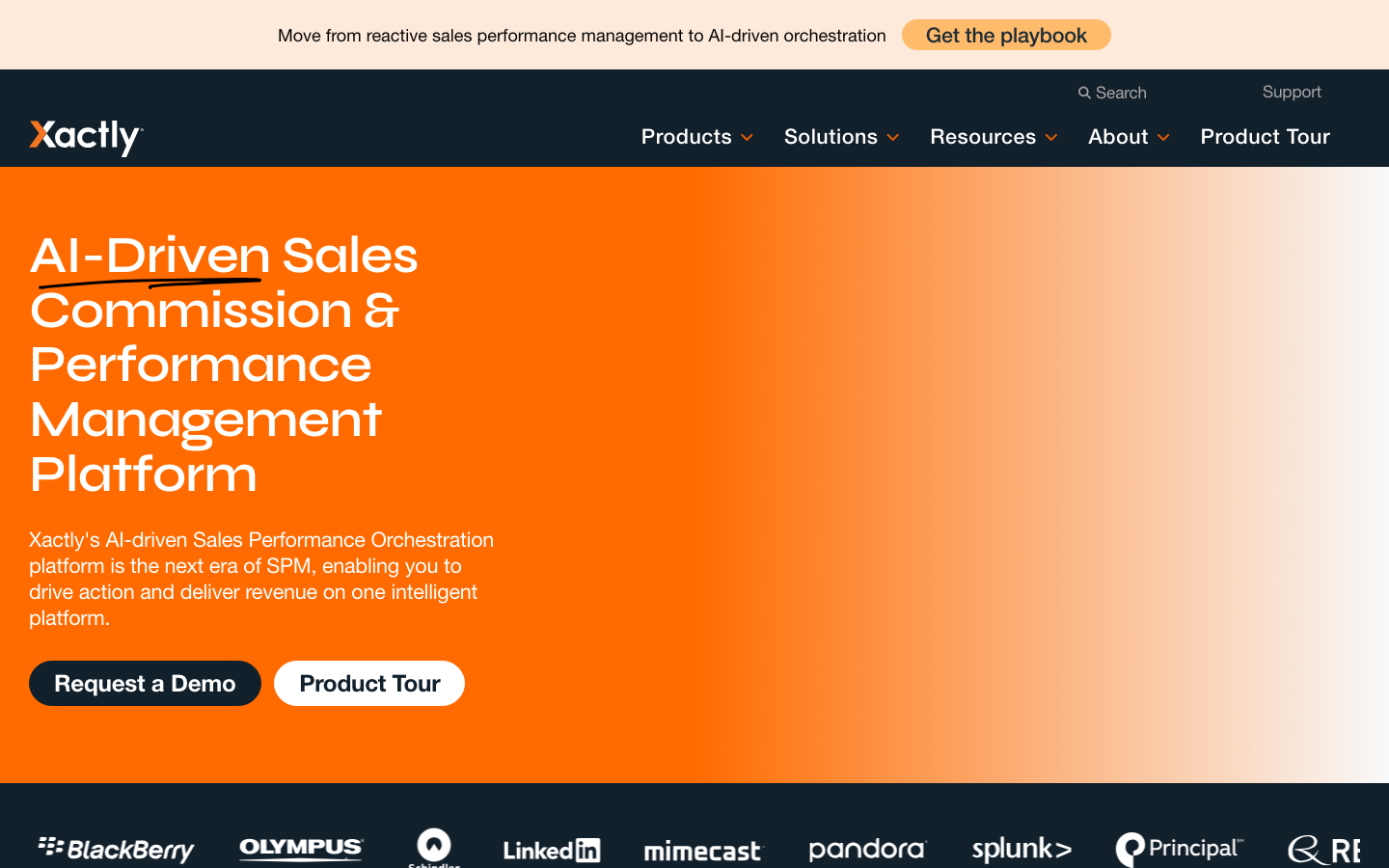
Xactly Incent is a sales ICM for global enterprises, configured with specialist involvement and built around governance. Quota management, analytics, and a complete audit trail sit behind every payout. The vendor states Incent increases accuracy up to 99 percent by eliminating payout errors and raises compliance efficiency by 65 percent.
Software Pros
- Audit trail designed for organizations that get examined regularly
- Payroll and accrual close speeded up alongside the payout itself
- Benchmarking drawn from more than 20 years of the vendor’s own data
Software Cons
- Plan changes need trained hands rather than a comp generalist
- Review the Incent product specifically, since the line is wider
- Enterprise implementation timelines and quote-based pricing
Xactly Incent Review
I would put this in front of a global enterprise where the audit is a scheduled event rather than a hypothetical. Governance is the product here, and the benchmarking data sitting behind it is genuinely hard for a competitor to replicate. A 100-rep company would spend its whole first year configuring capability it will not need for another decade.
Our Verdict
Governance And Audit First
FAQs About Incentive Management Software
What is incentive compensation management software?
It is the system that turns closed deals into paid commissions. Bookings and pipeline data come in from the CRM, the plan rules are applied, and a payout comes out the other side. Each person gets a statement showing how their number was reached, and finance gets an entry it can reconcile, and an auditor can follow. The whole point is that nobody rebuilds the calculation by hand at quarter-end.
What is the difference between ICM and compensation management software?
One handles variable pay and the other handles fixed pay, and the split is cleaner than the shared vocabulary suggests. Commissions, bonuses, and accelerators sit in the first category, calculated from what somebody sold. Base salary, merit increases, and equity sit in the second, decided in an annual cycle. Both exist because they solve genuinely different problems, and larger companies typically run one of each rather than choosing one over the other.
How much does it cost?
The market splits in 2, and the divide is easy to see. A handful of vendors publish a per-user rate openly, and everyone else quotes based on payee count, plan complexity, and modules. Where a rate is published on this page, it falls between $35 and $75 per user per month as of September 2026. Implementation and plan build are quoted separately, and at the enterprise end they can reshape the business case.
When is a company too small for one of these platforms?
It depends on plan complexity rather than on headcount, which surprises people. A flat rate on closed revenue for 10 reps, with no splits, ramps, or clawbacks, does not need software. A spreadsheet and a careful reviewer will hold it fine. The moment crediting rules get argued about, or a quarter-end runs past a few days, the calculation has outgrown your current tool.
Does this software handle ASC 606?
The standard requires the costs of winning a contract, commission included, to be capitalized and amortized across the expected customer lifetime. Expensing them at the point of payment is not permitted. Some platforms automate that schedule and produce the reports finance needs, and others leave the work entirely to the accounting team. Ask any vendor to demonstrate it on your own numbers, and remember that none of this is accounting advice.
Can it calculate commissions for reps in other countries?
Yes, and multi-currency handling is standard across the global platforms on this page. The complication isn’t the calculation, but the payment itself. When a rep is employed through a partner rather than by you, the platform calculates what is owed, and someone else pays it. That adds an approval step and a reconciliation that the software does not own.
What is channel or rebate incentive software?
It settles agreements between companies rather than paying employees. A manufacturer promises a distributor a better rate for hitting a volume tier, and the software tracks that agreement and accrues the liability. Settlement follows once the period closes. Enable and Vistex are the 2 platforms reviewed here that do this work, and neither calculates a sales rep’s commission.
How long does implementation take?
Small deployments run in weeks, mid-market in 1 to 2 months, and enterprise programs across a quarter or more. The timeline depends on the state of your data, not the software itself. Inconsistent account ownership, missing close dates, and disputed historical credits all have to be resolved before any calculation can be trusted. Clean the CRM before the project starts, not during it, and the estimate will hold.

Helen is Anywherer’s Market Analyst & Content Researcher, with extensive experience in analyzing global employment markets and HR technology trends. She is skilled at turning complex market data into clear, well-researched insights that inform every piece of content. With a strong grasp of the EOR, PEO, and international hiring space, Helen plays a key role in keeping Anywherer’s research accurate, up to date, and genuinely useful for readers.