Engagement is what happens between the survey and the exit interview. The best employee engagement software is what a company uses in that gap. It reaches everybody, including people with no desk and no work email. It gives managers something to act on, and it makes change visible after feedback is collected.
Software for employee engagement is bought by HR and people leaders, internal communications managers, and operations leaders who own an engagement program. Companies here range from roughly 100 employees to global enterprises. Many have large frontline populations, meaning staff who work in a store, a plant, a ward, or a vehicle rather than at a screen.
The pressure on these budgets changed. Gallup’s State of the Global Workplace reports that global engagement fell to 20 percent in 2025, its lowest level since 2020. It puts the cost of low engagement at roughly $10 trillion in lost productivity, or 9 percent of GDP. The same research records the sharpest drop among managers, whose engagement fell 5 points from 27 percent to 22 percent. Nobody is being asked for a score anymore. They are being asked who the program reached and what changed afterward.

INSIGHT: How much of the workforce does an engagement program actually reach?

A large share of the workforce has no desk, no company laptop, and often no work email. Reach, not features, is the first question in this category.
- In 2025, 70 percent of employed people in the US did some or all of their work at their workplace rather than at home, and 35 percent did some or all of it at home, per the Bureau of Labor Statistics American Time Use Survey released 25 June 2026. The 2 figures overlap because many people do both.
- Global engagement fell to 20 percent in 2025, its lowest since 2020, and Gallup estimates the cost of that at around $10 trillion in lost productivity, or 9 percent of GDP.
- Manager engagement fell 5 points in a single year, from 27 percent to 22 percent, which matters because managers are the delivery mechanism for most engagement programs.
- In practice, this means an intranet nobody can open on a shop floor is not an engagement program. It is a website for the head office.
So no platform wins outright, because this market is 4 markets wearing 1 label. Employee engagement software platforms split into listening, recognition, communication, and manager enablement. The right one depends on 2 answers: who you cannot currently reach, and whether your gap is communication or manager capability. This page covers the last 2 families. Surveys and recognition are covered on our other pages, so a familiar brand missing here is deliberate, not an oversight. Below, I’ve reviewed 14 of the leading platforms in A-Z order.
INSIGHT: Listening, recognition, communication, or manager enablement?
Engagement software is 4 markets wearing 1 label, and buying from the wrong family is why so many programs stall after the first survey.
- Recognition and rewards make good work visible and reward it. That family is covered on our employee recognition page.
- Communication and connection (Beekeeper, Blink, Firstup, Haiilo, Simpplr, Speakap, Staffbase) reach every employee, including those with no desk and no company email. Beekeeper states it was built for the 80 percent of the global workforce who do not sit at a desk.
- Manager enablement and action (Applaud, Betterworks, Bonfyre, Energage, Mesh, Perceptyx, PerformYard) turn results into team-level action. Perceptyx documents AI coaching and nudges delivered inside Teams, Slack, and the mobile tools frontline staff already use.
Employee Engagement Software Comparison
The table below is the argument of this page in 6 columns. Picking the best rated employee engagement software matters far less than picking the right family, so family and frontline reach come before anything else.
Reach is the column most buyers underweight. Leading software for employee engagement in a bank and in a bakery chain are different products. The difference is whether it works for somebody holding a phone in a stockroom with no corporate login.
Action planning is the second divider. Some employee engagement software providers give managers a guided plan with owners and dates; some send prompts, and some report and stop there. All 3 are legitimate. Only 1 of them changes what happens on Monday.
| Tool | Family | Reaches frontline staff | Action planning | Company fit | G2 rating |
|---|---|---|---|---|---|
| Applaud | Manager enablement | Partly | Reporting only | Enterprise | 4.8 (59) |
| Beekeeper | Communication and connection | Yes, mobile-first; no email needed | Manager prompts | Mid-market, Enterprise | N/A |
| Betterworks | Manager enablement | Desk-based | Guided plans | Mid-market, Enterprise | 4.4 (255) |
| Blink | Communication and connection | Yes, mobile-first; no email needed | Manager prompts | Mid-market, Enterprise | 4.6 (404) |
| Bonfyre | Manager enablement | Partly | Manager prompts | SMB, Mid-market | 4.7 (16) |
| Energage | Manager enablement | Partly | Guided plans | Mid-market, Enterprise | 4.6 (102) |
| Firstup | Communication and connection | Partly | Reporting only | Enterprise | 4.4 (206) |
| Haiilo | Communication and connection | Partly | Reporting only | Mid-market, Enterprise | 4.6 (291) |
| Mesh | Manager enablement | Desk-based | Manager prompts | SMB, Mid-market | 4.4 (356) |
| Perceptyx | Manager enablement | Partly | Guided plans | Enterprise | 4.5 (39) |
| PerformYard | Manager enablement | Desk-based | Guided plans | SMB, Mid-market | 4.7 (1,261) |
| Simpplr | Communication and connection | Partly | Reporting only | Mid-market, Enterprise | 4.6 (377) |
| Speakap | Communication and connection | Yes, mobile-first; no email needed | Reporting only | Mid-market, Enterprise | 4.5 (68) |
| Staffbase | Communication and connection | Yes, mobile-first; no email needed | Reporting only | Enterprise | 4.6 (249) |
The G2 column reflects each product profile as it stood in September 2026.
What Is Employee Engagement Software?
Employee engagement management software is the set of tools a company uses to build and hold connection to the work and the organization. It reaches people where they are, gives managers visibility into their own team, and makes follow-through visible. Engagement here means the emotional commitment behind discretionary effort, which is a different thing entirely from a dashboard score.
The line that trips up most buyers runs between measuring engagement and improving it. Survey platforms tell you the score, track sentiment over time, and run pulse checks, meaning short recurring surveys between annual cycles. We cover 28 of those in our roundup of employee survey tools, which is where to go if measurement is the problem you have. The platforms on this page are where the work happens after the results land. Most companies of any size end up owning both.
In practice, the benefits of employee engagement software come down to 3 things. Reach means a message arrives where somebody actually is, on a phone rather than in an inbox they check monthly. Visibility means a manager sees their own team rather than a company average. Follow-through means something identifiable happens after feedback, which is the single behavior employees use to decide whether the next survey is worth answering.
4 families sit under this label. Listening and surveys measure. Recognition and rewards make good work visible. Communication and connection platforms carry messages to everybody, including deskless staff, meaning workers with no assigned computer. Manager enablement platforms turn results into team-level action. The last 2 families are what this page reviews. The first 2 have their own dedicated pages on this site, which is why some familiar brands are absent here.
From Measurement to Action: What Happens After the Survey
Action planning is the step engagement programs fail at, and the failure is predictable. Results arrive in a deck, leadership discusses them, and 3 months later nobody at team level can name a single thing that changed. Employee engagement action plan software exists because that gap is where trust in the whole program is lost. The second survey always scores worse than the first when nothing followed it.
What the software provides is narrower and more useful than the marketing suggests. A guided plan per team, drawn from that team’s own results. An owner and a date against each action. Prompts that reach the manager where they already work. Progress visible to the people who gave the feedback in the first place. The best software for boosting employee engagement is usually the one that makes the next step obvious, not the one with the deepest analytics.
Tracking is a different discipline from survey reporting, and worth separating. Employee engagement tracking software measures behavior rather than sentiment. That means adoption rate, meaning the share of employees who actually use the platform. It also means reach per message, read rates by location, and whether action items were closed. Some vendors now push follow-up through assistants and nudges, which sits close to the ground our guide to AI agents for HR covers.
One honest limit belongs here. No platform makes a manager hold a difficult conversation. Software can surface the issue, suggest the words, and remind somebody twice, and a manager who will not engage still will not engage. That is a management problem, and buying a license does not solve it. It is worth saying plainly before any demo makes the opposite promise.
Best Employee Engagement Software by Team Type
Who you employ narrows this shortlist faster than any feature comparison. A manufacturer with 4,000 people on shifts and a 200-person software company share almost nothing as buyers. Below, 5 sections take 1 team type each, listing the platforms that suit it alphabetically and implying no order of merit.
For Frontline and Manufacturing Teams
This is the hardest version of the problem and deserves the most attention. Employee engagement software for manufacturing has to work without a corporate email address. It runs on a personal phone or a shared device on the floor, across shifts that never overlap. Add multiple sites, several languages, and safety notices arriving alongside culture content, and the desk-based tools fall away fast.
4 platforms here are built for it. Beekeeper states it was purpose-built for the 80 percent of the global workforce who do not sit at a desk, with content in 200+ languages. Blink runs as a mobile super-app with single sign-on. Speakap builds branded apps for retail, hospitality, and food service. Staffbase pairs an app with an intranet and email so 1 message reaches desk and floor together.
The practical test is onboarding. If activating a new hire needs a company email and a laptop, the platform misses the population you bought it for. Ask how somebody joins on their first day at a site, on their own phone and in their own language. Then ask how the account closes when they leave. High turnover makes that a weekly job rather than an annual one.
For Remote and Distributed Teams
Distributed teams have the opposite problem. Everybody has an inbox, which is exactly why messages disappear. Remote employee engagement software has to work asynchronously across time zones. It has to let somebody find an answer without asking a colleague, and build connection without another recurring meeting.
Firstup personalizes and orchestrates messages across channels, with delivery analytics showing who received and opened what. Simpplr organizes content and services around the individual so the answer surfaces without a search. Staffbase carries the same message through app, intranet, and email, which matters when half the company reads email and half never opens it. Search quality is the underrated feature in all 3.
For Small Businesses
Employee engagement software for small businesses has to work without an internal communications team, because there is not one. Usually, a single HR generalist handles this alongside payroll, hiring, and everything else. That rules out anything needing a content calendar, a rollout project, or a full-time administrator.
Bonfyre focuses on team-level connection and gives managers concrete prompts for their own group. Mesh publishes plans from $4 per person per month and centers on manager habits. PerformYard sets up quickly and lists $5 to $15 per person per month. Employee engagement software for small business is worth buying when managers already talk to their teams and need structure. It will not create the habit where none exists.
For Enterprise Programs
Employee engagement software for enterprise carries requirements the smaller tools never meet. Many populations and languages, governance and permissions by region, and measurement a board will accept. It also has to integrate with the HRIS so the directory is not maintained twice. Procurement and security reviews add months of scrutiny that has nothing to do with engagement.
Firstup targets messages by audience and reports on delivery, and states a Forrester Total Economic Impact study finding 398 percent ROI. Perceptyx pairs continuous listening with prescriptive guidance for managers. Staffbase states 1,500+ enterprise customers and reaches desk and frontline populations through 1 platform. At this size, the deciding question is usually governance.
For Teams Working Inside an HR Suite
Some companies do not want another destination employees must remember to visit. Employee engagement HR software in that situation sits over or beside the systems already running, surfacing what people need without replacing the HRIS underneath. If engagement work is likely to surface wellbeing needs, plan the pathway first. Our guide to employee wellness software covers where those referrals go.
Applaud puts a single front door over existing HR systems and states customers cut HR tickets by up to 90 percent. Betterworks drives engagement through goals and check-ins rather than a feed. Energage pairs culture measurement with benchmarking drawn from the Top Workplaces program, stating 30 million employee voices across 80,000 organizations. HR employee engagement software works best when it inherits the employee record rather than duplicating it.
Employee Engagement Software Pricing
Employee engagement software pricing follows 1 shape: a rate per employee per month, usually quoted rather than published. 4 of the 14 platforms here publish a figure. Frontline platforms tend to price on the total workforce rather than licensed users, which changes the arithmetic for a 5,000-person retailer.
Implementation, branded app builds, and integration sit on separate lines. The point buyers miss about employee engagement software cost is that the rate is fixed whether anyone opens the app. Adoption is the only variable that moves cost per active user, so rollout planning outranks feature selection.
| Tool | Pricing model | Free trial or demo | Published starting price |
|---|---|---|---|
| Applaud | Quote-based | Demo on request | Custom pricing |
| Beekeeper | Per employee per month, quote-based | Demo on request | Custom pricing |
| Betterworks | Per user per month | Demo on request | $8 per user per month |
| Blink | Per user per month | Free trial | $3.75 per user per month, billed annually |
| Bonfyre | Per user per month, quote-based | Demo on request | Custom pricing |
| Energage | Quote-based | Demo on request | Custom pricing |
| Firstup | Quote-based | Demo on request | Custom pricing |
| Haiilo | Quote-based | Demo on request | Custom pricing |
| Mesh | Per person per month | Demo on request | $4 per person per month |
| Perceptyx | Quote-based | Demo on request | Custom pricing |
| PerformYard | Per person per month | Demo on request | $5 to $15 per person per month |
| Simpplr | Quote-based | Demo on request | Custom pricing |
| Speakap | Quote-based | Demo on request | Custom pricing |
| Staffbase | Quote-based | Demo on request | Custom pricing |
As pricing is subject to change, prices are listed as of September 2026.
INSIGHT: Why is engagement software priced per employee?
Because the vendor is selling reach rather than usage, which means the bill is the same whether the app is opened daily or never.
- 4 of the 14 platforms here publish a price openly: Betterworks at $8 per user per month, Blink from $3.75 per user per month billed annually, Mesh from $4 per person per month, and PerformYard at $5 to $15 per person per month. The remaining 10 are priced by quotation, based on headcount and module mix.
- Bonfyre states on its own pricing page that enterprise plans run on a per-user-per-month model depending on total users, contract length, and feature set, which is how most of the quoted vendors behave.
- Frontline platforms typically price on the whole workforce rather than licensed seats, so a retailer counts every seasonal hire. Beekeeper and Staffbase both route pricing through a conversation for exactly that reason.
- The consequence is uncomfortable and worth stating. With per-employee pricing, adoption is the only lever that changes cost per active user, so a platform bought at $4 and used by a third of staff really costs $12.
Sources:
as of September 2026
How to Choose Employee Engagement Software
I would start with who you currently cannot reach, because that 1 question removes half the market before you look at a feature list. Then decide whether your problem is communication or manager capability. The 2 families solve different things, and buying the wrong one produces a platform nobody opens or a dashboard nobody acts on.
Check what you already own. If a survey platform is running, an employee engagement software solution has to add action and reach rather than a second questionnaire. Then look at what a manager sees about their own team, since organization-level dashboards change nothing at team level. Walk the action-planning workflow end to end, including who is accountable and how progress becomes visible to the people who raised the issue.
Test the adoption mechanics for frontline staff specifically: app store versus shared device, language coverage, and onboarding without email. Check the HRIS integration so the directory is maintained once. Engagement data and activity data answer different questions. That second one is where employee monitoring software belongs.
Then price it on the total workforce rather than on licensed seats, because that is the number that arrives on the invoice. Ask what the second year looks like once the launch campaign is over and adoption settles at its real level. That figure, not the demo, is what you are actually buying.
Top 14 Employee Engagement Software Platforms for 2026
For these best employee engagement software reviews, I reviewed each vendor’s product, customer, and pricing pages with 2 questions. Who does this platform reach, and what does it hand a manager the morning after results land? Every adoption rate and user count below is the vendor’s own claim.
I’m listing all providers in alphabetical order to keep this comparison neutral.
The mix runs from frontline apps like Beekeeper and Blink to communication platforms like Firstup and Staffbase and manager-led tools like Betterworks and Mesh. If you are drawing up a shortlist of the best employee engagement software 2026, the family column deserves your attention before anything else. No amount of configuration turns a platform from one family into another.
Employee engagement software companies market themselves in near-identical language. The difference shows up in 2 places. Can a warehouse worker open it without a company login, and does a manager get a plan or a chart?
Choosing top employee engagement software is less about scoring features than about matching a platform to a population. Every overview below names the family and the reach up front.
Applaud
Quick Overview
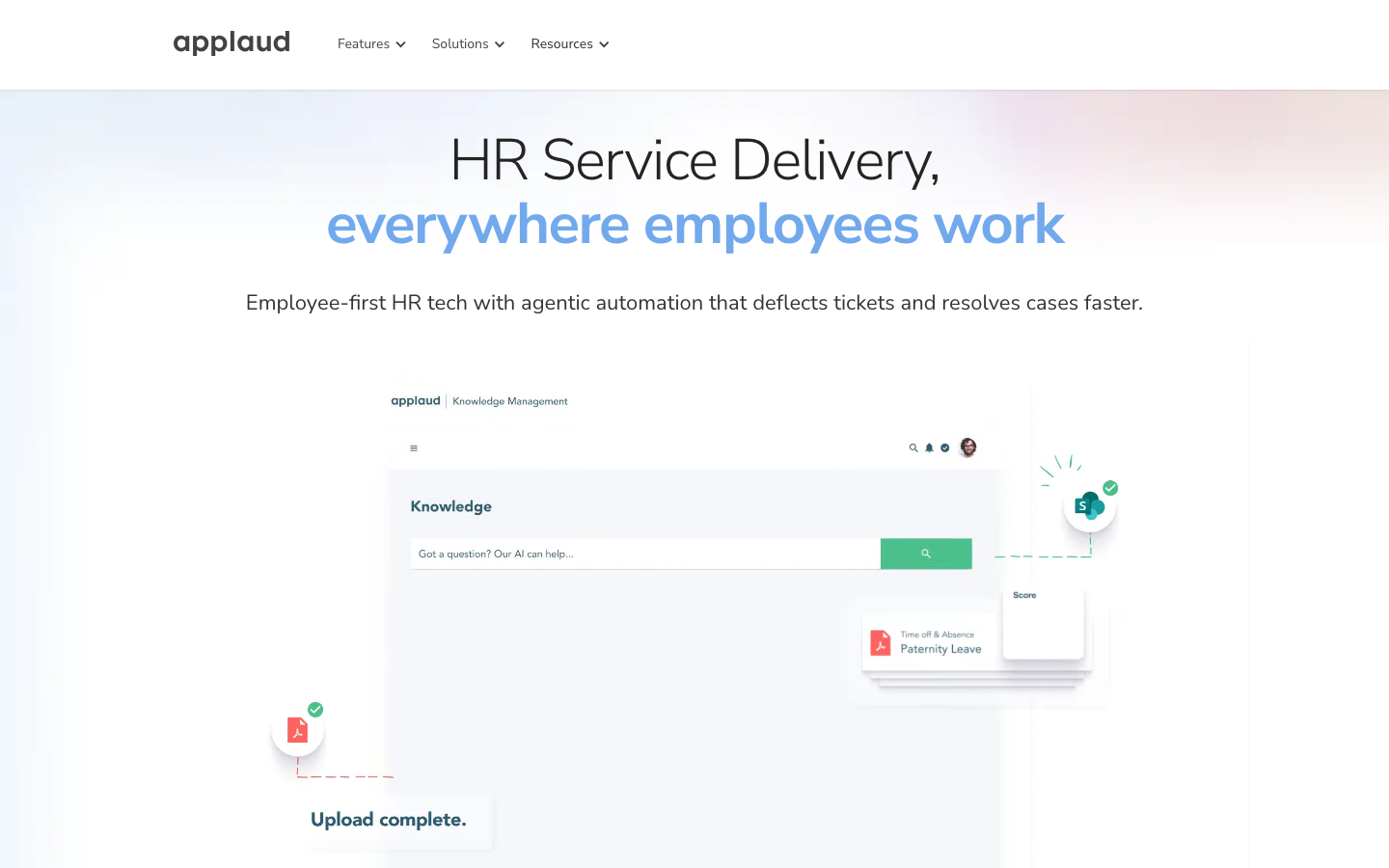
Applaud is a manager and service enablement platform layering over the HR systems a company already runs. Staff get 1 front door for services, content, and requests. It reaches desk staff well and frontline staff only partly, since it assumes self-service. The vendor states customers cut HR tickets by up to 90 percent.
Software Pros
- 1 front door over existing systems instead of another HRIS to run
- Self-service that removes routine questions from the HR queue
- AI-assisted answers drawn from content the company already owns
Software Cons
- Reporting rather than guided action plans for team managers
- Assumes employees will self-serve, which suits desk populations
- 59 G2 reviews, a modest sample for an enterprise purchase
Applaud Review
The buyer here is an enterprise with 6 HR systems and employees who cannot find anything in any of them. Applaud does not replace that estate, which is precisely the point. The reduction in tickets is a real operational saving. It is the wrong purchase if your engagement gap is a shift worker who never logs in at all, because nothing here reaches that person.
Our Verdict
One Door For HR
Beekeeper
Quick Overview
Beekeeper is a communication and connection platform built mobile-first for frontline teams in manufacturing, hospitality, retail, and logistics. It reaches workers without company email through a phone or shared device. The vendor states 7 million users across 2,000+ organizations, an 87 percent frontline adoption rate, and content in 200+ languages.
Software Pros
- Built for staff with no corporate email or assigned computer
- Operational workflows and shift communication in the same app
- 200+ languages and 500+ integrations, per the vendor
Software Cons
- Engagement analytics are thinner than in dedicated listening tools
- Needs somebody who owns internal communications day-to-day
- No current G2 product profile carrying an aggregate score
Beekeeper Review
This earns its place when the engagement gap is physical rather than cultural. Reaching people who have never had a work email changes what a program can do. Beekeeper has spent a decade on exactly that problem. A company whose staff all sit at laptops is buying reach it already has, and paying for a mobile app nobody needs.
Our Verdict
Frontline Reach At Scale
Betterworks
Quick Overview
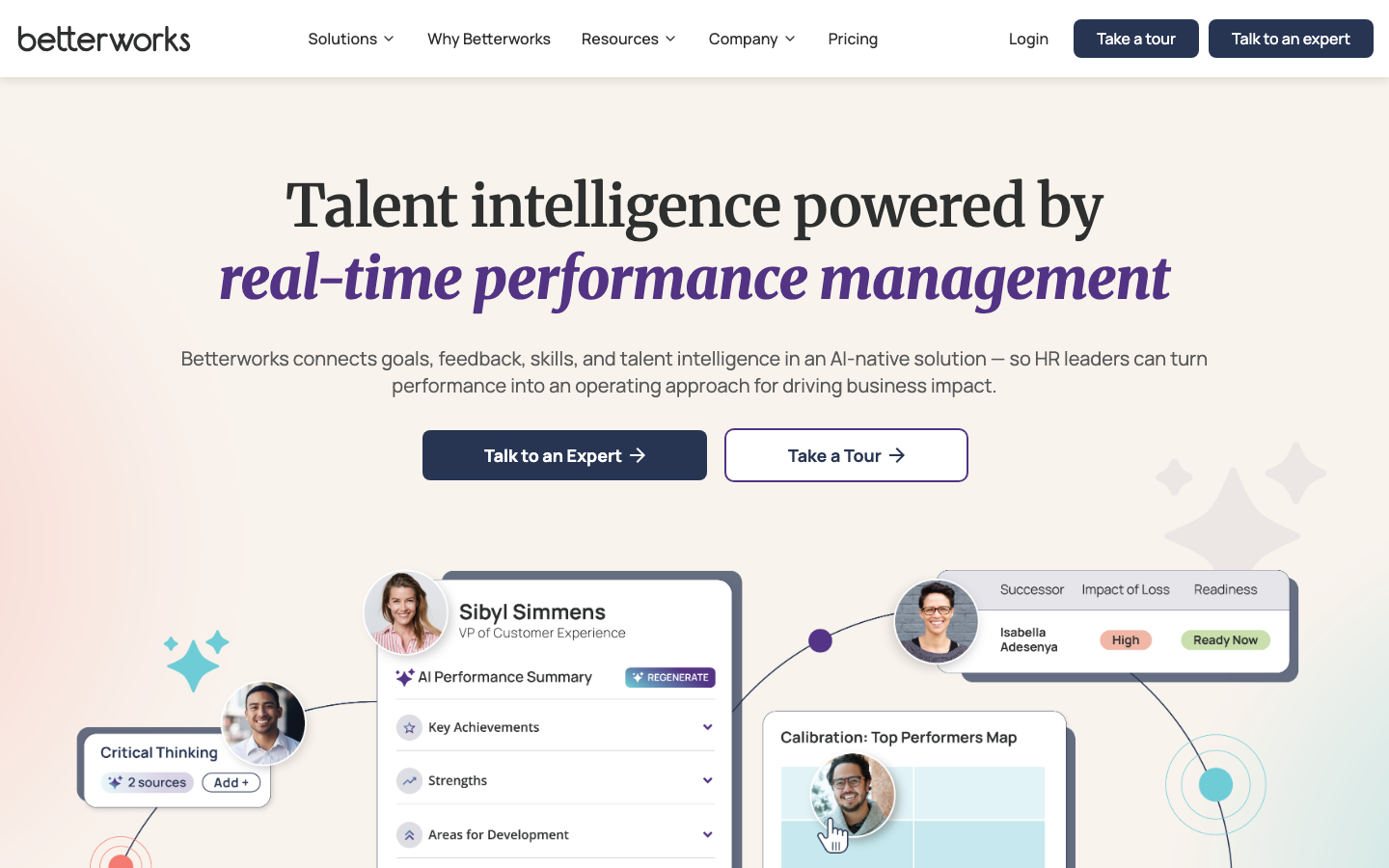
Betterworks is a manager enablement platform where engagement runs through goals, continuous check-ins, and conversations rather than through a content feed. It is desk-based by design. It publishes pricing from $8 per user per month, which is unusual in this category.
Software Pros
- Guided plans tied to goals rather than to a survey cycle
- 1-on-1 agendas and check-ins that give managers a weekly rhythm
- A published per-user rate to anchor a budget conversation
Software Cons
- Desk-based, so frontline populations are effectively out of scope
- Works only where managers already run structured conversations
- Performance framing can feel heavy to teams wanting a lighter touch
Betterworks Review
Where this wins is companies that already run formal goal cycles and want engagement carried by the same rhythm. Tying the engagement conversation to the work itself, rather than to a quarterly survey, is a defensible position that survives scrutiny. It does ask a lot of managers, and an organization whose managers already avoid their 1-on-1s will not be rescued by better software.
Our Verdict
Goals Drive The Conversation
*As pricing is subject to change, we are listing prices as they stand in September 2026
Blink
Quick Overview
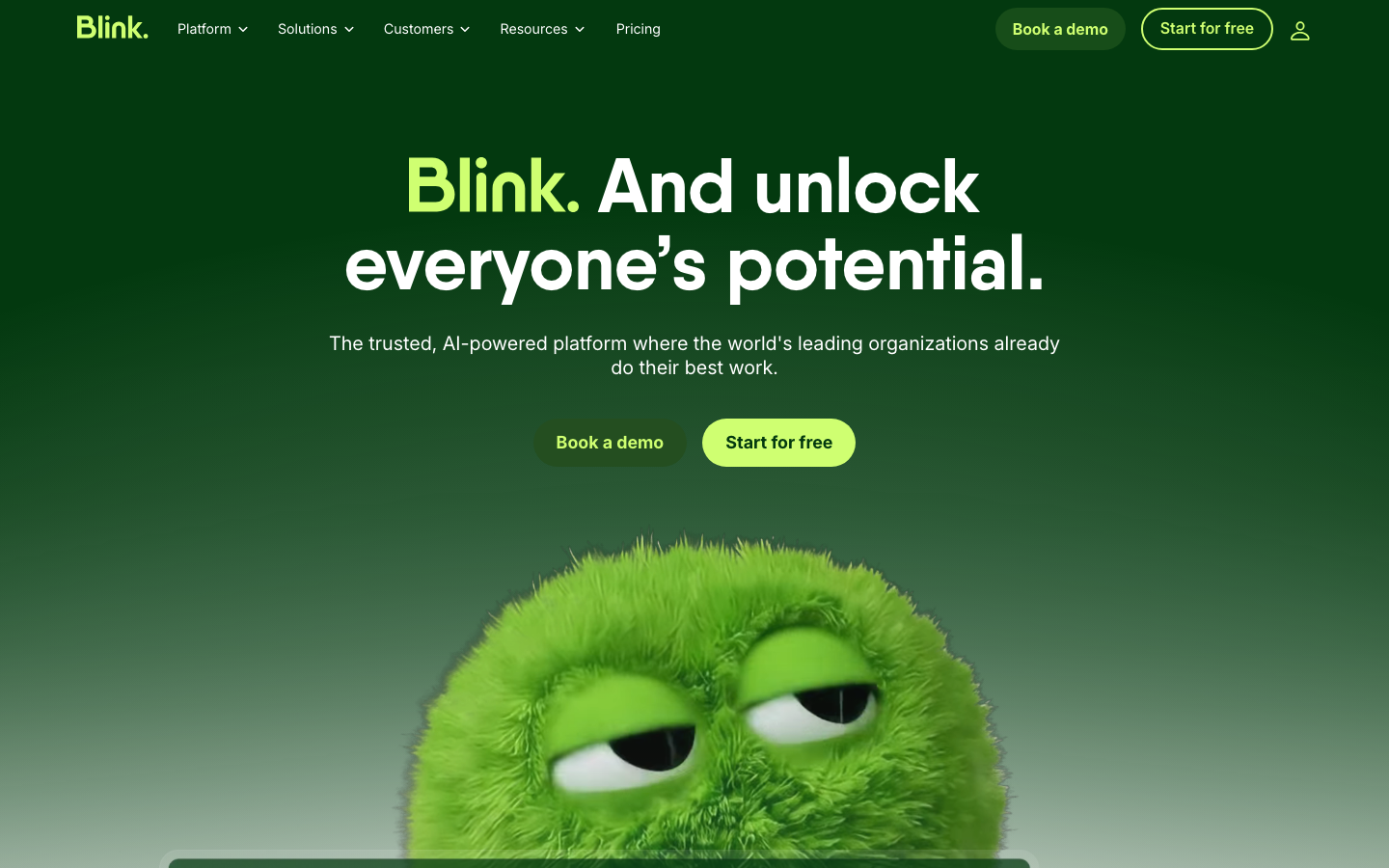
Blink is a communication and connection platform packaged as an employee super-app for frontline organizations. It combines a personalized feed, chat, documents, and single sign-on for people who never open a laptop. It reaches staff with no company email, and the vendor cites a retailer reporting 87 percent adoption within 10 days.
Software Pros
- Mobile-first reach for healthcare, transport, and field teams
- Single sign-on into the tools a frontline worker actually needs
- Published plans from $3.75 per user per month billed annually
Software Cons
- Manager prompts rather than structured action plans per team
- Adoption still depends on an internal owner running the launch
- The bare Blink profile on G2 belongs to an unrelated product
Blink Review
I rate this for organizations where the daily problem is access, not sentiment. Putting rosters, documents, and chat behind a single login on a personal phone removes daily friction that no engagement survey would ever have surfaced. If your engagement work is really about coaching managers to have better conversations, this is the wrong shelf of the market entirely.
Our Verdict
Super App For Frontline
*As pricing is subject to change, we are listing prices as they stand in September 2026
Bonfyre
Quick Overview
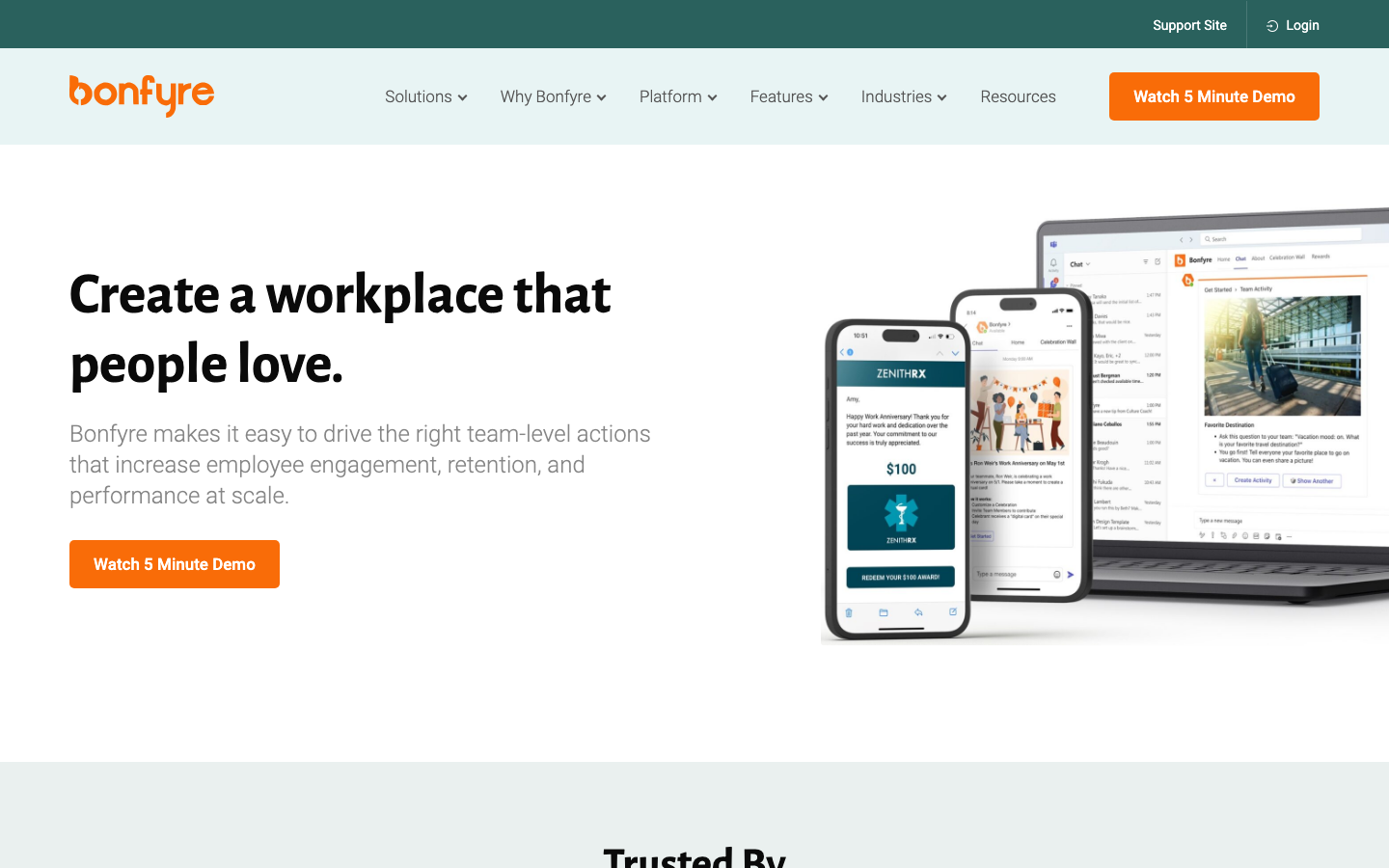
Bonfyre is a manager enablement platform built around team-level connection, giving people managers prompts and data for their own group rather than organization-wide programs. It reaches frontline staff partly through a mobile app. The vendor cites 55 percent frontline adoption and a 21-point lift in eNPS (employee Net Promoter Score).
Software Pros
- Team-level data managers can act on without an analyst
- Prompts and activities aimed at manager habits, not company campaigns
- Multi-site deployments with frontline adoption reported by customers
Software Cons
- 16 G2 reviews, too thin a sample to read as evidence
- Team focus means less organization-wide communication capability
- No published rate, so every comparison starts with sales
Bonfyre Review
The buyer here is a company whose engagement scores are fine on average and awful in 3 specific teams. Bonfyre works at exactly that level, which is where most engagement problems actually live rather than in the company average anybody reports upward. Anyone whose real need is to broadcast reliably to 10,000 people across 40 sites should look at communication platforms instead.
Our Verdict
Team Level Manager Prompts
Energage
Quick Overview
Energage is a manager enablement and benchmarking platform built on the research behind the Top Workplaces program. It pairs culture measurement with employer recognition and comparison against a large regional dataset. It reaches frontline staff and states 30 million employee voices across 80,000 organizations.
Software Pros
- Benchmarking against a dataset few competitors can match
- Guided plans that connect results to specific culture drivers
- Employer branding value when a company earns the award
Software Cons
- Listening is the core, so this list covers only what follows it
- Award framing suits some employers and sits awkwardly with others
- Partial frontline reach compared with the mobile-first platforms
Energage Review
Judged on what follows the survey, Energage gives a mid-market employer something rare: a credible external comparison rather than a private score. An external comparison is useful in a boardroom, and it is useful again in recruiting when candidates ask what the culture is like. It is a poor fit for a company that wants its engagement work kept internal and well away from any public awards program.
Our Verdict
Culture Data With Benchmarks
Firstup
Quick Overview
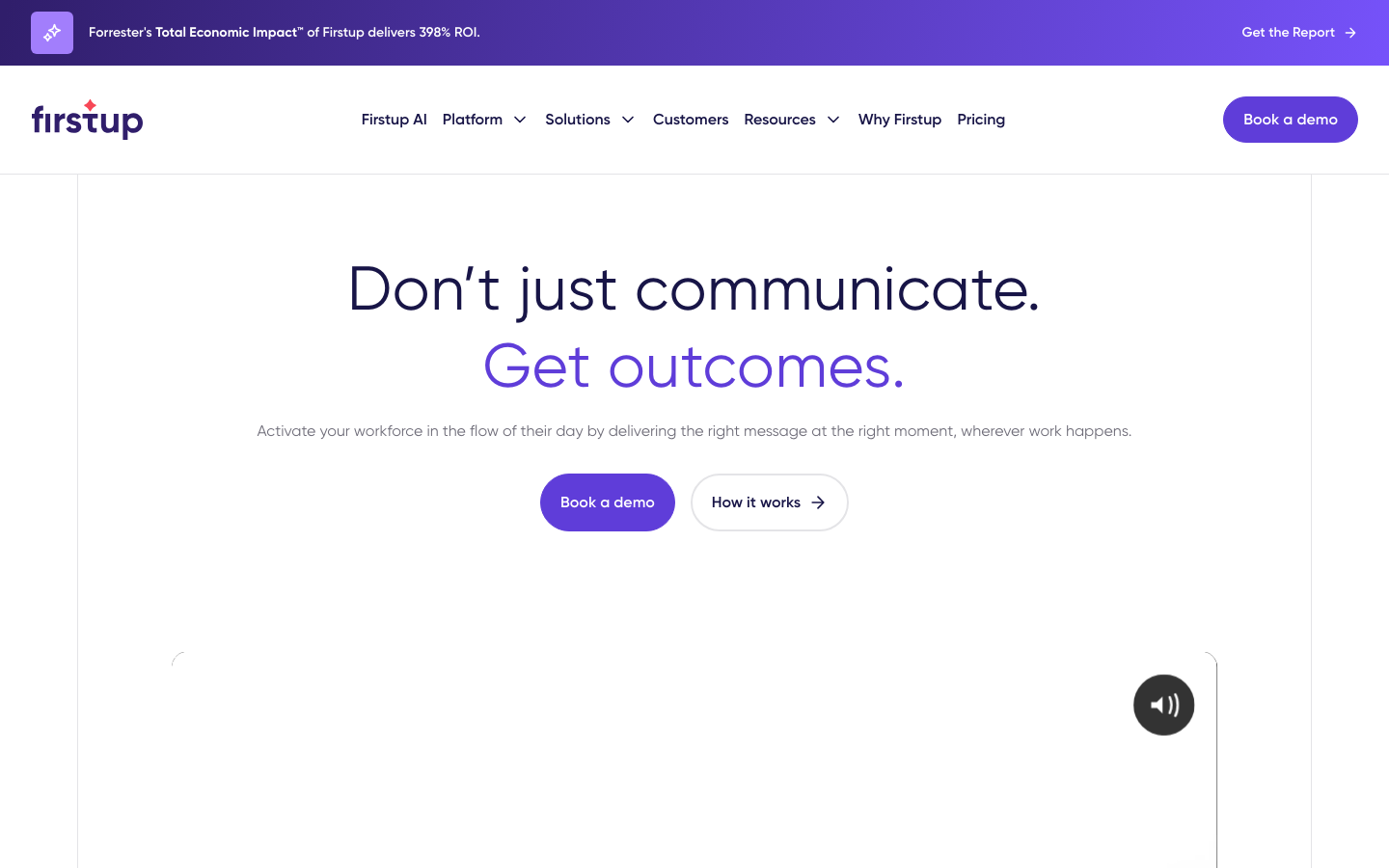
Firstup is a communication and connection platform that personalizes and orchestrates internal messages across channels, with delivery analytics showing who received and opened each one. It reaches frontline staff partly, depending on the channels enabled. The vendor cites a Forrester study finding 398 percent ROI.
Software Pros
- Message targeting by audience rather than by broadcast to all
- Delivery analytics that prove reach instead of assuming it
- Orchestration across app, email, and digital channels at once
Software Cons
- Reporting rather than team-level action planning for managers
- Enterprise scope drags an enterprise rollout timeline with it
- Needs a communications function to use the targeting properly
Firstup Review
The case here rests on proof. Most internal communications teams cannot say who read anything at all, which makes every budget conversation harder than it should be. Firstup turns that into a measurable number worth defending. It is more platform than a 300-person company will ever use, and the setup effort quietly assumes a communications team doing this full time.
Our Verdict
Targeted Comms With Proof
Haiilo
Quick Overview
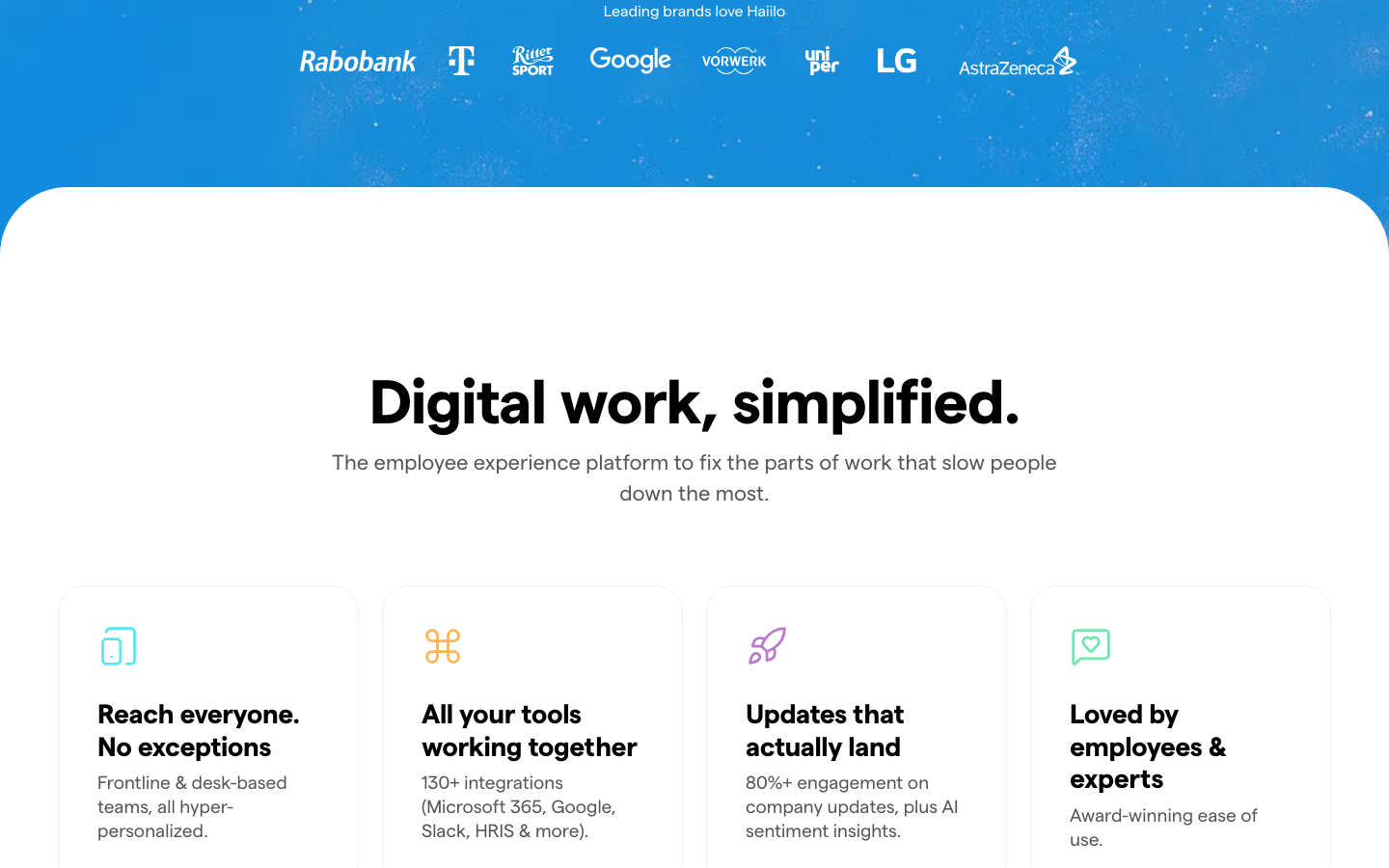
Haiilo is a communication and connection platform combining an intranet, employee communications, advocacy, and analytics in 1 product. It is strongest across European mid-market and enterprise organizations. It reaches frontline staff partly through a branded app, and boasts 130+ integrations and 80 percent engagement on company updates.
Software Pros
- Intranet, comms, and advocacy in 1 platform rather than 3
- Employee advocacy that extends internal content to social reach
- Deep Microsoft 365 integration for organizations already on it
Software Cons
- Reporting rather than guided action planning for team managers
- European center of gravity shows in support and references
- Advocacy features go unused at companies without a social program
Haiilo Review
The case here rests on consolidation. Running an intranet, a comms tool, and an advocacy platform as 3 separate contracts is a familiar and expensive mess. There are 3 renewal dates to match, and Haiilo collapses all of it into 1 stack. A US company with no advocacy ambitions and a straightforward comms need is paying for a large slice of capability it will never switch on.
Our Verdict
Intranet Plus Advocacy Together
Mesh
Quick Overview
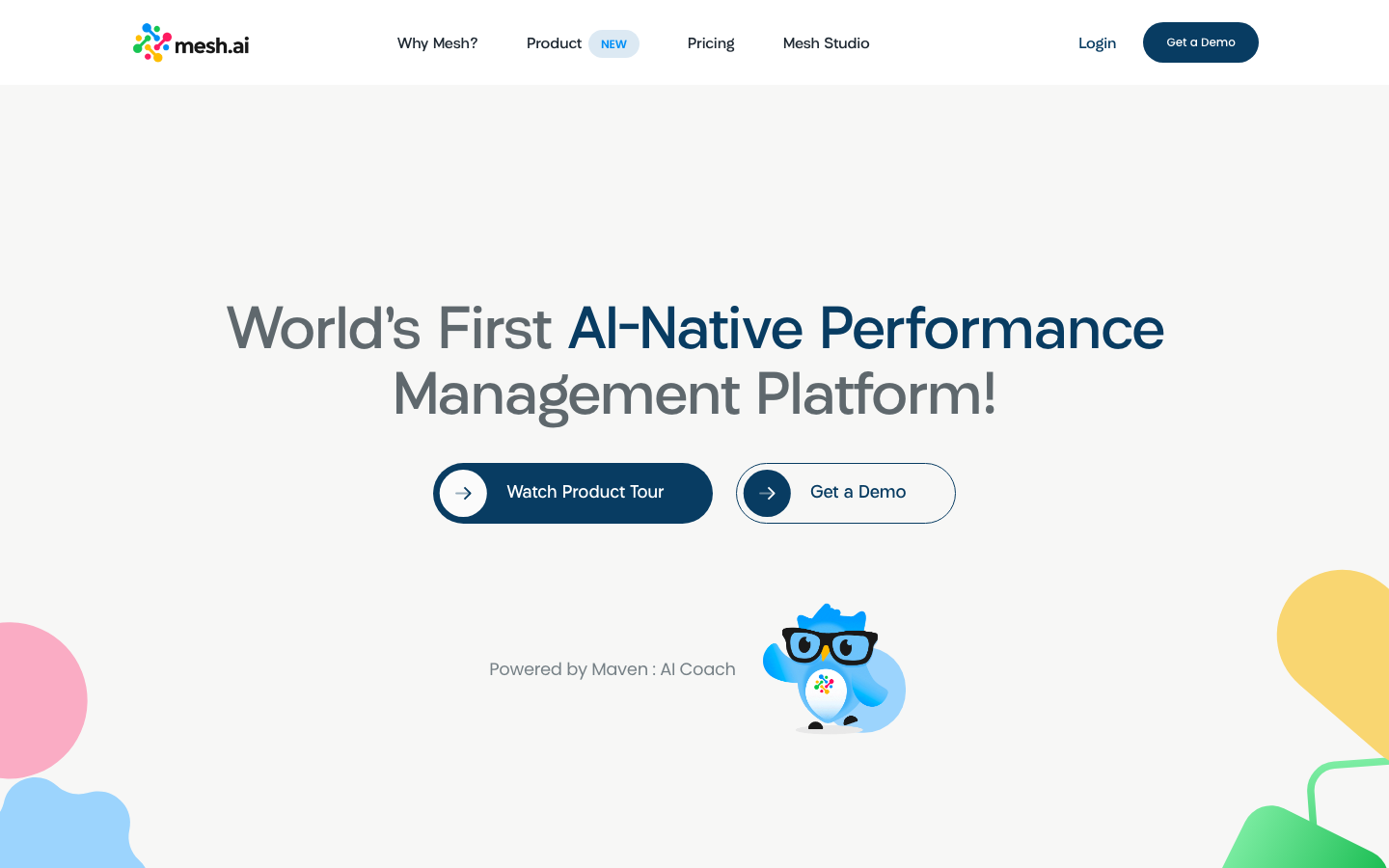
Mesh is a manager enablement platform built around lightweight goal tracking and continuous feedback, aimed at changing manager habits rather than adding another survey cycle. It is desk-based, publishes plans from $4 per person per month, and positions itself as an AI-native performance management platform.
Software Pros
- Published pricing from $4 per person per month, unusually open
- Nudges aimed at manager behavior rather than at HR reporting
- Light setup suited to growth-stage companies without an HR ops team
Software Cons
- Desk-based, so frontline populations are out of scope
- Manager prompts rather than structured plans per team
- Performance framing overlaps tools some companies already own
Mesh Review
This suits a company that has grown past 100 people and noticed something awkward. Its managers were promoted for being good at the job rather than at managing. Cheap, light, and focused squarely on habits is the right prescription in that situation. An enterprise running a formal listening program across 20,000 people will find it far too slight to carry that weight.
Our Verdict
Manager Habits Over Surveys
*As pricing is subject to change, we are listing prices as they stand in September 2026
Perceptyx
Quick Overview
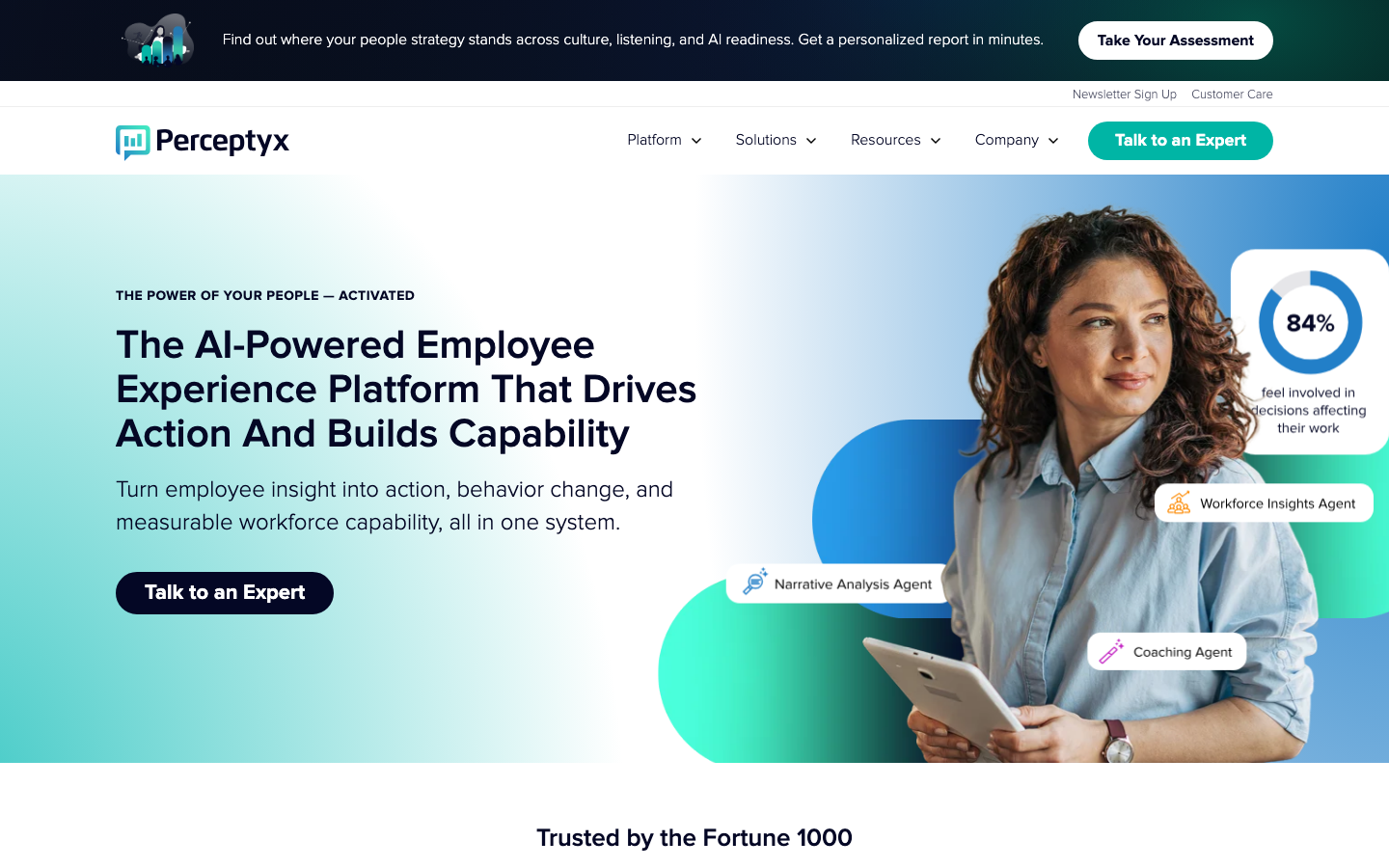
Perceptyx is a manager enablement and analytics platform whose listening program feeds prescriptive guidance. AI coaching and nudges arrive inside Teams, Slack, email, and the mobile tools frontline staff already use. It reaches frontline staff partly and states predictive signals flagging disengagement and attrition risk early.
Software Pros
- Guided action delivered where managers already work, not in a portal
- Predictive flags for attrition risk rather than backward-looking scores
- A research team behind the methodology, which enterprises ask about
Software Cons
- Listening is the core product, so it overlaps a survey platform
- 39 G2 reviews, below the level where a score means much
- Scope and pricing aimed well above the mid-market
Perceptyx Review
Judged on what follows the survey, Perceptyx is the strongest answer here. It suits a large employer that collects plenty of data and acts on almost none of it. Coaching delivered inside Teams beats a dashboard that nobody opens after the launch meeting. A company with no existing listening program is buying the second half of a solution before the first half exists.
Our Verdict
Listening Turned Into Coaching
PerformYard
Quick Overview
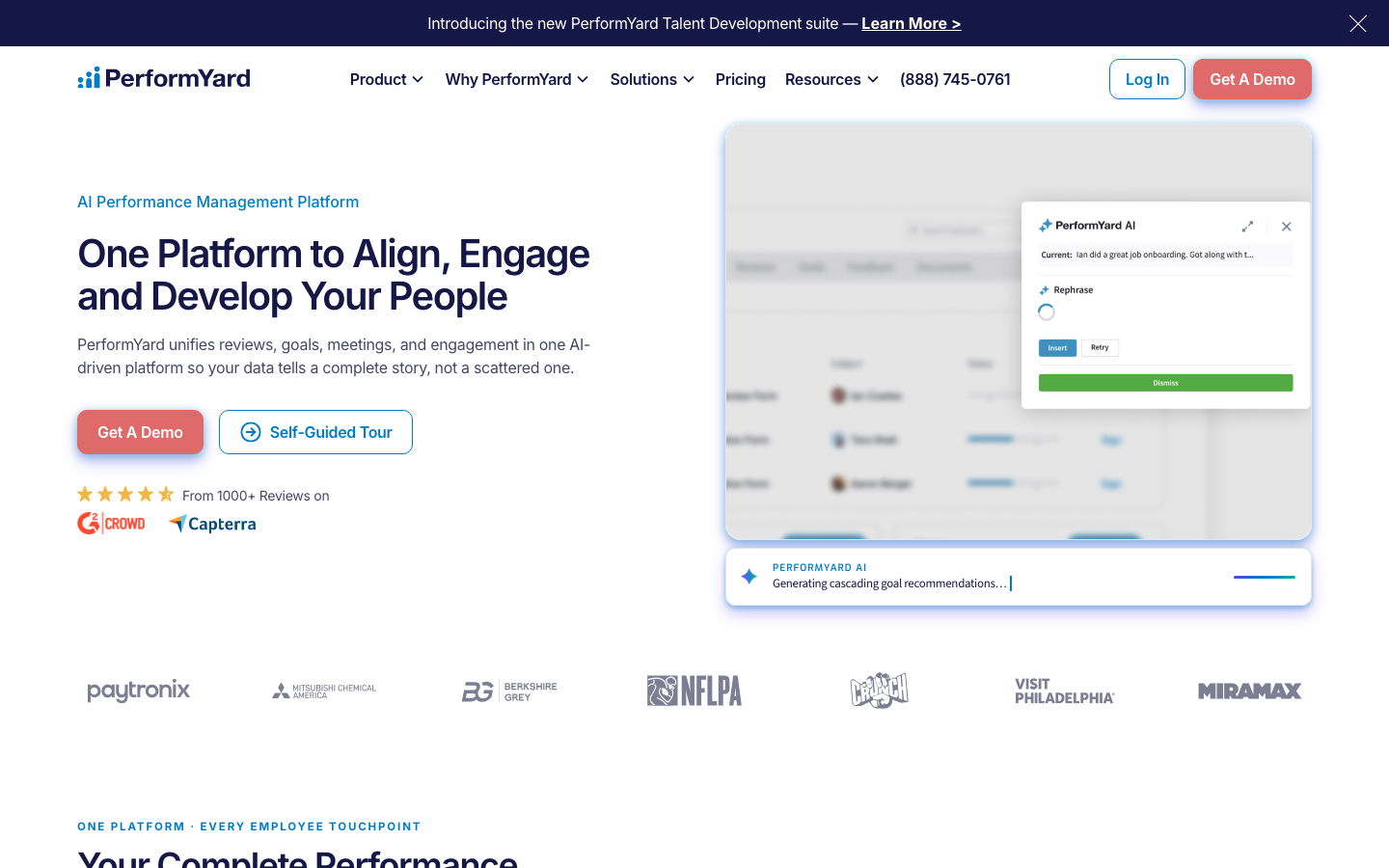
PerformYard is a manager enablement platform pairing flexible performance cycles with engagement features, aimed at HR teams that want structure without a long implementation. It is desk-based, publishes pricing at $5 to $15 per person per month, and states 27 percent better goal completion after multiple years.
Software Pros
- Review cycles configurable without vendor services time
- Engagement surveys and feedback sitting beside performance data
- Published per-person pricing and a short setup path
Software Cons
- Desk-based, with no route to frontline populations
- Engagement is secondary to performance in the product’s design
- Its G2 score covers the performance product, wider than this use
PerformYard Review
Where this wins is the mid-size company whose HR team of 2 needs structure by quarter end and cannot run a 6-month rollout. Getting reviews, goals, and a pulse into 1 place quickly is worth more in that situation than analytical depth nobody has time to use. A large enterprise with complex review structures will run into the configuration ceiling fairly quickly.
Our Verdict
Light Setup, Real Structure
*As pricing is subject to change, we are listing prices as they stand in September 2026
Simpplr
Quick Overview
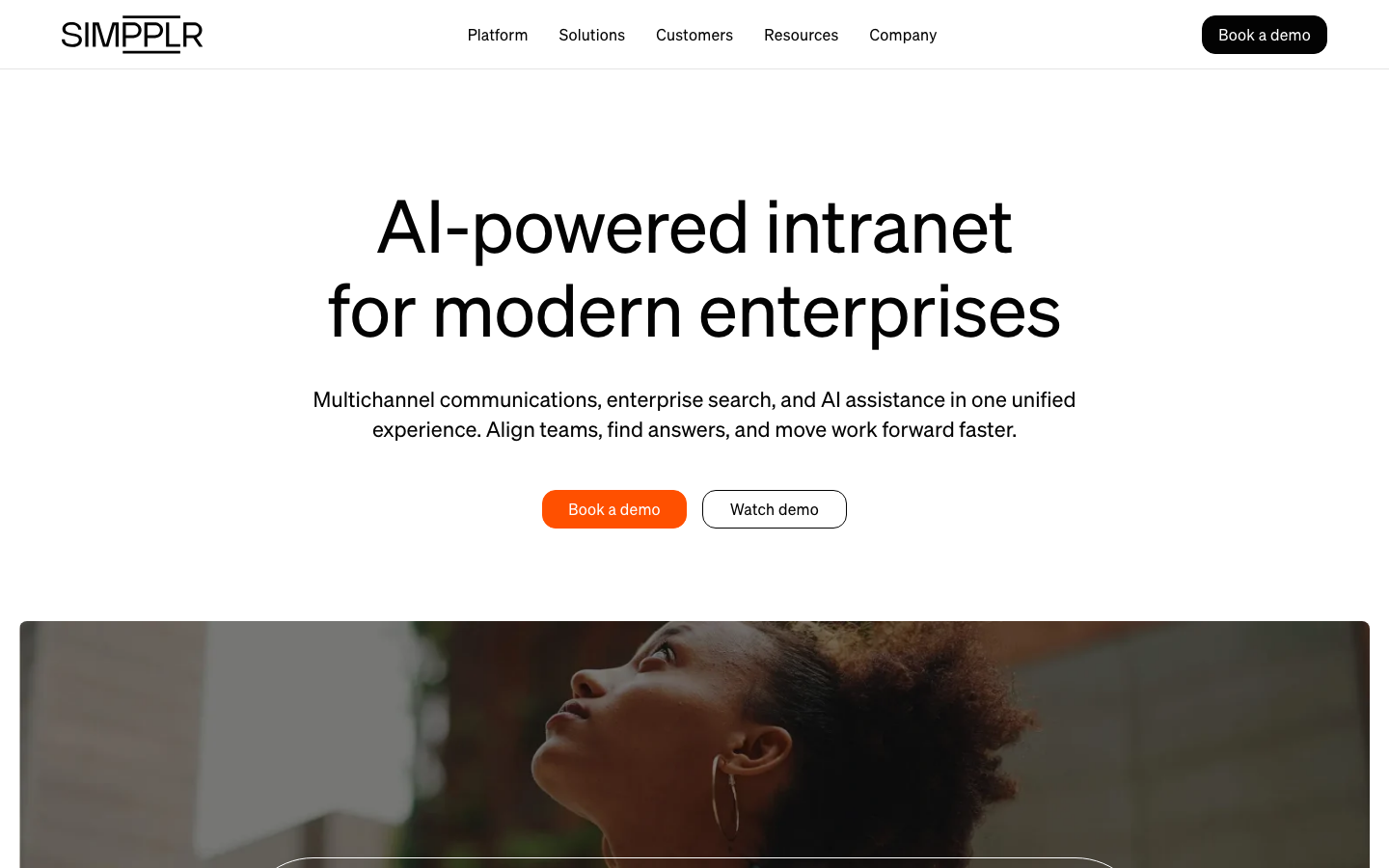
Simpplr is a communication and connection platform built around an AI-powered intranet, organizing personalized content, employee services, and engagement analytics in 1 place. It reaches frontline staff partly through its mobile experience and has 2 million active users and 1,000+ customers.
Software Pros
- Personalized content so people find answers without asking
- Employee services and content in the same place, not 2 systems
- Analytics on what employees actually read and act on
Software Cons
- Reporting rather than guided plans for individual managers
- Knowledge-worker bias in the design and the reference customers
- Intranet depth is more than a small company needs or can maintain
Simpplr Review
This suits a company that has outgrown a wiki and a group chat, where people waste real time hunting for information that exists somewhere. Simpplr is genuinely good at that problem, and customers keep mentioning the search quality. It is not the answer for a distribution center where most of the population has never held a company account to log in with.
Our Verdict
AI Intranet For Desks
Speakap
Quick Overview
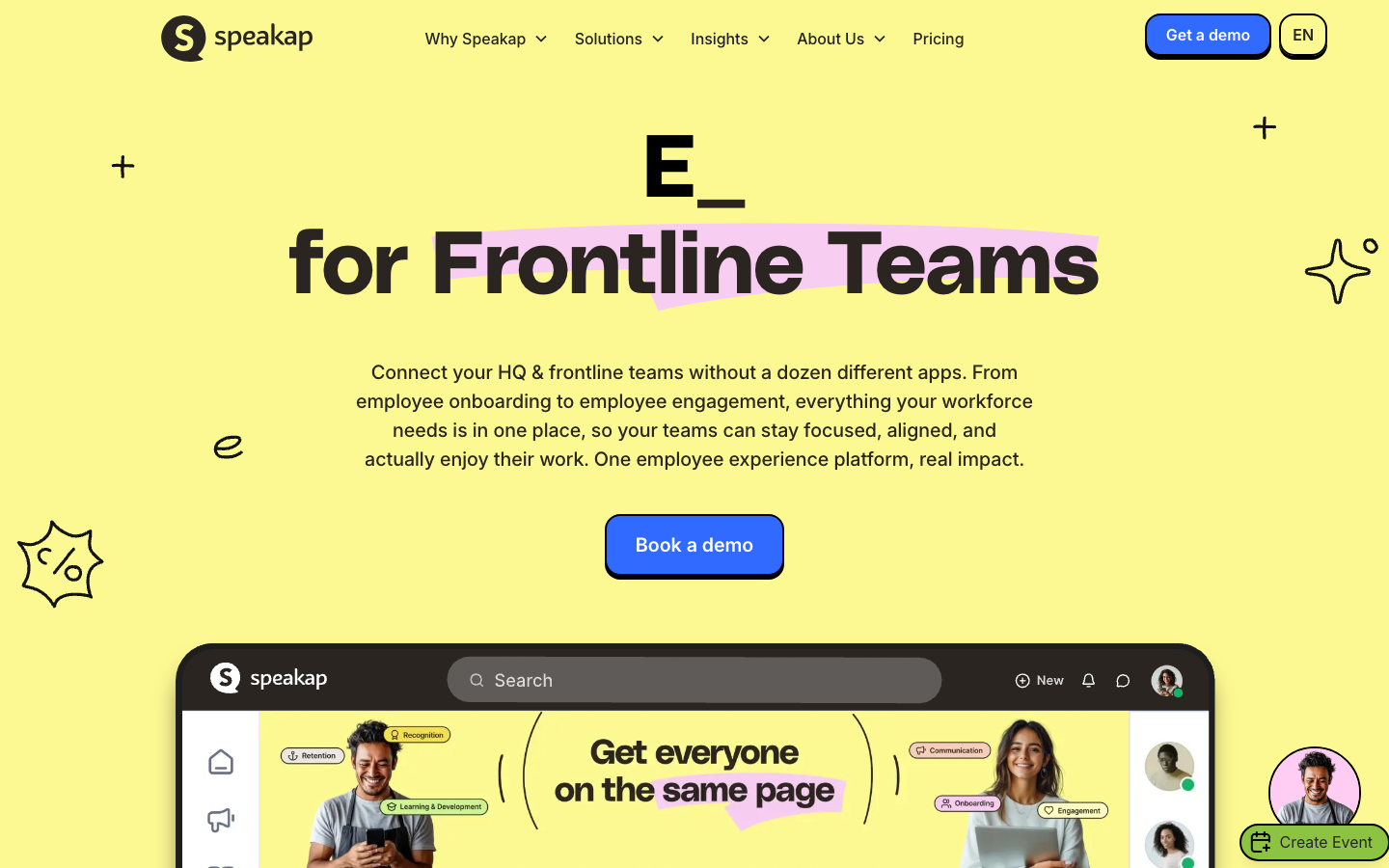
Speakap is a communication and connection platform for frontline and deskless staff, built around branded mobile apps for retail, hospitality, and food service. Multi-location and multi-language support come as standard. It reaches workers with no company email, and the vendor states that 600+ companies use it, reporting a 53 percent lift in frontline engagement.
Software Pros
- White-label app carrying the employer’s own brand to staff
- Multi-location and multi-language support for dispersed retail
- Onboarding and compliance training delivered in the same app
Software Cons
- Reporting rather than action planning for team managers
- Strongest in European retail and hospitality references
- Branded app builds add cost and time to the rollout
Speakap Review
I rate this for multi-site retail and hospitality groups where the employer brand matters to a young, high-turnover workforce. An app that carries the company’s own branding, rather than a vendor’s, gets opened more often. In that workforce, a few percentage points of adoption is not a small thing. A manufacturer that needs operational workflows sitting alongside its comms should look at the broader frontline platforms instead.
Our Verdict
Branded App For Retail
Staffbase
Quick Overview
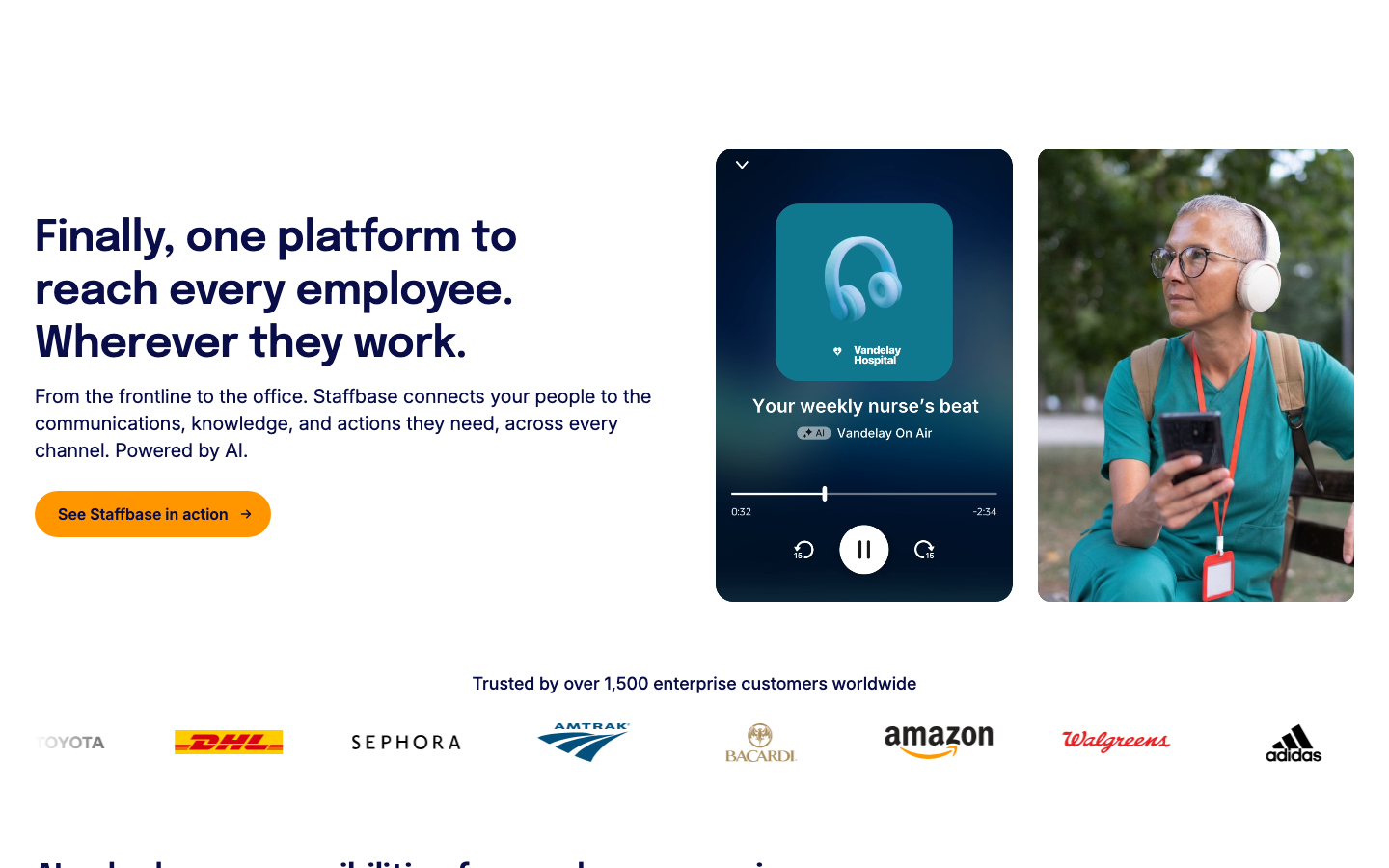
Staffbase is a communication and connection platform combining an employee app, intranet, and email campaigns. 1 message reaches desk and frontline staff at once, including people with no company device. The vendor cites 1,500+ enterprise customers, including an airline reaching 30,000+ employees with 96 percent monthly active use.
Software Pros
- App, intranet, and email carrying the same message to everybody
- Reach and read measurement by audience and location
- Built for mixed populations rather than for desk staff alone
Software Cons
- Reporting rather than team-level action planning
- Needs a communications owner to run it properly after launch
- Enterprise scope makes it heavy for organizations under 1,000 staff
Staffbase Review
This earns its place when a company has both populations and a single message that genuinely has to reach both. Sending through app, intranet, and email from a single editor removes a duplication that most communications teams simply live with, quarter after quarter. A 200-person startup would spend considerably more time configuring the thing than actually communicating through it.
Our Verdict
Every Employee, Every Channel
FAQs About Employee Engagement Software
What does employee engagement software do?
It does 3 things that matter, and the third is the one companies consistently forget. It reaches staff where they actually are, which across most workforces means a phone rather than an inbox. It gives a manager visibility into their own team rather than into a company average that hides everything interesting. And it makes follow-through visible, so employees can see something changed after they spoke up.
What is the difference between engagement software and survey tools?
Survey tools measure, and that is the whole job. They collect feedback, score sentiment, and track how it moves over time. The platforms reviewed here are where the work happens afterward: reaching people, prompting managers, and tracking whether anything actually got done. Most companies past 300 employees end up owning both, because one answers what is wrong and the other decides whether anybody fixes it.
How much does it cost?
Nearly all of this category is priced per employee per month and quoted rather than published, because the number tracks headcount and modules. 4 of the 14 platforms reviewed here publish a figure, and those run from $3.75 to $15 per person per month as of September 2026. Implementation, branded app builds, and integration work sit on separate lines that buyers routinely forget to budget for.
How do you engage employees who do not have a company email?
Through a mobile app they install on a personal phone, a shared device mounted at the site, or messages sent to a personal number. The practical detail is activation. A new hire has to join on day 1 without an email address and in their own language, then be removed cleanly on exit. Platforms built for frontline work solve that properly, and general intranets usually do not even try.
Does engagement software actually improve retention?
Not on its own, and any vendor claiming otherwise is overselling. Research links retention to manager quality and feeling recognized, and software supports those behaviors rather than causing them. Gallup’s 2026 State of the Global Workplace found manager engagement fell 5 points in a single year, which is the harder problem underneath. A platform helps a willing manager act sooner rather than creating that willingness.
Do we need both engagement software and recognition software?
The 2 categories overlap considerably more than vendors on either side like to admit. Many communication platforms include praise and shout-outs, which cover everyday appreciation perfectly adequately. Dedicated recognition tools exist for what those cannot do: points, budgets, tax handling, and physical rewards at scale. If your program is peer thanks in a feed, you probably have it already, and if it involves money moving, you need the specialist.
How long does it take to see results?
Adoption comes first, and sentiment lags behind it by several months. Expect 4 to 8 weeks to get a frontline app installed and habitually opened, then 2 or 3 measurement cycles before the scores move. Anybody promising a score lift inside the first quarter is selling to you rather than advising you. What you can measure early is reach, and that is the honest first milestone to hold any vendor to during the rollout.
Who should own engagement software internally?
Internal communications usually owns the communication platforms, and HR owns the manager-facing ones. The sensible arrangement is a named owner in 1 team, with the other formally involved. The common failure is nobody owning it at all. An unowned platform launches with real enthusiasm, goes quiet by month 4, and is canceled at the first renewal date.

Helen is Anywherer’s Market Analyst & Content Researcher, with extensive experience in analyzing global employment markets and HR technology trends. She is skilled at turning complex market data into clear, well-researched insights that inform every piece of content. With a strong grasp of the EOR, PEO, and international hiring space, Helen plays a key role in keeping Anywherer’s research accurate, up to date, and genuinely useful for readers.