Succession planning starts with critical roles, the positions that would hurt the business most if they sat empty. For each one, HR builds a talent pool, a group of employees who could grow into that kind of role. Many teams place those people on a 9-box grid, a 3-by-3 chart that plots performance against potential. Each candidate then gets a readiness rating, such as ready now, ready in 1 to 2 years, or ready in 3 or more years.
The named candidates for a single role form a successor slate. Across all roles, the depth of those slates is called bench strength. Leaders agree on ratings in a talent review, a meeting where managers discuss people together. Calibration is the part where they align ratings so 1 tough manager does not skew the grid. Flight risk, the chance that someone leaves soon, sits next to readiness. Succession planning software keeps all of this up to date.
What Is the Best Succession Planning Software in 2026?
Succession planning tools help a company identify critical roles, find potential successors, rate their readiness, and plan development to close the gap. Succession is 1 stage in the wider talent process, alongside performance reviews, learning, and careers, which our guide to talent management software covers. The buyers are CHROs, HR directors, talent management leads, and HR business partners. The right tool depends on company size, your existing HR system, and how formal your talent reviews are.
The gap is real. DDI’s HR Insights Report 2025, released June 25, 2025, found that only 20% of CHROs have leaders ready to fill critical business roles. Most companies learn who the successor is on the day the incumbent resigns. A plan that names people in advance turns that moment into a handover. Without one, the role stays open for months while an external search starts from zero.

INSIGHT: How ready are companies to replace their leaders?

Many companies have a succession plan on paper, but far fewer have ready successors for their critical roles.
- DDI’s 2025 report found that only about half (49%) of critical leadership roles could be filled immediately by internal candidates.
- The BLS projects the labor force participation rate of people aged 65 to 74 to rise from 26.7% in 2025 to 29.1% in 2035.
- A successor named once a year in a spreadsheet is a guess, not a plan.
Sources:
both read October 29, 2026
The HR system you already run settles most of this choice, so no single product comes out on top. Enterprise talent suites run succession next to performance and learning. Talent mobility and regional platforms tie it to careers or a regional base, and mid-market HR systems add it to core HR. Age adds pressure, and BLS projections show participation among people aged 55 to 64 rising from 66.6% to 69.5% by 2035. The best succession planning software fits the data you already hold. Below, I’ve reviewed 12 of the leading tools in A-Z order.
INSIGHT: Enterprise suite, talent platform, or HR system module?
The 12 tools here plan succession in 3 different settings, and the right one usually depends on the HR system you already use.
- Enterprise talent suites (Cegid HR, Cornerstone, Infor, PeopleFluent, SAP SuccessFactors): succession next to performance and learning for large workforces.
- Talent mobility and regional platforms (PageUp, PeopleStrong, TalentGuard): succession tied to careers or strong in a region.
- Mid-market HR systems (Access PeopleXD Evo, Cezanne HR, CIPHR, Sage People): succession inside core HR for mid-size companies.
Which Platforms Offer Succession Planning Tools?
The table compares 12 succession planning software solutions by group and by the features each vendor actually documents. Partial means the vendor documents either a grid or talent pools, but not both. Rows follow the same A-Z order as the reviews below, and every vendor quotes its price.
| Tool | Group | Best for | Grid and pools | Calibration | AI for succession | G2 rating |
|---|---|---|---|---|---|---|
| Access PeopleXD Evo | Mid-market HR system | Large UK employers on Access products | Yes | Not documented | None named | 3.9 (20) |
| Cegid HR | Enterprise talent suite | European companies, especially in France | Partial (Talent Box) | Not documented | None named (Cegid Pulse suite-wide) | 4.2 (31) |
| Cezanne HR | Mid-market HR system | UK and European mid-size companies | Yes | Not documented | None named | 4.4 (66) |
| CIPHR | Mid-market HR system | UK organizations wanting HR and succession together | Yes | Not documented | AI appraisal summaries | 3.7 (6) |
| Cornerstone | Enterprise talent suite | Large companies already on Cornerstone | Yes | Not documented | None named (Workforce AI suite-wide) | 4.0 (123) |
| Infor | Enterprise talent suite | Companies running Infor HCM or ERP | Partial (talent pools) | Not documented | None named | 4.1 (23) |
| PageUp | Talent mobility and regional platform | Talent reviews with live calibration | Partial (9-box) | Yes | None named | 4.4 (141) |
| PeopleFluent | Enterprise talent suite | Large organizations planning scenarios | Partial (talent pools) | Yes | None named | 4.0 (32) |
| PeopleStrong | Talent mobility and regional platform | Enterprises in Asia-Pacific | Partial (talent pools) | Not documented | AI-powered successor recommendations | 4.5 (74) |
| Sage People | Mid-market HR system | Midsize multi-country employers | Partial (9-box) | Not documented | None named | 4.4 (43) |
| SAP SuccessFactors | Enterprise talent suite | Global enterprises on SAP | Yes | Yes | AI-assisted successor insights | 4.1 (1,665) |
| TalentGuard | Talent mobility and regional platform | Linking succession to career paths | Partial (talent pools) | Not documented | WorkforceGPT Copilot | 4.6 (4) |
G2 ratings were taken from each product profile on October 29, 2026.
What Do Tools for Effective Succession Planning Include?
The core workflow runs in 5 steps. First, HR lists the critical roles, usually senior leaders plus specialists who are hard to replace. Next, it builds talent pools and plots people on a performance-and-potential grid. Each candidate gets a readiness rating, such as ready now, ready in 1 to 2 years, or ready in 3+ years. Finally, the team names successors for each role, ideally 2 or 3 at different readiness levels.
Regular use turns a list into a plan. Talent review and calibration meetings keep ratings honest, and development plans linked to learning give each successor a path to readiness. Bench strength and risk reports show which roles have nobody ready. A succession org chart shows gaps at a glance, and some teams pair it with org chart software for broader reporting.
Succession planning names people for specific roles. Forecasting how many people and which skills the company will need is a different job, handled by workforce planning software. Most enterprise HR software includes a succession planning module, so few large companies buy it separately. Smaller firms usually get it from their core HR system.
How AI Is Used in Succession Planning
AI in this category mostly suggests, summarizes, and flags. SAP’s AI-assisted successor insights summarize a named successor’s experience, performance, skills, and growth areas. PeopleStrong offers AI-powered successor recommendations, and the vendor says they reduce selection bias. TalentGuard’s WorkforceGPT Copilot generates skills, jobs, and career paths. CIPHR summarizes past appraisal forms, which feed the grid, and Cegid Pulse suggests development and training based on skills data.
Packaging matters as much as features. SAP sells its successor insights only as part of a Joule Premium package, priced by consumption of AI Units. Cornerstone describes Workforce AI and AI agents at the platform level, without a feature named for succession. Access, Cezanne HR, Infor, PageUp, PeopleFluent, and Sage People name no AI feature built specifically for succession.
The limit is the data underneath. Recommendations reflect skills profiles, job descriptions, and past ratings, so incomplete profiles or biased reviews carry straight into the shortlist. Any succession planning software platform can rank candidates. Only a talent review with people in the room should confirm who becomes a successor. The AI output works best as preparation for that meeting.
Best Succession Planning Software by Company Type
These groupings follow company type, not a score. Tools appear in A-Z order inside each group, and a tool named twice is broad rather than better. A 40,000-person bank and a 600-person UK retailer both need employee succession planning software. They need very different depths of calibration, data hosting, and integration with the HR system they already run.
Best Succession Planning Tools for Enterprises
Enterprises manage hundreds or thousands of critical roles across business units, so calibration and links to the HCM suite matter most. Cornerstone builds talent pools of high-potential employees and shows them on a configurable grid. Infor uses critical position attributes to calculate bench strength. These corporate succession planning tools work best when performance and learning data already live in the same suite.
PeopleFluent adds drag-and-drop calibration and what-if scenarios for planning ahead. SAP SuccessFactors offers a Succession Org Chart, a Lineage Chart that shows the domino effect of a move, and Matrix Grid reports. Any succession planning software for enterprise needs an IT owner and a rollout measured in months.
Best Succession Planning Software for HR Teams and HR Leaders
Many companies run succession without a dedicated talent team, so the tool has to be simple enough for HR generalists and line managers. Cezanne HR gives managers editable performance and potential grids and alerts when readiness dates approach. CIPHR lets HR and managers rate people on a 9-box grid and record who is ready to step up and when. TalentGuard compares internal candidates by match percentage and time to readiness. Good HR succession planning software lets managers fill in their own teams, while HR sees the whole picture.
Best Succession Planning Software for Mid-Sized Companies in the UK and Ireland
For mid-size firms in the UK and Ireland, succession usually belongs in the same system as core HR, with links to payroll. Access PeopleXD Evo, formerly CoreHR, serves organizations with 500+ employees and shows flight risk alerts and succession gaps to managers. Cezanne HR includes implementation and UK-based support in its price. Sage People targets companies with more than 500 employees, combining HR and payroll with talent plans on a 9-box grid. All 3 are priced for mid-size budgets rather than enterprise contracts.
Best Succession Planning Software for Multinationals in Europe and Asia-Pacific
Large teams outside the US need local data hosting, languages, and support in their own time zone. Cegid HR, formerly Talentsoft, maps future leaders in a configurable Talent Box and is strongest in France and wider Europe. PageUp runs talent reviews with live 9-box calibration and tracks flight risk for critical roles. PeopleStrong offers company-wide talent pools, staged successors, mentors, and what-if scenarios for enterprises in Asia-Pacific. Ask each vendor where data is hosted before you shortlist.
Best Succession Planning Software for Linking Succession to Career Development
Succession works better when successors can see their path, so being on a slate becomes a reason to stay. PageUp maps current and future critical roles with the competencies each one requires. SAP SuccessFactors connects succession data with career development planning on the same talent card. TalentGuard builds AI-generated career paths and development plans around each role. Employees who can see the roles they could grow into, often through career pathing software, tend to treat development as a real offer.
How Much Does Succession Planning Software Cost?
None of the best succession planning software platforms here publish a price. The models differ instead. SAP SuccessFactors, Cornerstone, Infor, and Cegid HR sell succession as a module inside an HCM or talent suite. Cezanne HR, CIPHR, Access PeopleXD Evo, and Sage People add it to an HR system priced by headcount or size. TalentGuard, PageUp, PeopleStrong, and PeopleFluent sell it as part of a talent platform. Buyers often miss that succession is rarely sold alone. The real price is the suite or modules you must buy with it, plus any AI add-on.
| Tool | Sold as | Pricing model | Published price | Trial or demo |
|---|---|---|---|---|
| Access PeopleXD Evo | Module | Modular quote | Custom pricing | Demo |
| Cegid HR | Module | Suite quote | Custom pricing | Demo |
| Cezanne HR | Module | By headcount range | Custom pricing | Demo |
| CIPHR | Module | HR system quote | Custom pricing | Demo |
| Cornerstone | Module | Suite quote | Custom pricing | Demo |
| Infor | Module | HCM suite quote | Custom pricing | Demo |
| PageUp | Module | Talent suite quote | Custom pricing | Demo |
| PeopleFluent | Module | Talent suite quote | Custom pricing | Demo |
| PeopleStrong | Module | HCM suite quote | Custom pricing | Demo |
| Sage People | Module | Quote by size | Custom pricing | Demo and product tour |
| SAP SuccessFactors | Module, AI add-on | Suite quote, AI Units | Custom pricing | Demo |
| TalentGuard | Module | Platform quote | Custom pricing | Demo |
As pricing is subject to change, prices are listed as they stand in October 2026.
INSIGHT: What does succession planning software actually cost?
Succession is rarely sold alone, so its real cost is the suite or modules it comes with.
- 0 of the 12 publish a price, and all 12 quote after a demo.
- 5 sell succession inside an HCM or talent suite, 4 inside an HR system, and 3 inside a talent platform.
- AI successor recommendations can be a separate purchase, as with SAP’s Joule Premium package.
How to Choose Succession Planning Software
I would start with the HR system you already run, because succession needs its people, job, and performance data. A module inside that system usually beats a better tool that needs a new integration. Then list your critical roles and check how many the product handles comfortably. Compare the grid, the readiness scale, and the talent pool features with how your talent reviews actually work, not how the demo runs them. The best tools for succession planning fit your meeting, not the other way around.
If leaders review talent together, check calibration closely. Ask where the performance ratings on the grid come from, usually your performance management software or the HR system itself. Check development plans and links to learning, then ask which AI features are included and which cost extra. Finally, decide whether a cloud-based succession planning software module inside your suite is enough, or whether your talent reviews need a specialist.
Top 12 Succession Planning Software Tools for 2026
I reviewed each vendor’s product pages, help centers, and documentation in October 2026. Ratings come from G2 profiles as they stood on October 29, 2026, and vendor numbers are flagged as the vendor’s own claims.
The list runs from enterprise suites like SAP SuccessFactors and Cornerstone to UK HR systems like CIPHR and talent platforms like TalentGuard. These succession planning software competitors differ most in what they document, so each block names the features the vendor actually shows.
I’m listing all providers in alphabetical order to keep this comparison neutral.
Access PeopleXD Evo
Quick Overview
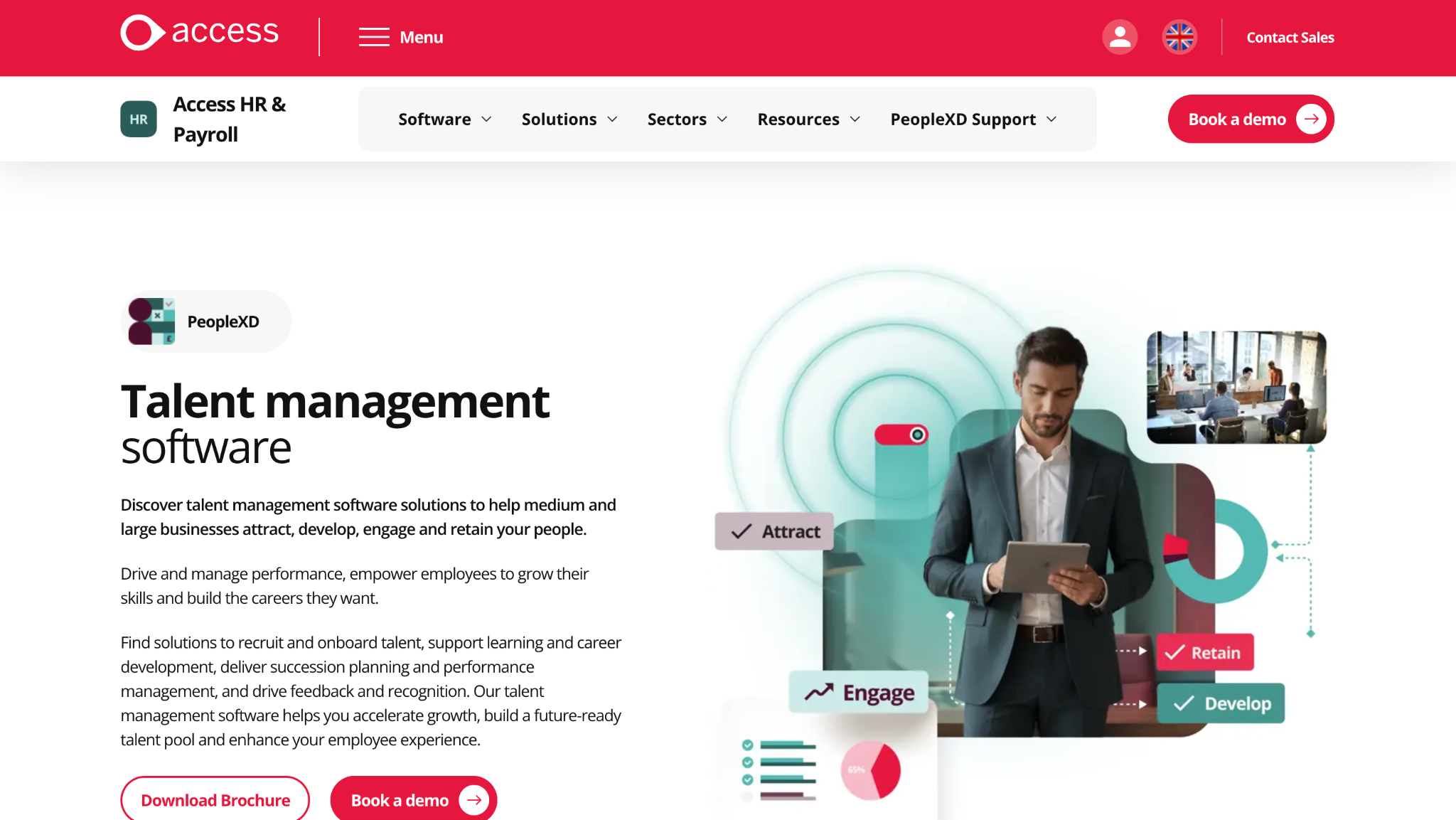
Access PeopleXD Evo is a mid-market HR system from The Access Group, formerly CoreHR, with succession inside its talent module. That module includes a 9-box grid, talent pools, and skills-gap mapping against critical roles. Managers can see flight risk alerts and succession gaps early. The vendor says 800+ UK and Ireland organizations with 500+ employees use it.
Software Pros
- Succession in the same system as core HR
- Managers see flight risk alerts directly
- Skills gaps mapped against critical roles
Software Cons
- Modular, quote-only pricing
- Mainly a UK and Ireland product
- Only 20 reviews on G2
Access PeopleXD Evo Review
Picture a CHRO who runs a large UK employer with several sites and wants succession next to payroll and core HR data. A talent review here starts from the 9-box grid, with managers already alerted to people at risk of leaving. Gaps against critical roles show where development should go first. Organizations already using other Access products gain the most from it.
Our Verdict
Succession Inside UK Core HR
Cegid HR
Quick Overview
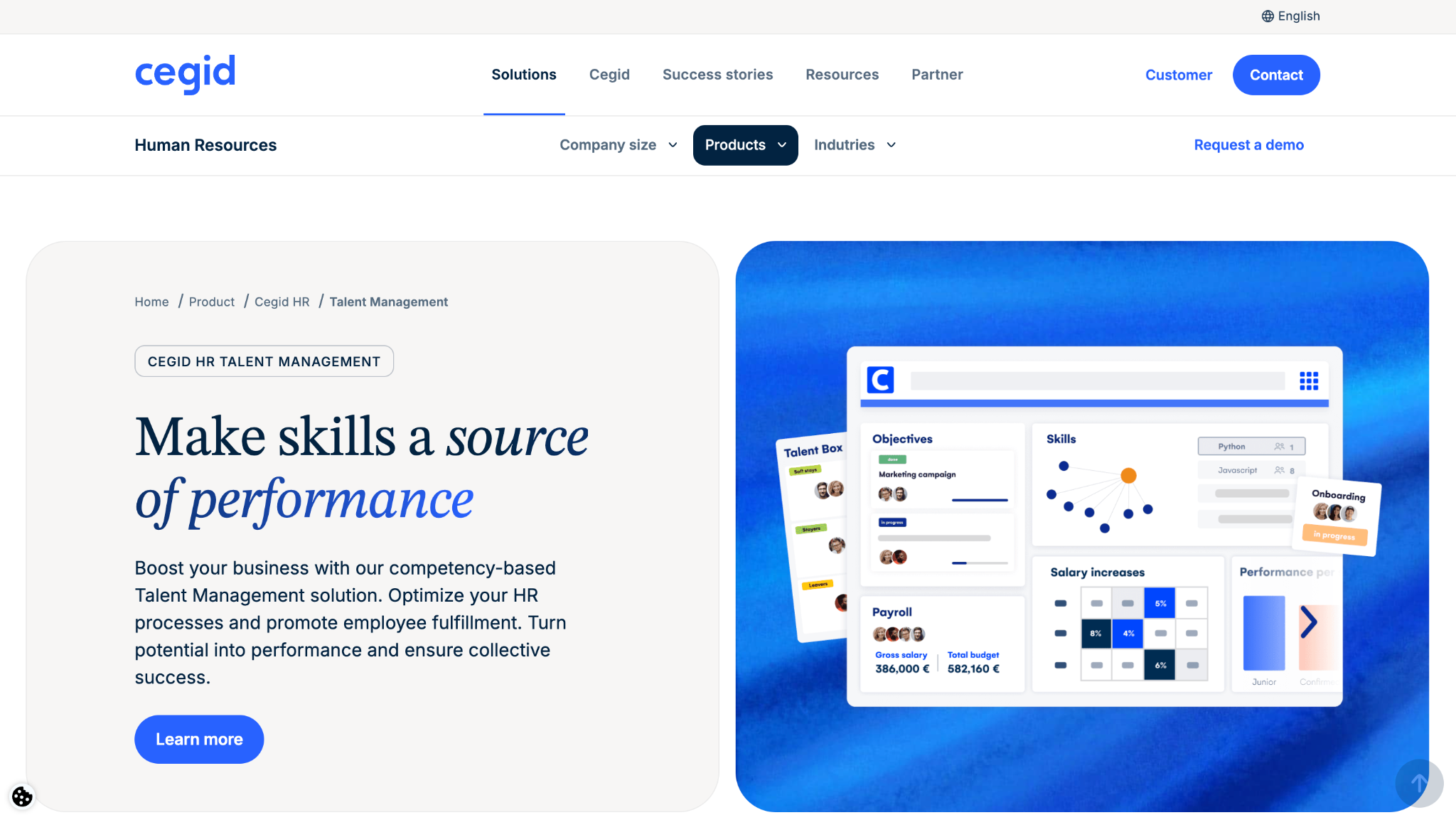
Cegid HR, formerly Talentsoft, is an enterprise talent suite where succession sits in talent management. It offers collaborative performance and potential grids and a configurable Talent Box for mapping future leaders. Succession plans live in each talent profile. Cegid Pulse adds AI skills analysis and development advice across the suite.
Software Pros
- Talent Box views such as departure risk versus impact
- Strong base in France and wider Europe
- Skills data feeds development plans
Software Cons
- Succession comes as part of the full suite
- No AI feature named for succession
- Small G2 review base (31)
Cegid HR Review
I’d shortlist this for a European company, especially in France, that already uses Cegid for talent management. A talent review here means rating people on shared grids, then dragging them between boxes as managers agree. The same data drives career plans and training suggestions. Companies outside Europe will find less local support, so check local support and data hosting for each region first.
Our Verdict
European Suite With Talent Box
Cezanne HR
Quick Overview
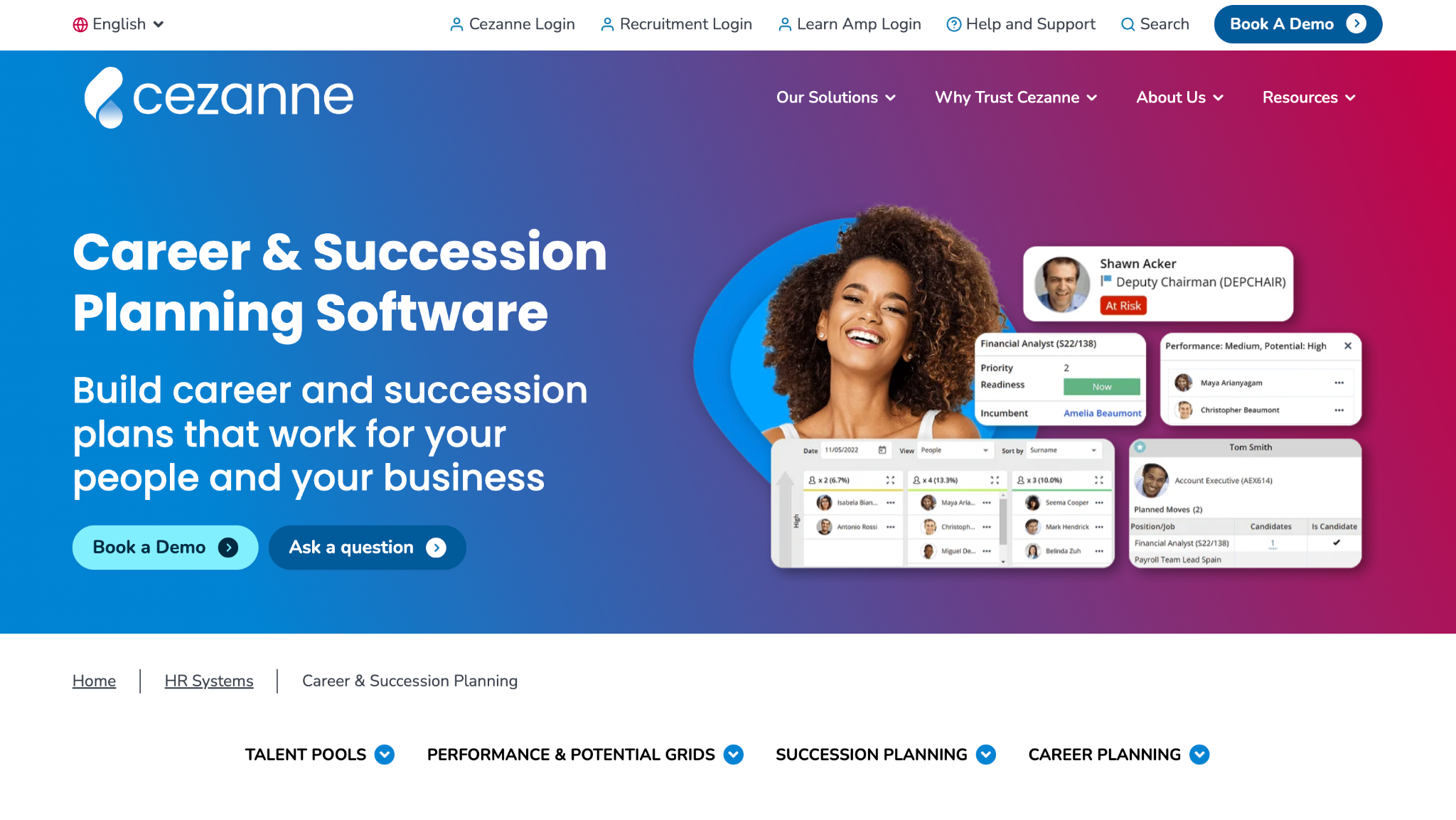
Cezanne HR is a mid-market HR system whose Career & Succession module sits inside the core HRIS. It offers interactive performance and potential grids, talent pools, and successors for key positions or job families. It flags positions without successors and people who are not yet ready. The module is not sold on its own.
Software Pros
- Dependency checks when adding successors
- Alerts as readiness and move dates approach
- Implementation and UK support included
Software Cons
- Requires the wider Cezanne HRIS
- Training is an extra service
- No AI feature named for succession
Cezanne HR Review
For an HR team that runs succession without a talent function, Cezanne HR keeps the process close to everyday HR data. Pricing depends on headcount range, with implementation included. A talent review here uses the grids alongside risk and readiness, then checks which roles have no successor. Reports can also show grids by gender or age to spot imbalances in the pipeline.
Our Verdict
Simple Succession for Mid-Size HR
CIPHR
Quick Overview
CIPHR is a UK mid-market HR system built around UK employment law. Its talent management includes a 9-box grid, talent pools for key roles, and a record of who is ready to step up and when. Its AI summarizes past appraisal forms and answers questions from your own HR data.
Software Pros
- HR and succession in 1 UK system
- Readiness recorded with a timeframe
- Go live in as little as 7 weeks, per CIPHR
Software Cons
- Mainly built for the UK
- Calibration features not documented
- Just 6 reviews on G2
CIPHR Review
My take is that CIPHR suits UK organizations that want succession a finance director can check, not a shortlist built from memory. Central HR goes live first, then talent management sits on top. A talent review here rates people on the 9-box grid and records readiness against key roles. AI coaching through MyTeamBuilder helps managers prepare for those conversations with each successor.
Our Verdict
UK HR System With 9-Box
Cornerstone
Quick Overview
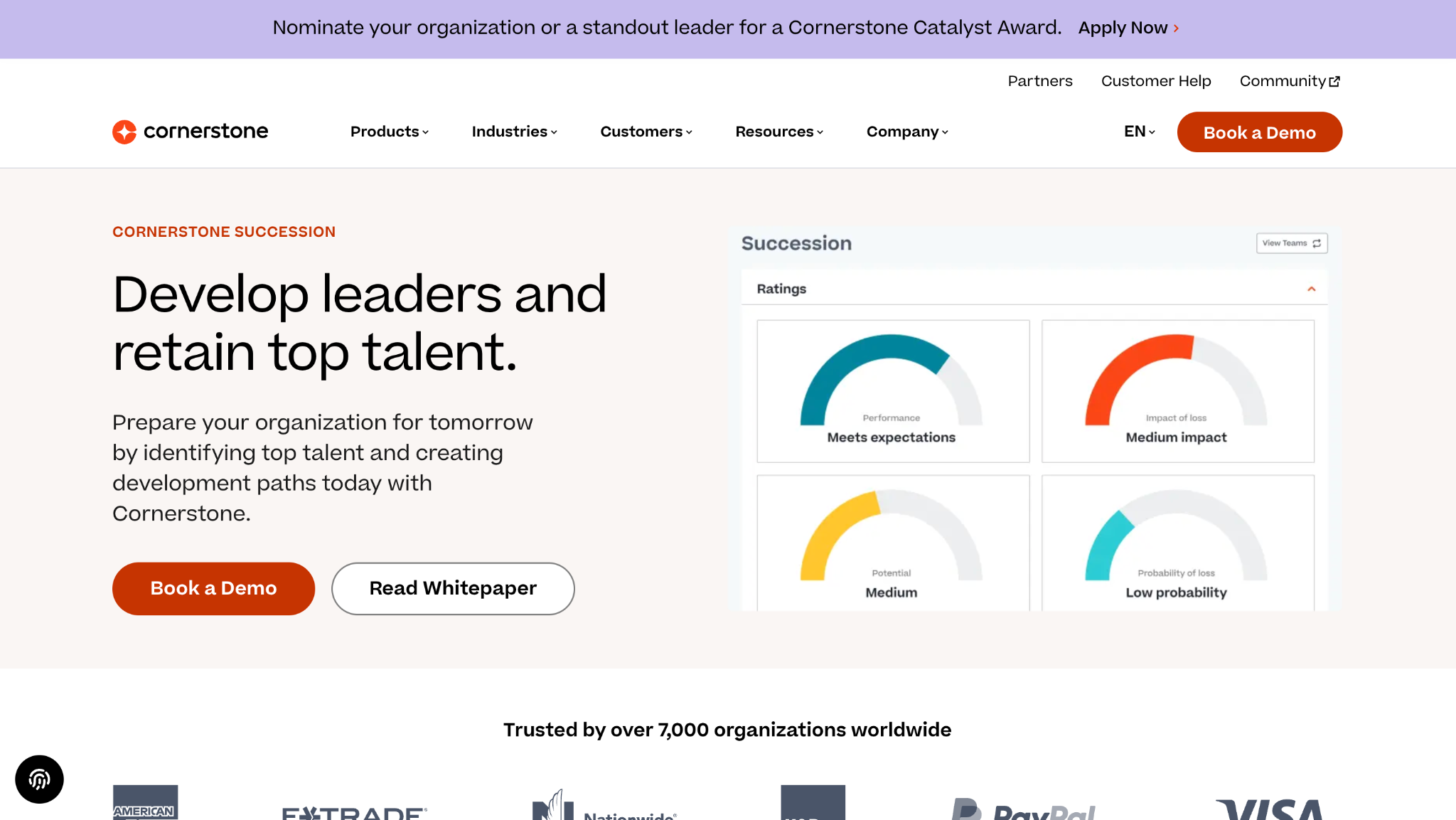
Cornerstone is an enterprise talent suite whose succession module builds talent pools of high-performing and high-potential employees and creates succession plans that identify skill gaps. A configurable grid with filters and color-coding flags high-potential talent and at-risk employees. The vendor says over 7,000 organizations use Cornerstone.
Software Pros
- Succession linked to learning content
- Configurable grid with color-coding
- Skill gaps shown inside each plan
Software Cons
- Bought as part of a large suite
- No AI feature named for succession
- Rating taken from the Cornerstone Performance profile
Cornerstone Review
Cornerstone makes sense for a large organization that already runs learning on it and wants succession in the same place. A talent review here filters the grid by business unit, then turns skill gaps into learning assignments. Managers use the same data to spot internal candidates for promotion. Workforce AI and AI agents sit at the platform level. Large teams can run the same grid across every region.
Our Verdict
Succession Tied to Learning
Infor
Quick Overview
Infor is an enterprise talent suite inside Infor HCM, where succession uses talent pools built on critical position attributes to calculate bench strength. Predictive analytics and Talent Science assessments support development. Infor’s talent brochure says over 65,000 organizations in more than 175 countries rely on Infor.
Software Pros
- Bench strength calculated from talent pools
- Fits companies already on Infor ERP or HCM
- Assessments support development decisions
Software Cons
- Grid and calibration not documented
- No AI feature named for succession
- Infor HCM has only 23 G2 reviews
Infor Review
The strongest case for Infor is a manufacturer or frontline-heavy business already running Infor systems. Succession data then sits next to operations and HR records. A talent review here starts from bench strength for critical positions and moves to development plans. Public pages describe succession briefly, so ask for a full demo of the module before you buy, using your own critical roles as test data.
Our Verdict
Bench Strength for Infor Customers
PageUp
Quick Overview
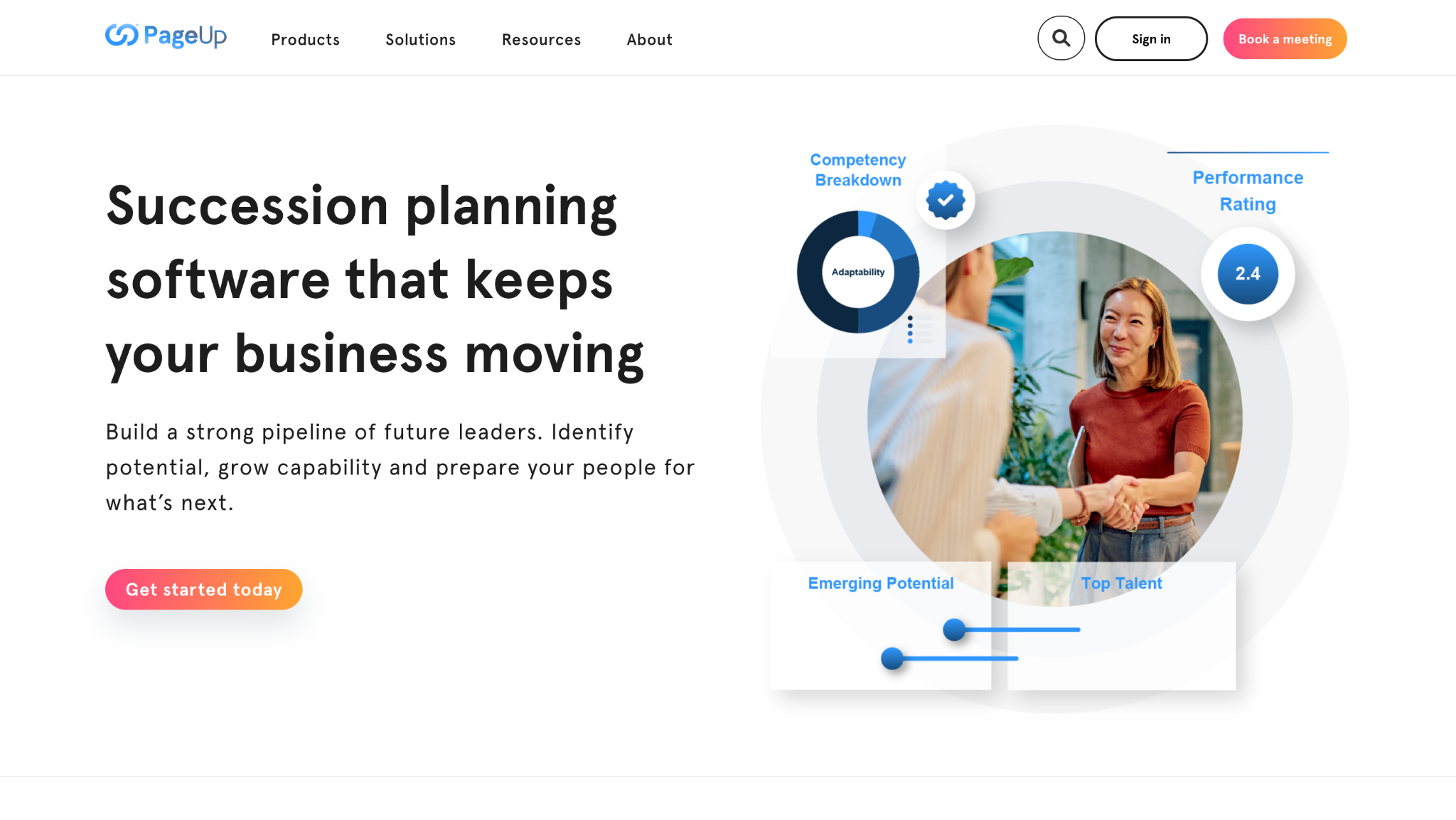
PageUp is a talent mobility platform whose succession module maps current and future critical roles and runs talent reviews with live 9-box calibration. It identifies flight risks, critical employees, and potential successors. Bench strength for each role shows each successor’s readiness.
Software Pros
- Drag-and-drop 9-box calibration
- Successors for current and future roles
- Leadership capability ratings for key talent
Software Cons
- Succession is 1 module of a talent suite
- No AI feature named for succession
- Custom pricing only
PageUp Review
A talent review happens live here, with managers dragging people across the 9-box while employee data sits on screen. That suits organizations with regular calibration cycles and many managers. Employee aspirations sit next to ratings, so plans reflect who actually wants to move. Skill gap trends then guide development spending. Leadership capability ratings sit next to each key employee, so reviewers compare like with like. Expect a quote, since succession is sold with the wider talent suite.
Our Verdict
Live Calibration for Talent Reviews
PeopleFluent
Quick Overview
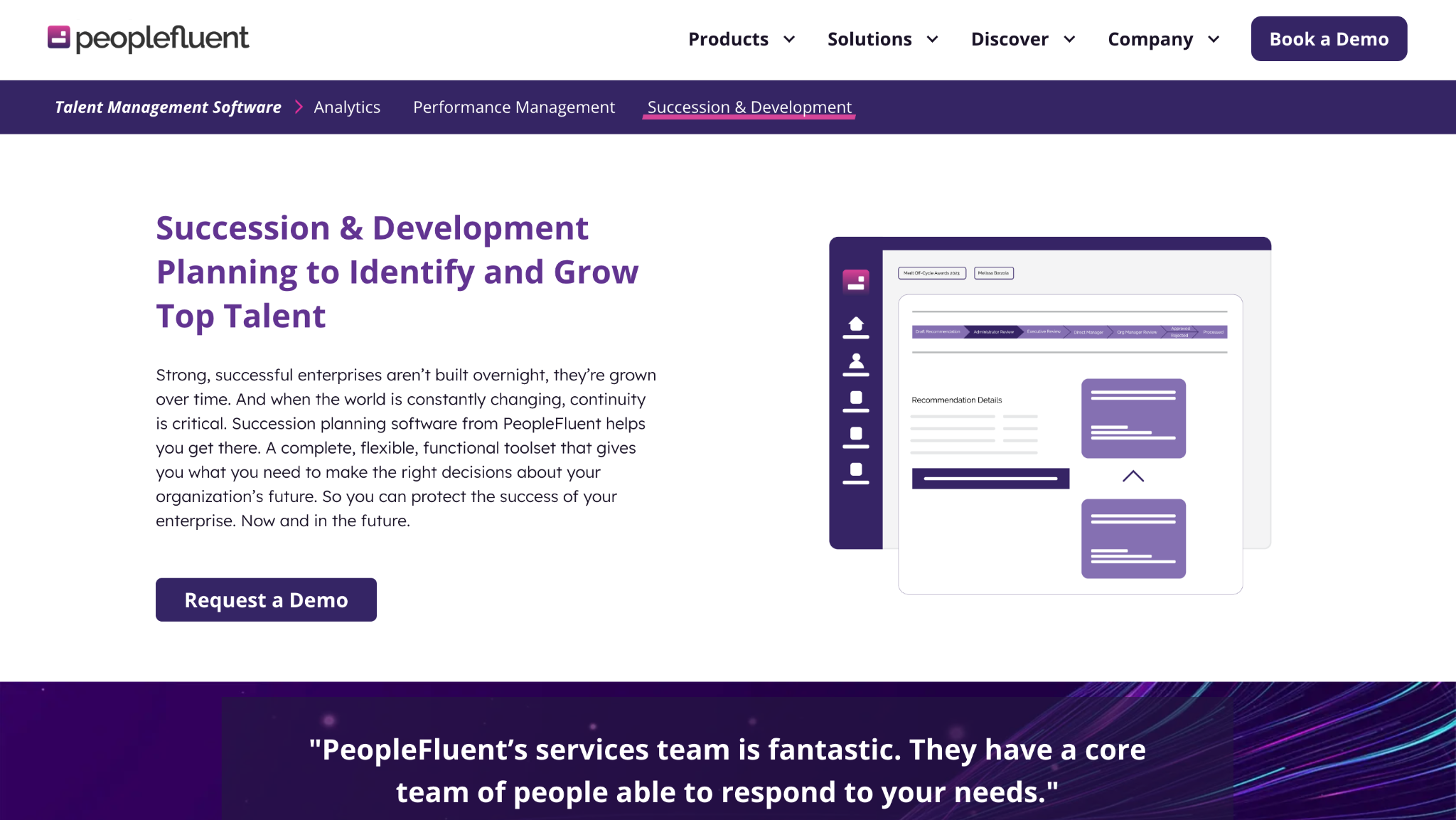
PeopleFluent is an enterprise talent suite whose succession module tracks high-performing, high-potential employees and candidates, maps career options, and shows bench depth for key positions. Drag-and-drop tools calibrate plans, and predictive analytics estimate who is likely to leave. No AI feature is named.
Software Pros
- What-if scenarios for future vacancies
- Calibration of plans in a drag-and-drop view
- Coverage checks for each key position
Software Cons
- Custom pricing only
- No named AI feature
- 32 G2 reviews for its talent suite
PeopleFluent Review
PeopleFluent rewards a large, complex organization that regularly plans for several possible futures at once. A talent review here compares scenarios, checks coverage for key positions, and calibrates plans against the talent pool. Predictive analytics show when and where replacements will be needed. The tool suits planners who prefer data over hunches. Career path options for high-potential employees appear in the same view, so development closely follows the plan.
Our Verdict
Scenario Planning for Large Enterprises
PeopleStrong
Quick Overview
PeopleStrong is a regional HCM platform with a dedicated succession module for mission-critical positions, company-wide talent pools, and staged lists of potential successors. AI-powered recommendations suggest successors, and the vendor says they reduce selection bias. Mentors and coaches can be assigned to each successor.
Software Pros
- Flight-risk analytics next to performance history
- Multiple what-if scenarios per position
- Gaps and pending retirements highlighted
Software Cons
- Strongest in Asia-Pacific
- Custom pricing only
- Succession sits inside a full HCM suite
PeopleStrong Review
Think of this as succession for Asia-Pacific enterprises that want planning, mentoring, and HCM data together. A talent review here starts with AI-suggested successors, then compares what-if scenarios for each role. Mentors get real-time updates on progress. Teams outside the region should check local support and data hosting before committing. Readiness views show each employee’s career journey, and conditional formatting highlights gaps and pending retirements. Plans stay live, so changes appear as people move.
Our Verdict
Asia-Pacific Succession With Mentoring
Sage People
Quick Overview
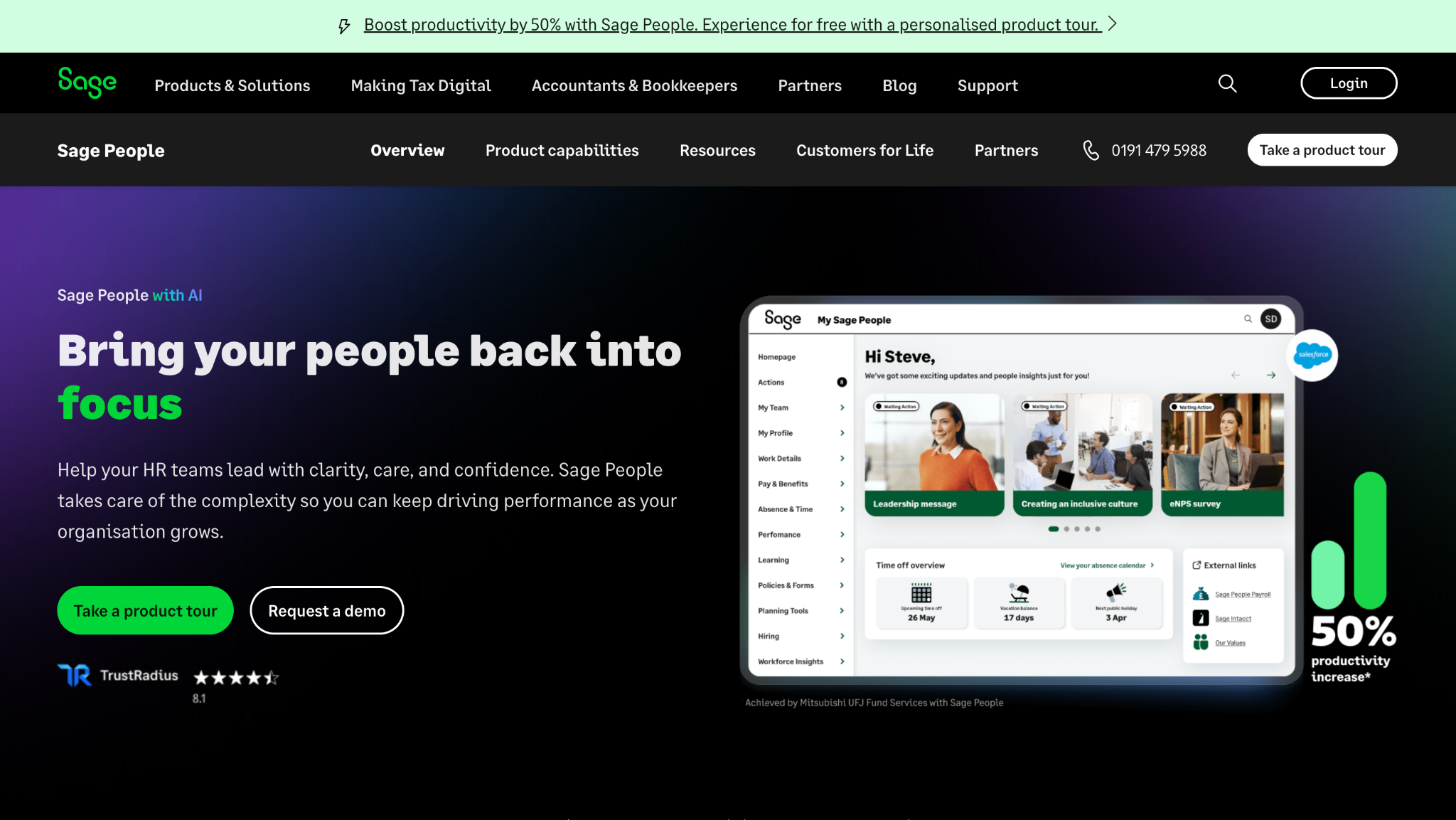
Sage People is a mid-market HR and payroll system for companies with more than 500 employees, with succession planning inside its talent plans. Managers see team members on a 9-box grid of performance against potential, or switch to an org chart view. Sage promotes built-in AI across the product.
Software Pros
- Talent plans visible in grid or org chart view
- HR and payroll in the same system
- Personalized product tour before buying
Software Cons
- Talent pools not documented
- No AI feature named for succession
- Modest G2 review count (43)
Sage People Review
In practice, Sage People fits a growing multinational that wants talent plans next to HR and payroll. A talent review here starts in the 9-box grid view, where each team member sits in the box for their rating. Managers then open full talent plan details. Its help center covers succession plans as a separate feature, so ask for that part in the demo.
Our Verdict
Talent Plans for Midsize Employers
SAP SuccessFactors
Quick Overview
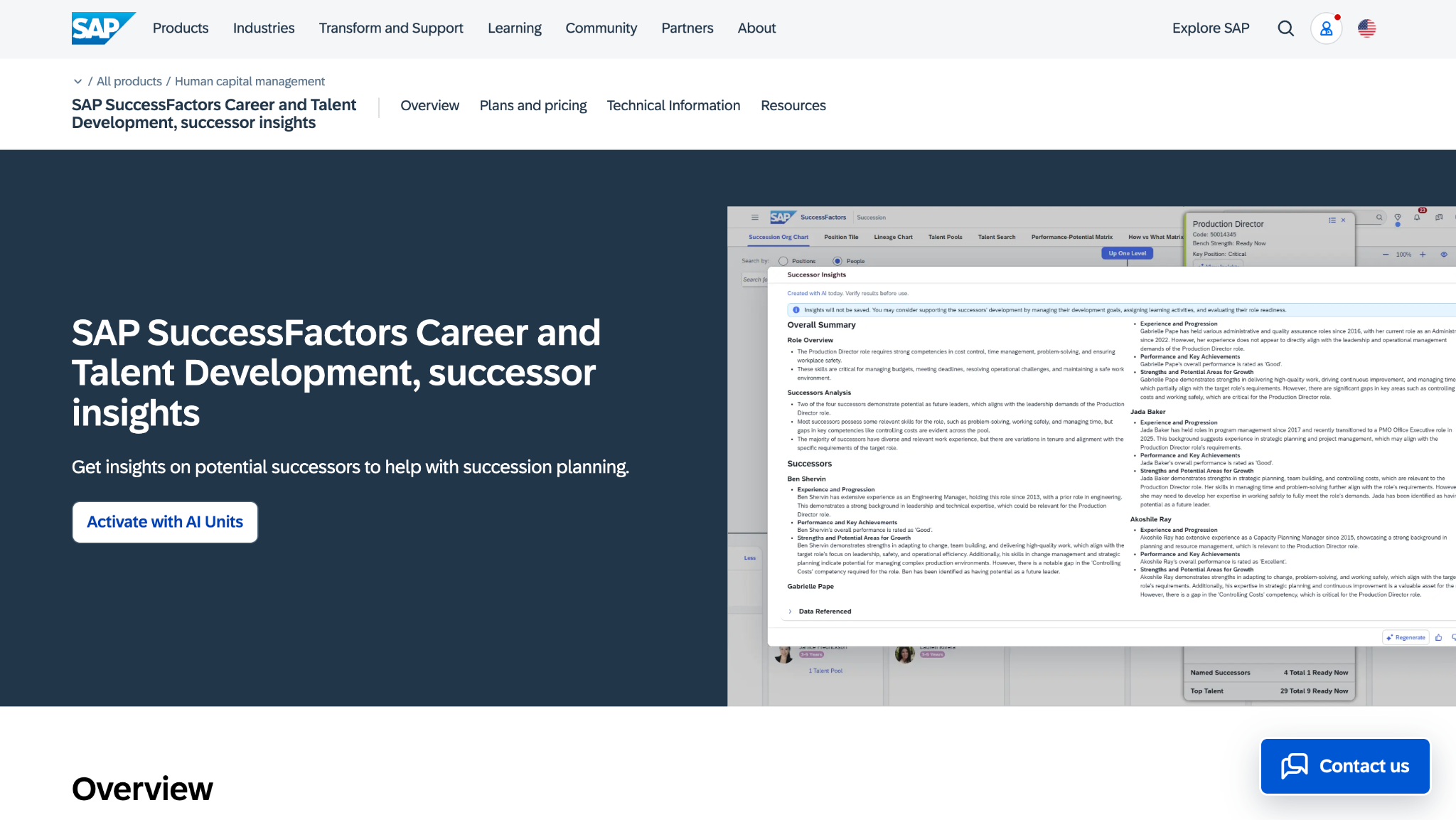
SAP SuccessFactors is an enterprise talent suite with a Succession Org Chart, Lineage Chart, Talent Search, Position Tile View, Talent Pools, and Matrix Grid reports. Calibration works with succession planning. AI-assisted successor insights summarize each named successor, and SAP claims 20% less planner time.
Software Pros
- Lineage Chart shows the domino effect of a move
- Nominate successors directly from Talent Search
- Key positions marked on the org chart
Software Cons
- AI insights only in a Joule Premium package
- Implementation measured in months
- Rating taken from the SuccessFactors HCM profile
SAP SuccessFactors Review
I’d shortlist this for a global enterprise already running SAP for core HR. A talent review here moves from the Succession Org Chart to the Lineage Chart, checking who backfills each successor. Matrix Grid reports show the performance and potential spread. AI successor insights open from the position card, priced through AI Units, and a person still decides who becomes a successor.
Our Verdict
Deep Succession for SAP Shops
TalentGuard
Quick Overview
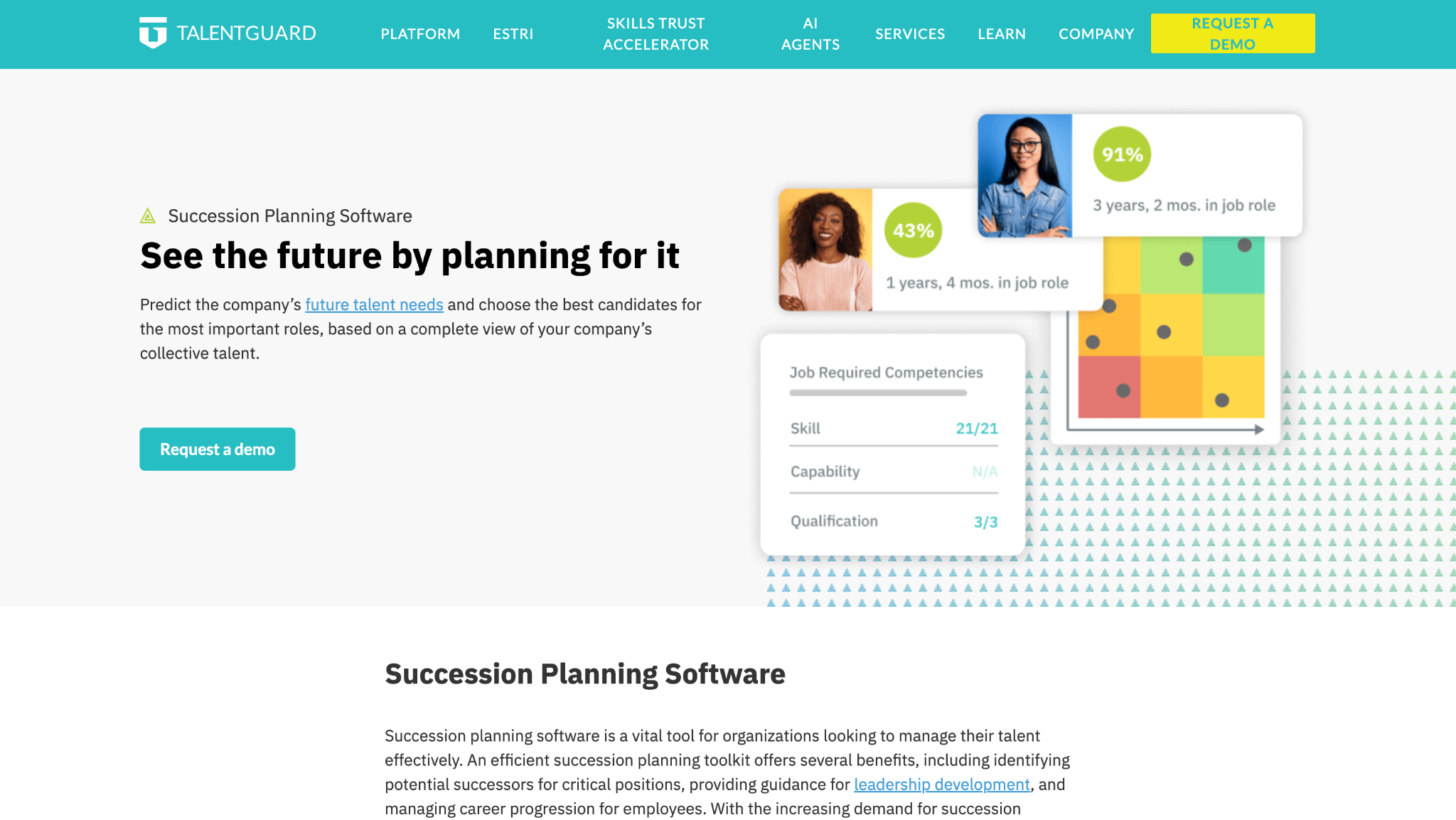
TalentGuard is a talent mobility platform focused on careers and succession, with internal talent pools and an ideal candidate finder. It compares candidates side by side by match percentage and time to readiness. Flight risk alerts warn management early. WorkforceGPT Copilot generates skills, jobs, and career paths.
Software Pros
- Readiness Intelligence built on verified skills
- Find internal people like your top performers
- Links to performance and 360 feedback modules
Software Cons
- Custom pricing only
- Grid and calibration not documented
- Only 4 reviews on G2 so far
TalentGuard Review
The company this fits wants succession and career paths to share 1 skills foundation. A talent review here compares candidates on match percentage, previous roles, preferences, and time to readiness. The ideal candidate finder surfaces internal people with similar skills to a top performer. Development plans then close the gaps that the comparison shows. Links to TalentGuard’s performance and 360 feedback modules keep ratings current. That suits companies where most leaders are grown internally.
Our Verdict
Skills-Based Succession and Careers
FAQs About Succession Planning Software
What is the top software for succession planning?
It depends mostly on company size and the HR system you already run. Large enterprises usually choose the succession module inside their HCM or talent suite, because the performance and learning data are already there. Mid-size companies often use the module in their core HR system, keeping costs and data in one place. Check the comparison table above to see which of the 12 options document grids, talent pools, calibration, and AI for succession.
What is a 9-box grid?
A 9-box grid is a 3-by-3 chart that places employees by performance on 1 axis and potential on the other. People in the top-right box are usually seen as future leaders, while the bottom-left box flags performance concerns. HR uses the grid in talent reviews to quickly spot successors, gaps, and risks. It works best when managers agree on rating criteria before the meeting starts and use the same definitions.
How many successors should each critical role have?
A common practice is 1 ready-now candidate and 1 or 2 others who could be ready in 1 to 3 years. That mix covers a sudden exit and longer-term growth. Treat it as a guideline rather than a rule, because some specialist roles have no internal candidate at all. In those cases, the plan may include an external search or a temporary interim cover arrangement while the search runs.
Should employees know they are on a succession plan?
Practices differ between companies, and both approaches have real trade-offs. Sharing helps keep high-potential people engaged, because they can see a future and a concrete development plan. It can also create promotion expectations the company can’t meet, which can backfire later. Many companies share development plans and growth goals openly with successors while avoiding promises about a specific role or a date.
What is the difference between succession planning and workforce planning?
Succession planning names people for specific roles and plans their development. Workforce planning forecasts how many people the company will need, in which roles, and with which skills, often 2 to 5 years ahead of time. The 2 overlap when a forecast shows critical roles that will open, because those roles then need successors. Many large companies run both processes side by side and use the same HR data.
Can small companies use succession planning software?
Yes, usually as a module of their HR system rather than a separate product. A company with 200 employees may have only 10 critical roles, so a simple grid and readiness ratings are usually enough. The main benefit is business continuity, because the plan survives when the HR manager who made it leaves. Start with the roles whose loss would hurt the business most.
How often should succession plans be reviewed?
At least once a year in a formal talent review, and many companies review critical roles twice a year. Update the plan immediately whenever a role holder leaves, changes role, moves abroad, or announces retirement. Readiness ratings also change quickly after promotions, transfers, or new projects. A plan that is never revisited quickly becomes a list of names that nobody trusts or uses.
Is succession planning software the same as business succession planning?
No, although the names sound similar. Business succession planning focuses on transferring ownership or control of a company, usually a family or private business, and involves lawyers and financial advisors. The tools reviewed here help plan leadership and critical roles in a company, whether it’s family-owned or large. A family business may need both, but they solve different problems with different advisors and timelines.

Helen is Anywherer’s Market Analyst & Content Researcher, with extensive experience in analyzing global employment markets and HR technology trends. She is skilled at turning complex market data into clear, well-researched insights that inform every piece of content. With a strong grasp of the EOR, PEO, and international hiring space, Helen plays a key role in keeping Anywherer’s research accurate, up to date, and genuinely useful for readers.