Every operation knows what it paid in wages last week. Far fewer know what the work should have cost. Labor management software closes that gap. It forecasts demand from business drivers, converts that demand into required hours, then measures what actually happened against a standard. The buyer is usually an operations leader or a finance partner, not an HR generalist. The number under scrutiny is cost per unit shipped or wages as a percentage of sales. Nobody opens these tools to find out who is working Saturday.
The reason this matters is arithmetic. The US Census Bureau reports that annual payroll was 44.1 percent of total operating expenses across retail trade in 2022. Employer costs for fringe benefits sit on top of that. In grocery stores, it was 47.5 percent, and in general merchandise stores, 50.9%. That makes people the largest controllable line in the business. It is also the line most often managed on instinct, with a manager adding an extra body because last Saturday felt busy. A forecast that is 5 percent wrong every day compounds quietly into real money.

INSIGHT: How much of operating cost is labor?

In warehouses, stores, and restaurants, people are usually the largest controllable line, which is why a small forecasting error is expensive.
- Annual payroll came to 44.1 percent of total operating expenses across US retail trade in 2022, per the Census Bureau Annual Retail Trade Survey, with an additional $124.96 billion in employer fringe benefit costs on top.
- The same table puts payroll at 47.5 percent of operating expenses in grocery stores and 50.9 percent in general merchandise stores, so the share rises with service intensity.
- Turnover keeps the number moving: 3.1 million US workers quit in July 2026, a quits rate of 1.9 percent, per the Bureau of Labor Statistics Job Openings and Labor Turnover Survey released 1 September 2026.
- What actually changes in practice is planning the right number of hours. The saving comes from the plan, not from paying anybody less.
There is no single winner here, and the reason is structural. A distribution center measures cases per hour, and a store measures wages against sales. A plant measures whether a qualified operator is on the line at all. Those are 3 different questions, so the market has split into 3 families. Warehouse systems are built on engineered standards, forecasting platforms on demand models, and rules-heavy platforms on coverage. The best labor management software for you is whichever family matches the unit you manage. Below, I’ve reviewed 10 of the leading platforms in A-Z order.
INSIGHT: Standards, forecasts, or rules?
The 10 platforms here answer the same question 3 different ways, and the right one depends on what you measure output in.
- Warehouse systems (EasyMetrics, Lucas Systems, Manhattan Associates, Softeon) measure performance against standards, in units, lines, or cases per hour. Manhattan documents measurement against engineered and dynamic standards; Lucas offers AI-based tracking as an alternative to rigid ones.
- Forecasting platforms (NICE, Quinyx, Workforce.com) predict demand from sales, traffic, or contact volume and build the plan to match, managing to a cost percentage rather than a rate per unit.
- Rules-driven platforms (Indeavor, Skedulo, WorkForce Software) plan against qualifications, coverage requirements, fatigue limits, and union agreements, where the binding constraint is eligibility rather than cost per unit.
- Buyers who cannot say which of the 3 describes them usually end up owning a reporting tool nobody opens.
Sources:
as of September 2026
Labor Management Software Comparison
Read this table as the argument of the page in 6 columns. What separates the best labor management software from a rostering product comes down to 5 columns. Those are the family, the documented industries, the conversion from demand into hours, standards support, and the public score.
| Tool | Family | Industry fit | Forecasting model | Labor standards support | G2 rating |
|---|---|---|---|---|---|
| EasyMetrics | Warehouse LMS | Third-party logistics, distribution, retail | Engineered standards | Engineered standards | N/A |
| Indeavor | Complex and industrial | Manufacturing, energy, food processing | Rules-based requirements | Not stated | 4.1 (27) |
| Lucas Systems | Warehouse LMS | Grocery, foodservice, industrial | Machine-learning demand model | Activity-based measurement | N/A |
| Manhattan Associates | Warehouse LMS | Retail, grocery, consumer goods, 3PL | Engineered standards | Engineered standards | 3.3 (5) |
| NICE | Forecasting and optimization | Contact centers, customer service, back office | Machine-learning demand model | Not stated | 4.3 (90) |
| Quinyx | Forecasting and optimization | Retail, hospitality, warehousing, healthcare | Machine-learning demand model | Not stated | 4.3 (527) |
| Skedulo | Complex and industrial | Healthcare, home care, utilities, public sector | Rules-based requirements | Not stated | 4.1 (422) |
| Softeon | Warehouse LMS | Third-party logistics, food and beverage, healthcare | Historical averages | Activity-based measurement | 4.3 (45) |
| WorkForce Software | Complex and industrial | Manufacturing, utilities, public sector, healthcare | Machine-learning demand model | Not stated | 4.1 (33) |
| Workforce.com | Forecasting and optimization | Hospitality, retail, healthcare | Machine-learning demand model | Not stated | 4.5 (133) |
Every rating below came off a G2 product profile in September 2026.
Labor Management, Workforce Management, or Scheduling?
Start with what a labor management system actually answers. It is not who works Tuesday. It is how many hours Tuesday’s work should take, and whether the hours you spent produced the output they should have. That is why labor management system software is bought by operations rather than HR in most companies. It compares a plan built from demand against a standard built from work content. Then it reports the variance, meaning the gap between expected and actual hours.
Scheduling software answers the next question down: who works when. It takes a number of hours as an input, then fills the grid with named people who are available and qualified. Our roundup of employee scheduling software covers 27 platforms and is the better page for anyone whose problem is building the grid. Buying a labor system to solve a rota problem is an expensive way to get a rota.
The third question is retrospective: what did the week actually consume? Punches, breaks, approved hours, and the file payroll runs on. Our guide to employee time clock software handles that market separately. It matters here because those consumed hours are 1 half of every variance calculation. Time and labor management software is where the 2 meet, and without clean captured hours, the productivity report has nothing to compare the standard against.
Sitting over all 3 is the umbrella term. Our list of workforce management software covers suites that bundle forecasting, scheduling, and time capture together, and several vendors on this page sell exactly that. The phrase workforce management software labor scheduling describes the bundle rather than the discipline. The distinction that matters is narrower: does the platform decide how much work there is, or only who does it?
How Labor Forecasting Software Works
Every forecast starts with a demand driver, which is the business number that predicts work. Retail forecasts from sales and foot traffic, distribution from orders and cases. Hospitality uses occupancy, healthcare uses patient census, and contact centers use contact volume. Labor forecasting software is only as good as that driver. Feed it a number that does not cause work, and every planned hour afterward is a guess.
The next step converts demand into hours. A warehouse uses standards: if picking a case takes 22 seconds, 40,000 cases is a known number of hours. A store uses ratios instead. Labor demand forecasting software carries that conversion, which is why the logic deserves more scrutiny in a demo than the charts do.
Machine learning is what most vendors now sell on top. Labor scheduling software with AI forecasting reads several seasons of history and picks up weekday patterns, weather effects, and promotions. Intervals get as fine as 15 minutes. ADP WorkForce Suite documents exactly that interval. The honest limit is that these models need clean volume history, and they break on genuinely new patterns. A new store, a new product line, or a changed process leaves the model predicting a past that no longer exists.
Accuracy is then measured against actuals, week by week, and the error is worth watching closely. Software for accurate labor cost forecasting is judged on whether the gap narrows over time, not on how confident the first forecast looked. A 5 percent error on a single shift is trivial. The same error across 21 shifts a week, in 40 sites, is a budget conversation. Small errors compound because they repeat.
Downstream, the forecast becomes 2 things somebody must own. The first is the labor budget, the hours finance agrees to fund. The second is the variance report, which is where a supervisor explains why the site burned 1,900 hours against a plan of 1,750. Buying WFM software with AI labor forecasting without agreeing who answers for that report is how these projects stop mattering.
Best Labor Management Software by Operation Type
A distribution center, a supermarket, and a chemical plant all want the right number of people doing the right work. What differs is the constraint: cost per unit, wages against sales, or who is allowed on the line. Each of the 4 sections below takes 1 of those constraints, naming platforms A-Z with no ranking implied.
For Warehouse and Distribution Operations
This is where the category began, and warehouse labor management software still means something specific. An engineered labor standard, meaning a measured time for a defined task, covers every activity in the building. Pick, pack, replenish, and travel each get a time, and volume turns into required hours. Performance is reported as units or lines per hour against that standard, and cost per unit shipped comes from the same data.
EasyMetrics builds this around multi-site cost visibility and pay-for-performance. Lucas Systems takes the opposite position, offering AI-based tracking instead of rigid standards. Manhattan Associates measures against engineered and dynamic standards inside its warehouse platform. Softeon includes standards its customers define themselves, native in the warehouse system. The honest cost is industrial engineering: somebody must build the standards and keep them current.
For Retail and Hospitality
Here the unit is money rather than cases. Managers run to a target wage percentage, forecast from sales, foot traffic, covers, or occupancy. Scheduling software with labor cost forecasting is what most of this market buys. The plan and the cost have to be visible on the same screen. Quinyx forecasts demand per site and per interval, then builds the plan against it. The vendor states 20 percent less over- and under-scheduling in its own Forrester-based figures.
Workforce.com approaches it from a cost-control angle, pairing an AI forecast with time capture so the wage percentage moves live. Forecasting labor costs using scheduling software works here because demand repeats: the same Friday peak arrives most weeks. It works badly for a brand-new site. The model has no history to read, and a manager’s judgment is still the better instrument.
For Complex and Industrial Operations
In continuous operations, the binding constraint is eligibility. A shift needs a qualified operator, a current certification, and a compliant rest period. Labor compliance management software here means enforcing rules within the plan: the system refuses assignments that break a rule rather than reporting the breach afterward. That is configuration work, not legal advice. The rules still belong to your own legal team.
Indeavor is built for exactly this. Its engine accounts for production demand, skills, qualifications, eligibility, union rules, and fatigue limits across 13 supported languages. WorkForce Software brings the same rule depth to global enterprises, with forecasting down to 15-minute intervals. Skedulo covers the mobile version, matching qualified people to work across healthcare, home care, and utilities.
For HR-Owned Labor Programs
Sometimes this sits with HR rather than operations, usually when the trigger was a pay dispute rather than a margin problem. That changes what good looks like. Labor management HR software has to push clean data into the HRIS and the payroll system. It also has to report by department and cost center, not by pick zone. Our guide to HR reporting and analytics tools covers where that data lands once it leaves the operation.
WorkForce Software fits well, because ADP ownership puts workforce data next to payroll by design. Workforce.com covers the smaller version, with an HRIS and payroll beside the forecast. The honest note is that operations still owns the forecast wherever this works. HR can own the rules and the reporting, but the person accepting the hours must answer for the output.
Labor Management Software Pricing
This is a quote-only category, because the subscription is the smaller half of the bill. Price tracks sites, employees, and modules, so 2 companies of the same headcount get very different quotes. There are 3 cost lines to plan for. The first is the platform subscription. The second is implementation and integration with the system holding your volume data: the WMS, ERP, or POS. The third is maintenance of standards or models, which warehouse buyers routinely underestimate.
| Tool | Pricing model | Free trial or demo | Published starting price |
|---|---|---|---|
| EasyMetrics | Quote-based | Demo on request | Custom pricing |
| Indeavor | Quote-based | Demo on request | Custom pricing |
| Lucas Systems | Quote-based | Demo on request | Custom pricing |
| Manhattan Associates | Per module, quote-based | Demo on request | Custom pricing |
| NICE | Per agent per month | Demo on request | $110 per agent per month, CXone Omnichannel Suite |
| Quinyx | Quote-based | Demo on request | Custom pricing |
| Skedulo | Per user per month, quote-based | Demo on request | Custom pricing |
| Softeon | Per module, quote-based | Demo on request | Custom pricing |
| WorkForce Software | Quote-based | Demo on request | Custom pricing |
| Workforce.com | Per employee, quote-based | Demo on request | Custom pricing |
As pricing is subject to change, prices are listed as of September 2026.
INSIGHT: Why is labor management software quoted rather than priced?
Because the subscription is the smaller half. Standards development, integration, and maintenance are where the real budget goes.
- 1 of the 10 platforms here publishes a price openly, and only at suite level: NICE lists CXone packages from $110 to $249 per agent per month, with workforce management bundled into the packaging rather than priced on its own. The other 9 quote.
- The integration is not optional, because the forecast needs the system holding the volume. Softeon runs its standards natively inside its own warehouse management system, Manhattan runs them inside its warehouse platform, and Workforce.com pairs its forecast with its own time capture.
- Skedulo publishes a per-user model with minimum licenses and volume-based rates above roughly 300 mobile workers, but no figure, which is roughly how the rest of this market behaves.
- Standards go stale. Change a pick path or a packing station and the times behind the report are wrong, so somebody has to own them after go-live. That role is rarely in anybody’s budget.
Sources:
as of September 2026
How to Choose Labor Management Software
I would start by naming the unit you manage. Cost per unit shipped and wages as a percentage of sales lead to different products. A company that cannot state its unit cost is not ready to buy. Then check whether you have the volume data the forecast needs, and how far back it goes. Most vendors want 2 years or more, and a company that changed its POS 8 months ago has less history than it thinks.
Decide next between engineered standards and model-based forecasting, and be honest about who maintains either. Standards need an industrial engineering function; models need somebody watching the error. Check the integration into the system holding the volume, which is the WMS, ERP, or POS rather than the HRIS. That connection is the whole product. Then check whether your team can configure rules, certifications, and agreements, or whether you need vendor development every time a contract changes.
Look closely at what a supervisor sees each morning, since a variance report nobody opens changes nothing. Ask what this replaces, because if you already run scheduling and time capture, you may be buying a forecast rather than a suite. Finally, price the implementation and the standards maintenance alongside the subscription. The quote covers the software, and the software is not the part that takes the year.
Top 10 Labor Management Software Platforms for 2026
For each vendor, I went to the product, industry, and pricing pages looking for 1 answer. How does this platform decide how many hours the work needs? That sentence is the whole category, and it is the one most comparison pages skip. Productivity and savings percentages are marked as the vendor’s own claim throughout, because this market advertises them heavily and none is independently audited.
I’m listing all providers in alphabetical order to keep this comparison neutral.
The 10 span a wide range, from warehouse labor systems like EasyMetrics and Manhattan Associates to forecasting platforms like Quinyx and Workforce.com. Between them sit the rules-driven platforms that plan around who is qualified rather than what anything costs. Read the family first and the feature list second, because a platform from the wrong family will not fix your problem, no matter how good it is.
EasyMetrics
Quick Overview
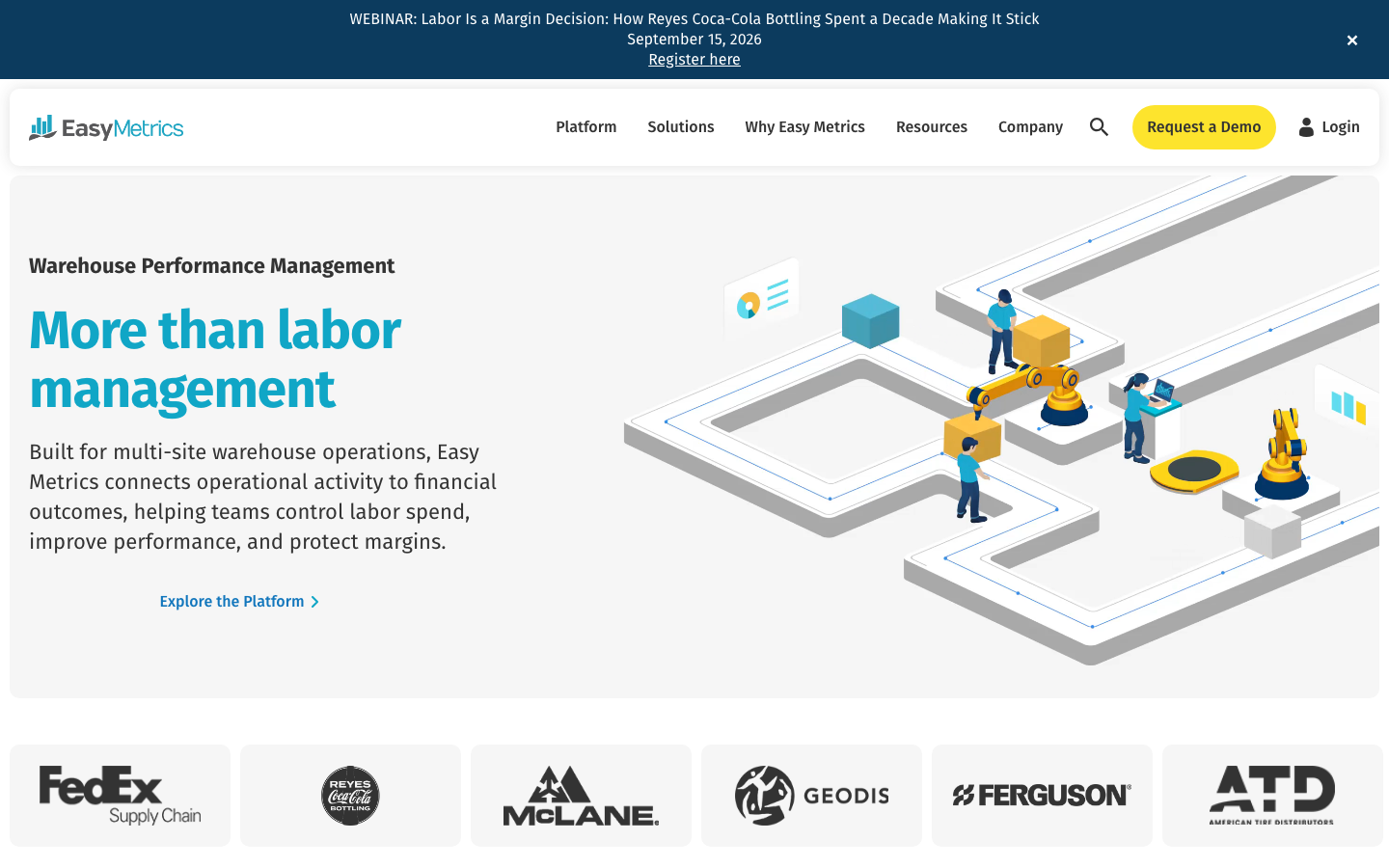
EasyMetrics is a warehouse system that measures performance against engineered standards and ties the result to cost. It runs multi-metric and data-driven standards, plus a profit view showing labor against revenue. The vendor states that 57 percent of the 3PL leaders in the 2025 Gartner Magic Quadrant use it.
Software Pros
- Standards analytics for teams without a big engineering function
- Cost per unit and margin visibility across a whole network
- Pay-for-performance run from the same productivity data
Software Cons
- Assumes a warehouse activity model, so stores and plants do not fit
- Standards still need an owner refreshing them after go-live
- No aggregate score on its G2 profile, so nothing public to cite
EasyMetrics Review
I would reach for EasyMetrics when the question is which of my 12 sites is losing money and why. Putting cost per unit next to the productivity data is what makes it a finance conversation rather than a supervisor one. It is the wrong purchase for a single building with 30 staff, where the standard effort outweighs whatever the reporting returns.
Our Verdict
Warehouse Margin And Standards
Indeavor
Quick Overview
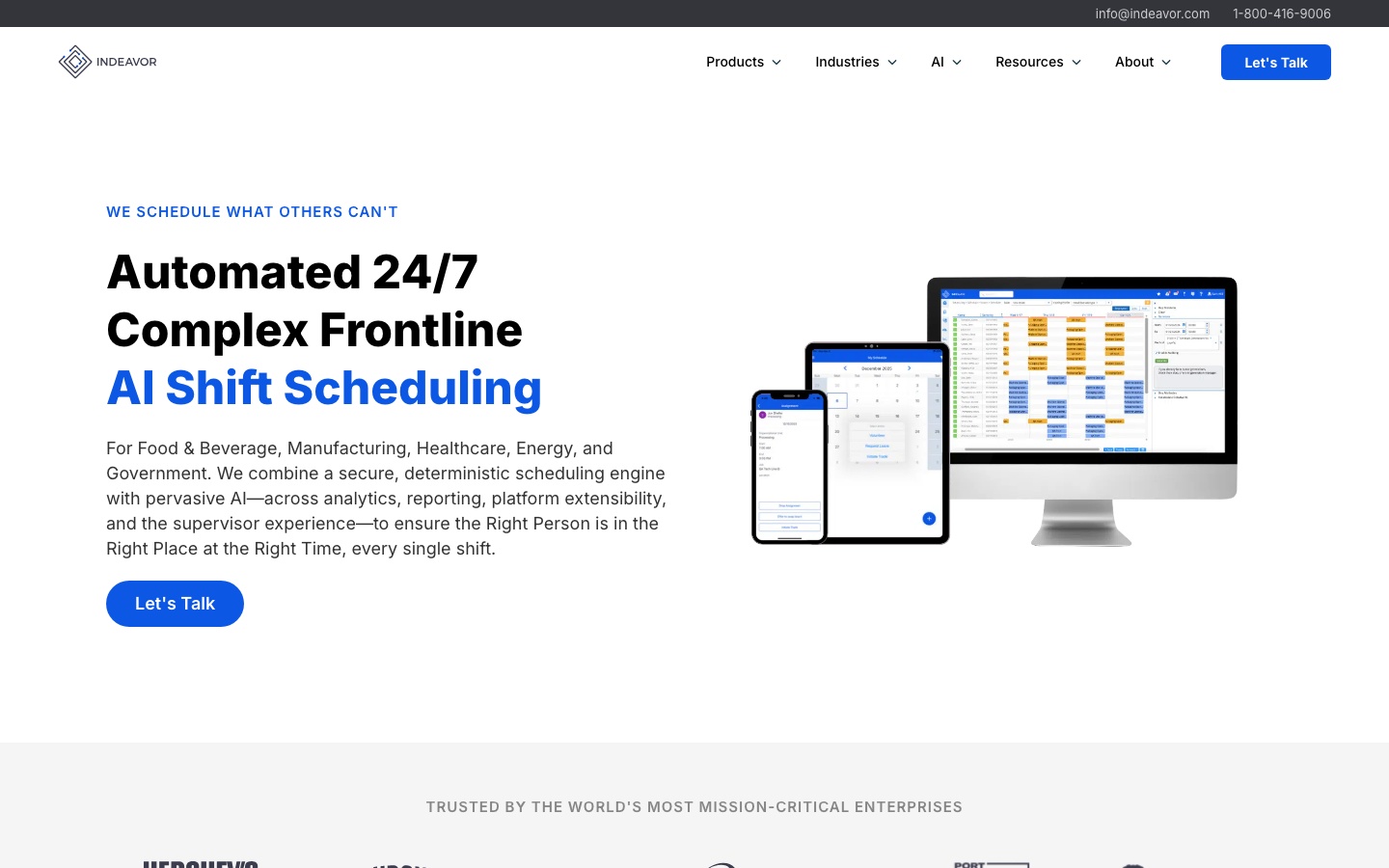
Indeavor is a rules-driven platform for continuous industrial operations, generating plans from production demand, skills, qualifications, eligibility, union rules, and fatigue limits. The requirement is calculated from the rules rather than from a cost target, which is the right model when a shift cannot legally run short. The vendor states support across 13 languages, in automotive, food processing, energy, and government.
Software Pros
- A rules engine that refuses any assignment breaking a constraint
- Fatigue and qualification handling built in, not bolted on
- Backfill and call-off workflows for the gaps that follow
Software Cons
- Configuration effort is real, and rule depth causes it
- No standards model, so productivity per unit is out of scope
- 27 G2 reviews, which is a thin public sample
Indeavor Review
The operation this fits is a plant that runs 24 hours with certified operators and a signed agreement covering every rest period. In that setting, a cost-led forecast is beside the point, because eligibility decides the plan before economics get a say. A retailer chasing a wage percentage will find the rule depth expensive here and the cost reporting thin.
Our Verdict
Rules First Plant Planning
Lucas Systems
Quick Overview
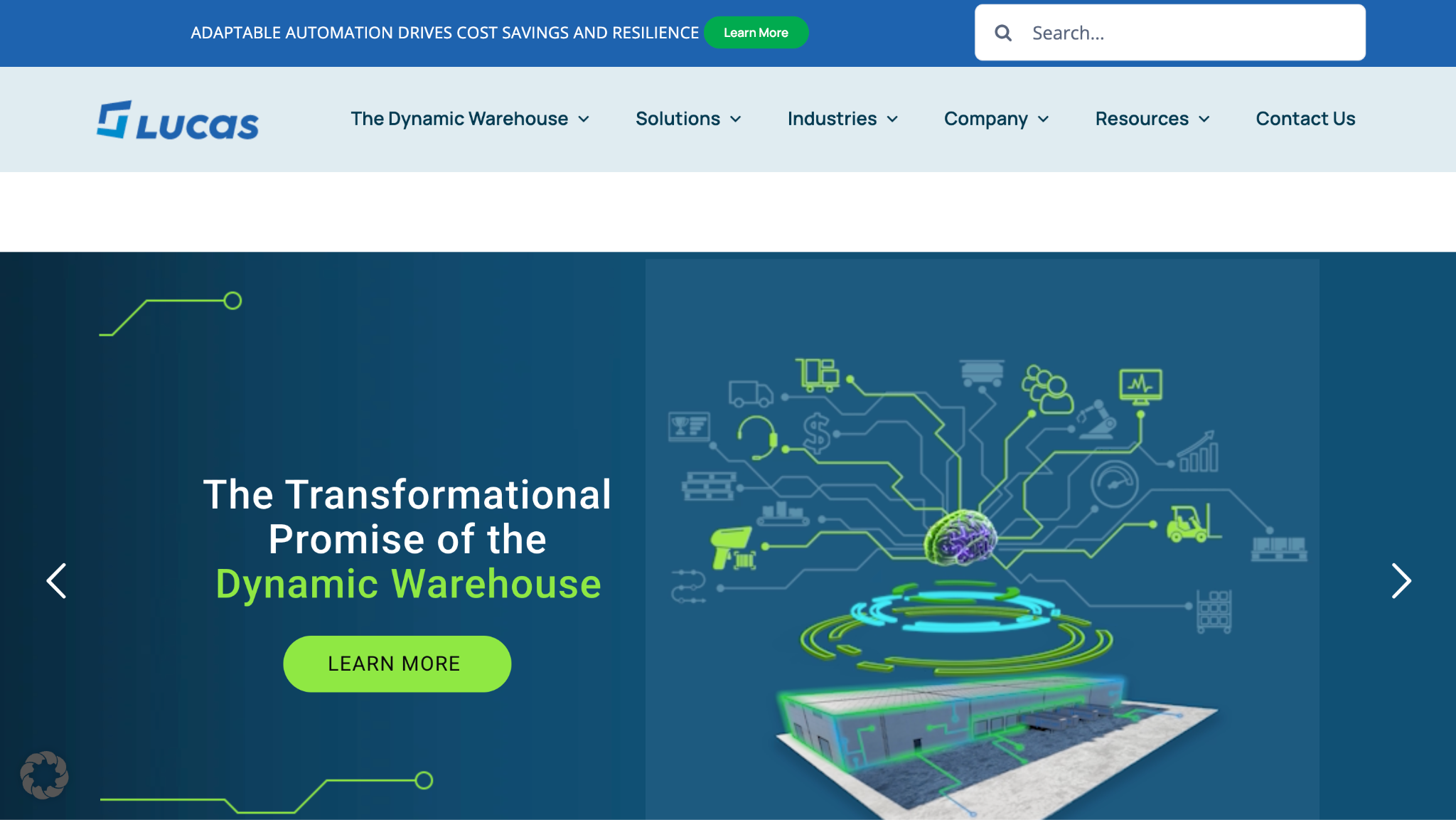
Lucas Systems is a warehouse platform whose labor model tracks performance with AI rather than fixed engineered standards. The vendor positions that as the cheaper alternative, with its Jennifer intelligence optimizing travel and task sequencing. The vendor claims an average productivity gain of 36 percent.
Software Pros
- AI-based tracking that avoids an engineered standards program
- Travel optimization, so gains come from less walking
- Dynamic planning that reallocates staff during a shift
Software Cons
- Best value comes bundled with its wider voice-directed suite
- Activity-based measurement, so no formal standard to audit
- Its G2 profile carries no aggregate score to cite
Lucas Systems Review
What convinces me about Lucas Systems is that it takes the honest position on standards. Most warehouses never staff the engineering function those standards assume, and a model that learns from the work actually done is the pragmatic answer. Buyers who need a defensible published standard, usually because customer contracts cite one, will want a traditional engineered system instead of this.
Our Verdict
AI Instead Of Standards
Manhattan Associates
Quick Overview
Manhattan Associates runs its labor capability inside its warehouse platform, measuring real-time performance against engineered and dynamic labor standards. Machine learning estimates task times as priorities shift, and gamification sits on the same data. The vendor states it has been a Gartner Magic Quadrant leader for warehouse management systems 18 times.
Software Pros
- Engineered and dynamic standards measured in real time
- Machine-learning task-time estimates that re-optimize mid-shift
- 3 editions, so a standards program can start small
Software Cons
- Best value assumes you run its warehouse platform too
- Enterprise scale brings an enterprise implementation timeline
- 5 G2 reviews on the labor listing, far too few to read
Manhattan Associates Review
My case for Manhattan Associates is scale. When a network runs 30 or more buildings on 1 warehouse platform, keeping standards in the same system removes an integration nobody enjoys owning. The gamification layer is more useful than it sounds in high-turnover buildings. A mid-market operator running somebody else’s warehouse system will find this a heavy and expensive way in.
Our Verdict
Standards At Distribution Scale
NICE
Quick Overview
NICE is a forecasting and optimization platform for contact centers and service operations. AI-based models turn contact volume into required staff hours against a service target, inside its CXone packaging. The vendor states it operates in over 150 countries and employs more than 10,000 people.
Software Pros
- Volume-to-hours forecasting refined over decades of contact work
- Published package pricing, which almost nobody else offers
- Planning sits beside performance and quality data
Software Cons
- Built for contact volume, so warehouse models are out of scope
- Priced per agent inside a suite, not as a standalone forecast
- Suite packaging brings capability you may never switch on
NICE Review
What convinces me about NICE is that it solves the purest version of this problem. Contacts arrive, a service target defines the answer, and the required hours fall out with less argument than any warehouse standard allows. If your demand driver is calls or messages, it belongs on the shortlist. If it is cases picked or covers served, almost nothing here transfers to your problem.
Our Verdict
Contact Volume Into Hours
Quinyx
Quick Overview
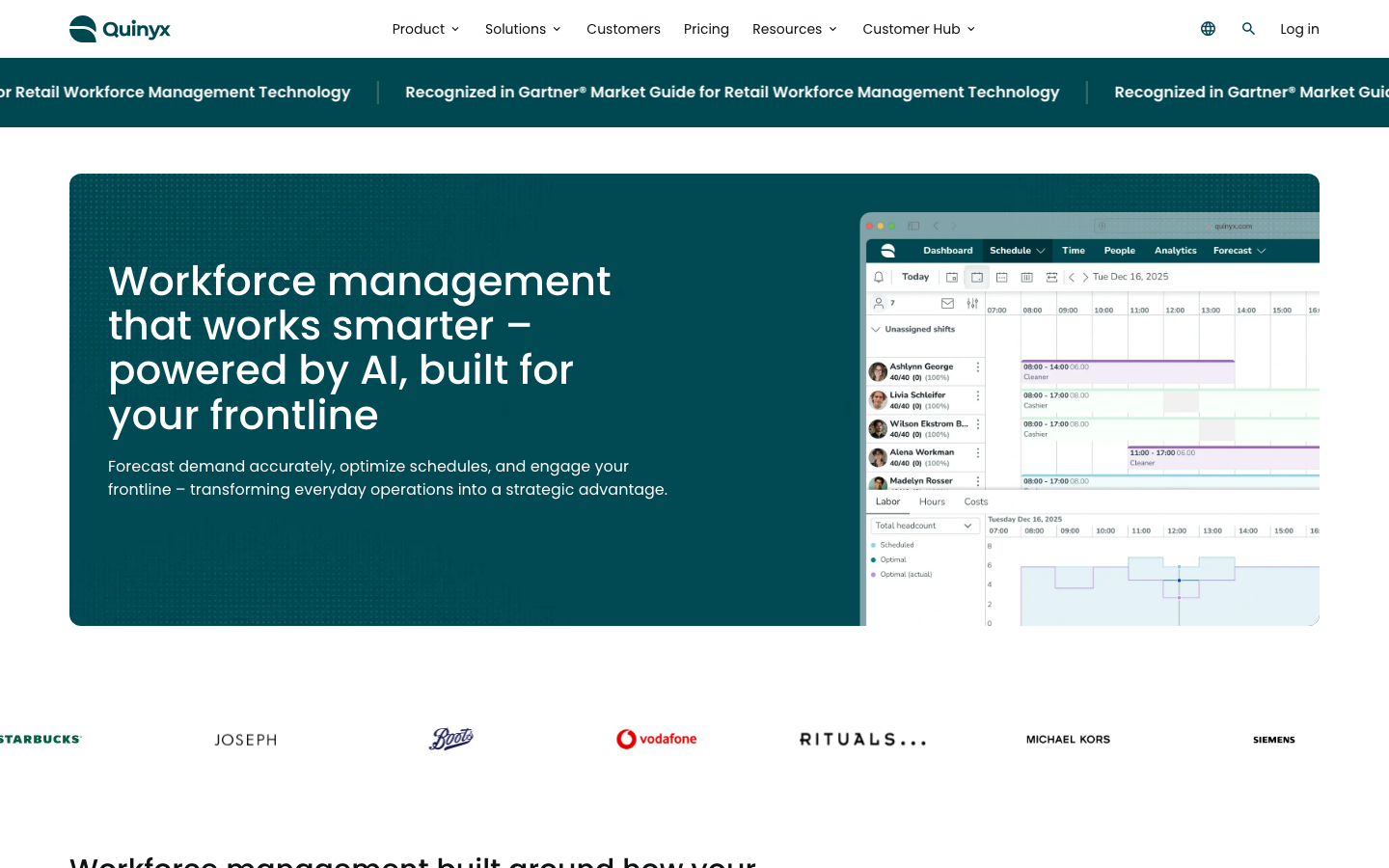
Quinyx is a forecasting and optimization platform that builds AI demand forecasts per site and per interval, then optimizes the plan against them. It covers retail, warehousing, hospitality, facility management, and healthcare. The vendor states 20 percent less over- and under-scheduling, citing a Forrester study it commissioned.
Software Pros
- Site-level and interval-level forecasts, not 1 chain-wide curve
- Optimization that plans to the forecast, not to last week
- 527 public G2 reviews, the largest sample on this page
Software Cons
- Only as good as the volume history each site supplies
- European roots show in the coverage and support model
- No public price, so a quote is the only starting point
Quinyx Review
I would reach for Quinyx when demand varies by site, and the current plan is a copied template. Forecasting each location on its own pattern is the difference between a plan and a habit. The vendor’s own study numbers are worth reading with the usual caution. A single-site operator with 1 predictable pattern will not recover the setup effort this asks for.
Our Verdict
Forecast-Led Frontline Planning
Skedulo
Quick Overview
Skedulo is a rules-driven platform for deskless and mobile teams, assigning work by skills, travel time, and availability rather than by a cost forecast. It covers healthcare, home care, utilities, and public sector work, where the location changes every visit. The vendor claims a 48 percent reduction in scheduling time and a 21 percent productivity increase.
Software Pros
- Qualification and travel-time matching for work that moves
- Analytics tracking resource actions and field productivity
- 422 public G2 reviews, a solid sample for this market
Software Cons
- Built for mobile work, so plant-floor coverage is unmodeled
- No standards model, so cost per unit goes unanswered
- Per-user pricing with minimum licenses and no published figure
Skedulo Review
I would only consider Skedulo when the work travels. Home care visits, field engineering, and community health all break the assumptions behind a fixed-site forecast, because travel time is part of the requirement. Within that world, the qualification and travel-time matching is genuinely useful, and few rivals attempt it. For a distribution center or a supermarket, none of this addresses the question those operations actually ask.
Our Verdict
Mobile Coverage By Qualification
Softeon

Quick Overview
Softeon is a supply chain vendor whose labor capability is built into its warehouse management system. Performance standards are set by your own team as reasonable expectations, then measured against captured work. The vendor states the capability is included with the warehouse system rather than licensed separately.
Software Pros
- Standards and labor data native in the warehouse system
- Included with the warehouse platform, not sold as a module
- Modular delivery, so labor can start after the core is live
Software Cons
- Only makes sense if you run or plan its warehouse system
- Standards are defined by your team, which is effort to fund
- The 45-review G2 score covers the warehouse system, not labor
Softeon Review
This fits a distribution business already choosing a warehouse system, where adding standards later means adding a checkbox rather than a project. That is a genuinely lower-friction path to measured productivity, and avoiding an integration project is worth real money. Buyers who want measurement over a warehouse platform they already own, and intend to keep, should look at the standalone systems reviewed above.
Our Verdict
Standards Inside The WMS
WorkForce Software
Quick Overview
WorkForce Software is a rules-driven enterprise platform, now sold as the ADP WorkForce Suite after ADP acquired the company in 2024. Its labor forecasting predicts demand down to 15-minute intervals, and the platform handles complex pay, absence, and fatigue rules globally. The vendor positions it for large enterprises in manufacturing, utilities, public sector, and healthcare.
Software Pros
- Forecasting to 15-minute intervals, per the vendor’s own page
- Rule configuration deep enough for multi-country pay terms
- Workforce data sits next to payroll through ADP
Software Cons
- Enterprise scope means a long configuration and testing cycle
- No engineered standards, so warehouse productivity is not the aim
- 33 G2 reviews on the current listing, a thin sample
WorkForce Software Review
I would only consider WorkForce Software at real enterprise complexity, which usually means several countries, several agreements, and a payroll team already tired of exceptions. That is the only setting where the rule depth on offer here repays the configuration bill it arrives with. A 500-person single-country operation will spend more on making it fit than the flexibility is worth.
Our Verdict
Enterprise Rules And Forecasts
Workforce.com
Quick Overview
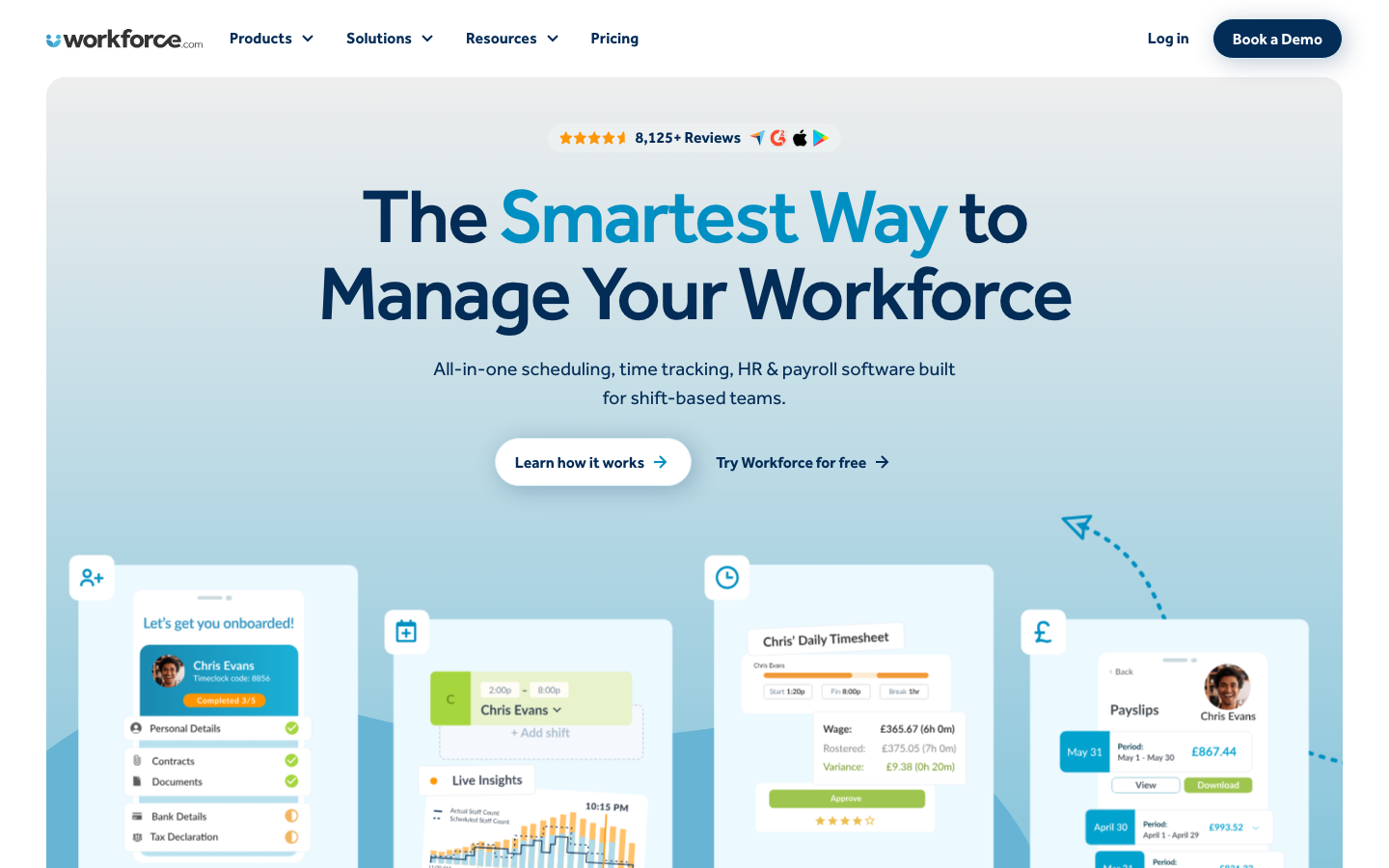
Workforce.com is a forecasting and optimization platform for hourly operations. AI guides staffing from sales and foot traffic, then holds the plan against a wage percentage as the day runs. Time capture and payroll sit in the same system, so the variance is visible without an export. The vendor serves a customer base of over 10,000 workers.
Software Pros
- Forecast, plan, and capture hours in 1 system, so variance is live
- Cost percentage tracked during the day, not after the week
- Built for hourly operations, from restaurants to clinics
Software Cons
- Aimed at operations, not industrial engineering, so no standards
- Its public G2 score covers the scheduling product, not the forecast
- Quoted rather than listed, so no anchor number exists
Workforce.com Review
My case for Workforce.com is that it closes the loop cheaply. Forecast, plan, clock, and cost in 1 place means the wage percentage is a live number, not a Monday post-mortem. That suits multi-site hourly businesses that never wanted a labor engineering program and never will. Anyone measuring cases or lines per hour needs a warehouse system built on standards instead.
Our Verdict
Cost Percentage Under Control
FAQs About Labor Management Software
What is the best labor management software?
There is no single winner, because the platforms split into 3 families answering different questions. Warehouse systems measure output against a standard, forecasting platforms predict demand and plan hours to match, and rules-driven platforms plan around qualifications and coverage. Which family fits depends on the unit you manage to, whether that is cost per case, wages against sales, or covered hours. The comparison table near the top sorts all 10 by family.
What is the difference between labor management and workforce management software?
Workforce management is the umbrella, and it usually bundles forecasting, scheduling, and time capture into 1 suite. The narrower discipline sits underneath it and answers a different question. That question is how many hours the work should take, and whether those hours produced the expected output. A scheduling tool decides who works when, while this decides how much work exists in the first place.
What are engineered labor standards?
An engineered standard is a measured time for a defined task, built by observing and timing the work rather than by averaging last month. Pick a case in 22 seconds and volume converts into required hours. Industrial engineers develop them, sometimes with consultants. They go stale the moment a process changes, so somebody has to maintain them after go-live, and that role is often unfunded.
How much does labor management software cost?
Almost all of it is quoted rather than published, and the price tracks sites, employees, and the modules you switch on. Budget 3 separate lines: the subscription, the integration with whichever system holds your volume data, and the ongoing model or standards maintenance. Only NICE publishes figures among the platforms reviewed here, and it lists packages from $110 per agent per month as of September 2026. In warehouse deployments, the implementation is routinely the larger of those numbers.
How accurate is labor forecasting?
It depends on 2 things: how much clean history you have, and how stable demand is. Accuracy is measured against actuals week by week, and a good implementation narrows the error over time. Models handle repeating patterns well and break on genuinely new ones. A new site or a changed process degrades the forecast until enough history accumulates, so don’t expect precision in month 1.
Do we need labor management software if we already have scheduling and time tracking?
You need it only if you have to forecast demand or measure productivity against a standard. If your schedules are built and your hours are captured accurately, you may already own what you need. The honest test is whether anyone in the business can say what last week’s work should have cost. If somebody can answer that with a number, this is already solved for you.
Does labor management software handle contract or contingent labor?
Some platforms do track external workers in the same plan as employees. That matters when a warehouse runs a mixed crew and needs 1 productivity view across both. These tools don’t manage the engagement itself. Sourcing, contracts, and paying an agency belong to a different product category with different buyers, so treat measurement and engagement as separate purchases.
Who should own labor management software internally?
Operations usually owns the forecast, because operations owns the output it predicts. Finance owns the budget those hours turn into, and HR owns the rules the plan must respect. The common failure is that nobody owns the variance report, which is the document the whole program exists to produce. When that gap has no named owner, the reports keep generating, the number never moves, and the program quietly dies.

Helen is Anywherer’s Market Analyst & Content Researcher, with extensive experience in analyzing global employment markets and HR technology trends. She is skilled at turning complex market data into clear, well-researched insights that inform every piece of content. With a strong grasp of the EOR, PEO, and international hiring space, Helen plays a key role in keeping Anywherer’s research accurate, up to date, and genuinely useful for readers.