16 platforms, compared on the factors that drive purchase decisions. How they handle the pipeline, whether scheduling is built in, what the reporting can answer, and how the vendor treats European data.
What Is the Top Recruiting Software in 2026?
Recruiting software is the system a company uses to hire. At minimum, that means an applicant tracking system that holds every candidate at every stage, with scheduling, a careers page, and reporting. The best recruiting software adds candidate relationship management and offer workflows on top, so a requisition runs end to end in one place.
Buyers of the best HR recruiting software are usually HR leaders, talent acquisition teams, and founders at companies with 50+ employees.
One platform has to satisfy several audiences at once. The best recruiting software for HR teams serves a recruiter, a hiring manager, and a finance lead asking what hiring costs.
The pressure has not eased. SHRM’s 2026 Talent Trends research found that nearly 7 in 10 HR professionals had difficulty recruiting for full-time roles. Just over half said it had grown harder than the year before. Platforms responded by absorbing AI into the workflow, which is the same pattern spreading through AI tools across HR.

INSIGHT: Does recruiting software actually speed up hiring?

The gains come from scheduling and pipeline discipline, not from posting jobs faster.
- Reverse-engineering the career page of every Fortune 500 company, Jobscan’s 2026 ATS Usage Report found tracking software running at 487 of them, or 97.4%.
- SHRM benchmarking data puts the average cost per hire at nearly $4,700, which is what a stalled pipeline actually costs when a role sits open for an extra month.
- The time goes into coordination rather than evaluation. Chasing four calendars, rescheduling one dropout, and nudging a hiring manager for feedback is where the days disappear, and that is the part software genuinely removes.
So what should you actually buy? It depends on two things: how many people you employ, and whether hiring runs through HR or through a dedicated recruiting team. Those two answers sort this list into four families, and picking the wrong family is the mistake that costs a year. Reading through the best recruiting software on the market without that filter is how teams end up with a suite nobody configures.
Volume is the other force at work. SHRM, reporting on Appcast’s research, describes a study spanning 27 million applications across nearly 1,200 employers, and notes that application rates are climbing. Candidates now use their own AI to submit far more applications than before.
Below, I’ve reviewed 16 of the leading platforms in A to Z order. Sourcing matters as much as tracking now, so the best recruiting software for finding talent gets as much attention here as the pipeline tooling does.
INSIGHT: SMB platform, mid-market ATS, enterprise suite, or HR all-in-one?
The 16 tools here do four different jobs, and most bad purchases come from buying the wrong family.
- SMB platforms with published or near-published pricing (Teamtailor, Tellent Recruitee, Workable, Zoho Recruit): quick to configure, priced for teams without a procurement process.
- Mid-market applicant tracking systems (Ashby, Gem, Greenhouse, Lever, Pinpoint): deeper pipelines, native scheduling and reporting built for a real recruiting function.
- Enterprise suites (iCIMS, Oracle Recruiting, SmartRecruiters, Workday Recruiting): global requisitions, compliance tooling and high volume, bought through procurement and rolled out over months.
- HR all-in-ones with recruiting modules (BambooHR, ClearCompany, Personio): hiring lives beside payroll, time off and performance, which suits an HR team more than a recruiting team.
Recruiting Platforms Compared
Start with the company-size column, because it eliminates more options than any feature does. Readers hunting the top-rated recruiting software will find the scores in the final column, each with the review count beside it.
Anyone comparing the best-rated HR recruiting software should weigh those numbers against sample size. A 4.7 across 129 reviews and a 4.4 across 6,456 are not the same kind of evidence.
| Tool | Company-size fit | Scheduling | Analytics depth | GDPR tooling | G2 rating |
|---|---|---|---|---|---|
| Ashby | Mid-market | Yes | Custom dashboards | Partial | 4.7 (129) |
| BambooHR | SMB, mid-market | Basic | Standard reports | Partial | 4.4 (6,456) |
| ClearCompany | Mid-market | Yes | Custom dashboards | Not stated | N/A |
| Gem | Mid-market | Yes | Custom dashboards | Partial | 4.7 (304) |
| Greenhouse | Mid-market, enterprise | Yes | Custom dashboards | Partial | 4.4 (4,002) |
| iCIMS | Enterprise | Yes | Custom dashboards | Yes | 4.2 (988) |
| Lever | Mid-market | Yes | Custom dashboards | Partial | 4.3 (2,123) |
| Oracle Recruiting | Enterprise | Yes | Custom dashboards | Yes | N/A |
| Personio | SMB, mid-market | Basic | Standard reports | Yes | 4.4 (928) |
| Pinpoint | Mid-market | Yes | Standard reports | Partial | N/A |
| SmartRecruiters | Enterprise | Yes | Custom dashboards | Yes | N/A |
| Teamtailor | SMB, mid-market | Yes | Standard reports | Yes | 4.6 (564) |
| Tellent Recruitee | SMB, mid-market | Yes | Standard reports | Yes | 4.5 (450) |
| Workable | SMB, mid-market | Yes | Standard reports | Partial | 4.4 (706) |
| Workday Recruiting | Enterprise | Yes | Custom dashboards | Yes | 3.7 (102) |
| Zoho Recruit | SMB | Via integration | Standard reports | Partial | 4.4 (1,856) |
Scores are drawn from each tool’s own product profile on G2, read in August 2026.
Best Recruiting Software by Use Case
Five situations account for most of the shortlists I see, and each group below runs A to Z with no ranking implied. Top recruiting software solutions are only comparable inside a shared situation.
Best Recruiting Software for Candidate Experience
Lever, Pinpoint, and Teamtailor all treat the applicant’s side of the process as a design problem rather than an output. Pinpoint and Teamtailor build careers pages that read like a company, and Lever keeps communication cadence and structured feedback tight. If your offer acceptance rate is slipping, the best recruiting software for candidate experience is the fix to try before compensation.
Worth remembering that your warmest candidates rarely come from a job board at all, so employee referral program software belongs alongside whichever platform you pick.
Best Recruiting Software for Remote Teams
Teamtailor, Workable and Zoho Recruit suit companies whose candidates and interviewers are never in the same room. Time zones are the real problem. A panel spread across three of them needs self-scheduling that respects working hours, plus asynchronous stages that do not stall waiting on one calendar. The best recruiting software for remote teams also handles the handoff to whoever manages cross-border employment. The platform hires the person; it does not employ them.
Best Recruiting Software for Mid-Market
Ashby, ClearCompany, Gem, Greenhouse, and Lever all sit where founder-led hiring stops working. At this size, you need consistent interview stages and approvals that exist as workflow rather than as a Slack message. Reporting has to be readable by a leadership team. The best recruiting software for mid-market companies makes hiring repeatable, not heroic.
The other thing to test here is headroom. Top recruiting software for scalability should still make sense at three times your headcount, because replacing a platform costs more than the license did.
Best Enterprise Recruiting Software
iCIMS, Oracle Recruiting, SmartRecruiters and Workday Recruiting are built for requisitions spanning countries, legal entities and works councils. The best enterprise recruiting software earns its cost in compliance reporting and high-volume throughput.
Auditability is the other half of the bill. The best recruiting software for talent acquisition at this scale shows exactly how any single hire was decided.
Two of these are chosen because the HCM is already in place. The best hiring software for enterprise recruiting is often whichever one your finance and HR systems already speak to. Integration work at this scale is the expensive part.
Best All-in-One Recruiting Software
BambooHR, ClearCompany, Personio and Workable put hiring inside a wider HR platform, so a candidate becomes an employee without anybody rekeying a record. The best all-in-one recruiting software suits companies where one team owns hiring and HR administration.
That single record is what makes the best full-cycle recruiting software worth its trade-offs. Offer, contract, onboarding, and first payroll run from one profile, removing the handoff where details get lost.
The honest caveat is scope. Buying the best recruiting software for HR tech reasons means buying an HR platform. A company that only wants to hire will pay for modules it never opens.
Best Recruiting Automation Software Features
Automation is where these platforms differ most in practice. The best recruiting automation software today isn’t the tool that posts jobs fastest. It is the one that removes the manual steps between stages.
Five things get automated reliably. Distributing a posting to many boards at once, screening questions that filter before a human reads anything, and interview scheduling with self-booking links.
The measurable win is coordination time. Top recruiting software that speeds up hiring cuts the back-and-forth around interviews, not the interviews themselves.
One caution about scope. Top recruiting software for automation still expects a person to decide. A separate class of AI-native tools goes further, conducting screening interviews or sourcing candidates independently. Those are a different purchase from the platforms reviewed here.
For a best recruiting automation software comparison rather than a description, use the table near the top of this page. It shows which platforms ship scheduling natively and which lean on an integration.
Recruiting Software Pricing
Pricing splits cleanly along the same lines as the tools themselves. At the smaller end, vendors publish a rate you can budget from, usually per employee or per user each month. Mid-market and enterprise platforms quote instead, because the number depends on headcount, which modules you take, and how much implementation the rollout needs.
| Tool | Pricing model | Free plan or trial | Starting price |
|---|---|---|---|
| Ashby | Flat tier, then quote-based | No | $400 per month, up to 100 employees |
| BambooHR | Per employee per month | No | $10 per employee/month |
| ClearCompany | Quote-based | No | Custom pricing |
| Gem | Quote-based | No | Custom pricing |
| Greenhouse | Quote-based | No | Custom pricing |
| iCIMS | Quote-based enterprise contract | No | Custom pricing |
| Lever | Quote-based | No | Custom pricing |
| Oracle Recruiting | Quote-based enterprise contract | No | Custom pricing |
| Personio | Quote-based, per employee | No | Custom pricing |
| Pinpoint | Quote-based | No | Custom pricing |
| SmartRecruiters | Quote-based enterprise contract | No | Custom pricing |
| Teamtailor | Quote-based, tiered by size | No | Custom pricing |
| Tellent Recruitee | Tiered by plan and headcount | Free trial | Custom pricing |
| Workable | Flat monthly tiers | Trial, 15 days | $299 per month |
| Workday Recruiting | Quote-based enterprise contract | No | Custom pricing |
| Zoho Recruit | Per user, with a free tier | Yes, Forever Free | $0, one active job |
As pricing is subject to change, prices are listed as of September 2026.
INSIGHT: Why do so many recruiting platforms hide their pricing?
Above the SMB tier, the price depends on employee count, modules, and implementation, so vendors quote instead of publishing.
- Three of the 16 publish a usable rate: Ashby from $400 a month, BambooHR from $10 per employee each month, and Workable from $299 a month. Zoho Recruit publishes a free tier limited to one active job. The remaining ten quote.
- The add-ons that move a quote are consistent: candidate texting, a sourcing database, candidate relationship management, and the higher analytics tier. What rarely drives the number up is the tracking core itself.
- Price the second year rather than the first. Implementation is a one-time line, but the modules a team adopts in month six become permanent, and renewal quotes are based on usage rather than the original scope.
How to Choose Recruiting Software: Top Things to Consider
Once the family is settled, four features determine which platform actually fits. The top things to consider in recruiting software are the ones your team touches daily, not the ones that look impressive in a demo. Each gets its own section below.
Interview Scheduling Features
Scheduling is where recruiting time is genuinely lost. Look for candidate self-booking, panel coordination that respects everyone’s working hours, two-way calendar sync, and automatic time-zone handling. Top recruiting software with scheduling features also rebooks cleanly when an interviewer drops out.
Metrics, Analytics, and Dashboards
Five numbers matter more than the rest, and together they are the top performance metrics for recruiting software. Time-to-hire, source of hire, pipeline conversion by stage, offer-acceptance rate, and quality of hire.
The real division is between canned reports and configurable dashboards. The best metrics analytics in recruiting software build the view your leadership asks for without exporting anything. That is where Ashby, Gem, and the enterprise suites separate from the rest.
Recruiting numbers mean more than headcount and cost data. Pairing your platform with HR reporting and analytics tools is what turns a hiring report into a workforce decision.
GDPR and Compliance Features
For European hiring, four capabilities matter. Consent capture at application, retention schedules that delete candidate data on time, a right-to-erasure workflow somebody can run, and documented EU data residency. Top recruiting software with GDPR features treats all four as product rather than as policy.
Personio, Teamtailor, and Tellent Recruitee document EU hosting most clearly. Calling any platform the best recruiting software that’s GDPR compliant overstates what software can do, since compliance is shared with the vendor. This describes features rather than legal obligations.
Applicant Tracking Essentials
Top recruiting software with applicant tracking gets the basics right first. Named pipeline stages, collaborative scorecards, approval steps before a requisition or an offer, and distribution to the boards your candidates actually read.
Evaluation is the piece people forget to plan for. Narrowing a pool is not the same as judging capability. Structured results from pre-employment assessment tools need to land inside the candidate record rather than in somebody’s inbox.
Top 16 Recruiting Software Platforms for 2026
These top-rated recruiting software reviews come from each vendor’s own documentation, pricing page, and G2 profile, checked the same week.
The mix runs from enterprise suites like iCIMS and Workday Recruiting to European platforms like Personio and Teamtailor. Judging the best recruiting software 2026 has produced means judging it against a specific company, not in the abstract.
Every entry below carries a verdict written for one kind of buyer. That is the only useful way to rank top recruiting software 2026 has on offer.
One note on newness. The top recent recruiting software entrants lean on analytics and automation, while the established suites lead on compliance and scale. Both are real advantages, and neither is universal.
I’m listing all providers in alphabetical order to keep this comparison neutral.
Ashby
Quick Overview
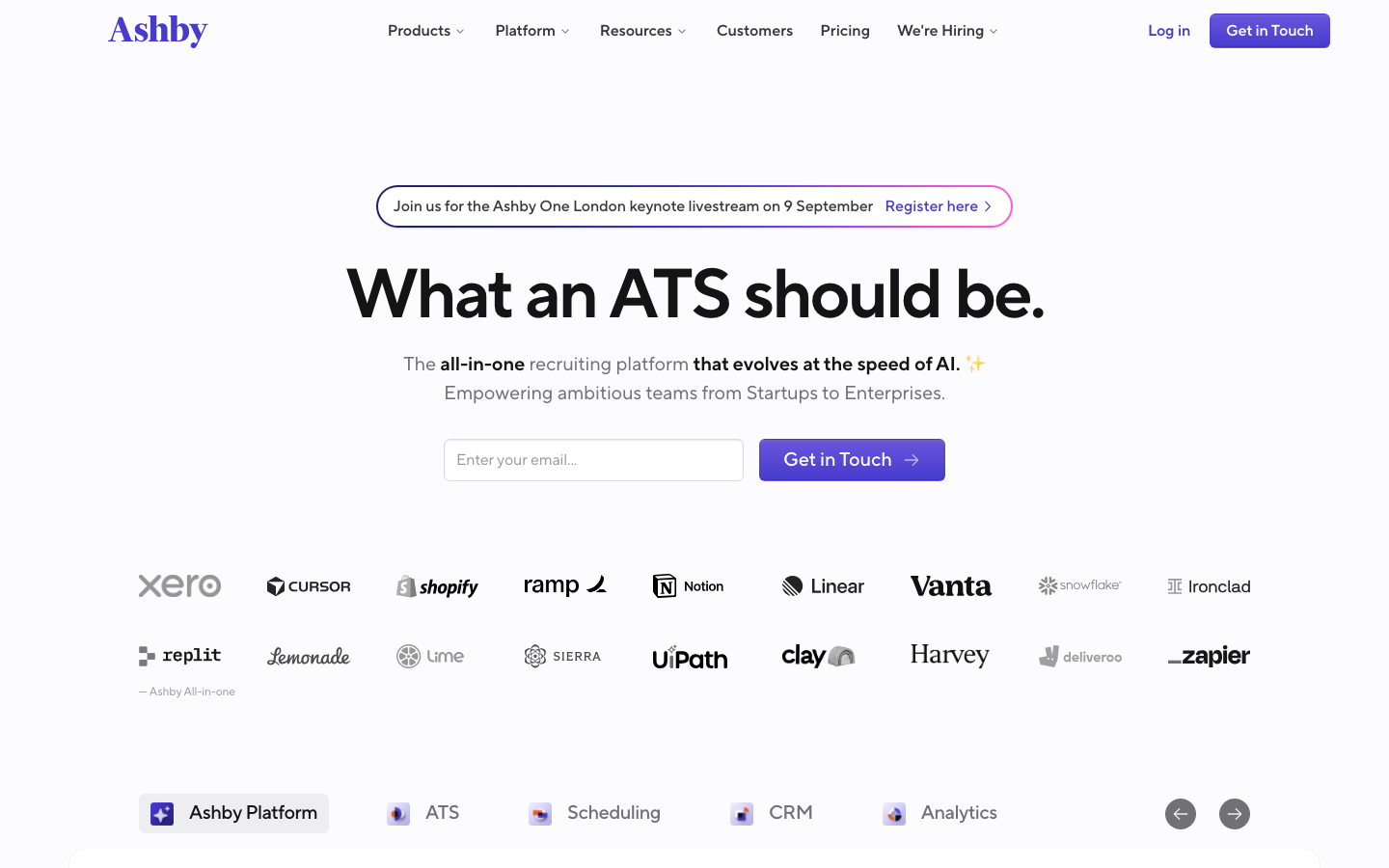
Ashby keeps applicant tracking, scheduling, sourcing, and reporting on a single underlying record, so its dashboards never require an export. It suits mid-market companies with a real recruiting function, and publishes a Foundations tier at $400 a month for organizations up to 100 employees.
Software Pros
- Reports are configurable, so a pipeline question is answered where it is asked
- Panels and time zones are handled in-product, with no coordinator tool required
- One record behind sourcing, tracking, and analytics keeps the numbers consistent
Software Cons
- Only Foundations carries a price; everything above it is negotiated
- The analytics depth outruns what a company hiring occasionally will ever use
- Getting value out of it depends on somebody owning the configuration properly
Ashby Review
While reviewing Ashby, the reporting is what earns its place on a mid-market shortlist. Asking how long candidates sat in a stage last quarter is a filter here, not a data request.
Our Verdict
Analytics Built Into Hiring
BambooHR
Quick Overview
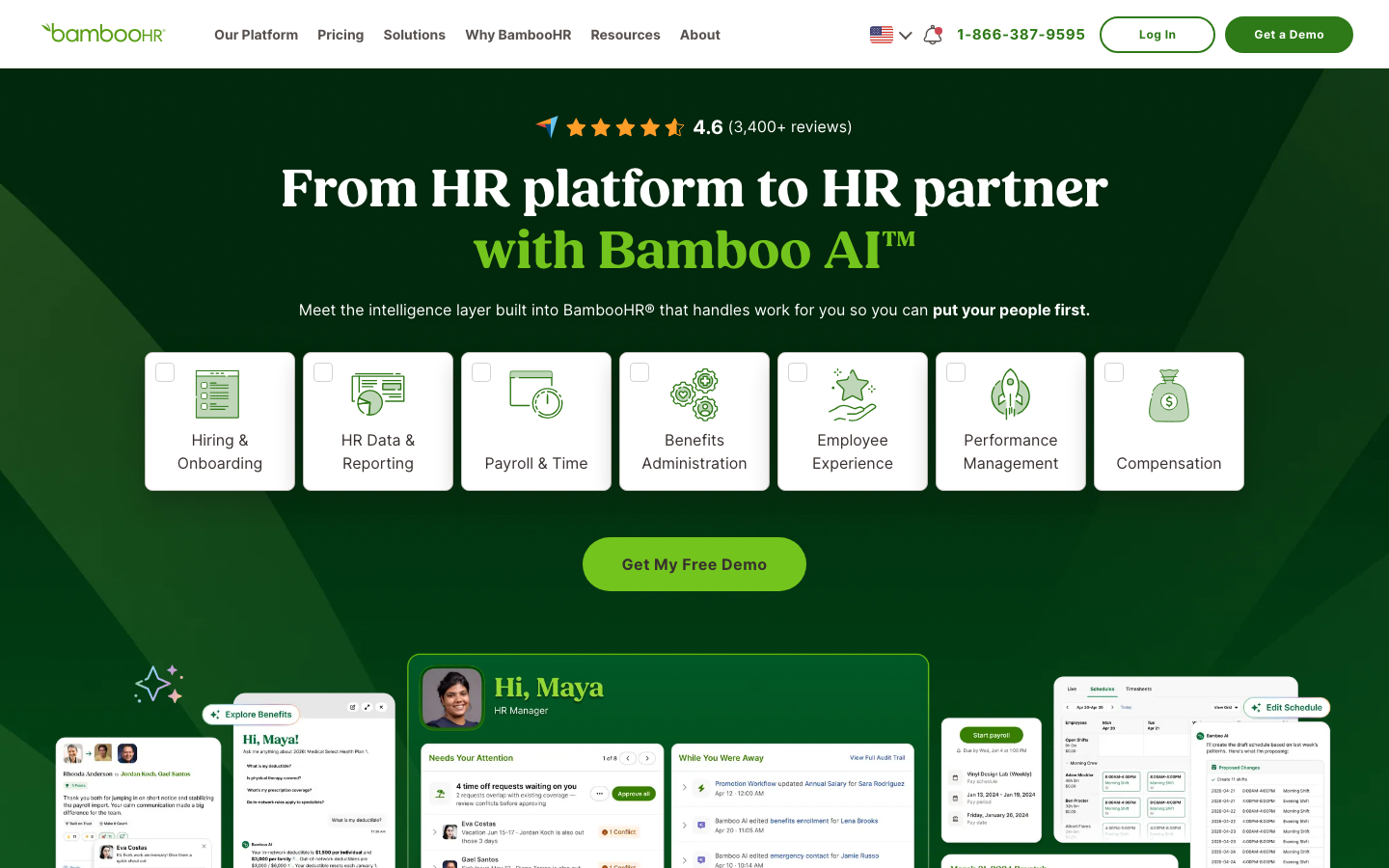
BambooHR is an HR platform whose hiring module gives smaller HR teams an applicant tracking system, offers and onboarding. It all sits inside the same system as core HR. Pricing starts at $10 per employee per month. Hiring is included on every tier, with 5, 25, or 50 open jobs depending on the plan.
Software Pros
- Hiring sits on the same employee record as payroll, time off, and documents
- Published per-employee pricing makes the total predictable before any sales call
- Onboarding follows the offer automatically, with no rekeying between systems
Software Cons
- Buying it to solve hiring means buying an HR platform you may not need
- Open-job caps per tier constrain a company hiring at pace
- Scheduling and reporting stay basic next to a dedicated recruiting platform
BambooHR Review
What stood out to me about BambooHR is how little friction sits between a hire and an employee. In most stacks that handoff involves re-entering somebody twice; here the record simply changes state.
Our Verdict
HR Suite With Hiring
*As pricing is subject to change, we are listing prices as they stand in August 2026
ClearCompany
Quick Overview
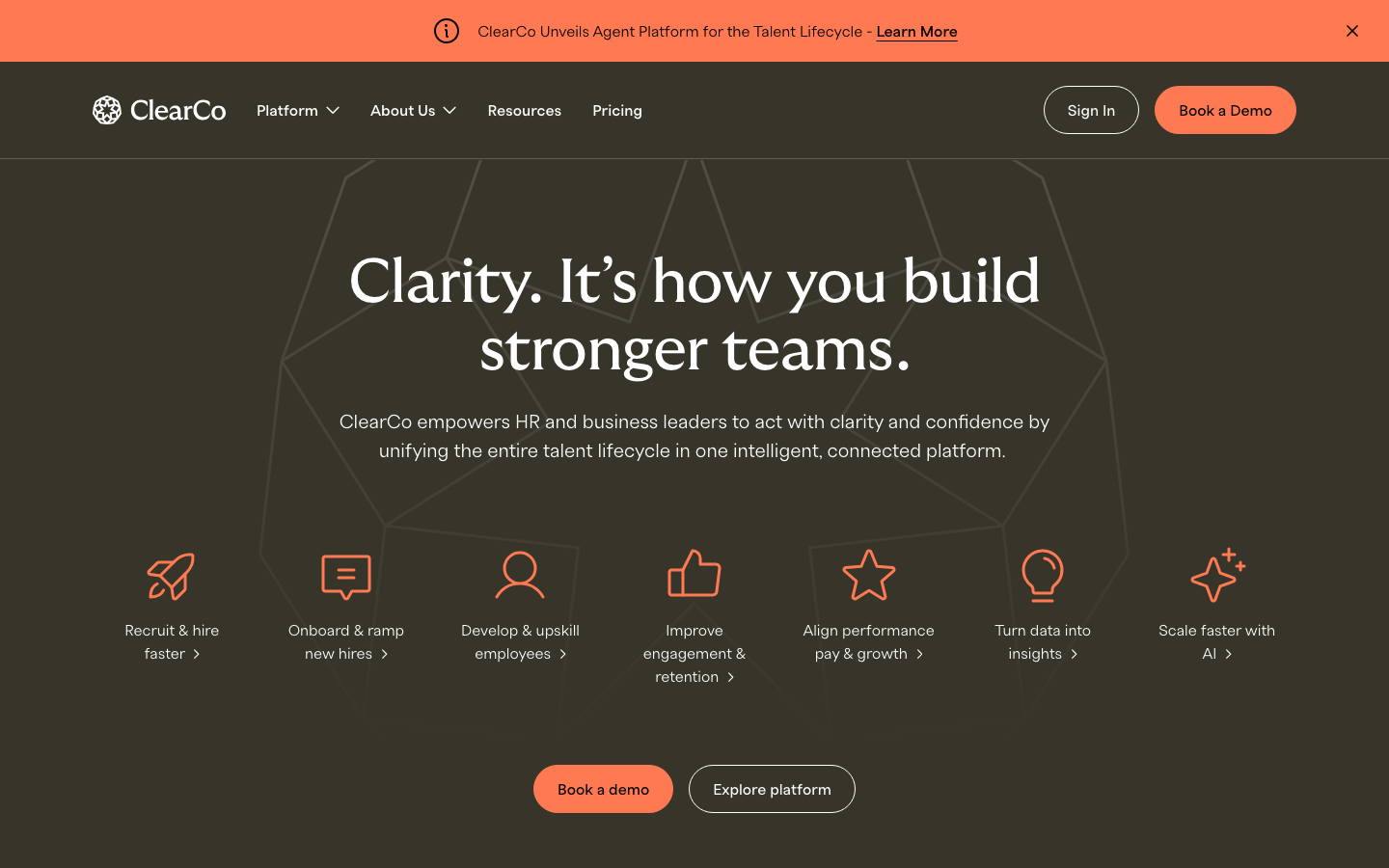
ClearCompany pairs recruiting with onboarding, performance and analytics for HR teams that would rather run one vendor than four. The recruiting side covers pipelines, scheduling, offers and reporting, aimed at mid-market organizations. No rate appears anywhere publicly, so every figure comes from a quote.
Software Pros
- Recruiting, onboarding and performance share one record across the employee lifecycle
- Reporting spans hiring and post-hire outcomes rather than stopping at the offer
- Built around structured processes, which suits companies formalizing how they hire
Software Cons
- No published pricing, which slows down comparison
- The talent management breadth is more than a pure recruiting buyer needs
- Without a G2 profile to check, independent evidence is scarce
ClearCompany Review
During my evaluation of ClearCompany, the through-line from hiring to performance was the distinguishing feature. Very few platforms let you ask whether the candidates from one source actually performed a year later.
Our Verdict
Talent Management End To End
Gem
Quick Overview
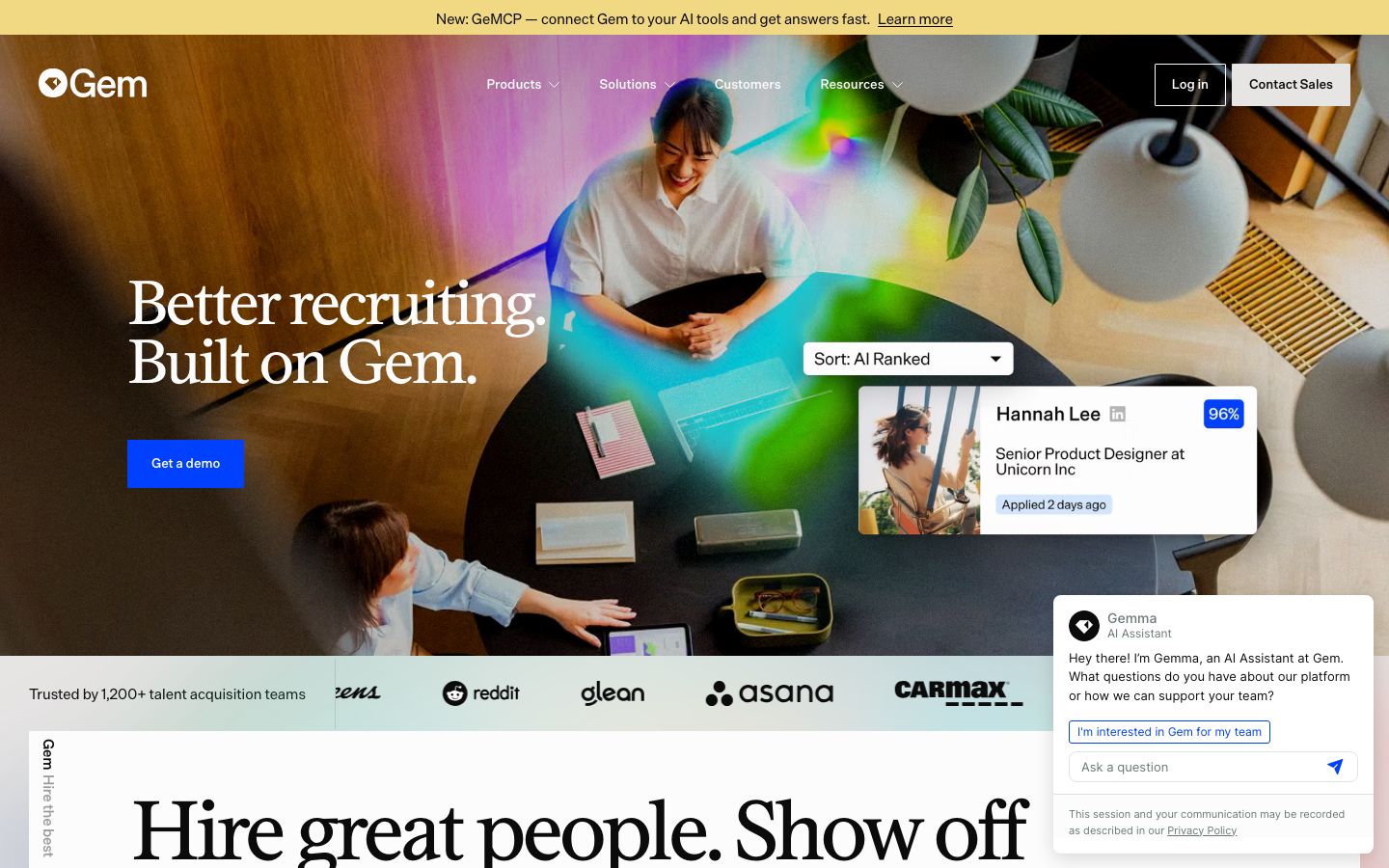
Gem brings sourcing, candidate relationship management, applicant tracking, scheduling, and analytics into one platform, having grown out of outbound recruiting for technology teams. It fits mid-market companies that build pipelines before roles open rather than waiting for applications.
Software Pros
- Outbound sequences and talent pools sit in the same system as the pipeline
- Conversion reporting starts at the sourcing step, not at the application
- Scheduling and pipeline management are native rather than assembled
Software Cons
- Quote-based pricing with no published entry point
- Teams hiring purely through inbound applications will not use half of it
- Built around technology hiring; frontline volume roles are not its strength
Gem Review
I spent time with the reporting across sourcing and pipeline, which is where Gem differs from platforms that added outbound later. Knowing that a channel produces interviews rather than merely producing contacts changes where a team spends its week.
Our Verdict
Sourcing And Pipeline Together
Greenhouse
Quick Overview
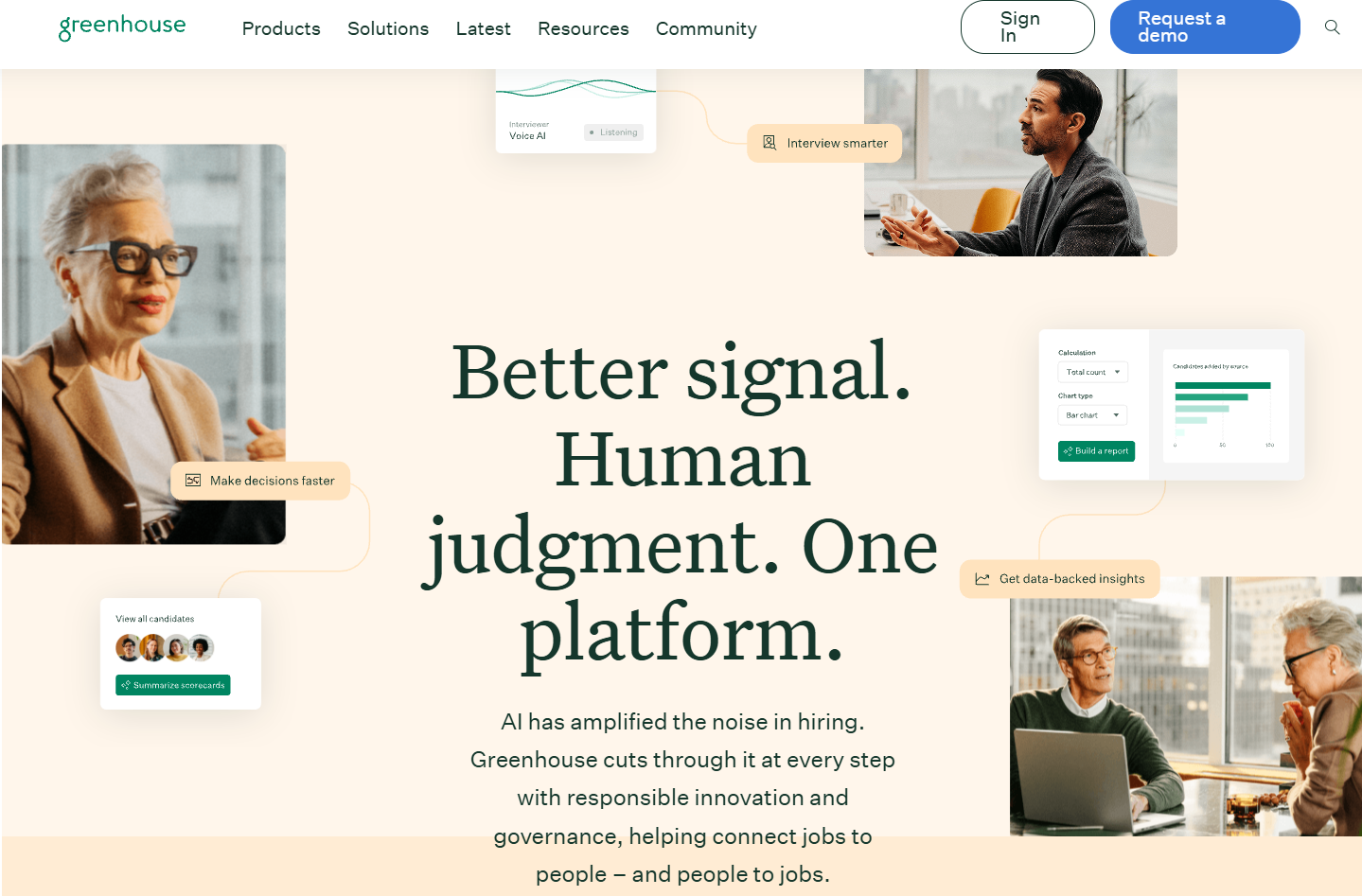
Greenhouse is a recruiting platform built on structured hiring: defined scorecards, interviewer assignments, and documented decisions across the whole funnel. Around the tracking core sit sourcing automation, native scheduling, onboarding, custom reporting, and an ecosystem of 500+ integrations. It fits mid-market and enterprise teams, with quote-based pricing across three tiers (Essential, Advanced, Expert).
Software Pros
- Structured hiring turns interviews into comparable evidence: scorecards, interview kits, and documented decision rationale
- Sourcing automation and talent rediscovery keep past applicants working for new requisitions
- Custom reporting and 500+ integrations connect assessments, background checks, and HR systems without exports
Software Cons
- Quote-based pricing across all tiers, so the number arrives through a scoping conversation
- The methodology pays off for teams that adopt it fully rather than partially
- Aimed at mid-market and enterprise; very small teams may not need the structure
Greenhouse Review
During my evaluation, the discipline is what distinguishes Greenhouse from platforms that treat hiring as pipeline plumbing. Every stage answers a question the team agreed on in advance, so its debriefs produce decisions rather than impressions. For a company formalizing its hiring, this platform enforces that formality.
Our Verdict
Structured Hiring At Scale
iCIMS
Quick Overview
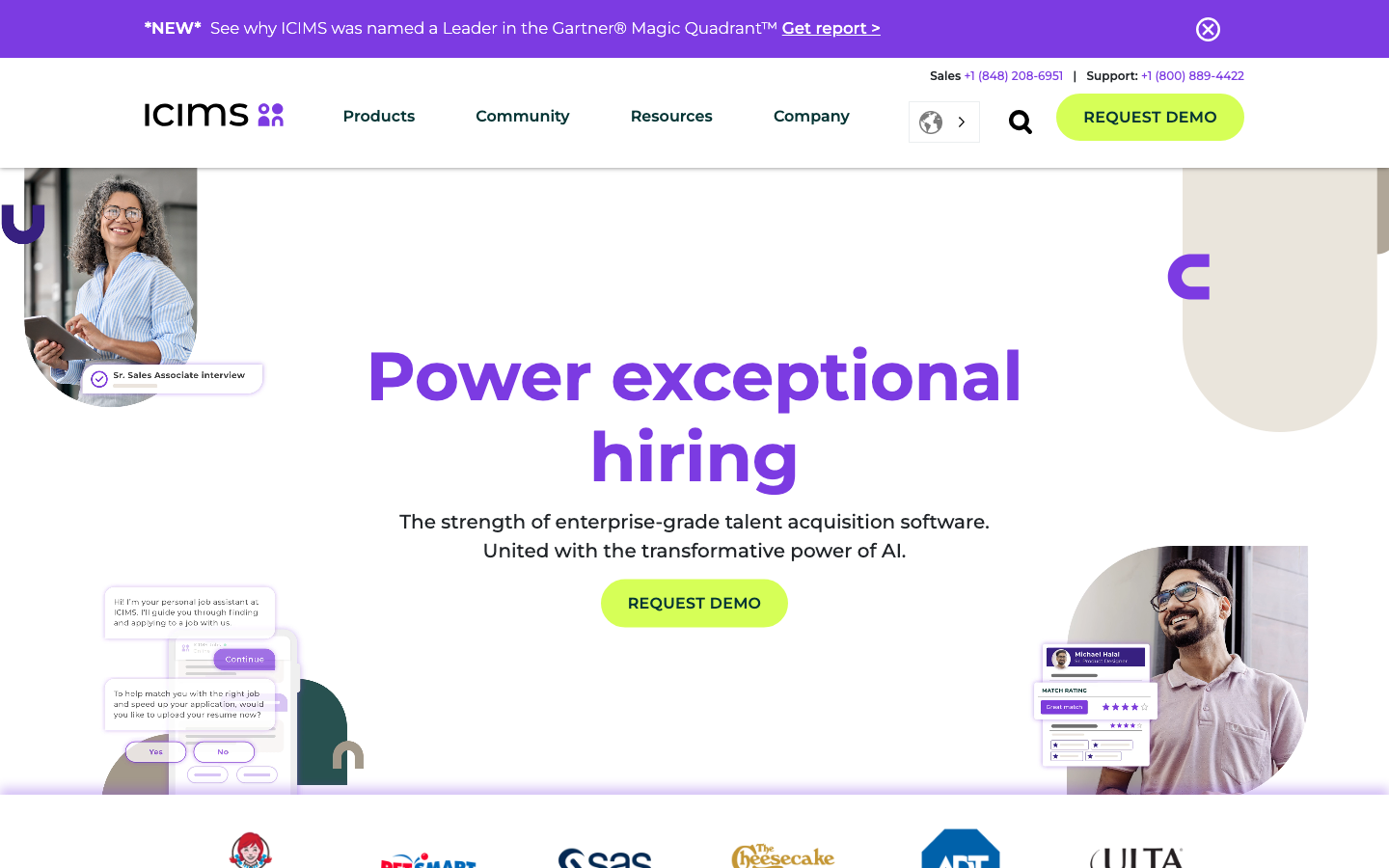
iCIMS serves global and high-volume hiring through candidate relationship management, branded career sites, texting, video, and compliance tooling. The G2 entry appears under the post-rename iCIMS profile. Pricing is quoted per deployment.
Software Pros
- Audit and compliance reporting designed for regulated, multi-country hiring
- Texting and video handle candidate volume that email cannot absorb
- Recruitment marketing and career site tooling ship as part of the platform
Software Cons
- Going live is an IT-led program rather than a self-serve setup
- Priced by quote, and the module mix swings the total widely
- Assumes a staffed talent acquisition team behind it
iCIMS Review
The feature I kept coming back to is the texting layer. In high-volume hiring, the candidate who answers within the hour is the one you keep, and email loses that race every time.
Our Verdict
Global High-Volume Talent Cloud
Lever
Quick Overview
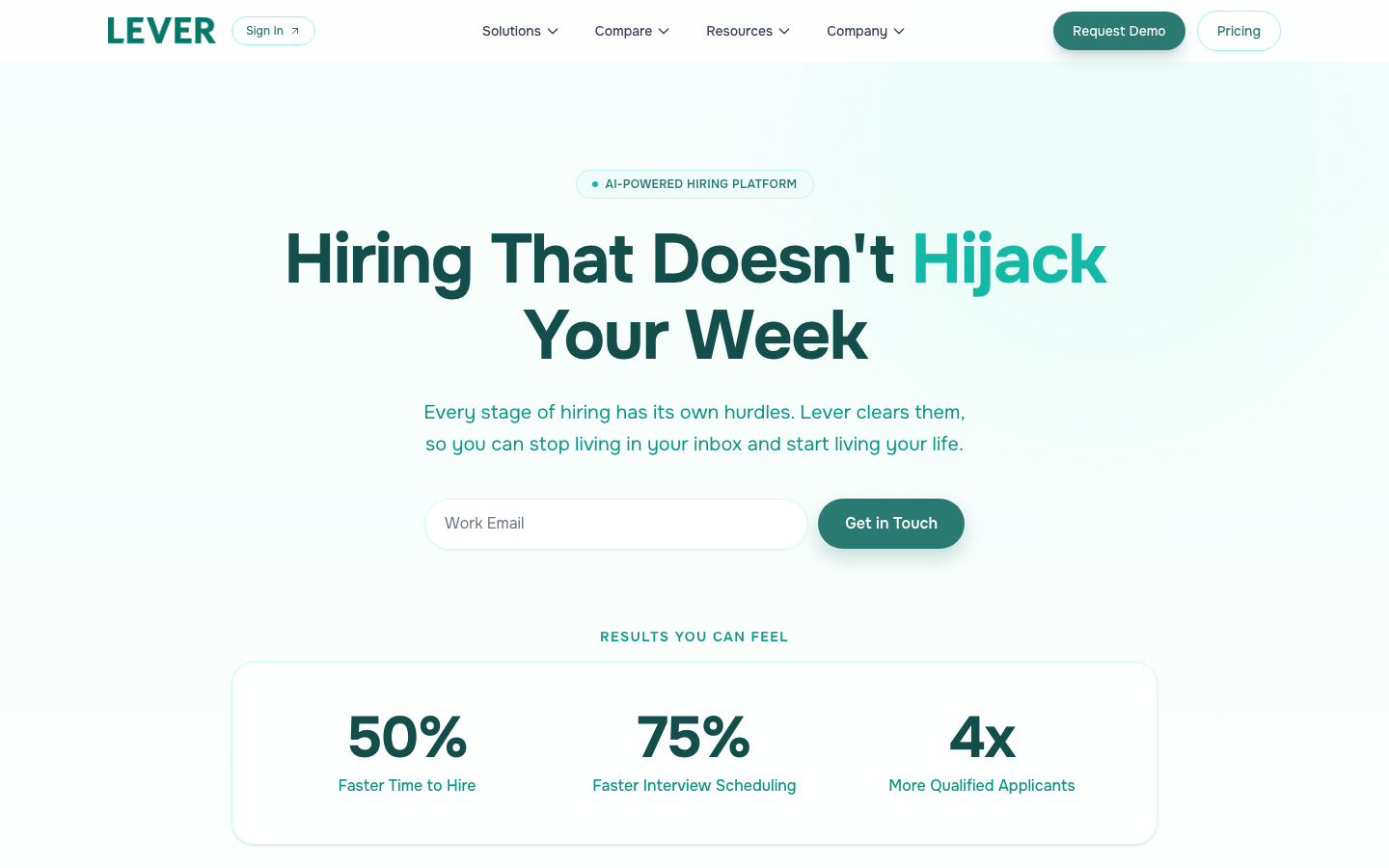
Lever combines an applicant tracking system with a native candidate relationship manager, so inbound applications and outbound nurture run through a single pipeline. It suits mid-market recruiting teams doing both, and was acquired by Employ in 2022. Pricing is quoted rather than published.
Software Pros
- A passive contact and a live applicant share one record, never two
- Nurture campaigns and pipeline reporting read from the same history
- Structured feedback and scheduling are included rather than sold as tiers
Software Cons
- No published pricing, so budgeting starts with a scoping call
- Companies hiring only through applications pay for outbound they will not run
- Configuring both halves properly takes longer than a tracking-only system
Lever Review
My first impression of Lever was that it solves a filing problem most teams have stopped noticing. Sourcing in one tool and tracking in another means the same person exists twice under two statuses.
Our Verdict
Inbound And Outbound One Pipeline
Oracle Recruiting
Quick Overview
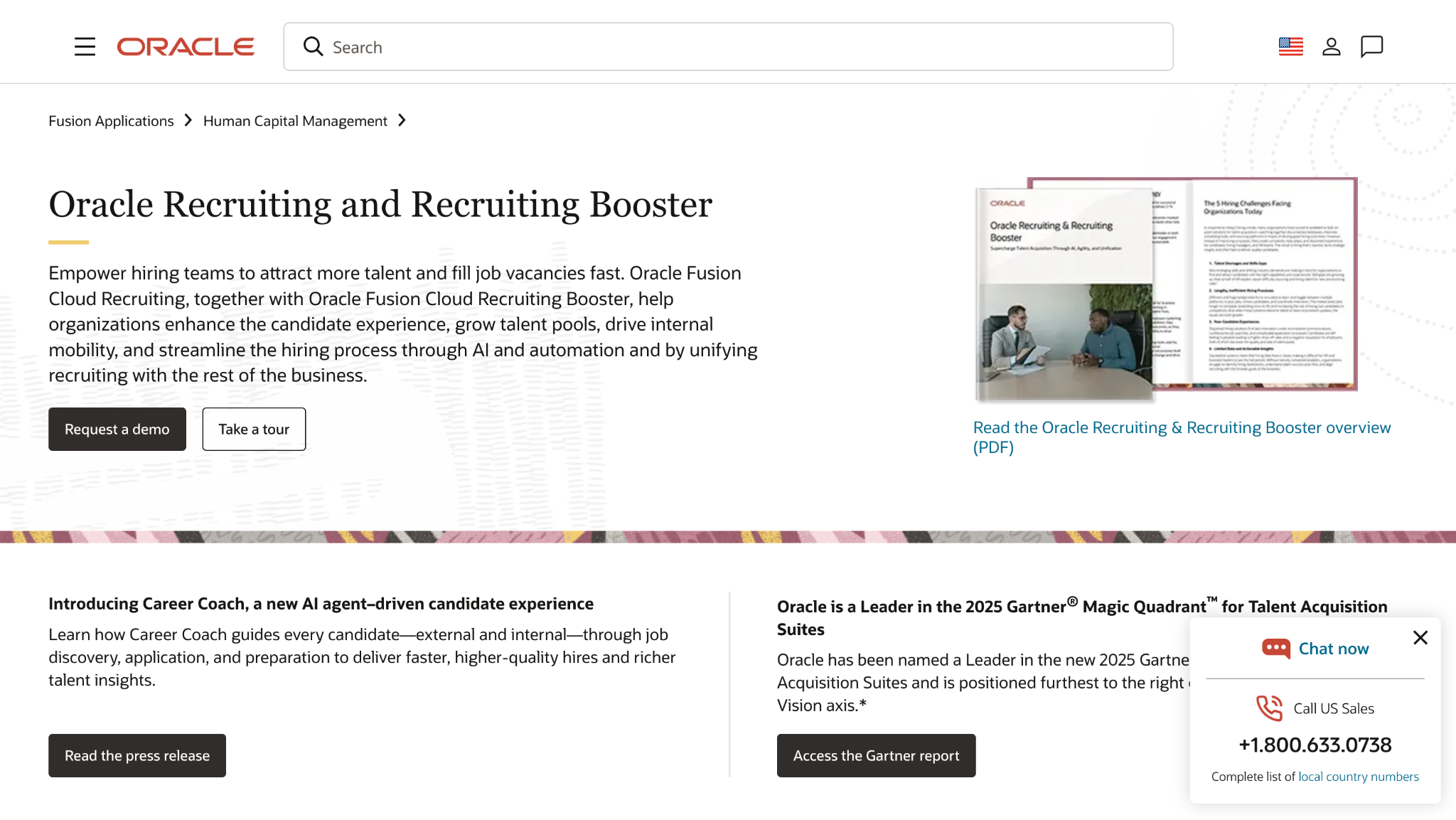
Oracle Recruiting sits inside Oracle Fusion Cloud HCM and handles requisitions, candidate management, offers, and hiring in the same system as core HR and payroll. Organizations choose it almost entirely because they already run Oracle as their HCM. Pricing is quoted through Oracle.
Software Pros
- Requisitions and headcount live in the same system as payroll and org data
- Enterprise compliance and approval chains are handled as standard
- No integration project needed where Oracle HCM is already in place
Software Cons
- Only a sensible choice if Oracle is already your HR system
- Quote-based enterprise licensing with a long procurement cycle
- Recruiting-specific usability lags behind purpose-built platforms
Oracle Recruiting Review
I looked closely at how Oracle Recruiting positions itself, and the honest read is that it wins on adjacency rather than on features. When requisitions, headcount budget, and payroll already live in one place, adding recruiting there removes an integration nobody wanted to build.
Our Verdict
Recruiting Inside Oracle HCM
Personio
Quick Overview
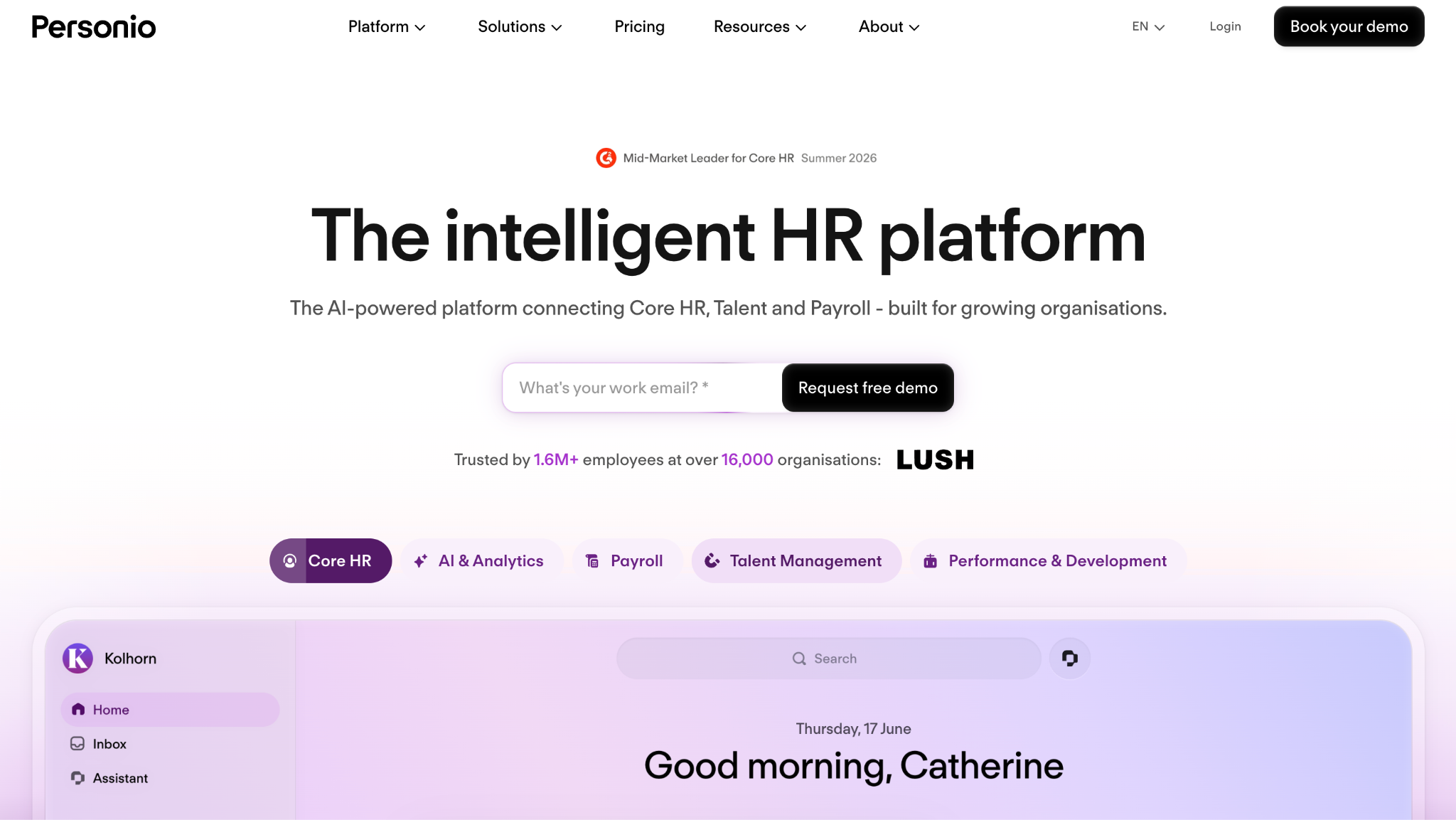
Personio is a European HR platform whose recruiting module covers job posting, pipelines, interview coordination, and offers, alongside absence, documents, and payroll preparation. It is built EU-first, with data residency and privacy tooling shaped by European requirements.
Software Pros
- European hosting and privacy controls arrive switched on, not as a setup task
- Hiring records and employee records live in the same platform from day one
- Strong fit for European small and mid-sized companies needing HR admin too
Software Cons
- Recruiting is one module of an HR platform, not a standalone purchase
- Scheduling and hiring analytics are lighter than dedicated systems provide
- Pricing is not published, so the total depends on a quote
Personio Review
I came away from Personio thinking the European framing is not marketing. Retention rules and consent handling are built into how the product behaves, not described in a policy page. That matters when a data request arrives.
Our Verdict
European HR With Recruiting
Pinpoint
Quick Overview
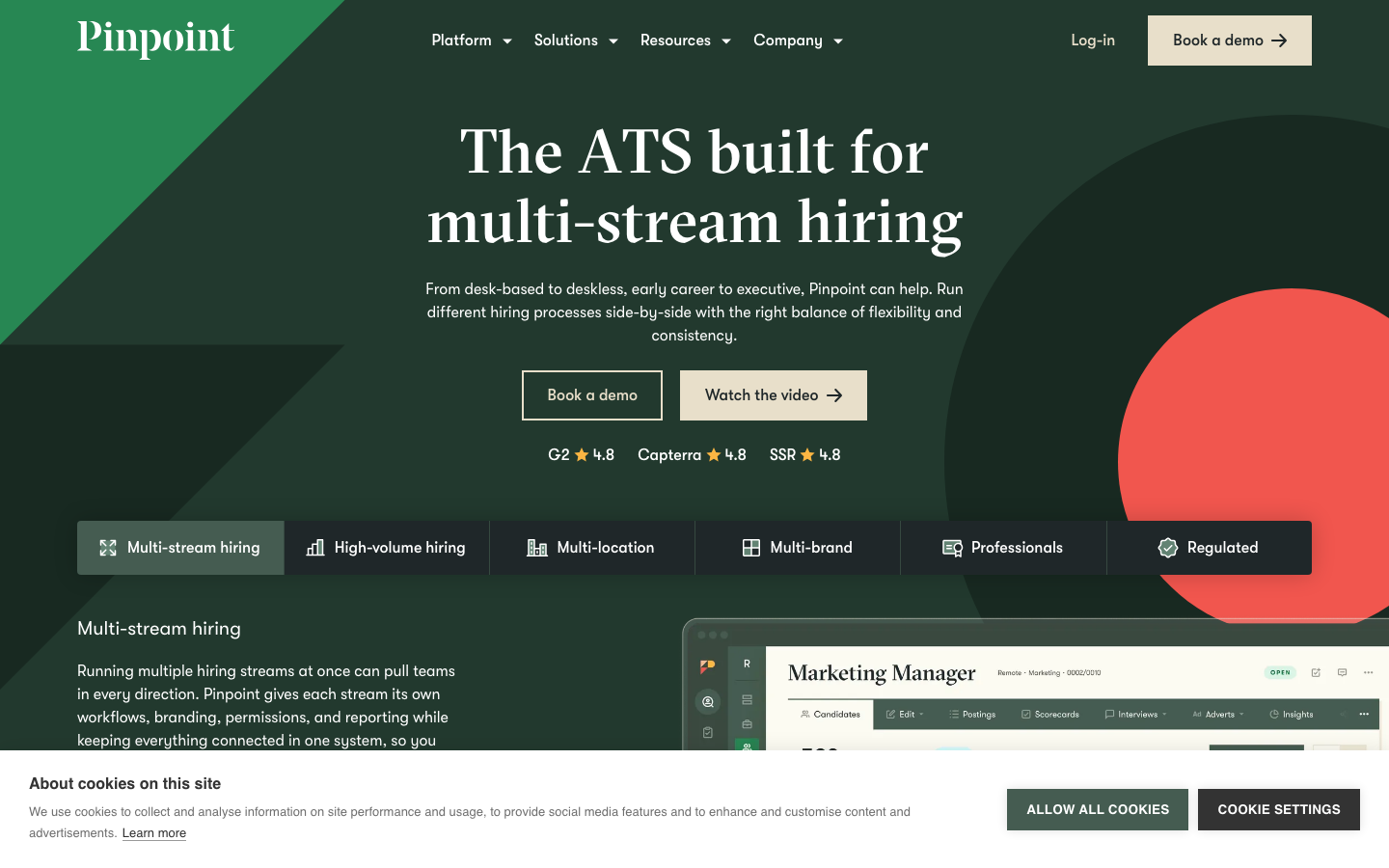
Pinpoint puts candidate experience and employer brand first, starting with a careers-site builder a marketing team can operate unaided. Scheduling, structured feedback, and direct support sit around it, for in-house teams in the mid-market.
Software Pros
- Careers pages can be built and changed without touching engineering
- Panel scoring stays consistent because feedback is captured in a fixed format
- A hands-on support model rather than a ticket queue, which speeds up launch
Software Cons
- Costs are quoted individually, with nothing published to compare against
- Candidate relationship management is an add-on rather than core
- Without a resolved G2 profile, outside evidence is limited
Pinpoint Review
While reviewing Pinpoint, the effort spent on the applicant’s view of the process stood out. Most platforms in this bracket hand you a page template and move on.
Our Verdict
Careers Page And Experience
SmartRecruiters
Quick Overview
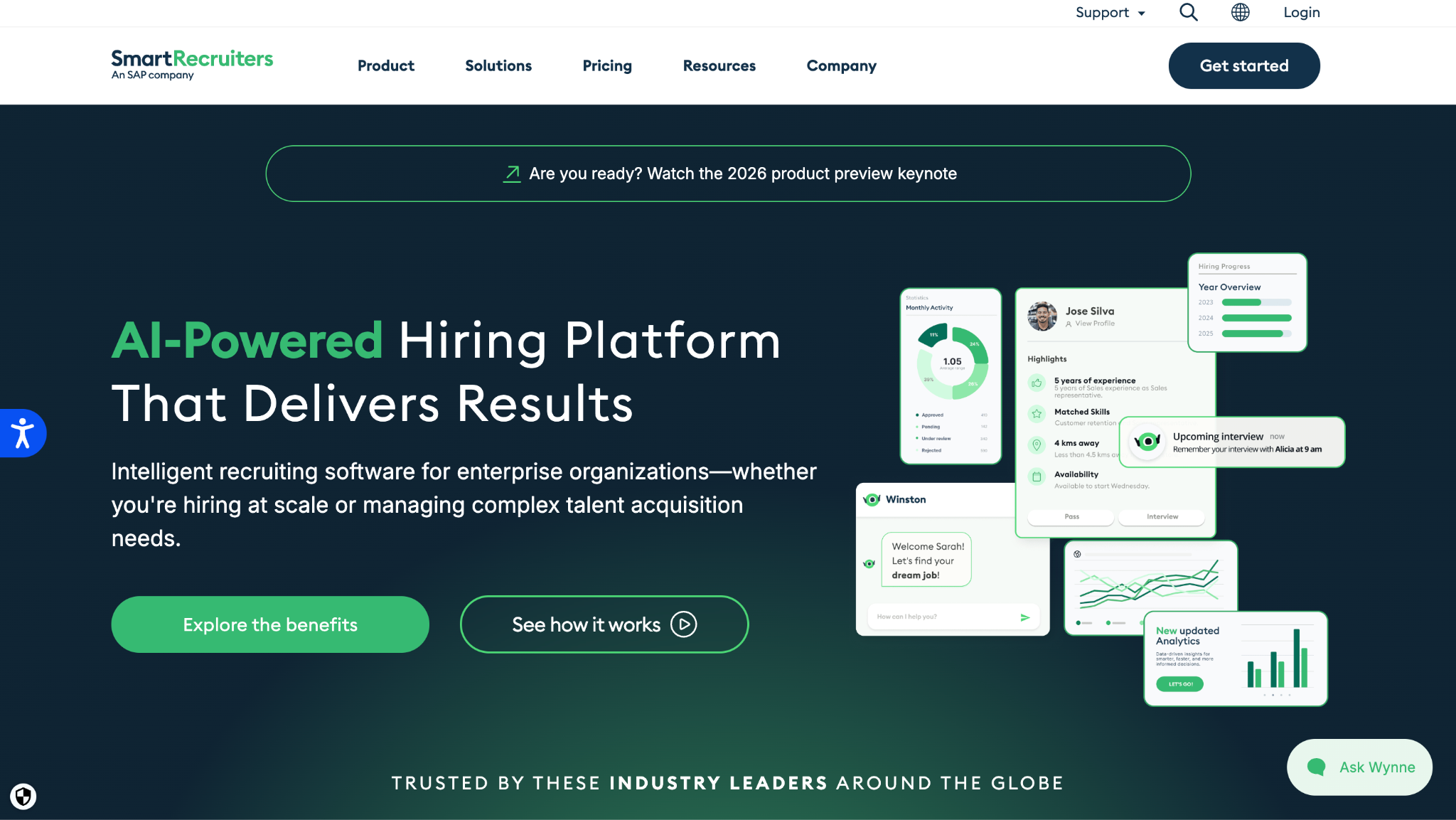
SmartRecruiters sells a full talent acquisition suite. Recruitment marketing, candidate relationship management, tracking, and offer management sit together, ringed by an integration marketplace. It targets enterprises hiring across many countries and business units.
Software Pros
- Marketing and CRM are part of the platform, not adjacent products
- The closing stage is covered properly through offer workflows and approvals
- Assessments, background checks, and HR systems all connect via the marketplace
Software Cons
- Enterprise contracts and a rollout measured in months
- Quoted pricing in which the chosen modules account for most of the spend
- No resolved G2 profile, so this page publishes no score for it
SmartRecruiters Review
What stood out to me about SmartRecruiters is how much weight it puts on the integration marketplace. Enterprises never run one system, so the hub’s connective tissue decides whether the whole stack holds together.
Our Verdict
Talent Acquisition Suite At Scale
Teamtailor
Quick Overview
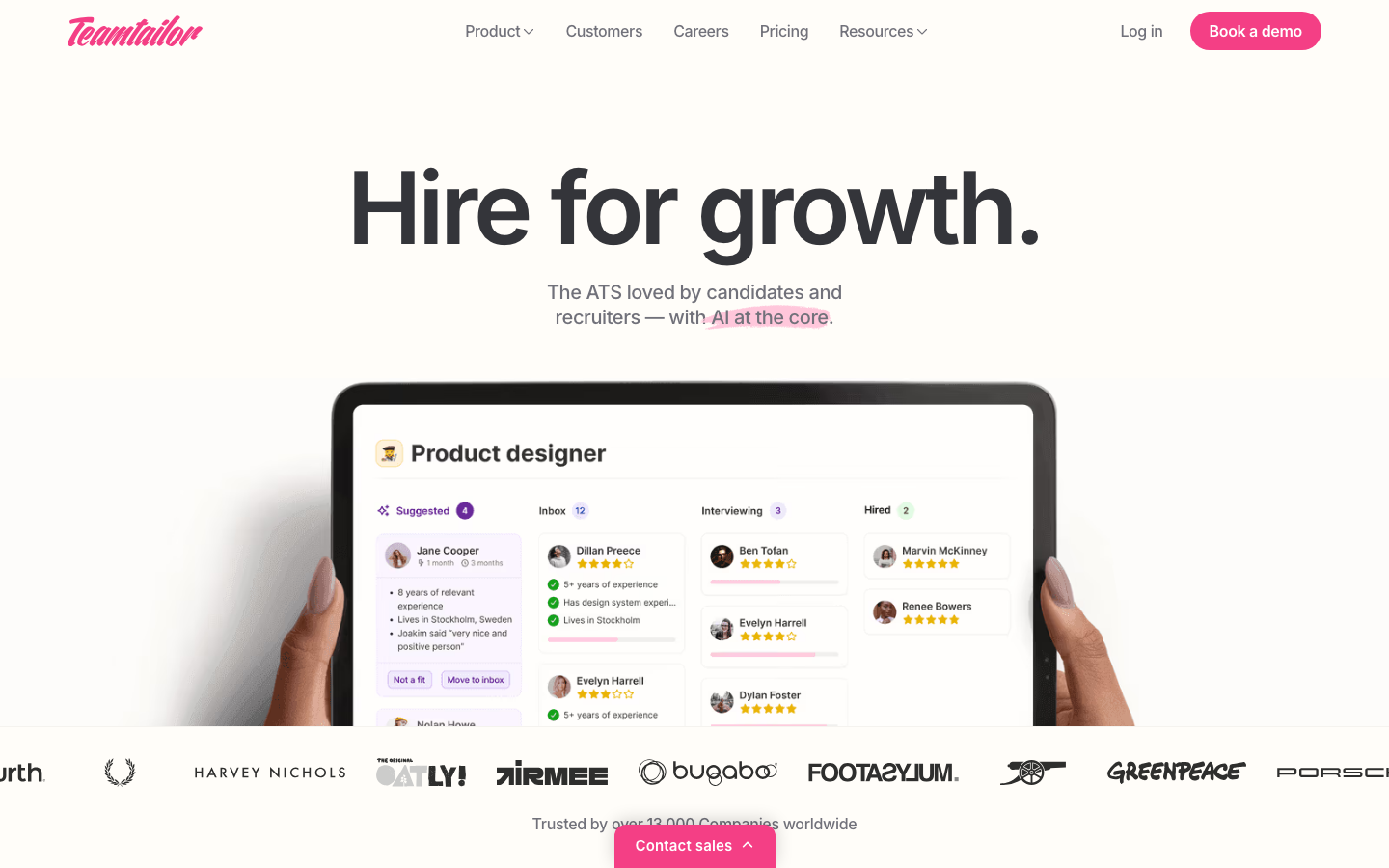
Teamtailor is from Sweden and treats the career site as the center of gravity, with the pipeline arranged around it. Pipelines, scheduling and candidate messaging sit around it, with GDPR-shaped defaults that suit European employers. Pricing is quoted by company size.
Software Pros
- A genuine content tool underneath the career site, with pages and employee stories
- Consent capture and retention handling come configured for European hiring
- Straightforward enough that a non-recruiter can run it end to end
Software Cons
- Quote-based pricing with no published entry rate
- Reporting stops at standard views; there are no configurable dashboards
- Strongest across European markets and thinner elsewhere
Teamtailor Review
During my evaluation of Teamtailor, the site editor turned out to be a real content tool rather than the branded templates most rivals ship. Where the bottleneck is attracting applicants rather than processing them, this beats extra pipeline depth.
Our Verdict
Employer Brand Led ATS
Tellent Recruitee
Quick Overview
Tellent Recruitee, formerly Recruitee before its rebrand under Tellent, is a collaborative European applicant tracking system. It offers drag-and-drop pipelines, a no-code careers-site builder, and multi-board posting. Subscriptions are tiered by plan, employee count and billing period, and a free trial is available.
Software Pros
- Collaboration is built in, so hiring managers participate without training
- The no-code career site builder needs no developer involvement
- European hosting and privacy tooling suit EU-based employers
Software Cons
- Named tiers carry no published figures, so cost arrives by quote
- Reporting is standard rather than configurable
- Sits below the enterprise suites on compliance depth for global hiring
Tellent Recruitee Review
I spent time with the collaboration model, which is the quiet strength here. Hiring managers who will never learn an applicant tracking system can still leave structured feedback. That participation usually decides whether a process holds together.
Our Verdict
Collaborative European Hiring Pipeline
Workable
Quick Overview
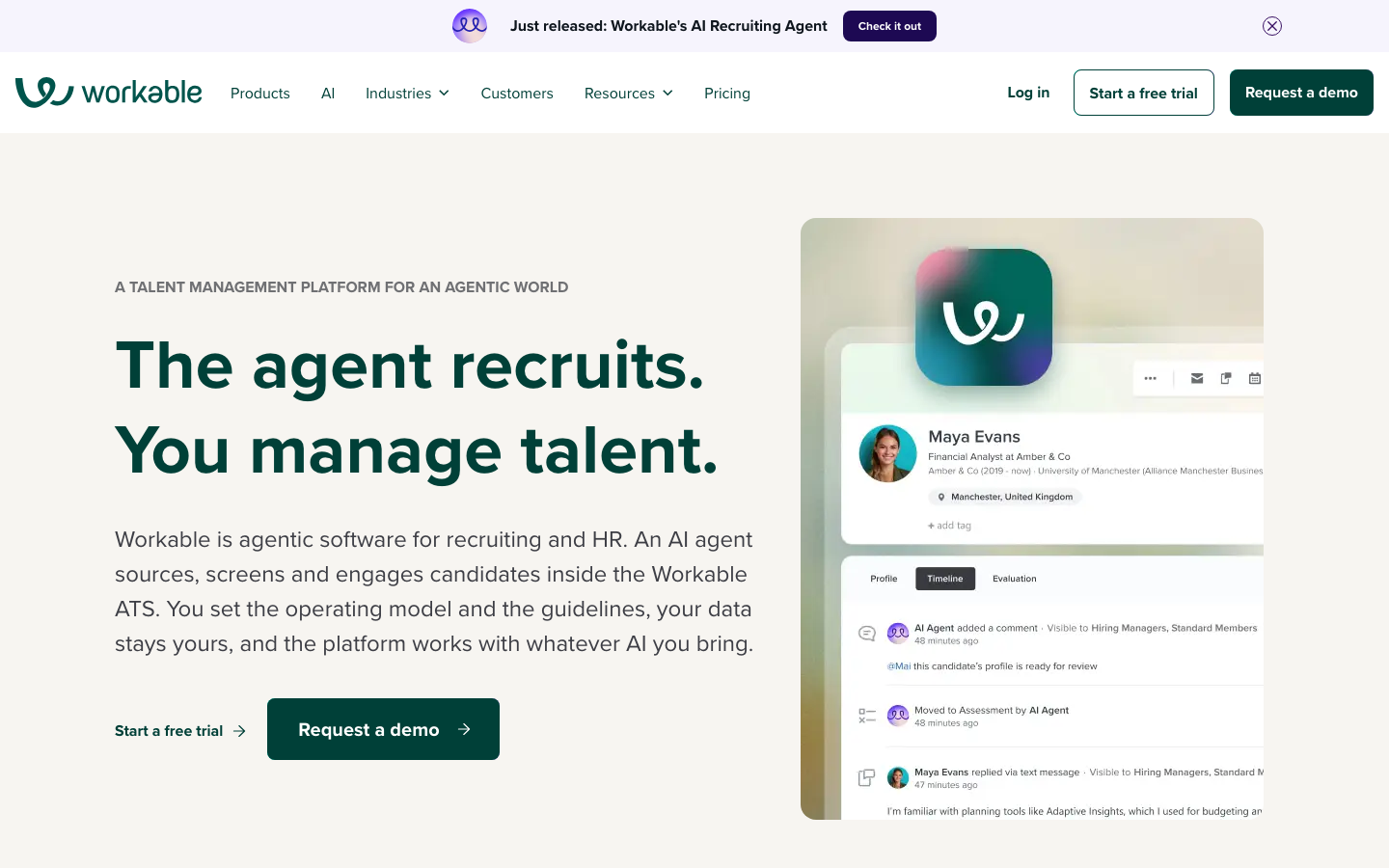
Workable sizes its bundled candidate database at 400M+ profiles (a vendor figure) and pushes a single posting to 200+ job boards. HR tooling has been added around it over time. Plans start at $299 a month with a 15-day trial, which is unusual above the small-business tier.
Software Pros
- A monthly rate you can read and a trial you can actually run, uncommon here
- Vendor-documented distribution to 200+ boards from a single posting
- Database access comes inside the subscription instead of as a separate purchase
Software Cons
- Candidate relationship management is an add-on, not part of the base tier
- Reporting is limited to standard views rather than dashboards you configure
- The expanding HR feature set adds scope a hiring-only buyer will not use
Workable Review
The feature I kept coming back to is what the subscription already includes. Paying separately for candidate database access is the norm in this category, and skipping that second invoice changes the maths for a smaller team.
Our Verdict
Database Plus Board Distribution
*As pricing is subject to change, we are listing prices as they stand in August 2026
Workday Recruiting
Quick Overview
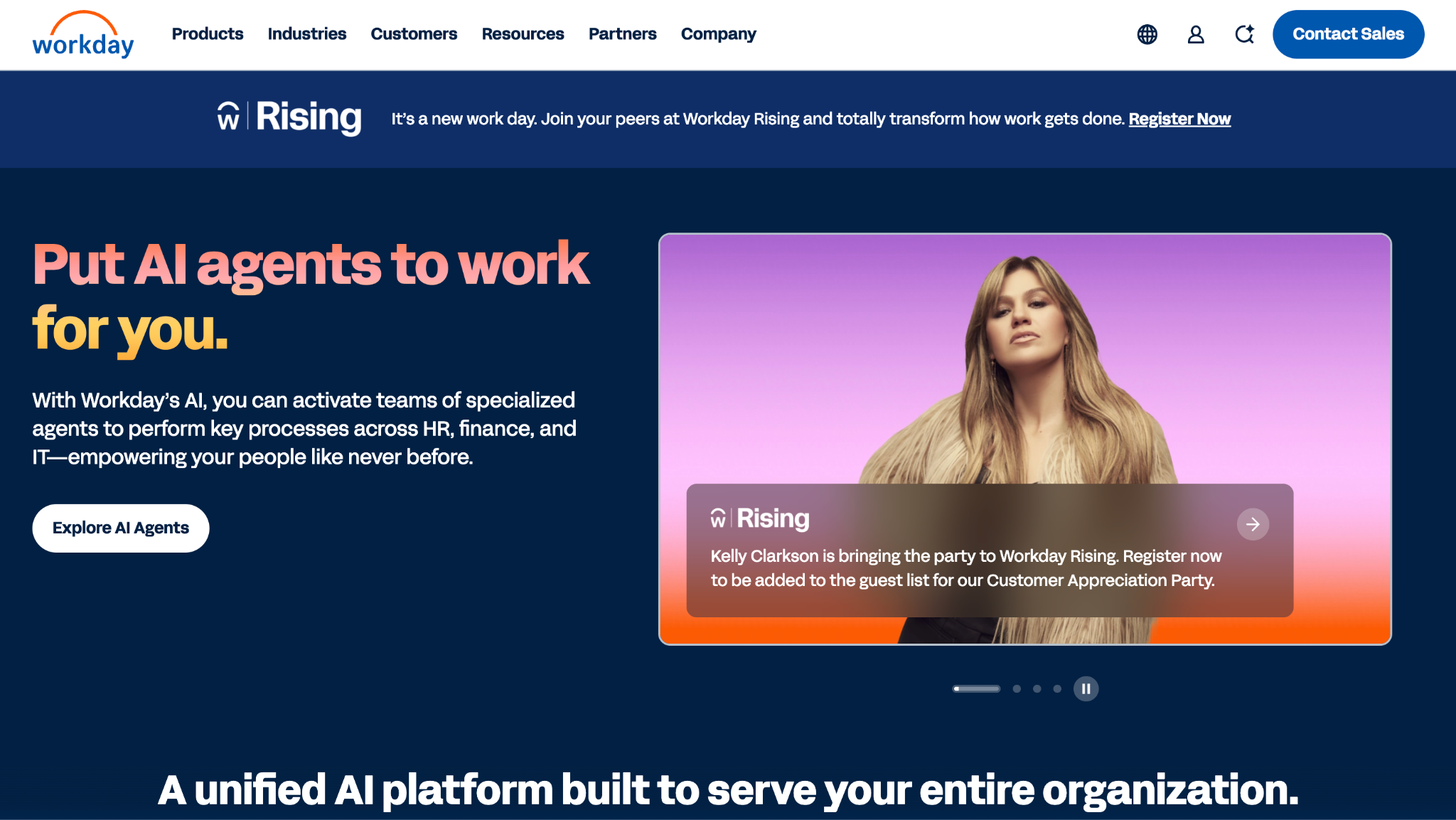
Workday Recruiting handles requisitions, candidate management and hiring inside the Workday HCM suite, so headcount, budget and org data all sit in one system. Enterprises choose it when Workday is already the HR system of record. Pricing is quoted as part of the wider suite.
Software Pros
- Requisitions tie directly to approved headcount and org structure
- Hiring, onboarding and workforce planning read from a single source
- Enterprise compliance and approval chains come as standard
Software Cons
- Only worth considering where Workday is already the HCM
- Its G2 rating of 3.7 is the lowest here, from a small sample of 102 reviews
- Recruiter-facing usability trails purpose-built applicant tracking systems
Workday Recruiting Review
My first impression of Workday Recruiting is that it is bought for the org chart rather than for the recruiter. Connecting a requisition to approved headcount without an integration is genuinely valuable to finance and HR leadership.
Our Verdict
Hiring Inside Workday HCM
Zoho Recruit
Quick Overview
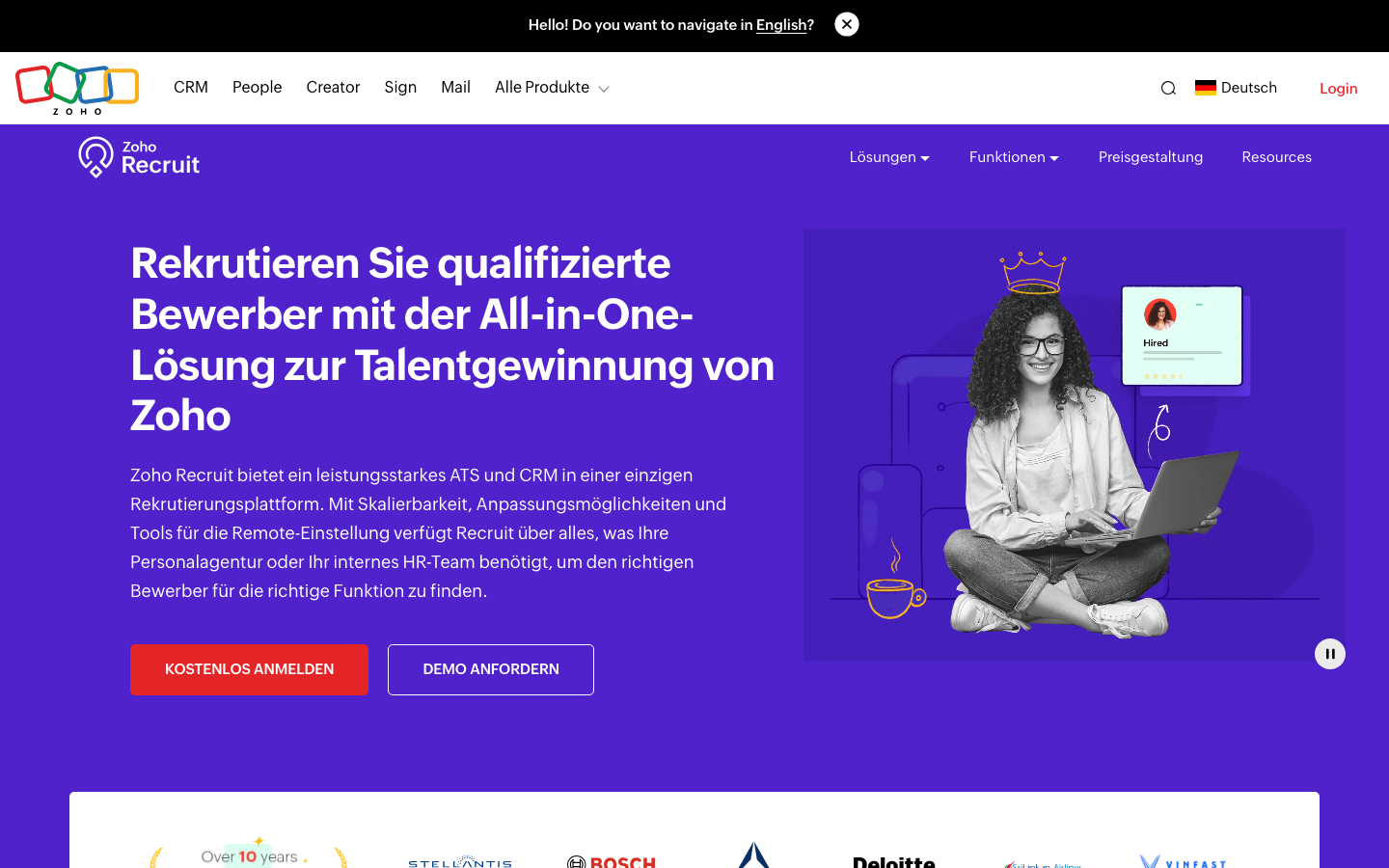
Zoho Recruit is the recruiting product in the Zoho suite, covering job posting, pipelines, candidate management, and offers for corporate hiring teams. A Forever Free tier supports one active job, and a separate staffing edition exists that falls outside this review.
Software Pros
- A genuinely free tier for a company running a single open role
- Connects to the wider Zoho suite, including CRM and the HR module
- Low-cost entry compared with the mid-market platforms on this list
Software Cons
- The free tier’s single active job limits it to occasional hiring
- Interview booking runs through a connected app instead of shipping in the box
- Depth is thinner than dedicated platforms once hiring becomes continuous
Zoho Recruit Review
I looked closely at where Zoho Recruit stops being enough, and the honest answer is the second simultaneous opening. As an entry point, it is hard to argue with, particularly for a company already inside the Zoho ecosystem.
Our Verdict
Low-Cost Recruiting In Zoho
FAQs About Recruiting Software
What Is the Best Recruiting Software?
No single platform wins, because the answer depends on how many people you employ and whether hiring runs through HR or a dedicated team. Those two answers sort the market into small-business platforms, mid-market tracking systems, enterprise suites and HR all-in-ones. Establish which of the four you belong to, then ignore every row in the table above that falls outside it.
What Is the Difference Between Recruiting Software and an Applicant Tracking System?
The tracking system is the middle of it, holding candidates, advancing them through stages and preserving why each call was made. Recruiting software describes the platform wrapped around it, which adds sourcing, candidate relationship management, career sites, and offer workflows.
How Much Does Recruiting Software Cost?
Three shapes exist. Some vendors publish a rate. Among the 16 reviewed here, prices start at $10 per employee per month, $299 per month, and $400 per month, as of August 2026. One publishes a free tier limited to a single open role. The other ten quote per deployment, where headcount, modules, and implementation set the number.
What Are the Top Recruiting Software Companies?
They fall into four groups rather than one league table. European platforms are built around career sites and privacy tooling, while mid-market systems focus on pipelines and reporting. Then enterprise suites covering global compliance and volume, and HR platforms where hiring is one module among several.
Do Recruiting Platforms Use AI?
Almost all of them do, as features rather than as the product. Four jobs come up again and again: turning a resume into fields, scoring against a job description, drafting outreach, and writing up interview notes. A separate class of tools is built the other way around, with a model conducting the screening interview or sourcing candidates on its own. Those are a different purchase.
What Recruiting Software Works for Remote or Global Teams?
Look for three capabilities. Self-scheduling that respects working hours across time zones, and asynchronous stages so the pipeline doesn’t stall waiting on one calendar. Then documented data handling in every region you hire in.
Is Recruiting Software GDPR Compliant?
Software cannot be compliant on your behalf, but it can give you the tooling compliance requires. Look for consent capture at application, retention schedules that delete candidate data automatically, a workable right-to-erasure process, and documented EU data residency.

Helen is Anywherer’s Market Analyst & Content Researcher, with extensive experience in analyzing global employment markets and HR technology trends. She is skilled at turning complex market data into clear, well-researched insights that inform every piece of content. With a strong grasp of the EOR, PEO, and international hiring space, Helen plays a key role in keeping Anywherer’s research accurate, up to date, and genuinely useful for readers.