A coding assessment is any structured test of programming skill used in hiring. The oldest form is the timed challenge, a set of problems scored against test cases, meaning hidden inputs with known correct outputs. A take-home assignment is a small project the candidate finishes on their own schedule, trading speed for realism. A live coding interview puts the candidate and an engineer in a shared editor. It often runs as pair programming, where both work through the same problem together.
The newest format is the work sample, a task lifted from the real job, such as reviewing a pull request or fixing a production bug. Across all these formats, coding assessment tools add proctoring, supervision through the webcam, screen, or browser. They also add plagiarism detection, which compares submitted code with known solutions and with other candidates. In practice, the format you choose tells you more about a candidate than the vendor you choose.
What Are the Best Coding Assessment Tools in 2026?
Most technical hiring now starts with a test rather than a resume conversation. Online coding assessment tools send candidates a link, record what they write, and hand engineers a scored report instead of a raw code dump. The usual buyers are technical recruiters, engineering managers, and founders hiring developers, often in other countries and time zones. Coding tests are only 1 slice of wider pre-hire testing. Our guide to pre-employment assessment tools covers cognitive, personality, and job-skills tests for every role.
The category is changing quickly because developers’ daily work has changed. The 2026 Stack Overflow Developer Survey came out on October 6, 2026. Coding assistants and agents were the leading AI use, named by 66% of respondents. Among users, 73% use them every day. That leaves hiring teams with an awkward fact. A test that bans every AI tool now measures a job that barely exists. A test that allows them has to measure judgment rather than typing speed.

INSIGHT: How many developers already code with AI?

Most developers now use AI tools at work, so coding tests have to decide whether to ban AI or test how candidates use it.
- More than 30,000 people took Stack Overflow’s 2026 survey. Coding assistants and agents ranked as the top AI use case at 66%, ahead of general-purpose chatbots at 63%.
- LinkedIn’s skills research adds that using skill filters in recruiter searches leads to more targeted hiring and surfaces talent that credential filters miss.
- A test nobody would face on the job measures test-taking, not engineering.
Sources:
- Stack Overflow Developer Survey 2026
- Stack Overflow results announcement
- LinkedIn Economic Graph skills research
all read October 2026
There is no single winner because two factors determine the fit: the role’s seniority and how many candidates you test each month. The 13 tools here fall into 3 groups. Developer assessment platforms run timed tests, take-homes, and live interviews. Real-world work and interview services use realistic tasks or trained interviewers. Multi-skill platforms place coding within a broader test library. Testing skills instead of credentials also widens the pool. LinkedIn’s Economic Graph research reports that companies can grow their AI talent pipeline 8.2x with a skills-based approach. Below, I’ve reviewed 13 of the leading tools in A-Z order.
INSIGHT: Coding test, real-world task, or all-in-one library?
The 13 tools here test developers in 3 different ways, and the right one depends on how senior the role is.
- Developer assessment platforms (Coderbyte, CoderPad, CodeSignal, Glider AI, HackerEarth, Qualified): coding tests and live interviews.
- Real-world work and interview services (Karat, SkillPanel, Woven): realistic tasks or trained interviewers.
- Multi-skill assessment (Canditech, Testlify, WeCP, Xobin): coding inside a wider skills-test library.
Coding Assessment Software Comparison
The table sorts the 13 by group, so a shortlist starts with the type of test rather than the brand. Rows follow the same A-Z order as the reviews below. Prices are left out here and collected in the pricing section, where the billing units behind them can be compared fairly.
| Tool | Group | Best for | Formats | AI and cheating controls | G2 rating |
|---|---|---|---|---|---|
| Canditech | Multi-skill assessment | AI-era live coding plus other roles in 1 tool | Timed test, live interview | Copy-paste, tab-switch, device and location detection | 5.0 (58) |
| Coderbyte | Developer assessment platform | Startups and staffing firms with steady hiring | Timed test, take-home, live interview, AI phone screen | AI chat and agent mode, cheating detection, AI-content detection | 4.4 (436) |
| CoderPad | Developer assessment platform | Teams running many live coding interviews | Timed test, take-home, live interview | AI Assist with prompt playback, Claude Code and Codex in the pad | 4.4 (470) |
| CodeSignal | Developer assessment platform | Standardizing technical screening at scale | Timed test, live interview, AI interview | AI Interviewer, Suspicion Score, AI proctoring, ID verification | 4.5 (1,408) |
| Glider AI | Developer assessment platform | Staffing firms and IT services companies | Live interview, simulation, AI interview | AI Assistant, integrated AI proctoring, session replay | 4.7 (159) |
| HackerEarth | Developer assessment platform | Campus and high-volume technical hiring | Timed test, live interview, AI interview | Plagiarism detection, AI-based plagiarism checks, OnScreen | 4.5 (608) |
| Karat | Real-world work and interview services | Enterprises short on engineer interview time | Interview service | NextGen with a built-in AI assistant | 4.2 (12) |
| Qualified | Developer assessment platform | Enterprises wanting realistic, auto-scored tasks | Timed test, take-home project, pair-programming interview | Code similarity detection, code playback | 4.8 (408) |
| SkillPanel | Real-world work and interview services | Mid-size and large companies testing real tasks | Work sample | Anti-plagiarism tools, real-time observation | 4.6 (166) |
| Testlify | Multi-skill assessment | Testing developers and other roles in 1 tool | Timed test, live interview, AI interview | AI assistance detection, Focus Guard, face detection | 4.7 (856) |
| WeCP | Multi-skill assessment | Small teams and budget-conscious screening | Timed test, AI interview, panel interview | Sherlock, AI Interviews | 4.7 (84) |
| Woven | Real-world work and interview services | Hiring experienced engineers | Work sample | AI and plagiarism detection, async video proctoring | N/A |
| Xobin | Multi-skill assessment | Mid-size companies hiring across roles | Timed test, live interview, AI interview | AI interviewer, identity checks, browser controls | 4.7 (232) |
G2 ratings were read in October, 2026.
Are Coding Assessment Tools Missing Strong Candidates?
Sometimes, and usually because of how a test is set up rather than which tool runs it. The classic failure is a timed algorithm puzzle with no link to the job, which rewards practice on puzzle sites over years of shipping software. Long unpaid take-homes are the second filter, because senior engineers with offers elsewhere simply skip a 6-hour project. Automatic scoring causes the third problem. A clean but partial solution can fail the same hidden test cases as a careless one, and nobody looks at the code.
Most of this is fixable with setup choices. Use work-sample tasks that resemble the real role, such as reading unfamiliar code or fixing a bug. Put a short screen before any long exercise, so only serious candidates invest an evening. Send borderline scores to an engineer instead of an automatic rejection. State the AI policy before the test starts, because a candidate who guesses wrong about AI use is being tested on mind reading.
Candidate experience is a hiring signal in its own right. Tight time limits, missing feedback, and long tests all change who finishes. The people who drop out are often the ones with the most options. A team that reviews completion rates by seniority soon sees whether its test filters for skill or for spare time. Short written feedback after a rejection costs little and keeps a good engineer willing to apply again next year.
How AI Is Changing Coding Assessments
AI now sits on both sides of the test. On the employer side, AI interviewers run first-round technical screens. CodeSignal’s AI Interviewer, HackerEarth’s OnScreen, Coderbyte’s AI phone screens, Glider AI, WeCP, and Xobin all offer a version of it. The same technology now screens sales, support, and operations candidates, and our roundup of AI recruiting tools covers more than engineering.
Detection is the second layer. CodeSignal combines AI proctoring, ID verification, and a Suspicion Score. Canditech tracks copy-paste, tab switches, and device or location changes. Testlify adds AI assistance detection and Focus Guard, an anti-cheat mode. WeCP sells Sherlock and claims 92% accuracy for it, a figure the vendor has not tied to a published method.
The third shift is tests that intentionally give candidates an AI assistant. CoderPad runs AI Assist in every pad and adds Claude Code and Codex on higher plans. CodeSignal offers agentic assessments with Claude and Codex, and Coderbyte has an AI chat and agent mode. Canditech brings Claude Code and Cursor into live interviews, and Karat NextGen includes a built-in assistant. These formats score how a candidate directs, checks, and corrects AI output.
Every detection system produces flags, not verdicts. A tab switch can be a password manager, and a long pause can be a slow connection. A person should review the evidence before anyone rejects a candidate. Every accuracy figure in this section is the vendor’s own claim, not an independent measurement.
Best Coding Assessment Tools by Hiring Situation
These groupings follow the hiring situation, not a score. Tools appear in A-Z order inside each group, and a tool named twice is broad rather than better. Volume matters as much as seniority. A startup filling 3 roles a year and a bank screening 5,000 graduates both need coding tests. They shouldn’t buy the same plan, scoring model, or amount of proctoring.
For Startups and Small Teams
Small teams need published prices, a fast setup, and enough tests for a handful of hires a quarter. Coderbyte fits here, with a monthly plan for 20 invites and unused invites rolling over. An invite is the billing unit, meaning 1 candidate sent 1 assessment. CoderPad’s Starter plan covers take-home screens and live interviews in 1 subscription, which suits a team where the same engineer screens and interviews. WeCP offers a free Freemium plan for a first assessment, so a founder can test the workflow before paying anything. All 3 let a team go live in an afternoon rather than after a procurement cycle.
For Enterprise, Campus, and High-Volume Hiring
Enterprise and campus hiring need the same test, scored the same way, across thousands of candidates. CodeSignal’s Pro plan adds enterprise ATS integrations with Workday, iCIMS, and Oracle, plus advanced fraud prevention. An ATS is the applicant tracking system where recruiters manage every candidate. Glider AI serves staffing firms and IT services companies that screen contractors in volume, with session replay for later review. HackerEarth is built for campus drives and high-volume hiring, with 40+ languages, plagiarism detection, and reports recruiters can read without an engineer. In this group, proctoring and audit trails matter more than clever questions.
For Senior Engineers and Real-World Skills
Senior engineers rarely respond well to puzzles, so this group tests realistic work or puts a trained person in the room. Karat runs the interview for you with its own Interview Engineers, which saves the most engineering time. Qualified scores project-style tasks through unit tests and lets a reviewer turn any assessment into a pair-programming session. SkillPanel’s SkillCheck tests let candidates use their own IDE, Git, and documentation. Woven has 2 certified engineers score each scenario double-blind. As coding interview assessment software, all 4 differ from general video interviewing software, which records a conversation but never runs a line of code.
Best Coding Assessment Software for Remote Hiring
Remote hiring removes the in-person moment when you meet a candidate, so identity checks carry more weight. Canditech flags new devices and location changes alongside copy-paste and tab-switch tracking. CodeSignal pairs AI proctoring with ID verification on every self-serve plan, which matters when a candidate abroad takes the test overnight. Glider AI runs live coding in a cloud IDE with integrated AI proctoring against impersonation and code leakage. Live interviews across time zones still need a calendar that works for both sides. The rest of a distributed team’s stack is covered in our guide to remote work tools.
For Hiring Developers and Non-Technical Roles in One Tool
Some companies hire 2 developers a year and 40 people in sales, support, and operations. For them, 1 subscription covering coding, cognitive, and job-skills tests beats a specialist tool that sits idle most months. Testlify lists 3,500+ tests, including programming and engineering tests and a live coding platform with 45+ languages. WeCP combines coding tests with AI interviews and panel interviews for any role. Xobin counts 3,400+ prebuilt tests across skills, coding, and psychometrics. The trade-off is depth, since specialist platforms usually go further on niche frameworks and senior-level tasks.
Coding Assessment Tools Pricing Comparison 2026
The billing unit matters more than the sticker price. CodeSignal, Coderbyte, CoderPad, HackerEarth, Testlify, and WeCP sell plans with a set number of credits, invites, or tests. A credit is 1 use of the platform by 1 candidate. Coderbyte Pro removes the cap with unlimited candidates on an annual plan. Woven charges a monthly fee plus a success fee for each hire, while Canditech and Xobin price by candidate volume. Glider AI, Karat, Qualified, and SkillPanel quote enterprise contracts. Buyers miss that a credit is spent when a candidate starts. CodeSignal, Testlify, and WeCP all count it once a candidate starts the test, so drop-offs and retakes still use up the plan.
| Tool | Pricing model | Free plan or trial | Published starting price | Billing unit |
|---|---|---|---|---|
| Canditech | Annual plans by candidates per year | Free start, no card | $200/month billed yearly for 100 candidates (Pro, with coding) | Candidate per year |
| Coderbyte | Monthly invites, pay as you go, or unlimited annual | 14-day trial | $99/month for 20 invites | Invite, or unlimited on Pro |
| CoderPad | Plans with a yearly or monthly interview allowance | Free trial | $80/month billed annually ($120 monthly) | Test or interview |
| CodeSignal | Credit plans, annual or monthly | Not stated | $79/month billed annually ($99 monthly) | Credit |
| Glider AI | Enterprise contract | Not stated | Custom pricing | Not published |
| HackerEarth | Credit plans, monthly or yearly | 30-day trial | $99/month for 10 credits ($990/year) | Credit |
| Karat | Enterprise contract | Not stated | Custom pricing | Not published |
| Qualified | Annual team plans | 14-day trial, up to 5 results | Custom pricing | Not published |
| SkillPanel | Quote | Not stated | Custom pricing | Not published |
| Testlify | Annual credit plans | 7-day trial | $139/month billed annually ($1,668/year) | Credit |
| WeCP | Freemium plus enterprise plans | Free plan | Free plan; paid plans custom | Credit |
| Woven | Monthly fee plus success fee, or annual | Free trial, 60-day money-back | $249/month plus $4,000 per hire | Successful hire |
| Xobin | Modules priced by region | 14-day trial | From $699 for Skill Assessments (North America) | Module and candidate volume |
As pricing is subject to change, prices are listed as they stand in October 2026.
INSIGHT: What does a coding assessment really cost per hire?
Credits are spent when candidates start tests, so drop-offs and retakes decide the real cost per hire.
- 8 of the 13 publish a paid starting price; WeCP publishes only its free plan, and 4 quote everything (Glider AI, Karat, Qualified, SkillPanel). 9 offer a free trial, a free plan, or a free start.
- Credits drive CodeSignal, HackerEarth, Testlify, and WeCP. Coderbyte counts invites or sells unlimited annual use, and CoderPad counts tests or interviews. Woven adds a success fee, and Canditech prices by candidates per year.
- ATS integrations, proctoring, and AI interviewers often sit on higher plans or cost extra. Coderbyte sells its ATS add-on for $1,499 a year, and Testlify charges $2,388 a year on its Standard plan.
How to Choose a Coding Assessment Tool
I would start by matching the format to the role. A short screening test is fine for junior hires, while senior candidates deserve a work sample or a live interview. Then list the languages and frameworks your team actually ships with, and check them against each library rather than the headline count. Decide your AI policy next, whether banned, allowed through a built-in assistant, or expected, and confirm the tool can enforce it. Check which cheating controls exist and, just as important, who reviews the flags before a rejection goes out.
Look closely at scoring. Automatic test cases are fast, while human reviewers are slower but catch quality. The best setups let your own engineers see the code behind every score. Count the candidates you expect each month and compare that number with the credits or invites on each plan, drop-offs included. Check that your ATS integration exists and which plan includes it, since several vendors keep it for higher tiers or sell it as an add-on. Finally, take the test yourself as a candidate. Any coding skills assessment software looks better in a demo than from the candidate’s seat.
Top 13 Coding Assessment Tools for 2026
I built each review from the vendor’s product, documentation, and pricing pages, read in October 2026. I pulled G2 ratings from each product profile on October 28, 2026, and labeled vendor numbers as vendor claims. The list runs from developer platforms like CodeSignal and CoderPad to real-world assessments like Woven and multi-skill libraries like Testlify. That spread is deliberate, because coding skills assessment tools built for campus drives and for staff engineers solve different problems.
Every block sets out the pros and cons of top coding assessment tools in the same order. It also names the test formats, how scoring works, the AI policy, and the ATS integrations each vendor lists. That way, the reviews can be compared line by line.
I’m listing all providers in alphabetical order to keep this comparison neutral.
Canditech
Quick Overview
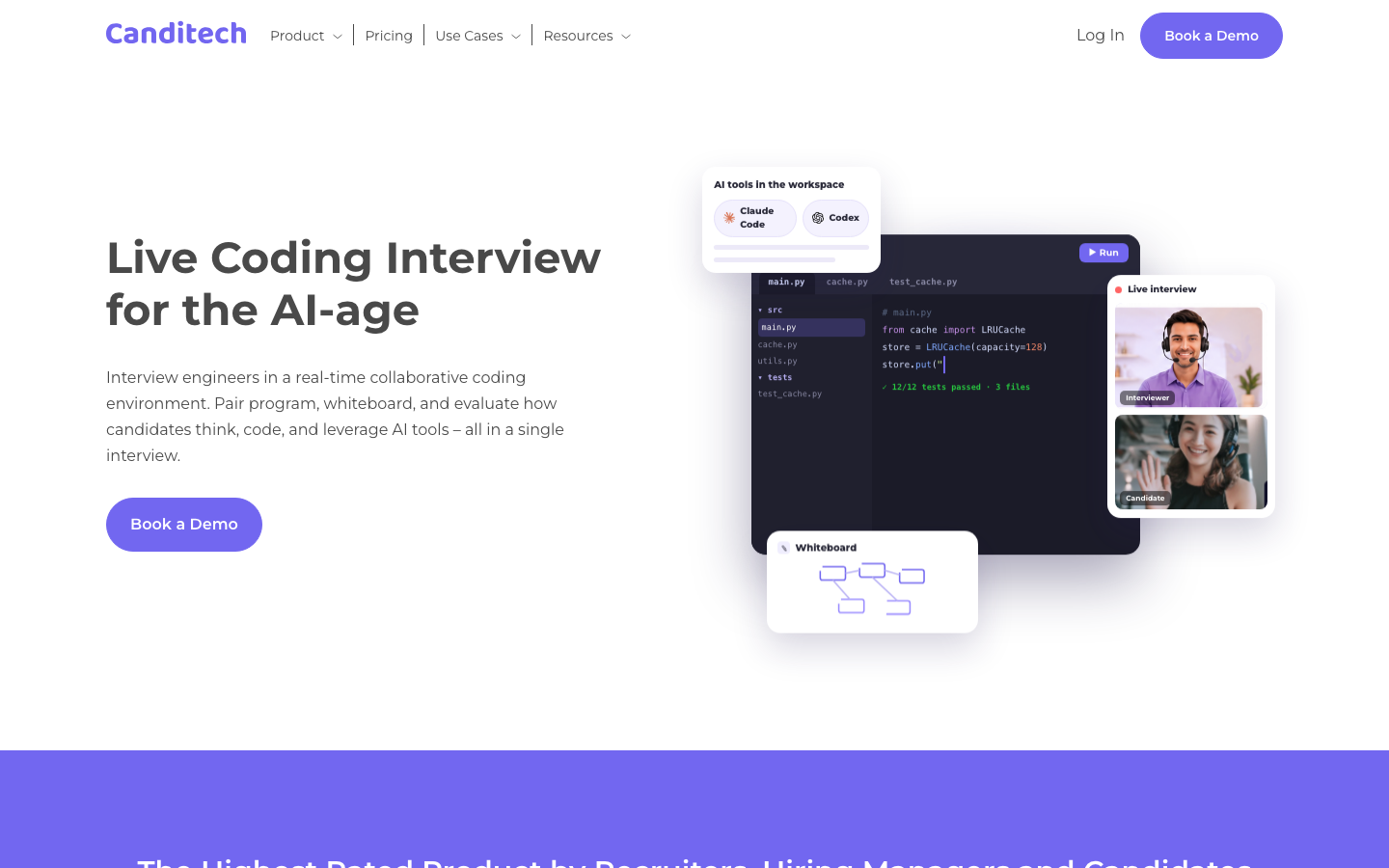
Canditech is a multi-skill assessment platform that adds live coding interviews to a library of pre-employment tests. AI tools such as Claude Code and Cursor are allowed inside the interview. Its pricing page lists 500+ pre-built tests. Cheating controls flag copy-paste, tab switches, and new devices or locations.
Software Pros
- Shows how candidates actually work with AI coding tools
- Copy-paste, tab-switch, and device checks
- Coding, Excel, video, and open-text questions in 1 library
Software Cons
- Coding questions and ATS integration start on Pro, not Team
- Webcam snapshots and monitored ChatGPT sit on Enterprise
- Shallower coding depth than developer-only platforms
Canditech Review
I would point Canditech at a company that hires a few developers alongside many non-technical roles and wants 1 vendor for both. Tests score automatically, while live interviews rely on your interviewer’s judgment. Candidates get a shared editor with real AI tools, which feels closer to the job than a locked-down browser. Pro costs $200 per month billed yearly for 100 candidates, the first plan with coding questions.
Our Verdict
AI-Era Live Coding Plus Tests
*As pricing is subject to change, prices are listed as they stand in October 2026
Coderbyte
Quick Overview
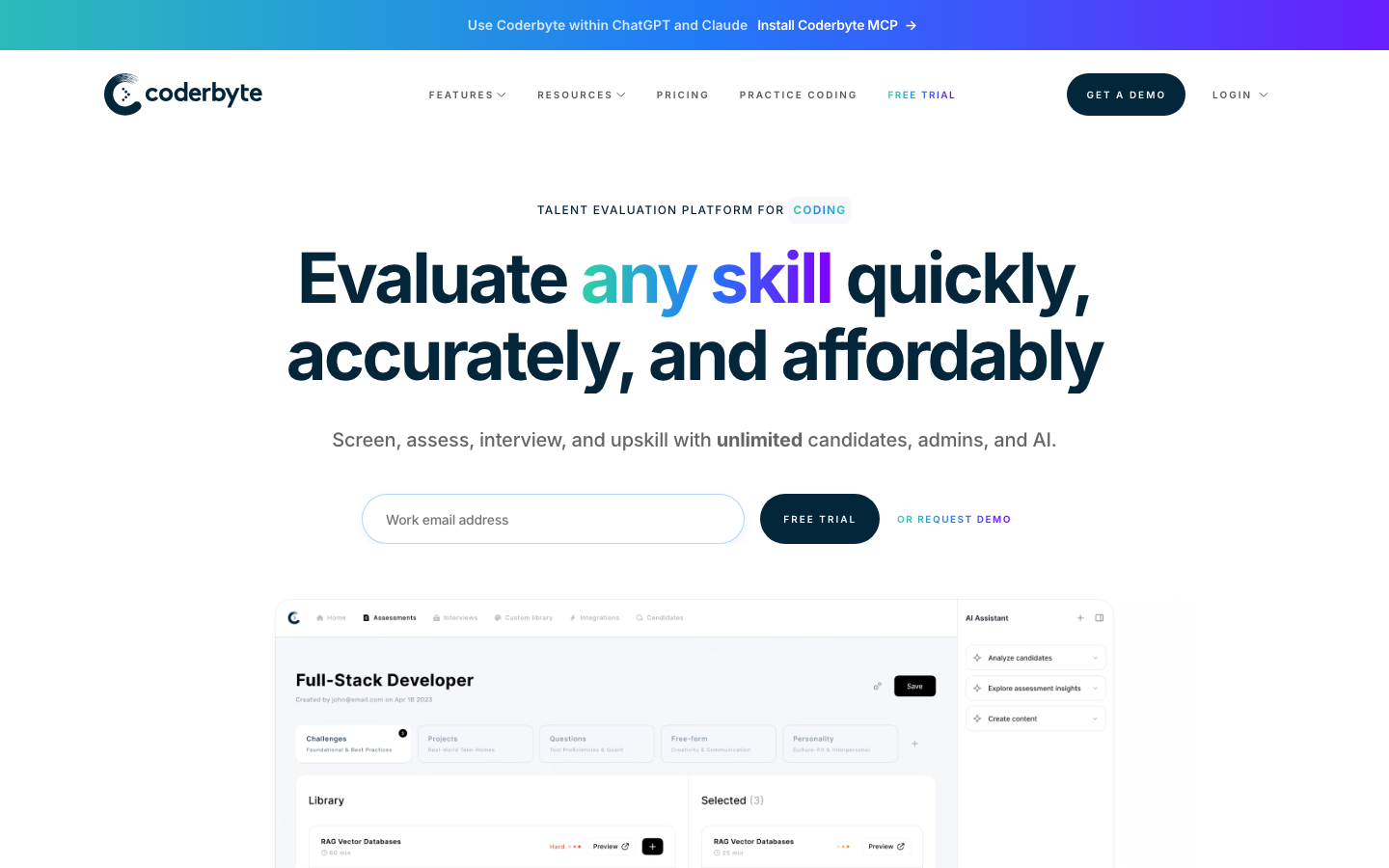
Coderbyte is a developer assessment platform with timed challenges, take-home projects, live coding, and AI phone screens. Candidates can get an optional AI chat and agent mode. It also scores resumes and detects AI-generated content. The vendor says 3,000+ startups, enterprises, and staffing platforms use it.
Software Pros
- Tests how candidates build with frontier models in VS Code
- Unlimited candidates on the $1,999 yearly Pro plan
- Named ATS partners include Greenhouse, Lever, and Workday
Software Cons
- API, ATS, and MCP integrations cost $1,499 a year extra on Pro
- The Monthly plan caps usage at 20 invites
- Puzzle-style challenges need curating for senior roles
Coderbyte Review
The hiring team this fits is a startup or staffing firm with steady but unpredictable volume. Scoring is automatic, with playback and AI analysis for reviewers, and employers can enable or disable AI chat and agent mode. Candidates work in a native IDE or VS Code. The Monthly plan costs $99 for 20 invites, with $20 per extra invite, and Enterprise starts at $14,995 a year.
Our Verdict
Flexible Plans for Steady Hiring
*As pricing is subject to change, prices are listed as they stand in October 2026
CoderPad
Quick Overview
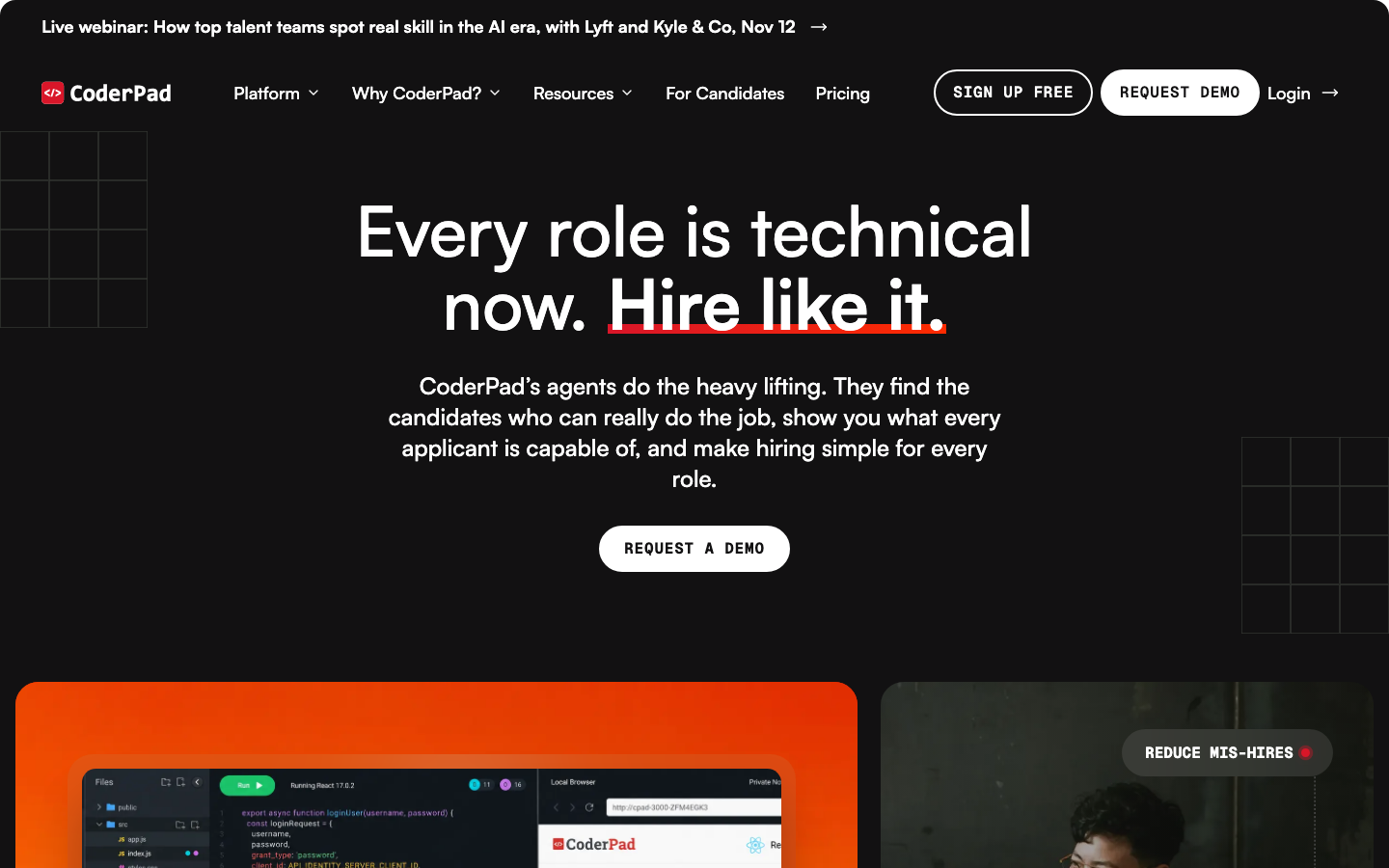
CoderPad is a developer assessment platform with take-home and auto-scored screens (CoderPad Screen, formerly CodinGame for Work) and live pair-programming interviews (CoderPad Interview). AI Assist runs in every pad, and it captures candidate prompts for playback. The vendor says 4,000+ customers use it.
Software Pros
- Live pads run real code in 40+ languages and frameworks
- Every AI prompt is captured for interviewer playback
- Claude Code and Codex run inside the pad from Frontier Lite
Software Cons
- ATS integrations such as Greenhouse and Lever sit on Enterprise
- Starter allows 60 interviews a year on annual billing
- Extra tests or interviews cost $30 each
CoderPad Review
It shines for team that run many live coding interviews and want screening in the same tool. Screens are scored automatically, while interviews depend on the engineer in the pad, supported on Enterprise by an AI Interview Coach. Candidates get a real IDE instead of a whiteboard. Starter costs $80 per month (billed annually) or $120 per month, and Team costs $400 or $500 per month.
Our Verdict
Strongest for Live Pair Coding
*As pricing is subject to change, prices are listed as they stand in October 2026
CodeSignal
Quick Overview
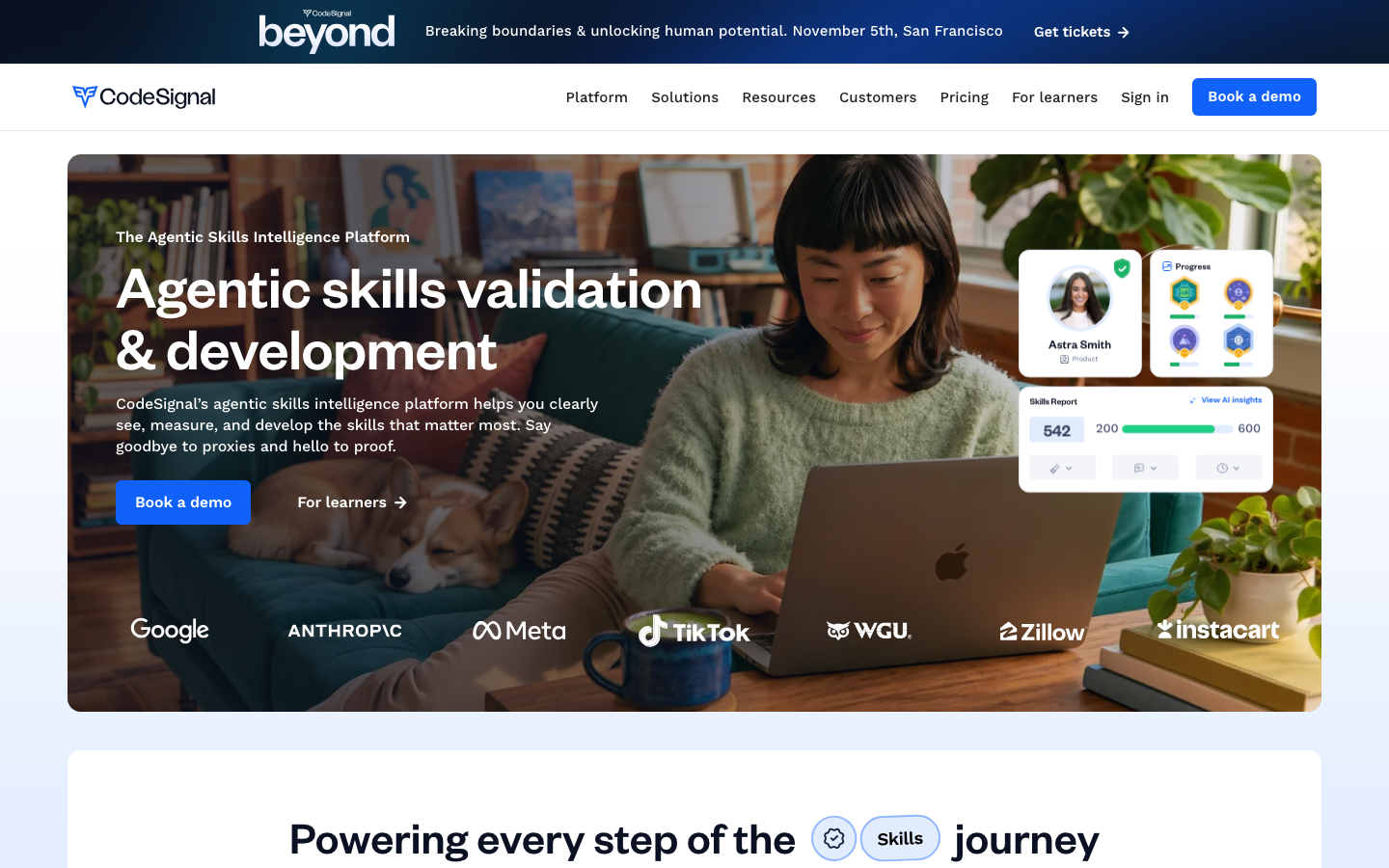
CodeSignal is a developer assessment platform covering pre-screen tests, live technical interviews, and AI Interviewers, including agentic assessments where candidates work with Claude and Codex. Integrity tools include AI proctoring, ID verification, and a Suspicion Score. Its pricing page says a credit is spent only when a candidate starts.
Software Pros
- Agentic assessments test real work with AI assistants
- AI proctoring and ID verification on every plan
- Credits work across assessments, AI interviews, and live interviews
Software Cons
- Build includes only 60 credits a year on annual billing
- Gem and Ashby need Grow, and Workday or iCIMS need Pro
- Extra credits cost $20 each
CodeSignal Review
My take is that CodeSignal suits a company standardizing technical screening across many teams. Scoring combines automatic grading with AI insights, and Pro adds candidate benchmarking. Candidates work in a cloud IDE and may meet an AI Interviewer first. Build costs $79 per month billed annually, or $99 per month with 5 credits. Grow costs $479 or $599 on the same terms.
Our Verdict
Standardized Screening at Scale
*As pricing is subject to change, prices are listed as they stand in October 2026
Glider AI
Quick Overview
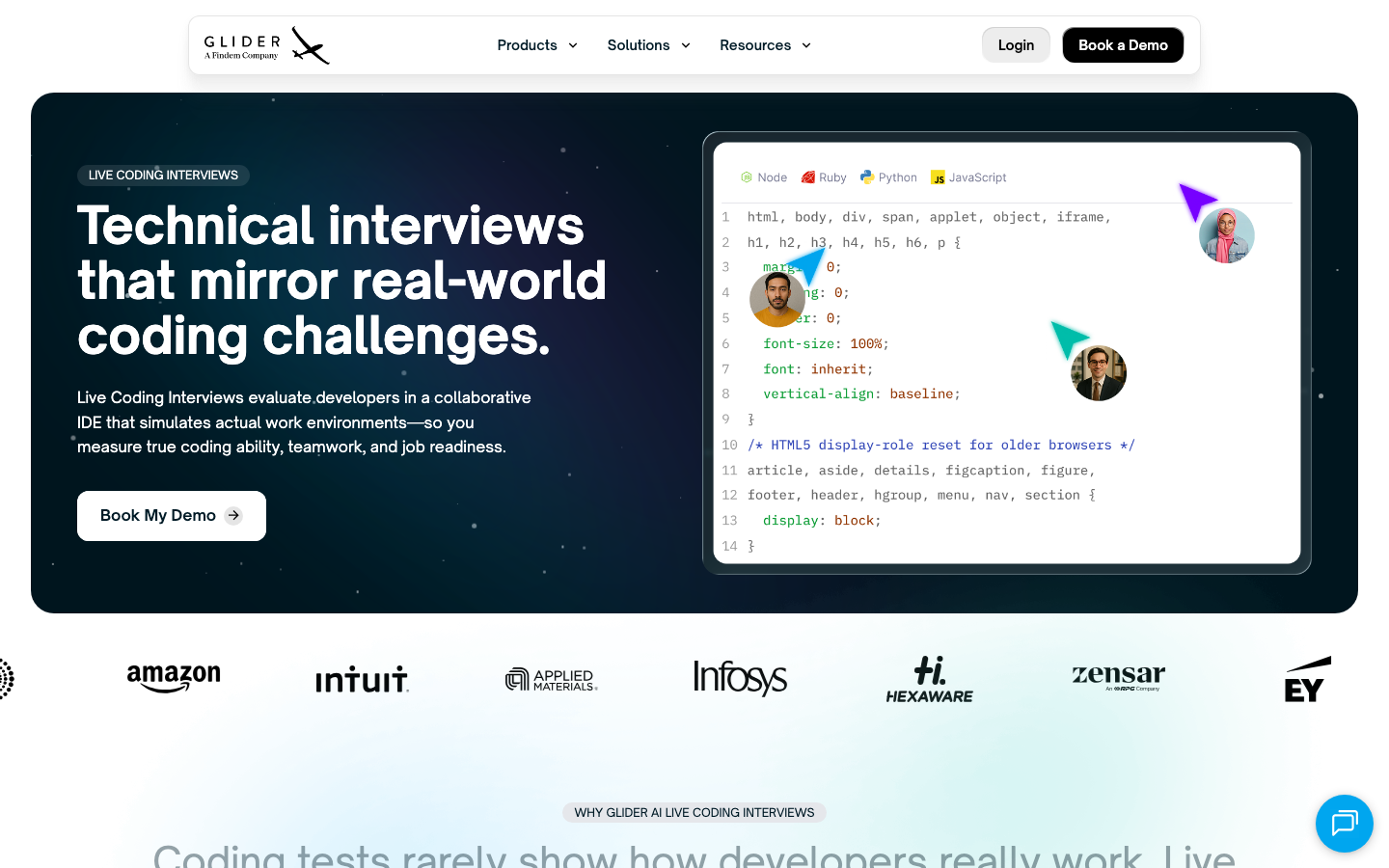
Glider AI is a developer assessment platform for enterprises, staffing firms, and IT services. It is built around live coding in a cloud IDE, pair programming, and AI-led interviews. Its AI Assistant lets candidates use AI in the session so employers can see how they work with it. The vendor supports 250+ languages, frameworks, and libraries.
Software Pros
- Live sessions are recorded and replayable for review
- Integrated AI proctoring against impersonation and code leakage
- Recruiter-led interviews with AI prompts, no engineer required
Software Cons
- Pricing is by quote only
- Built for volume, so heavy for a 5-person startup
- Live formats still take an interviewer’s calendar time
Glider AI Review
For a team that screens contractors or IT services staff in volume, Glider AI keeps the process consistent. Scoring blends AI-backed reports with the interviewer’s notes, and recruiters can replay sessions before shortlisting. Candidates work in a familiar IDE on tasks closer to real work than trick questions. Its autonomous AI interviews run around the clock, which helps when candidates sit across many time zones.
Our Verdict
Live Coding for Staffing Firms
HackerEarth
Quick Overview
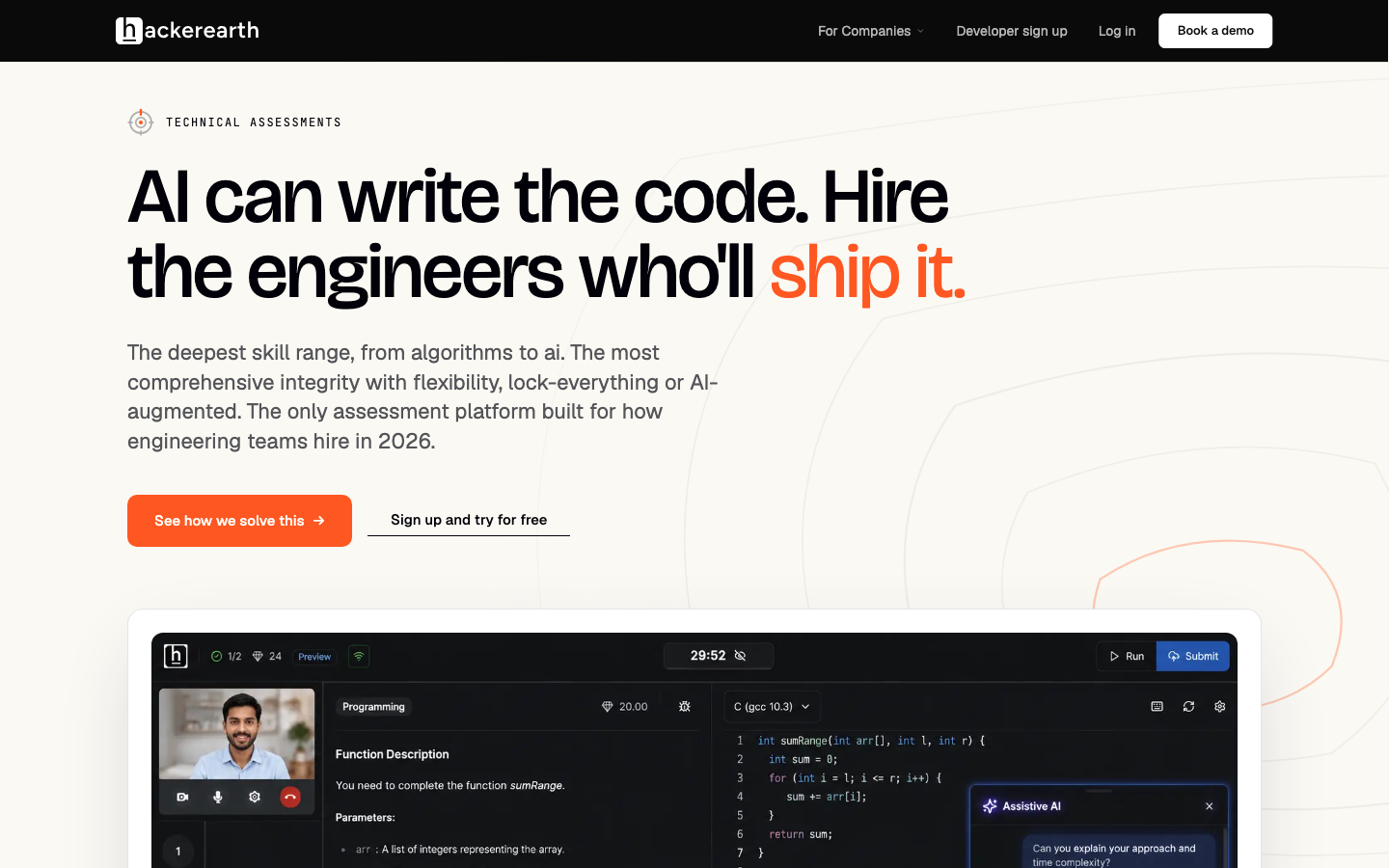
HackerEarth is a developer assessment platform for enterprise, campus, and high-volume hiring, with timed tests, FaceCode live interviews, and a separate AI interviewer called OnScreen. Candidates can answer in 40+ languages. Its pricing page lists plagiarism detection on every plan and AI-based checks on Scale.
Software Pros
- Built for campus drives and large hiring events
- Plagiarism detection included from the Growth plan
- 20K+ question library on the Scale plan
Software Cons
- Growth includes only 10 credits a month
- ATS integrations start on Scale
- The OnScreen AI interviewer is priced as a separate product
HackerEarth Review
The clearest case for HackerEarth is a graduate program or recruiting team screening hundreds of developers a month. Tests score automatically against test cases, and reports suit recruiters as much as engineers. Candidates get snippets and autocomplete in each language, and a 30-day free trial is offered. Growth costs $99/month or $990/year, and Scale costs $399/month or $3,990/year.
Our Verdict
Built for High-Volume Screening
*As pricing is subject to change, prices are listed as they stand in October 2026
Karat
Quick Overview
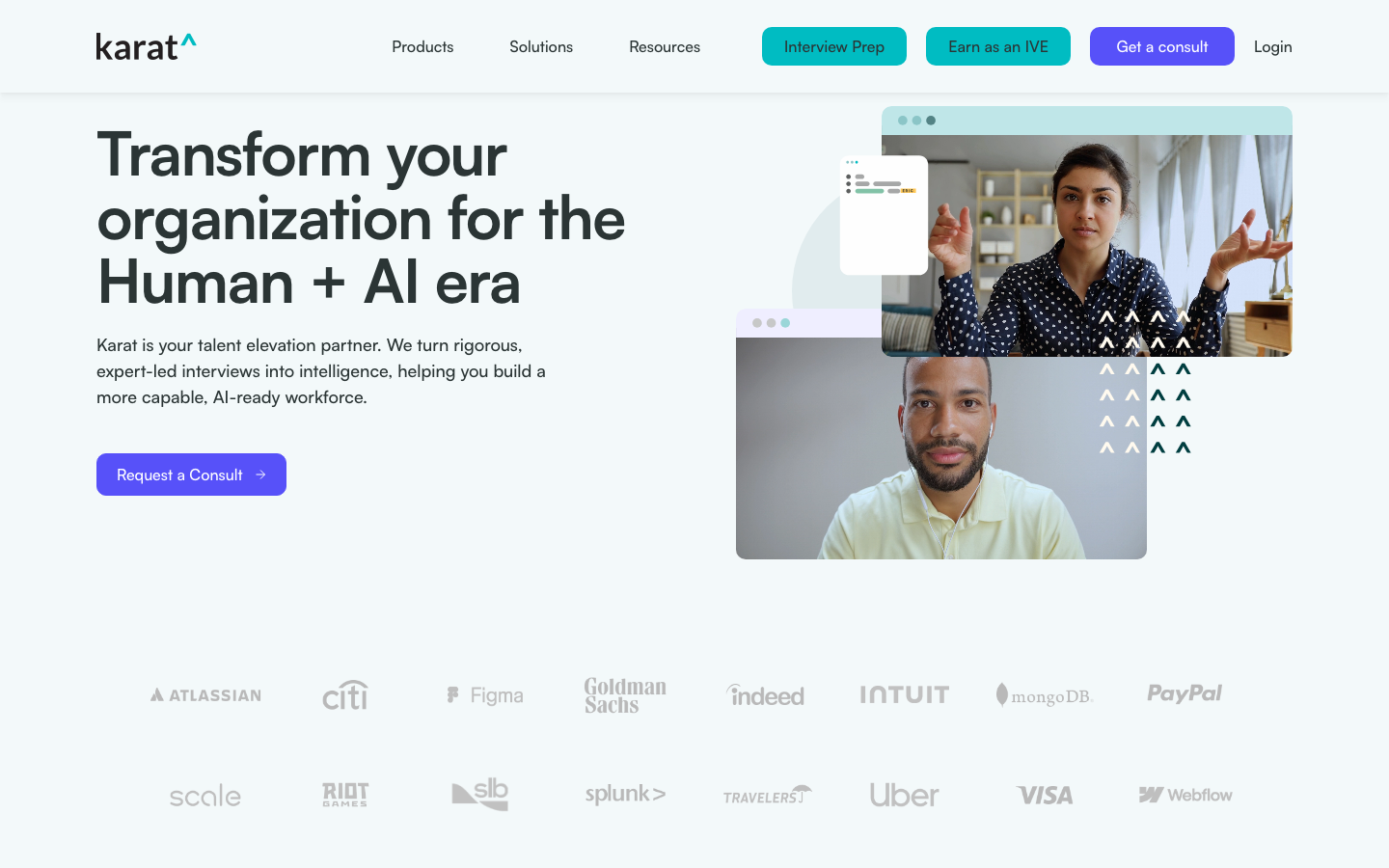
Karat is an interview service that runs technical interviews for you with its own Interview Engineers and also screens contractors and IT service providers. Its NextGen format, launched in December 2025, gives candidates a production-grade codebase and a built-in AI assistant. The vendor cites 600,000+ technical interviews.
Software Pros
- Trained engineers run interviews instead of your team
- NextGen scores how candidates direct and check AI code
- Benchmarking across roles and geographies
Software Cons
- Enterprise contracts with quote-only pricing
- Only 12 G2 reviews, a thin sample
- Less control over each interviewer’s style
Karat Review
Put simply, Karat buys back engineering time. It suits enterprises and growth-stage companies that interview more engineers than their teams can handle. Scoring is human, using Karat’s rubrics, with structured data for hiring managers. Candidates meet a live engineer, which most prefer to a silent timer. Karat bought Byteboard in January 2025, and NextGen tests AI-enabled work in multi-file projects.
Our Verdict
Interviews Run by Engineers
Qualified
Quick Overview
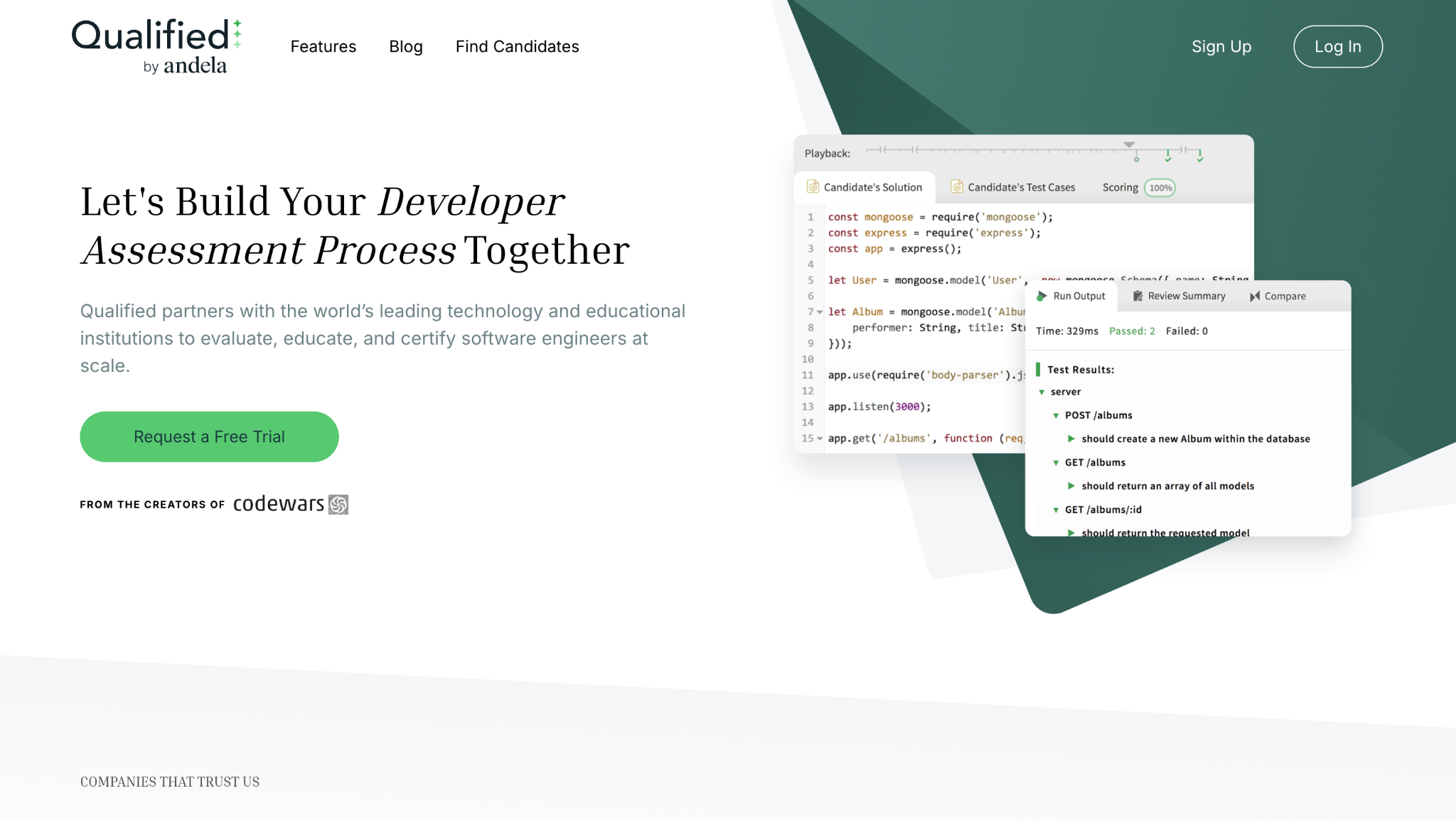
Qualified is a developer assessment platform owned by Andela that offers auto-scored coding challenges, custom projects, and pair-programming sessions for enterprises and education. Scoring runs on unit tests in frameworks such as Mocha, RSpec, PHPUnit, and JUnit. It names no AI interviewer or AI assistant feature, and it checks code similarity.
Software Pros
- Realistic project tasks scored by unit tests
- Code playback shows how a solution was built
- Blind reviewers and assessment reviews for teams
Software Cons
- Pricing is quote-only and billed annually
- The free trial is capped at 5 assessment results
- No AI-era features named on its site
Qualified Review
This one fits an enterprise or education program that wants realistic tasks without paying an engineer to grade each one. Scoring is automatic through unit tests, and reviewers can compare solutions side by side. Candidates code in a web IDE, and any assessment can become a pair-programming conversation. Andela also owns Woven, so buyers comparing both should ask how the 2 products are positioned today.
Our Verdict
Auto-Scored Realistic Projects
SkillPanel
Quick Overview
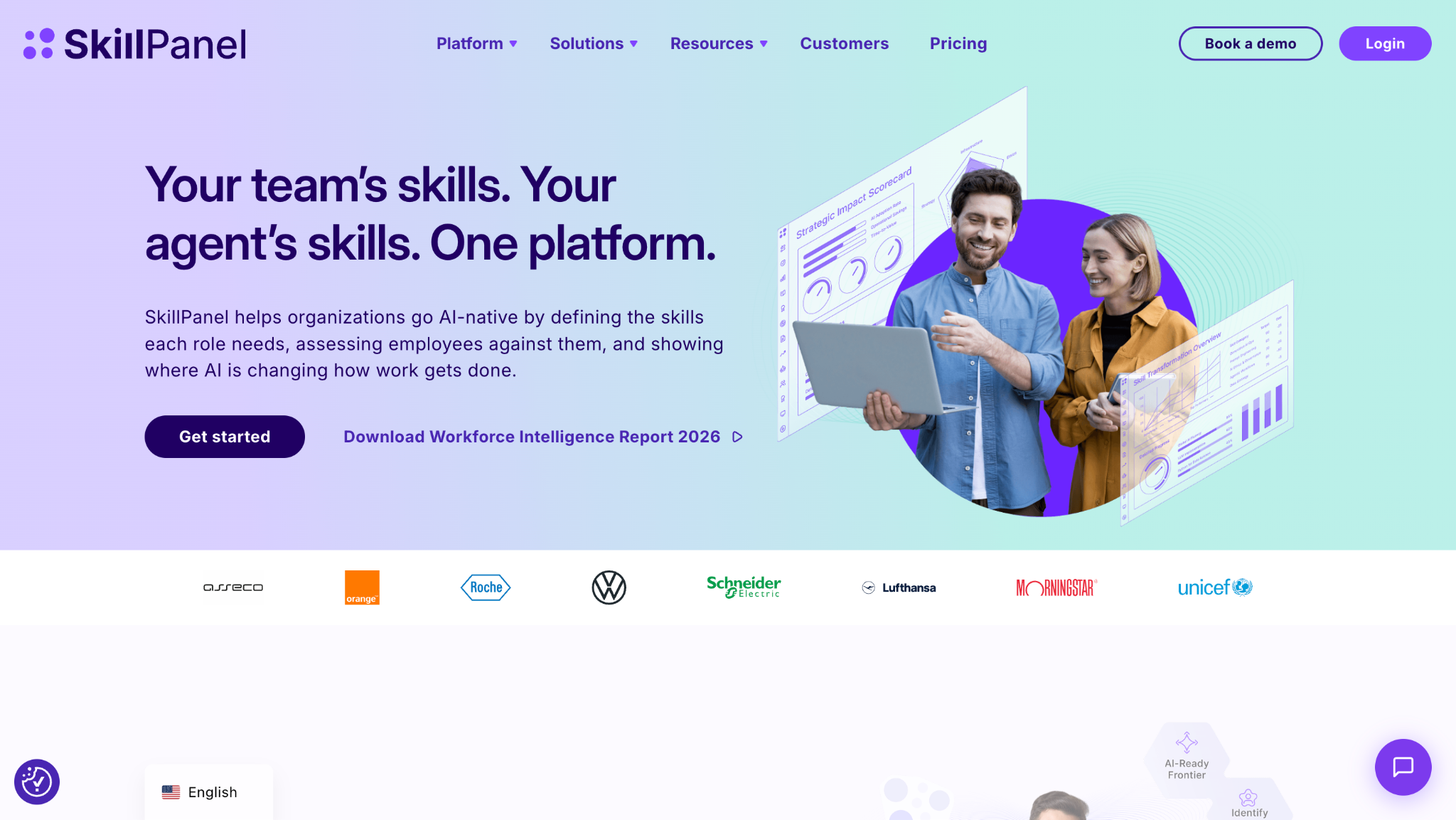
SkillPanel, formerly DevSkiller, is a real-world work assessment vendor whose SkillCheck coding tests use its RealLifeTesting methodology. Candidates may use their own IDE, clone to Git, run unit tests, and look things up on Stack Overflow, GitHub, or Google. Tests cover 220+ languages, resources, and skills.
Software Pros
- Work-sample tasks set at junior, middle, and senior levels
- Candidates use their own IDE and normal research tools
- Custom tests can be built from your own codebase
Software Cons
- Pricing for coding tests is quote-only
- Longer tasks ask more of a candidate’s time
- The wider skills platform can blur what you are buying
SkillPanel Review
I would point SkillPanel at mid-size and large companies that want to see real tasks rather than puzzles. Scoring is automatic, with results written for non-technical recruiters, and teams can watch tests in real time. Candidates work much as they would on the job, which senior developers tend to respect. The vendor says Plutora saved about 8 hours of developer time per candidate.
Our Verdict
Real Tasks With Real Tools
Testlify
Quick Overview
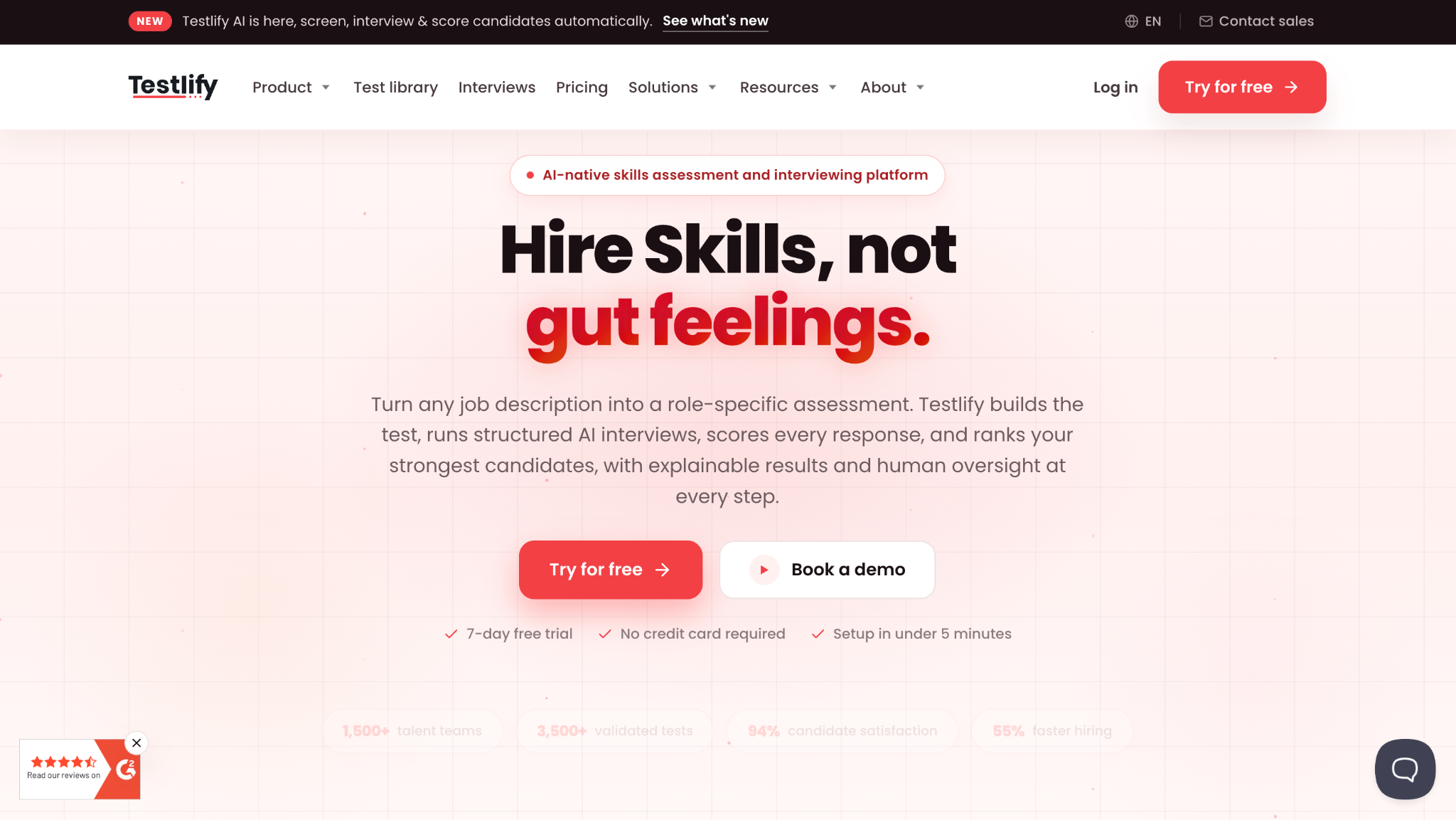
Testlify is a multi-skill assessment platform with 3,500+ tests, including programming tests and a live coding platform covering 45+ languages. Its anti-cheating suite includes AI assistance detection, Focus Guard (Anti-Cheat Mode), face detection, and proctoring via tabs, snapshots, and IP. Its pricing page says 1,500+ hiring teams use it.
Software Pros
- Coding, cognitive, and job simulations in 1 subscription
- AI assistance detection flags unapproved AI use
- A credit is spent only when a candidate starts
Software Cons
- 100+ ATS integrations cost $2,388 a year on Standard
- Live video proctoring costs $5 per attempt
- Coding depth trails developer-only platforms
Testlify Review
The hiring team this fits is a growing company testing developers and other roles with the same tool. Scoring is automatic, and recruiters can add custom coding challenges and role simulations. Candidates take the test in a browser, and the platform runs in 16+ languages. The Starter plan costs $139 per month (billed annually), or $1,668 a year for 100 credits, and includes a 7-day trial.
Our Verdict
Broad Library With Coding Tests
*As pricing is subject to change, prices are listed as they stand in October 2026
WeCP
Quick Overview
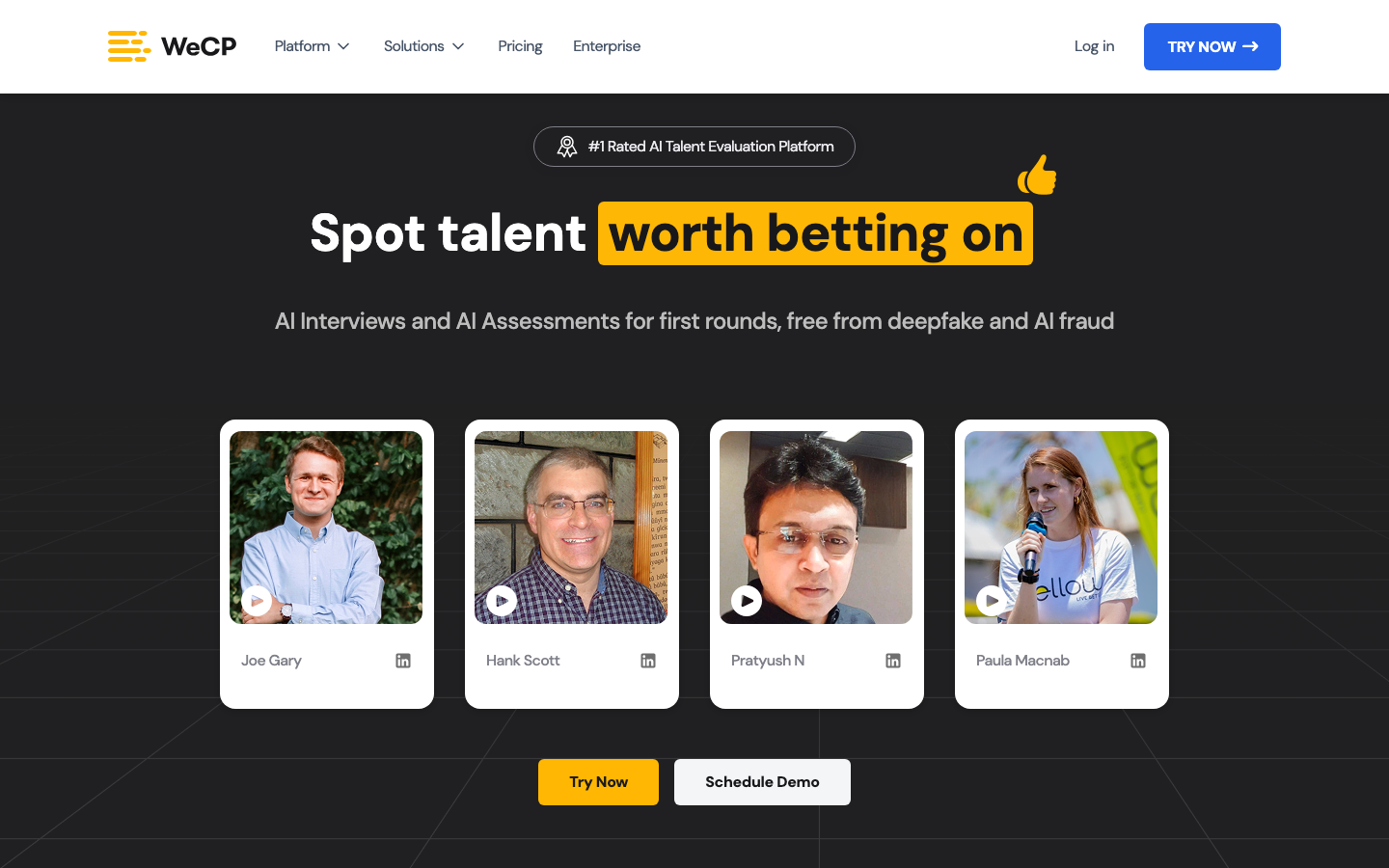
WeCP is a multi-skill assessment platform combining coding tests, AI Interviews for first rounds, and panel interviews. Sherlock, its AI integrity agent, watches for AI-assisted cheating and deepfakes, so candidates are expected to work without outside AI help. The vendor says 2,000+ companies in 20+ countries use it.
Software Pros
- Free Freemium plan for a first assessment
- Sherlock targets AI cheating in remote interviews
- Prebuilt questions plus custom coding tests
Software Cons
- Paid plans are quote-only on the current page
- Sherlock’s 92% accuracy figure is the vendor’s own claim
- A credit is used when a candidate starts or attempts a test
WeCP Review
It shines for small or budget-conscious team that want AI first-round interviews without an enterprise contract. Tests score automatically, and AI Interviews produce structured results for review. Candidates meet either a coding test or an AI interviewer, depending on the stage. ATS integrations are listed on the Freemium plan, which is unusual, and larger teams move to an Enterprise plan with unlimited candidates.
Our Verdict
Budget AI Screening With Sherlock
Woven
Quick Overview
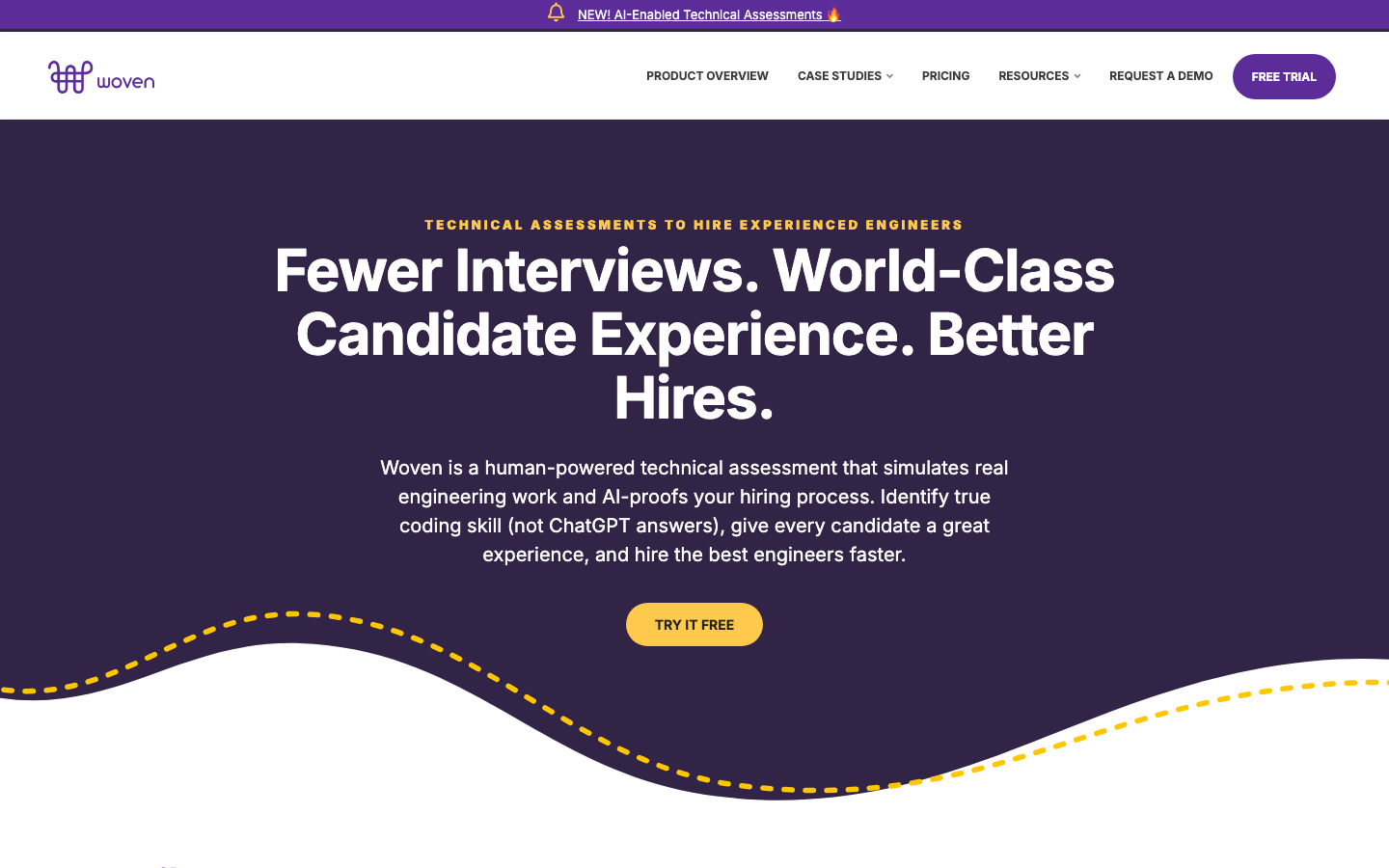
Woven is a real-world work assessment service built on scenarios such as reviewing a pull request, debugging a production bug, and system design. Two certified engineers score every submission double-blind, with AI and plagiarism detection. Andela acquired Woven in January 2026, and the vendor says customers cut interview time by 85%.
Software Pros
- Scenarios match senior engineering work, not quizzes
- Human scoring by 2 certified engineers
- Unlimited candidates on the monthly plan
Software Cons
- $4,000 success fee per hire on the monthly plan
- The monthly plan covers only 2 unique roles
- No G2 product profile to check reviews against
Woven Review
Woven is clearest for companies hiring experienced engineers who will not sit through puzzles. Candidates complete short, time-boxed scenarios that resemble the job, and engineers score the result, so your team meets only strong finalists. Andela also owns Qualified, so ask how the 2 products will fit together. The monthly plan costs $249 plus $4,000 per successful hire, with a 60-day money-back guarantee.
Our Verdict
Human-Scored Senior Engineering Tasks
*As pricing is subject to change, prices are listed as they stand in October 2026
Xobin
Quick Overview
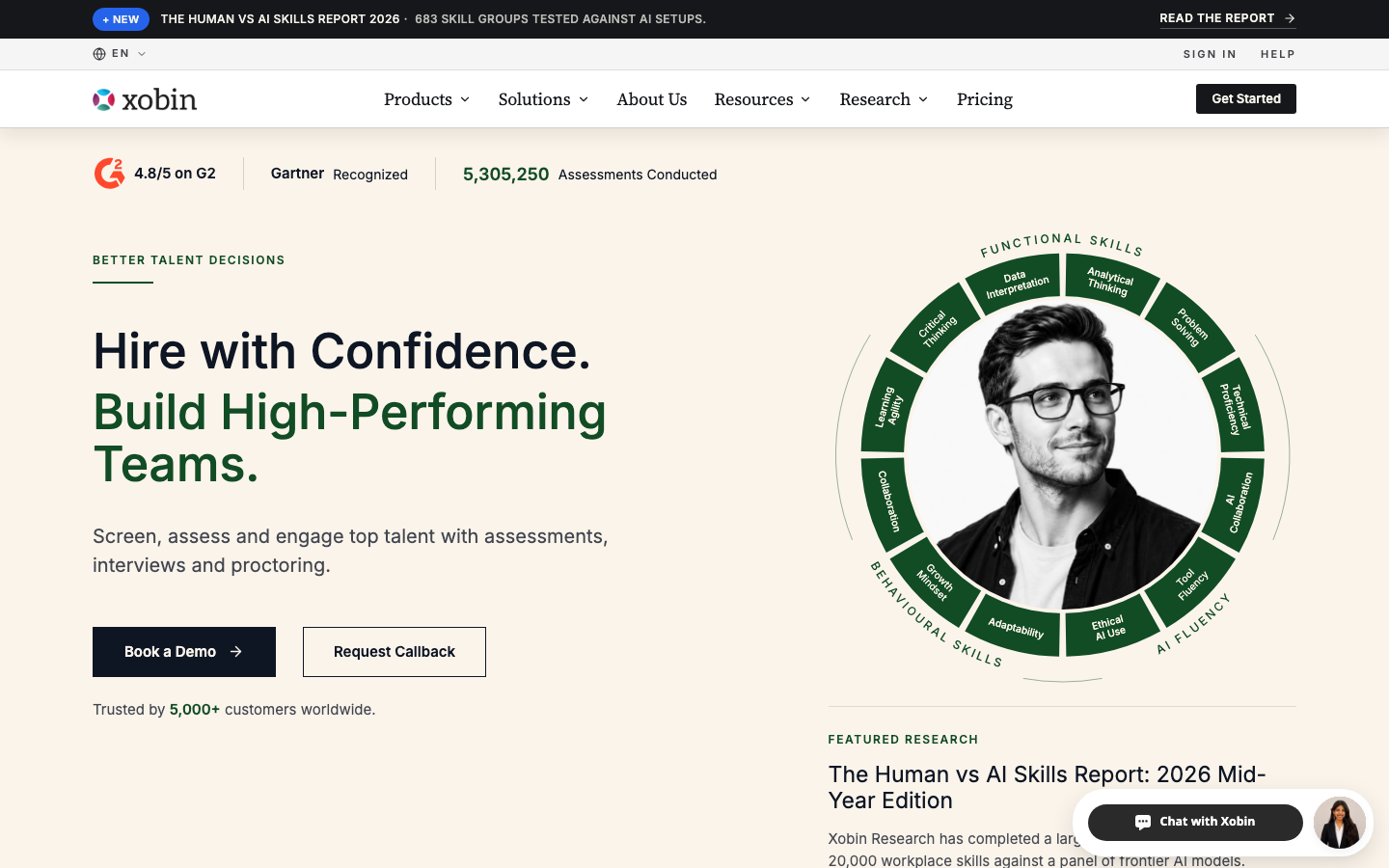
Xobin is a multi-skill assessment platform with 3,400+ prebuilt tests for skills, coding, and psychometrics. It adds live coding and an AI interviewer that asks follow-up questions. Its proctoring uses identity checks, browser controls, and AI monitoring. The vendor says 5,000+ customers use it worldwide.
Software Pros
- Coding assessments in 40+ languages with automated test cases
- AI interviewer asks follow-ups while candidates code
- Cognitive and personality tests in the same platform
Software Cons
- Pricing varies by region and module
- Cognitive and AI interview modules are quote-only
- Coding depth trails specialist platforms
Xobin Review
Candidates will find Xobin closer to a general assessment suite than a developer playground, and that is the point. It suits mid-size companies and staffing agencies hiring across technical and other roles. Coding tests score automatically against test cases, with code-level reports for reviewers. The Skill Assessments module starts at $699 in North America, with a 14-day free trial.
Our Verdict
Single Suite for Every Role
*As pricing is subject to change, prices are listed as they stand in October 2026
FAQs About Coding Assessment Tools
What is a coding assessment?
A coding assessment tests programming skills used in hiring. It can be timed challenges scored against test cases, a take-home project, or a live session where an engineer and the candidate code together. Newer formats add work samples, such as reviewing a pull request, and AI interviews. Most hiring processes start with a short screen, then move to a longer, more realistic exercise.
Should candidates be allowed to use AI in coding tests?
It depends on the job. If your engineers use AI assistants daily, a test that allows them is closer to real work and shows how a candidate checks AI output. If you need proof of unaided fundamentals, ban AI for that stage and say so clearly. Either way, state the policy in the invitation before anyone starts so candidates never have to guess what is allowed.
How do coding assessment tools detect cheating?
Most platforms combine several separate signals. Proctoring watches the webcam, screen, or browser, and identity checks match the person to an ID. Tab-switch and copy-paste tracking show behavior during the test, code similarity checks compare answers with known solutions, and AI-use detection looks for generated code. All of these produce flags rather than proof, so reviewers should review the evidence before rejecting anyone who was flagged.
How long should a coding test be?
Screening tests of 30 to 60 minutes are common, and most candidates will finish something that size. Longer take-home projects give a richer picture but lose senior candidates, who often hold several offers and have little free time. Treat these numbers as typical practice rather than a rule. A sensible pattern is a short screen first, then a longer exercise only for people who have already shown real interest.
Are live coding interviews better than take-home tests?
Neither is better overall, because each tests something different. A live interview shows how someone reasons, explains choices, and responds to hints, which matters for collaborative roles. A take-home test reflects work closer to the job, done at a normal pace without an audience. Many teams use both: a take-home or work sample first, then a live session that discusses the code the candidate already wrote.
How much do coding assessment tools cost?
Published entry prices in October 2026 start at $79 per month for CodeSignal and $80 for CoderPad, both billed annually. Coderbyte charges $99 a month for 20 invites, HackerEarth $99 a month for 10 credits, and Woven $249 a month plus a fee per hire. Several vendors quote only. You usually spend a credit when a candidate starts, so drop-offs and retakes count against your plan’s allowance.
Do coding assessments work for senior engineers?
Puzzle-style tests often don’t, because they reward recent practice over experience. Senior engineers respond better to work samples, code review tasks, debugging exercises, and system design interviews, where judgment and trade-offs matter. Keep the time commitment modest and explain why each step exists. A senior candidate who sees a realistic task will usually finish it, and you learn more from the result than from a puzzle score.
What is the IBM software developer coding assessment?
It is an online coding test that IBM uses early in the hiring process for many software developer roles. Candidates commonly report a timed set of data structures and algorithms questions delivered on HackerRank, but IBM has not confirmed the platform publicly. Prepare as you would for any timed screen and practice explaining your approach. Read the invitation closely for the current format, the number of questions, and the time limit.

Helen is Anywherer’s Market Analyst & Content Researcher, with extensive experience in analyzing global employment markets and HR technology trends. She is skilled at turning complex market data into clear, well-researched insights that inform every piece of content. With a strong grasp of the EOR, PEO, and international hiring space, Helen plays a key role in keeping Anywherer’s research accurate, up to date, and genuinely useful for readers.