
A Swiss umbrella company employs you so that you do not have to employ yourself. The provider signs an employment contract with the consultant and invoices the client or the recruitment agency for the assignment. It runs Swiss payroll, makes all statutory deductions, and pays the salary at month-end.
Switzerland has no legal category with that name. What the market calls an umbrella company is usually payrolling, Lohntraegerschaft (salary hosting), or portage salarial. Where the consultant is placed with a client who directs the work, the arrangement can qualify as Personalverleih (staff leasing) under the AVG/LSE.
That is the first thing to unlearn if you arrive from Britain. The structure behind the best umbrella company in the UK is a payroll convention built around PAYE. The Swiss version sits inside ordinary employment law and a federal licensing regime. Copying assumptions across the Channel is how contracts go wrong.
Buyers here fall into 2 groups. Consultants who want employee status without founding a GmbH, and companies or agencies that need a compliant Swiss legal employer for project workers. Provider choice decides licensing scope, pension treatment, payroll accuracy across 26 cantons, permit handling, and when you actually get paid.
I reviewed 10 providers for this guide. I opened each official site in September 2026. I checked what each one publishes on legal-employer coverage, licensing, pricing, payroll depth, permits, and contractor tools. If a provider doesn’t publish something, I say so rather than filling the gap with an estimate.
How Do Umbrella Companies Work in Switzerland?
The structure has 3 parties. The provider is the legal employer, the consultant is its employee, and the client company hosts the assignment. The consultant negotiates the rate and works directly with the client, and the provider then processes the paperwork.
The provider signs the employment contract, runs monthly payroll, and issues payslips and the annual salary certificate. It withholds and remits AHV/IV/EO and ALV contributions and arranges occupational pension under the BVG/LPP where the salary qualifies. It also covers accident insurance and processes Quellensteuer (source tax) where required.
The client or the agency receives an invoice for the assignment. In a typical umbrella company Switzerland setup, the consultant never invoices anyone personally. That is the point for anyone who wants employee status without company administration.
Where the worker is made available to the client and the client holds the instruction and control rights, this is Personalverleih. The AVG/LSE then applies, along with its licensing regime. A payroll bureau that only processes salaries for a company’s own staff sits elsewhere. The label matters less than what happens in practice.
Licensing follows the same logic. Under AVG Article 12, an employer that commercially supplies workers to client businesses needs an operating license from the cantonal labor office. Cross-border leasing activity requires an additional federal license from SECO. The same article states plainly that staff leasing from abroad into Switzerland is not permitted.
Umbrella and EOR overlap but are not identical. Both can make a Swiss provider the legal employer. EOR is an international hiring label used for permanent local hires, while umbrella work is assignment-based. My guide to an employer of record in Switzerland covers that model. In either case, the staff-leasing analysis still decides which license the provider needs.

INSIGHT: Is a Swiss umbrella company the same as a UK or Irish umbrella company?

No. Switzerland applies ordinary employment law plus staff-leasing rules, rather than a UK-style contractor-payroll convention or a French-style portage statute.
- The worker becomes an employee of the Swiss provider and receives Swiss payslips, Swiss social-insurance cover and a Swiss salary certificate.
- Where the consultant is supplied to a client who directs the work, the AVG/LSE staff-leasing rules apply to the arrangement.
- Licensing is Swiss: a cantonal authorization for domestic leasing, plus a federal SECO authorization where the activity crosses the border.
- Direct or indirect staff leasing from a foreign provider into Switzerland is prohibited, so a foreign license solves nothing here.
Top Umbrella Companies in Switzerland for 2026
I looked for the same things in every provider. Does the company become the Swiss legal employer, and does it say so on its own site? What does it publish about cantonal and federal licensing? How deep does the payroll service go, from AHV registration to pension and accident cover? Does it handle permits and cross-border commuters, when is salary released, and is the fee published at all?
The result mixes traditional payrolling specialists, contractor platforms, and companies that also sell EOR or international mobility. There is no single best umbrella company in Switzerland. A consultant in Geneva and an agency placing 20 engineers in Zug are not shopping for the same thing.
All companies below are listed alphabetically, so their position on the page does not indicate ranking.
Access Financial
Company Description:
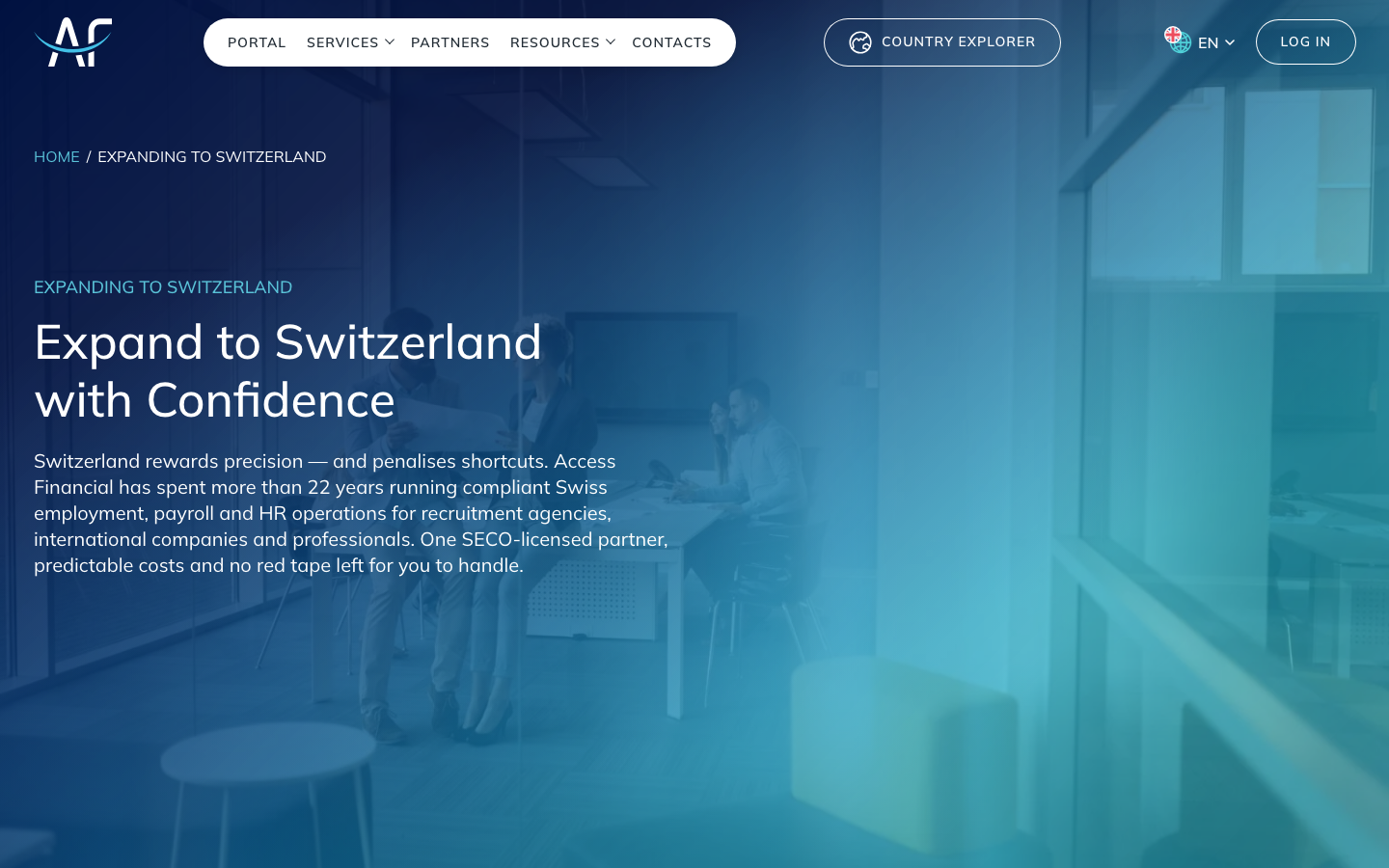
Access Financial runs Swiss employment, payroll, and HR operations for agencies, international companies, and professionals. Its Swiss page cites more than 22 years of local specialization and a federal SECO license for labor leasing and placement nationwide.
Key Features:
- Labor leasing and EOR under one licensed entity
- Social security, pension and child benefit registrations
- Monthly payroll, payslips, taxes and social charges
- Accident, unemployment and sickness cover
- L, B and C permit support
Fee Structure:
Custom. Contact for a simulation or quote.
Top Advantages:
- A published federal license covering the whole country
- Annual salary certificates and exit de-registrations included
- Support in English, German and French
Additional Services:
- Permanent placement compliance support for agencies
- Swiss HR and payroll outsourcing
- Audit readiness for payroll, VAT and federal tax
Our Verdict
I would shortlist Access Financial when an agency needs one licensed partner for a stream of Swiss placements.
CTC Resourcing Solutions
Company Description:
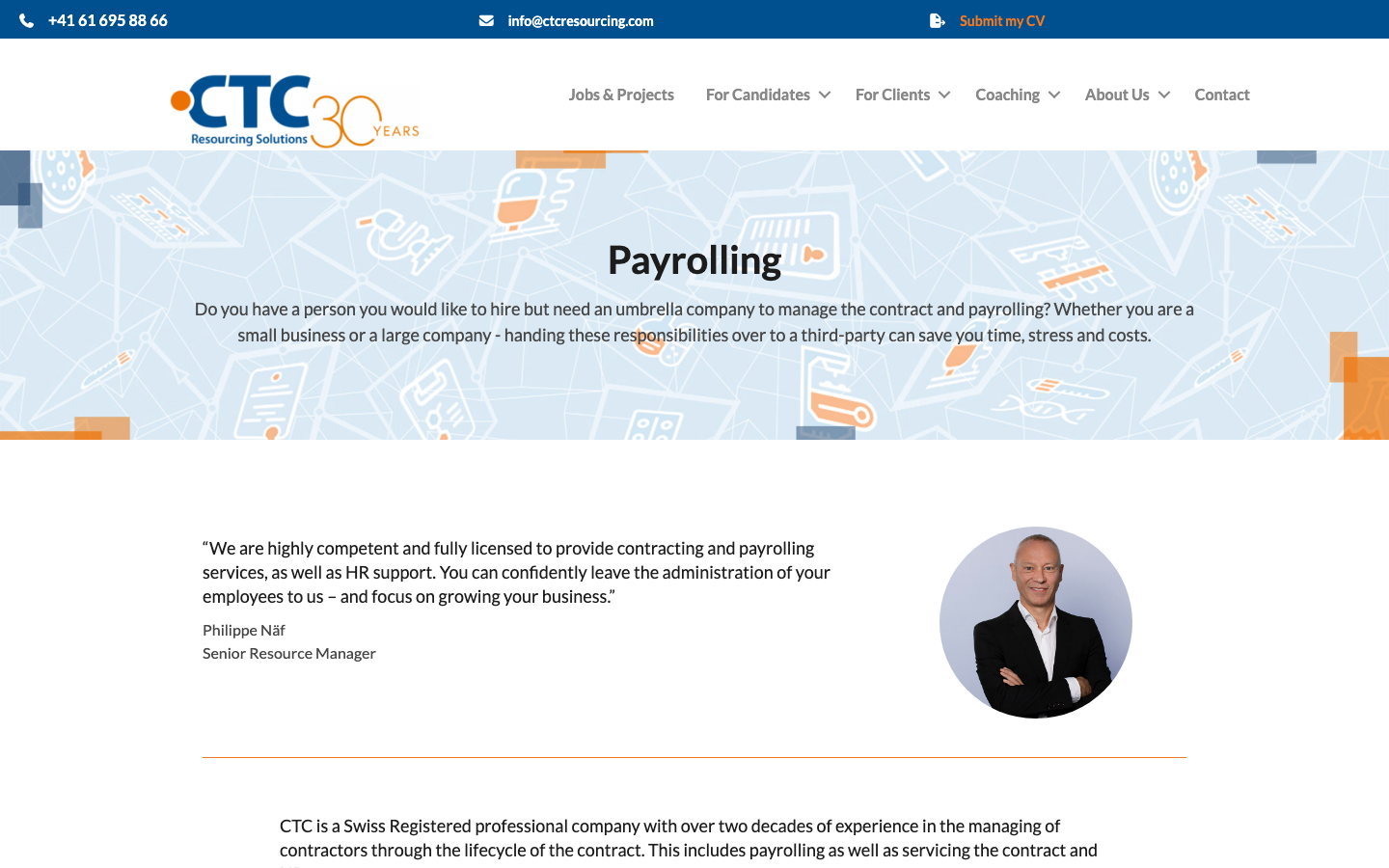
CTC Resourcing Solutions is a Swiss-registered company with its head office in Basel and a second office in Frankfurt. Its payrolling page cites over 20 years of contractor management and states that the company is fully licensed for contracting and payrolling.
Key Features:
- Standalone payrolling, separate from its recruitment work
- Employee registration for permits and tax at source
- Social security, pension fund, and accident insurance
- Contract servicing and HR support
Fee Structure:
Custom. Contact for a simulation or quote.
Top Advantages:
- A licensing statement in the provider’s own words
- Serves legal structures not registered in Switzerland
- Simple monthly processing and reporting
Additional Services:
- Recruitment across its candidate network
- HR support for thin internal teams
- A no-obligation offer before any commitment
Our Verdict
I would ask CTC for a quote when a start-up or a foreign entity needs one Swiss employee payrolled properly.
Diligo
Company Description:
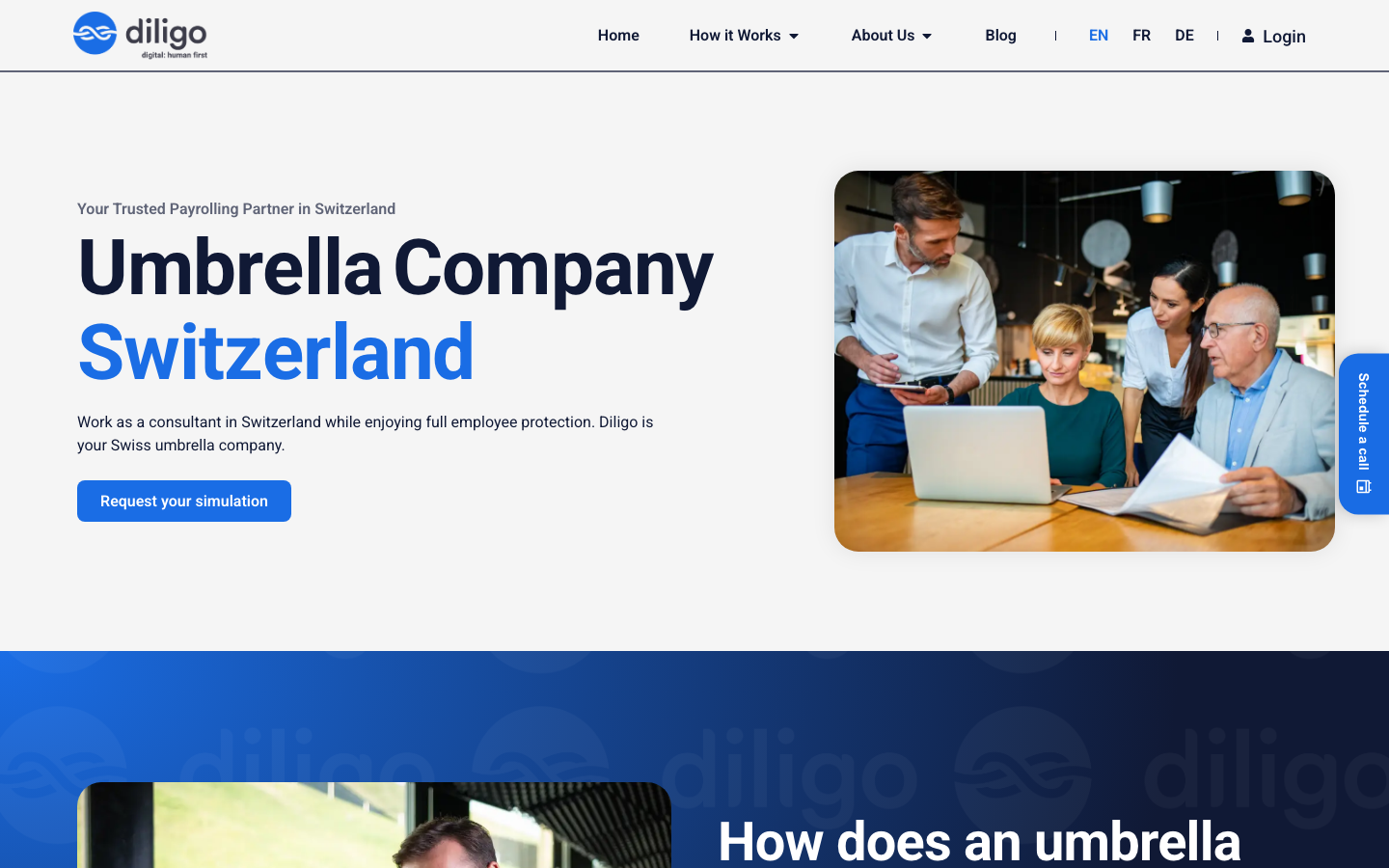
Diligo is a Swiss payrolling provider with offices in Geneva and Zurich. Its umbrella page states that Diligo becomes the legal employer, signs the client agreement, processes salary, and handles all Swiss social contributions, including for cross-border workers.
Key Features:
- Client contract management and Swiss employment contract
- Monthly payroll from invoiced amount to net salary
- AHV/AVS contributions plus ALV, UVG and LPP cover
- Multi-client work, with each mandate handled separately
- Permit applications and renewals for commuters
Fee Structure:
Custom. Request a salary simulation.
Top Advantages:
- A licensed structure that removes the pseudo-independence risk
- No incorporation cost and no capital requirement
- Offices in both main language regions
Additional Services:
- Salary simulation before signing
- A scheduled call with an adviser instead of a form
- Guidance material in English, French and German
Our Verdict
I would shortlist Diligo for a consultant who lives across the border and wants permits handled with the payroll.
Helvetic Payroll
Company Description:
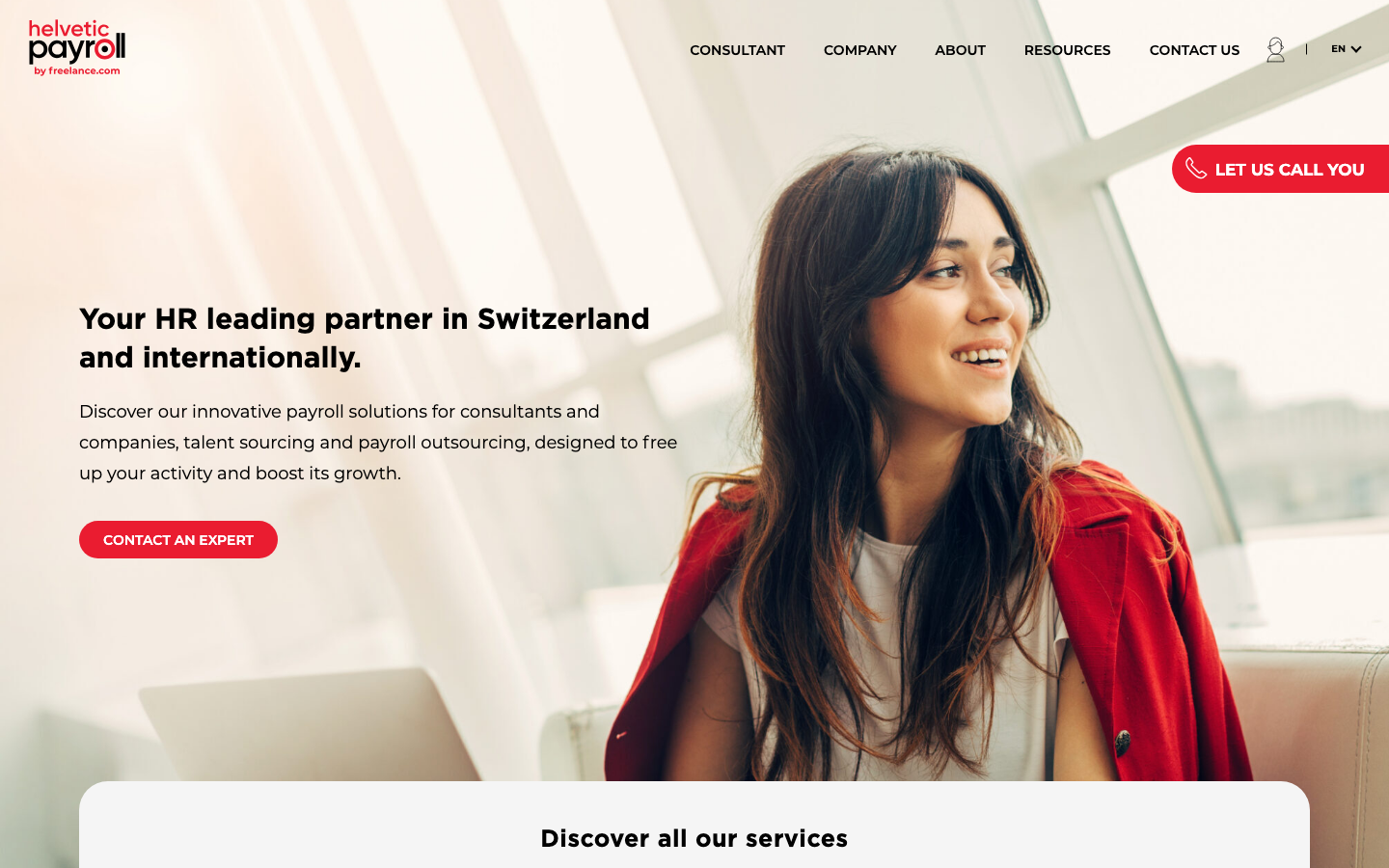
Helvetic Payroll works from Geneva and Zurich, with technical expertise across all 26 cantons. Its payrolling page states that it has cantonal authorization granted by the SPE to operate throughout Switzerland, plus a federal authorization granted by SECO for cross-border activities.
Key Features:
- Cantonal and federal authorizations published openly
- Online contract signature through DocuSign
- PUMA portal for activity reports, invoices and payslips
- Documents available around the clock
- Complete financial simulation before you start
Fee Structure:
Custom percentage of consultant turnover. The rate is not published; request a personalized simulation.
Top Advantages:
- The clearest licensing statement in this review
- More than 25,000 payslips issued in 2025
- A separate portal for client companies
Additional Services:
- Talent sourcing for direct hiring
- Payroll outsourcing for existing staff
- 9 languages spoken across the 2 sites
Our Verdict
I would start here if the deciding factor is a provider that publishes exactly which authorizations it holds.
MITC
Company Description:
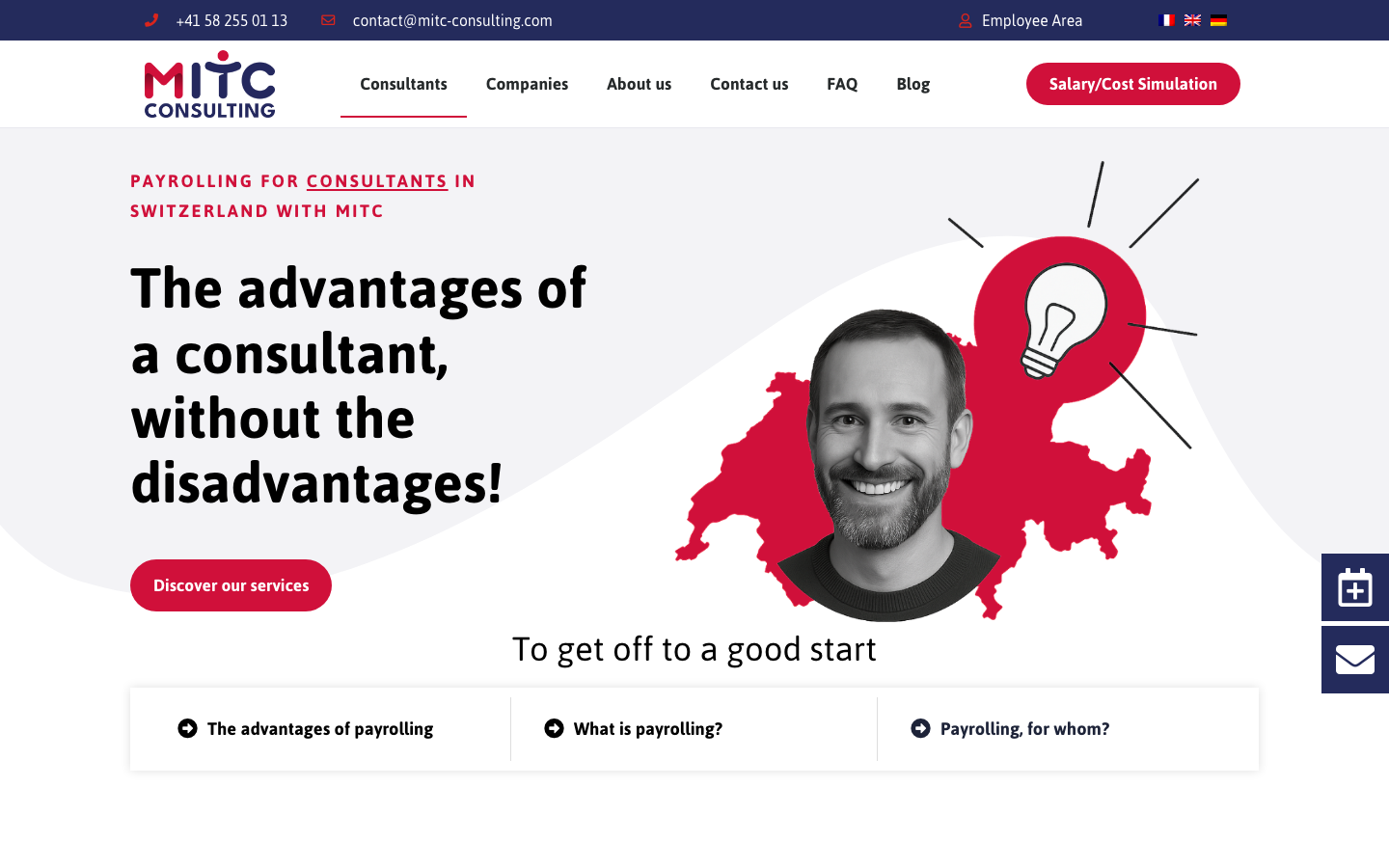
MITC runs a payroll service aimed at consultants who want independence without administration. Its site lists a local presence across Geneva, Vaud, Zurich, Basel, Bern, Neuchâtel, Fribourg, Valais, Ticino and Zug, and declares consultants in their own work region.
Key Features:
- Capped commission rather than an open-ended percentage
- Income protection insurance covering 90% of salary
- 3 options for second-pillar contributions
- Online administrative management platform
Fee Structure:
Custom. The commission is capped, but the rate is not published; use the free salary and cost simulation.
Top Advantages:
- A capped fee is unusual in this market
- Pension flexibility through 3 plan options
- Cantonal spread across both language regions
Additional Services:
- Free salary and cost simulation
- Services for companies as well as consultants
- An employee area for ongoing administration
Our Verdict
I would ask MITC for the cap in writing, because it changes the arithmetic most on a high daily rate.
Numeriq Payroll
Company Description:
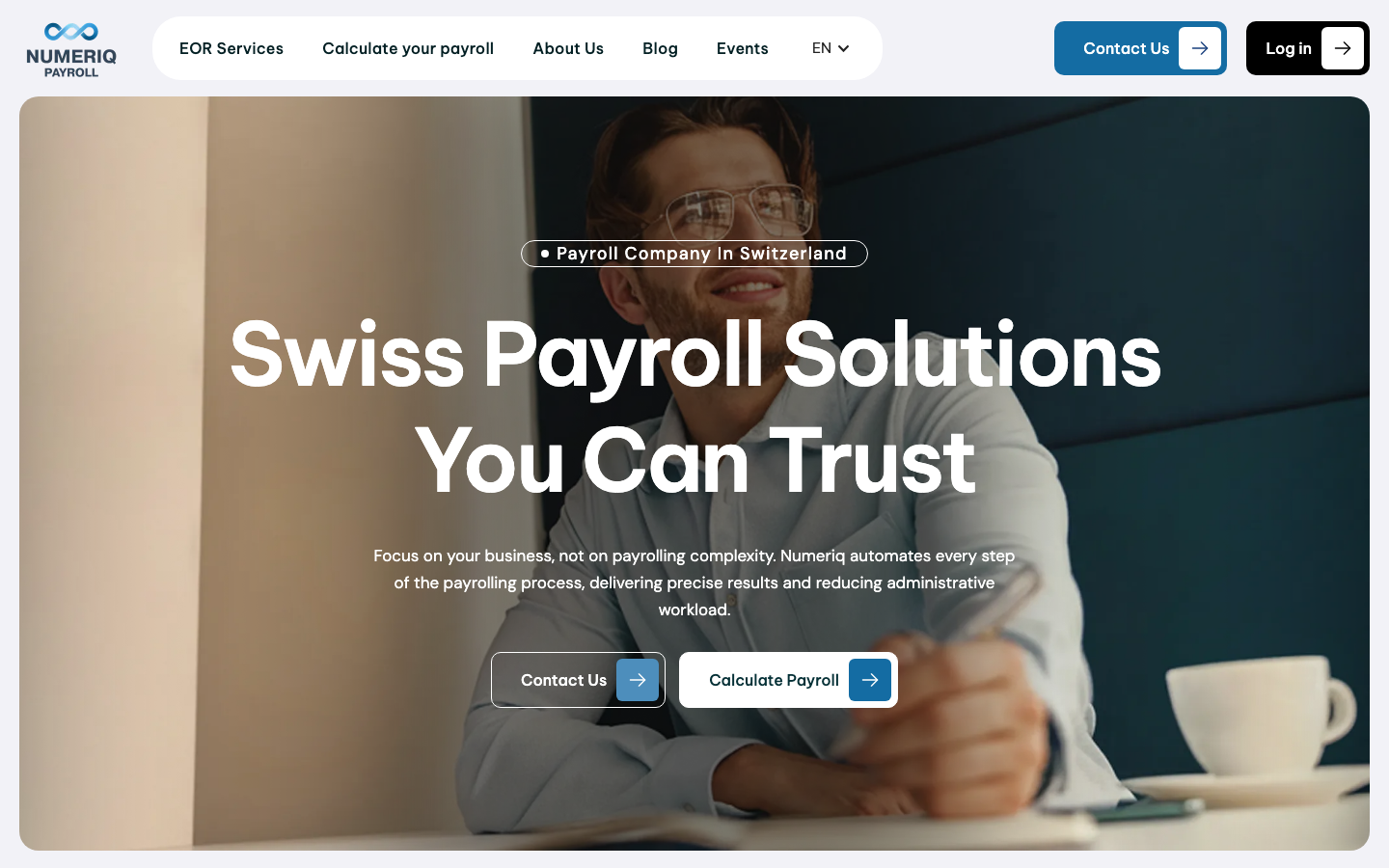
Numeriq Payroll sells payroll administration, an Umbrella Payroll service for individual contractors and EOR. Its comparison table states that an umbrella company is the legal employer, covers Swiss compliance in full, and requires a personnel leasing license.
Key Features:
- Employment with full Swiss social insurance and pension
- Invoicing of Swiss or foreign clients
- Compliant payslips and insurance coverage
- Taxes, declarations, and contracts handled
- Multi-currency payroll processing
Fee Structure:
Custom. Contact for a simulation or quote.
Top Advantages:
- A published payroll accuracy figure of 99.9%
- Support by email, phone, live chat, Slack, and Teams
- A public explanation of umbrella next to EOR
Additional Services:
- EOR for companies without a Swiss entity
- Payroll outsourcing for local SMEs
- An online payroll calculator
Our Verdict
I would consider Numeriq when a company wants umbrella and EOR from the same supplier.
PayrollPlus
Company Description:
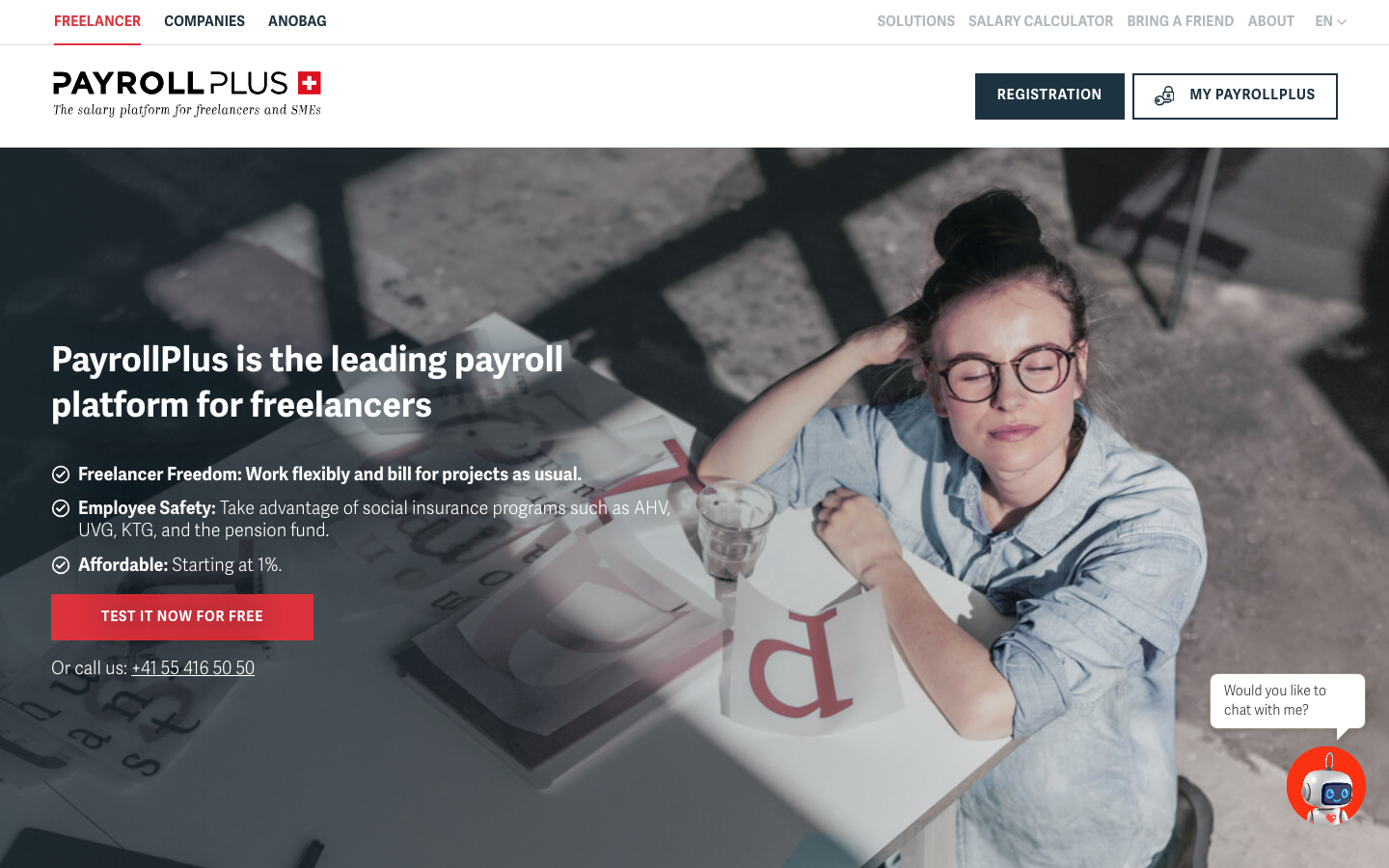
PayrollPlus is a payroll platform for freelancers, based in Pfaeffikon SZ. It offers staff leasing under the AVG and an individual employment contract under the Swiss Code of Obligations, and says it has processed CHF 200,000,000 in payroll.
Key Features:
- Both contract models: AVG leasing and a CO contract
- AHV, child allowances, and withholding tax processed
- UVG accident, KTG sickness, and BVG pension cover
- Online tool for invoices and working hours
- Salary paid 1 to 2 days after the client settles
Fee Structure:
1% to 3% of the invoiced amount, per the published freelancer FAQ, which states the fee covers the whole service. Other pages show a wider 1% to 5% band, so confirm the rate for your model.
Top Advantages:
- One of only 2 published fee figures in this list
- A salary calculator that works in 4 clicks
- Clients pay the platform, not the freelancer
Additional Services:
- A payroll solution for SMEs
- ANOBAG handling for employees of foreign employers
- Free registration and a free trial
Our Verdict
I would pick PayrollPlus when fee transparency matters more than a named account manager.
*As pricing is subject to change, we are listing prices as they stand in September 2026
SAGE SA
Company Description:
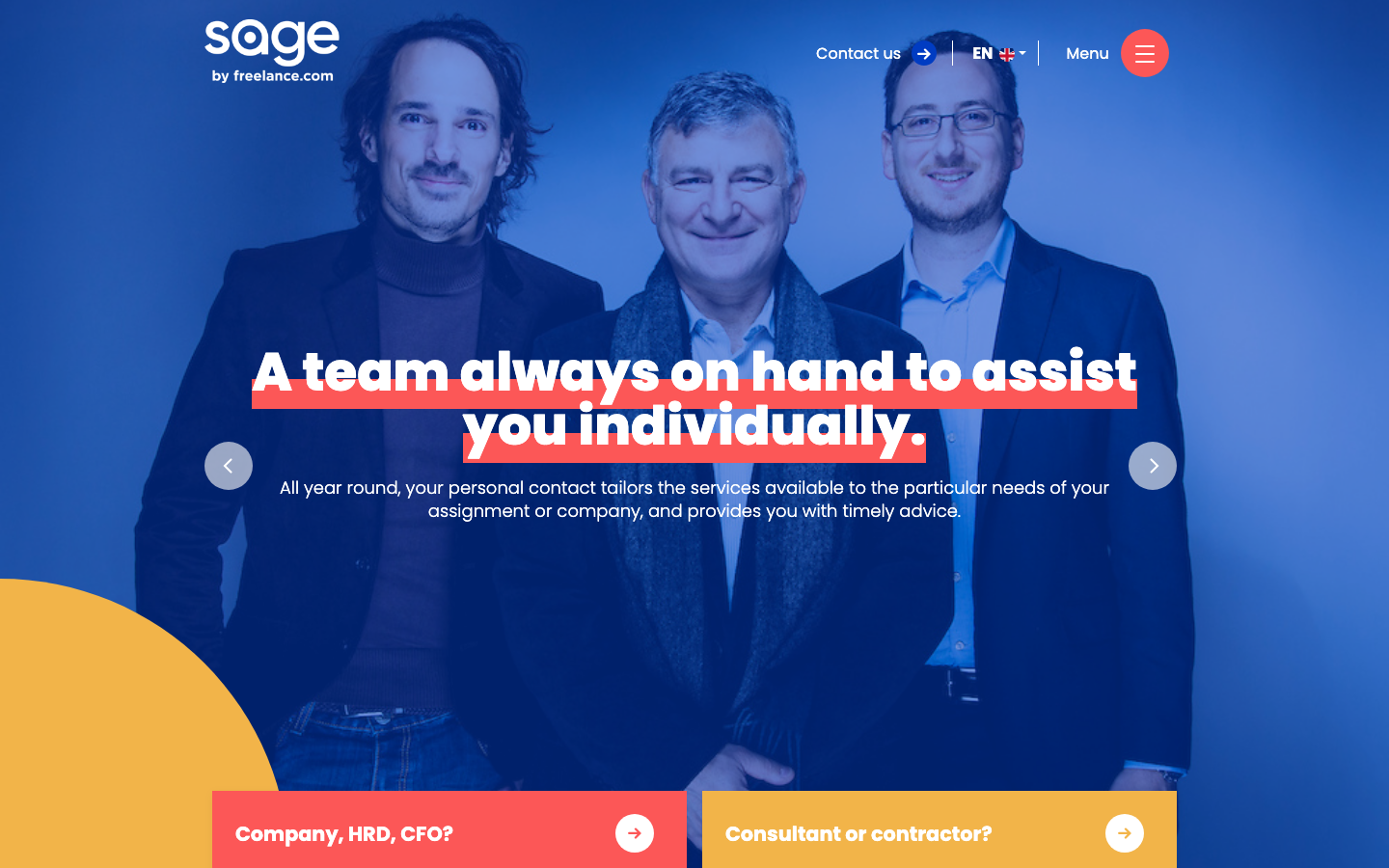
SAGE SA is an international umbrella specialist that has worked with companies and contractors for more than 30 years, and says it has specialized in international contractor services since 1989. It has been part of the freelance.com group for 6 years.
Key Features:
- A service agreement with the client and a contract with the contractor
- Administration, invoicing, and payroll deductions handled
- Financial, legal, tax, and social support on assignment
- A named personal contact for each client
Fee Structure:
Tailored. Contact for a quote.
Top Advantages:
- More than 30 years focused on international mobility
- One structure for expatriation and assignment management
- Services offered à la carte, in a client’s own words
Additional Services:
- Expatriation management for HR directors and CFOs
- International mobility solutions for contractors
- An international mobility blog with case material
Our Verdict
I would talk to SAGE SA when the assignment crosses borders, and Switzerland is only part of the problem.
SPS – Switzerland Payroll Services
Company Description:
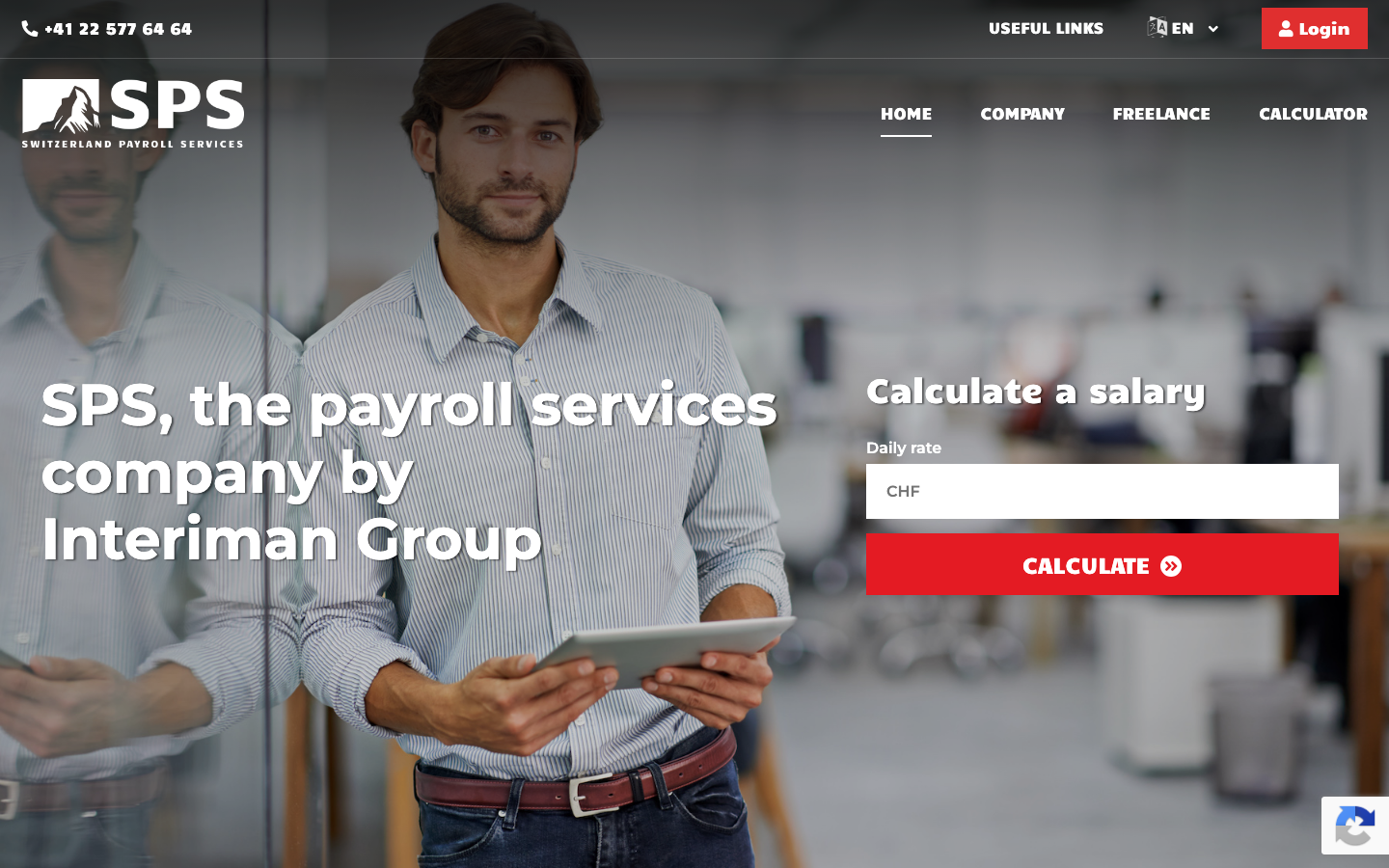
SPS is the payroll company of the Interiman Group, which reports 4,500 customers and 148,000 assignments filled a year. The site states that SPS holds legal authorizations and complies with the Swiss Labor and Employment Services Act.
Key Features:
- An assignment contract with the freelancer, who becomes an employee
- A service rental contract signed with the client
- Timesheets entered by the freelancer and validated by the client
- Monthly invoice out and salary payment in
- A public calculator that breaks a daily rate apart
Fee Structure:
5% administrative cost in the official calculator, plus an optional 1% credit line if salary is paid before the client settles.
Top Advantages:
- A published fee visible without filling in a form
- Group scale through Interiman
- Basic and gold pension levels in the calculation
Additional Services:
- JEM, the group’s Swiss freelancing platform
- Lump sum expense handling inside the calculation
- Recruitment services across the group
Our Verdict
I would run the SPS calculator early, because it sharpens every other conversation about price.
*As pricing is subject to change, we are listing prices as they stand in September 2026
Thalent
Company Description:
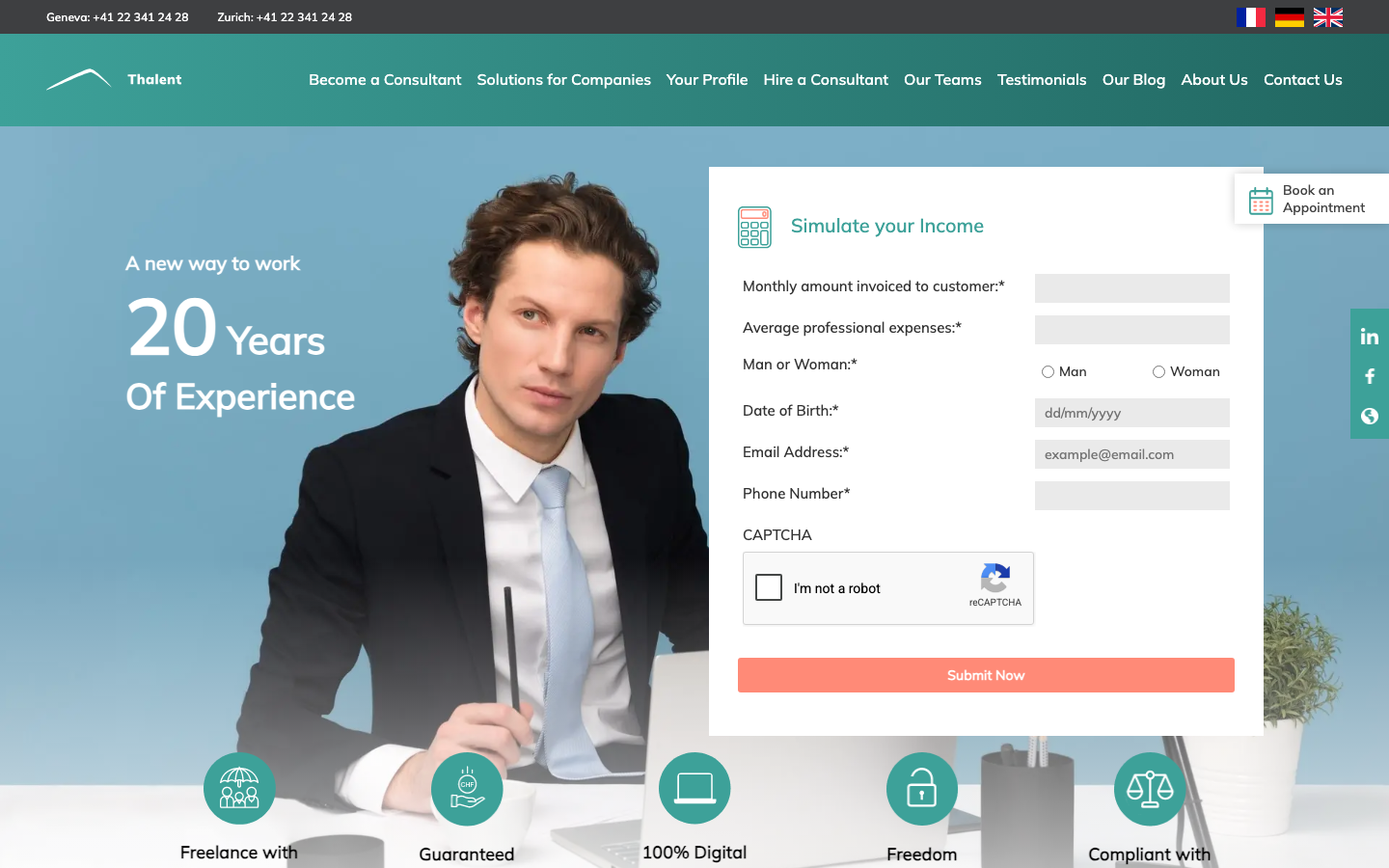
Thalent SA was founded in Geneva in 2001 and serves multinationals, SMEs, federal, cantonal, and communal administrations, and NGOs. It runs numbers for Geneva and Zurich, claims expertise across 26 cantons, and states that it has formal government authorization to act as a consulting hosting company.
Key Features:
- Employee status with all social contributions paid
- Wage paid even when the client settles late
- A fully digital process from interview to payslip
- Tax office and work permit office relations handled
Fee Structure:
Custom. The management fee is not published; request a simulation.
Top Advantages:
- A payment guarantee written into the contract
- No registration or deregistration fees
- No minimum contract period
Additional Services:
- Solutions for companies hiring consultants
- Consultant sourcing for clients
- An income simulator before any commitment
Our Verdict
I would consider Thalent when late-paying clients are the real risk and the payment guarantee outweighs a lower fee.
How Much Do Umbrella Companies Cost in Switzerland in 2026?
Swiss providers usually quote a management fee as a percentage of the invoiced assignment value, though the model varies and several publish nothing at all. Only 2 of the 10 companies I reviewed publish a number. The rest ask for a simulation first.
The fee is the smallest part of the calculation. Employer and employee social contributions, occupational pension, accident and sickness cover all stand between the amount billed and the salary paid. Source tax and canton-level items such as family allowances can move the result again.
Lists of recommended umbrella companies in Switzerland tend to stop at the percentage, which is why comparing headline rates alone is a trap. A 3% fee with a basic pension plan can cost more than a 5% fee with a stronger one. Ask every provider on your shortlist for the same simulation, using the same daily rate, canton, and number of billable days.
| Provider | Published fee | Other charges and notes | Fee model |
|---|---|---|---|
| PayrollPlus | 1% to 3% of the invoiced amount | The freelancer FAQ states the fee covers the entire service with no extra costs. Other pages show a wider 1% to 5% band, so confirm the rate for your contract model. | Percentage |
| SPS – Switzerland Payroll Services | 5% administrative cost in the calculator | The same calculator carries an optional 1% credit line for payment before the client settles. | Percentage plus optional credit charge |
| Helvetic Payroll | Percentage of consultant turnover, rate not published | Free personalized simulation; pension, tax and social elements depend on the canton and the personal situation. | Custom percentage |
| MITC | Capped commission, rate not published | Free salary and cost simulation; 3 second-pillar options change the outcome. | Custom, capped |
| Access Financial, CTC, Diligo, Numeriq, SAGE SA, Thalent | Not published as a Swiss tariff on the pages I reviewed | Request a quote or a salary simulation. | Custom |
As pricing is subject to change, we are listing prices as they stand in September 2026
INSIGHT: What does a Swiss umbrella company actually cost?
The provider margin is only one line, because Swiss payroll also carries statutory contributions, plan-specific deductions, and employer on-costs.
- Published examples in this list are PayrollPlus at 1% to 3% of the invoiced amount and the SPS calculator at a 5% administrative cost.
- In 2026, AHV/IV/EO is 5.3% for the employee and 5.3% for the employer, so 10.6% of salary in total.
- ALV adds 1.1% for each side on salary components up to CHF 148,200.
- BVG/LPP occupational pension starts at an annual salary of CHF 22,680 in 2026, with the coordinated salary running from CHF 26,460 to CHF 90,720.
How to Choose an Umbrella Company in Switzerland
The top-rated umbrella companies in Switzerland are licensed. Start with the register, not the brochure. For staff leasing, SECO and the cantons keep a public list of licensed businesses. It showed 6,965 entries when I searched it in September 2026. Ask which legal entity holds the authorization, because group websites and licensed entities are not always the same company.
Then check the scope. Domestic activity needs a cantonal authorization from the canton of establishment, and cross-border activity needs the federal one as well. With a foreign client or a commuter, that difference is the whole arrangement.
Refuse a foreign-only staffing setup. Leasing workers into Switzerland from abroad is prohibited, directly or indirectly, so a provider licensed somewhere else cannot substitute for a compliant Swiss structure.
Compare simulations rather than fees. Ask for the same calculation on the same rate. Then read each line separately: contributions, deductions, the BVG plan, the insurance cover and any advance charge.
Ask when the salary actually lands. Some pay after approved timesheets, some only once the client has settled, and some finance an advance for a fee. On a 60-day payment term, that matters more than a point of commission.
Check permits early for anyone who is not Swiss or settled, and ask which categories the provider has handled in your canton. Treat a promise of eligibility as a warning. Ask about the wage floor too, because some cantons set one even though the country does not.
INSIGHT: Which licenses should a Swiss umbrella company have?
The answer depends on what the provider actually does, because staff leasing has its own authorization framework while pure payroll processing does not.
- Commercial staff leasing inside Switzerland requires a cantonal authorization from the canton where the provider is established.
- A Swiss provider that also leases or places across the border needs an additional federal authorization from SECO.
- SECO and the cantons publish a searchable register of licensed placement and staff-leasing businesses.
- Staff leasing from abroad into Switzerland is not permitted, so a foreign license is never a substitute for a Swiss one.
None of this travels well across a border. The rules behind an Ireland umbrella company are not the Swiss rules. The same goes for the best umbrella company in France, or for a best umbrella company in Netherlands search that lands on a Dutch page. Licensing, pension design, and payment timing are set locally, so check each market on its own terms.
FAQs on Umbrella Companies in Switzerland
What is an umbrella company, and how does it work in Switzerland?
The provider becomes your legal employer and signs an employment contract with you. It also signs the assignment paperwork with your client or agency. It invoices for the work, runs payroll with every statutory deduction, and pays you a salary. You keep the rate you negotiated, without operating a company.
Is an umbrella company the same as an Employer of Record in Switzerland?
They overlap without being identical. Both can make a Swiss provider the legal employer. EOR is an international hiring label used mainly for permanent local hires, while payrolling is usually assignment-based. Where the worker is supplied to a client who directs the work, staff-leasing rules apply, regardless of the label the provider uses.
Do umbrella companies in Switzerland need a staff-leasing license?
Where a business employs workers and commercially supplies them to clients, yes. Domestic activity requires a cantonal authorization from the canton of establishment, and cross-border activity requires an additional federal authorization from SECO. A payroll bureau that only processes salaries for a company’s own employees sits outside that requirement.
Can a foreign umbrella company lease a worker into Switzerland?
No. Staff leasing from abroad into Switzerland is not permitted, directly or indirectly. A foreign service provider posting its own employees for a limited assignment is a different legal concept with its own notification rules. Genuine leasing has to run through a licensed Swiss structure.
What services do Swiss providers usually include?
An employment contract, client invoicing, monthly payroll, and payslips. Then AHV/IV/EO and ALV administration, occupational pension where the salary qualifies, accident and sickness cover, and source-tax processing where it applies. The annual salary certificate is included. Many also handle permits, expenses, and a portal.
How much do umbrella companies charge in Switzerland in 2026?
Only 2 providers in this review publish a figure. PayrollPlus states 1% to 3% of the invoiced amount in its freelancer FAQ. The SPS calculator shows a 5% administrative cost with an optional 1% credit line. The rest is quoted after a simulation.
How are Swiss social-security contributions handled?
The provider withholds the employee share and remits both shares as the employer. In 2026, that means 5.3% each for AHV/IV/EO, and 1.1% each for ALV on salary up to CHF 148,200. Occupational pension, accident insurance, and canton-specific items sit on top. No single deduction percentage fits every worker.
Does Switzerland have a national minimum wage?
No statutory minimum wage applies nationwide. Several cantons set their own, and generally binding collective or standard employment agreements can impose mandatory floors. Staff-leasing assignments can also fall under the collective agreement for staff leasing, which is currently valid until 31 December 2027.
How should businesses compare the top umbrella companies in Switzerland?
Compare the license scope and the legal entity that holds it, the published fee, and a full salary simulation. Then look at pension and insurance coverage, payment timing, permit support, cantonal coverage, and client invoicing. Those points matter far more than the headline rate.
What is the difference between an employed consultant and a self-employed freelancer?
An employed consultant is an employee of the provider, with payroll, social insurance, and employee protections. A self-employed person invoices independently and carries the business risk and the administration. Swiss compensation offices decide who qualifies as self-employed, and the label on a contract does not settle it.

Helen is Anywherer’s Market Analyst & Content Researcher, with extensive experience in analyzing global employment markets and HR technology trends. She is skilled at turning complex market data into clear, well-researched insights that inform every piece of content. With a strong grasp of the EOR, PEO, and international hiring space, Helen plays a key role in keeping Anywherer’s research accurate, up to date, and genuinely useful for readers.