In Germany, an umbrella company is a German employer that puts the worker on its own payroll. It signs the employment contract, withholds wage tax, registers the worker for social insurance, and keeps the paperwork straight. The client still directs the work itself.
The word travels badly, though. British and Irish umbrella companies grew out of contractor payroll practices, and our guide to umbrella company Ireland options describes that market. Germany has no separate umbrella category. The same job sits inside Employer of Record services, co-employment and employee leasing, which German law calls Arbeitnehmerüberlassung.
Two audiences buy this. Contractors get employee status, statutory health cover and a pension record without registering a business. Companies get a legal employer in Germany without opening an entity or learning German payroll.
The provider you choose determines whether the arrangement holds up. Permit status, payroll accuracy, and contract quality vary a lot between firms. I reviewed 10 providers by reading each one’s website in September 2026. For every firm, I noted the employment model, the permit status where the site states it, and the price.
How Do Umbrella Companies Work in Germany?
Three parties are involved. The provider is the legal employer and signs the employment contract. The client selects the worker and directs the daily work. The worker is an employee of the provider, not of the client, and the 2 companies sign a separate agreement covering the placement.
Where the worker joins the client’s organization and takes instructions from it, German law treats the placement as employee leasing. Section 1 of the Arbeitnehmerüberlassungsgesetz (AÜG) then requires a permit from the Bundesagentur für Arbeit. The contract between provider and client must be labeled as Arbeitnehmerüberlassung before the worker starts, and it must name the worker.
That test decides the permit question, not the product name on a website. Every German umbrella company worth considering is a German legal employer, not a broker. The same arrangement gets sold as Employer of Record, co-employment, or leasing, depending on who is buying it.
Buyers differ too. A German employer of record is usually bought by a foreign company with no German entity. Co-employment, which PORTEGO offers, is bought by German companies that cannot add headcount directly during a restructuring or a hiring freeze.
The monthly work looks the same in all 3 models. The provider runs gross-to-net payroll and withholds wage tax. It registers the worker with a statutory health insurance fund, pays both contribution shares, and handles payslips, leave and sick pay.

INSIGHT: Is a German umbrella company the same as a UK or Irish umbrella company?

No. The German version is built on employee-leasing law rather than on a contractor payroll convention, and the rules follow from that.
- The provider is a German employer running German payroll, while the client keeps control of the work itself.
- Placing a worker inside a client’s organization, under its instructions, needs a Bundesagentur für Arbeit permit under section 1 AÜG.
- Provider and client must label their contract as Arbeitnehmerüberlassung before the worker starts, and identify the worker by reference to it.
- Leasing into construction businesses for work normally done by manual workers is prohibited, with narrow exceptions under section 1b AÜG.
Sources:
all checked on September 22, 2026
Top Umbrella Companies in Germany for 2026
My checklist had 5 questions. Does the provider hold a permit and say so on its own site? Is a price published? How fast does onboarding run? Does it sponsor work permits for non-EU hires? How deep does the payroll service go? I have not ranked the top-rated umbrella companies in Germany by score, because no independent rating covers most of this market.
The list intentionally mixes 2 kinds of firms. Some are Germany-only specialists. Others are platforms covering 160 or more countries, where Germany is 1 market among many. Both sit among the recommended umbrella companies in Germany below, because the answer depends on whether you are hiring in 1 country or 12.
All companies below are listed in alphabetical order, so their position on the page does not indicate ranking.
AUGSIGHT GmbH
Company Description:
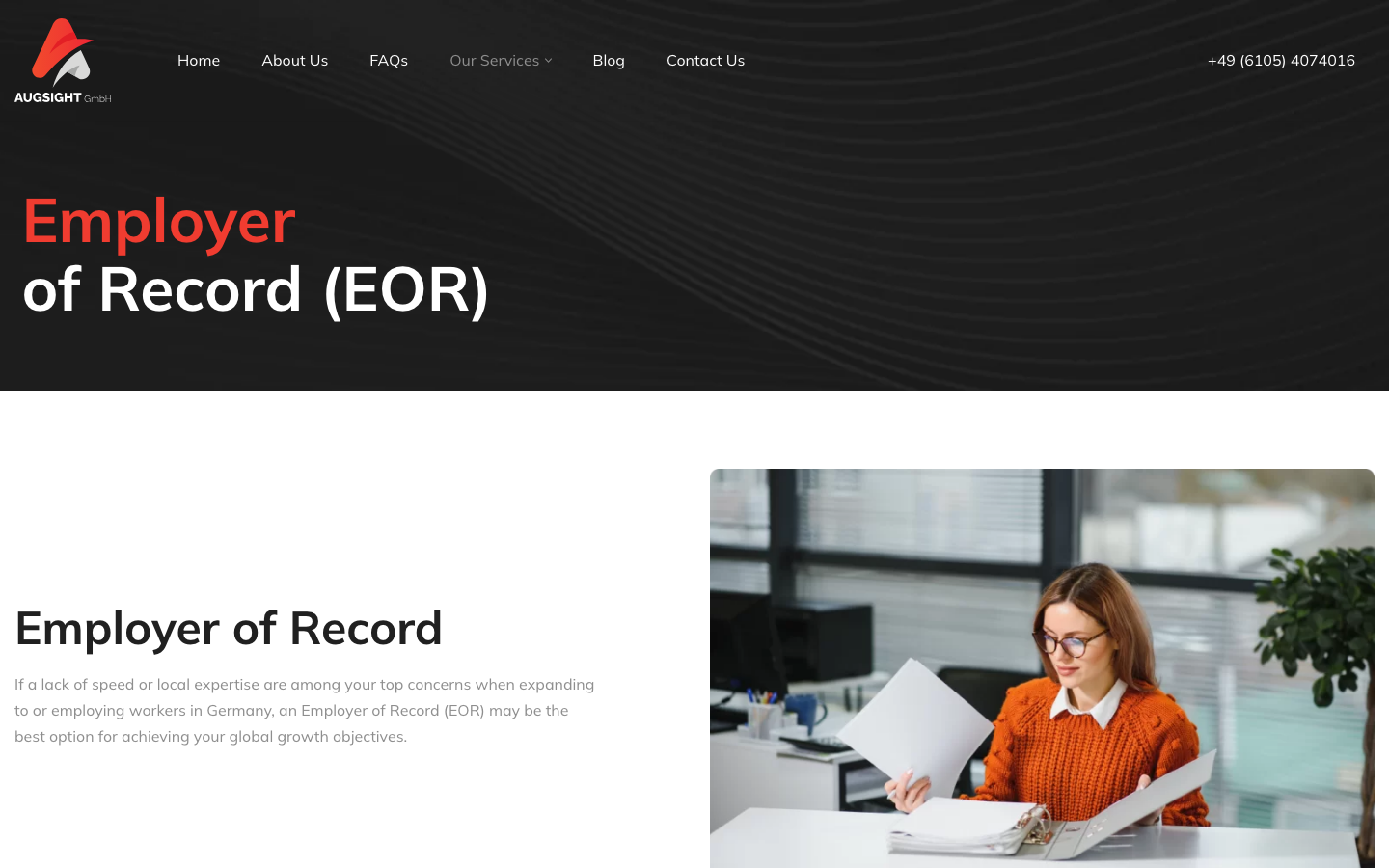
AUGSIGHT is based in Mörfelden-Walldorf, near Frankfurt. It describes itself as an AÜG-licensed umbrella company acting as the legal employer of your workforce in Germany. It suits companies that want a German entry without setting up their own presence.
Key Features:
- Market entry in days rather than the months an entity takes
- Payroll, social security, taxes, and health insurance handled together
- Work and business visa sponsorship
- Platform for payroll and employee management
Fee Structure:
Custom. Contact for a quote.
G2 Rating:
No G2 profile.
Top Advantages:
- States its AÜG license openly on the service page
- Covers hybrid working arrangements and workplace duties
- Handles the paperwork for ending contracts as well as starting them
Additional Services:
- Work permits and visa sponsorship
- Contractor and temporary employee hiring
Our Verdict
Worth a call when your first German hire also needs visa sponsorship.
FMC Group
Company Description:
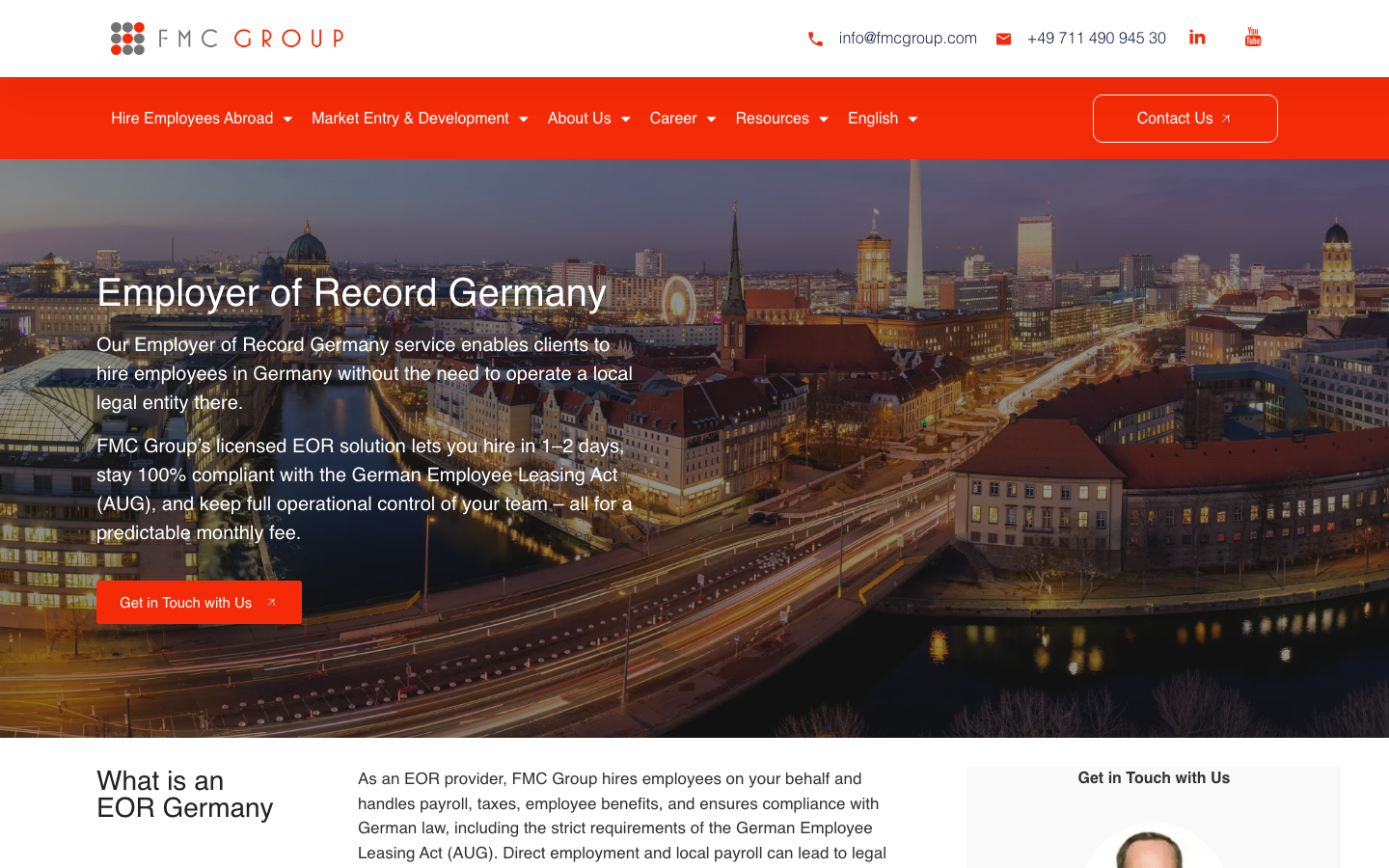
FMC Group is a Stuttgart firm holding a permit from the Bundesagentur für Arbeit for employee leasing. Its Employer of Record service covers Germany alongside employee leasing in 50 or more countries. It suits buyers who want a licensed German employer with an international reach.
Key Features:
- Onboarding typically within 1 to 2 business days
- A dedicated contact for each client and each employee
- Software for expenses and leave
- Optional company car arrangements
Fee Structure:
Custom. Contact for a quote. The site describes a predictable monthly fee but doesn’t publish the number.
G2 Rating:
Listed on G2 without ratings.
Top Advantages:
- Holds the AÜG permit and says so with the legal detail
- Explains the 18-month cap and the cooling-off period on its own page
- Complimentary Wellhub access for its Employer of Record employees in Germany
Additional Services:
- Market entry and business development services
- Employee leasing across 50 or more countries
Our Verdict
My pick when you want a licensed German employer that also covers other markets.
German Employer of Record
Company Description:
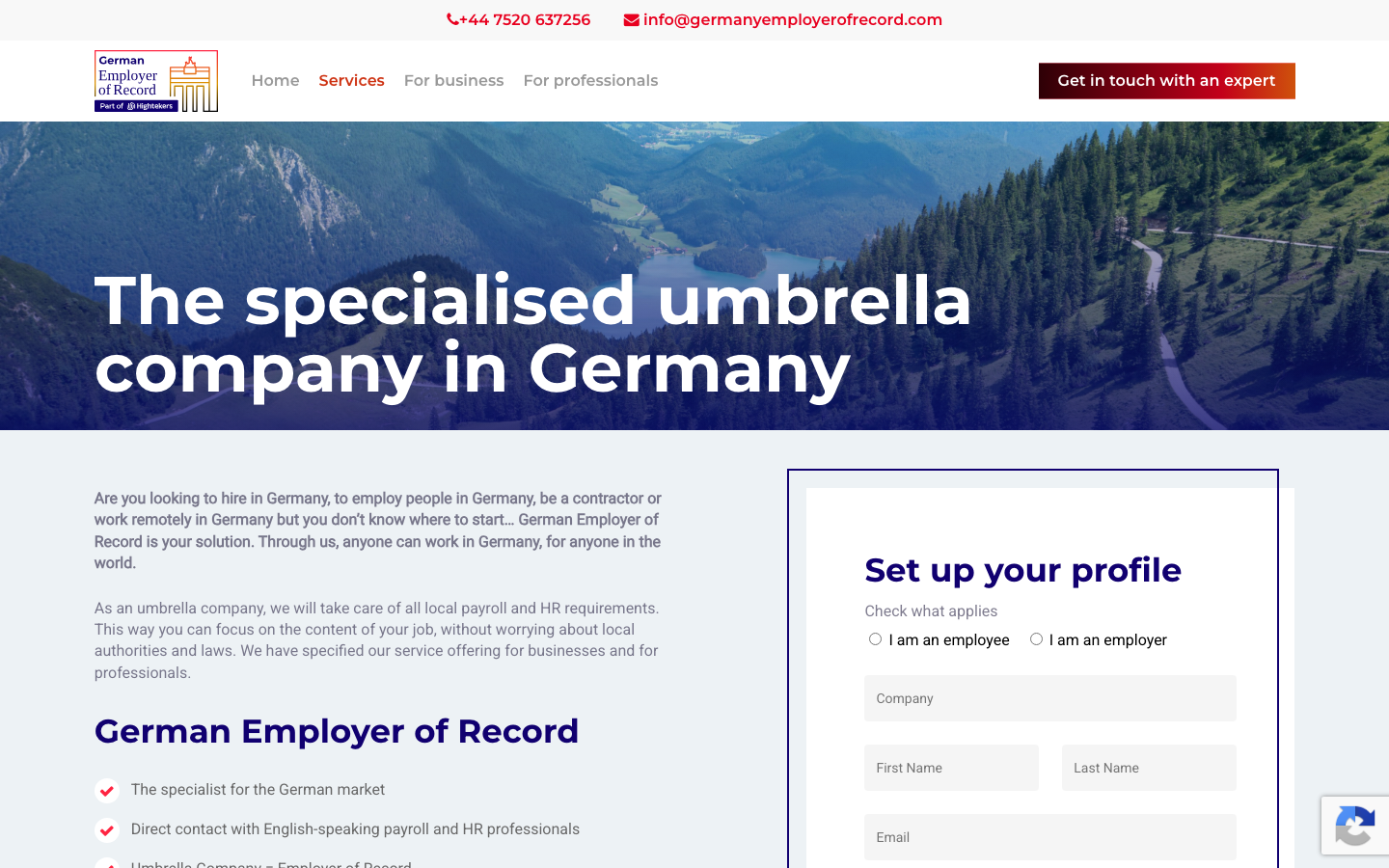
German Employer of Record runs a dedicated umbrella company service page and treats umbrella and Employer of Record as the same product. It works from Frankfurt am Main and is part of Hightekers. It suits English-speaking buyers who want a single point of contact.
Key Features:
- Profile setup online for businesses and for individual professionals
- Direct contact with English-speaking payroll and HR specialists
- Team onboarding described in days rather than weeks
- Separate tracks for companies and for contractors
Fee Structure:
Custom. Contact for a quote.
G2 Rating:
Listed on G2 without ratings.
Top Advantages:
- Serves both sides of the arrangement, the business and the professional
- Payroll outsourcing offered separately from full employment
- Guidance written for people relocating to Germany
Additional Services:
- Work visa sponsorship and immigration support
- Payroll outsourcing and company relocation services
Our Verdict
Worth a call if English-language support matters more to you than a German-language portal.
HRsolution International (IPS)
Company Description:
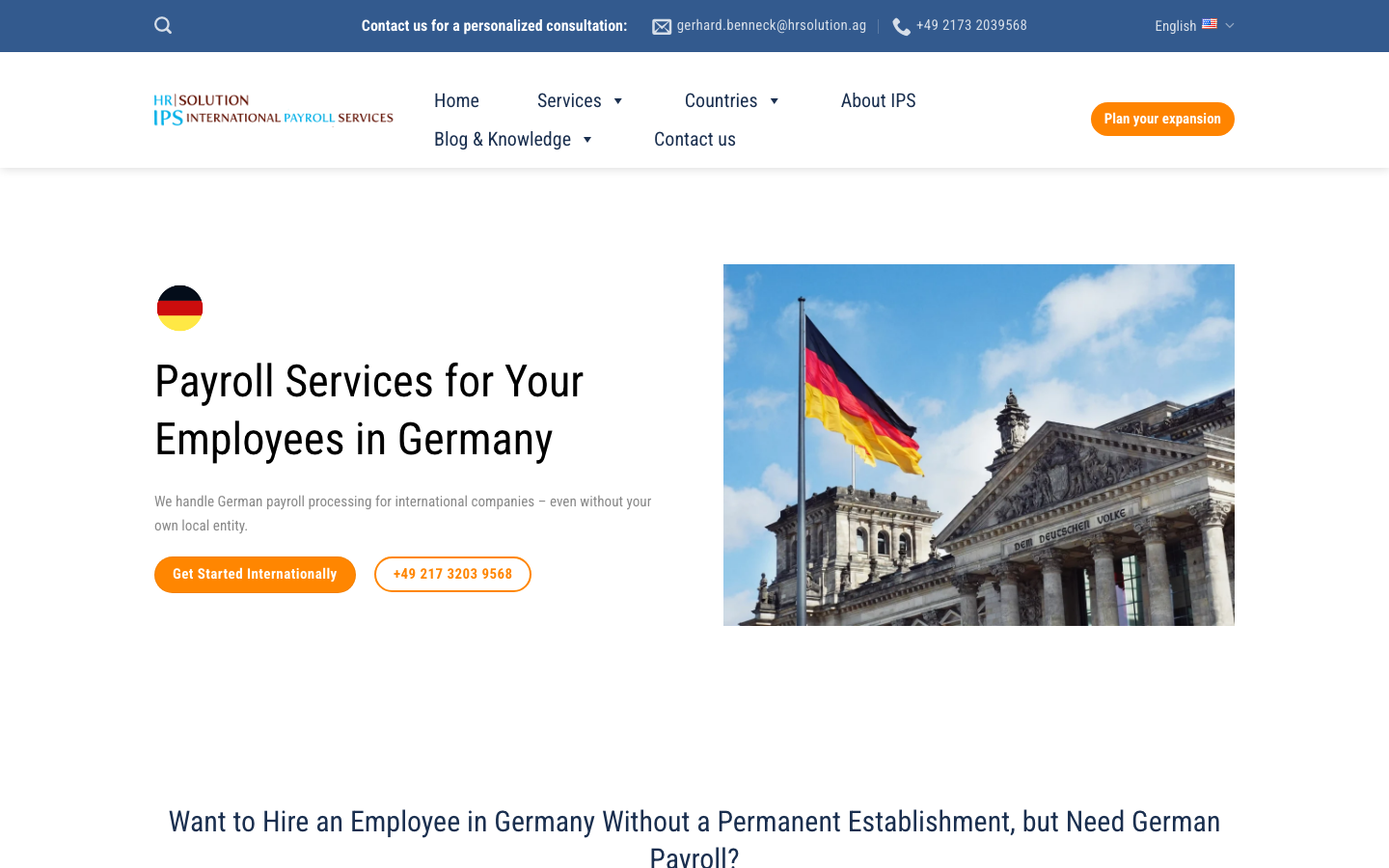
HRsolution International, trading as IPS, is based in Langenfeld and offers 2 routes into Germany. It suits a foreign employer weighing a leased arrangement against registering itself as a foreign employer for German payroll.
Key Features:
- Employer of Record route, which it calls employee leasing or an umbrella arrangement
- Direct employment route with German payroll run on your behalf
- Payroll processing across many countries
- No German branch or permanent establishment required
Fee Structure:
Custom. Contact for a quote.
G2 Rating:
No G2 profile.
Top Advantages:
- States plainly on the page that the leased route is capped at 18 months
- Offers a long-term alternative when that cap is a problem
- Payroll specialists rather than a general HR platform
Additional Services:
- Foreign employer registration for German payroll
- International payroll in further countries
Our Verdict
The clearest choice when you already know 18 months will not be long enough.
Lano
Company Description:
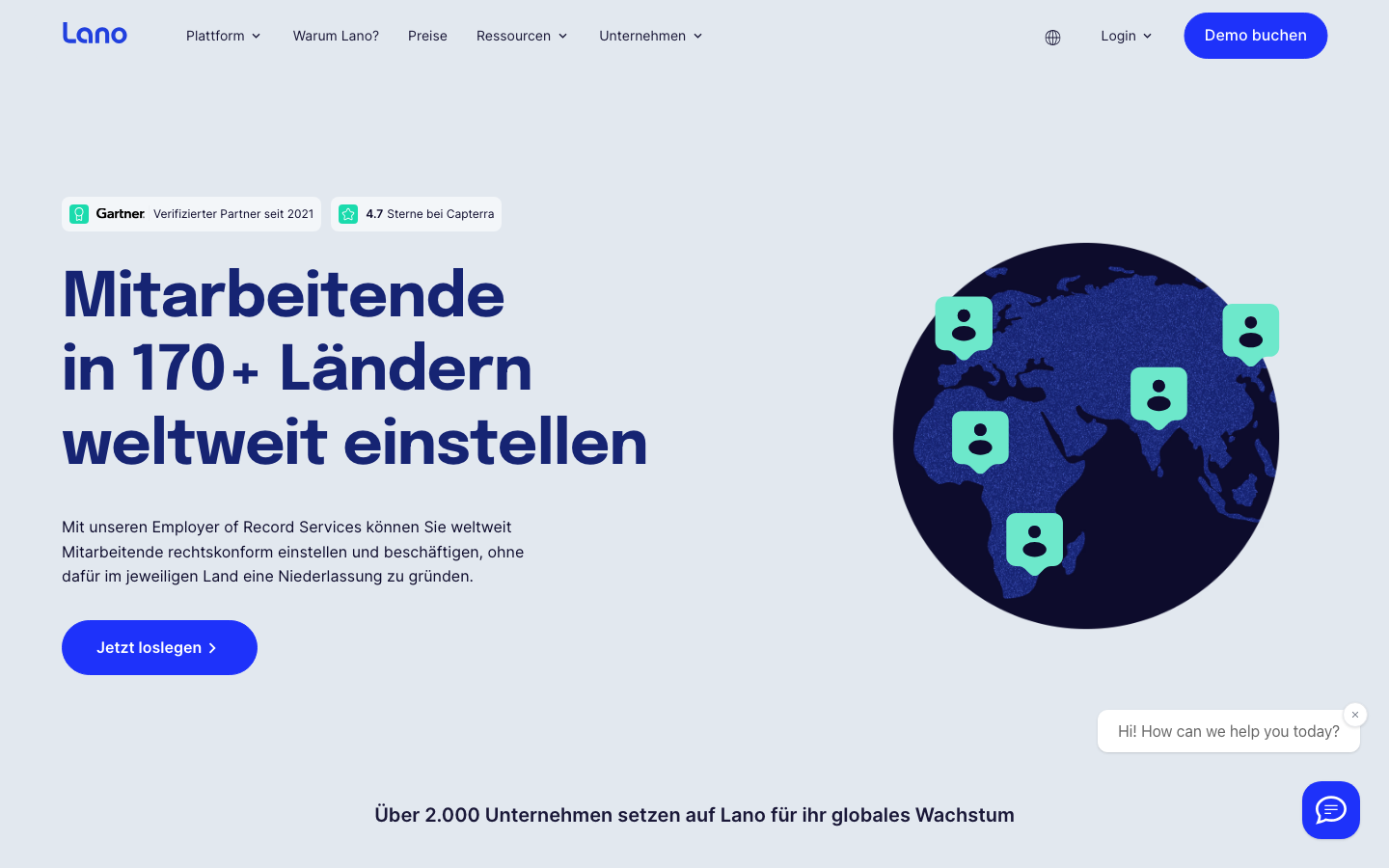
Lano is a Berlin software company running global Employer of Record and payroll through a network of in-country partners. It covers more than 170 countries, including Germany. It fits a team opening several countries in the same quarter.
Key Features:
- Hiring described in days rather than weeks
- Compliant local contracts adapted per country
- Payroll consolidation across countries in 1 dashboard
- Integrations with HRIS and finance tools
Fee Structure:
From EUR 499 per employee per month for Employer of Record, with volume discounts. The rate is platform-wide, not a Germany-specific quote.
G2 Rating:
4.0 out of 5 from 17 reviews.
Top Advantages:
- Publishes its Employer of Record price, which is unusual in this group
- Separate cheaper tiers for payroll consolidation and multi-country payroll
- Payments built into the platform in 70 or more currencies
Additional Services:
- Contractor management alongside employment
- Visa and immigration support
Our Verdict
Where I would start if Germany is 1 of several countries on the same hiring plan.
*As pricing is subject to change, we are listing prices as they stand in September 2026
PORTEGO
Company Description:
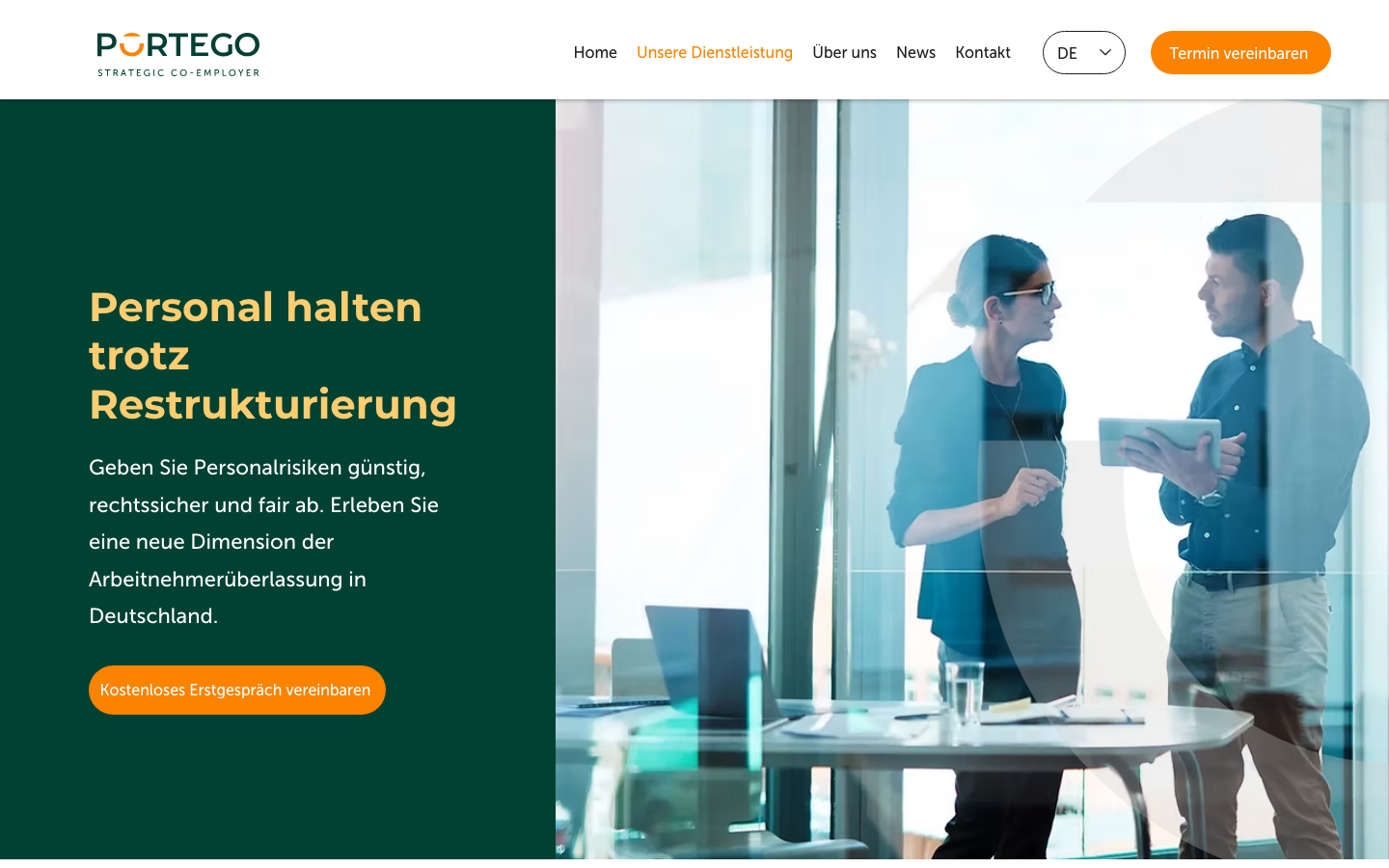
PORTEGO runs a co-employer model built directly on the AÜG. The client picks the people, PORTEGO employs them on fixed-term contracts and leases them back. It suits German companies in a restructuring or under a headcount freeze.
Key Features:
- The client selects the workers, with no recruitment from PORTEGO
- Fixed-term employment for a defined period
- A single percentage markup covering all employment costs
- Equal pay and equal treatment can be applied in full
Fee Structure:
Custom. A transparent percentage markup on the agreed gross salary covers employment costs and administration.
G2 Rating:
No G2 profile.
Top Advantages:
- Cost control from day 1, since 1 markup covers everything
- Built explicitly around the AÜG rather than adapted to it
- Workers can keep the same conditions and benefits as permanent staff
Additional Services:
- Free initial consultation with online booking
- Support for keeping staff through restructuring
Our Verdict
My recommendation for a German employer that wants to keep people it cannot carry on its own payroll.
Smooth Transitions
Company Description:
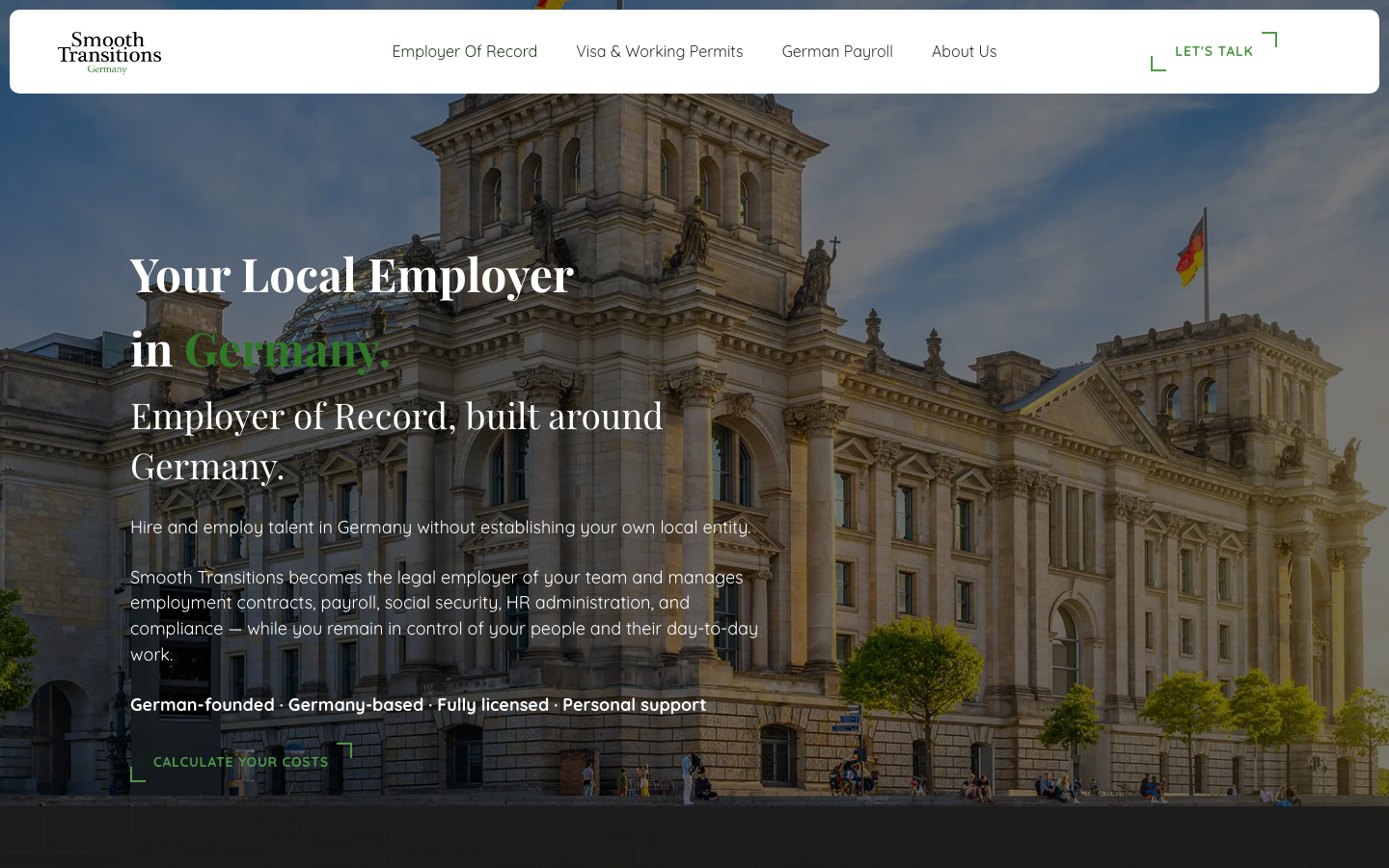
Smooth Transitions is a German-founded, Germany-based Employer of Record in Winterberg, working under the required German licensing. It deliberately covers 1 country. It suits buyers who prefer depth in Germany over breadth across a map.
Key Features:
- Employment contracts drafted to German requirements
- Monthly payroll, payslips and statutory deductions
- Onboarding and offboarding through to final payroll
- Cost calculator on the site
Fee Structure:
EUR 499 per employee per month, with employer contributions passed through at cost and no markup. Volume discounts and enterprise pricing are available.
G2 Rating:
No G2 profile.
Top Advantages:
- Publishes a flat monthly fee and states the pass-through policy
- Germany-only focus rather than a 100-country platform
- Says openly that an own entity may make more sense as you grow
Additional Services:
- Immigration help where an employee needs a visa
- Benefits administration covering bonuses, allowances, and company cars
Our Verdict
My default suggestion for one German hire on a budget that cannot move.
*As pricing is subject to change, we are listing prices as they stand in September 2026
Universal Hires
Company Description:
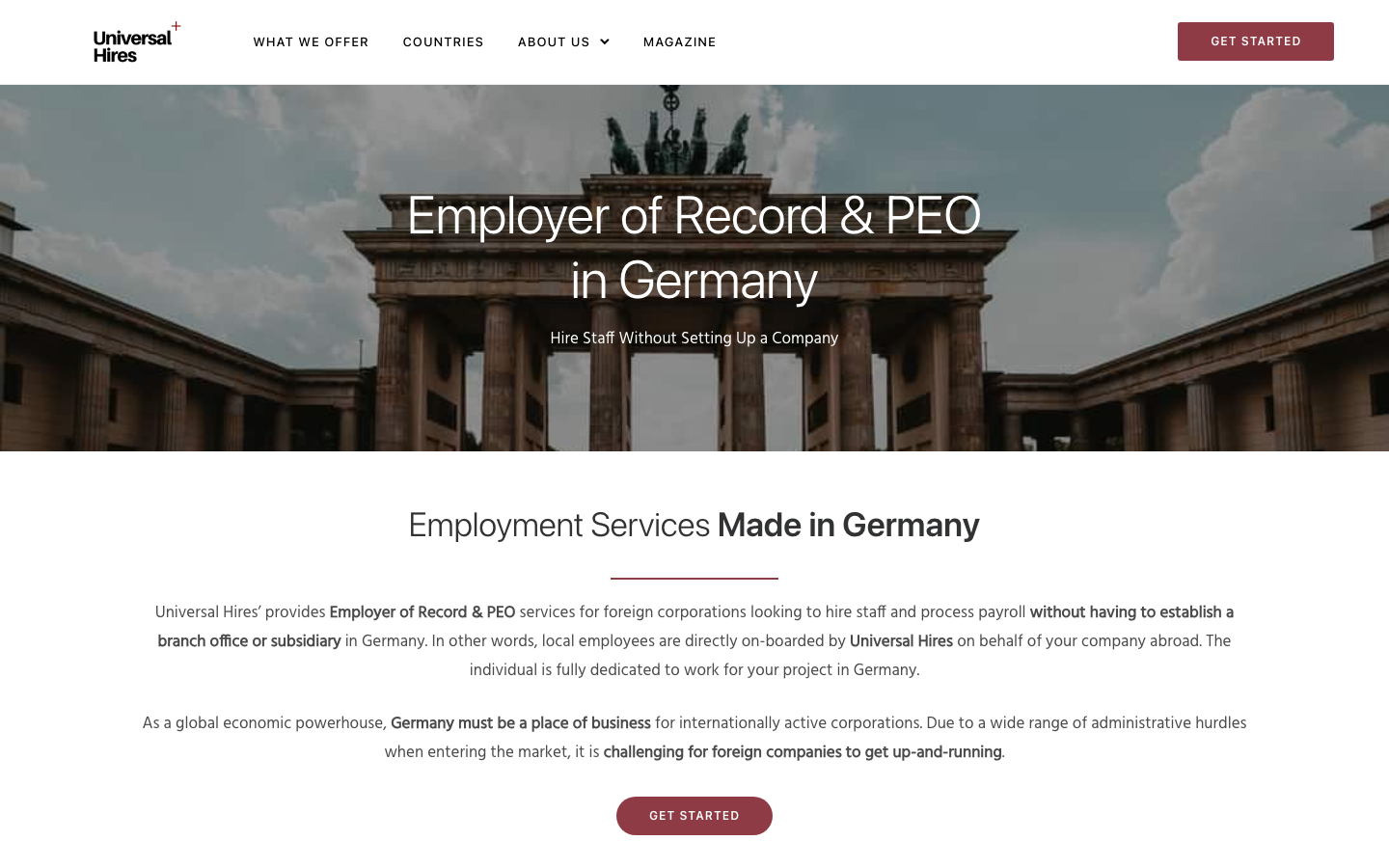
Universal Hires is a Berlin company offering Employer of Record and PEO services in Germany, and it states that its German entity is licensed under the AÜG. It works as a single German entity rather than through partners. It suits buyers who want hiring and employment from 1 supplier.
Key Features:
- Bilingual German and English employment contracts
- A dedicated HR advisor and a payroll officer per client
- Direct service rather than an in-country partner chain
- Recruitment available alongside employment
Fee Structure:
Custom. Contact for a quote.
G2 Rating:
No G2 profile.
Top Advantages:
- Licensed under the AÜG according to its own Germany page
- Recruitment and executive search sit next to the employment service
- Single German entity, so accountability is not split
Additional Services:
- Recruitment and executive search
- Payroll services for companies with their own entity
Our Verdict
Worth a shortlist when the search and the employment can come from one supplier.
WorkMotion
Company Description:
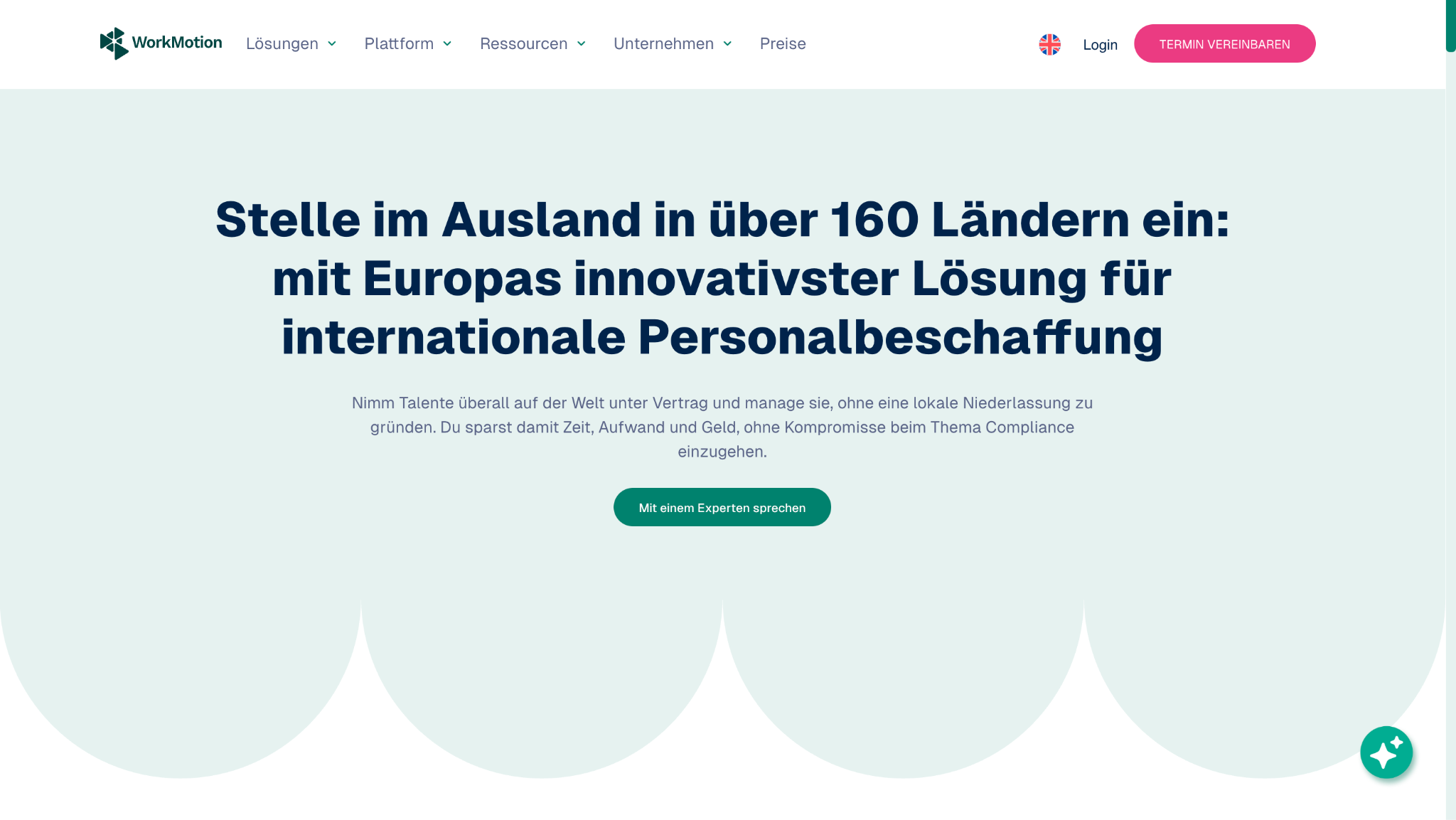
WorkMotion is a Berlin-founded platform for Employer of Record and global payroll across more than 160 countries. Germany is 1 market on that map. It suits companies that want software and international coverage in the same package.
Key Features:
- Country-compliant contract templates
- End-to-end payroll management on the platform
- Cost and net-salary calculators before you hire
- Contractor management and direct hiring as separate options
Fee Structure:
From EUR 499 per talent per month for Employer of Record, subject to a financial review. Direct hiring starts at EUR 399 and contractor management at EUR 29.
G2 Rating:
4.6 out of 5 from 511 reviews.
Top Advantages:
- Publishes prices for 3 different engagement models
- The largest review base of any provider in this group
- Legal and HR guidance built into the product
Additional Services:
- Contractor management in more than 160 countries
- Direct hiring support for longer-term presence abroad
Our Verdict
I would shortlist this platform when hiring in Germany as part of a wider international plan.
*As pricing is subject to change, we are listing prices as they stand in September 2026
worknow
Company Description:
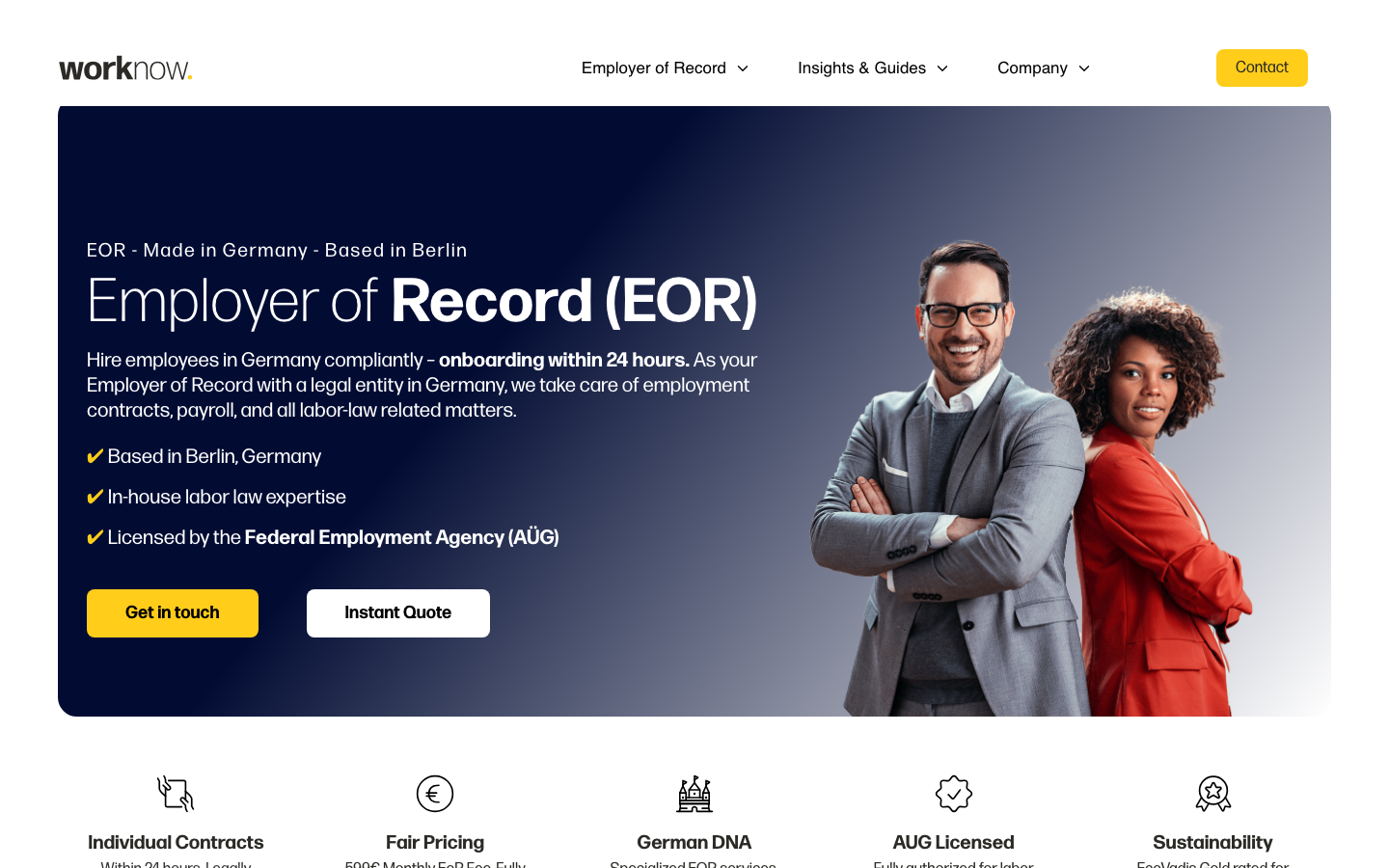
worknow is a Berlin Employer of Record licensed by the Federal Employment Agency under the AÜG, working in Germany alone. Its Berlin team drafts contracts in-house. It suits buyers who want a German specialist and a published price list.
Key Features:
- Individual contracts issued within 24 hours
- In-house labor law expertise rather than outsourced templates
- Minijob and working-student contracts supported
- Instant quote and cost calculator on the site
Fee Structure:
EUR 599 per employee per month, plus EUR 199 for onboarding and EUR 199 for offboarding. A deposit of 1.5 months of gross salary plus employer contributions is required before onboarding and offset against the final payroll.
G2 Rating:
No G2 profile.
Top Advantages:
- Licensed under the AÜG and says so on the page
- EcoVadis Gold rated for ethical and social responsibility
- Legally vetted contracts rather than generic templates
Additional Services:
- Contract types beyond full-time, including minijobs
- Guides on German employment written for foreign employers
Our Verdict
My choice for a German-only hire when you want the whole price in writing up front.
*As pricing is subject to change, we are listing prices as they stand in September 2026
How Much Do Umbrella Companies Cost in Germany in 2026?
Two fee models are in use. Most providers charge a flat monthly amount per employee. PORTEGO instead adds a percentage markup to the agreed gross salary, and that markup covers employment costs and administration.
Under the flat model, the fee is not the bill. Employer social security sits on top of gross salary, and so does any one-off charge. Read a quote as 3 numbers: gross salary, the statutory employer share, and the fee.
Published prices cluster tightly. Lano, Smooth Transitions and WorkMotion all start at EUR 499, and worknow sits at EUR 599 plus onboarding and offboarding. The 2 platform rates are list prices across every country they cover.
Deposits are the line buyers miss. worknow asks for 1.5 months of gross salary plus employer contributions before onboarding, refunded against the final payroll. Ask every provider whether it holds one.
No single firm is the leading umbrella company Germany buyers should default to on price. At EUR 499, the published rates are close enough that the permit, the deposit and the one-time charges decide the real total.
| Provider | Published fee | Other charges | Fee model |
|---|---|---|---|
| Lano | From EUR 499 per employee per month | Volume discounts available | Flat monthly fee, platform-wide |
| Smooth Transitions | EUR 499 per employee per month | Employer contributions passed through at cost; volume discounts | Flat monthly fee |
| WorkMotion | From EUR 499 per talent per month | Subject to a financial review | Flat monthly fee, platform-wide |
| worknow | EUR 599 per employee per month | EUR 199 onboarding, EUR 199 offboarding, deposit of 1.5 months of employment cost | Flat monthly fee |
| PORTEGO | Not published | Percentage markup on gross salary covering employment costs and administration | Percentage markup |
| AUGSIGHT, FMC Group, German Employer of Record, HRsolution International (IPS), Universal Hires | Not published | Quote on request | Custom |
*As pricing is subject to change, we are listing prices as they stand in September 2026
INSIGHT: What does an umbrella company in Germany actually cost?
The service fee is the smaller half of the bill, and the statutory employer contributions on gross salary are the larger one.
- Published flat fees in this group run from EUR 499 per month at Lano, Smooth Transitions, and WorkMotion to EUR 599 per month at worknow.
- worknow adds EUR 199 at onboarding and EUR 199 at offboarding, and holds a deposit of 1.5 months of gross salary plus employer contributions.
- The statutory minimum wage is EUR 13.90 gross per hour from January 1, 2026, rising to EUR 14.60 in 2027, which sets the floor under any hourly arrangement.
- The minijob earnings limit moved with it, to EUR 603 per month in 2026, and a midijob now runs from EUR 603.01 to EUR 2,000.
Sources:
all checked September 22, 2026
How to Choose an Umbrella Company in Germany
The best umbrella company in Germany for you depends on 5 questions, and none of them is about the monthly fee. Work through them in order before you shortlist anyone.
Ask for the permit first. Request a copy of the Erlaubnis and check its term. A first permit is always time-limited, and an indefinite one signals at least 3 years of clean operation.
Then measure the assignment against the clock. A role likely to run past 18 months with the same client needs a different vehicle. Look at the direct-employment route or your own entity instead.
Break down the fee before comparing quotes. Ask what triggers a one-time charge, whether a deposit is held and how it is released, and how employer contributions are billed. Passed through at cost and absorbed into a markup are very different answers.
Check immigration support if the hire is not an EU national. Work permits and the EU Blue Card have their own requirements, set out on the federal Make it in Germany portal. Not every provider sponsors them.
Finally, look at contract flexibility. Minijobs, working students and part-time roles are not always supported. Ask what happens once you open a German entity, because moving a leased worker onto your own payroll should be planned.
INSIGHT: How long can a worker stay with one client through a German umbrella company?
18 consecutive months, and the clock does not reset just because the provider changes.
- The cap is 18 consecutive months with the same client under section 1 subsection 1b AÜG.
- Earlier assignments to that client, through the same or a different provider, count in full unless more than 3 months separate them.
- Equal treatment with comparable client staff applies under section 8 AÜG. A collective agreement may deviate on pay for the first 9 months only.
- A permit runs for 1 year at first, with renewal applied for at least 3 months before expiry, and can become indefinite after 3 consecutive years.
If your next assignment sits outside Germany, the rules change with the border. I am preparing a companion guide on choosing an umbrella company in France, where the regulated model is called portage salarial. Another covers which umbrella company Netherlands contractors can rely on. Neither market copies the German permit system.
FAQs on Umbrella Companies in Germany
What is an umbrella company, and how does it work in Germany?
It is a German company that employs the worker and runs payroll and social security. That worker is then placed with a client who directs the daily work. Because the worker sits inside the client’s organization and follows its instructions, German employee-leasing law governs the arrangement.
Is an umbrella company the same as an Employer of Record in Germany?
They overlap without being identical. Employer of Record is usually bought by foreign companies with no German entity, while co-employment and classic leasing also serve German firms. Many German providers deliver all 3 under a single permit, which is why the labels blur.
Do umbrella companies in Germany need an AÜG license?
A permit is required wherever the worker is integrated into a client’s organization and works under its instructions. That is the statutory test, not the product name. Not every arrangement marketed as Employer of Record meets it, so ask the provider which model it is actually selling you.
How do umbrella companies benefit contractors and international businesses in Germany?
Workers gain employee status, statutory health and pension cover, and freedom from running their own company. Businesses avoid setting up a German payroll or an entity. They also start much sooner than incorporation allows and hand the compliance work to someone who does it daily.
What services do umbrella companies in Germany typically provide?
Employment contracts, monthly payroll, wage tax withholding, social insurance registration and contributions, payslips, and leave and sick-pay administration. Most add work-permit support. Some go further with recruitment, benefits administration, expense tools and cost calculators.
How much do umbrella companies charge in Germany in 2026?
Published flat fees among the providers reviewed here run from EUR 499 to EUR 599 per employee per month. One provider charges a percentage markup on gross salary instead, and most quote privately. Statutory employer contributions are charged on top of the applicable fee.
How are German payroll taxes and social-security contributions handled through an umbrella company?
The provider is the employer, so it withholds wage tax and remits it to the tax office. It also registers the worker with a statutory health insurance fund. Both the employer and the employee share of pension, unemployment, health and long-term care contributions are then paid each month.
What is the 18-month rule under the German Arbeitnehmerüberlassungsgesetz (AÜG), and when can it apply?
A worker may be placed with the same client for at most 18 consecutive months. Earlier placements at that client count fully unless more than 3 months separate them, and switching providers changes nothing. Collective agreements in the user industry can set a different limit.
How should businesses compare the top umbrella companies in Germany?
Check the permit and whether it is time-limited, what the monthly fee includes, and which charges arrive once rather than monthly. Compare deposits, onboarding speed, support for work permits, the contract types offered, and the route to direct employment later.
What is the difference between using an umbrella company and hiring an independent contractor in Germany?
A contractor invoices you and handles their own tax and social security. An umbrella worker is somebody else’s employee. Treating a contractor like staff risks false self-employment, or Scheinselbstständigkeit, which the Deutsche Rentenversicherung can rule on through a status determination.

Helen is Anywherer’s Market Analyst & Content Researcher, with extensive experience in analyzing global employment markets and HR technology trends. She is skilled at turning complex market data into clear, well-researched insights that inform every piece of content. With a strong grasp of the EOR, PEO, and international hiring space, Helen plays a key role in keeping Anywherer’s research accurate, up to date, and genuinely useful for readers.