Executive search software is organized around an engagement rather than a vacancy. An engagement is a single senior mandate a firm is retained to fill, paid in stages whether or not a hire happens. The work runs for months. Mapping a market, building a longlist of people who are not looking, cutting it to a shortlist, and reporting to the client weekly.
Executive search recruiting software has to hold all of that. Buyers include search firm partners, research associates who do the mapping, and in-house teams running board and C-suite hires. Each of the 3 wants something different from the same record.
The market these firms serve is small in volume and enormous in value. Spencer Stuart’s 2025 S&P 1500 CEO Transitions report came out in February 2026. It counted 168 new S&P 1500 chief executives named during 2025, the most since 2010. Average tenure at departure has slid to 8.5 years from a peak of 10.3 in 2021. Each of those seats is a mandate worth a fee measured in hundreds of thousands, which changes how firms shop. A license costing a few thousand a year is a rounding error against 1 lost client. Firms buy for research depth and for what the client sees.

INSIGHT: Why do search firms tolerate expensive software?

A single retained fee dwarfs the annual license, so firms buy for research depth and client experience rather than for price.
- Spencer Stuart counted 168 new S&P 1500 chief executives appointed during 2025, the highest number since 2010. Average tenure at departure is down to 8.5 years, and nearly 40% of those CEOs left within 5 years.
- Board seats are scarcer still. Only 364 new independent directors joined S&P 500 boards in 2026, the fewest since 2016, and departing directors had served an average of 11.3 years.
- What that means in practice is simple. The expensive mistake in this category is losing a client relationship, not overpaying a per-seat rate.
Sources:
both read September 2026
The heading has no single honest answer. A 5-person boutique and a global firm with 20 years of research want different things, and the second can’t easily move. Choosing the best recruitment software for executive search starts with your size and your history, not a feature grid. One clarification before the list: the search terms overlap. One clarification before the list, because the search terms overlap. This page reviews the software that search firms run on. If you want a firm to run a search for you, our recruitment agencies by country directory answers the other half. Below, I’ve reviewed 8 of the leading platforms in A-Z order.
INSIGHT: Legacy research CRM, modern platform, or AI-assisted?
These 8 platforms span 3 generations of this market, and the trade-off between depth and usability runs along that line.
- Established research CRMs (Cluen Encore, FileFinder, Invenias): decades of accumulated capability, plus the interface age that comes with it. Still the backbone of many large firms.
- Modern search platforms (Clockwork, Ezekia, Thrive TRM): built around client collaboration and reporting, easier to adopt, lighter on deep research tooling.
- AI-assisted newcomers (Longlist, Talentis): automated research and live candidate data, with smaller vendors behind them, which matters for support and roadmap.
Executive Search Software Comparison
The order below is alphabetical and matches the reviews themselves. Picking the best executive search software usually turns on 2 of these columns. Whether the system models an assignment properly and what your client sees each week.
| Tool | Firm size fit | Engagement management | Client portal or reporting | Data residency documented | G2 rating |
|---|---|---|---|---|---|
| Clockwork | Boutique to mid-size | Assignments with phases | Client-facing portal | Not stated | 3.6 (6) |
| Cluen Encore | Mid-size to large | Assignments with phases | Generated reports | Not stated | 4.0 (1) |
| Ezekia | Boutique to mid-size | Assignments with phases | Client-facing portal | Not stated | 5.0 (1) |
| FileFinder | Mid-size to large | Assignments with phases | Client-facing portal | Not stated | 4.5 (1) |
| Invenias | Mid-size to large | Assignments with phases | Generated reports | Not stated | 1.3 (6) |
| Longlist | Boutique | Basic project tracking | Generated reports | Not stated | 4.9 (17) |
| Talentis | Boutique to mid-size | Assignments with phases | Client-facing portal | Not stated | 4.9 (9) |
| Thrive TRM | Mid-size to large | Assignments with phases | Client-facing portal | Not stated | 5.0 (1) |
Every rating here was taken from the product profile in September 2026.
Why Executive Search Software Is Not an ATS
Start with the commercial model, because everything else follows. A retainer is a fee paid in stages across the search, typically at kickoff, at shortlist, and on placement, meaning the moment a hire signs. That structure turns a search into a project with phases, a deadline, and a paying client. That is exactly why firms look for project management software for executive search and end up buying something else.
Executive search management software organizes the work around assignments and their stages rather than around open positions waiting for applications.
The top executive search software platforms all share that shape, whatever else separates them. A vacancy-shaped system can be bent toward this work, but it never stops resisting.
Then comes the market map, which is the researched picture of who sits in which seat at which competitor. Building it produces a longlist, meaning everybody worth considering, which is later cut to a shortlist of people the client will meet. Almost nobody on that longlist applied for anything, and most will say no. That single fact is why a standard applicant tracking system is the wrong shape here. It is also why the tools on our ATS recruiting software page solve a different problem. Executive search sourcing software must find people who aren’t in any pipeline.
The database is the firm’s actual asset, and it compounds. Executive search database software stores research notes, compensation details, references, and relationship history built up across years of mandates. The runner-up from a 2023 search is often the right answer to a 2026 brief. Only a system that kept the notes can tell you so.
This is also the CRM half of the job. The best executive search CRM software tracks the client side with the same care. A firm makes its living from repeat mandates rather than from one-off placements.
Client-facing reporting is where this category diverges most visibly. In retained search, the weekly progress report is a deliverable the client pays for, not an internal dashboard. Candidate summaries and status updates have to leave the system looking like the firm, not the software. Off-limits tracking belongs here too. The rule is that a firm will not approach people at a company it currently serves, and quietly breaching it loses accounts. No general recruiting tool models it.
Set that against agency work and the split is clean. Contingency recruiting is paid only on placement, runs many job orders at once, and rewards speed and volume. Retained search runs a handful of mandates over months and rewards depth. The features of best executive search software follow from the second model. Assignment stages, market mapping, a research database that ages well, off-limits rules, and client-facing reporting. Buy for the first model and the system will argue with you every week.
Confidentiality, Candidate Data, and GDPR in Executive Search
Search firms hold something unusual: detailed files on senior people who never applied and often do not know a record exists. Those files carry compensation, career history, referencing notes, and candid assessments written by consultants. European rules treat all of it as personal data, which raises questions a firm has to answer for itself. What is the lawful basis for holding it, and how is the person told? How long is it kept, and what happens when somebody asks to be erased?
The features that matter in practice are unglamorous. Retention rules that purge records on a schedule rather than on somebody remembering. Consent and notice records showing what a candidate was told and when. Access control so a researcher on 1 mandate cannot browse another partner’s files. Audit logs showing who opened what. Data residency, meaning the country where records physically sit, is worth asking about directly, since no vendor here publishes a hosting region openly. Anybody comparing GDPR compliant executive search software should ask for processing terms in writing rather than trusting a badge on a homepage.
3 vendors document specific machinery. Cluen publishes a GDPR module automating consent collection and compliance documentation, supporting legitimate interest or consent as the basis. Clockwork lists GDPR data compliance and consent management as platform features. Ikiru People, behind Talentis and FileFinder, runs a GDPR notice program through its GatedTalent network. Compliance is not something a platform can hand you, and nothing here is legal advice. These systems keep records; the duty sits with the firm holding them. Confidentiality is the other half. A leak that a company is replacing its chief executive can cost your client more than the fee. That is why vendor due diligence belongs beside risk management software for the rest of the firm.
Best Executive Search Software by Firm Type
A 3-partner boutique and a firm with offices on 4 continents are buying different products, even when the feature lists look alike. What follows sorts the 8 by the kind of firm each suits. Platforms inside each group appear alphabetically, and showing up twice means breadth rather than a higher position.
For Boutique and Small Search Teams
Clockwork, Ezekia, and Longlist fit firms with 2 to 10 consultants, no IT function, and no appetite for a 3-month implementation. The best executive search software for small teams is whatever is running properly by the second week. Nobody at this size has a project manager to spare. Per-seat cost bites differently at this size too. 6 licenses is a line item a partner notices personally, so a published rate beats a negotiated discount. All 3 set up without consultants, and 2 of them publish their rates.
For Global Search Firms
Cluen Encore, FileFinder and Invenias are the systems large firms actually run on, and the reasons are unglamorous. Offices in several countries need shared off-limits rules, so a partner in Frankfurt does not approach a company the New York office is serving. Decades of research have to migrate rather than start fresh. Reporting has to satisfy a client whose board sits in a different jurisdiction. The leading executive search software for agencies at this scale is often the oldest. That’s no accident, because depth like this takes years to build.
For In-House Executive Recruiting
Clockwork and Thrive TRM suit a small internal team running board and C-suite hires, not a corporate system built for volume applications. The difference matters more than people expect. A confidential search for a chief financial officer cannot sit in a system 200 colleagues can browse. The audience for the weekly update is a chief executive or a nominating committee. Thrive states that more than 30,000 executives are hired through its platform each year, spanning in-house teams, private equity and search firms.
For Technology Sector Search
Longlist, Talentis and Thrive TRM suit search work in a sector where people move constantly and a 6-month-old pipeline is fiction. Executive search software for tech companies has to refresh candidate data rather than store it, because titles, employers, and compensation all shift within a year.
This is also where executive search AI software earns its keep honestly. Talentis documents search across more than 800 million public professional profiles and states that data entry drops by 90%. Treat both as vendor figures, and treat automated research as a first draft a researcher still edits.
Executive Search Software Pricing
Nearly everything here is priced per user, monthly or annually. Just 3 of the 8 put a rate in public where you can read it without booking a call. Executive search software pricing therefore looks cheap at a boutique and serious at scale. The same per-seat number a 6-person firm shrugs at becomes a real budget line across 200 consultants.
The figure nobody quotes is migration. Moving 20 years of research notes, attached documents, and relationship history out of a legacy system is a project with its own timeline. On delivery, software-as-a-service executive search is now the norm, though several established products here carry an on-premises history worth asking about.
| Tool | Pricing model | Free trial or demo | Published starting price |
|---|---|---|---|
| Clockwork | Per user per month | Demo | $149 per user per month, billed annually |
| Cluen Encore | Quote-based | Demo | Custom pricing |
| Ezekia | Quote-based | Free sign-up | Custom pricing |
| FileFinder | Quote-based | Demo | Custom pricing |
| Invenias | Quote-based | Demo | Custom pricing |
| Longlist | Per user per month | Demo | From $59 per user per month |
| Talentis | Per user per month | 7-day free trial | From €104 per user per month |
| Thrive TRM | Quote-based | Demo | Custom pricing |
As pricing is subject to change, prices are listed as of September 2026.
INSIGHT: What does switching search software actually cost?
The subscription is the easy number. Moving decades of research notes, documents, and relationship history is the real project.
- Public pricing exists for 3 of the 8. Clockwork lists $149 per user per month billed annually. Longlist starts at $59 per user per month, and Talentis at €104 when paid annually. The other 5 quote.
- Import support is documented unevenly. Dillistone publishes a data migration information sheet for FileFinder, and Longlist lists migration support inside its entry tier. Talentis includes free onboarding training with a 7-day trial.
- No vendor on this list publishes what happens when you leave. A firm whose entire asset is its database should get the export terms in writing before it invests 20 years of research.
How to Choose Executive Search Software
Settle the engagement question before anybody opens a feature list. If a system cannot hold phases, retainer stages, and a named client, it will fight you every Monday morning. No amount of configuration fixes that. Next, look at what the client sees. Ask whether the weekly report is a deliverable the platform produces in your branding or a spreadsheet somebody exports and reformats by hand. Then examine how research gets captured and searched. The database is the asset, and a system that makes note-taking tedious quietly stops being used.
Ask about migration in detail before you sign anything. Who does the work, what happens to attachments, do notes keep their dates and authors, and how long it takes. Anybody weighing executive search software alternatives should price that work alongside the license, since it is where switching projects actually fail. Check off-limits handling if you serve competing clients. Check retention settings, and where records are held against the countries your candidates live in. Run the per-seat math at the headcount you expect in 2 years rather than today’s. Last, be honest about vendor size. Several companies here are small, which brings responsive support and a thinner roadmap, and knowing which trade you are making beats discovering it later.
Top 8 Executive Search Software Platforms for 2026
I worked through vendor product and pricing pages for this rather than through anybody else’s ranking. That matters here, because several vendors in this market publish comparison pages about each other. These executive search software reviews cover a genuinely small field. It is a specialist category, and padding it with general agency systems would only waste your time. The mix runs from established research CRMs like Cluen Encore and FileFinder to modern platforms like Longlist and Talentis.
Read the firm size column before the review. What follows covers the best software for executive search firms of 8 different shapes. It reflects what was verifiable in September 2026, not what any vendor claims about a rival.
None of these is crowned the single best executive search software 2026 produced. The right answer depends on the size and history of the firm asking.
I’m listing all providers in alphabetical order to keep this comparison neutral.
Clockwork
Quick Overview
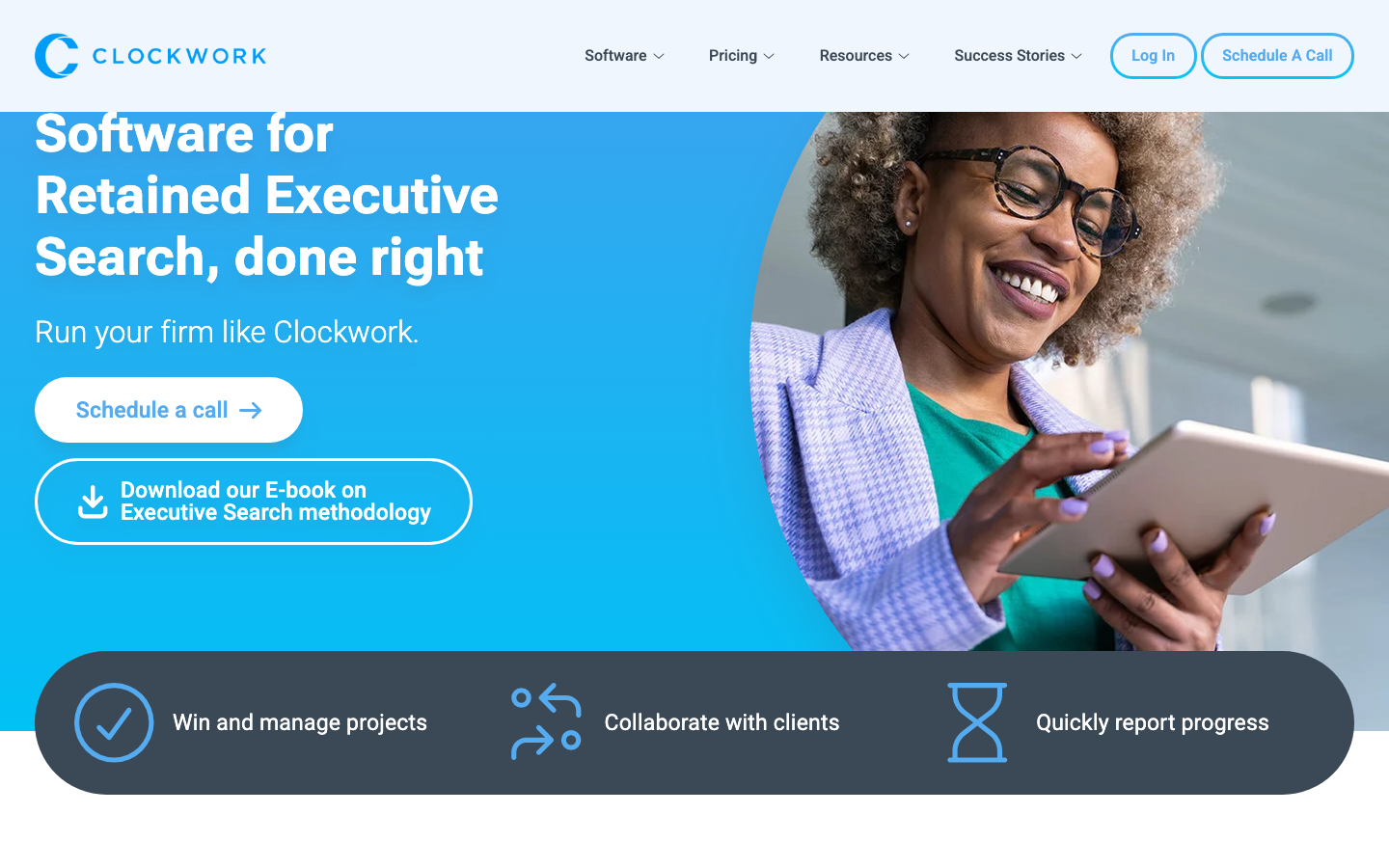
Clockwork is a modern search platform for boutique and mid-size firms. It models the engagement as a configurable project, with candidate statuses the client agrees to. Its pricing page publishes a single plan at $149 per user per month billed annually. That covers the CRM, a client collaboration portal, business development tools, and AI assistance. GDPR data compliance and consent management are listed as platform features, not paid extras.
Software Pros
- Client collaboration portal included in the only plan
- Configurable candidate statuses agreed with the client
- Published rate with no negotiation required
Software Cons
- Research tooling is lighter than the legacy CRMs offer
- A single plan means small firms fund features they may not use
- Data residency is not published, so ask before signing
Clockwork Review
The search problem this solves is the Friday afternoon a consultant spends rebuilding a client update from scratch. Clockwork treats the progress report as part of the product rather than as an export, and for a boutique that single decision justifies a look. A firm sitting on 20 years of accumulated research will find the database side noticeably thinner than what it would be leaving behind.
Our Verdict
Client Reporting Done Properly
*As pricing is subject to change, we are listing prices as they stand in September 2026
Cluen Encore
Quick Overview
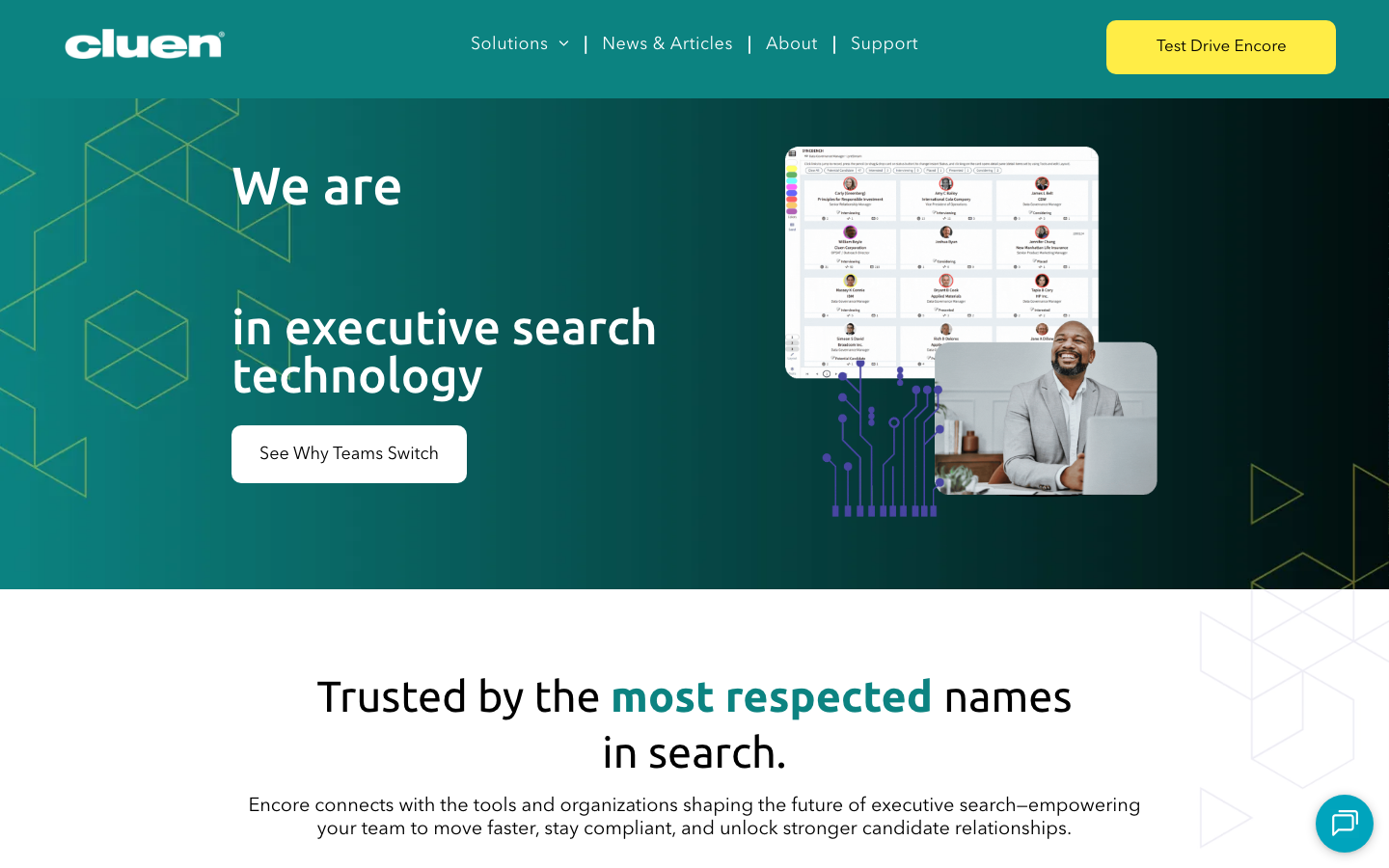
Cluen Encore is an established research CRM for mid-size and large firms. It is built around a relationship database that gets more valuable the longer a firm runs on it. Assignments, candidate engagement, and relationship intelligence sit in 1 system, with separate offerings for search firms, in-house teams, and legal recruiting. Its GDPR module automates consent collection and compliance documentation on either a legitimate interest or a consent basis.
Software Pros
- Relationship history that survives decades of mandates
- Consent and compliance documentation automated in-system
- Distinct configurations for firm, in-house, and legal search
Software Cons
- Depth comes with a learning curve for new researchers
- Cost is quoted, so a budget needs a call first
- Only 1 public G2 review to sense-check the product against
Cluen Encore Review
This platform earns its fee in year 7 rather than year 1. Cluen is bought by firms whose competitive advantage is knowing exactly who was almost right in 2019. It rewards disciplined note-taking more than any other tool on this list. If your firm is 2 years old, you are paying today for an asset you have not finished building yet.
Our Verdict
Research Depth Over Decades
Ezekia
Quick Overview
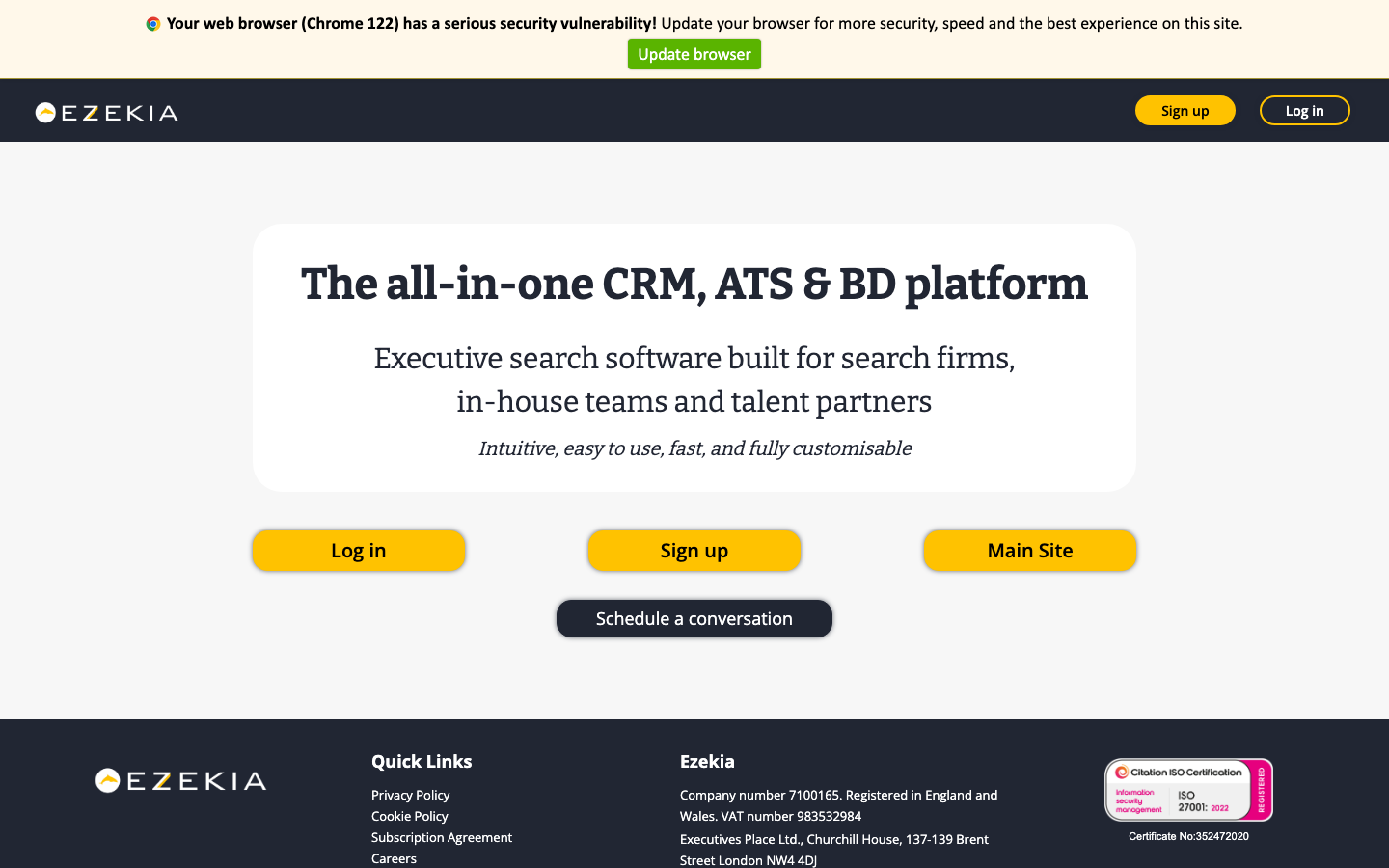
Ezekia is a modern search platform for boutique and mid-size firms, covering the assignment from engagement letter through to placement in 1 place. The company is registered in England and Wales and positions the product for search firms, in-house teams, and talent partners alike. Sign-up is self-service rather than demo-gated, which is unusual in this market and tells you something about the intended buyer.
Software Pros
- Assignment lifecycle handled end-to-end without add-ons
- Self-service sign-up rather than a mandatory sales call
- Interface designed for consultants rather than administrators
Software Cons
- Small vendor, so support and roadmap depend on a modest team
- Research tooling is lighter than the established CRMs
- Pricing is not published anywhere on the site
Ezekia Review
I would shortlist this for firms that want something current without committing to a configuration project first. Ezekia gets a search running quickly and keeps client collaboration in the same place as the work itself, which removes a whole category of email. Firms with heavy research operations and large legacy databases should compare it carefully against older systems before committing to a move.
Our Verdict
Modern Without The Project
FileFinder
Quick Overview
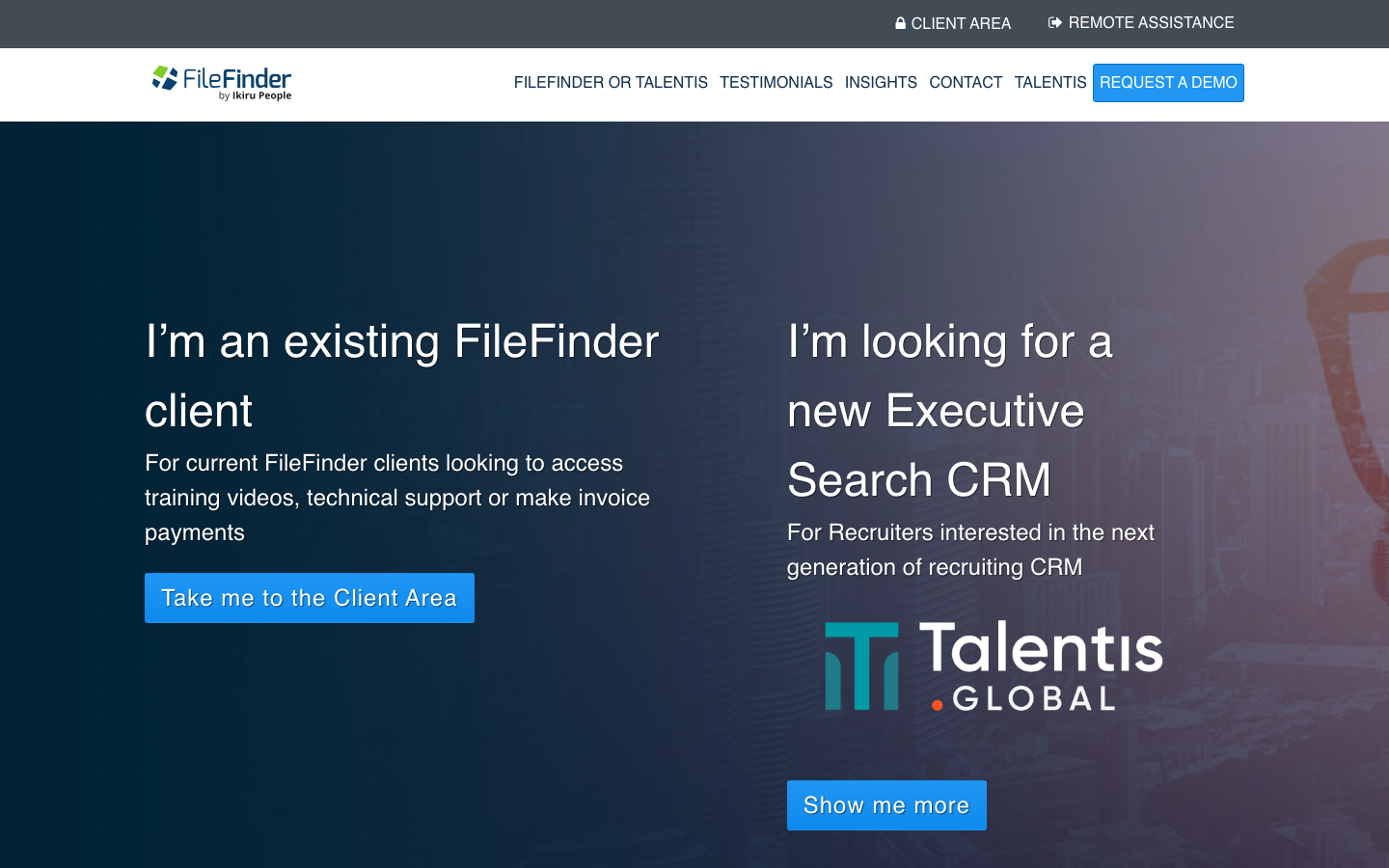
FileFinder is an established research CRM for mid-size and large firms, modeling assignments alongside a Web Research Zone built specifically for research associates. Consultants can run searches without leaving Outlook, and client reports or a client portal deliver the output. It comes from Ikiru People, which also owns Talentis, and the vendor states it has more than 30 years of experience serving executive recruiting.
Software Pros
- Web Research Zone built for research associates specifically
- Assignments worked entirely inside the Outlook inbox
- Customizable KPI reporting for partners and owners
Software Cons
- The interface reflects its age compared to newer platforms
- No published pricing at any tier
- Only 1 public G2 review, listed as FileFinder Anywhere
FileFinder Review
My candid read is that FileFinder gets bought for what it remembers rather than how it looks on screen. The research tooling runs deeper than most of this list, and the Outlook-first workflow genuinely suits consultants who already live inside their inbox. A younger firm choosing on first impressions will almost certainly pick something else, and will be perfectly fine.
Our Verdict
Depth Beneath A Dated Skin
Invenias
Quick Overview
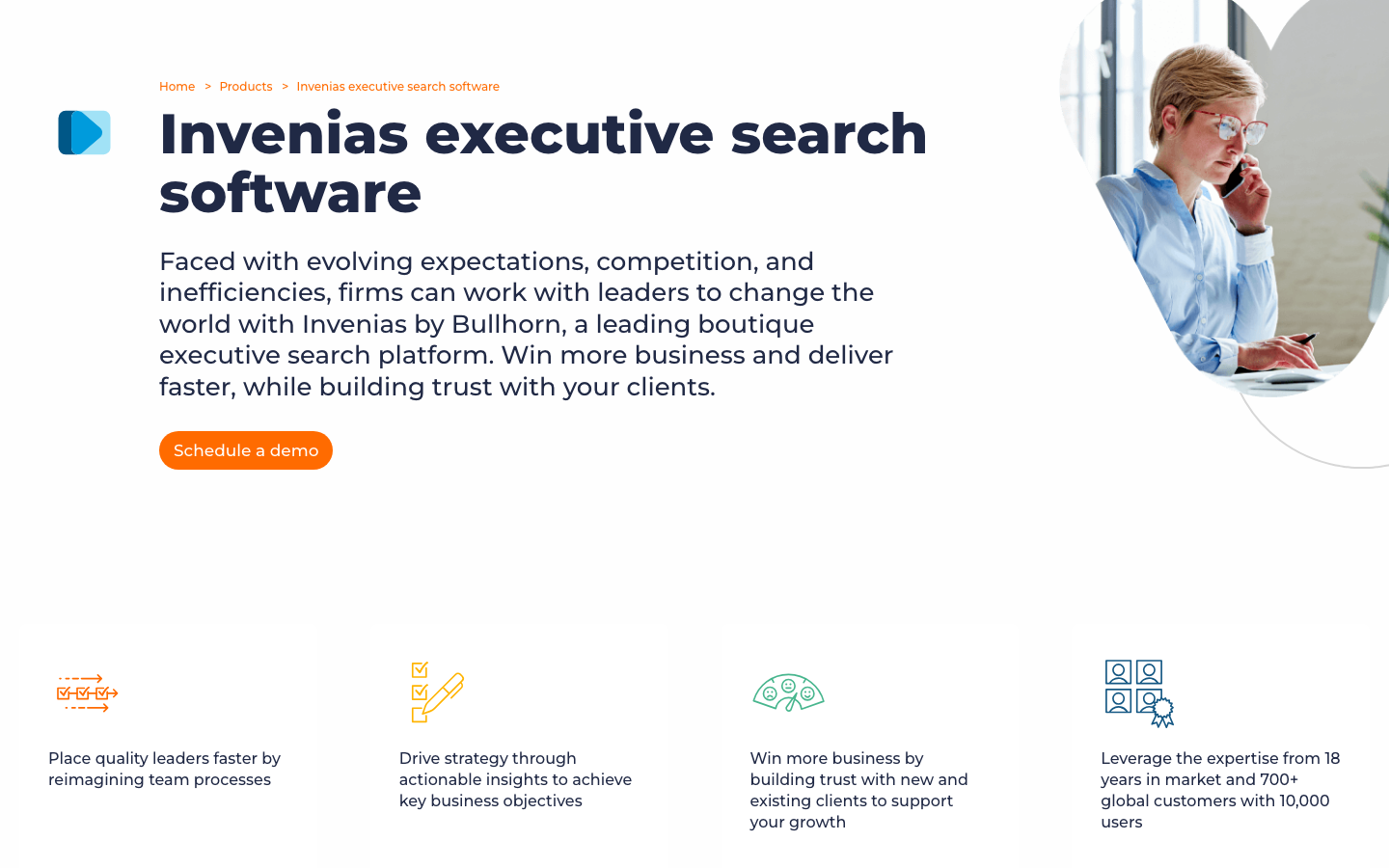
Invenias is an established platform for mid-size and large retained firms, and a Bullhorn product. It builds longlists by targeting a client’s competitors and mining previous similar assignments, then turns candidate profiles into branded client deliverables. Invenias Analytics covers utilization and financial planning, with a documented Power BI integration for firms that want to combine search data with outside sources.
Software Pros
- Longlists built from a client’s competitors and past mandates
- Branded candidate deliverables generated from the record
- Analytics covering utilization and financial planning
Software Cons
- Its 6 public G2 reviews average 1.3, the lowest score here
- Enterprise sales process with nothing published on cost
- Scale-oriented, so a 3-person firm buys more than it needs
Invenias Review
This deserves a demo if you run retained search across several offices and need the business development side modeled as carefully as the delivery side. Invenias covers that ground properly, and the analytics layer is stronger than most competitors offer. I would still walk into reference calls with the public review scores in hand and ask current customers directly how support actually responds.
Our Verdict
Retained Search At Scale
Longlist
Quick Overview
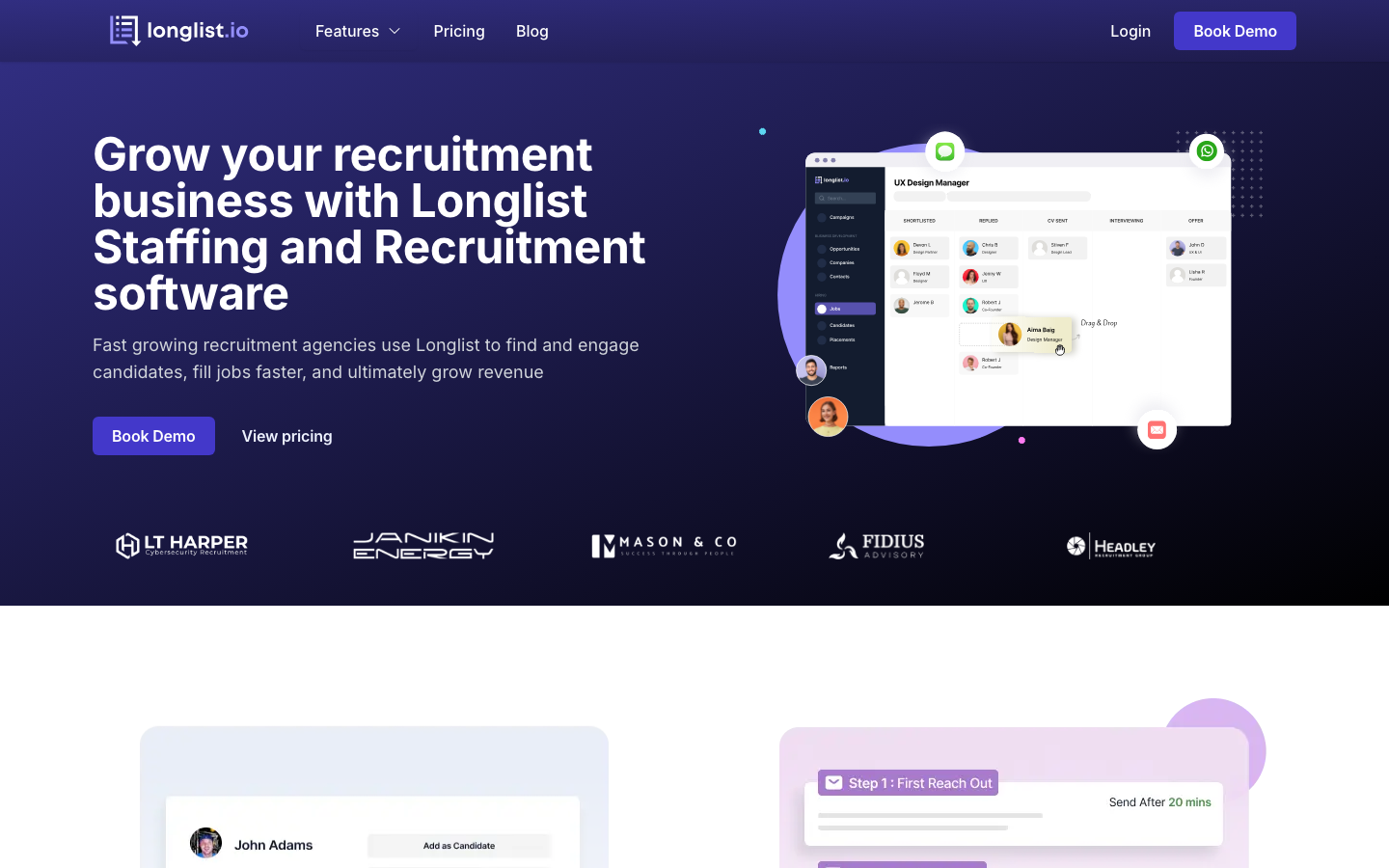
Longlist is an AI-assisted newcomer aimed at boutique teams, tracking searches as projects rather than as staged retained assignments. Its pricing page publishes $59 per user per month for Growth and $79 for Plus, with 20% off annual billing. Data migration support is included in the entry tier. Email sequences, resume parsing, and Gmail or Outlook integration come as standard rather than as upgrades.
Software Pros
- Lowest published entry rate on this list
- Migration support included in the entry tier
- Email sequencing and parsing without an upgrade
Software Cons
- Project tracking rather than true retained assignment stages
- Product spans general recruiting, so search depth is limited
- Small vendor with a short track record behind it
Longlist Review
The straight case for this is budget, and it is a good one. Longlist is the cheapest serious way for a new boutique to stop running searches out of a spreadsheet. Migration help at the entry tier is genuinely unusual at this price. Firms that need retainer stages, off-limits rules, and client-facing deliverables will outgrow it, probably within 2 years.
Our Verdict
Cheapest Serious Starting Point
*As pricing is subject to change, we are listing prices as they stand in September 2026
Talentis
Quick Overview
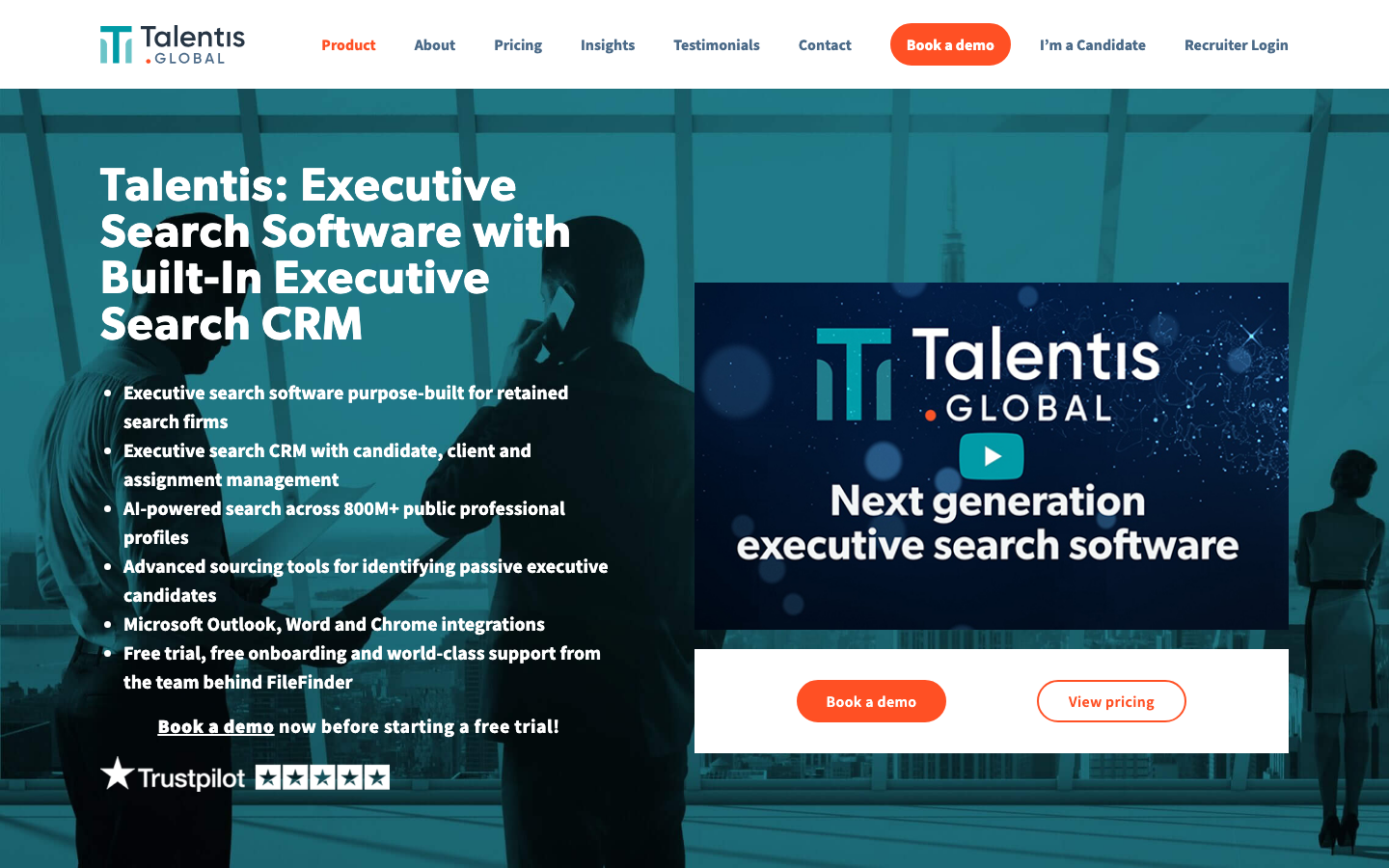
Talentis is an AI-assisted platform for boutique and mid-size retained firms, combining assignment management with self-populating research. The company states it searches across more than 800 million public professional profiles and achieves a 90% reduction in data entry. Its pricing page lists a monthly equivalent of €104 per user when prepaid annually, with a 7-day free trial and free onboarding. It shares a parent, Ikiru People, with FileFinder.
Software Pros
- Longlists assembled from live public profile data
- Published rate plus a 7-day trial and free onboarding
- Outlook, Word and browser extensions for daily research
Software Cons
- Automated research still needs a human editing pass
- Newer product than the CRM it sits alongside
- Data residency is not published on the public site
Talentis Review
The search problem this solves is the week a research associate spends assembling a longlist by hand from scratch. Talentis compresses that work materially, and the free trial plus a published price make it easy to test without opening a procurement cycle. Firms whose value rests on proprietary notes gathered over decades should carefully weigh live public data against their own archive.
Our Verdict
Research That Fills Itself
*As pricing is subject to change, we are listing prices as they stand in September 2026
Thrive TRM
Quick Overview
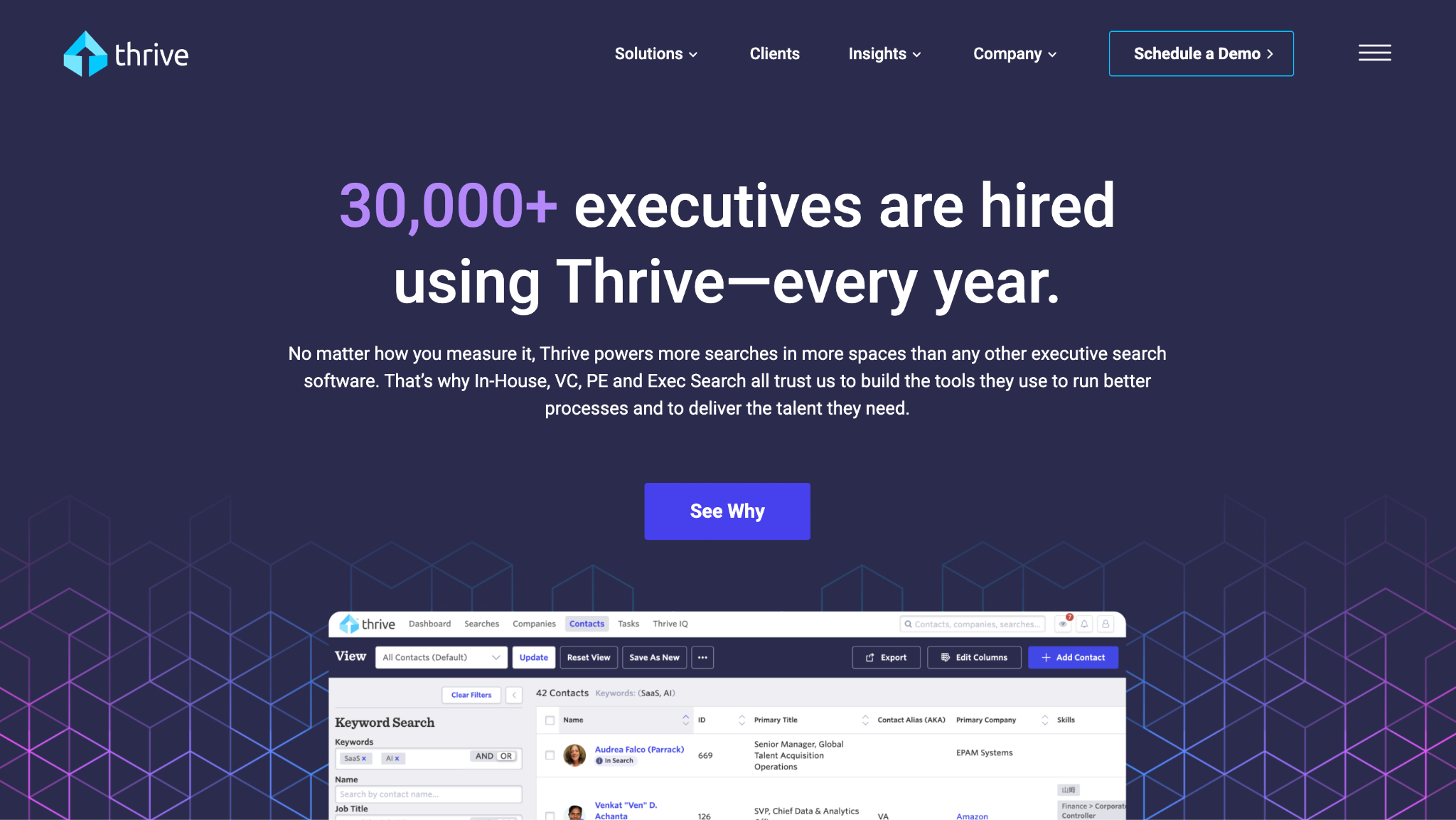
Thrive TRM is a modern platform for mid-size and large teams, organizing searches around real-time collaboration with the people who have to approve a hire. Talent discovery, search management, relationship management, and reporting sit together, with configurations for in-house teams, venture capital and private equity, and search firms. Its site claims it hires more than 30,000 executives through the platform a year.
Software Pros
- Live stakeholder visibility rather than weekly status emails
- Relationship mapping covering compensation and career milestones
- Distinct setups for in-house, investor, and firm use
Software Cons
- Priced and scoped above what a small boutique needs
- Quote-only, with nothing published about cost
- Just 1 public G2 review to check the product against
Thrive TRM Review
This platform earns its fee through search with 6 stakeholders who all want to know where it stands on Tuesday. Thrive is the strongest option here for in-house teams and investor-backed hiring. The audience there is a board or a founder, not a paying client. A traditional firm buying purely on research depth has better-matched options elsewhere on this list.
Our Verdict
Stakeholders Kept In Sync
FAQs About Executive Search Software
What software do I need for executive search?
3 capabilities matter more than any feature list. You need a system that models the assignment, its stages, and its paying client. You need a research database that keeps notes usable for years, and reports the client receives without anyone rebuilding them. Which product wins depends on your firm’s size and how much history you carry, and the table above sorts the field on both.
Can I use a normal applicant tracking system instead?
You can, and plenty of small firms do for a year or 2. The mismatch shows up quickly, because a tracking system is designed around people who applied, and almost nobody in a senior mandate ever does. It has no market map, no retainer stages, and no client-facing deliverable. Firms usually switch when the weekly client update starts taking half a day.
How much does it cost?
Most of this market prices per user. Published rates among the 8 above run from $59 to $149 per user per month, plus a vendor listing fee of €104. 5 of the 8 quote instead, which usually means they bundle implementation in. Budget the migration separately, because moving years of notes and documents is a project, not a setup task.
What is a market map and does the software build it?
A market map is a researched picture of who holds which senior role at which company, built before you approach anyone. Software helps in 2 ways: it pulls profile data automatically, and it stores the map so the next mandate in that sector starts further along. What it does not do is judge whether somebody would actually move, which is still the researcher’s work and still the hard part.
What happens to all that candidate data?
At category level, expect retention rules that purge records on a schedule, consent and notice records, access control between consultants, and audit logs. Some vendors document more machinery than others, and none publish a hosting region openly, so ask where records physically sit. This is not legal advice, and no platform makes a firm compliant; the obligation stays with the firm holding the files.
How hard is it to migrate from a legacy system?
The structured data is the easy half. Contacts, companies and assignments move reasonably well between systems. The difficult part is everything unstructured: research notes, attached documents, referencing comments, and the record of who wrote what and when. Vendors differ enormously in how much of that they will handle for you, so get the scope in writing before the contract rather than after.
Do in-house teams use this kind of platform?
Yes, for confidential senior hires, their corporate system cannot hold. The work changes shape without an external client, because there is no fee and no weekly report to send anybody. A chief executive or a nominating committee still wants visibility, and often only 3 people in the building may see the file. Stakeholder collaboration therefore matters far more than business development tooling in that setting.
I want a firm to recruit software executives, not a tool. Where do I start?
This page reviews the systems that search firms run their mandates on, so it is the wrong page for that question. Hiring a firm is a different exercise. You are assessing sector track record, the partner who will do the work, references from comparable mandates, and fee structure. Our directory of recruitment agencies by country is the better starting point for that search.

Helen is Anywherer’s Market Analyst & Content Researcher, with extensive experience in analyzing global employment markets and HR technology trends. She is skilled at turning complex market data into clear, well-researched insights that inform every piece of content. With a strong grasp of the EOR, PEO, and international hiring space, Helen plays a key role in keeping Anywherer’s research accurate, up to date, and genuinely useful for readers.