A skills matrix is a grid of people against skills that shows who can do what, and at which level. Skills matrix software turns that grid into a live system. It stores proficiency levels, certificates with expiry dates, evidence of sign-off, and gap analysis for each role.
A skills matrix tool is bought by more people than HR alone. Operations and quality managers use it to keep a line running. Resourcing managers use it to staff work. HR and L&D teams use it to plan development, and each of the 3 wants something different from the same grid.
The pressure behind it keeps rising. The World Economic Forum’s Future of Jobs Report 2025 came out on 7 January 2025. Of the employers it surveyed, 85% intend to make upskilling a priority before 2030. A further 70% expect to hire for skills they lack today, and 50% intend to move people out of shrinking roles into growing ones. None of that is possible without knowing what your people can already do. Most organizations do have that record. It is a spreadsheet; it was accurate the week somebody built it, and nobody has opened it since.

INSIGHT: Why does every skills matrix start in Excel and end badly?

The problem is not building the matrix. Nobody maintains it, and nothing tells you when a certificate expired last month.
- 63% of employers told the World Economic Forum that skill gaps are the single biggest thing blocking business transformation between now and 2030. The same survey expects 39% of an average worker’s skill set to be reshaped or made obsolete inside that window.
- Regulated work sets the bar higher than a grid. Under US drug manufacturing rules at 21 CFR 211.25, training must cover the particular operations a person performs. It must also be conducted by qualified individuals on a continuing basis.
- The practical failure is quieter than either. A spreadsheet is right on the day it is built and quietly wrong 3 months later, and nobody notices until an audit or an absence.
So the heading has no single answer, and pretending otherwise would be useless. A matrix built to satisfy an auditor and one built to show a team what it knows are different products. They are priced differently and set up differently. The 10 platforms below split into 3 families. Matrix and compliance tools hold verified assessments and certification expiry. Visual mapping tools go live in an afternoon and run largely on self-reported data. Skills intelligence and resourcing tools infer or model capability to match people to work. Quality management standards make the same distinction: ISO 9001:2015 asks organizations to retain documented evidence of competence, not a colorful chart. Picking the best skills matrix software therefore starts with why you want one. Below, I’ve reviewed 10 of the leading platforms in A-Z order.
INSIGHT: Audit-ready, visual, or intelligent?
The 10 platforms here answer 3 different questions. What decides your shortlist is whether anyone outside the company will ever check the data.
- Matrix and compliance (AG5, CABEM Competency Manager, Kahuna, Poka): verified assessments, certification expiry, evidence, and records built to survive an audit.
- Visual mapping (MuchSkills, Skills Base, SkillsDB): quick to adopt, largely self-reported, built for team visibility and staffing rather than proof.
- Skills intelligence and resourcing (365Talents, Avilar, Cinode): taxonomies, inference, and matching people to roles or engagements, aimed at development and utilization.
Skills Matrix Software Comparison
Rows follow the same A-Z sequence as the reviews further down. Choosing the best skills matrix software comes down to 2 columns more than the rest. Where the proficiency data comes from and whether the tool watches expiry dates for you.
| Tool | Family | How skills data is captured | Certification expiry | Free tier | G2 rating |
|---|---|---|---|---|---|
| 365Talents | Skills intelligence and resourcing | Inferred from work history | Not stated | No | 4.8 (112) |
| AG5 | Matrix and compliance | Manager assessment and certification records | Yes with reminders | No | 4.6 (65) |
| Avilar | Skills intelligence and resourcing | Assessment scores and manager review | Basic | No | N/A |
| CABEM Competency Manager | Matrix and compliance | Sign-off and evidence upload | Yes with reminders | No | N/A |
| Cinode | Skills intelligence and resourcing | Self-assessment and CV data | Basic | Yes, up to 10 users | 4.6 (147) |
| Kahuna | Matrix and compliance | Validated assessment and certification records | Yes with reminders | No | 4.9 (50) |
| MuchSkills | Visual mapping | Self-assessment with validation workflows | Yes with reminders | Trial only | 4.5 (1) |
| Poka | Matrix and compliance | Manager sign-off on the shop floor | Yes with reminders | No | 4.6 (229) |
| Skills Base | Visual mapping | Self-assessment and manager assessment | Yes with reminders on the top tier | Yes, up to 250 skills | 4.5 (29) |
| SkillsDB | Visual mapping | Manager assessment, self-assessment on paid tiers | Basic, 1 certification on the free tier | Yes, up to 50 user records | N/A |
Each G2 score came off the product profile itself in September 2026.
What Is Skills Matrix Software?
Start with the grid itself. Rows are people, columns are skills, and each cell holds a proficiency level, meaning an agreed rating of how well somebody can do that thing. Skills management matrix software adds the 4 things the grid cannot carry on its own. It records who assessed the person and on what basis, which is the evidence. It stores certificates and their expiry dates. It compares every person against what their role requires, which is gap analysis. And it reports all of that to someone who wasn’t in the room.
The honest reason a spreadsheet stops working is not company size. Plenty of 500-person operations run one for years. It is maintenance. The file is accurate the week it is built, then 1 person leaves, 2 get promoted, 4 renew a qualification, and nobody updates the sheet. By spring, 3 versions are circulating, and no one has ever sent anyone a reminder. A skills matrix online tool fixes the maintenance problem rather than the grid. Teams that switch usually say the reminders mattered more than the visuals.
4 kinds of things go into the matrix, and mixing them up causes most of the confusion in this category. Technical skills are what somebody can perform, from welding a joint to writing a query. Certifications and licenses are formal, externally granted, and dated. Behavioral competencies cover judgment, communication, and leadership. They belong to a competency framework, meaning a structured description of what good looks like at each level. Then there is the software skills matrix in its plainest sense. Which tools and systems each person can actually operate, from a CAD package to a CRM.
Companies buy for 3 reasons, and the reason predicts the product. Compliance buyers need proof. Visibility buyers need to see coverage across a team. Development buyers want to know what to train and who to move. Note what none of them is. This software records the capability you hold today and whether the paperwork is current. Modeling the capability your business needs in 3 years is a separate category with separate tools. Getting skills data into the same view as the rest of your workforce reporting is a fair next question. Our roundup of HR reporting and analytics tools covers that.
Certification Tracking and Audit-Ready Skills Records
An auditor almost never asks to see your skills matrix. The question is narrower and much harder: who was qualified to perform this task on this date, and what is the evidence? A spreadsheet cannot answer it retroactively because it reflects today’s state, not history. Software built for this keeps a record version by version. The answer for a date 14 months ago is still available after the person has changed roles twice.
Expiry and recertification are where the money is. Most qualifications lapse on a cycle. The feature that pays for the subscription is the reminder firing 60 days ahead, not the dashboard nobody opens. Evidence and sign-off matter just as much: a record that says who assessed the person, against what criteria, and when. This is exactly where self-assessed matrices fall over, because an employee rating themselves 4 out of 5 is an opinion, not a qualification. Regulators write the requirement in those terms too, and 21 CFR 211.25 requires training conducted by qualified individuals on a continuing basis.
Coverage risk is the operational version of the same problem. If 1 certified operator covers a line and that person books 2 weeks off, you want to know before the shift, not during it. Of the 10 reviewed here, AG5, CABEM Competency Manager, Kahuna, and Poka document expiry tracking with reminders and evidence records on their own sites. MuchSkills documents validation workflows and an audit trail on its pricing page. None of this makes an organization compliant, and nothing here is legal or safety advice; the software records and produces, and people decide. One more thing it will not do is close the gap it just found, which is a job for the training tools we cover separately.
Best Skills Matrix Software by Team Type
A 40-person agency and a 3-site chemical plant both want a skills matrix, but they shouldn’t buy the same one. What follows is sorted by the situation each tool fits, not by any score I assigned. Tools inside each group are listed alphabetically, and appearing twice says the platform is broad, not that it ranks higher.
For Manufacturing and Frontline Operations
AG5, Kahuna, and Poka are built for people who do not sit at desks. The daily questions here are operational. Is this operator signed off for this machine, does the night shift still have 2 qualified people, and what lapses this quarter? All 3 hold certification cycles with reminders, and all 3 assume a supervisor verifies capability rather than the worker claiming it. Mobile matters more than in any other group because verification happens on the floor, not in an HR system. This is where the category is strongest and where the money is, since a lapsed qualification here stops production or fails an inspection.
For Professional Services and Resourcing
365Talents and Cinode answer a different question: who can I put on this engagement, starting Monday, at the rate the client agreed. Resource skills matrix software connects the skills inventory to staffing and utilization. The useful output is a shortlist of available people matching a client requirement. Cinode leans into the consultancy workflow, pairing skills with CVs and sales pipeline, which matters when a proposal has to name the team. 365Talents works from inferred capability across a larger workforce. Neither is built for certification evidence, and firms in this group rarely need it.
For Small Teams
MuchSkills, Skills Base and SkillsDB all reach a working matrix without a project plan. Skills matrix software for teams lives or dies on adoption. The most user-friendly skills matrix software here is whatever your team will fill in during a single meeting, not whatever has the most features.
Free skills matrix software is real. Skills Base offers a free forever tier up to 250 skills. SkillsDB offers a free tier up to 50 user records, as confirmed on its pricing page. The honest note is that a 15-person team usually needs visibility, not an audit trail. Self-reported ratings are perfectly adequate for that.
For Enterprise Skills Intelligence
365Talents and Avilar suit organizations that already think in competency frameworks. The work here is structural. A skills taxonomy, meaning an organized vocabulary of skills, has to stretch across thousands of roles and mean the same thing in 2 countries. Avilar approaches it through formal competency modeling and assessment, and 365Talents through inference and internal mobility. Both connect the matrix to development rather than to proof. Note the boundary. Forecasting what capability the business needs years out is a separate product category, and buying one of these expecting it will disappoint.
For Software and Engineering Teams
This group gets asked more than any other, so here is the direct answer. A software developer skills matrix has 5 dimensions worth separating. Programming languages and frameworks come first. Next are systems and platforms: cloud providers, databases, and the runtime environment. Then tooling and infrastructure, covering version control, CI pipelines, and observability. Domain knowledge closes the set, because a payments engineer and a games engineer are not interchangeable.
Testing sits in the middle of that list and deserves its own treatment. A software quality assurance skills matrix adds automation frameworks, performance testing and security testing as columns in their own right. Folding them into 1 QA rating tells nobody anything.
Teams get levels wrong. A software engineer skills matrix should define proficiency by what somebody can do without help, not by years served. A workable 4-level scale runs: needs supervision, works independently on routine work, handles ambiguity and edge cases, and sets the standard others follow. Write each level as observable behavior so 2 managers rate the same person the same way.
On tooling, 365Talents and Cinode carry technical taxonomies deep enough to hold a software engineering skills matrix at scale. MuchSkills documents a library of more than 70,000 skills and certifications on its pricing page, covering most stacks without custom entry.
Skills Matrix Software Pricing
This category is more open than most software markets. 3 of the 10 publish a rate you can read without a call, and 3 run a genuine free tier. That is why free skills matrix software is a real search. Pricing takes 3 shapes. Per-user monthly rates sit at the team end, usually a few dollars a head. Tiered plans scale by feature depth or volume. Quote-based contracts cover the compliance-heavy platforms, where an implementation comes with the license. Then there is the cost that never appears on any pricing page. Somebody inside your organization has to decide what the skills are, what each level means, and who signs off. That is weeks of work, and it lands on a person who already has a job.
| Tool | Pricing model | Free tier and its limit | Published starting price |
|---|---|---|---|
| 365Talents | Quote-based | None | Custom pricing |
| AG5 | Tiered, quote-based | None | Custom pricing |
| Avilar | Quote-based | None | Custom pricing |
| CABEM Competency Manager | Quote-based | None | Custom pricing |
| Cinode | Per user per month | Free for up to 10 users, no card required | Custom pricing |
| Kahuna | Quote-based | None | Custom pricing |
| MuchSkills | Per member per month | Free trial on the Starter tier | From €5 / $5.5 per member per month |
| Poka | Quote-based | None | Custom pricing |
| Skills Base | Per person per month | Free forever, up to 250 skills | $0 free, then $2.25 per person per month |
| SkillsDB | Per user per month | Free forever, up to 50 user records | $0 free, then $7 per user per month |
As pricing is subject to change, prices are listed as they stand in September 2026.
INSIGHT: What does a skills matrix actually cost to set up?
The subscription is the easy part. Deciding what the skills are and what each proficiency level means is weeks of internal work.
- 3 of the 10 publish a starting price openly (MuchSkills, Skills Base, SkillsDB), and 7 route everything through a quote. 3 run a genuine free tier: Cinode up to 10 users, Skills Base up to 250 skills, and SkillsDB up to 50 user records.
- Prebuilt libraries are what shorten the framework work. MuchSkills documents more than 70,000 skills and certifications on its pricing page. Skills Base publishes skills data templates and a competency framework, and AG5 lists global and local skills libraries in its top tier.
- Nobody puts the definition work in the project plan, and it is the part that slips. An editable vendor taxonomy buys back more calendar than a per-user difference of a dollar or 2 will ever buy back in cash.
Sources:
all read September 2026
How to Choose Skills Matrix Software
I would settle 1 question before opening a single demo: why do you want the matrix? Compliance, visibility, and development lead to genuinely different products, and buying the wrong one is how these projects die quietly in month 4. Next, decide whether self-assessment is acceptable. It is fine for planning a team’s work and worth nothing in an audit. That means the answer comes from your first decision, not a feature comparison. If anything you do is regulated, check expiry tracking, reminders, and evidence records specifically. Ask to see a historical record rather than a live dashboard.
Then ask how much of the framework you have to define yourself. That is the real implementation cost, and no vendor puts it on the pricing page. Check who updates the matrix and how often, since a system nobody maintains is the spreadsheet problem wearing a subscription. Check the HRIS integration in both directions so leavers and joiners are not maintained twice. Ask what happens after you find a gap, because identifying it and closing it are different purchases. Check that the reporting would satisfy an auditor or a client, not just your own team. Finally, run the per-user math against frontline headcount rather than office headcount, which is usually significantly larger. Skills visibility also feeds internal opportunity, and our guide to employee engagement software covers that side of the argument.
Top 10 Skills Matrix Software Platforms for 2026
Everything below came off vendor product and pricing pages, not off anybody else’s ranking. That distinction earns its keep here, because several roundups competing for this search term are written by vendors who appear in them. Family, capture method, free tier, and price were each checked against the platform’s own site in September 2026. The 10 run from compliance-grade platforms like AG5 and Kahuna to visual tools like MuchSkills. A single ranking of employee skills matrix software would flatter some and misrepresent others.
Look at the family column first, then the review. What you are reading is the best skills matrix software 2026 has for 10 separate situations, and not a ranking.
I’m listing all providers in alphabetical order to keep this comparison neutral.
365Talents
Quick Overview
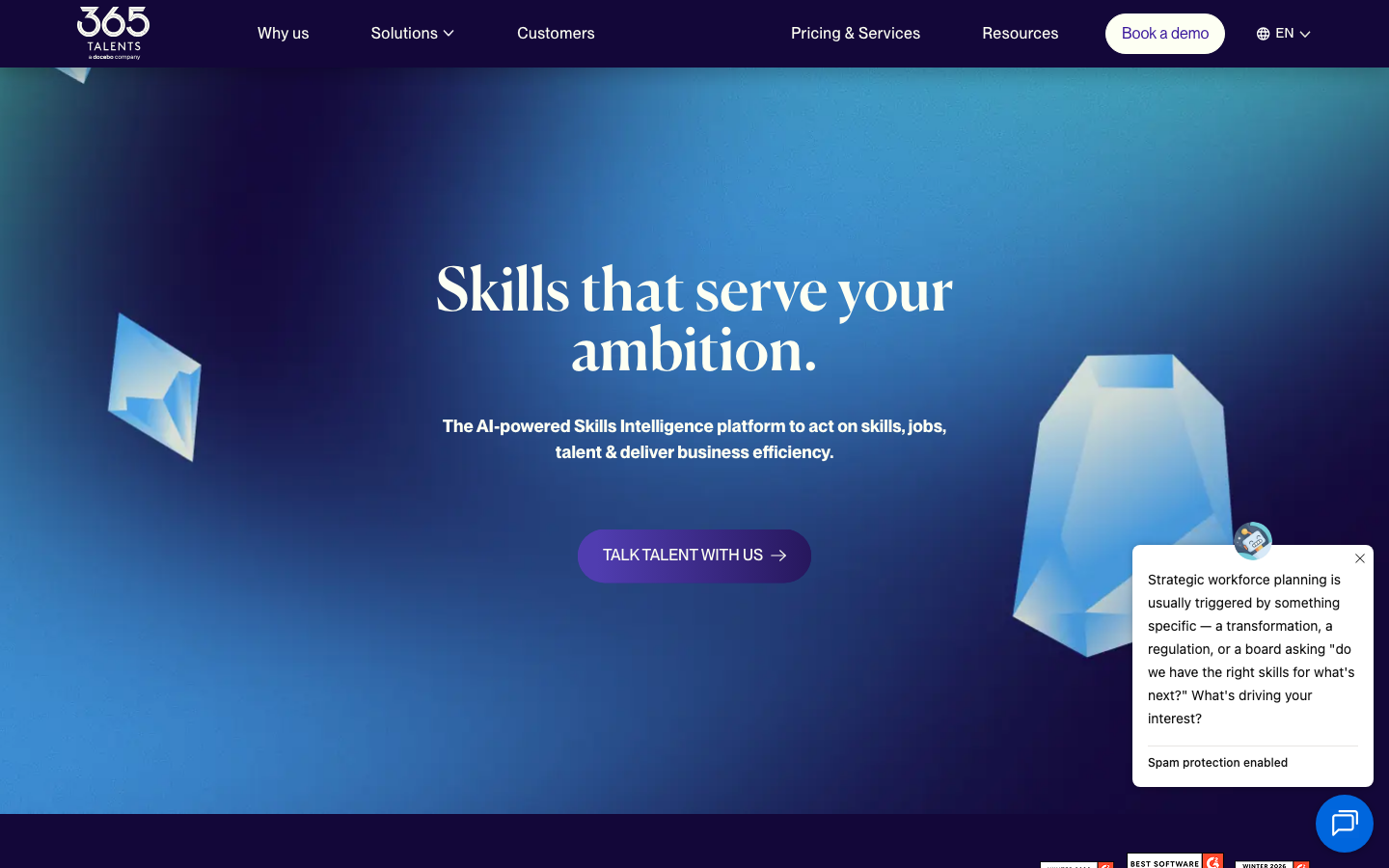
365Talents is a skills intelligence platform. Its distinguishing feature is that it infers capability from work history, projects, and career data rather than requiring manual entry. It builds a taxonomy underneath and applies it to internal mobility and development. The company says more than 2 million employees across 60+ countries use the platform. Its site is organized around AI agents for skills and talent intelligence.
Software Pros
- Inference fills the matrix without a company-wide data entry exercise
- Taxonomy holds up across thousands of roles and several languages
- Skills data feeds internal mobility and development directly
Software Cons
- Inferred capability is a probability, not a verified qualification
- No documented certification expiry tracking, so regulated work needs another tool
- Enterprise sales motion with no published price
365Talents Review
The skills problem this fixes is the blank page. Large organizations rarely fail because they picked the wrong framework; they fail because nobody will fill in 8,000 profiles. Inference gets you to a usable map without that fight, and the mobility features then have something to work with. Do not buy it to prove anything to an inspector, because that is not what the data is.
Our Verdict
Inference At Enterprise Scale
AG5
Quick Overview
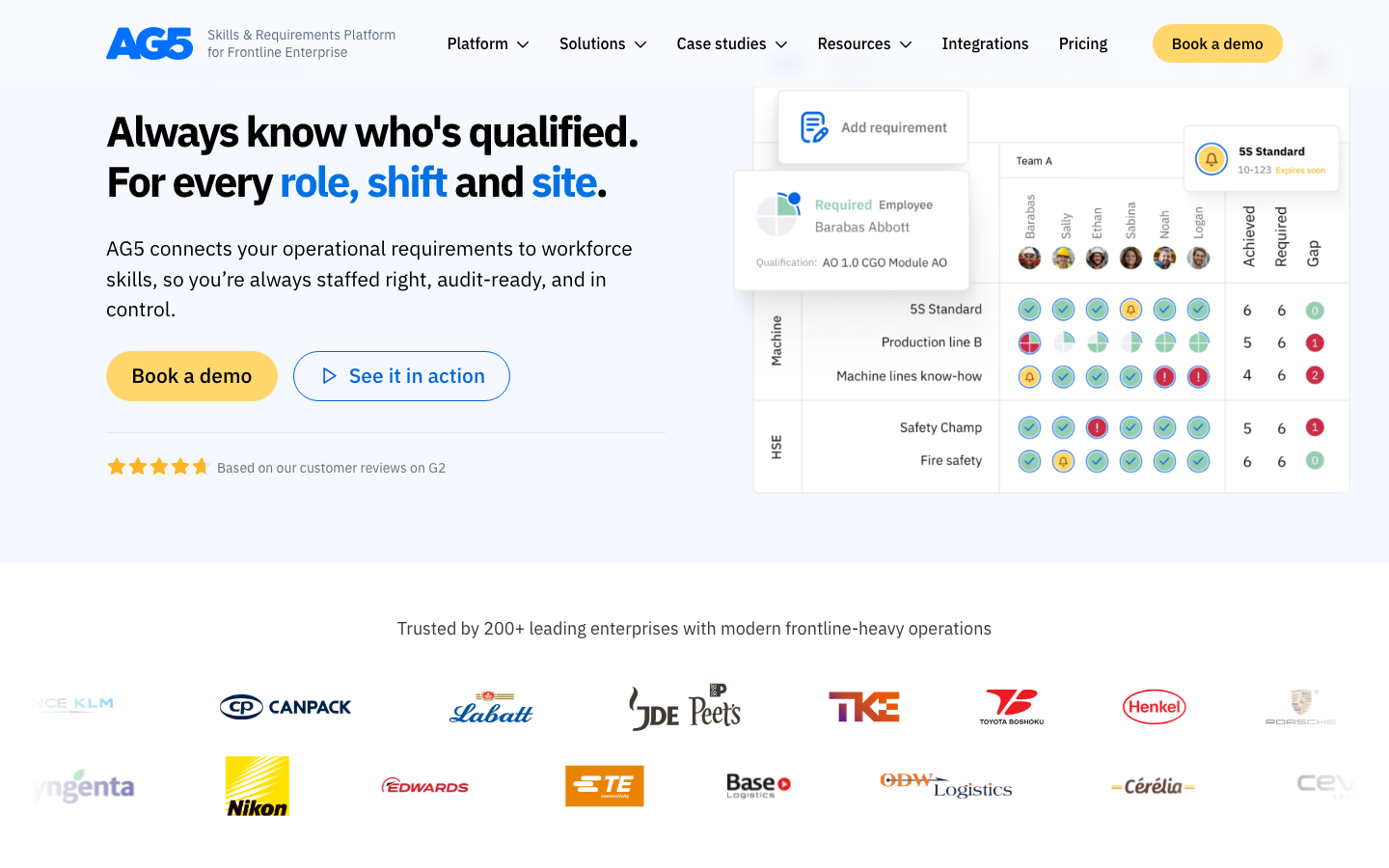
AG5 is a matrix and compliance platform, built on manager assessment and certification records rather than self-reported ratings. It positions itself openly as the replacement for the Excel skills matrix, with visual matrices, qualification tracking, and audit-ready records. Its pricing page sets out 3 tiers (Core, Accelerate, Enterprise), with compliance features reserved for the top one. The company advertises use by more than 200 enterprises.
Software Pros
- Skills matrix functions in every tier, including the entry plan
- More than 100 HRIS integrations and support for 30 or more languages
- Global and local skills libraries shorten the framework build
Software Cons
- Tiers are published, but no prices are, so budgeting needs a call
- Compliance and FDA features sit only in the Enterprise tier
- Identifying a gap is where it stops, so a learning tool is a separate spend
AG5 Review
This one pays for itself in the audit week that used to consume a quality manager for 10 solid days. AG5 is unusually direct about calling itself the spreadsheet replacement, and the product does match the pitch. My reservation is the tier structure. The compliance capability most buyers arrive for sits behind the largest plan, so price that in early.
Our Verdict
Built For The Audit
Avilar
Quick Overview
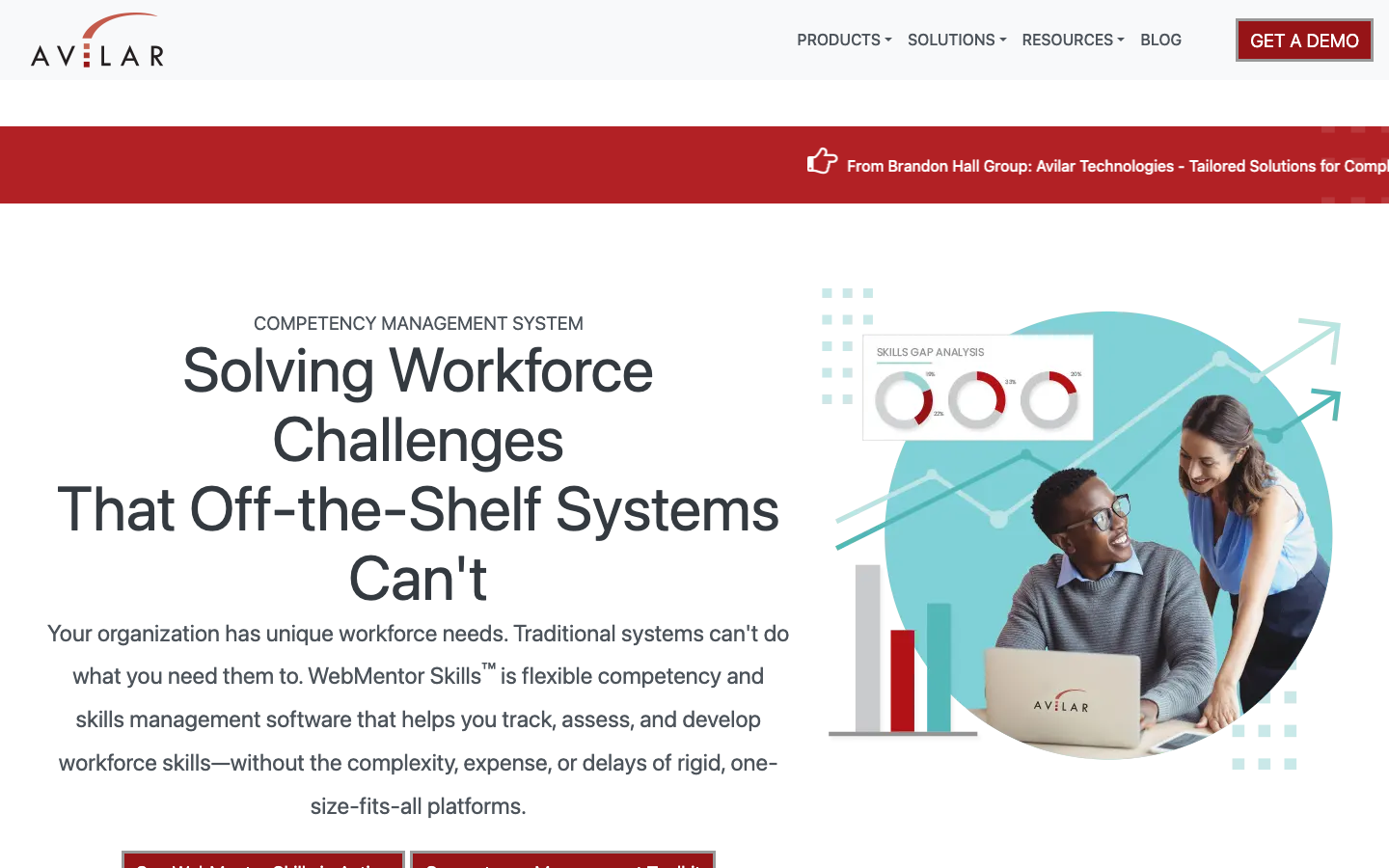
Avilar is a skills intelligence and competency platform, populated by assessment scores and manager review rather than inference. It is one of the longest-established names here, trading as The Competency Company from Columbia, Maryland. Its WebMentor Skills product pairs competency frameworks with assessments and gap analysis. The G2 profile is listed under that product name rather than the company name.
Software Pros
- Formal competency modeling rather than a flat skill list
- Assessment engine feeds the matrix with scored results
- Gap analysis reports against defined role requirements
Software Cons
- Interface shows its age next to the newer visual tools
- No public pricing and no self-serve entry point
- Certification expiry handling is basic compared to the compliance specialists
Avilar Review
I would put this in front of an organization that already has a competency framework on paper and wants it running as a live system. Avilar treats competency as the primary object rather than an afterthought, which is the right model for public sector bodies and professional bodies. Teams that just want a coverage view will find the setup heavier than the outcome justifies.
Our Verdict
Competency Modeling Done Formally
CABEM Competency Manager
Quick Overview
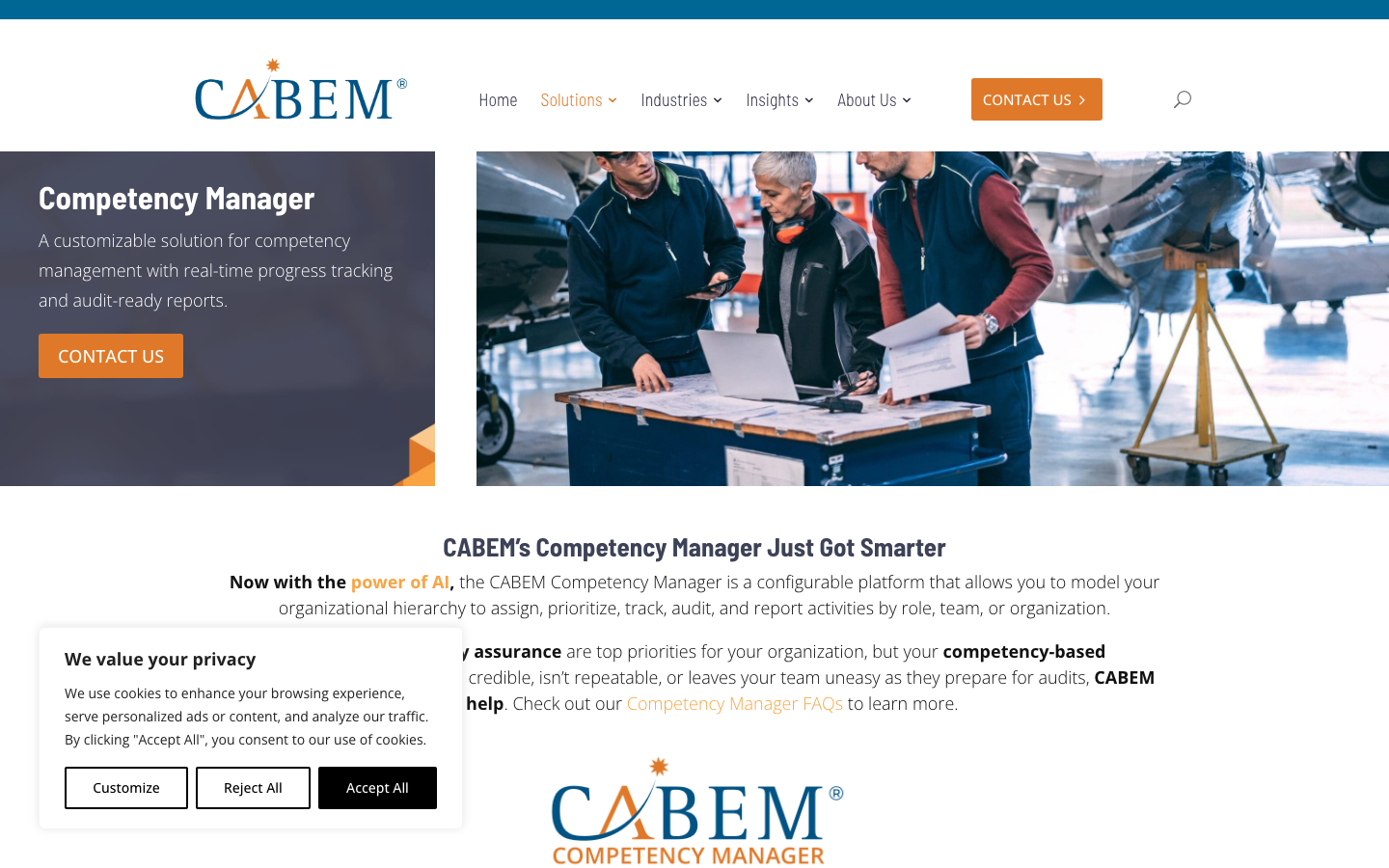
CABEM Competency Manager is a matrix and compliance platform whose data comes from sign-off and evidence upload, which is the part regulated buyers care about. Its site describes assigning activities by role, team, or organization, then running an approval process. That covers evaluation, manager sign-off, self-attestation, and document uploads, with certificates awarded at the end. The company states it has over 2 decades of building software for regulated environments.
Software Pros
- Approval workflow records who signed off and on what basis
- Evidence uploads attach to the qualification record itself
- Hierarchy modeling assigns requirements by role or by site
Software Cons
- Small vendor with no G2 ratings to check against
- Configuration-heavy, so expect a real implementation
- No public price and no published tier structure
CABEM Competency Manager Review
My honest read here is that CABEM sells the audit trail first and the interface second. That is the correct order for anybody in healthcare, manufacturing, or government work. The sign-off model is more explicit than any other tool here. It is also considerably more setup than a team wanting a quick capability picture should sign up for.
Our Verdict
Sign-Off With A Paper Trail
Cinode
Quick Overview
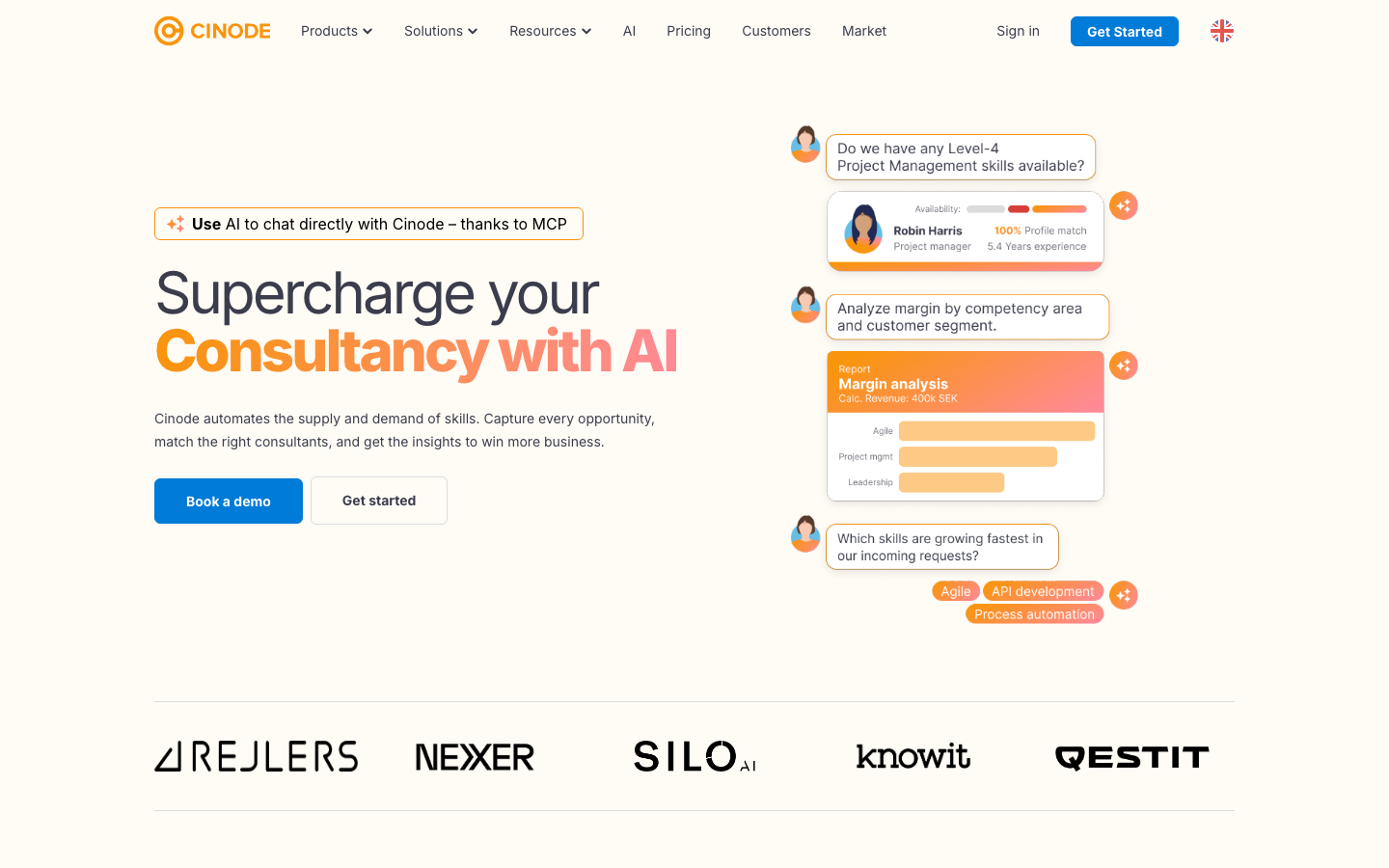
Cinode is a skills and resourcing platform built for consultancies, drawing on consultant self-assessment and CV data. The matrix answers a commercial question rather than a compliance one. Who can be staffed on which engagement, and can their CV reach the client tomorrow? Its Free plan covers up to 10 users with no card required, and adds access to the Cinode partner network.
Software Pros
- Skills connect directly to CVs, staffing, and the sales pipeline
- Free tier up to 10 users makes evaluation genuinely easy
- Partner network surfaces work outside your own bench
Software Cons
- Self-assessed and CV-derived data will not satisfy an auditor
- Built around the consultancy model, so a factory gains little
- Certification tracking is basic next to the compliance platforms
Cinode Review
This is worth a trial when proposals keep going out late because nobody can find the right consultant fast enough. Cinode is the clearest example on this whole list of a skills matrix built to serve revenue rather than risk. The CV linkage is the piece competitors do worst. Outside professional services, most of what you would pay for goes unused.
Our Verdict
Skills That Win Engagements
Kahuna
Quick Overview
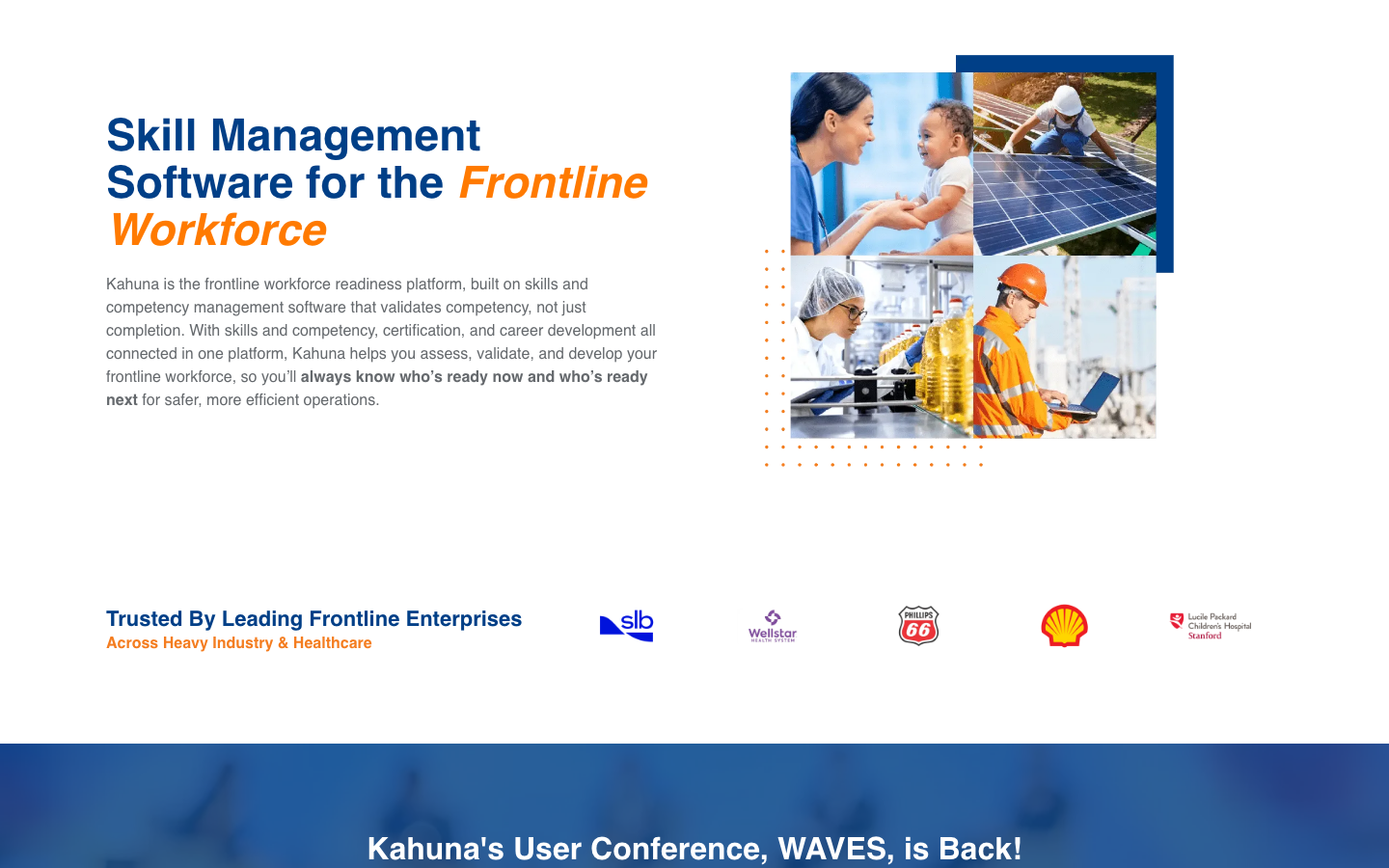
Kahuna is a matrix and compliance platform for frontline and field workforces, and its data comes from validated assessment and certification records. The company draws the line itself on its homepage, saying the platform validates competency rather than completion. Skills, certification, and career development sit in 1 system, with heavy industry and healthcare named as its core markets.
Software Pros
- Validation model separates proven competency from course attendance
- Recurring qualification and recertification cycles tracked with reminders
- Readiness view answers who can work a job right now
Software Cons
- Priced and scoped for enterprise frontline operations, not small teams
- Framework definition is substantial work before go-live
- Quote-only pricing with no self-serve path
Kahuna Review
The plain case for this is safety-critical work, where being wrong costs far more than any subscription ever will. Kahuna is the most explicit platform here about verification rather than attendance, and in energy or healthcare that single distinction is the whole purchase. A 60-person company will find both the price and the setup disproportionate to the problem.
Our Verdict
Frontline Readiness, Verified
MuchSkills
Quick Overview
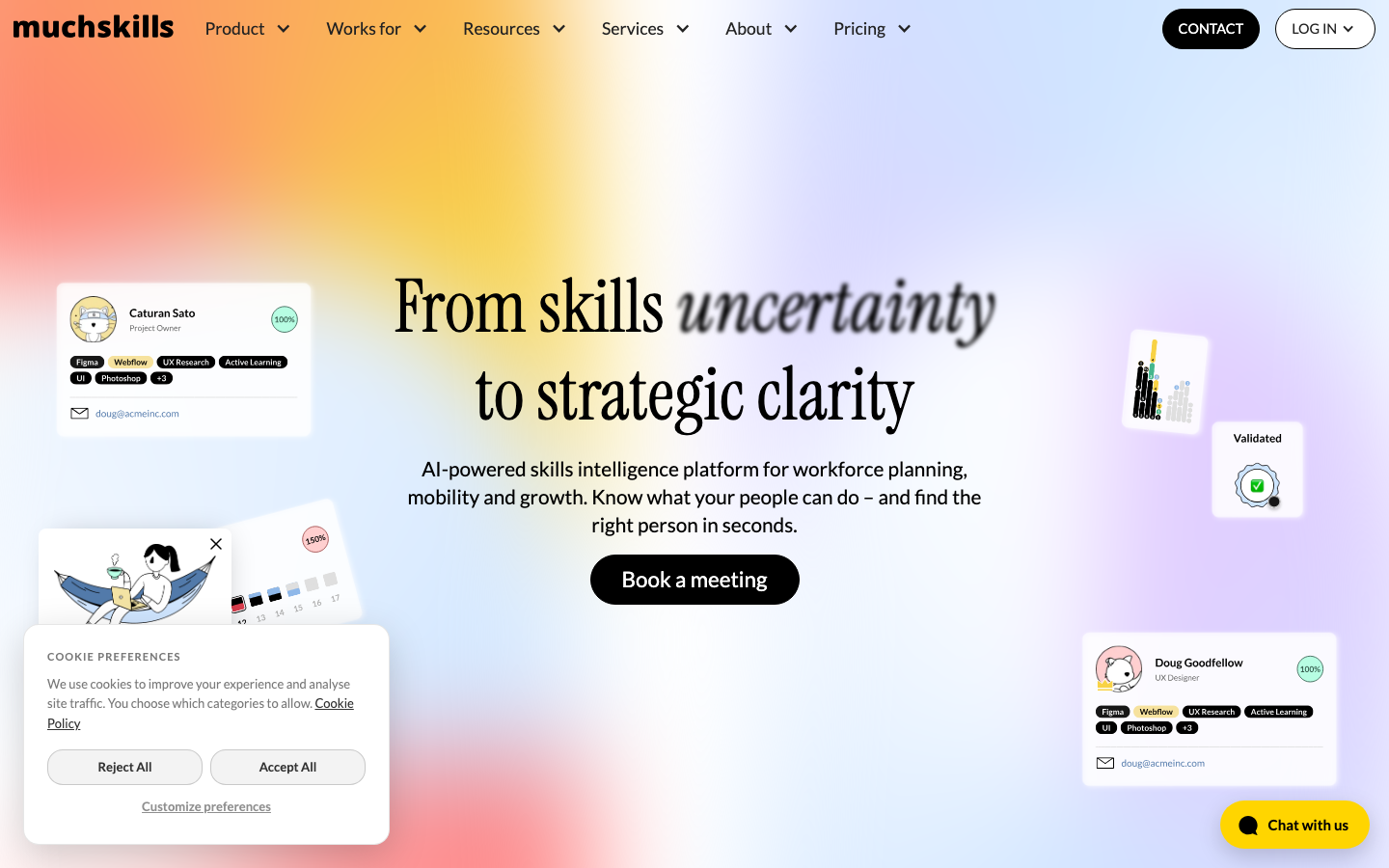
MuchSkills is a visual mapping platform running on employee self-assessment of skills, proficiency, and interests, with validation workflows layered over the top. Its pricing page documents a library of more than 70,000 skills and certifications updated daily. Expiry tracking, a historical audit trail, and compliance-ready reporting sit on the paid tiers. Starter begins at €5 or $5.5 per member per month, and non-profits are offered a 50% discount.
Software Pros
- Very large prebuilt skills and certification library
- Published per-member rate rather than a quote request
- Validation workflows sit over the self-reported base
Software Cons
- The base data is what employees say about themselves
- Compliance reporting and unlimited admin roles need a paid upgrade
- Only 1 G2 review, so outside evidence is thin
MuchSkills Review
The skills problem this fixes is a team that has never written any of it down. MuchSkills gets a real map out of people quickly, and its taxonomy is the largest I verified on this list. Treat the validation features as a way to firm up self-reported data over time, not as a substitute for an assessor signing something.
Our Verdict
Fast Map, Real Taxonomy
*As pricing is subject to change, we are listing prices as they stand in September 2026
Poka
Quick Overview
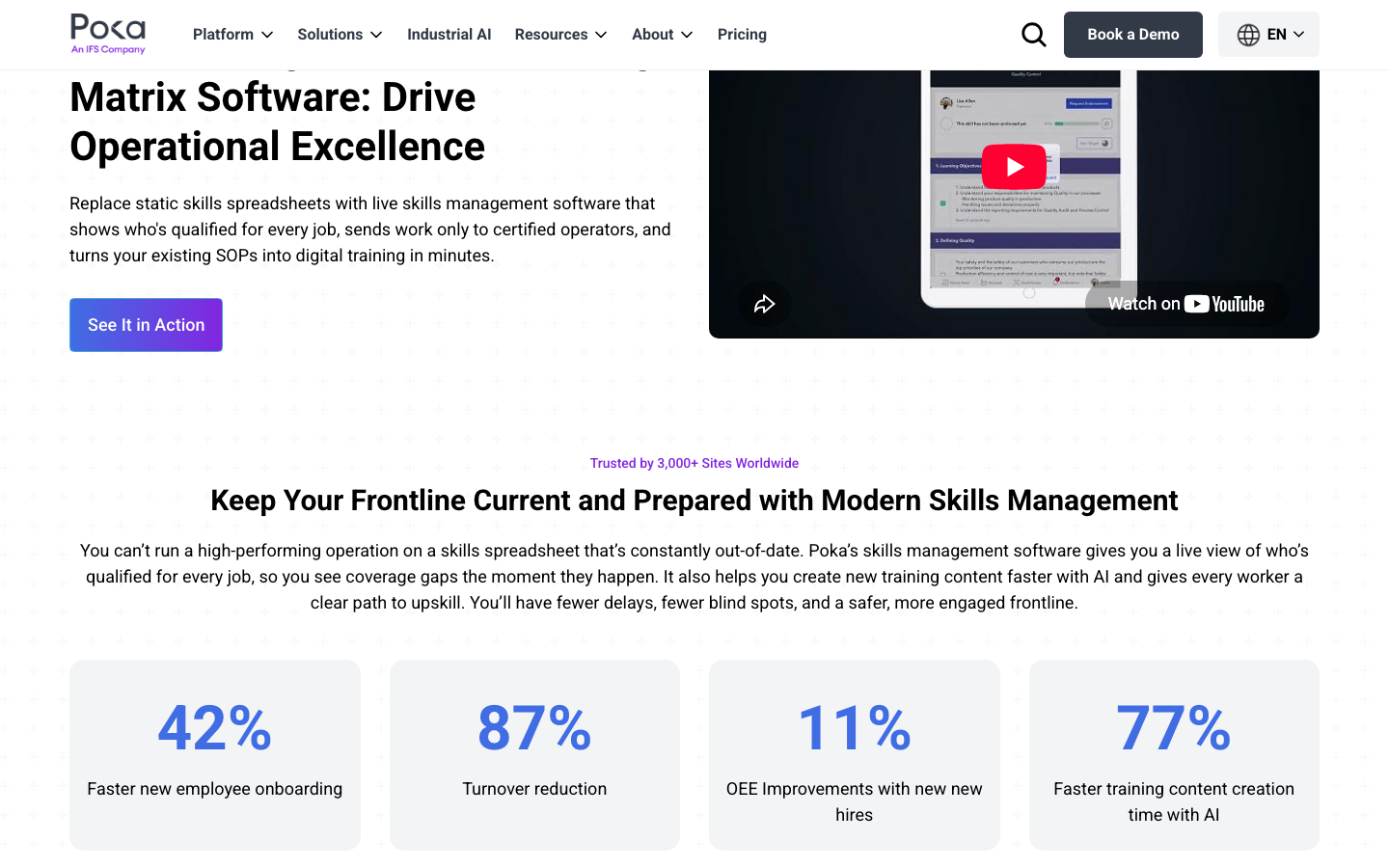
Poka is a matrix and compliance platform inside a connected worker product for factories, with skills confirmed by manager sign-off on the shop floor. Unlike the rest of this list, it also delivers the training, turning existing standard operating procedures into digital instruction. A gap and its remedy live in 1 place. The company says more than 3,000 sites worldwide trust it.
Software Pros
- Work can be routed only to operators certified for it
- Training content is generated from existing procedures
- Live coverage view flags gaps as they appear on a line
Software Cons
- It is a factory platform, so the skills matrix comes bundled with much more
- Little value outside manufacturing and industrial operations
- Quote-only pricing sized for multi-site rollouts
Poka Review
Where this one pays for itself is when the plant buys a skills tool and a training tool and struggles to make the 2 talk. Poka collapses that into 1 purchase, and routing work by certification is a control other platforms only report on. If you want a skills matrix and nothing else, you are buying a factory system to get it.
Our Verdict
Shop Floor Skills Live
Skills Base
Quick Overview
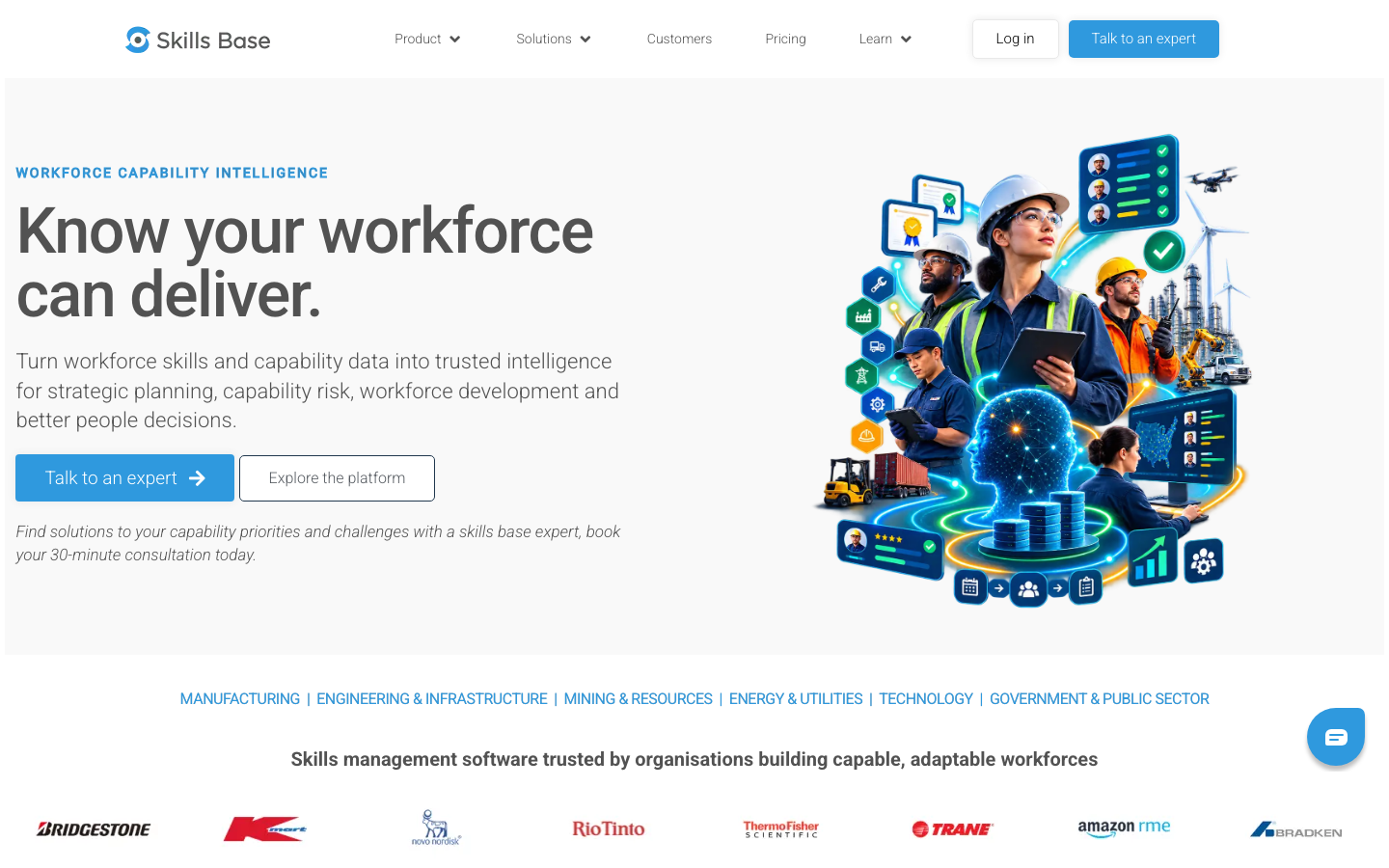
Skills Base is a visual mapping platform running on a mix of self-assessment and manager assessment. It tracks and analyzes team capability without a wider HR suite attached. Its pricing page publishes a free forever tier covering up to 250 skills with unlimited assessments. Paid tiers run $2.25 per person per month for Teams and $4 for Enterprise. The company states it follows ISO 27001 principles across its security framework.
Software Pros
- Genuine free tier with no time limit or card required
- Custom skills taxonomies rather than a fixed list
- Published per-person rates at every paid tier
Software Cons
- Expiring certification notifications sit only on the top tier
- Self-assessment remains the default input
- 29 G2 reviews, so the score rests on a small sample
Skills Base Review
I would put this in front of a team that wants to start this week and argue about the budget later. The free tier is real, not a trial dressed up as one, and 250 skills covers a whole department comfortably. Read the tier table carefully, though, because the certification reminders most compliance buyers want are reserved for the highest plan.
Our Verdict
Free Start, Honest Ceiling
*As pricing is subject to change, we are listing prices as they stand in September 2026
SkillsDB
Quick Overview
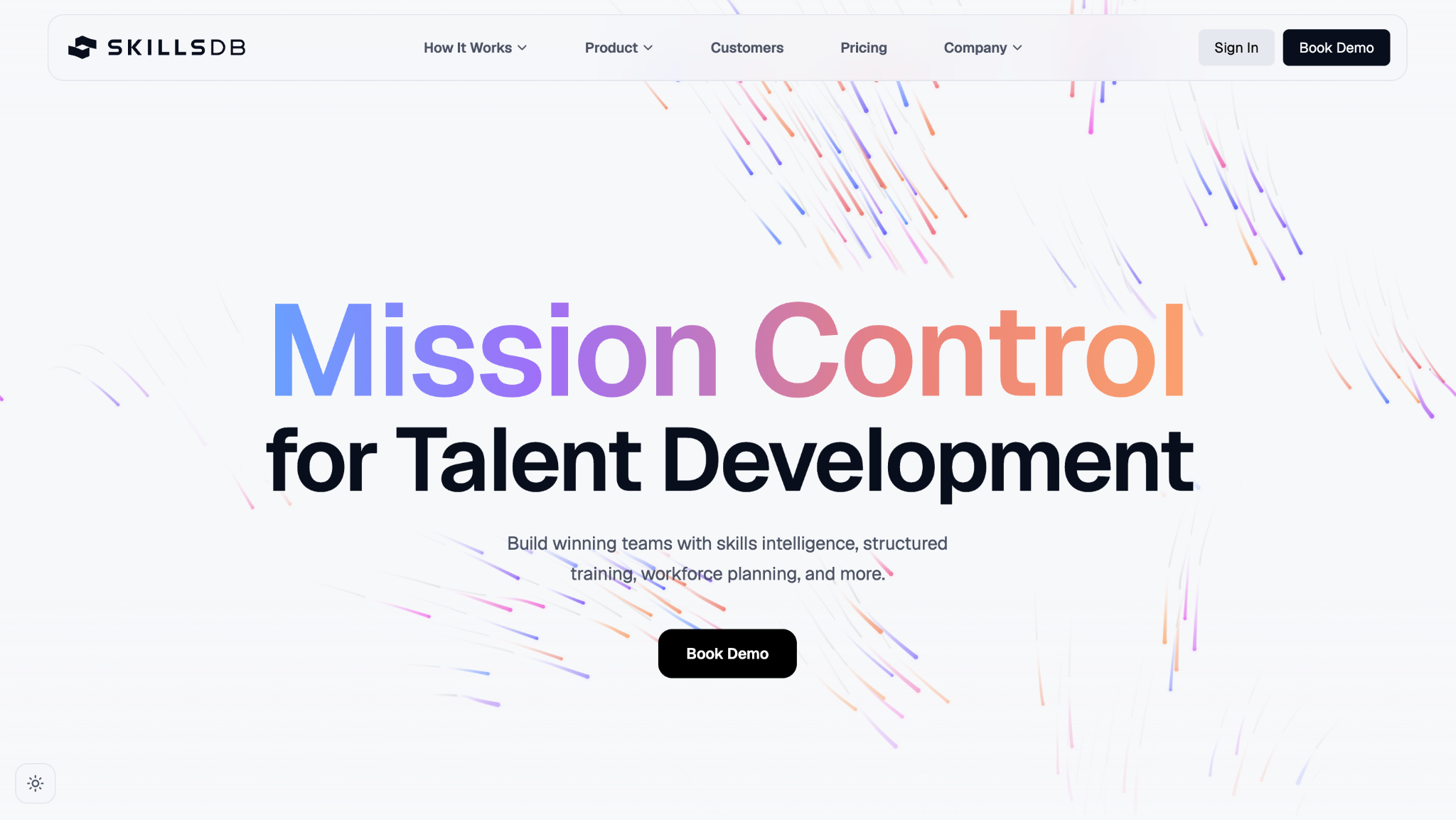
SkillsDB is a visual mapping and tracking platform built on manager assessment, with employee self-assessment arriving on the paid tiers. It favors function over presentation, covering skills libraries, job architecture, proficiency assessment, and gap analysis. Its pricing page publishes a free forever plan for up to 50 user records with 1 certification. Paid tiers run $7 per user per month for Team and $10 for Scale.
Software Pros
- Free plan runs on manager assessment rather than self-rating
- Per-user pricing published at every tier, including annual rates
- Job architecture and career frameworks included rather than sold separately
Software Cons
- Free plan caps certifications at 1 and the matrix is view-only
- Per-user cost climbs quickly across a frontline headcount
- No G2 rating available to sense-check the product
SkillsDB Review
My honest read here is that SkillsDB is the least glamorous option on this list and quietly one of the more sensible. Starting the free tier on manager assessment rather than self-rating is a better default than most competitors choose. Do the arithmetic before a wide rollout, because $7 a head is a different number at 80 people and at 800.
Our Verdict
Function Over Visual Polish
*As pricing is subject to change, we are listing prices as they stand in September 2026
FAQs About Skills Matrix Software
What are the benefits of skills matrix software?
4 things, and they are concrete rather than strategic. You can see who can do what across a team instead of guessing. Certificates get watched, so expiry dates arrive as reminders rather than as surprises during an inspection. Every person is compared against what their role requires, and the resulting record holds up when somebody outside the company asks to see it.
Is there free software for building one?
Yes, and 3 of the platforms reviewed above offer a free plan. Cinode covers up to 10 users with no card required, and Skills Base caps its free forever plan at 250 skills. SkillsDB offers a free plan for up to 50 user records, and all 3 were confirmed on the vendors’ own pricing pages in September 2026. Expect visibility rather than compliance features, because that is what these tiers are built to give you.
Can I just use Excel for a skills matrix?
Yes, and most organizations already do. The failure point is not the number of rows, which is what people expect, but maintenance. The file is right the week it is made and wrong by the next quarter, with several versions circulating. No cell ever reports a lapsed qualification, so if nothing you do is time-bound or inspected, a spreadsheet may be enough.
How much does it cost?
Cheaper than most people assume at the small end and quote-based at the large end. Published rates among the 10 above run from $2.25 to $10 per person per month. A further vendor lists €5 or $5.5 per member, all accurate in September 2026, and the compliance-focused platforms quote instead. Budget the internal time to define the framework, which costs more than the first year of subscription in most rollouts.
Who should assess skills, the employee or the manager?
It depends entirely on what the record is for, and that question decides your shortlist. Self-assessment is quick, drives adoption, and works well for planning work or spotting who wants to learn something. It is worth nothing as proof, because a rating somebody gave themselves is an opinion. Where the record has to stand up, an assessor signs off against defined criteria and the system stores who, when, and on what basis.
Does this software handle certifications and expiry dates?
Compliance-focused tools do, and that is the main reason they exist. Expect certificate records with expiry dates, automatic reminders ahead of lapse, recertification cycles, and evidence attached to each qualification. The visual tools vary, and several put reminders behind a higher tier. None of this makes an organization compliant; the software keeps and produces records, and people make the decisions.
How does this differ from planning future capability?
One records what exists today and whether the paperwork is current. The other models what the business will need in 2 or 3 years under different assumptions, and prices the gap. Both are real problems, and neither tool does the other job well. Buying the forward-looking product because you want a current coverage view is a common and expensive mistake, and the reverse disappoints just as reliably.
What should a software development skills matrix include?
5 dimensions cover it: programming languages and frameworks, systems and platforms, tooling and infrastructure, testing and quality specialties, and domain knowledge. Define proficiency by what somebody can do unsupervised rather than by years of experience. Write each level as observable behavior so 2 managers rate the same person the same way. The engineering use case above explains the dimensions and levels in more detail.

Helen is Anywherer’s Market Analyst & Content Researcher, with extensive experience in analyzing global employment markets and HR technology trends. She is skilled at turning complex market data into clear, well-researched insights that inform every piece of content. With a strong grasp of the EOR, PEO, and international hiring space, Helen plays a key role in keeping Anywherer’s research accurate, up to date, and genuinely useful for readers.