The best talent acquisition software is the layer around the applicant tracking system, not the tracking itself. It covers the funnel from attraction to offer: job advertising, the career site, employer brand, candidate relationship management, and sourcing. The analytics then tie a hire back to whatever produced it.
Heads of recruiting and talent acquisition leaders at mid-market and enterprise organizations buy a talent acquisition tool like this. They almost always already have an applicant tracking system. What they do not have is a way to reach people who never applied, which is a different product with a different budget line.
The gap shows up in the survey data. SHRM reports that just 56 percent of HR professionals rate their organization’s recruiting efforts as effective. It also puts 61 percent of recruiting professionals short of qualified candidates for open roles. Those numbers do not describe a tracking problem. Most teams manage applicants perfectly well and still cannot fill the role, because the shortfall sits upstream of the first application.

INSIGHT: Where do hires actually come from?

The candidates who apply are a small slice of the market, which is why attraction and pipeline work sit outside the applicant tracking system.
- LinkedIn Talent Solutions puts the share of workers actively looking for a new role at 36 percent, which leaves the rest of the workforce reachable only through outreach, brand, and nurture rather than through a job posting.
- The same research notes that the top 10 percent of candidates often leave the talent marketplace within 10 days, so speed of contact decides who is still available when the process reaches them.
- SHRM reports that 61 percent of recruiting professionals are facing a lack of qualified candidates for open roles, and only 56 percent of HR professionals consider their recruiting efforts effective.
- What follows in practice is a reporting limit. An applicant tracking system can only describe people who have already arrived, so source data has to come from the layer sitting in front of it.
There is no outright winner here, because the label covers 2 separate categories. Suites cover the funnel and usually include tracking. Marketing platforms create the demand that fills it and sit in front of whatever you already run. Choosing the best talent acquisition software for businesses comes down to which half is missing. LinkedIn Talent Solutions notes that the strongest candidates disappear within days, which is an attraction-and-speed problem rather than a workflow one. Below, I’ve reviewed 10 of the leading platforms in A-Z order.
INSIGHT: Suite or marketing platform?
The 10 platforms here solve 2 different problems. Buying the wrong one is how teams end up with better reporting and the same empty pipeline.
- Talent acquisition suites (Avature, Cegid HR, Cornerstone, Greenhouse, Jobvite, PageUp) cover the funnel from pipeline to offer and usually include an applicant tracking system, with implementation measured in months. Avature describes its own platform as highly configurable, which is the trade-off in a sentence.
- Recruitment marketing platforms (Appcast, Joveo, Radancy, Symphony Talent) create and convert candidate demand through advertising, career sites, and brand. None of the 4 tracks applicants, so each sits in front of the system you already own.
- The overlap is real and worth checking. Several suites now sell marketing modules, and Symphony Talent has added a CRM alongside its media and career site products, so ask which side a vendor actually competes on.
- A quick test settles it. Ask the vendor which metric its customers quote back: cost per applicant points to marketing, and time in stage points to a suite.
Best Talent Acquisition Software 2026 Comparison
The table below holds this page’s argument across 6 columns. The best talent acquisition software solutions differ on family and funnel coverage long before they differ on features. Family decides whether a platform can address your problem at all.
The column worth reading twice is whether a platform includes tracking. 4 of the 10 do not, by design. A reader who arrives wanting an applicant tracking system should treat those 4 as a separate purchase entirely.
| Tool | Family | Funnel coverage | Includes an ATS | Company fit | G2 rating |
|---|---|---|---|---|---|
| Appcast | Recruitment marketing | Advertising, analytics | No, sits in front of yours | Mid-market, Enterprise | 4.2 (167) |
| Avature | Enterprise suite | CRM, sourcing, career sites, ATS, onboarding, analytics | Yes | Enterprise | 4.4 (110) |
| Cegid HR | Enterprise suite | Sourcing, candidate management, career sites, analytics | Yes | Mid-market, Enterprise | 4.2 (31) |
| Cornerstone | Enterprise suite | Recruiting, onboarding, internal mobility, analytics | Yes | Enterprise | 3.4 (60) |
| Greenhouse | Mid-market suite | Sourcing, CRM, ATS, structured interviewing, analytics | Yes | Mid-market, Enterprise | 4.4 (4,001) |
| Jobvite | Enterprise suite | Advertising, career site, CRM, ATS, onboarding, analytics | Yes | Mid-market, Enterprise | 4.0 (674) |
| Joveo | Recruitment marketing | Advertising, source analytics | No, sits in front of yours | Mid-market, Enterprise | 4.8 (119) |
| PageUp | Enterprise suite | Recruitment marketing, ATS, onboarding, analytics | Yes | Enterprise | 4.4 (141) |
| Radancy | Recruitment marketing | Career sites, brand, advertising, CRM, analytics | No, sits in front of yours | Enterprise | 4.7 (204) |
| Symphony Talent | Recruitment marketing | Brand, career sites, media, CRM | No, sits in front of yours | Enterprise | 3.6 (21) |
G2 figures were read from the product profiles in September 2026.
Talent Acquisition Suite or Applicant Tracking System?
An applicant tracking system is bought to manage the people who have already applied. It holds the requisition, moves candidates through stages, carries scorecards and interview kits, and records the decision. Our roundup of ATS recruiting software covers that market on its own terms. Everything it does begins at the moment somebody submits an application, which is exactly where its usefulness starts and stops.
A suite adds everything before that moment. Best talent acquisition suites software carries the job advertising, the career site, and the employer brand. It also carries candidate relationship management, meaning the pipeline of people who have not applied and may not for a year. It also carries the analytics that connect a hire back to the source that produced it, which no tracking system can do alone.
Most organizations end up owning both, and the useful question is which one is missing today. Searches for best ATS and talent acquisition software 2026 usually come from teams that already worked this out. If your recruiters complain about admin, the tracking layer is the problem. If they complain about empty pipelines, no workflow change will fix it. Our wider full recruiting software guide covers the platforms that sit across both jobs.
The boundary genuinely blurs, which is why vendor demos are confusing. Several suites include tracking, and several tracking systems have added a CRM module. A reader comparing the best recruiting software for talent acquisition will see near-identical feature grids. The test that works is asking where the vendor’s own customers came from. A company that replaced spreadsheets sells tracking, and one that replaced a job board contract sells attraction.
Recruitment Marketing: The Half an ATS Does Not Cover
Programmatic job advertising is where the money moves. Instead of paying a flat rate to post on a board, the platform bids for placement across sites and networks. It optimizes toward cost per applicant, meaning what you paid divided by the applications you got. Appcast cites a health system cutting cost per application by 43 percent, and Joveo builds its bidding around the same metric.
Career sites and employer brand change the conversion rate rather than the traffic. A candidate who clicks an ad and meets a slow, generic application form leaves, and everyone who leaves was already paid for. Radancy and Symphony Talent both build career sites and brand content as products in their own right, which is a different discipline from job posting.
Candidate relationship management handles the people who are not ready. Talent pools group them by skill, location, or past application, and nurture campaigns keep contact alive until a relevant role opens. AI-native sourcing and screening tools are a separate class again, and worth evaluating on their own rather than as a feature of any suite here.
Source-of-hire analytics is the payoff. A tracking report tells you which channel a hire selected from a dropdown. The marketing platform tells you what that channel cost across every applicant it produced. The honest warning belongs here too. Media spend is a separate line from the platform fee, usually much larger, and it determines whether the tool paid for itself.
Best Talent Acquisition Software by Team Type
Hiring volume and company shape cut this list down faster than any feature comparison will. A company hiring 40 people a year and one hiring 4,000 across 12 countries have almost nothing in common as buyers. The 4 sections that follow each take a single hiring situation, with platforms listed A-Z and no ranking intended.
For Enterprise Talent Acquisition
At enterprise scale, the constraints are structural. Many business units and countries, approval chains that differ by region, and compliance requirements attached to every posting. The employer brand has to hold across all of it. Implementations run in months rather than weeks, and the HCM-native recruiting modules compete here too, bundled into a platform the company may already license.
Avature suits organizations that want to build their own process rather than adopt a vendor’s. Cornerstone puts recruiting beside learning and internal mobility, and serves customers in more than 180 countries. PageUp handles complex approval and compliance requirements, with customers reporting a 50 percent reduction in time to fill. Radancy covers the attraction half at scale and serves 675+ global employers.
For Mid-Market Teams
A mid-market talent acquisition team is usually 3 to 8 people covering everything. There is no dedicated recruitment marketer and no program manager for a 12-month rollout. The best talent acquisition software for mid-market buyers needs to cover the funnel without an enterprise implementation. The real decision is whether to buy 1 suite or assemble specialists around a tracking core.
Greenhouse leans on structured hiring and a large integration marketplace, which suits assembling best-of-breed tools around it. Jobvite covers advertising, career sites, CRM, tracking, and onboarding in 1 system, with analytics that the vendor says run to 60+ dashboards and reports. The suite wins on fewer contracts, and the assembled stack wins on depth in whichever part matters most.
For Executive Hiring
Executive pipelines behave differently. They are confidential, they run for years rather than weeks, and the relationship history matters more than any stage a candidate sits in. Anyone searching for the best software for executive talent acquisition should know that most executive hiring is still agency-led. The software question is about managing the search-firm relationship and the internal pipeline, not replacing either.
Avature documents an executive search product alongside its wider suite, with agency management for the firms doing the work. Greenhouse handles the internal side well, keeping prospect records and structured interview design consistent for senior roles. What neither replaces is the network a search firm brings, which is what you’re paying for.
For High-Volume Attraction
Continuous hiring across many locations makes cost per applicant the operating metric. When 200 roles are open in 40 sites, and the same roles reopen every quarter, the question changes. It becomes where the next 1,000 applications come from and what each one costs. Channel testing at that scale is a full-time discipline.
Appcast optimizes advertising spend toward the channels and roles producing qualified applicants, drawing on benchmarks it states are informed by billions of job postings. Joveo controls cost per applicant and cost per hire through bidding across boards and channels. Symphony Talent pairs media buying with career sites and brand, so the traffic lands somewhere built to convert it.
Talent Acquisition Software Pricing
This is a quote-only end of the market, and none of the 10 publishes a rate. The suites price on employee count, modules, and hiring volume. At the enterprise end, implementation is frequently a separate 6-figure line covering data migration, career site work, and integration.
INSIGHT: Does the platform fee tell you what talent acquisition software costs?
For the marketing platforms, no. The media budget is separate and usually larger, and it is the number that decides whether the tool paid for itself.
- None of the 10 platforms here shows a price to the public. Greenhouse names its plans as Core, Plus, and Pro without attaching figures, and Jobvite routes its pricing page straight to a quote, which is how the whole category behaves.
- 4 of the 10 separate media spend from the platform fee by design, because they buy advertising on your behalf. Appcast, Joveo, Radancy, and Symphony Talent all sell against cost per applicant rather than against a subscription.
- For the suites, the hidden line is implementation. Data migration, career site build, and integration with the systems you keep are quoted separately, and at enterprise scale they can rival the first-year license.
- The comparison that settles it is cost per hire, including fees and media, measured against what the same roles cost to fill last year. Nothing else distinguishes a platform that worked from one that reported nicely.
How to Choose Talent Acquisition Software
I would start with 1 question: is the problem too few candidates, or too much chaos managing the ones you have? That answer picks the family before any feature comparison. Getting it wrong is how teams end up with better dashboards and the same unfilled roles. Then check what you already own, since most buyers here already run a tracking system.
Check whether the platform includes tracking and whether you want it to, because replacing a working system is a project nobody asked for. Then check the integration with the system you intend to keep, in both directions. A one-way feed pushes candidates in and tells you nothing about what happened to them, which quietly destroys source-of-hire reporting.
Ask who runs the thing daily. Anyone evaluating the best talent acquisition software for recruiters should confirm 1 thing. Does the person who will own campaigns, career site content, and nurture sequences actually exist? Then check source-of-hire reporting properly, because it is the only way to learn which spend produced hires rather than applications.
Check career site and brand control if attraction is the gap, and be honest about implementation length against your hiring plan. Decide early what happens once a candidate is in the funnel. Screening and evaluation are a separate purchase, and our guide to pre-employment assessment tools covers that stage. Finally, separate media spend from license when you compare costs.
Top 10 Talent Acquisition Software Platforms for 2026
These best talent acquisition software reviews came from reviewing each vendor’s product, customer, and pricing pages against a single test. Which parts of the funnel does this platform own, and which does it expect you to bring? Customer outcomes and counts below are all the vendor’s own claims.
I’m listing all providers in alphabetical order to keep this comparison neutral.
The mix runs from enterprise suites like Avature and Cornerstone to programmatic advertising in Appcast and Joveo. If you are drawing up a shortlist of the best talent acquisition software 2026, start with the family column. No amount of configuration turns an advertising platform into a tracking system.
A talent acquisition tool is also a longer commitment than most HR software purchases. Career site work, brand assets, and integration all outlive the contract that paid for them, so switching costs are higher than the license suggests.
Reading the blocks below, the fastest filter is the first sentence of each overview. The best talent acquisition software for your team names its family and funnel coverage there. 4 of these 10 rule themselves out immediately for anyone needing candidate tracking included.
Appcast
Quick Overview
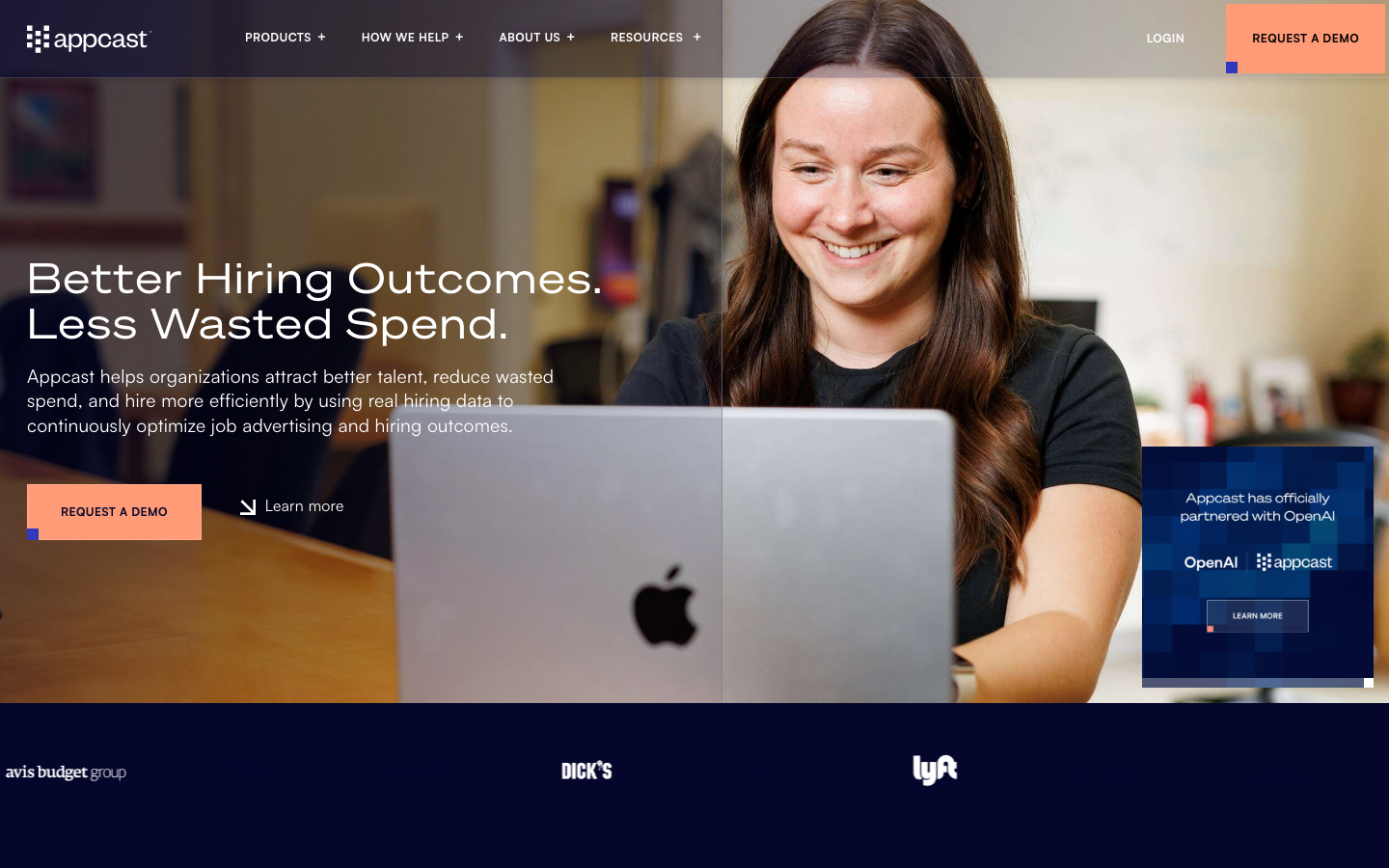
Appcast is a recruitment marketing platform covering advertising and analytics only, with no applicant tracking. It sits in front of whatever system you already run. It buys and optimizes job advertising across sites and networks on a cost-per-applicant basis. The vendor cites a health system cutting cost per application by 43 percent.
Software Pros
- Programmatic buying that shifts spend toward channels producing applicants
- Benchmarks the vendor states are drawn from billions of job postings
- Reporting across the full funnel rather than per job board
Software Cons
- No applicant tracking, so it complements rather than replaces one
- Media spend sits on top of the platform fee and dwarfs it
- Needs somebody who owns advertising performance week to week
Appcast Review
The gap this fills is attraction economics. Most teams cannot say what an applicant costs by channel, and without that number every advertising decision is a guess dressed as strategy. Appcast makes the figure visible and actionable. A company hiring 30 people a year will never generate the volume this needs. Optimization can’t earn its keep, and the reporting feels like overhead.
Our Verdict
Cost Per Applicant Control
Avature
Quick Overview
Avature is an enterprise suite covering candidate relationship management, sourcing, career sites, applicant tracking, onboarding, and analytics on 1 platform. The vendor describes its solutions as highly configurable, which is the whole proposition: you build your process rather than adopting one. Executive search and agency management ship as documented products.
Software Pros
- Configuration deep enough to model a process nobody else supports
- CRM and sourcing built for pipelines that run for years
- Executive search and agency management as first-class modules
Software Cons
- Configuration needs an internal owner who knows the platform well
- Workflows, forms, and portals all have to be designed before launch
- Implementation runs in months and assumes a program team
Avature Review
This belongs on a shortlist when your hiring process is genuinely unusual. Bending it to fit a vendor would be the wrong trade, and you have already concluded that. Avature will model almost anything you can describe. The cost is that somebody internally has to decide what to model. A company hoping for out-of-the-box speed has misread what it is buying here.
Our Verdict
Configure Your Own Process
Cegid HR
Quick Overview
Cegid HR, the suite that absorbed the Talentsoft brand, is a European enterprise platform. Its recruiting capability covers sourcing, candidate management, career sites, and analytics alongside performance and learning. Tracking is included. Its center of gravity is France and continental Europe, which shows in language coverage and local compliance handling.
Software Pros
- Recruiting sits inside a talent suite rather than beside it
- European language and compliance coverage handled natively
- Career sites and candidate management under 1 contract
Software Cons
- Strongest in continental Europe, thinner elsewhere
- 31 G2 reviews on a listing covering the whole suite
- Recruiting is 1 module among several, not the main event
Cegid HR Review
What I would weigh here is geography before features. A European organization already running Cegid for payroll or learning gets recruiting on the same contract and data model. That is worth real money in integration avoided. A US company with no existing Cegid footprint has very little reason to start here, and it will find stronger options closer to home.
Our Verdict
European Suite With Recruiting
Cornerstone
Quick Overview
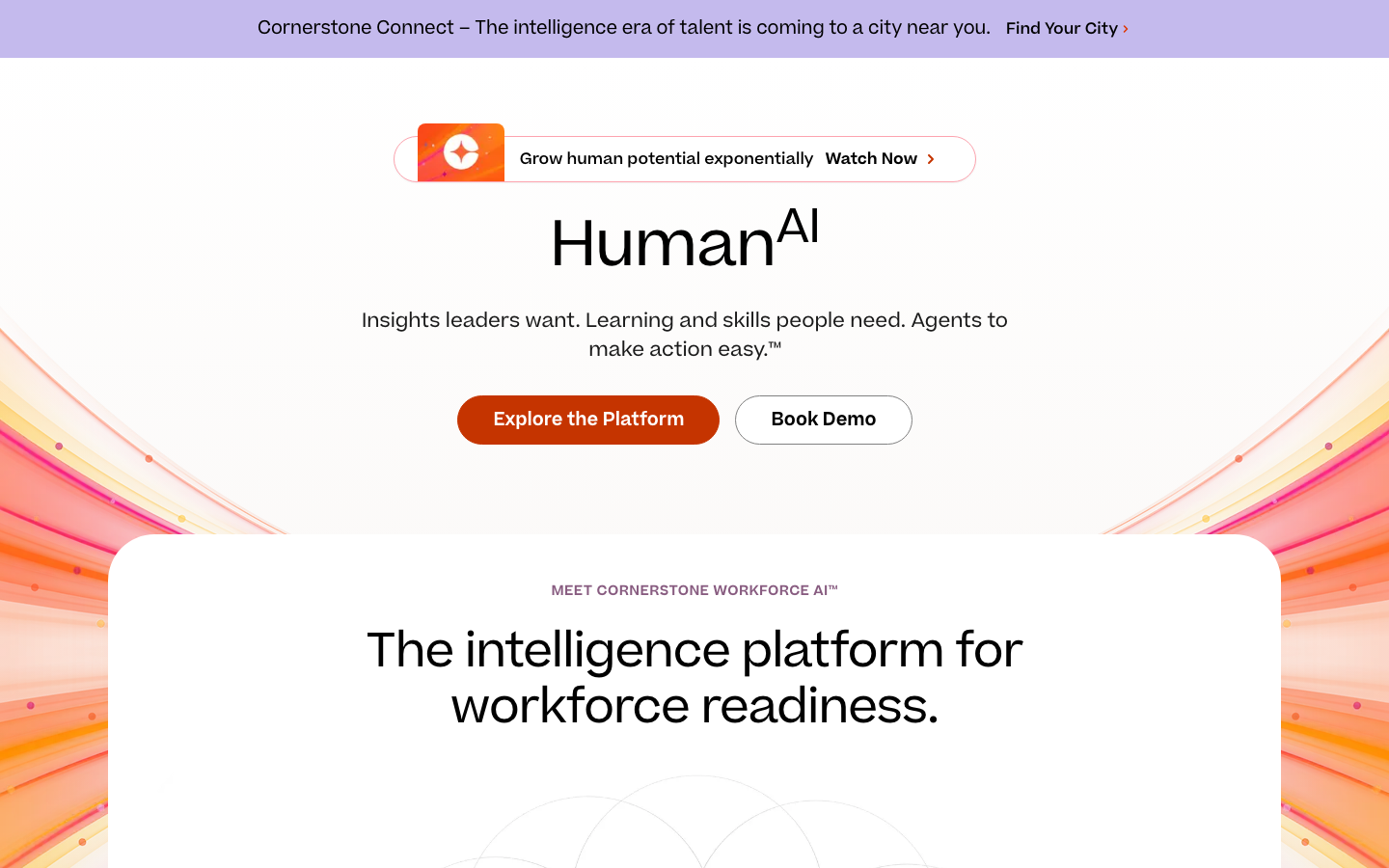
Cornerstone is an enterprise suite where recruiting sits beside learning, performance, and internal mobility, with tracking included. The pitch is hiring and development on 1 platform rather than 2. The vendor says its customer base spans more than 180 countries, and that half the Fortune 100 are among them.
Software Pros
- Internal mobility treated as a hiring channel, not an afterthought
- Learning and development data sitting beside the hiring record
- Customers in more than 180 countries, per the vendor
Software Cons
- Recruiting is not the product’s center of gravity
- 3.4 on its recruiting-specific G2 listing, the lowest here
- Enterprise implementation and a dedicated administrator assumed
Cornerstone Review
This belongs on a shortlist when internal candidates matter to you as much as external ones do. Filling a role from your own workforce is the cheapest hire available. Very few platforms connect learning records to open requisitions properly. A team whose only problem is external attraction will find the recruiting module noticeably less developed than the learning and performance side.
Our Verdict
Hiring Beside Internal Mobility
Greenhouse
Quick Overview
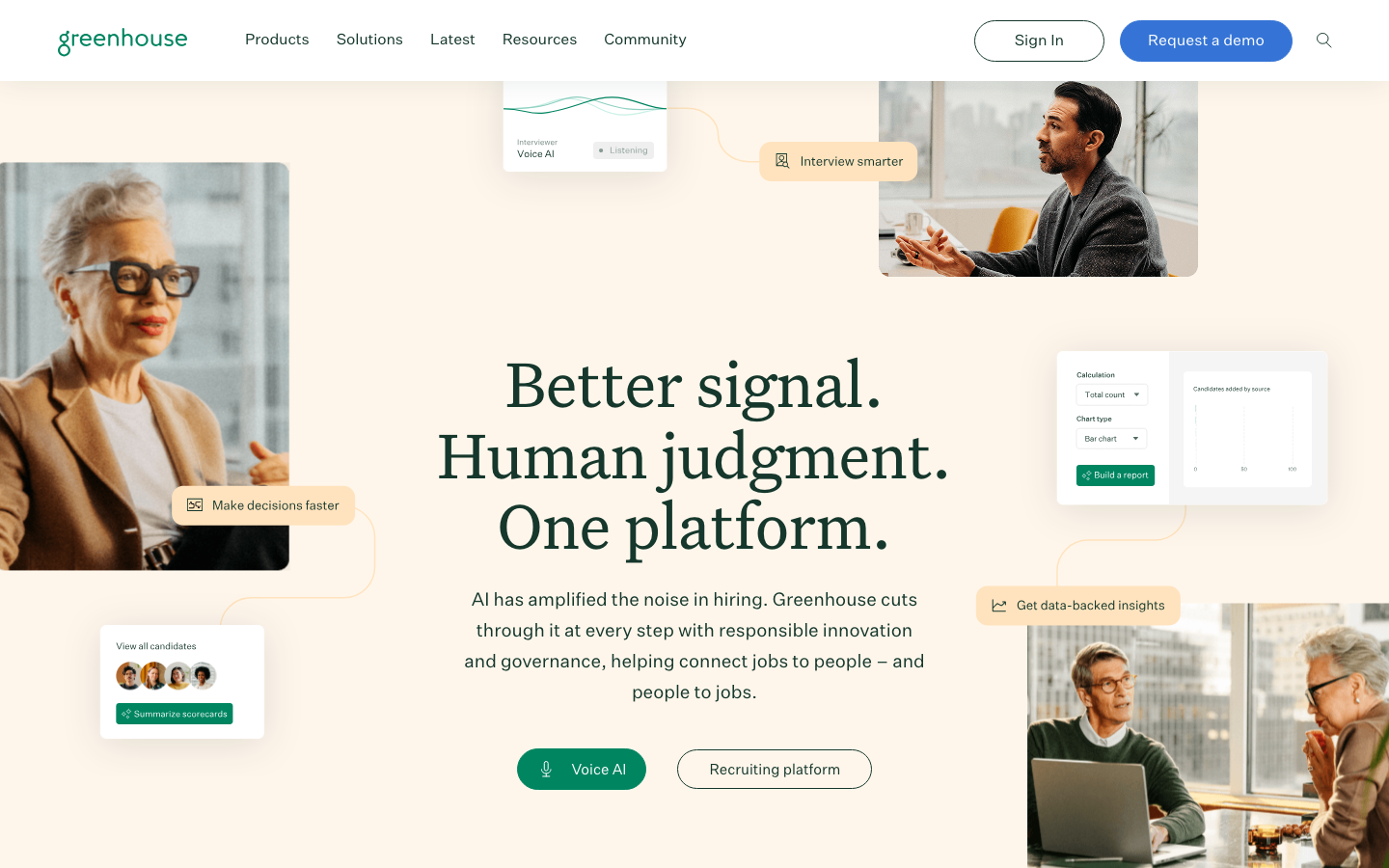
Greenhouse is a mid-market suite spanning sourcing, candidate relationship management, tracking, structured interviewing, and analytics, with a large integration marketplace. The emphasis is on designing a consistent hiring process rather than recording one. Its plans are named Core, Plus, and Pro, with quote-based pricing.
Software Pros
- Structured interview design that makes hiring decisions comparable
- Prospect pools and sourcing tools beside the tracking core
- An integration marketplace built for assembling specialist tools
Software Cons
- Quote-based pricing across all 3 published plan tiers
- Less depth in advertising and brand than the marketing platforms
- Structure only pays off if hiring managers actually follow it
Greenhouse Review
The team this serves has figured out that inconsistent interviewing is quietly costing it good candidates. Greenhouse is unusually good at making a process repeatable across hiring managers who would frankly rather improvise. An organization whose pipeline is simply empty will find the structure well built and pointed squarely at the wrong problem, which is an expensive mistake.
Our Verdict
Structure Over Simple Tracking
Jobvite
Quick Overview
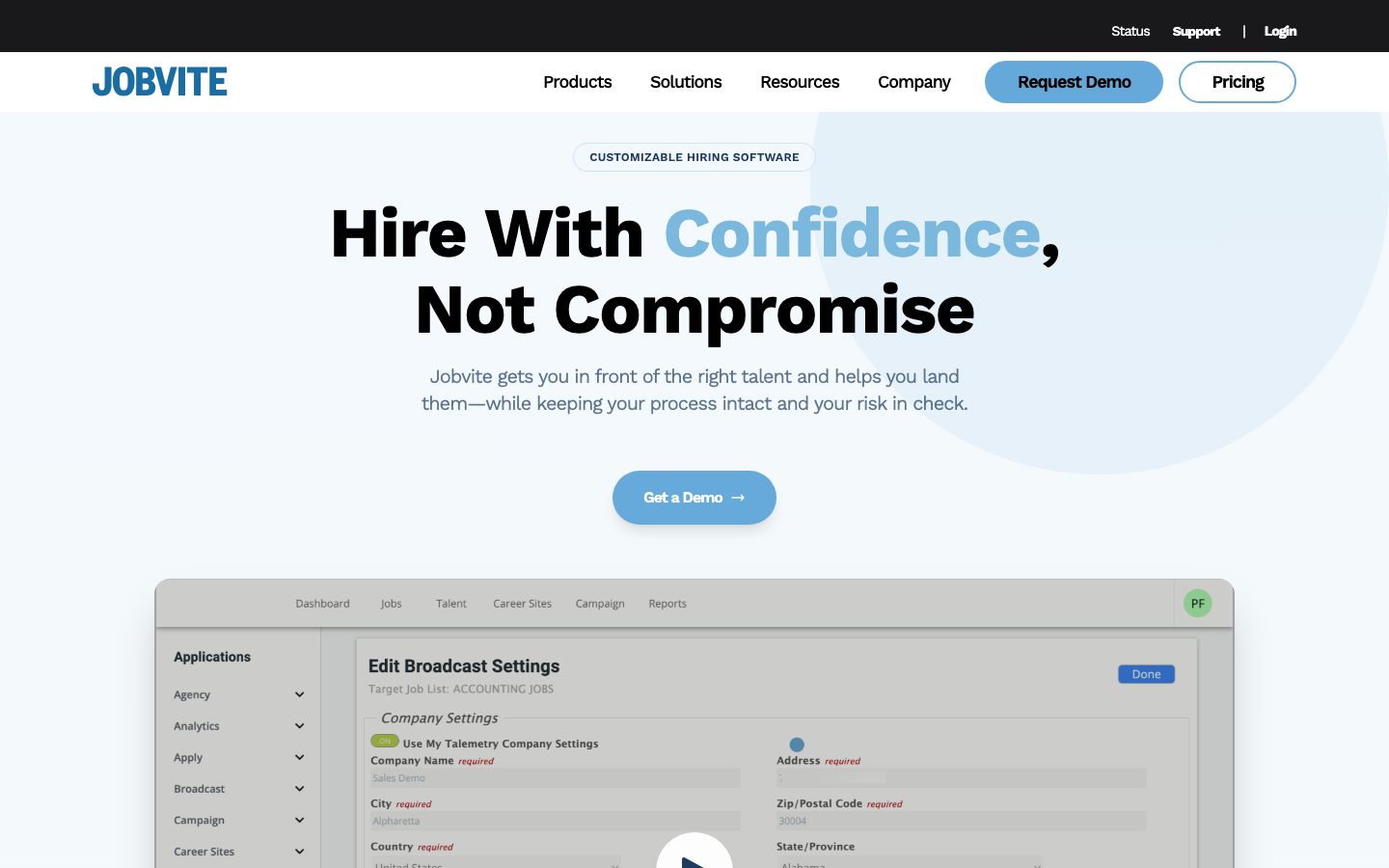
Jobvite is an enterprise and mid-market suite covering recruitment marketing, career sites, candidate relationship management, applicant tracking, and onboarding in 1 system. It is part of Employ, the group that also owns 2 platforms covered on our other recruiting pages. The vendor states analytics run to 60+ dashboards and reports.
Software Pros
- The full funnel from advertising to onboarding under 1 contract
- Employee referrals and job broadcast built into the same system
- 60+ analytics dashboards, per the vendor, across the whole funnel
Software Cons
- Breadth means fewer standout modules than specialist tools offer
- Quote-only pricing with a demo required before any figure
- 4.0 on G2, the lowest of the mid-market suites reviewed here
Jobvite Review
The team this serves is a small talent acquisition function that wants 1 vendor and 1 invoice for a job that spans advertising through onboarding. Consolidation has genuine value when nobody on the team has time to manage 4 separate contracts and 4 renewal dates. A team with a strong in-house marketing capability will find the advertising layer noticeably less deep than a dedicated platform offers.
Our Verdict
Funnel In One Suite
Joveo
Quick Overview
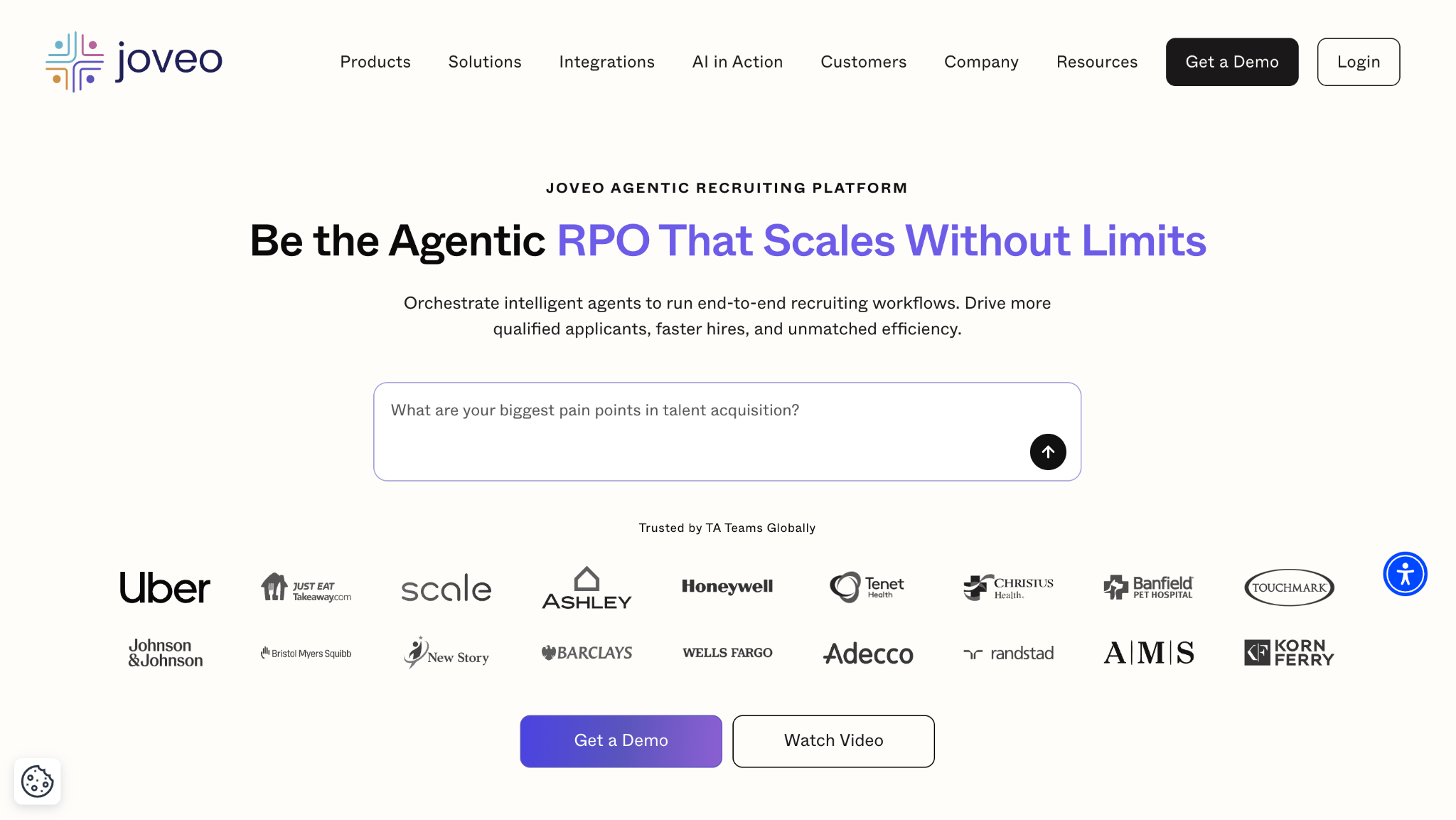
Joveo is a recruitment marketing platform focused on programmatic job advertising, with no applicant tracking of its own. It runs in front of the system you already have. Bidding models control cost per applicant and cost per hire across job boards and channels. Analytics show which sources produced hires.
Software Pros
- Bidding tuned to cost per hire rather than to traffic volume
- Source analytics that follow applicants through to hires
- Channel breadth across boards, search, and social in 1 buy
Software Cons
- No tracking, career site, or brand tooling of its own
- Media budget is separate from and larger than the platform fee
- Optimization needs volume before the models earn their keep
Joveo Review
The gap this fills is spend accountability. Job advertising is one of the least measured budgets in most companies, and Joveo turns it into a managed line with a number attached. That visibility is worth having at any real volume. For a team filling 20 roles a year, the reporting overhead comfortably outweighs anything the bidding models could ever recover.
Our Verdict
Bidding On Applicant Cost
PageUp
Quick Overview
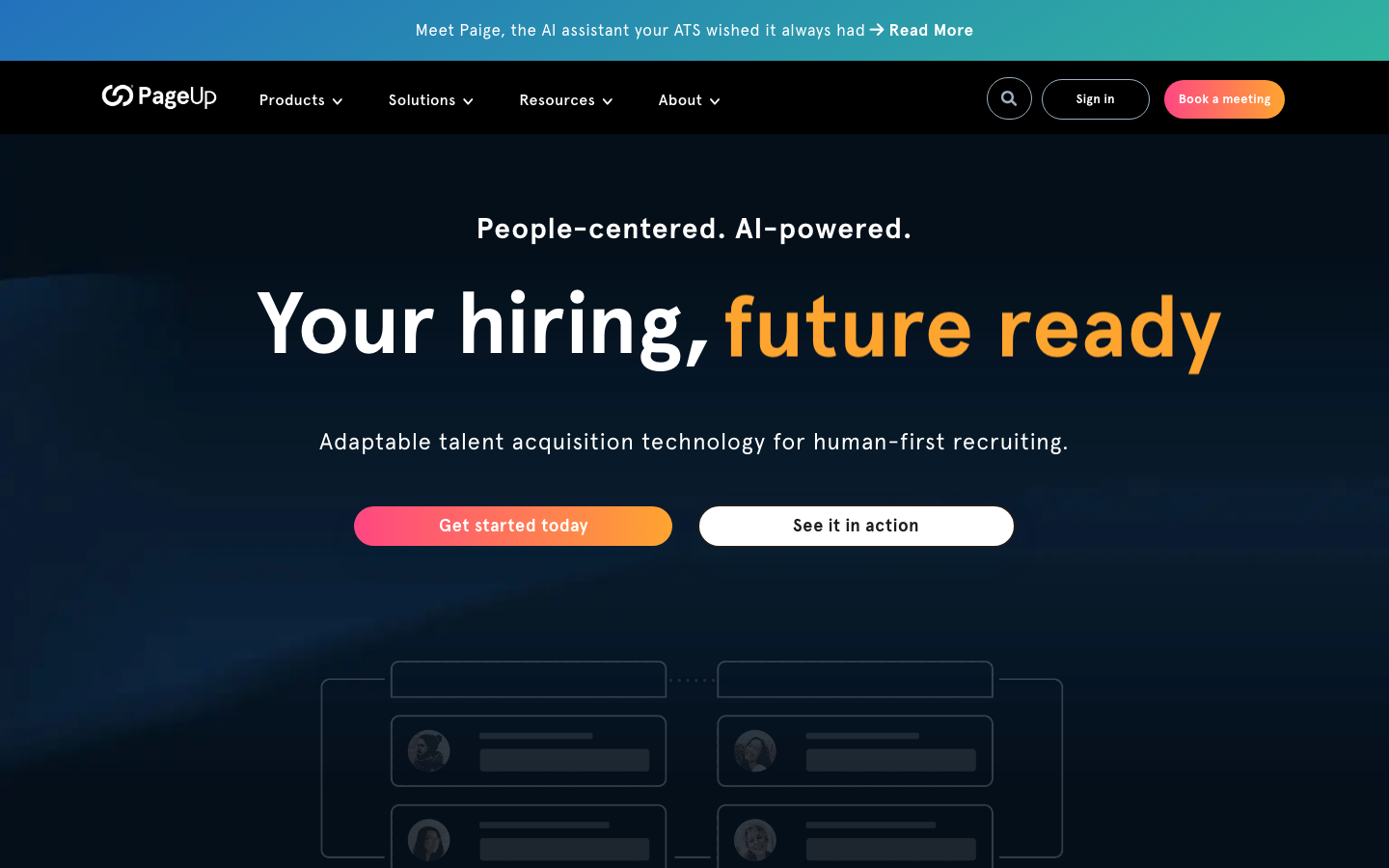
PageUp is an enterprise suite covering recruitment marketing, candidate management, tracking, and onboarding. It is strongest in Australia and New Zealand, and in organizations with complex approval requirements. The vendor cites customers reporting a 50 percent reduction in time to fill and a 400 percent increase in employee referrals.
Software Pros
- Approval workflows built for regulated and public sector hiring
- Recruitment marketing and onboarding at either end of the funnel
- Strong APAC presence with local compliance handled natively
Software Cons
- Center of gravity in Australia and New Zealand
- Configuration effort and an implementation running into months
- Approval depth is overhead for a company that does not need it
PageUp Review
What I would weigh here is whether approvals are your bottleneck. In universities, healthcare, and government, a requisition can pass 6 desks before a job is posted, and most platforms treat that as an edge case. PageUp treats it as the main event. A fast-moving commercial team will find that same machinery slows every requisition down, with no measurable benefit.
Our Verdict
Compliance Heavy Hiring Programs
Radancy
Quick Overview
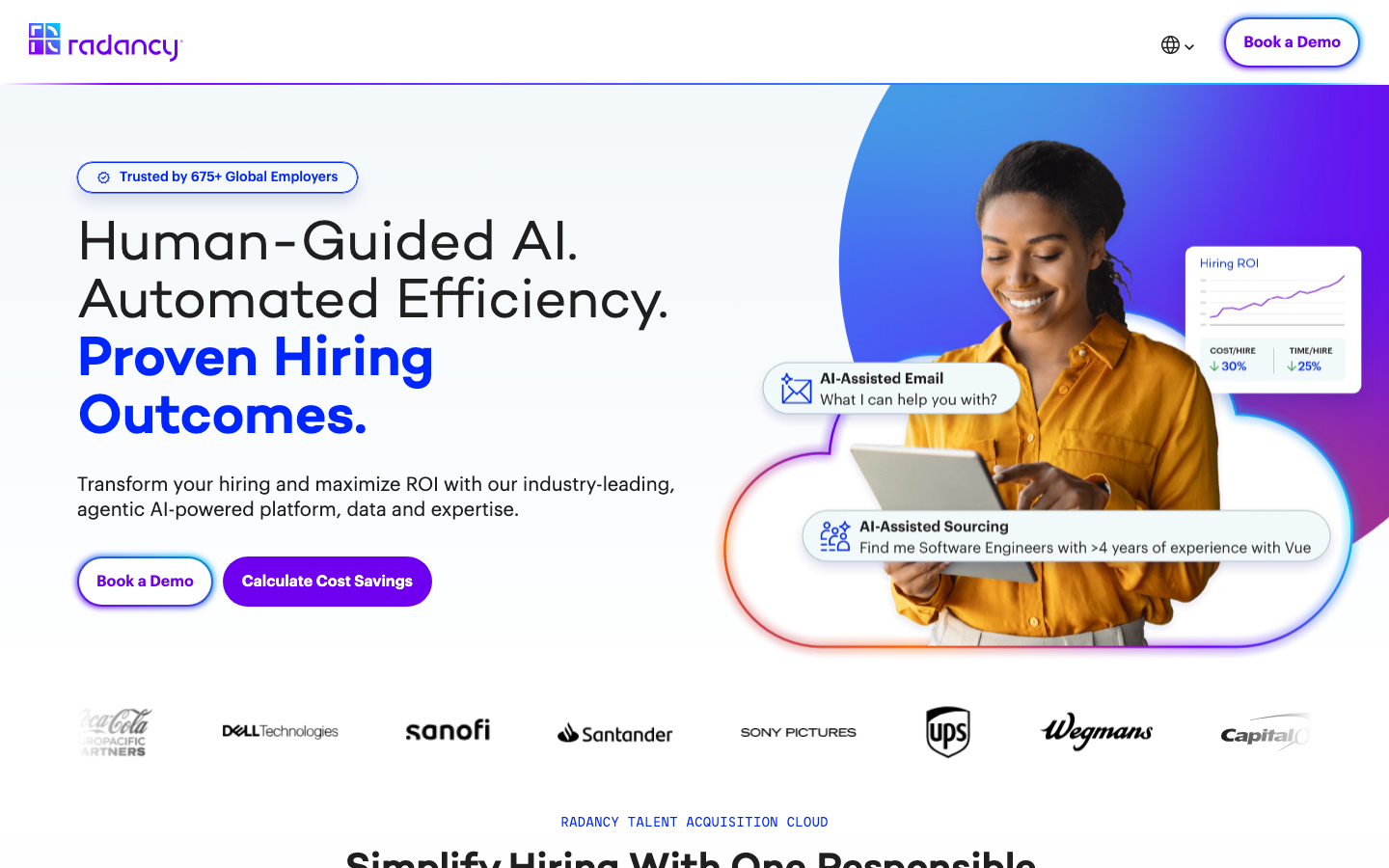
Radancy is a recruitment marketing platform built around attraction at scale, with no applicant tracking of its own. It covers career sites, employer brand, programmatic advertising, and candidate relationship management. The vendor states that 675+ global employers use it and cites customer outcomes, including a 30 percent reduction in cost per hire.
Software Pros
- Career sites, brand, and advertising managed as 1 estate
- CRM for nurturing candidates who are not ready to apply
- Built for employers hiring continuously across many locations
Software Cons
- No applicant tracking, so it layers onto your existing system
- Media spend is the larger budget line and sits outside the fee
- Enterprise scope makes it heavy for a single-site employer
Radancy Review
I would look at this when employer brand is the constraint and the careers page hasn’t changed in 4 years. Radancy treats attraction as a discipline with its own budget and metrics, which is how large employers actually run it. A company with 1 location and steady hiring is buying an entire operating model it does not need and cannot staff.
Our Verdict
Brand And Advertising Scale
Symphony Talent
Quick Overview
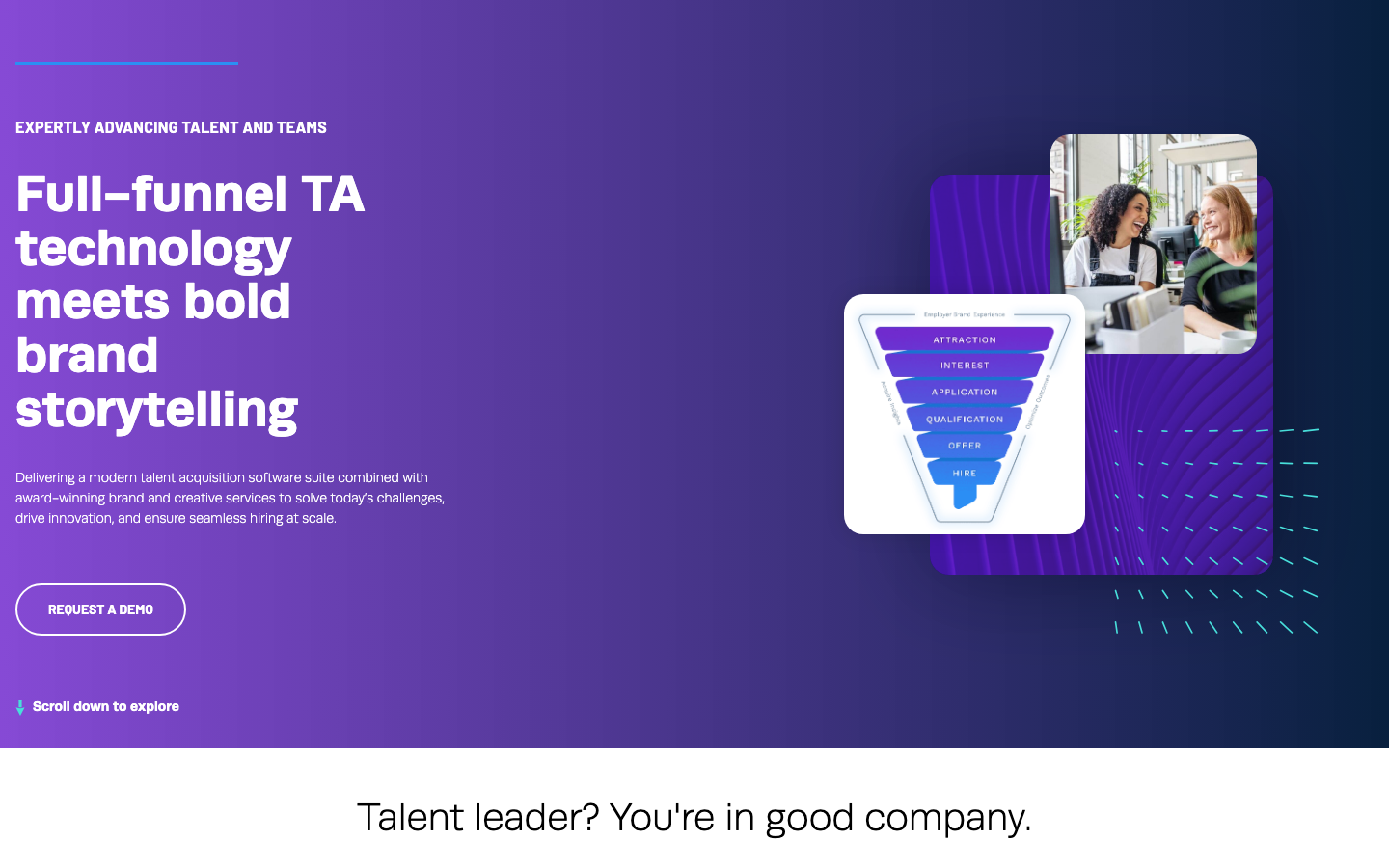
Symphony Talent is a recruitment marketing platform combining employer brand, career sites, media buying, and a CRM, with no applicant tracking. Its products ship under the SFX name: SFX CRM, SFX Career Sites, and SFX AdTech and Media. Creative brand services come from its own studio.
Software Pros
- Creative brand services delivered alongside the software itself
- Career sites and media buying managed by the same vendor
- CRM with segmentation and nurture for candidates not yet applying
Software Cons
- No tracking, so it sits in front of your existing system
- A CRM listing carrying only 21 G2 reviews, which settles nothing
- Media spend and creative services both sit outside the platform fee
Symphony Talent Review
I would look at this when the employer brand needs building rather than broadcasting. Pairing creative services with the software that distributes the work is unusual, and it suits a company with no employer brand team of its own. An organization that already has creative capability in-house is paying twice for something its own team can do perfectly well.
Our Verdict
Career Sites And Media
FAQs About Talent Acquisition Software
What’s the best software for talent acquisition?
There is no single winner, because the category splits in 2. Suites cover the funnel from pipeline to offer and usually include candidate tracking, while marketing platforms create the demand that fills it. Which one fits depends on whether your real problem is too few candidates or too much chaos managing the ones you have. The comparison table near the top of this page sorts all 10 by family, which is the fastest way to cut the list in half.
What is the difference between this and an applicant tracking system?
One manages candidates, and the other creates them. A tracking system takes over when somebody applies, holding the requisition, the stages, and the decision record. The wider platform handles everything before that: advertising, the career site, employer brand, and the pipeline of people who have not applied yet. The reporting difference follows from that split, because a tracking system can only ever describe the people who already arrived.
Do we need both?
Most organizations end up with both, and the useful question is which layer is missing today. If recruiters complain about admin and lost candidates, the tracking layer needs work. If they complain that nobody good applies, no workflow change will help. Several suites include both halves, which is why checking what a vendor actually competes on matters far more than comparing 2 feature lists.
How much does it cost?
This end of the market quotes rather than publishes, and none of the 10 platforms reviewed here lists a rate anywhere. Suites price on employee count, modules, and hiring volume, with implementation frequently a separate line that reaches 6 figures at enterprise scale. For the advertising platforms, the fee is only part of it. You fund the media separately, and that budget is usually the larger of the 2.
What is recruitment marketing?
It is the work of getting candidates to want the job before they ever apply. That covers job advertising, the career site they land on, and the employer brand content that persuades them. Nurture campaigns then keep contact alive with people who aren’t ready yet. All of it sits outside candidate tracking because every part happens before an application exists.
What is programmatic job advertising?
It is bidding for job ad placement across sites and networks automatically, with the system shifting budget toward whatever produces qualified applicants. It replaces the flat-rate job board contract, where you pay the same amount whether a posting delivers 3 applicants or 300. The metric it optimizes toward is cost per applicant rather than impressions or clicks, which is what makes it accountable.
How long does implementation take?
Marketing platforms can be live within a few weeks, once the advertising accounts and conversion tracking are connected properly. Suites run from a couple of months in the mid-market to as much as 3 quarters at enterprise scale. The timeline is rarely the software itself. Data migration and career site work usually decide it, and both depend on internal teams with other jobs.
Can it work with our existing tracking system?
Yes, and the 4 marketing platforms on this page are designed specifically to do that. The pattern worth watching closely is whether the integration actually runs in both directions. A one-way feed pushes candidates in and never learns what happened to them, which means you can report on applications but not on hires. Without that return path, source reporting becomes guesswork dressed up as data, and every spend decision built on it inherits the problem.

Helen is Anywherer’s Market Analyst & Content Researcher, with extensive experience in analyzing global employment markets and HR technology trends. She is skilled at turning complex market data into clear, well-researched insights that inform every piece of content. With a strong grasp of the EOR, PEO, and international hiring space, Helen plays a key role in keeping Anywherer’s research accurate, up to date, and genuinely useful for readers.