Goal Setting Software in 2026: Why Teams Rely on It
Goal setting software helps teams set, track, and review goals in a simple, repeatable way. It keeps objectives, key results, progress updates, and check-ins in one place instead of scattered docs and chats. In many companies, it sits next to performance systems, employee evaluation software, and HR tools as one of the core tools for goal setting and alignment.
Research has shown for years that clear, specific goals improve performance at team level, not just for individuals. A meta-analysis on goal setting and group performance found that specific, difficult goals lead to much higher performance than vague ones. At the same time, newer studies stress that feedback and context matter as much as the goal itself, so most modern goal setting tools bake in check-ins and progress reviews.
In 2026, many teams now use OKRs (Objectives and Key Results) or similar frameworks to tie goals to outcomes. McKinsey&Company have written about how goal frameworks and OKRs help close the “strategy-execution gap” by turning high-level plans into trackable results and avoiding goals that feel random or disconnected from strategy. Tools in this list are built to support that kind of work: linking company goals, team priorities, and personal objectives so everyone can see how their work fits.
Goal setting software is also part of a wider people stack. Some teams connect it to employee survey providers to pick up signals on morale and blockers before they derail progress, using tools like employee survey providers to listen while goals move forward. Others link goals with recognition tools and ask, what’s the best employee recognition platform so that wins tied to goals get noticed, not just tasks.
Remote and hybrid work put even more pressure on clear goals. Strategy pieces on OKRs and alignment show that OKRs and similar performance goal setting software can help teams stay focused when they are spread across locations and time zones, as long as goals are visible and updated often. This is where the best goal setting software for teams really matters: it gives you one simple place to see what matters, who owns it, and what progress looks like.
Best Goal Setting Tools: 23 Platforms I Reviewed
I’ve found and analyzed some of the most notable goal setting tools that teams use for OKRs, targets, and ongoing progress reviews. This list covers a mix of dedicated goal platforms and broader people systems that still act as strong software for goal setting. I’m listing all providers in A–Z order to keep things simple and fair.

15Five
Quick Overview:
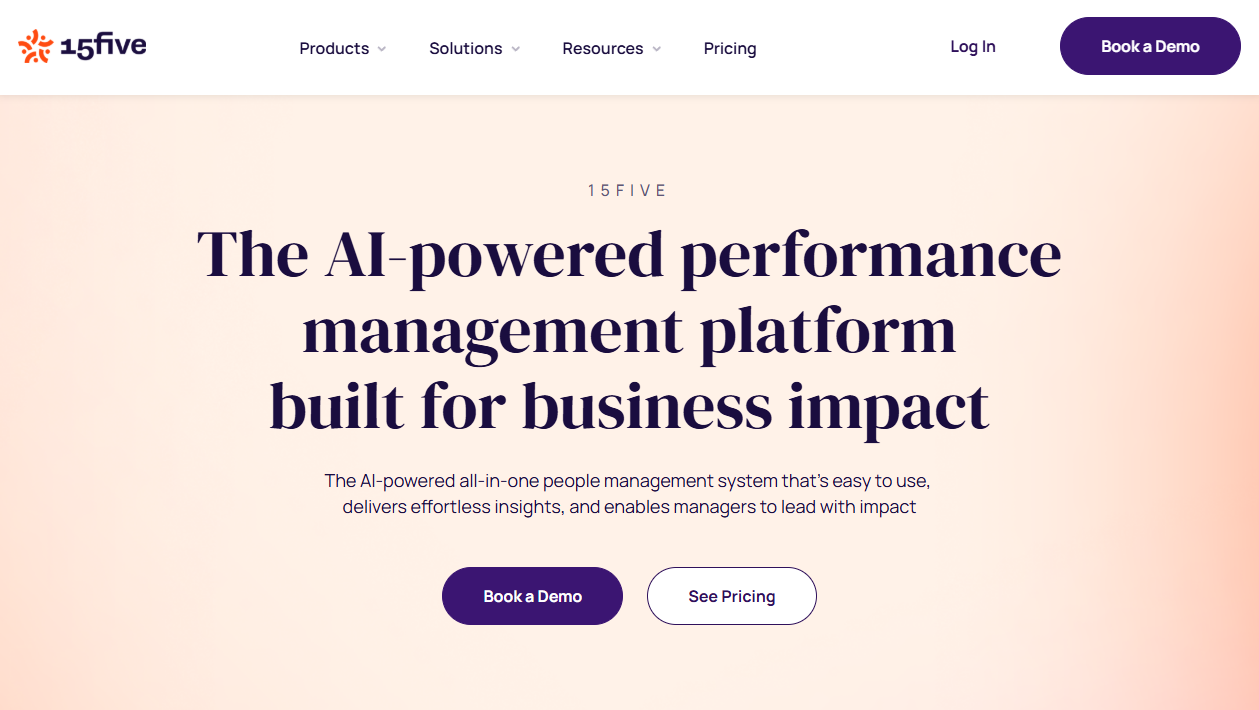
15Five combines goals, performance, and feedback in one system. Teams use it as employee goal setting software, linking OKRs with weekly check-ins and reviews. It suits companies that want goals, 1:1s, and performance in one place.
Software Pros:
- Tight link between goals, feedback, and reviews
- Strong support for OKRs and focus areas
- Good manager views for tracking progress
Software Cons:
- Can feel heavy for very small teams
- Works best when check-ins are done regularly
15Five Review:
While exploring 15Five, I paid attention to how goals show up in weekly workflows, not just in dashboards. I like how naturally goals flow into 1:1 agendas and performance talks instead of being a separate admin task. I’d position this primarily as a good goal setting management software choice for teams that already value continuous feedback.
Our Verdict
Goals Woven Into Check-Ins
Asana
Quick Overview:
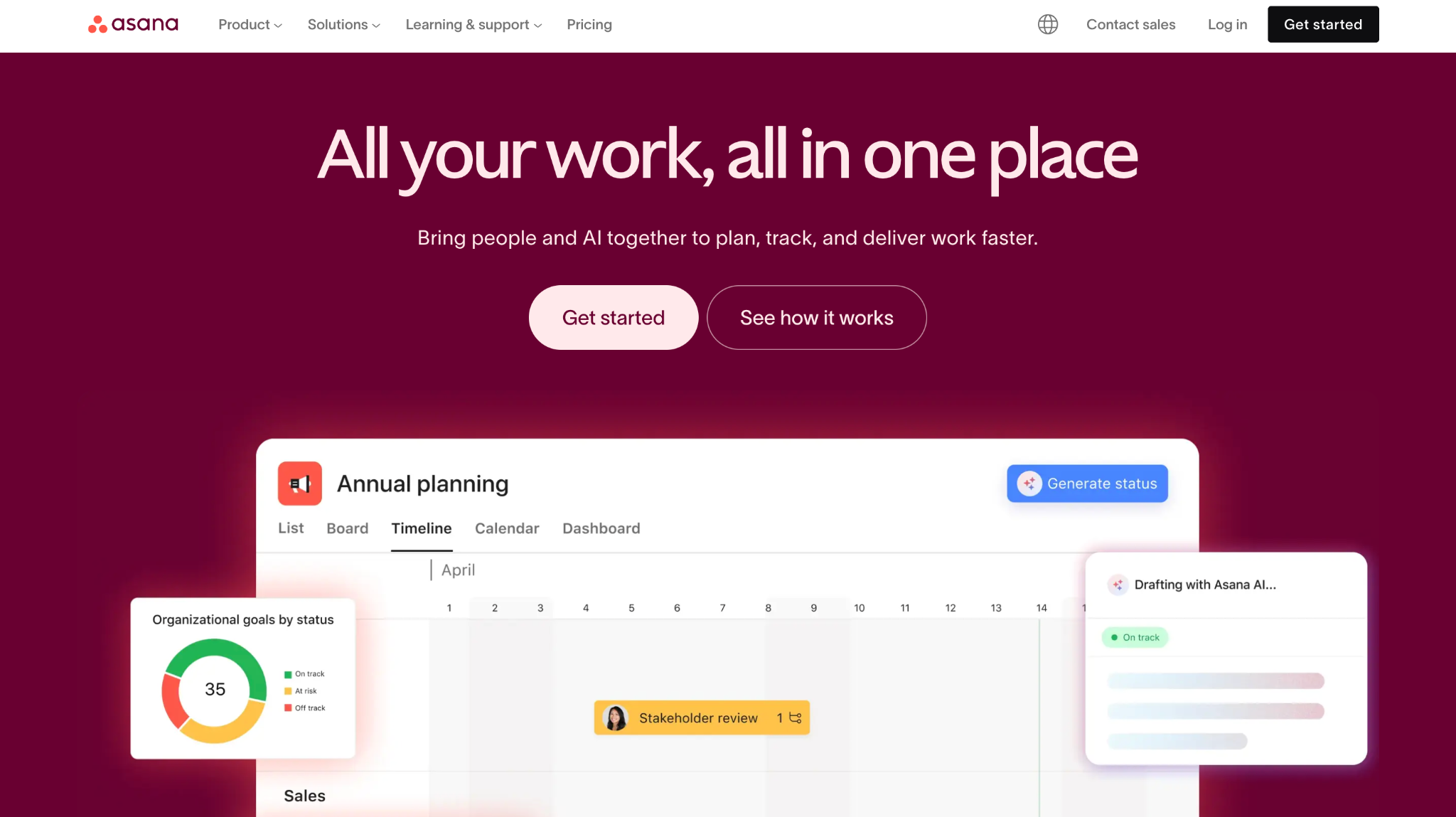
Asana is a work management tool with built-in goals that tie to projects and tasks. Teams use it as goal setting software for teams when they want strategy and execution in the same view. Goals sit above projects, which makes it easier to see how work ladders up.
Software Pros:
- Clear link between goals, projects, and tasks
- Good visual views for tracking OKRs and outcomes
- Strong collaboration features for cross-team work
Software Cons:
- Not a dedicated goal product
- Advanced reporting may need higher-tier plans
Asana Review:
I usually pay attention to how well goals connect to actual work, and Asana does this better than many. What stood out to me is how teams can see goals, initiatives, and day-to-day tasks in one place. In my opinion, this is one of the best goal setting tools for teams that already live in Asana for projects.
Our Verdict
Project-Led Goal Visibility
Betterworks
Quick Overview:
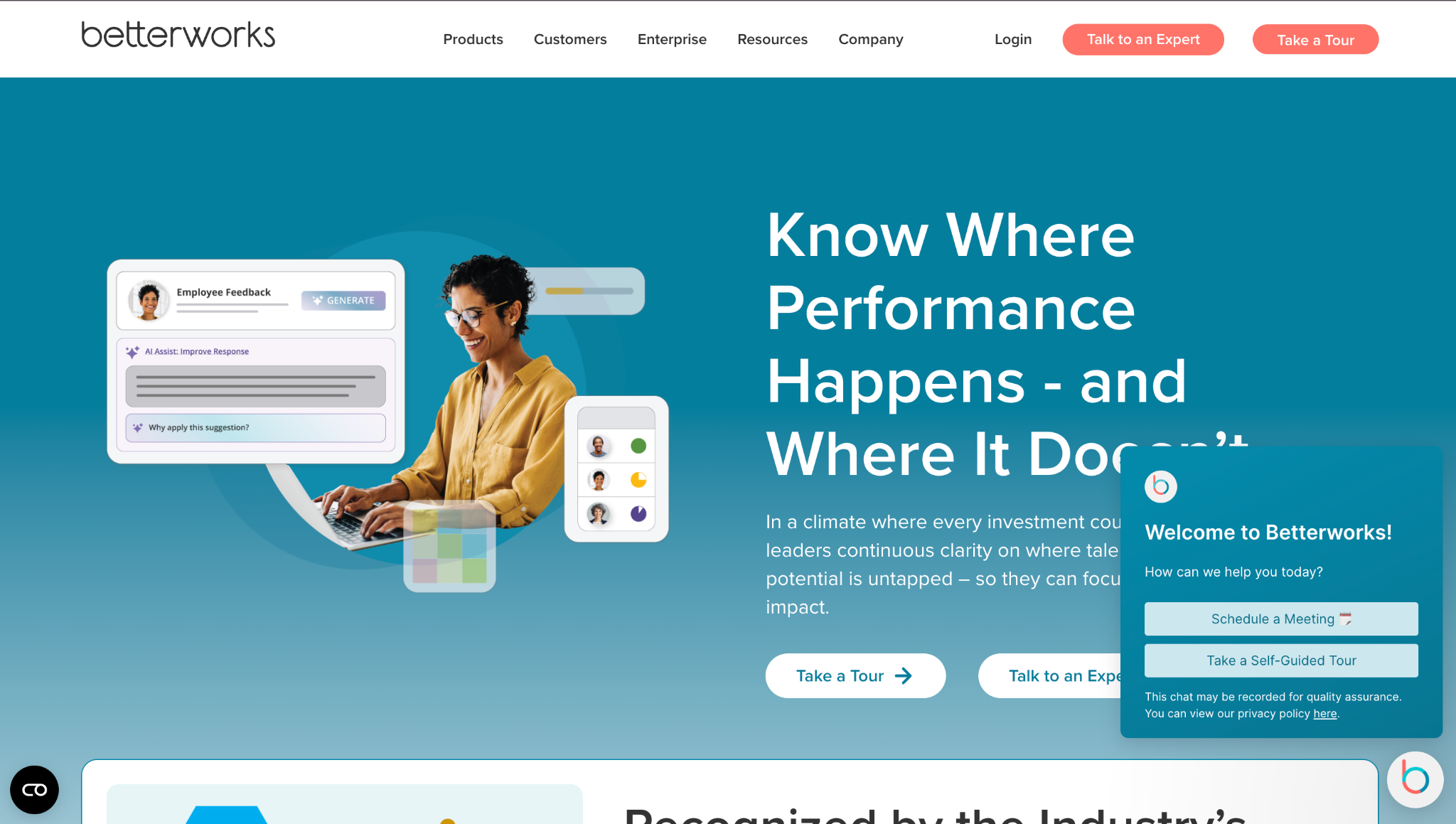
Betterworks is performance goal setting software built around OKRs and check-ins. It helps companies connect strategic objectives to team and individual goals. Many organizations use it as an employee goal setting platform as well as for reviews.
Software Pros:
- Strong OKR and alignment features
- Regular check-in workflows
- Good support for large and mid-size teams
Software Cons:
- Setup takes time to do well
- Best fit for companies that commit to an OKR process
Betterworks Review:
I focused on how it guides people through the whole OKR cycle, not just goal creation. I liked how check-ins and progress updates are built into the flow rather than treated as extra steps. I tend to view Betterworks as one of the best employee goal setting software options for companies that want a structured OKR approach.
Our Verdict
Structure For Serious OKRs
ClickUp
Quick Overview:
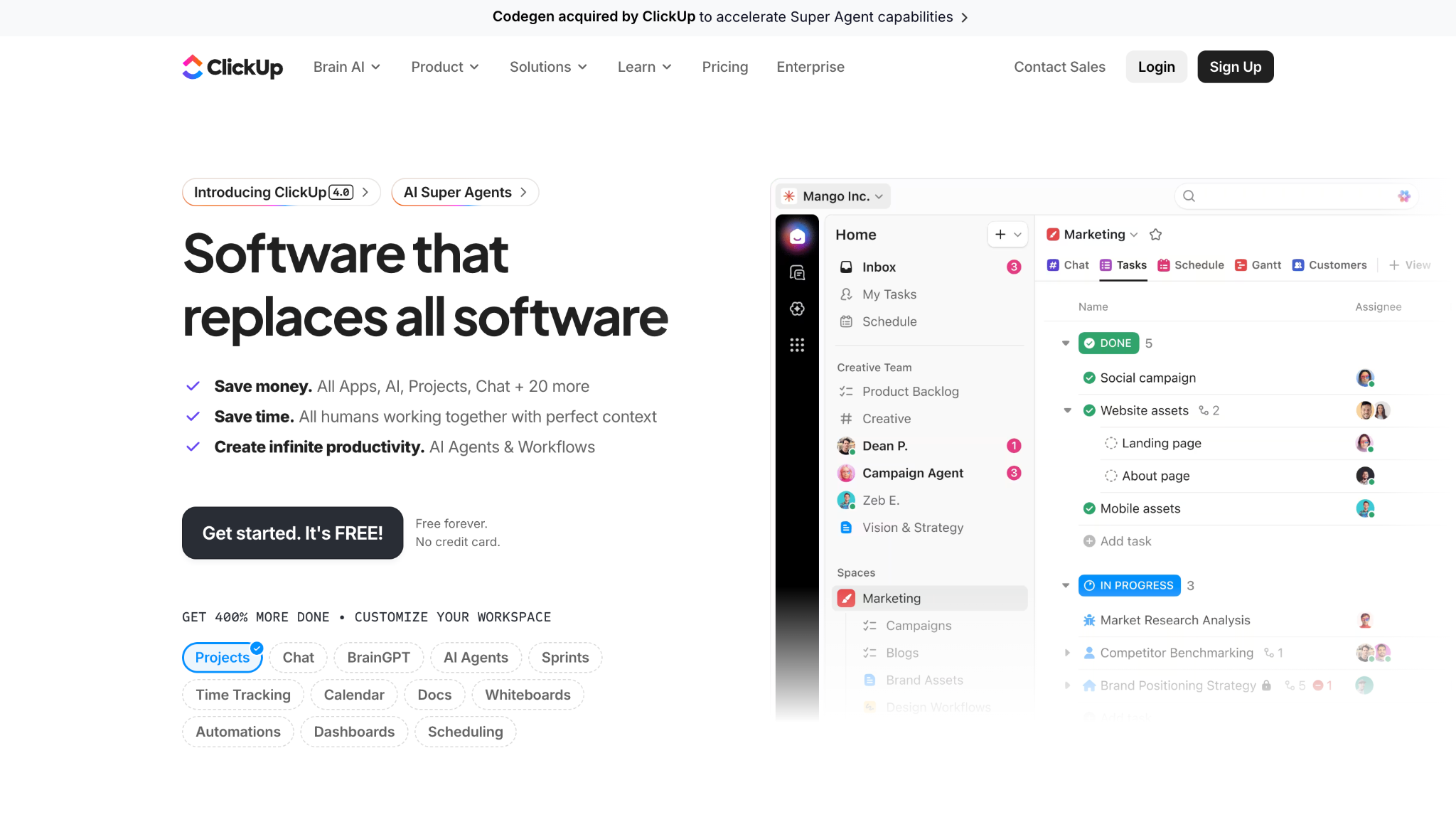
ClickUp is a work management platform with goals, targets, and dashboards. Teams often treat it as goal setting software for teams when they want tasks, sprints, and OKRs inside a single workspace. Goals can be tied to lists, sprints, or custom fields.
Software Pros:
- Flexible goal structure and hierarchies
- Many ways to connect goals to work
- Strong dashboards and views
Software Cons:
- Feature-rich interface can feel busy
- Requires some setup to keep things simple
ClickUp Review:
What I noticed fairly quickly is how many different teams can use the same goal setting tool but still keep their own structure. I appreciated the way goals, tasks, and dashboards stay connected without forcing one strict model. I’d position ClickUp as one of the top goal setting software options for teams that already use it for work planning.
Our Verdict
Flexible Goals Inside Workflows
Culture Amp

Quick Overview:
Culture Amp started with engagement and surveys and then added goals and performance. It now works as employee goal setting software plus feedback and review tools. Many companies use it alongside employee survey providers workflows.
Software Pros:
- Strong link between engagement data and goals
- Good views for managers and HR
- Built-in feedback and review tools
Software Cons:
- Goals are one part of a larger suite
- Can be more than you need if you want goals only
Culture Amp Review:
I found it interesting how goals, feedback, and survey data come together in one place. That mix makes it easier to see not just what teams are doing, but how people feel about the work while they chase goals. In my opinion, Culture Amp fits teams that want tools for goal setting and listening in the same platform.
Our Verdict
Goals Backed By Voice Data
Engagedly
Quick Overview:
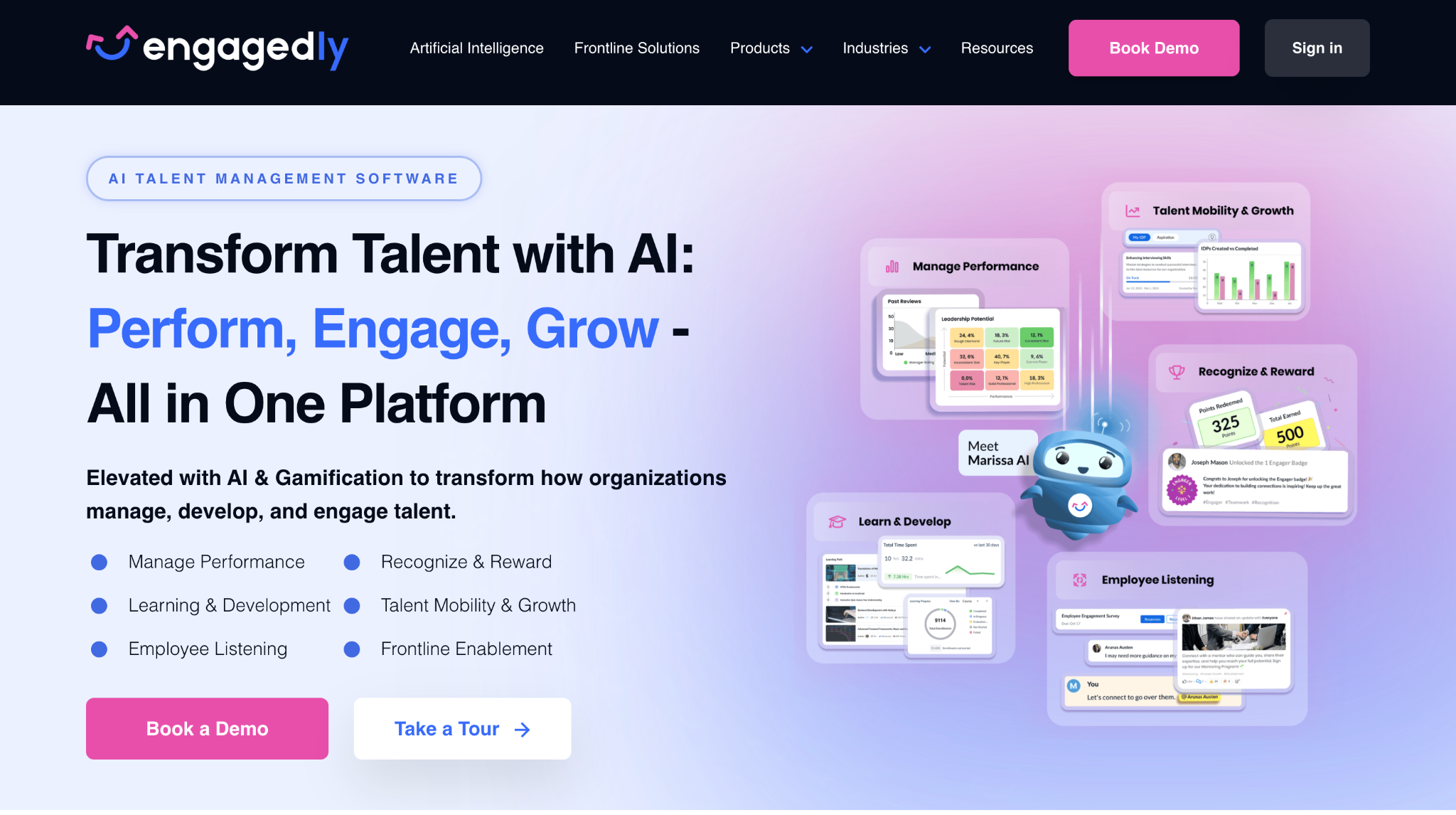
Engagedly is a performance and engagement platform with OKRs and goals. It positions itself as software for goal setting, feedback, and learning in one suite. Organizations use it to run performance cycles and align goals at the same time.
Software Pros:
- Rich performance and goal modules
- Links learning, feedback, and objectives
- Supports different goal methods (OKRs, SMART)
Software Cons:
- Interface can feel full at first
- Needs clear internal process to avoid clutter
Engagedly Review:
While reviewing Engagedly, I checked how goals show up alongside feedback, recognition, and development. I liked that people do not have to jump between many screens to see what they own and how they are doing. I tend to view it as a good performance goal setting software choice for teams that also want engagement and growth tools.
Our Verdict
Goals Inside A Full People Suite
Lattice
Quick Overview:
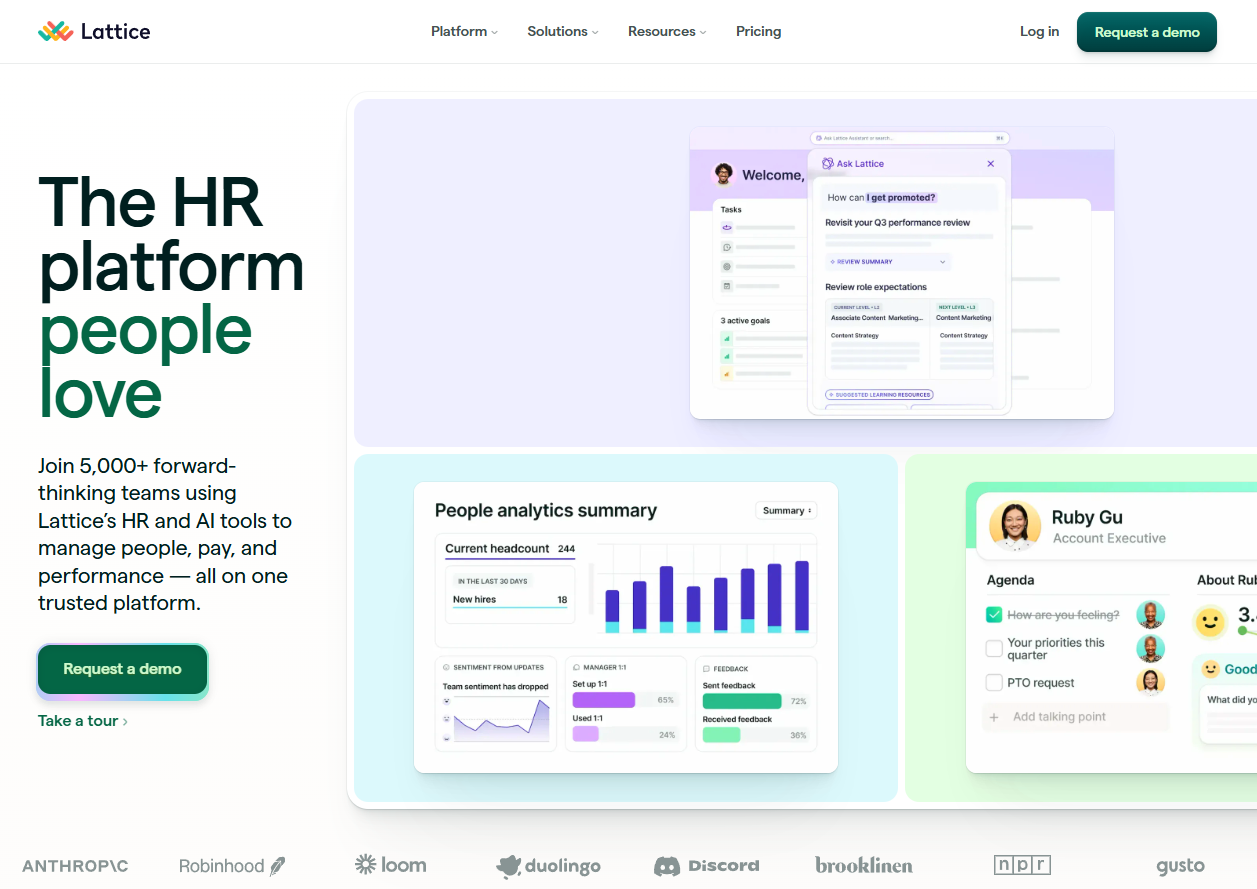
Lattice combines goals, performance reviews, feedback, and growth plans. Many teams treat it as employee goal setting software plus a review system. Goals can be shared across teams, linked to company priorities, and discussed in 1:1s.
Software Pros:
- Flexible goals and OKR support
- Tight link between goals, reviews, and feedback
- Strong manager and HR reporting
Software Cons:
- Setup and configuration take time
- Pricing can feel high for very small teams
Lattice Review:
I spent some time exploring how goals connect to reviews and growth plans. What stood out to me is how often goals appear in the flow of work: in 1:1s, in feedback, and in performance cycles. For dynamic teams that update goals more than once a year, Lattice feels close to the best goal setting software and review combo.
Our Verdict
Connected Goals And Reviews
Leapsome
Quick Overview:
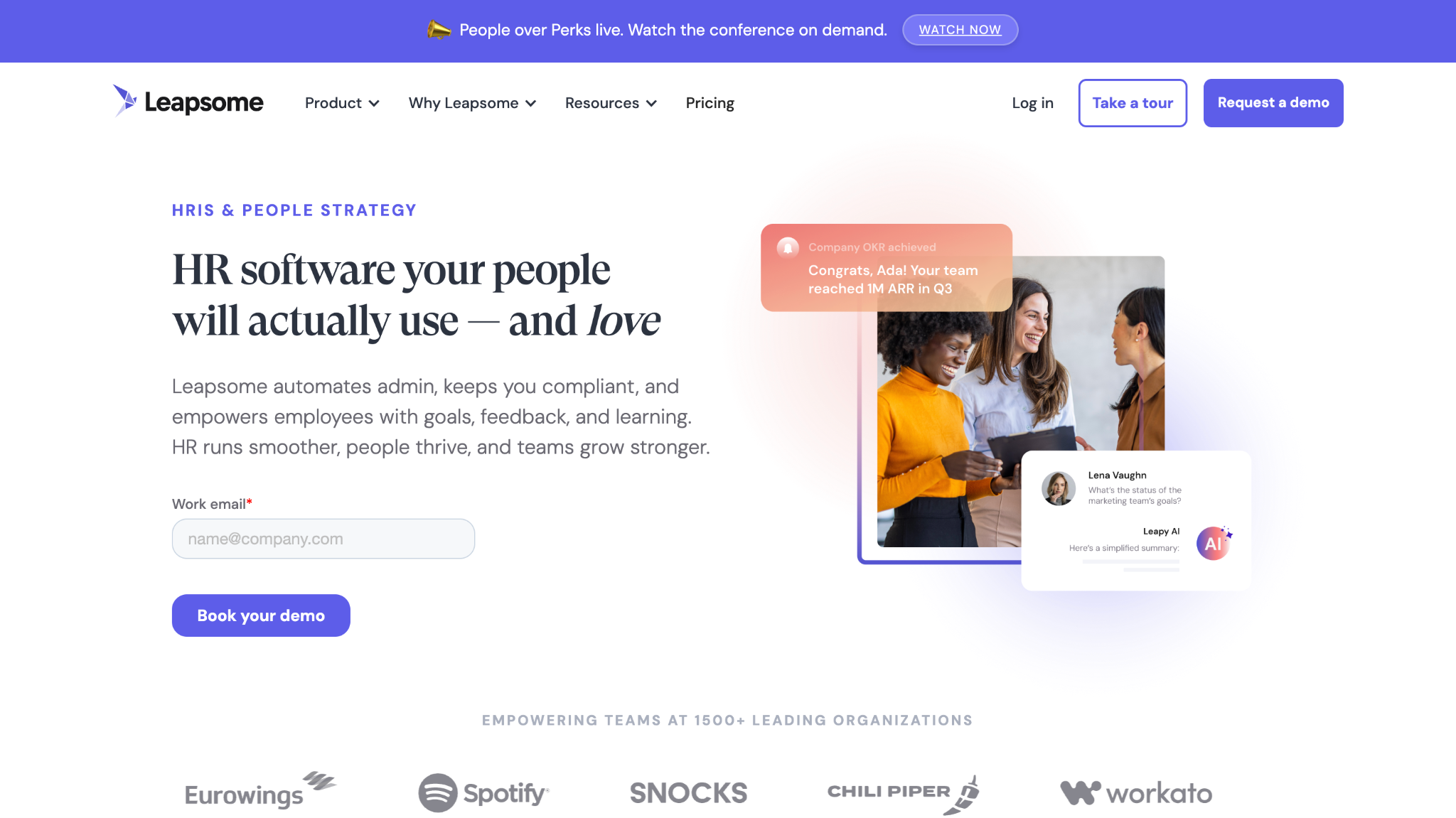
Leapsome is a people enablement platform with goals, feedback, learning, and engagement. It works as a goal setting tool with extra focus on growth and coaching. Goals support both OKR style and simpler targets.
Software Pros:
- Strong automation for check-ins and cycles
- Clear link between goals and learning paths
- Good for scaling modern people programs
Software Cons:
- Needs setup time for best use
- Works best when managers are active in the tool
Leapsome Review:
While exploring Leapsome, I liked how goals are tied to development, not just to ratings. I found it genuinely helpful when thinking about what comes after hitting a target, not only whether it was hit. I’d position this as one of the best goal-setting tools for dynamic teams that want improvement to be ongoing.
Our Verdict
Growth-Focused Goal Platform
Microsoft Viva Goals
Quick Overview:
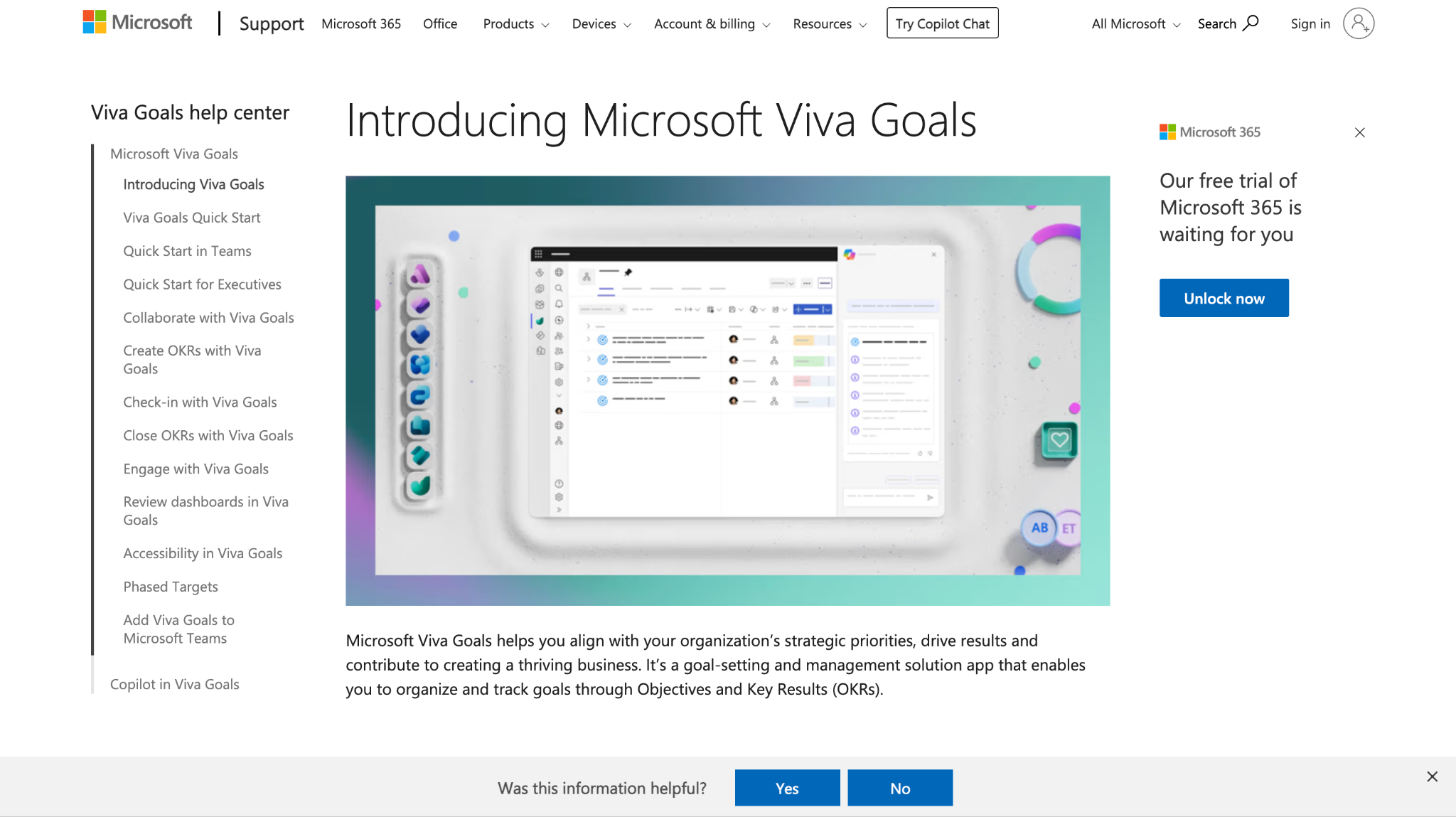
Microsoft Viva Goals is an employee goal setting service that fits inside the Microsoft 365 ecosystem. It connects to Teams, Azure DevOps, and other Microsoft tools. Many companies use it as goal setting software for teams that already live in Microsoft.
Software Pros:
- Deep integration with Microsoft 365 and Teams
- Good for OKR alignment at scale
- Clear dashboards for leaders and teams
Software Cons:
- Less appealing if you are not on Microsoft 365
- Needs process discipline to stay up to date
Viva Goals Review:
I was curious to see how goals show up in daily tools rather than standalone dashboards. I appreciated the way OKRs appear directly inside Teams and link to engineering or project work. For organizations that rely on Microsoft already, Viva Goals feels like a natural corporate employee goal setting platform.
Our Verdict
Native Goals For Microsoft Stacks
Monday.com
Quick Overview:
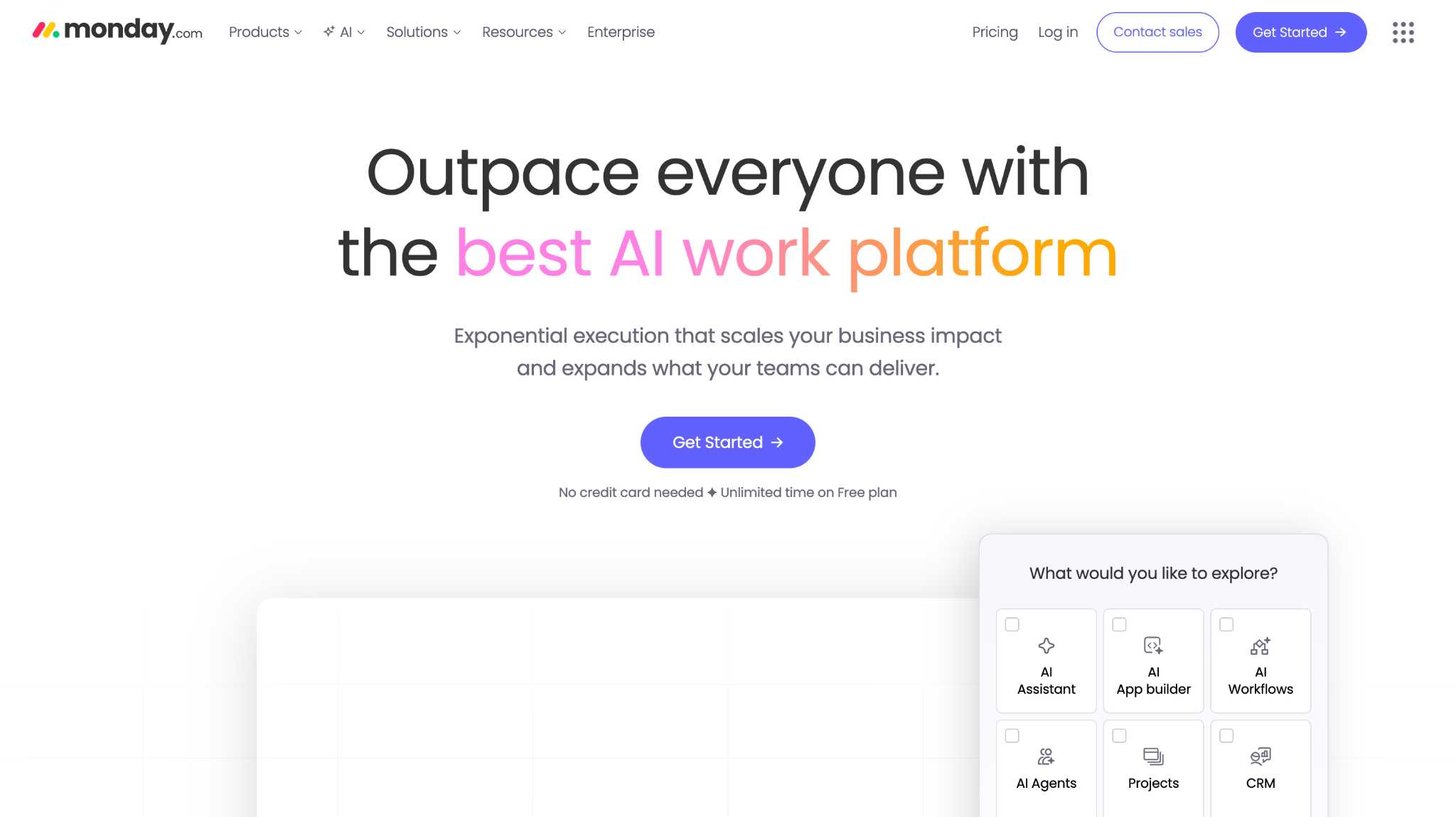
Monday.com is a visual work management platform that can act as goal setting software for teams. Using boards, dashboards, and OKR templates, teams track objectives and key results alongside projects and tasks.
Software Pros:
- Very visual boards and dashboards
- Flexible goal templates for different teams
- Strong automation and integrations
Software Cons:
- Not a pure goal-only product
- Can get complex if too many boards are created
Monday.com Review:
I spent some time exploring different goal templates and dashboards. I liked how easy it is to build a simple OKR board and then layer in automation as you grow. In my opinion, Monday.com is one of the best goal setting tools for teams that want clear views without a heavy HR system.
Our Verdict
Visual Boards For Shared Goals
Mooncamp
Quick Overview:
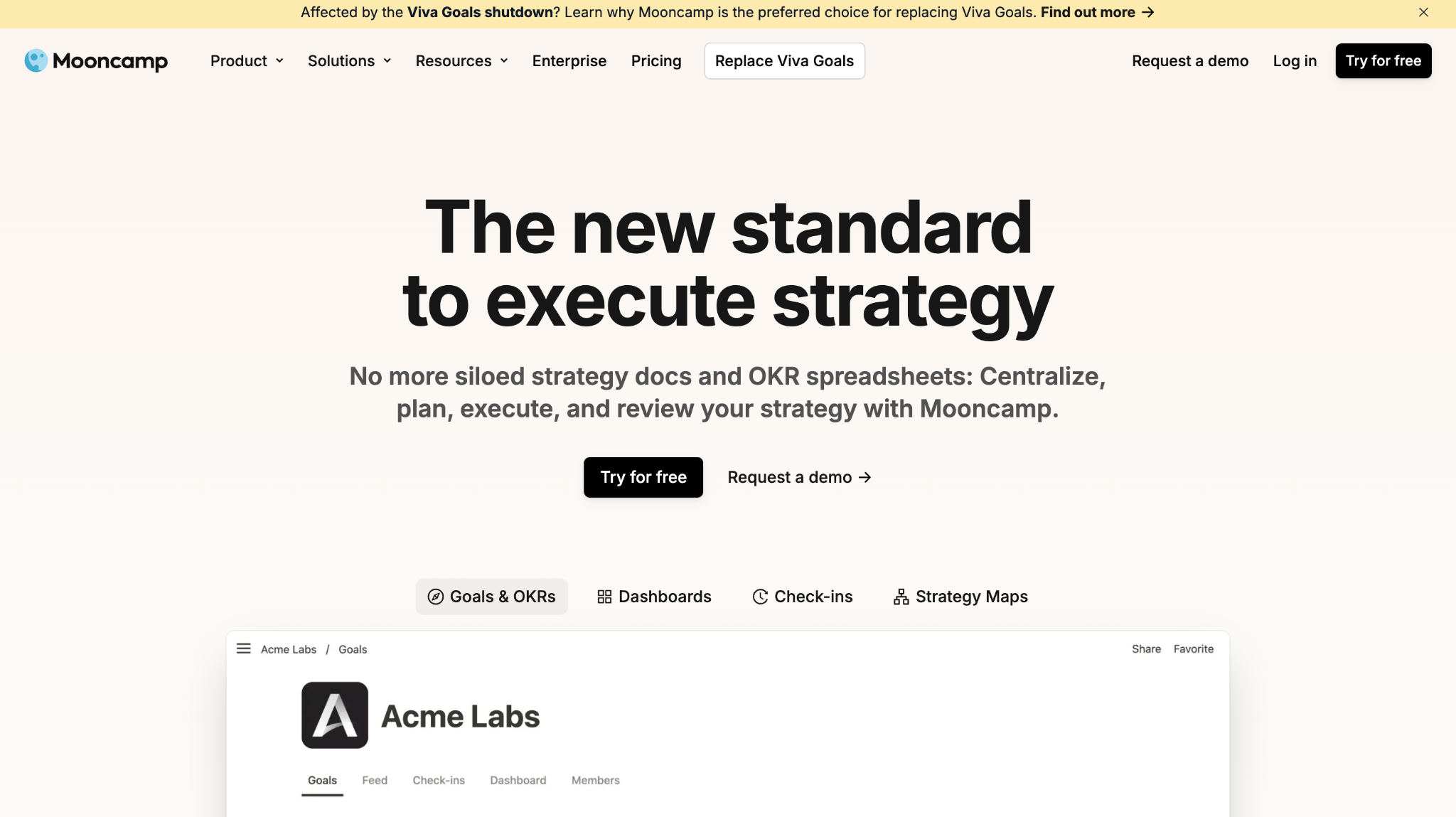
Mooncamp is a dedicated OKR and goal platform. It focuses on alignment, updates, and dashboards, and is used as employee goal setting software in modern, fast-moving teams. It also supports check-ins and routines.
Software Pros:
- Simple, focused OKR design
- Clear alignment maps and dashboards
- Regular check-ins to keep goals moving
Software Cons:
- Narrower scope than broad HR suites
- May feel limited if you want reviews and HR in one place
Mooncamp Review:
What I noticed fairly quickly is how light the interface feels compared to full HR systems. I liked that the main jobs, such as setting goals, aligning them, and updating them, are front and center. For teams that want best goal-setting tools for dynamic teams rather than full HR software, Mooncamp is an appealing pick.
Our Verdict
Lightweight OKR-First Platform
Notion
Quick Overview:
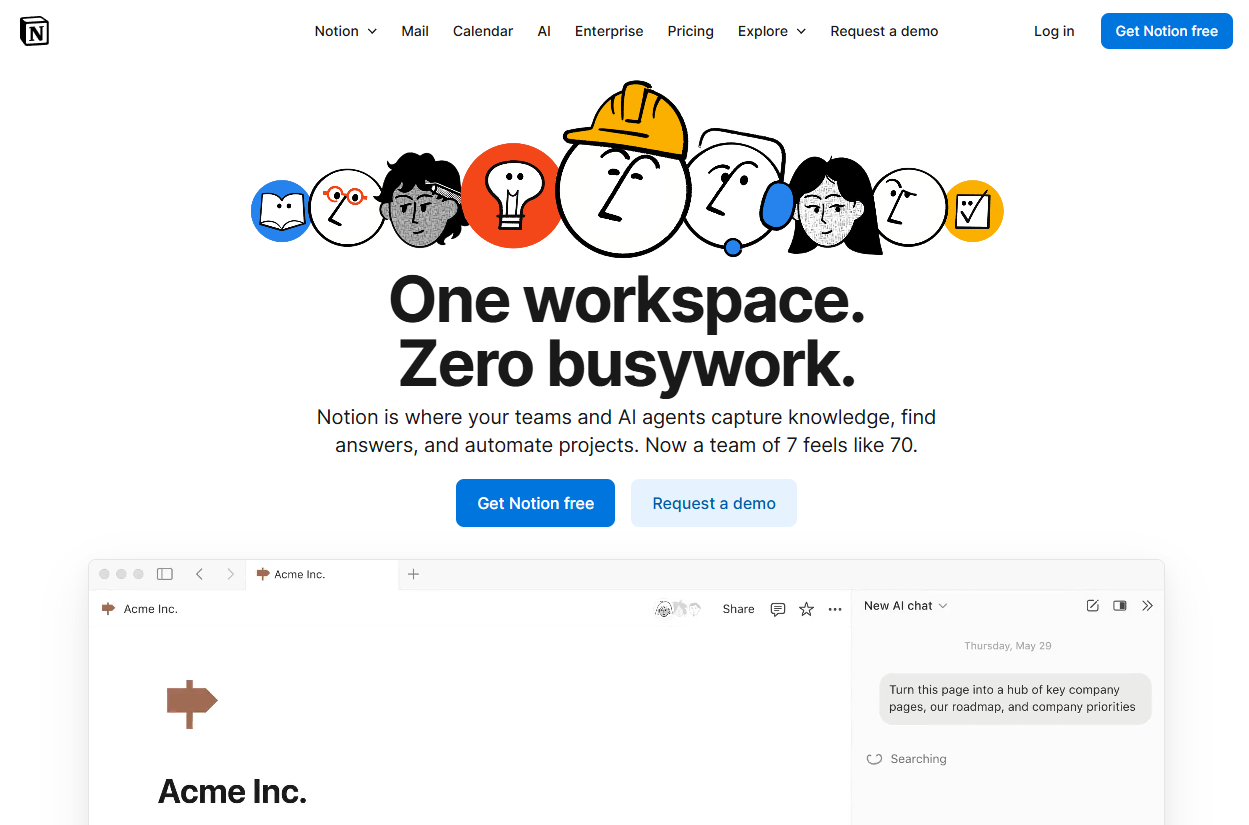
Notion is a workspace tool that many teams adapt as simple goal setting software free to start with. Using templates, databases, and views, teams create their own goal pages, scorecards, and OKR dashboards.
Software Pros:
- Very flexible structure and templates
- Easy to adapt to different goal models
- Generous free plan for small teams
Software Cons:
- No “official” goal engine or workflows
- Needs a clear owner to keep structure clean
Notion Review:
I found it easy to sketch out simple goal databases and tailor them for different teams. I appreciated the freedom to build only what you need instead of fitting into a fixed model. For small groups looking for free goal setting software, Notion is a practical starting point.
Our Verdict
Flexible DIY Goal Workspace
Peoplebox
Quick Overview:
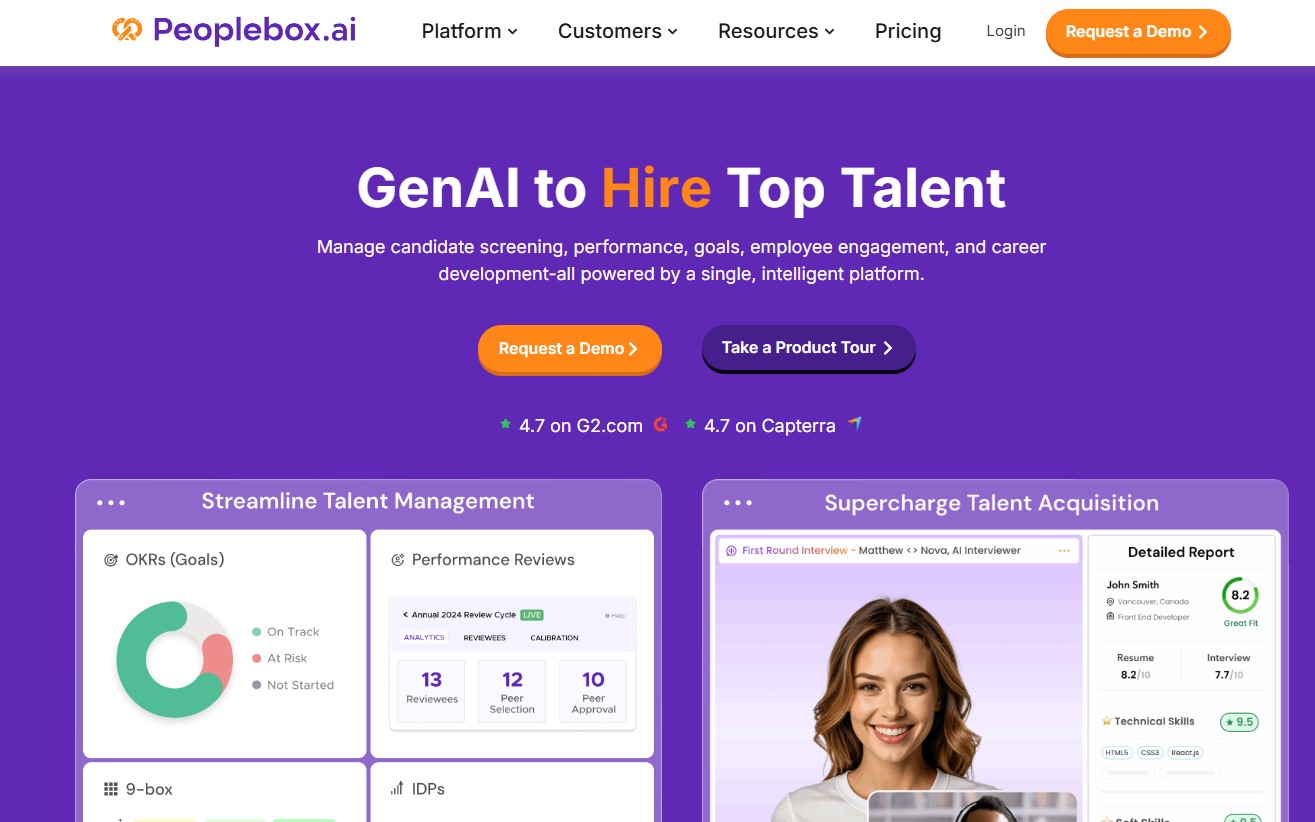
Peoplebox is an OKR and performance platform focused on alignment and tracking. It works as employee goal setting software with strong integrations into tools like Slack, Teams, and project systems. Many growing companies use it to centralize OKRs.
Software Pros:
- Clear OKR hierarchy from company to individual
- Integrations to pull progress from work tools
- Good visibility for leaders across teams
Software Cons:
- Some workflows can feel dense at first
- Best value once you commit across the company
Peoplebox Review:
I was curious to see how Peoplebox handles automatic progress updates from other systems. I liked that it reduces manual data entry and instead connects to tools teams already use. For organizations that want best employee goal setting software without a full HR suite, Peoplebox is a strong candidate.
Our Verdict
Integration-Friendly OKR Hub
Perdoo
Quick Overview:
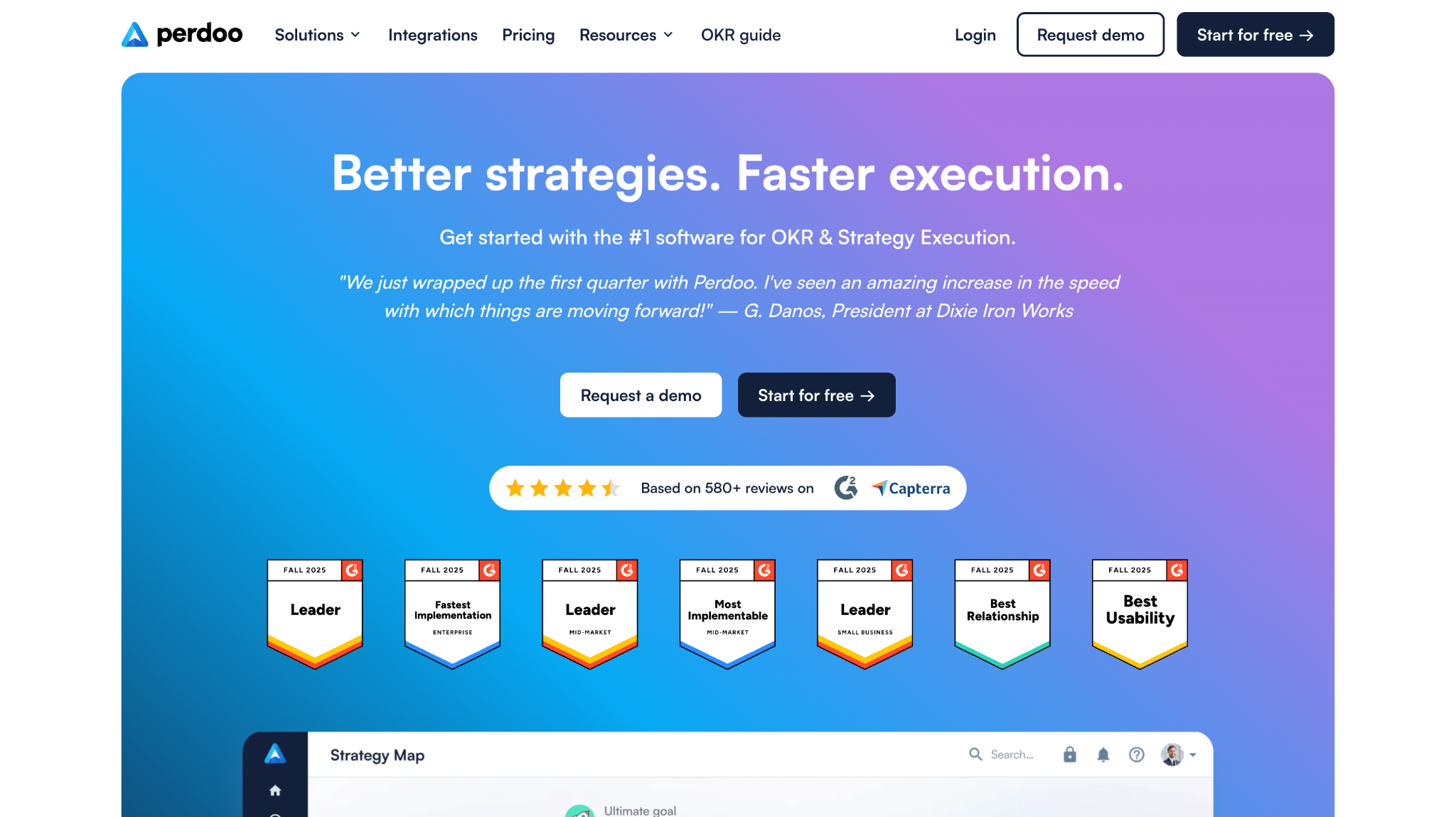
Perdoo is an OKR and strategy platform that helps companies set goals and track progress at every level. It’s used as goal setting software for teams and leadership who want a clear map from strategy to execution.
Software Pros:
- Strategy map that links goals across levels
- Support for OKRs, KPIs, and initiatives
- Clean, focused interface
Software Cons:
- Narrower scope than all-in-one HR tools
- Works best when everyone participates
Perdoo Review:
I appreciated the way Perdoo shows company goals, team OKRs, and initiatives in one aligned view. It makes it easier to see where work supports strategy and where gaps exist. I’d position Perdoo as top goal setting software for organizations that want a strong strategy-to-execution link without extra HR features.
Our Verdict
Clear Line From Strategy To Goals
Profit.co
Quick Overview:
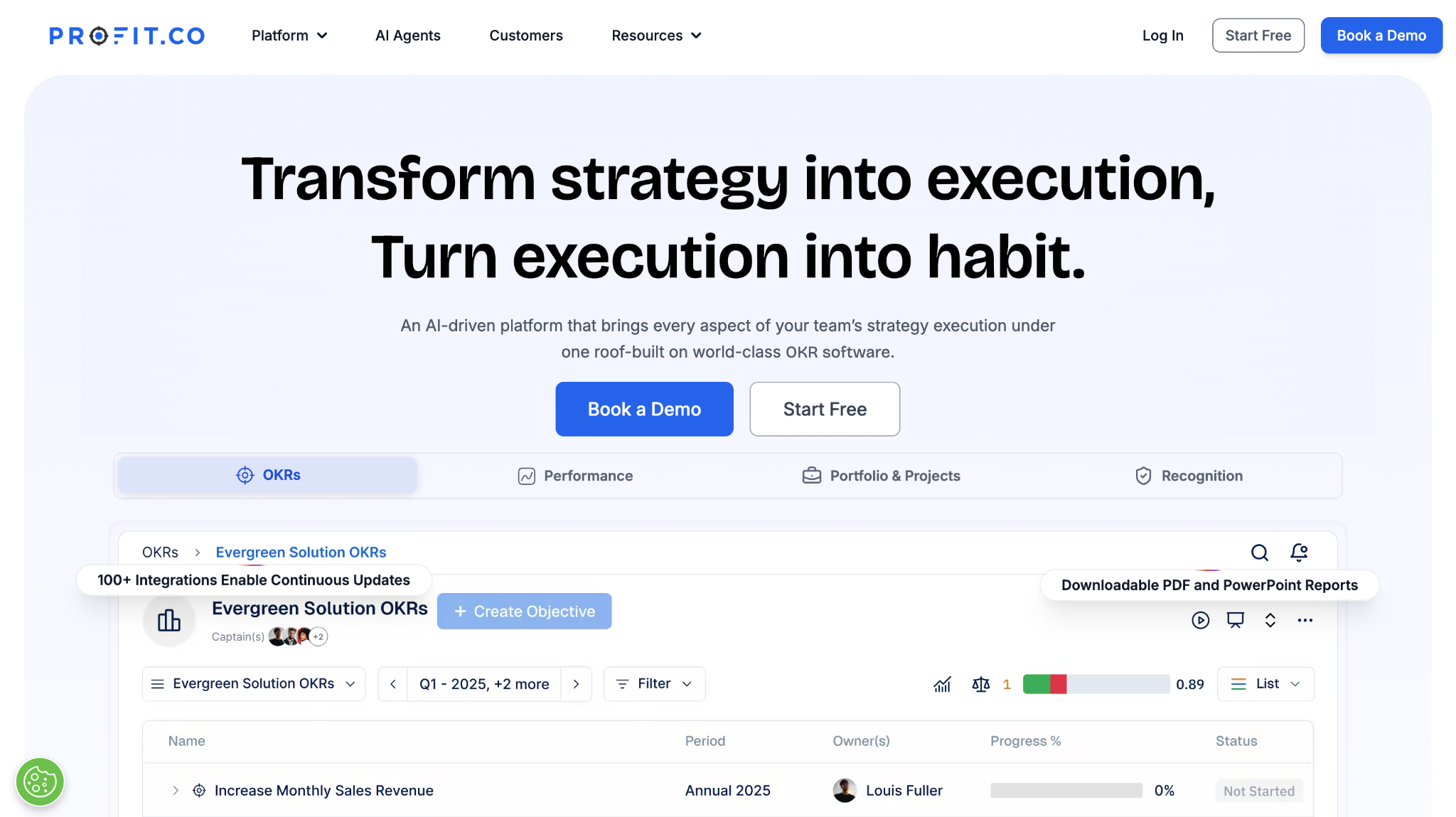
Profit.co is an OKR platform with performance and task features. Teams use it as goal setting management software, linking objectives, key results, and action items. It also supports review and feedback modules.
Software Pros:
- Rich OKR configuration and templates
- Option to add performance and tasks
- Detailed dashboards for leaders
Software Cons:
- Interface can feel complex at first
- Setup needs clear ownership
Profit.co Review:
I spent some time exploring how OKRs connect to initiatives and tasks. I liked the way you can go from high-level objectives down to specific work items without losing the thread. For teams that want a single employee goal setting platform with lots of levers, Profit.co offers plenty of depth.
Our Verdict
Detailed OKR And Action Hub
Quantive Results
Quick Overview:
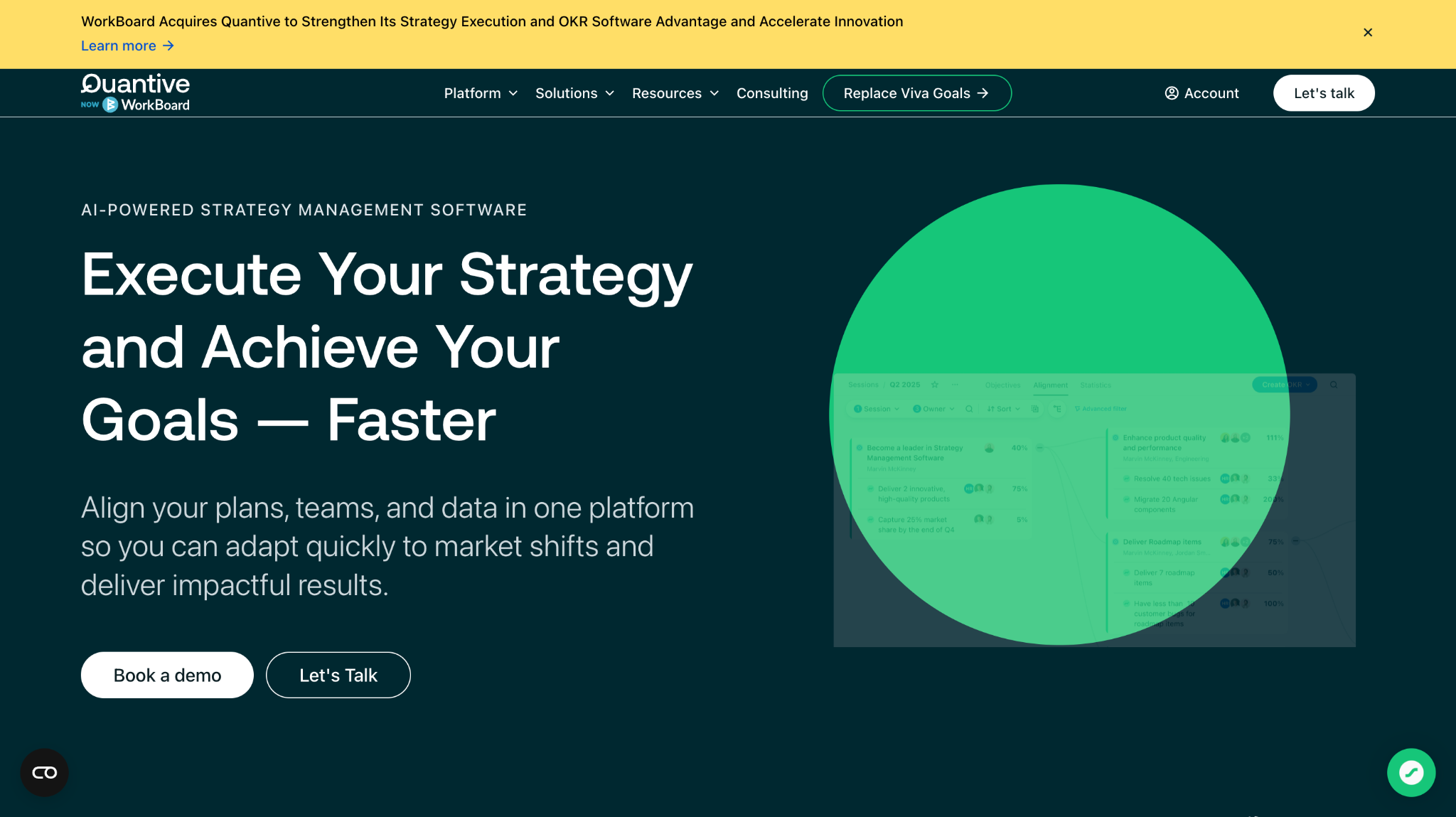
Quantive Results is an OKR and performance platform built for data-driven teams. It connects goals to metrics, dashboards, and integrations. Many companies treat it as one of their top goal setting software options for data-heavy use cases.
Software Pros:
- Strong analytics and KPI connections
- Flexible OKR structures
- Good support for complex environments
Software Cons:
- May feel advanced for very small teams
- Best results when you integrate many data sources
Quantive Results Review:
I found the approach interesting because goals are tied tightly to real metrics rather than just progress bars. The platform makes it easier to see where goals are off track before quarter-end. In my opinion, Quantive Results fits teams that want performance measurement tools and goal tracking in one place.
Our Verdict
Data-Rich OKR And KPI Stack
Tability
Quick Overview:
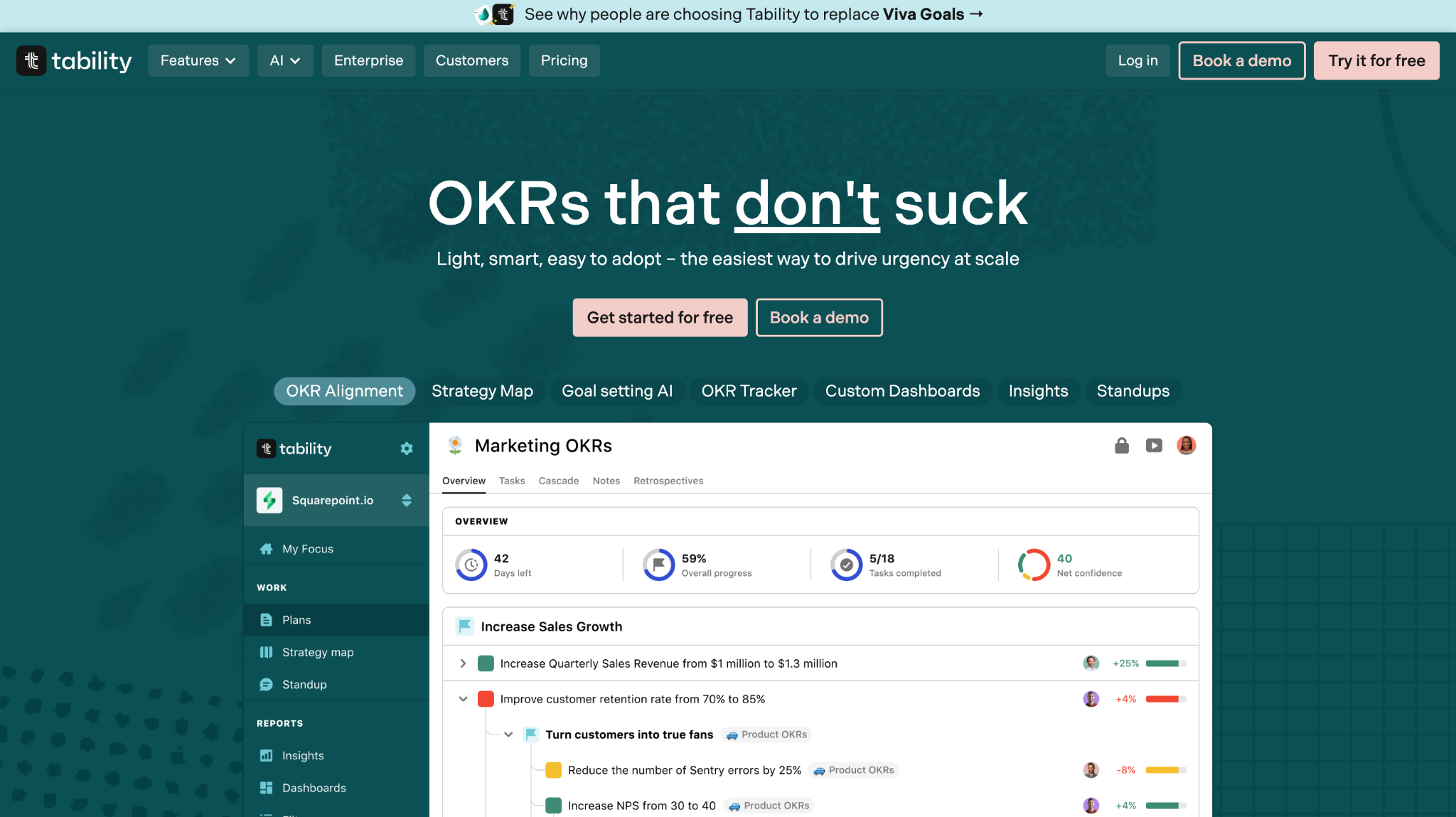
Tability is a simple goal-tracking platform focused on weekly check-ins for OKRs and goals. It acts as lightweight goal setting software for teams that do not want a heavy HR suite. The tool nudges people to update progress regularly.
Software Pros:
- Very simple check-in flow
- Good habit-building around updates
- Integrations with tools like Jira and ClickUp
Software Cons:
- Narrow feature set (goals and updates)
- Not a full performance management system
Tability Review:
What stood out to me is how much the product focuses on rhythm rather than just goal creation. I liked how the weekly prompts make it harder to “set and forget” objectives. For teams that want best goal-setting tools for dynamic teams without complex HR layers, Tability is an easy match.
Our Verdict
Rhythm-First Goal Tracker
Teamflect
Quick Overview:
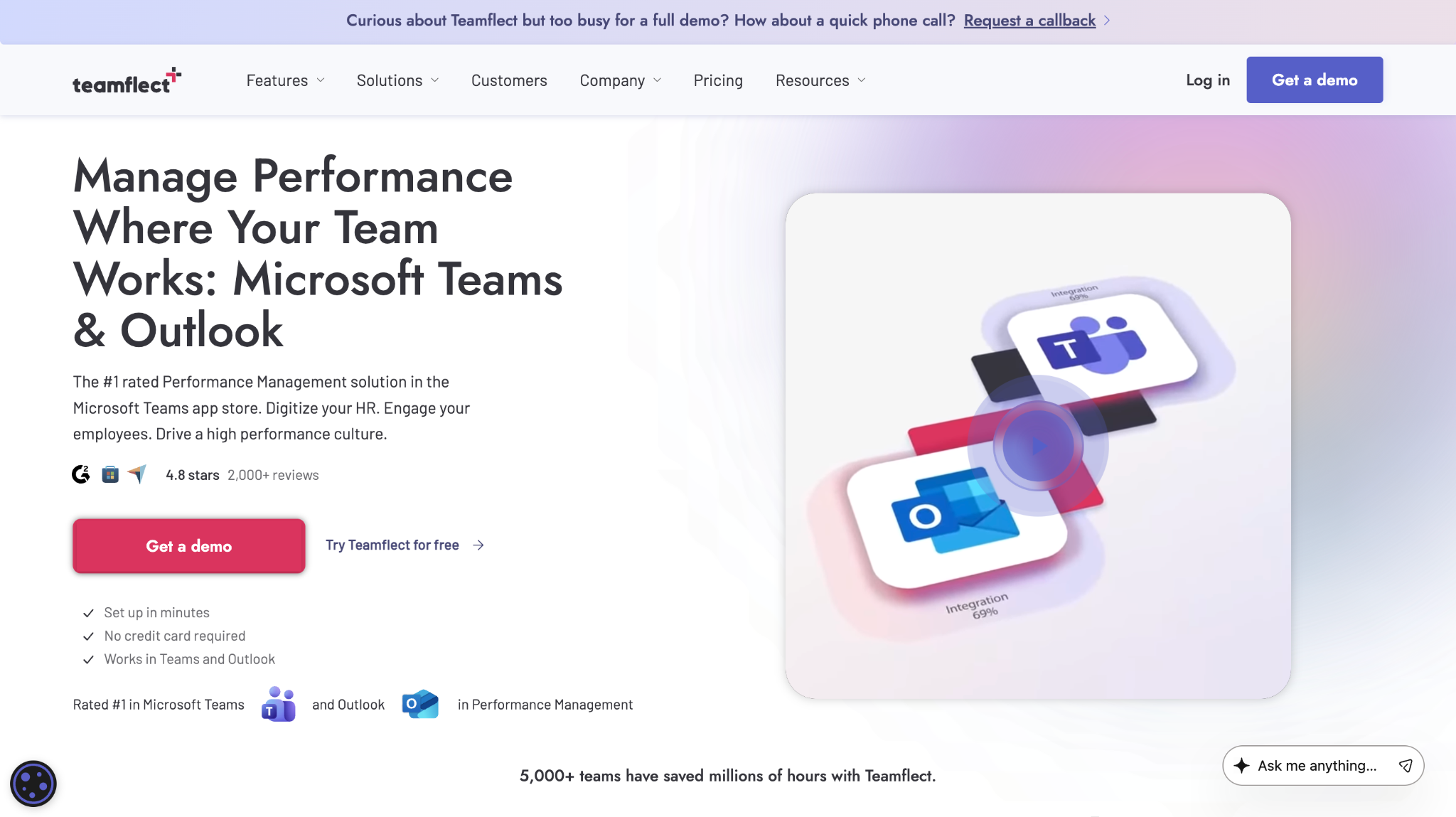
Teamflect is a performance and goal tool built for Microsoft Teams. It offers SMART goals, OKRs, feedback, and reviews directly inside Teams. Small groups can use it as goal setting software free for up to a set user limit.
Software Pros:
- Deep Microsoft Teams integration
- Supports both OKRs and traditional goals
- Free tier for small teams
Software Cons:
- Best fit only if you rely on Teams
- Interface depends on Teams layout
Teamflect Review:
I liked how naturally goals fit into daily chats and meetings with Teamflect. It turns employee goal setting software into something people see in their normal work channel instead of a separate site. For small and mid-size Teams-centric companies, it’s one of the best employee goal setting software options to try early.
Our Verdict
Teams-Native Goals And Feedback
Weekdone
Quick Overview:
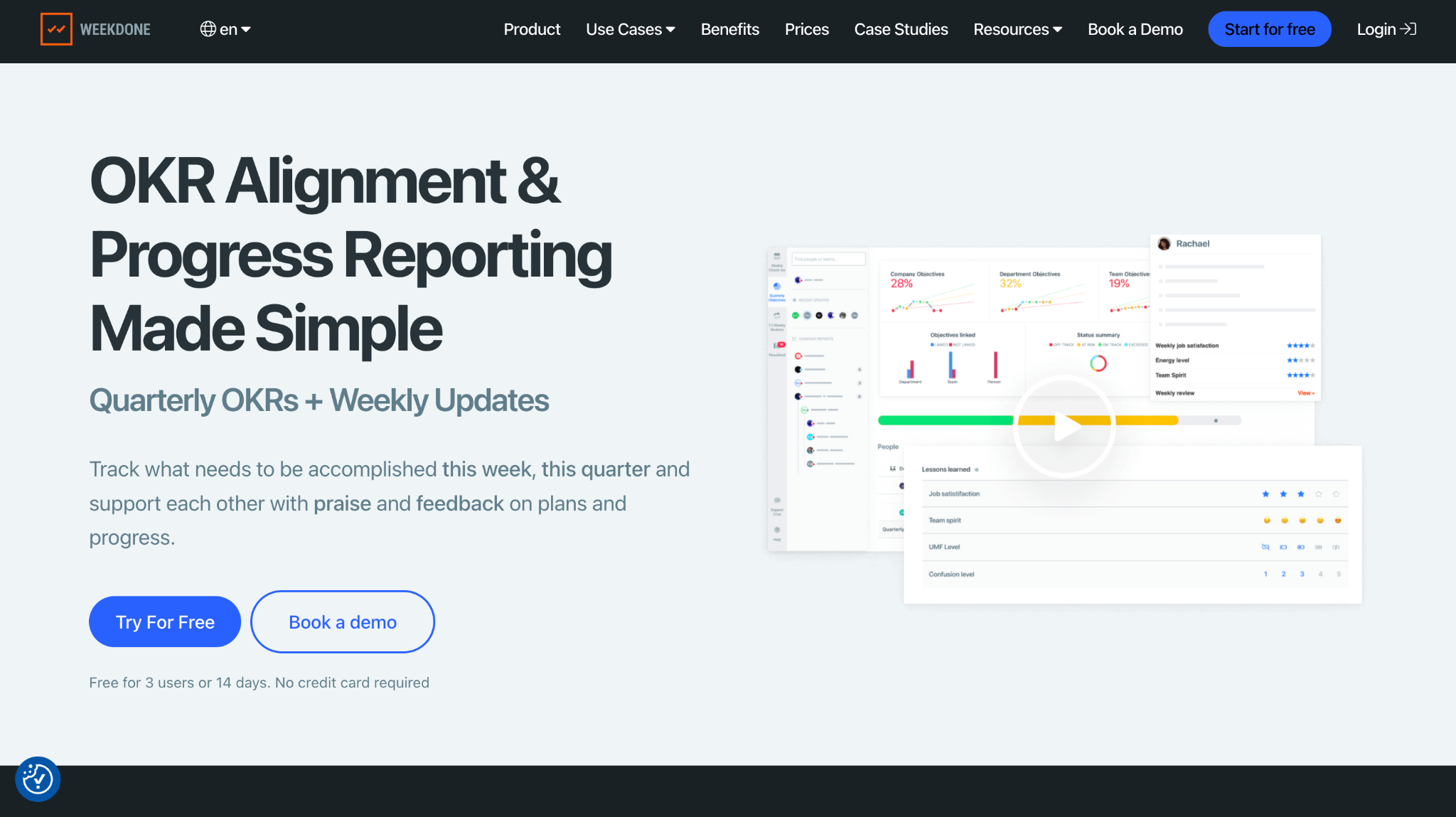
Weekdone is an OKR and weekly planning tool. It combines goals with status reports and priorities, acting as goal setting software for teams that want short cycles and simple updates. It also offers a free plan for small teams.
Software Pros:
- Weekly update rhythm baked in
- Simple OKR structure for small and mid-size teams
- Free plan for early use
Software Cons:
- Less suited for very large enterprises
- Narrower feature set than big HR suites
Weekdone Review:
I appreciated the way Weekdone pulls OKRs and weekly reports into one simple screen. It feels very focused on “what’s next” rather than only quarter-end summaries. For small teams looking for free goal setting software plus lightweight planning, it is a practical choice.
Our Verdict
OKRs Plus Weekly Focus
Workboard
Quick Overview:
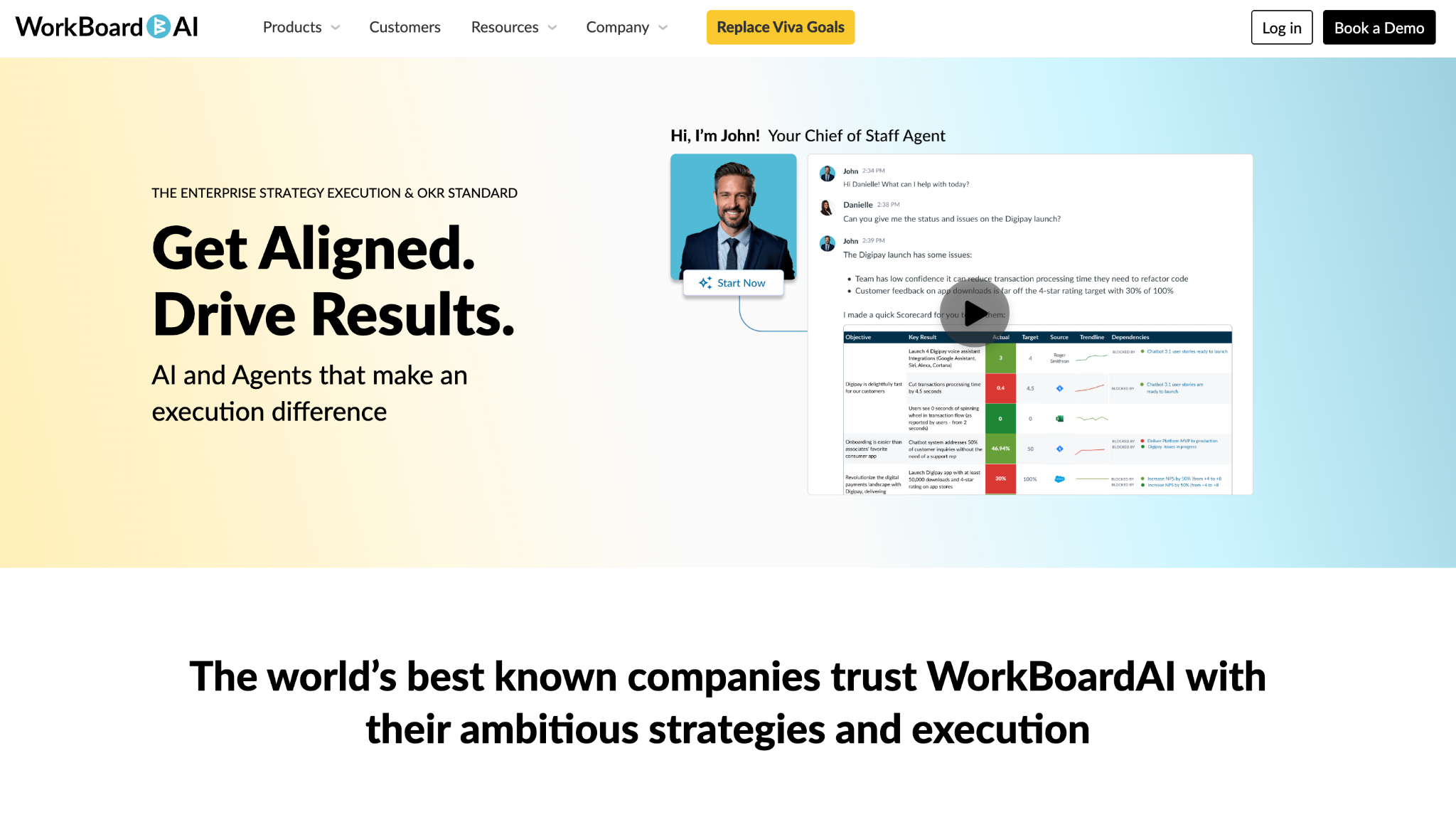
Workboard is a strategy execution and OKR platform used by large and fast-growing organizations. It acts as goal setting management software plus execution tracking, tying company objectives to team work and metrics.
Software Pros:
- Strong alignment and strategy views
- Good support for complex goal trees
- Rich reporting for leaders
Software Cons:
- Built mainly for mid-size and enterprise
- Setup and rollout take planning
Workboard Review:
I spent some time exploring how company objectives flow into team-level OKRs and workstreams. I liked that leaders can see both progress and risk in one place instead of many slides. For enterprises that want top goal setting software for execution, Workboard is a serious contender.
Our Verdict
Enterprise Strategy And OKR Engine
Workpath
Quick Overview:
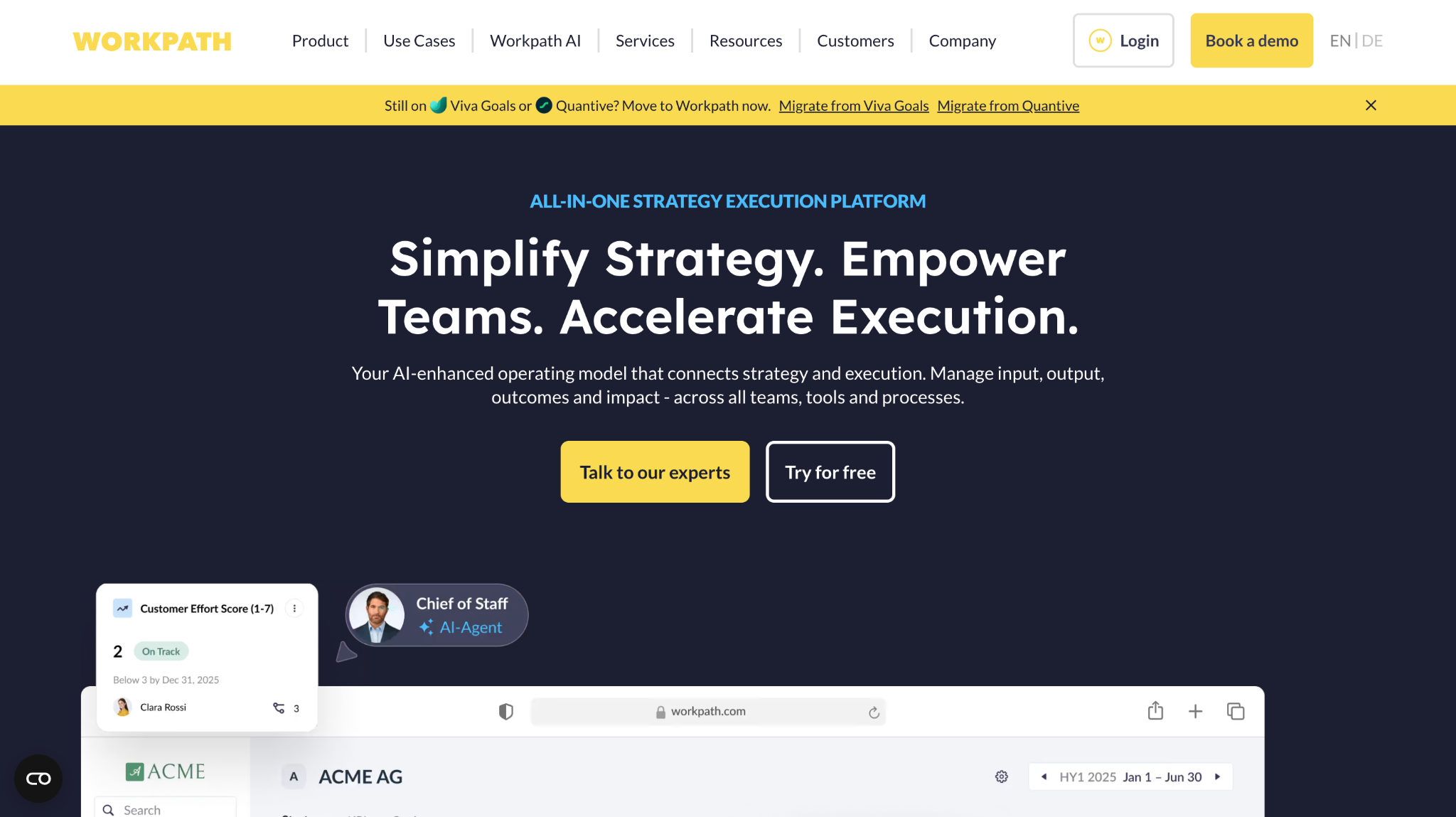
Workpath is an AI-supported strategy and OKR platform for enterprises. It is often described as a corporate goal setting solution that links OKRs, KPIs, and initiatives across large organizations. Many European enterprises use it for strategy execution.
Software Pros:
- Strong focus on alignment and steering
- OKRs, KPIs, and workflows in one place
- Built for large, complex companies
Software Cons:
- More than needed for small teams
- Requires clear sponsorship and rollout
Workpath Review:
I found the approach interesting because it treats OKRs as part of a full strategy execution loop, not just a goal list. The platform helps leaders steer resources, not only track numbers. In my opinion, Workpath suits companies that see OKRs as tools for performance management and change, not just a planning ritual.
Our Verdict
Strategy-First Enterprise Goal Platform
WorkTango
Quick Overview:
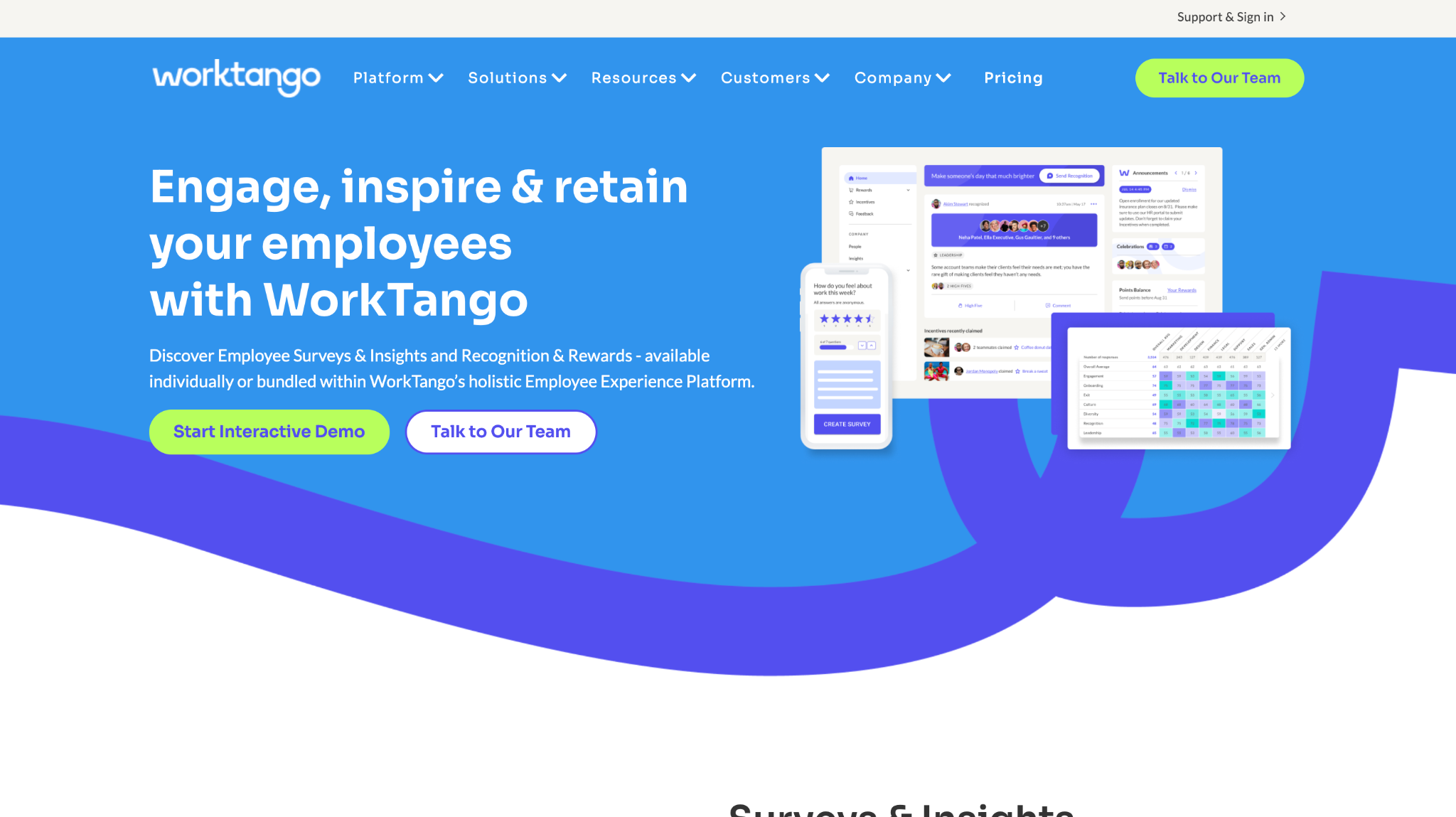
WorkTango is an employee experience platform that includes goals, feedback, surveys, and recognition. It can serve as employee goal setting software inside a wider experience stack, alongside engagement and recognition.
Software Pros:
- Goals connected to feedback and surveys
- Recognition and rewards in the same system
- Good fit for culture-focused programs
Software Cons:
- Goals are one piece of a larger suite
- May be more than needed if you want goals only
WorkTango Review:
I liked how naturally goals fit into the wider employee experience flow: surveys, feedback, and recognition are all close by. That mix makes it easier to keep goal progress visible while also paying attention to sentiment and appreciation. For teams asking both “how are we doing?” and “what are we aiming for?”, WorkTango is a useful employee goal setting platform.
Our Verdict
Goals Inside Experience Platform
Wrike
Quick Overview:
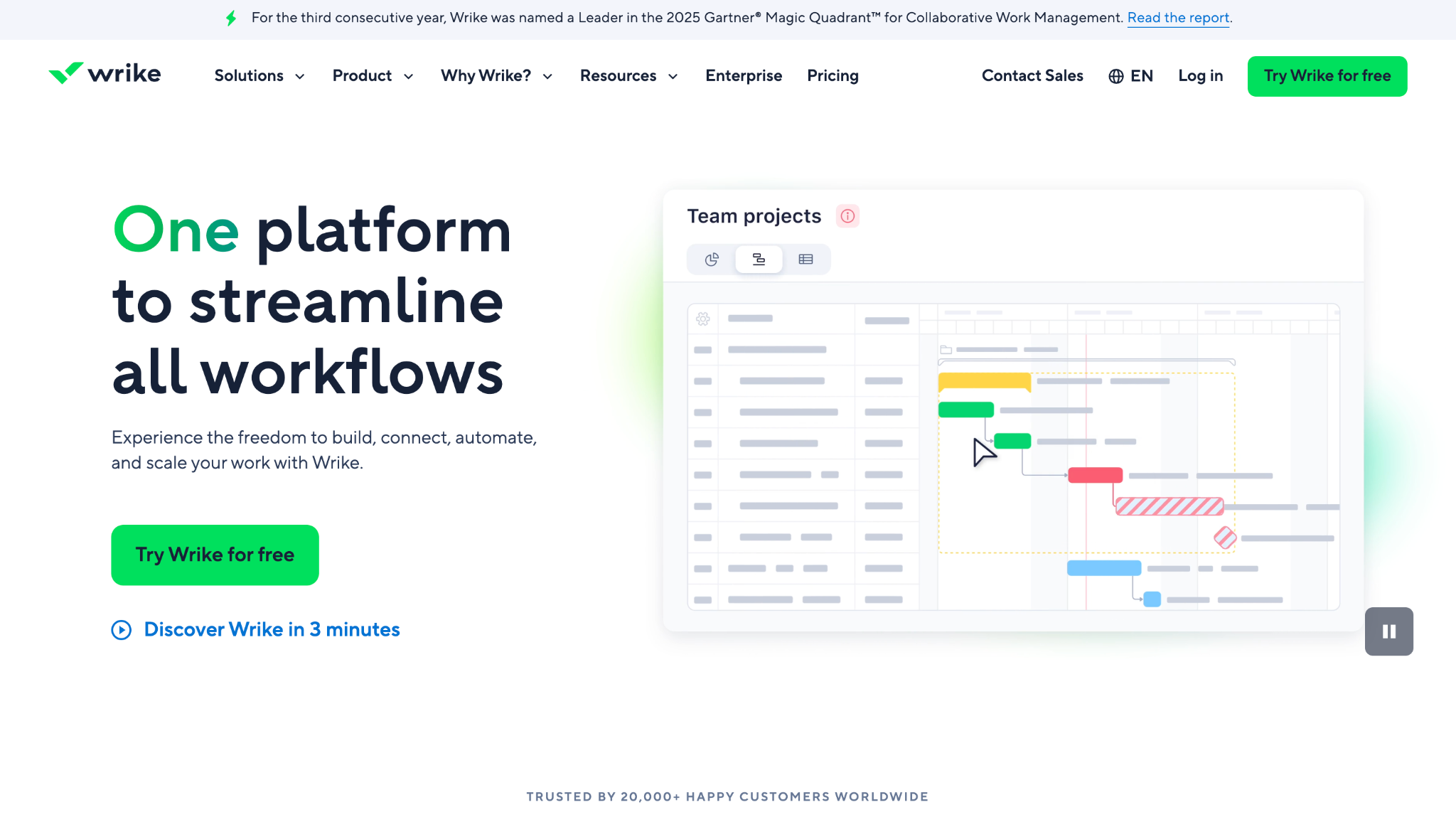
Wrike is a work management platform with goals, projects, and OKR-style tracking. Teams use it as goal setting software for teams that want to see objectives beside projects, tasks, and workload.
Software Pros:
- Goal and project views in one place
- Good for cross-team work and dependencies
- Solid reporting and dashboards
Software Cons:
- Interface can feel complex for new users
- Not a dedicated HR or performance system
Wrike Review:
I appreciated the way goals, projects, and workload views sit next to each other, which makes trade-offs easier to see. It is helpful when you want to match goals with realistic capacity, not just ambition. For operations-heavy teams, Wrike serves as one of the best goal setting tools that still stays close to execution.
Our Verdict
Operational Goals And Project Control
FAQs about Employee Goal Setting Software
How does goal setting software help teams stay aligned?
Employee goal setting software gives everyone a shared view of what matters, who owns each goal, and how progress is tracked. Instead of goals being hidden in slide decks or notes, they live in one place that teams revisit during check-ins and reviews. Research on group goal setting shows that clear, specific goals improve performance compared with vague ones, especially when progress is tracked and discussed regularly.
What features should goal setting software include in 2026?
In 2026, I’d look for clear goal hierarchies (company, team, individual), easy progress updates, and support for frameworks like OKRs or SMART goals. Good tools for goal setting should also offer dashboards, integrations with work tools, and reminders for check-ins so goals do not get forgotten. Some platforms also add links to feedback, reviews, or performance management solutions, which helps connect goals to real performance talks.
How is goal setting software different from task or project management tools?
Project tools track tasks, deadlines, and workloads. Goal setting software focuses on outcomes and results, and then links those outcomes to projects or tasks. A task might be “launch a campaign,” while a goal might be “increase qualified leads by 20% this quarter.” Many platforms in this list integrate with work management tools so goals and work stay in sync but are not the same thing.
Who typically uses goal setting software within an organization?
Goal setting software usually serves several groups: executives use it to set direction, managers use it to align team work, and employees use it to see their own goals and updates. HR, people ops, or strategy teams often act as admins for employee goal setting software, making sure the process is clear and that goals connect to reviews, feedback, and even recognition programs.

Yaryna is our lead writer with over 8 years of experience in crafting clear, compelling, and insightful content. Specializing in global employment and EOR solutions, she simplifies complex concepts to help businesses expand their remote teams with confidence. With a strong background working alongside diverse product and software teams, Yaryna brings a tech-savvy perspective to her writing, delivering both in-depth analysis and valuable insights.