10 platforms, judged on one question: how many people can they get into a room at the same time without a coordinator chasing calendars. The comparison table sorts them into three families first, because that split decides which of these is even relevant to you.
What Is the Best Interview Scheduling Software in 2026?
Interview scheduling software automates the coordination between candidates, recruiters, and interviewers. It reads availability across calendars, sends a self-scheduling link, and books the slot. Reminders fire, reschedules are handled, and the result writes back to your applicant tracking system.
The bar is straightforward. Good candidate interview scheduling software does all of that without a human in the middle.
The buyers are recruiting coordinators, talent acquisition leads, and HR managers. Anyone shopping for HR interview scheduling software is trying to recover hours that disappear into a calendar instead of judging candidates.
One distinction matters more than it sounds. GoodTime’s 2025 Hiring Insights Report is the vendor’s own research, not an independent study. It found that interview cancellations and reschedules were the top bottleneck slowing hiring down, and that 60% of organizations saw time-to-hire rise in 2024. Coordination, not evaluation, is where the days go.

INSIGHT: How much recruiter time does scheduling actually eat?

Coordination, not evaluation, stretches the hiring process, which is why a whole software category exists for the calendar alone.
- GoodTime’s 2025 Hiring Insights Report, published by a vendor in this category and labeled as such, names interview cancellations and reschedules the top bottleneck slowing hiring, and reports 60% of organizations seeing time-to-hire increase in 2024.
- The same report finds top-performing talent acquisition teams are 35% more likely to focus on decreasing time-to-schedule, which is the clearest signal of where the interview scheduling software market is aimed.
- SHRM benchmarking data puts the average cost per hire at nearly $4,700, so every week a requisition sits open waiting on a calendar carries a real number attached to it.
- In practice, the saving shows up as days removed between stages, not in the act of sending an invite.
So which one should you buy? The honest answer is that the category splits three ways, and the deciding factor is how many interviewers are in the room. General schedulers book one calendar against one candidate. Recruiting-specific coordinators solve multi-interviewer loops. Interviewing platforms include scheduling next to video or assessments. Picking the best interview scheduling software starts with counting the people you need in the meeting.
Below, I’ve reviewed 10 of the leading platforms in A to Z order. Each block leads with what the tool does for the calendar, not whatever else the vendor sells alongside it.
INSIGHT: General scheduler, recruiting coordinator, or interviewing platform?
The 10 tools here solve three different problems, and buying the wrong family is the usual reason scheduling software gets abandoned.
- General schedulers (Calendly): one calendar against one candidate, per-seat pricing, live in an afternoon, and no interviewer-pool logic at all.
- Recruiting-specific coordinators (Cronofy, GoodTime, ModernLoop, Rakuna, Yello): interviewer pools, load balancing, loop and panel logic, two-way applicant tracking sync, and mostly quote-based pricing.
- Interviewing platforms with scheduling built in (HackerRank, HireVue, Spark Hire, VidCruiter): the booking sits beside the interview itself, which suits teams that want one tool covering both.
Sources:
Interview Scheduling Platforms Compared
Read the type column before anything else. It tells you whether a tool can coordinate a four-person loop at all. That is what separates the best interview scheduling software from a booking link.
The remaining columns narrow the interview scheduling software options further. Whether candidates book themselves, which systems the tool writes back to, and how real users have scored it.
| Tool | Type | Panel and loop scheduling | Self-scheduling | ATS integrations | G2 rating |
|---|---|---|---|---|---|
| Calendly | General scheduler | No | Yes | Not stated | 4.7 (2,648) |
| Cronofy | Recruiting-specific coordinator | Yes with interviewer pools | Yes | ATS-agnostic, plus API | 4.7 (52) |
| GoodTime | Recruiting-specific coordinator | Yes with interviewer pools | Yes | Two-way sync with major ATSs | 4.4 (117) |
| HackerRank | Interviewing platform with scheduling | Basic multi-person | Yes | Major ATSs | 4.5 (560) |
| HireVue | Interviewing platform with scheduling | Basic multi-person | Yes | Enterprise ATS and HCM | 4.1 (255) |
| ModernLoop | Recruiting-specific coordinator | Yes with interviewer pools | Yes | Greenhouse, Lever, Ashby | 4.6 (72) |
| Rakuna | Recruiting-specific coordinator | Basic multi-person | Yes | Major ATSs | 4.5 (5) |
| Spark Hire | Interviewing platform with scheduling | Basic multi-person | Yes | Major ATSs | 4.7 (706) |
| VidCruiter | Interviewing platform with scheduling | Yes with interviewer pools | Yes | Major ATSs and HRIS | 4.8 (261) |
| Yello | Recruiting-specific coordinator | Yes with interviewer pools | Yes | Enterprise ATSs | 4.4 (33) |
Each score sits on that tool’s individual G2 product profile, pulled in August 2026.
What Automated Interview Scheduling Software Actually Does
Vendors describe the same five jobs in different words, so it helps to know what each one means when you see it. Interview scheduling software functionality breaks down into availability, self-scheduling, panel coordination, automation triggers, and reporting.
The first job is availability. The tool reads free and busy time across Google Calendar, Microsoft 365, Exchange, and Apple in real time. Online interview scheduling software that syncs with a delay will eventually double-book somebody.
The second is candidate self-scheduling. Instead of a recruiter proposing three slots by email, the candidate picks from real availability and books themselves. Rescheduling works the same way. This is where job interview scheduling software saves the most obvious time, because the back-and-forth simply stops happening.
The third job is the hard one: panel and loop coordination. Booking four interviewers across two time zones takes interviewer pools and rules about who is eligible for each stage. It also takes load balancing so the same senior engineer isn’t interviewing daily, and the ability to rebuild a loop when somebody drops out.
Fourth is automation. A stage change in the applicant tracking system triggers the booking, and reminders fire before the interview. No-show follow-ups go out without anyone having to remember to send them. Most applicant tracking systems and interviewing platforms already ship basic recruiting software interview scheduling like this.
The limit shows up with complex loops, which is why a separate category of dedicated coordinators exists. If your interviews involve one person and one candidate, you probably do not need one.
Fifth is reporting: time-to-schedule, interviewer load, reschedule rate, and no-show rate. Those figures only carry meaning next to your wider hiring data. They belong beside HR reporting and analytics tools, not in a scheduling dashboard nobody opens.
AI Interview Scheduling Software: What Is Real and What Is Marketing
This is the part of the category worth reading skeptically. Much of what gets sold as AI interview scheduling software is rules-based automation renamed when the term became fashionable. Telling the two apart changes what you should pay.
Genuinely model-driven features do exist. Matching interviewers against required skills and current load is a real prediction problem. So is flagging candidates likely to no-show, and parsing a natural-language request into a booking. Among the 10 here, GoodTime and ModernLoop document interviewer matching and load logic most explicitly. The best AI interview scheduling software claims to name the signal the model actually uses.
Rules-based automation is different, and it is not worse. Trigger-based booking on a stage change, round-robin distribution, reminder sequences, and template-driven invites all work reliably because somebody defined them. Vendors describing these as AI-powered interview scheduling software are relabeling, not inventing.
The practical test is to ask what the feature does when the data is unfamiliar. Automation follows the rule regardless; a model changes its answer. That same distinction runs through AI tools across HR, where the useful products are the ones wired into real operational data.
Best Interview Scheduling Software by Use Case
Four situations account for most of the buying I see here, and each rewards a different kind of tool. Names inside each group appear alphabetically and nothing more.
For High-Volume Hiring
GoodTime, HireVue, and Yello are built for programs running hundreds of interviews a week. At that scale, the constraint stops being the candidate and becomes the interviewer. Without fatigue rules and load balancing, the same twelve people carry every loop until they refuse. So what is the best high-volume interview scheduling software? Whichever one also handles event days, where dozens of interviews run in one room across a single afternoon.
For Technical Interviews
HackerRank and ModernLoop suit engineering hiring, where the booking has to find not just a free slot but the right interviewer. A live coding session needs somebody qualified to run it, and shadow flows let newer interviewers train without derailing the loop. Ask what the best software for technical interview scheduling is? What this really means: booking the assessment and the people together, rather than as two separate steps.
For SaaS and Startup Teams
Calendly, Cronofy, and ModernLoop cover the arc most growing companies actually travel. You start with a general scheduler because it costs little and works immediately, then move up when panels start breaking. Interview scheduling software for SaaS companies tends to get bought twice. Once early for convenience, and again when the first four-person loop takes three days to arrange.
For Mobile-First Candidates
Rakuna, Spark Hire, and VidCruiter all assume the candidate is on a phone. That means booking and rescheduling from a small screen without an account. It also means text confirmations rather than email alone, and portals that load on a weak connection. The best interview scheduling software for mobile matters most in hourly, campus, and field hiring, where a desktop is not part of the picture.
Interview Scheduling Software Pricing
Three pricing shapes cover this list. General schedulers sell per seat and publish the rate, so you can budget in a minute. Recruiting-specific coordinators quote per deployment, because the number tracks hiring volume and how many interviewers sit in the pool. Interviewing platforms fold scheduling into a wider license, which means it has no separate price and cannot be compared line by line.
| Tool | Pricing model | Free plan or trial | Starting price |
|---|---|---|---|
| Calendly | Per seat | Yes, free plan | $10 per seat/month |
| Cronofy | Per seat, usage-based | No | Custom pricing |
| GoodTime | Volume-based, quote | No | Custom pricing |
| HackerRank | Bundled into platform license | Trial available | Custom pricing |
| HireVue | Bundled into platform license | No | Custom pricing |
| ModernLoop | Volume-based, quote | No | Custom pricing |
| Rakuna | Quote-based | No | Custom pricing |
| Spark Hire | Bundled into platform license | No | Custom pricing |
| VidCruiter | Bundled into platform license | No | Custom pricing |
| Yello | Volume-based, quote | No | Custom pricing |
As pricing is subject to change, prices are listed as of August 2026.
INSIGHT: Why does scheduling software range from a few dollars a seat to five figures a year?
You are not paying for the booking. You are paying for the logic that picks which interviewer gets booked.
- 1 of the 10 publishes usable prices. Calendly runs from a free plan to $16 a seat each month, with an enterprise tier from $15,000 a year. The other nine quote or bundle scheduling into a wider license.
- Per seat: Calendly and Cronofy, the latter charging only for seats used in a month. Volume-based quotes: GoodTime, ModernLoop, Rakuna and Yello. Bundled into a platform license: HackerRank, HireVue, Spark Hire and VidCruiter.
- The crossover is predictable. Per-seat pricing suits teams booking single calls, volume pricing suits teams running loops, and companies switch when panels start breaking rather than at a headcount number.
How to Choose Interview Scheduling Software
I would count the loops before looking at a single product page. A team booking phone screens and a team booking four-person panels are shopping in different categories. That number settles which two-thirds of this list you can ignore.
Then ask whether the tool balances interviewer load or merely finds a free slot. Those sound similar and are not. Finding a slot is a calendar query. Spreading interviews fairly across a pool is what stops your best engineers quietly opting out of hiring.
Check that the applicant tracking sync runs in both directions. One-way sync means somebody retypes the outcome, which reintroduces exactly the manual step you are paying to remove.
Look at what the candidate sees, and try rescheduling as one. If changing a time requires emailing a recruiter, the tool has automated your side of the process and left theirs alone.
For distributed hiring, test time zones and calendar coverage together. A platform handling Google and Microsoft but not Exchange will fail on the one interviewer who matters, usually a senior person in a regulated market.
Think about what happens after the booking. Getting people into a room is coordination. Deciding whether the candidate can do the job is a separate step, and that is where pre-employment assessment tools belong in the stack.
Last, check what you already pay for. If your existing systems handle the loops you actually run, the cheapest scheduler on this page is the one already sitting inside your stack.
Top 10 Interview Scheduling Software Platforms for 2026
For these automated interview scheduling software reviews, I worked from each vendor’s documentation, pricing page, and G2 profile. I checked all of them in the same week. Where an efficiency figure carries no method, I left it out.
The mix runs from general schedulers like Calendly to enterprise coordinators like GoodTime and Yello, with interviewing platforms in between. Sorting the best interview scheduling software 2026 has produced means sorting by family before comparing any feature.
Every verdict below is written for one kind of team. Ranking top interview scheduling software 2026 has on offer works no other way.
I’m listing all providers in alphabetical order to keep this comparison neutral.
Calendly
Quick Overview
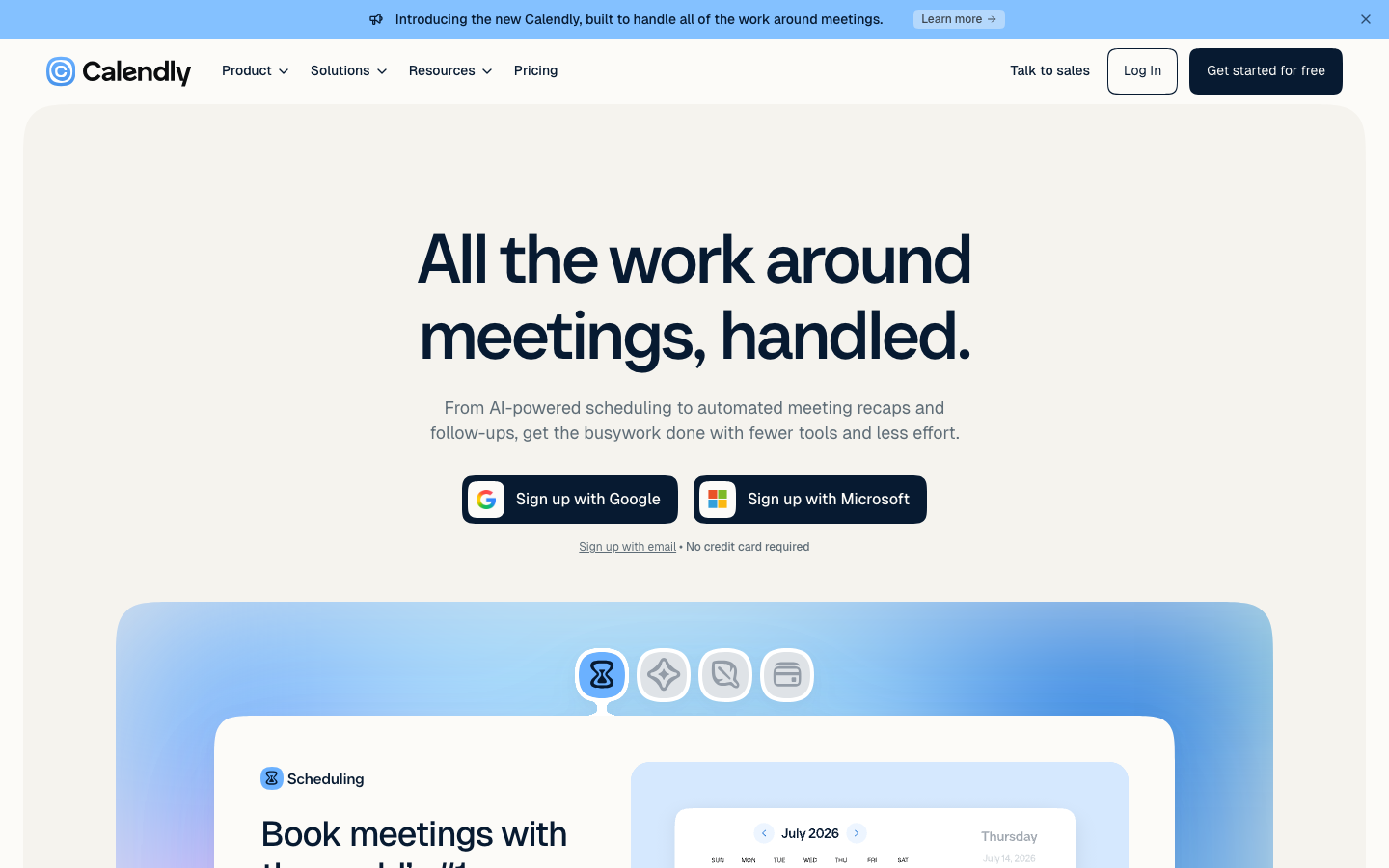
Calendly is the general scheduler most teams already own. It issues self-scheduling links, applies buffers and availability rules, distributes meetings by round robin on the Teams tier, and sends reminders automatically. Plans range from a free tier to $16 per seat per month.
Software Pros
- Self-scheduling links work immediately, with no configuration required
- Round-robin routing spreads intake calls across a group from the Teams tier up
- Published per-seat pricing, including a genuinely free plan
Software Cons
- No interviewer-pool logic, so it cannot build a four-person loop
- Round robin distributes meetings but does not balance interviewer workload
- Its G2 profile reflects general scheduling rather than recruiting use
Calendly Review
While reviewing Calendly, the honest question is whether it is enough, and for many teams it genuinely is. Booking phone screens and intake calls needs a link and a calendar, not orchestration.
Our Verdict
General Scheduler Most Teams Own
*As pricing is subject to change, we are listing prices as they stand in August 2026
Cronofy
Quick Overview
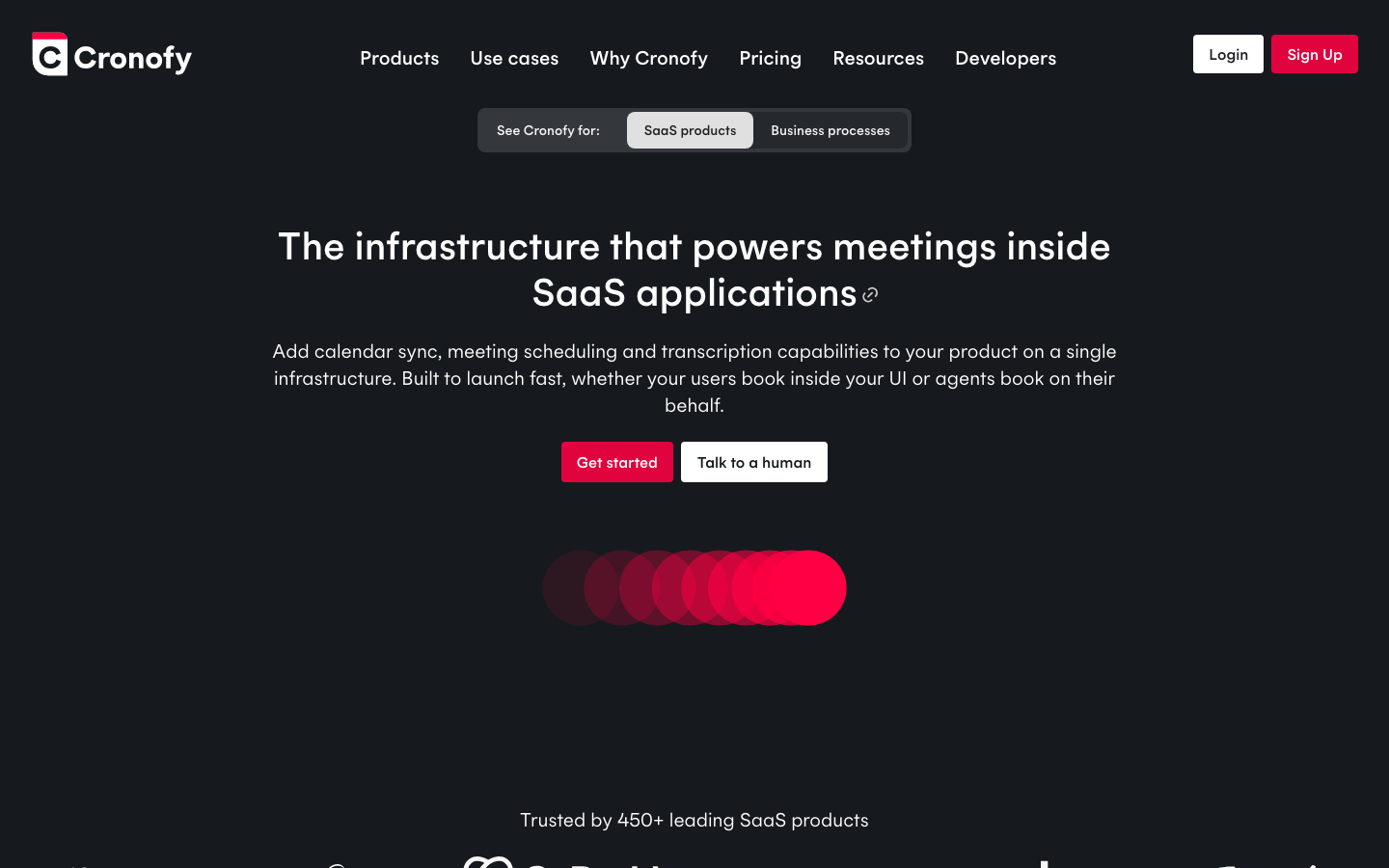
Cronofy is a recruiting-specific scheduler and calendar infrastructure. It reads real-time availability across Google, Microsoft 365, Exchange, and Apple, supports interviewer pools, multi-stage bookings and round-robin interviews, and stays applicant-tracking-agnostic. A calendar API sits alongside the turnkey scheduler.
Software Pros
- Real-time availability across every major calendar provider, not just the big two
- Interviewer pools and multi-stage bookings handle sequential interview rounds
- Seats are charged on actual monthly usage rather than on licenses purchased
Software Cons
- The API side needs engineering time, so it is not purely a buy-and-run product
- No published rate, which slows down budgeting
- A review base of 52 is small next to the general-purpose schedulers
Cronofy Review
What stood out to me is which calendars Cronofy actually reaches. Most tools quietly assume Google or Microsoft, which fails the moment a senior interviewer sits on Exchange.
Our Verdict
Scheduler And Calendar Infrastructure
GoodTime
Quick Overview
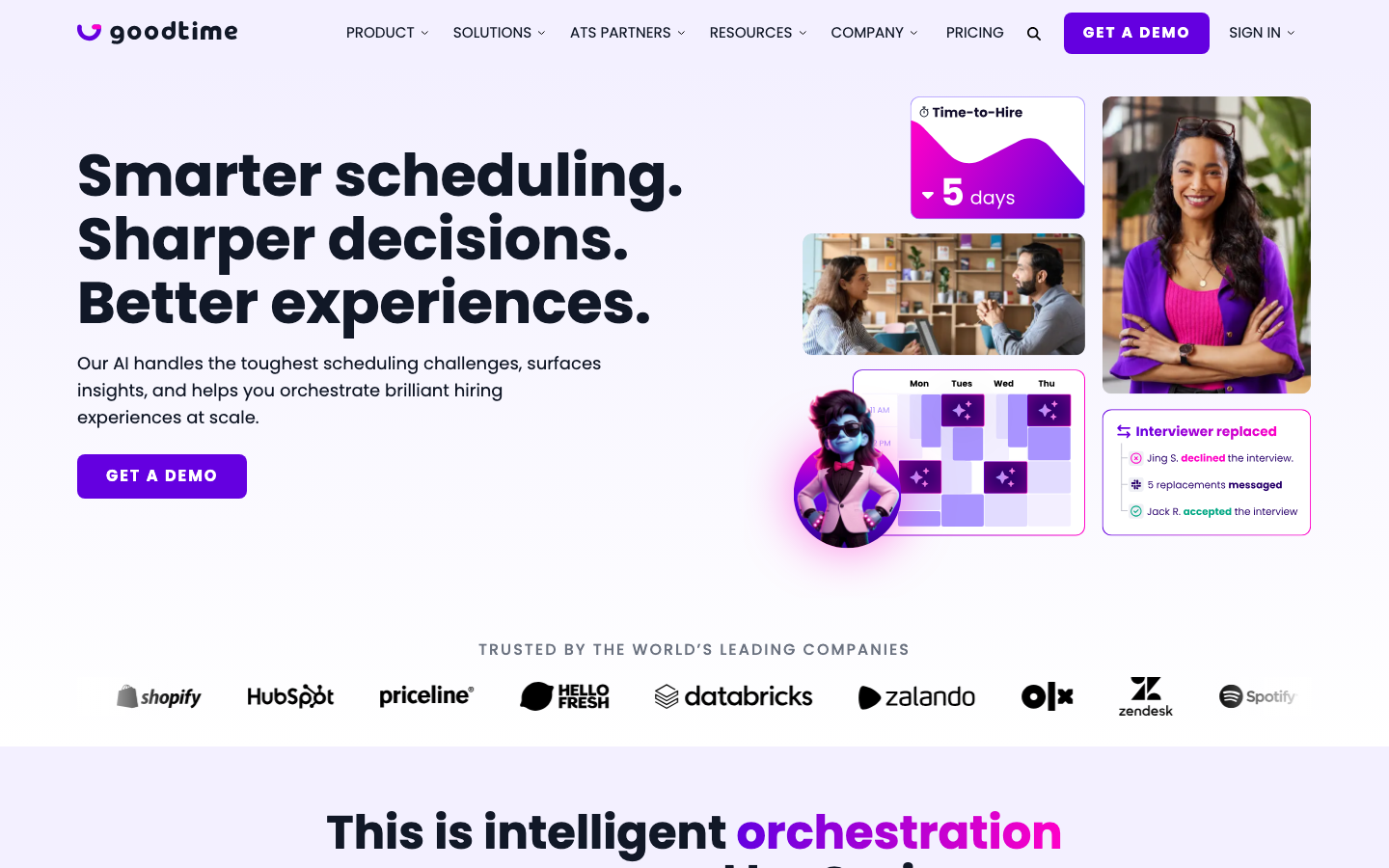
GoodTime is an enterprise interview coordinator built for complex loops. It handles multi-panel booking, balances interviewer load with fatigue rules, matches interviewers to required skills, and syncs both ways with major applicant tracking systems. The vendor also publishes an annual hiring insights report.
Software Pros
- Interviewer load balancing and fatigue rules protect the people doing the interviews
- Skills-based matching picks who should interview, not just who is free
- Two-way applicant tracking sync keeps stages and outcomes aligned automatically
Software Cons
- Quote-based pricing that tracks hiring volume, with no published entry point
- Built for panel complexity a small team will never encounter
- Rollout takes real configuration to define pools and rules properly
GoodTime Review
During my evaluation, the fatigue rules were the feature I did not expect to matter so much.
Our Verdict
Panel Orchestration At Scale
HackerRank
Quick Overview
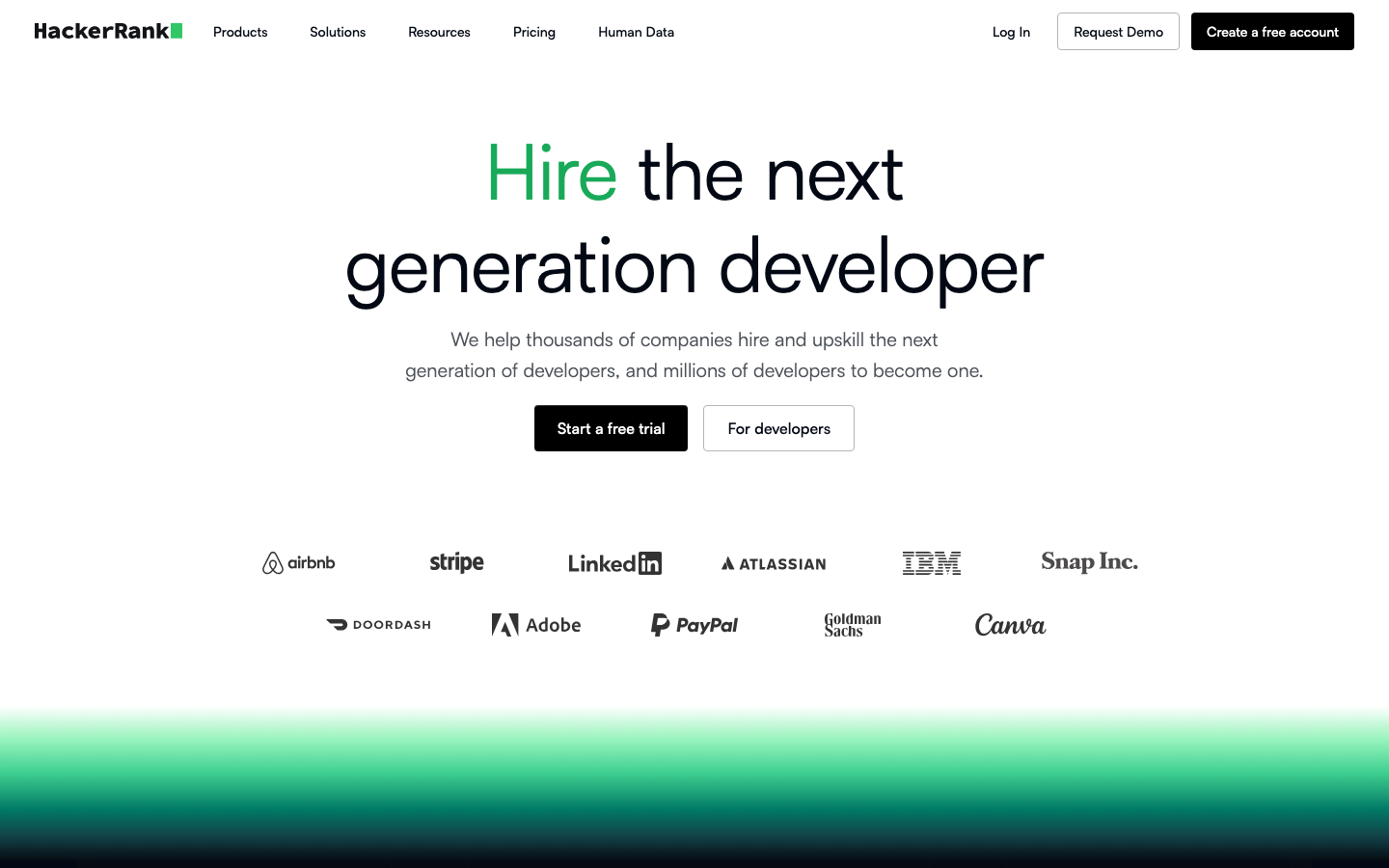
HackerRank is an interviewing platform where scheduling sits inside the technical workflow, so a coding interview is booked and run in the same place. Candidates self-schedule into live sessions, and the coordination happens beside the assessment rather than in a separate tool. Its G2 entry appears under the Developer Skills Platform listing.
Software Pros
- Booking and the live coding session live in one workflow, with no handoff
- Candidates self-schedule into technical sessions without recruiter involvement
- Integrates with major applicant tracking systems to keep stages current
Software Cons
- Booking is a component of an assessment product rather than a separate tool
- Panel logic is basic next to the dedicated coordinators here
- Little use outside technical hiring, where the assessment side is the draw
HackerRank Review
I spent time with the flow from invitation to live session, and the value is the absence of a gap. In most stacks, a technical loop takes one tool to book and another to run the interview. The seam between them is where sessions get lost.
Our Verdict
Technical Loops Booked Inline
HireVue
Quick Overview
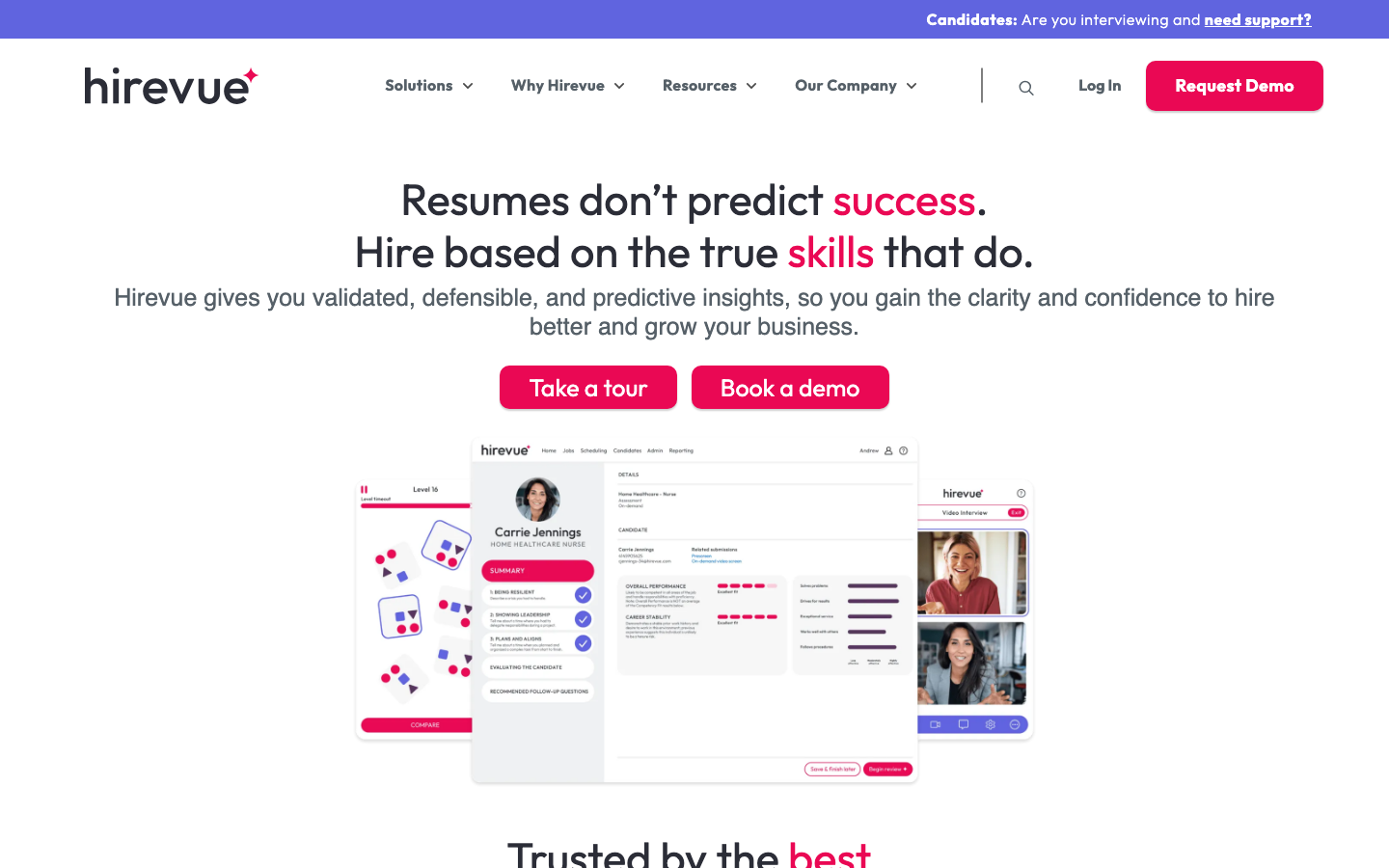
HireVue is an enterprise interviewing platform whose scheduling automation coordinates structured and on-demand interviews at volume. Candidates book themselves into slots, reminders and follow-ups run automatically, and the platform connects to enterprise applicant tracking and HCM systems.
Software Pros
- Scheduling automation is designed for the volumes enterprise programs actually run
- On-demand formats remove the calendar problem entirely for early stages
- Enterprise integrations keep candidate status current across systems
Software Cons
- Scheduling comes bundled into a wider license, so it carries no separate price
- Interviewer-pool logic is lighter than the dedicated coordinators offer
- Sized for enterprise programs rather than for a small coordination team
HireVue Review
The feature I kept coming back to is what happens before the calendar is involved at all. Moving an early stage to an on-demand format means there is nothing to coordinate, which is a more direct fix than optimizing the booking.
Our Verdict
Structured Interviews At Volume
ModernLoop
Quick Overview
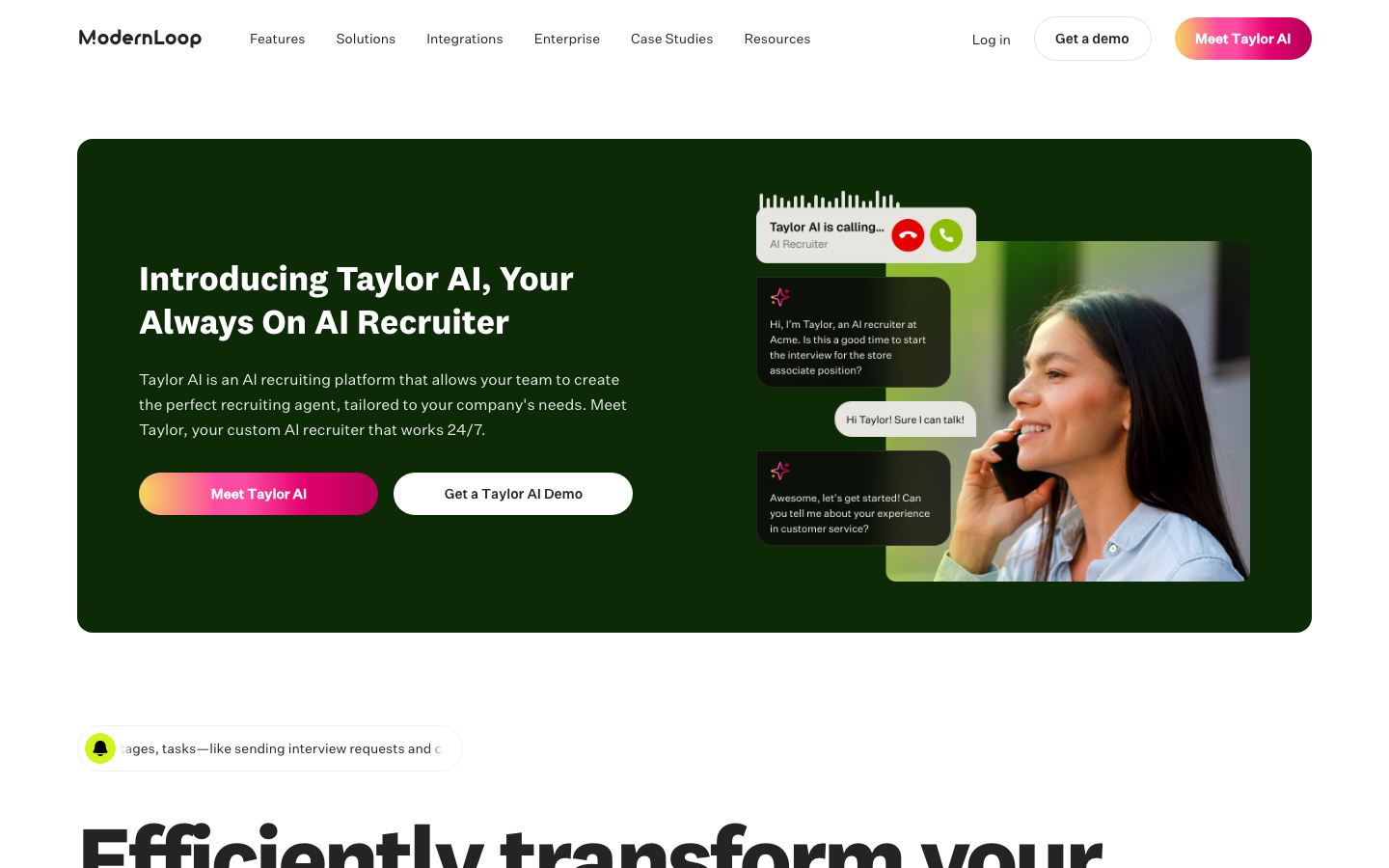
ModernLoop is a recruiting-specific coordinator built around zero-click scheduling. A stage change in the applicant tracking system triggers interviewer selection, collects candidate availability, and sends the invites, with no coordinator involved. Interviewer training and shadow flows sit alongside, aimed at structured mid-market teams.
Software Pros
- A stage change alone can produce a booked loop, with no manual trigger
- Shadow and training flows let new interviewers join loops without disrupting them
- Connects directly to the applicant tracking systems mid-market tech teams run
Software Cons
- Quote-based pricing, and third-party figures circulating for it are not vendor-stated
- The value assumes a structured process already exists to automate
- A review base of 72 is modest next to the larger platforms here
ModernLoop Review
While reviewing ModernLoop, the training flows struck me as the underrated part. Every company says it wants more interviewers trained, and almost none has a mechanism that makes shadowing happen.
Our Verdict
Zero-Click Loop Automation
Rakuna
Quick Overview
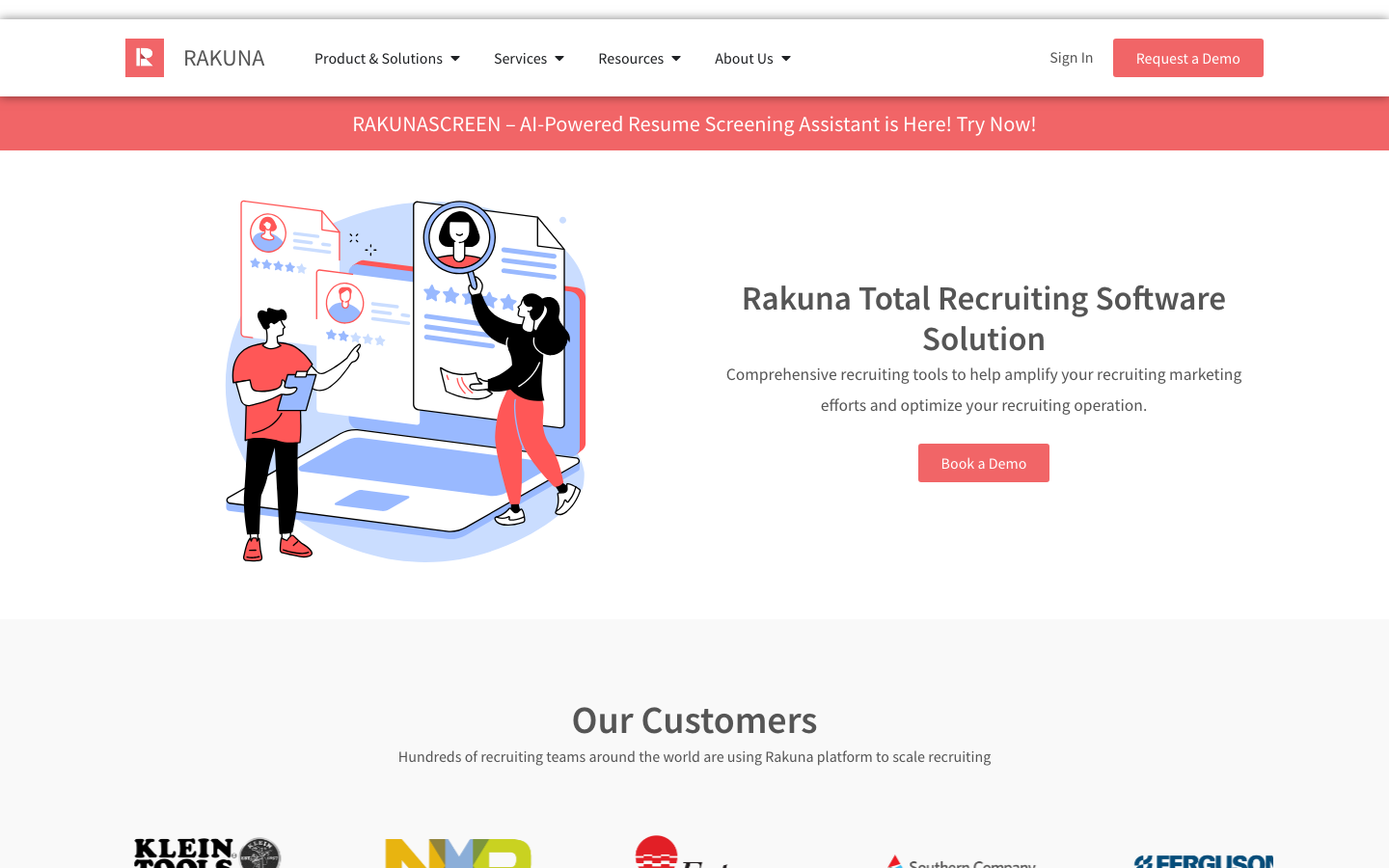
Rakuna is a recruiting-specific scheduler built around events and campus programs. Interviews there happen in blocks on a single day rather than spread across a week. The recruiting CRM and text recruiting sit alongside the scheduling tool, and candidates book and confirm from a phone.
Software Pros
- Event-day scheduling handles interviews booked in blocks, not one at a time
- Text-based confirmations reach candidates who do not check email during the day
- Mobile-first candidate flow suits campus and early-careers hiring
Software Cons
- Its G2 profile carried only 5 reviews, so third-party evidence is very thin
- Built for events and campus rather than continuous corporate hiring
- Nothing published on cost, so pricing arrives only through sales
Rakuna Review
What stood out to me about Rakuna is how specific its assumptions are.
Our Verdict
Campus And Event Scheduling
Spark Hire
Quick Overview
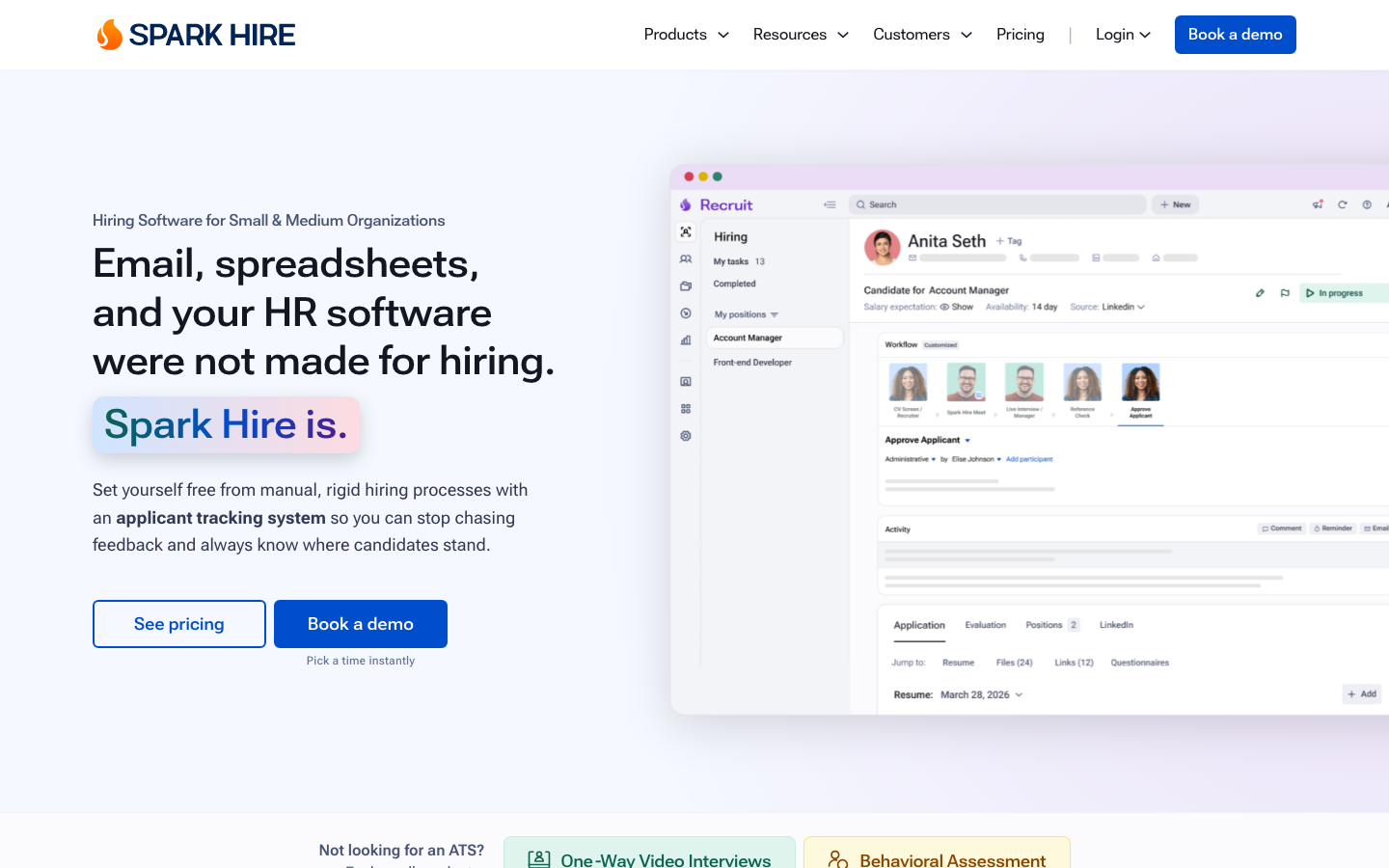
Spark Hire is a video interviewing platform that supports both one-way and live formats, aimed at small and mid-sized teams. Candidates self-schedule live interviews or record answers on their own time, and the platform integrates with common applicant tracking systems.
Software Pros
- Self-scheduling covers live interviews and one-way recordings from one place
- One-way formats remove the scheduling problem for early screening stages
- Sized and priced for small and mid-sized teams rather than enterprise programs
Software Cons
- Scheduling is bundled into the video platform, not sold or priced separately
- Panel coordination stays basic compared with the dedicated coordinators
- Teams wanting scheduling alone will be paying for interviewing they may not use
Spark Hire Review
During my evaluation of Spark Hire, the practical appeal was how little a small team has to run.
Our Verdict
Video Interviews With Booking
VidCruiter
Quick Overview
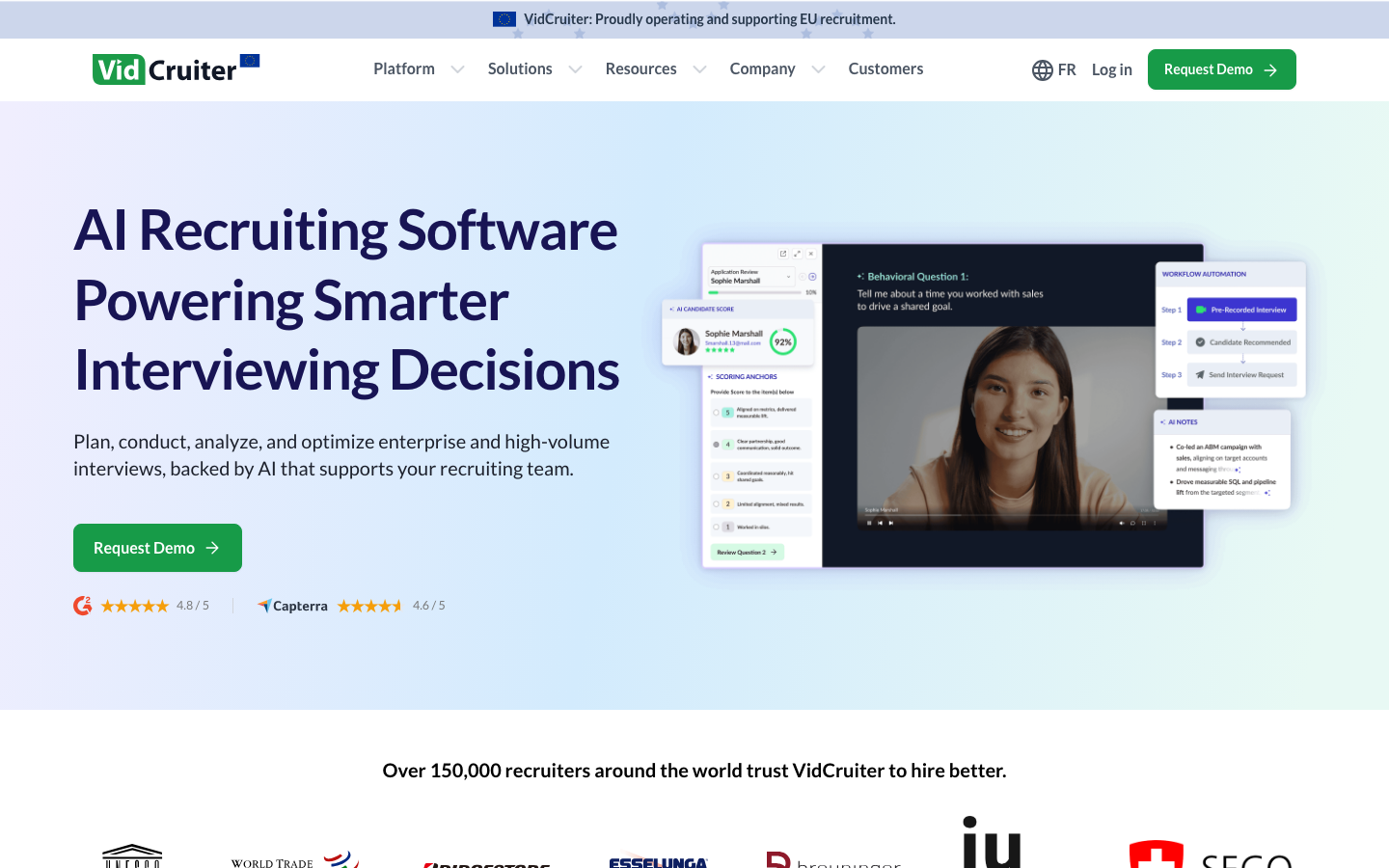
VidCruiter is a configurable recruitment platform where automated scheduling runs inside structured interview workflows. Live and pre-recorded formats, interviewer pools, and reference checking sit in one system. That is why it turns up in regulated and public sector hiring.
Software Pros
- Scheduling is configured as a step inside a defined interview workflow
- Interviewer pools support panels rather than only sequential bookings
- Structured process design suits organizations that must document every stage
Software Cons
- The amount you can configure turns onboarding into a scoped project
- Scheduling is bundled into the platform license with no separate price
- More process rigor than a fast-moving startup team will want
VidCruiter Review
I spent time with the workflow builder, and the strength is that scheduling is treated as a governed step rather than a convenience. In regulated hiring, showing that every candidate moved through identical stages in identical order matters as much as speed.
Our Verdict
Configurable Structured Workflows
Yello
Quick Overview
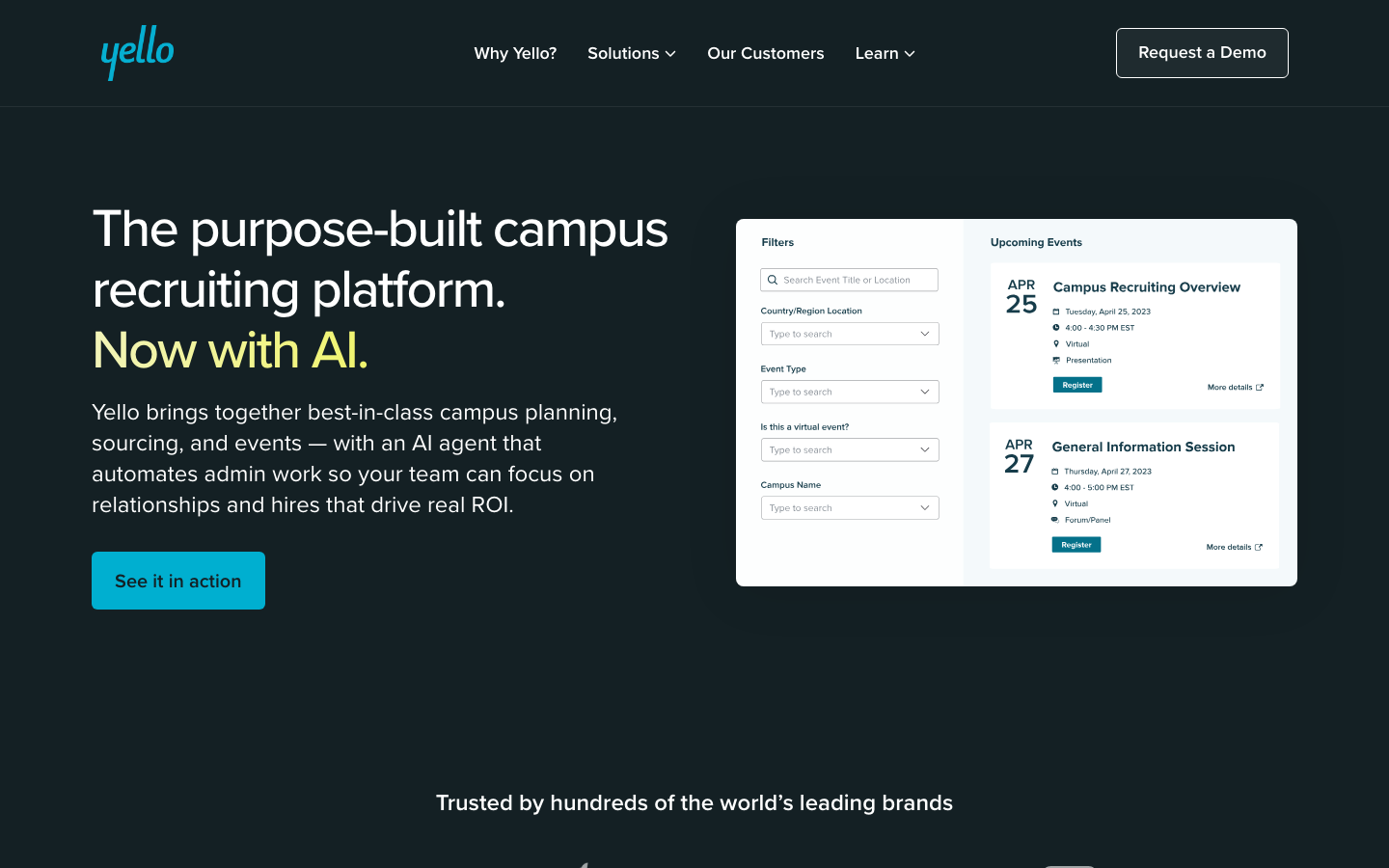
Yello is a recruiting operations platform whose scheduling and rescheduling tools were built for campus and high-volume enterprise programs, including event-day coordination. It handles interview loops across large interviewer groups and connects to enterprise applicant tracking systems.
Software Pros
- Event-day coordination handles interviews running in parallel across many rooms
- Rescheduling is treated as a first-class workflow rather than an exception
- Interviewer pools scale to the group sizes large campus programs require
Software Cons
- Its G2 profile carried 33 reviews, below the threshold worth leaning on
- Enterprise scope and quote-based pricing put it out of small-team reach
- Campus and high-volume focus means less value for steady corporate hiring
Yello Review
The feature I kept coming back to is how Yello handles cancellations.
Our Verdict
High-Volume Program Coordination
FAQs About Interview Scheduling Software
What Is the Best Interview Scheduling Software?
No single tool wins, because this category splits three ways. General schedulers book one person against one candidate, recruiting coordinators solve multi-interviewer loops, and interviewing platforms bundle booking beside video or assessments. Count the interviewers in a typical loop, then read the comparison table above and shortlist inside the family that matches that number.
How Does Interview Scheduling Software Work?
It syncs availability from everyone’s calendar, then sends the candidate a link showing only genuinely open slots. The candidate picks one, the meeting is created with the right people and the right conferencing details, and reminders go out automatically. The outcome writes back to your hiring system, so the record updates without anybody retyping it.
How Much Does Interview Scheduling Software Cost?
Three shapes exist. Per-seat tools publish rates, and among the 10 here, those run from a free plan to $16 a seat each month. An enterprise tier starts at $15,000 a year, as of August 2026. Dedicated coordinators are quoted based on hiring volume and interviewer count. Interviewing platforms are included in a wider license, so they are not priced separately.
When Should We Move From a General Scheduler to a Recruiting-Specific One?
The trigger is loops, not headcount. Once you regularly book three or more interviewers for one candidate, a general tool starts producing double-bookings and unbalanced workloads. The second signal is coordinator hours climbing per requisition.
Do These Tools Integrate With Our ATS?
Nearly all of them do, and the direction matters more than the logo list. One-way sync pushes a booking out but leaves somebody updating the candidate record by hand. Two-way sync lets a stage change trigger the booking and sends the outcome back automatically, so ask which fields move in which direction.
Can Scheduling Software Handle Panel Interviews Across Time Zones?
The recruiting-specific tools can, and it is largely what you pay them for. They hold interviewer pools with rules about who is eligible for each stage, and read working hours in local time. They also rebuild the sequence when one participant drops, which general schedulers leave to you.
Is AI Scheduling Different From Automated Scheduling?
Yes, though the marketing blurs it. Automation follows rules somebody wrote: this trigger books that meeting, this reminder fires two days out. Model-driven features make a judgment instead, choosing an interviewer from skills and workload or predicting a likely no-show. A good deal of what carries the AI label in this category is the first thing wearing the second’s name.

Helen is Anywherer’s Market Analyst & Content Researcher, with extensive experience in analyzing global employment markets and HR technology trends. She is skilled at turning complex market data into clear, well-researched insights that inform every piece of content. With a strong grasp of the EOR, PEO, and international hiring space, Helen plays a key role in keeping Anywherer’s research accurate, up to date, and genuinely useful for readers.