Co-employment means 2 businesses hold the employer role for the same workers: you and a Professional Employer Organization (PEO). The PEO reports wages under its own tax accounts, offers group benefit plans, and usually covers workers’ compensation. You keep day-to-day control: hiring, assignments, and schedules. Before choosing a PEO, Missouri owners usually want to know exactly which duties change hands. Data from the SBA Office of Advocacy shows 590,131 small businesses in the state. Their payrolls employ 1.1 million people, or 44.4% of Missouri employees.
Missouri’s payroll also has a city layer that many states lack. Kansas City and St. Louis each collect a 1% earnings tax, and St. Louis also charges employers an additional 0.5% payroll expense tax. The statewide minimum wage reached $15.00 an hour on January 1, 2026, according to the Department of Labor and Industrial Relations (DOLIR). Health insurance for a group of 12 also costs more per employee than coverage for a large company. Pooled plans exist to narrow that gap. Co-employers must register with the Secretary of State, which publishes the list of registered firms.
PEO and Payroll Services Missouri Businesses Rely On
Withholding starts with state income tax. Brackets for 2026 top out at 4.7%. Payroll staff size every deduction based on the worker’s MO W-4 and the Department of Revenue (DOR) calculation method. People who live in Kansas City or St. Louis, or who work inside either city, also owe the 1% earnings tax, and the employer withholds it. Kansas City voters renewed that tax on April 7, 2026, keeping it until 2031. St. Louis employers add the 0.5% payroll expense tax on wages earned in the city. Pay floors matter too: $15.00 an hour, $7.50 in cash for tipped staff, and time and a half past 40 weekly hours. Missouri payroll services earn their fee by matching each worker to the right city tax and keeping up with every rate change.

INSIGHT: What comes out of a Missouri paycheck in 2026?

Missouri withholds state income tax, and its 2 largest cities add an earnings tax. Home address and job site both change the deduction, so payroll has to track each one.
- State income tax: graduated rates up to 4.7%, unchanged from 2025 (Bloomberg Tax, November 2025).
- Earnings tax: 1% in Kansas City and St. Louis for residents and for nonresidents working in the city (EY Tax News, May 2026).
- Payroll expense tax: 0.5% of wages earned in St. Louis, paid by the employer (EY Tax News, May 2026).
- Wage floor: $15.00 per hour from January 1, 2026 (DOLIR, November 2026).
Unlike income tax, unemployment insurance (UI) comes out of the employer’s pocket only. The Division of Employment Security (DES) taxes the first $9,000 of each worker’s 2026 wages, down from $9,500 a year earlier. Most new employers pay 2.376% for their first 2 or 3 years, after which experience rates run from 0% to 6% before any surcharge. DES expects quarterly wage reports, DOR collects withholding on Form MO-941, and new hires are reported within 20 days. Federal FICA and FUTA apply on top. State law also shapes the co-employment contract itself. Section 285.730, RSMo, makes the PEO responsible for withholding, reporting, and remitting payroll and unemployment taxes for covered staff.
Injury coverage and benefits are where co-employment goes past a payroll vendor. Missouri requires workers’ compensation at 5 employees, or at 1 in construction, according to the Division of Workers’ Compensation. Count part-timers, relatives on the payroll, and corporate officers when checking the threshold. Section 285.740, RSMo, says the contract must assign the duty to buy coverage to either you or the PEO. Many co-employers carry it under their own program, so a small firm does not shop the market alone. For employers with fewer than 50 full-time-equivalent staff, offering medical, dental, vision, or a 401(k) is voluntary, and leave rules are up to the owner. That mix explains most of the demand for PEO services in Missouri.
INSIGHT: Which insurance and benefits does a Missouri employer have to provide?
Injury insurance is the one benefit-type duty the state imposes on most firms. Medical, leave, and retirement plans remain optional for small employers, though job seekers compare them, and pooling helps small team offer them.
- Workers’ comp: required at 5 employees, or 1 in construction (DOLIR, November 2026).
- UI: a 2026 wage base of $9,000 per worker, funded only by employers (EY Tax News, January 2026).
- Paid sick leave: the statewide mandate ended on August 28, 2025, under HB 567 (EY Tax News, August 2025).
- ACA: federal coverage rules begin at 50 full-time-equivalent staff (IRS, November 2026).
Owners here generally pick from 3 routes. The lightest is a payroll vendor that cuts checks and files returns. A co-employer bundles payroll with benefits, comp cover, and HR while you keep directing the work. Readers new to co-employment can start with my explainer on what a PEO is. Consulting-style HR support without co-employment brings advice and paperwork help but leaves payroll and insurance with you. Before signing with a PEO in Missouri, look the firm up on the Secretary of State’s list. Listings show legal entity names so that a brand may appear under a different name.
The IRS runs a separate Certified PEO (CPEO) program. Certification moves federal employment tax liability for covered wages to the provider alone. In this review, Alcott HR, Lever1, and SWBC PEO appear on that roster, as of August 7, 2026.
I reviewed 15 options for Missouri employers: local PEOs and HR firms, plus Midwest and national co-employers that accept clients in the state. Each block covers services, pricing approach, and the kind of business it fits. Weighing top PEO companies, Missouri-based or national, side by side? My roundup of the best PEO companies covers national names.
Top 15 Missouri PEO Providers and Payroll Services
When searching for the best PEO, Missouri owners save time by answering 3 questions first. First, do you need benefits and comp folded into payroll, a vendor that only runs pay, or HR guidance without shared employment? Second, how close is your headcount to the 5-employee comp threshold and the 50-employee ACA line? Third, would you rather work with a firm that has a Missouri office, or with a national co-employer and its larger benefits pool?
I measured PEO companies in Missouri against one checklist. A co-employer should hold a current Secretary of State registration and withhold state and city taxes correctly. I then compared each firm’s workers’ comp model, the depth of its medical and 401(k) plans, and whether any CPEO or ESAC claim holds up. Clear pricing counted as well.
A local firm and a national one can both serve a small team well. Choosing a Missouri PEO provider often comes down to a nearby office versus a bigger benefits pool. Ask every finalist how it handles both, and request written quotes on the same staff census.
All 15 providers appear in A-to-Z order. The sequence says nothing about quality, preference, or ranking.
Alcott HR
Provider Type:
Farmingdale, New York co-employer with IRS certification
Company Description:
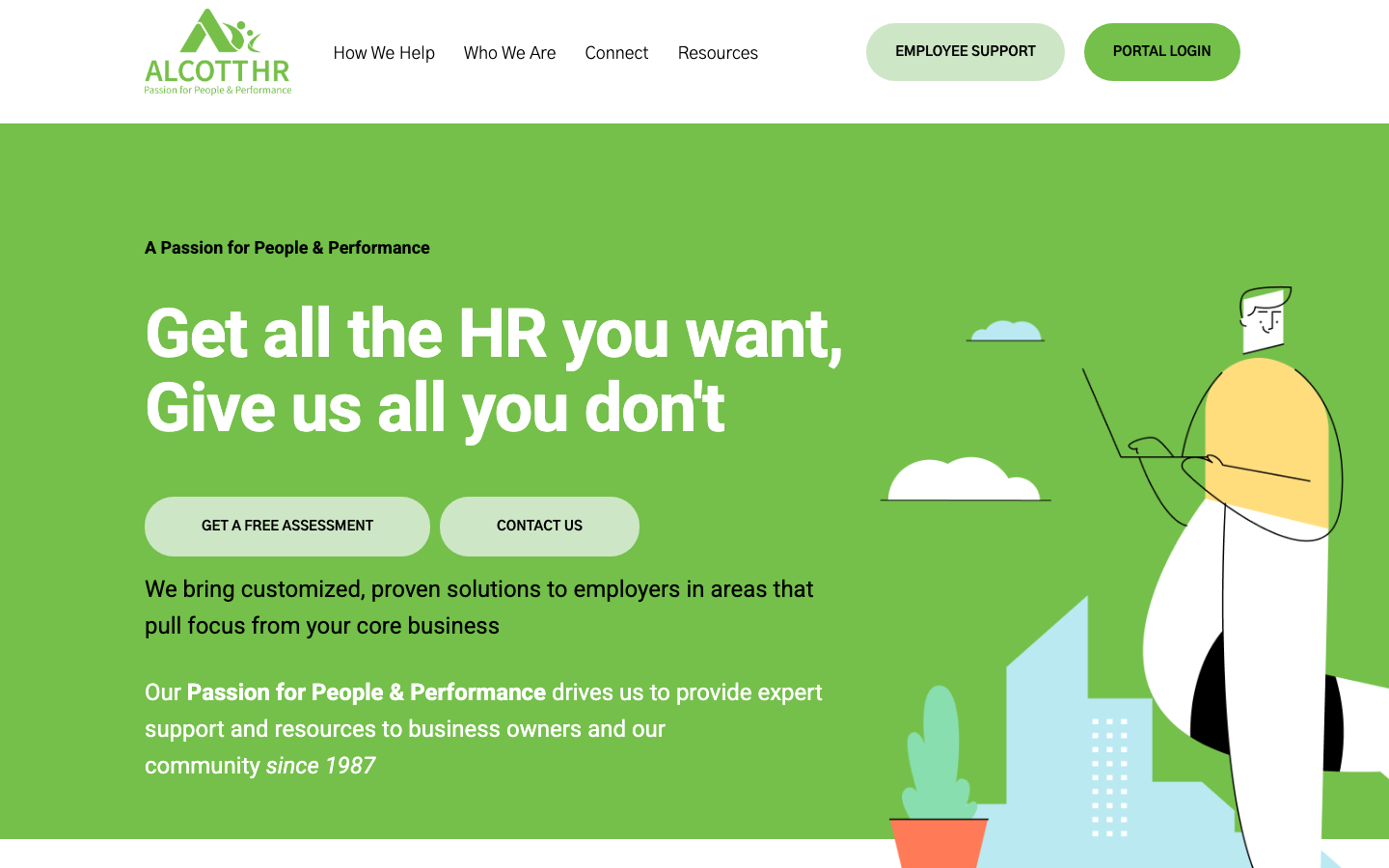
Alcott HR has supported business owners since 1987 and belongs to the Cameron Group of companies. Its PEO covers HR, payroll, finance, employee benefits, and risk management, but clients can also buy single services. Alcott HR Group LLC appears on the IRS list of Certified PEOs.
Key Specialty Area:
Certified PEO that also sells HR services separately
Service Cost:
Quote after a free business and HR assessment
Top Advantages:
- IRS certification for Alcott HR Group LLC, dated August 7, 2026
- Services available one at a time, not all or nothing
- Payroll, HR, and CPA-certified specialists on its team
Scope of Services:
- Payroll, COBRA, W-2, and quarterly 940/941 filings
- Medical, dental, vision, disability, and 401(k) plans
- Handbooks, onboarding, terminations and leave management
Our Verdict
A Kansas City office that wants a certified co-employer, but only for part of its HR work, should ask Alcott for an assessment.
Avitus Group

Provider Type:
National PEO with accounting and IT services
Company Description:
Avitus Group pairs a co-employment program with accounting, tax preparation, IT, and marketing help for small and mid-sized firms. Under its agreement, it runs payroll and tax filings, handles comp claims, keeps personnel records, and administers benefits. The owner keeps managing daily work.
Key Specialty Area:
PEO coverage bundled with bookkeeping and tax help
Service Cost:
Consultation first, followed by a tailored proposal
Top Advantages:
- Accounting and tax preparation from the same team
- Comp claims and personnel files handled under co-employment
- Recruiting help, from resume screening to first interviews
Scope of Services:
- Payroll, payroll tax, and benefits administration
- HR, safety, and risk management
- Bookkeeping, tax planning, IT and marketing add-ons
Our Verdict
Owners who want their books, taxes, and payroll handled by one outside team will find that combination at Avitus.
Connectify HR

Provider Type:
Midwest PEO headquartered in Des Moines, Iowa
Company Description:
Connectify HR was founded in Des Moines by PEO professionals who had worked together at Aureon HR. It provides HR technology, payroll and payroll taxes, workers’ comp insurance, employee benefits, retirement plans, and compliance guidance. The company cites 120+ combined years of PEO and HR experience.
Key Specialty Area:
Midwest co-employer with a free health cost comparison
Service Cost:
Quote, with a free health insurance cost comparison
Top Advantages:
- Free side-by-side review of your current health premiums
- Leadership team drawn from a large Midwest PEO
- HR software for onboarding and employee records
Scope of Services:
- Pay runs with payroll tax deposits and returns
- Workers’ comp insurance and risk management
- Health benefits and retirement plan offerings
Our Verdict
Northern Missouri employers who already know Iowa business networks may like a Midwest co-employer with a short drive to its office.
Employers Resource
Provider Type:
National PEO with its corporate office in Boise, Idaho
Company Description:
Employers Resource was founded in 1985 and runs its corporate office from Boise. It says it has been licensed in all 50 states for more than 30 years. Its co-employment package for small and medium-sized firms covers payroll and tax, HR and compliance, benefits, safety, and workers’ comp.
Key Specialty Area:
Safety rebates and claims help from a 1985 PEO
Service Cost:
Custom quote requested through its site
Top Advantages:
- Field safety team and cash safety rebates, per the company
- Professional claims management after workplace injuries
- Help with ACA questions once you pass 50 employees
Scope of Services:
- Pay processing with state and federal tax returns
- HR guidance and compliance support
- Employee benefits, safety programs and workers’ comp
Our Verdict
Trades and service companies whose comp costs depend on safety records should look at Employers Resource’s rebate model.
HR One Source
Provider Type:
Lee’s Summit HR and co-employment provider
Company Description:
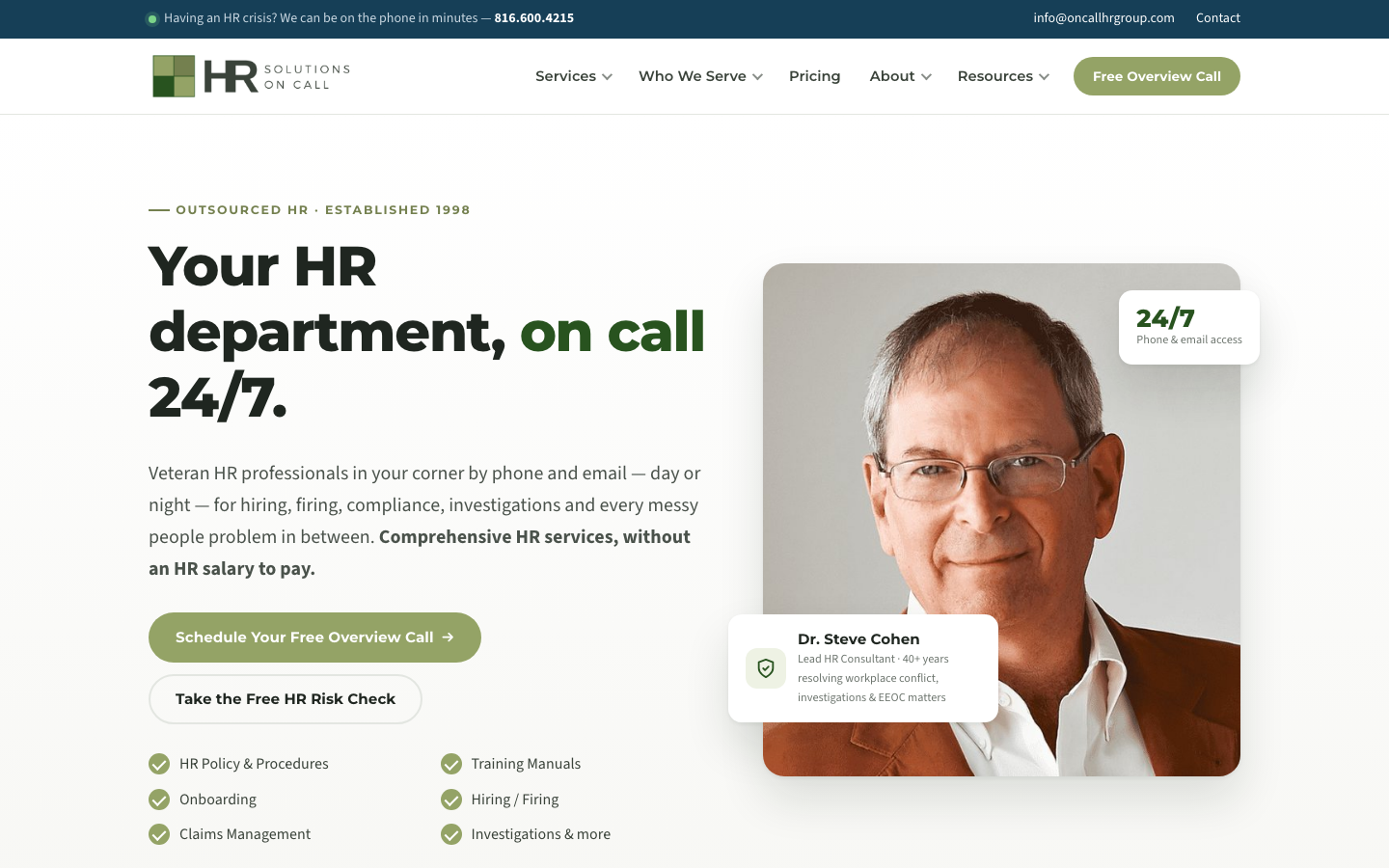
HR One Source is the staffing and co-employment arm of HR Solutions On-Call, a Lee’s Summit firm established in 1998. Its co-employment option gives clients access to its benefits programs, comp rates, payroll systems, and HRIS, along with employee leasing, temp-to-hire, and recruiting.
Key Specialty Area:
On-call HR experts plus a co-employment option
Service Cost:
24/7 HR support at $499 a month for up to 10 employees; remote HR manager from $1,500 a month; co-employment by quote
Top Advantages:
- HR professionals reachable by phone and email around the clock
- Employee leasing, with hiring risk carried by the firm
- Help with investigations, terminations, and EEOC claims
Scope of Services:
- Co-employment with payroll, benefits, and workers’ comp
- Temp-to-hire, recruiting, and executive search
- Policy manuals, training, and HR compliance reviews
Our Verdict
Eastern Jackson County firms that want an HR expert on call before trouble starts should start with HR One Source.
*As pricing is subject to change, we are listing prices as they stand in November 2026
Lever1
Provider Type:
Kansas City co-employer, now a Helpside company
Company Description:
Lever1 describes itself as a Kansas City-based PEO and part of Helpside, with offices in Overland Park, Kansas, and downtown St. Louis. Small and mid-sized clients get HR, payroll, benefit plans, and comp coverage from one team. Lever1, LLC appears on the IRS list of Certified PEOs.
Key Specialty Area:
IRS-certified co-employer with 2 metro offices
Service Cost:
Quote through its contact page
Top Advantages:
- Same local team, now on Helpside’s employer platform
- Recruiting and background checks next to payroll
- IRS certification listed for Lever1, LLC
Scope of Services:
- Payroll, W-2 processing, and time tracking
- Health, dental, vision, 401(k) and life plans
- Workers’ comp plus FLSA and OSHA compliance help
Our Verdict
Companies with staff on both sides of State Line Road can keep one certified co-employer for Missouri and Kansas.
Opes Companies
Provider Type:
North Kansas City HR outsourcing firm with a PEO tier
Company Description:
Opes Co. is based in North Kansas City, and its management team cites 40+ years of entrepreneurial and HR experience. Clients choose business process outsourcing, administrative services outsourcing (ASO), HR consulting, or a full PEO with large-group benefits and comp coverage.
Key Specialty Area:
4 service tiers from payroll support to full PEO
Service Cost:
Quote-based, with clear pricing promised by the company
Top Advantages:
- A dedicated HR contact who can visit on site
- Room to move up from payroll support to co-employment
- ProSoftware platform for payroll, time and onboarding
Scope of Services:
- Payroll, benefits administration and time tracking
- Big-group medical, dental, vision and retirement access
- HR audits, handbooks and manager training
Our Verdict
Fast-growing Northland businesses that are not ready for co-employment yet can start smaller and switch later.
Payday HR

Provider Type:
Pensacola, Florida PEO serving Missouri clients
Company Description:
Payday HR is based in Pensacola and describes itself as a full-service HR, safety, and leadership development platform. Its packages are sized for small (5-49), medium (50-499), and large (500+) employers. They cover benefits, HR management, payroll administration, workers’ comp, and safety and risk.
Key Specialty Area:
Co-employment plans grouped by headcount band
Service Cost:
Quote; its pricing page explains PEO fees without listing a rate
Top Advantages:
- Separate offers for 5-49, 50-499, and 500+ employees
- Managed care approach to workers’ comp claims
- On-site safety audits from its risk management team
Scope of Services:
- Benefits and HR management
- Payroll administration and tax handling
- Workers’ comp, safety and risk services
Our Verdict
Manufacturers and contractors that want safety audits built into their co-employment deal should get a Payday quote.
Payroll Plus Global
Provider Type:
Lee’s Summit PEO for small and mid-sized firms
Company Description:
Payroll Plus Global is a Lee’s Summit PEO that builds custom HR, benefits, payroll, comp, and risk programs for small and medium-sized businesses. Its site says support staff answers the phone 24/7. It also says partner carriers offer clients insurance discounts that small firms rarely see.
Key Specialty Area:
Local co-employer with phone support at all hours
Service Cost:
Quote prepared after you send the contact form
Top Advantages:
- Phone help for owners and staff at any hour
- Insurance discounts through partner carriers, per the firm
- Portals for managers and for employees
Scope of Services:
- HR and compliance management
- Payroll processing with tax deposits and filings
- Benefit plans plus injury coverage for staff
Our Verdict
Kansas City-area owners who want a nearby co-employer that answers late-evening calls should talk to Payroll Plus Global.
Simploy
Provider Type:
St. Louis PEO operating since 2004
Company Description:
Simploy has served St. Louis employers since 2004 and now works with hundreds of small businesses and thousands of employees in almost every state, per its site. Its co-employment package bundles HR, payroll, benefits administration, and workers’ comp under one contract.
Key Specialty Area:
Local St. Louis PEO with one specialist per client
Service Cost:
Quote after a free consultation
Top Advantages:
- A local team picks up the phone, the company says
- Dedicated specialist who learns how your business runs
- Online calculator for estimating PEO savings
Scope of Services:
- Payroll runs plus state and federal tax filings
- Plan enrollment, benefits upkeep, and HR advice
- Comp coverage plus an online HR system
Our Verdict
St. Louis owners comparing every top Missouri PEO should include Simploy, since its whole team works in the region.
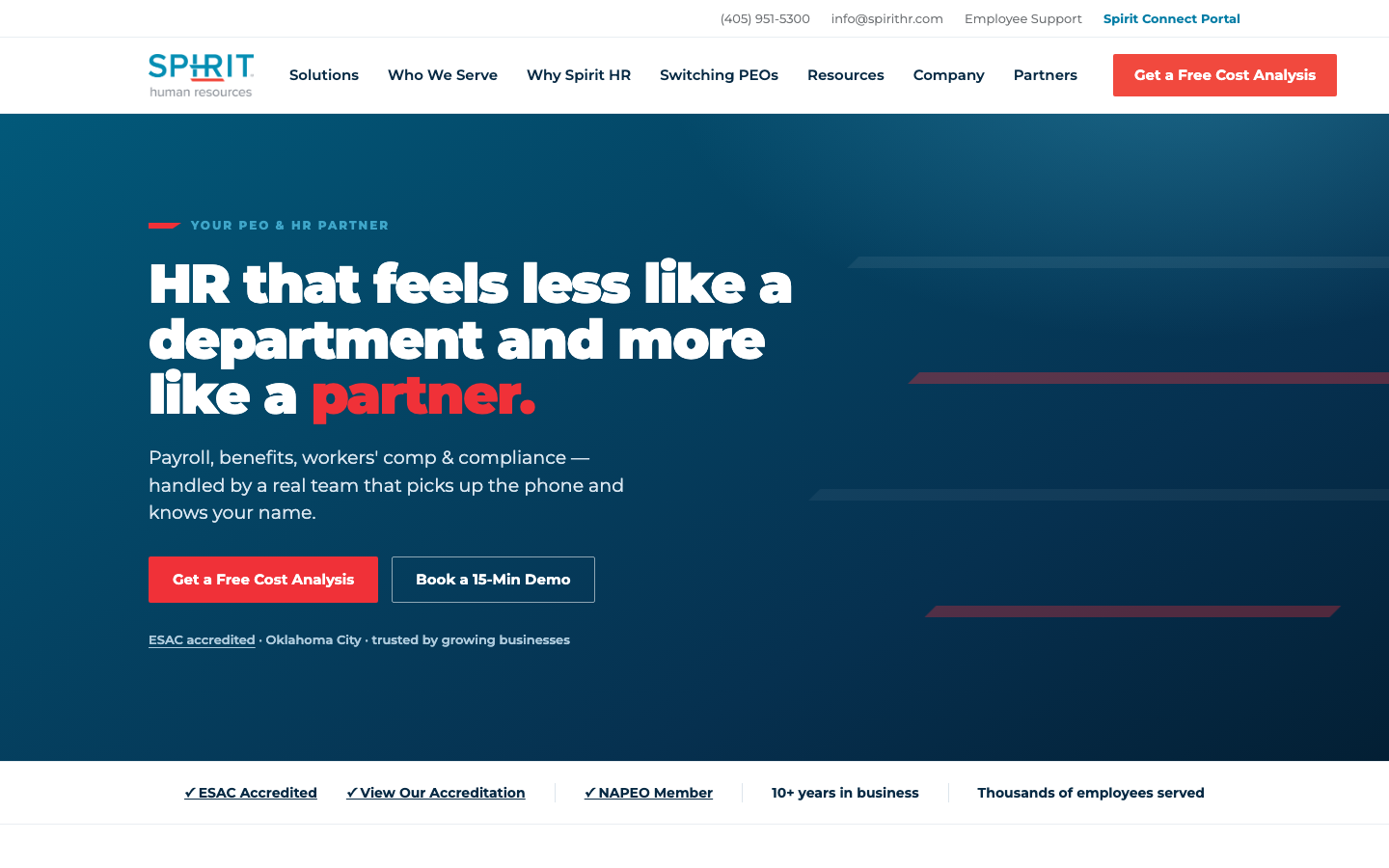
Spirit HR
Provider Type:
Oklahoma City PEO that says it serves clients nationwide
Company Description:
Spirit HR is headquartered in Oklahoma City, and its site shows ESAC accreditation and NAPEO membership. Its PEO combines payroll processing and tax filing, 401(k), health, dental, vision, and life plans, HR compliance, workers’ comp, and risk management on one platform.
Key Specialty Area:
Single login for payroll, benefits, and comp
Service Cost:
Free cost analysis, then a quote
Top Advantages:
- Free analysis of what your HR setup costs today
- Employee self-service for pay, benefits, and hours
- Guidance for businesses moving from another PEO
Scope of Services:
- Payroll, tax filing, and timekeeping
- Medical, dental, vision, life coverage, and a 401(k)
- HR compliance, workers’ comp and risk management
Our Verdict
Employers unhappy with a current co-employer may find Spirit HR’s switching support useful during the move.
Stratus HR
Provider Type:
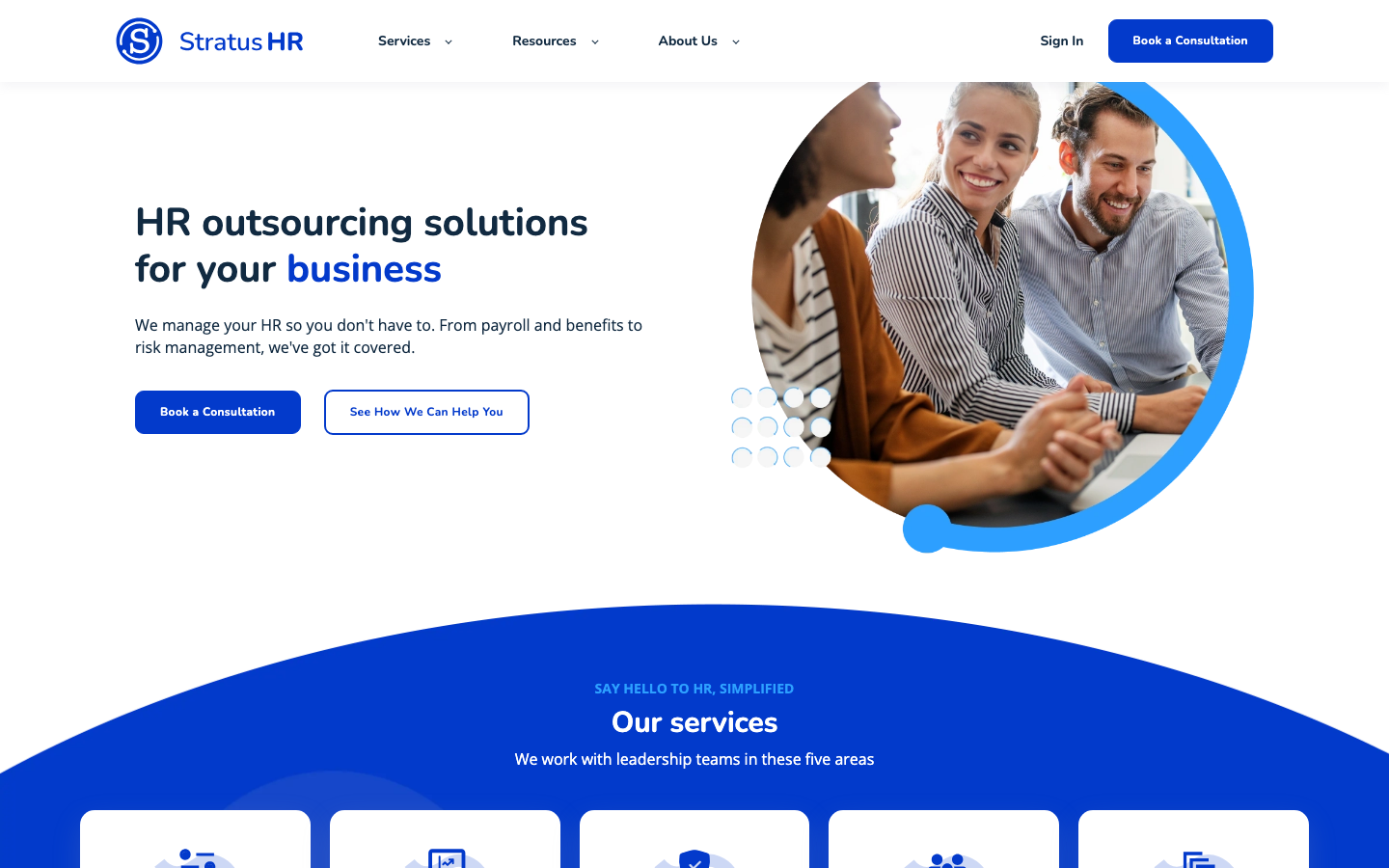
Sandy, Utah PEO with multi-state coverage
Company Description:
Stratus HR is a Sandy, Utah, PEO that says it supports multi-state organizations nationwide as well as single-state clients. It works with leadership teams in 5 areas: HR, HR technology, risk management, benefits administration, and payroll and tax administration.
Key Specialty Area:
Credentialed HR team for growing multi-state firms
Service Cost:
Quote after an initial consultation
Top Advantages:
- Staff credentials include CPA, CPP, SPHR, and SHRM-SCP
- 99% client retention, according to Stratus
- Benefit plans tailored instead of one fixed package
Scope of Services:
- HR management and HR technology
- Benefits administration and risk management
- Wage runs covering federal, state, and city taxes
Our Verdict
Missouri businesses opening locations in other states can lean on Stratus for HR and payroll across every site.
SWBC PEO
Provider Type:
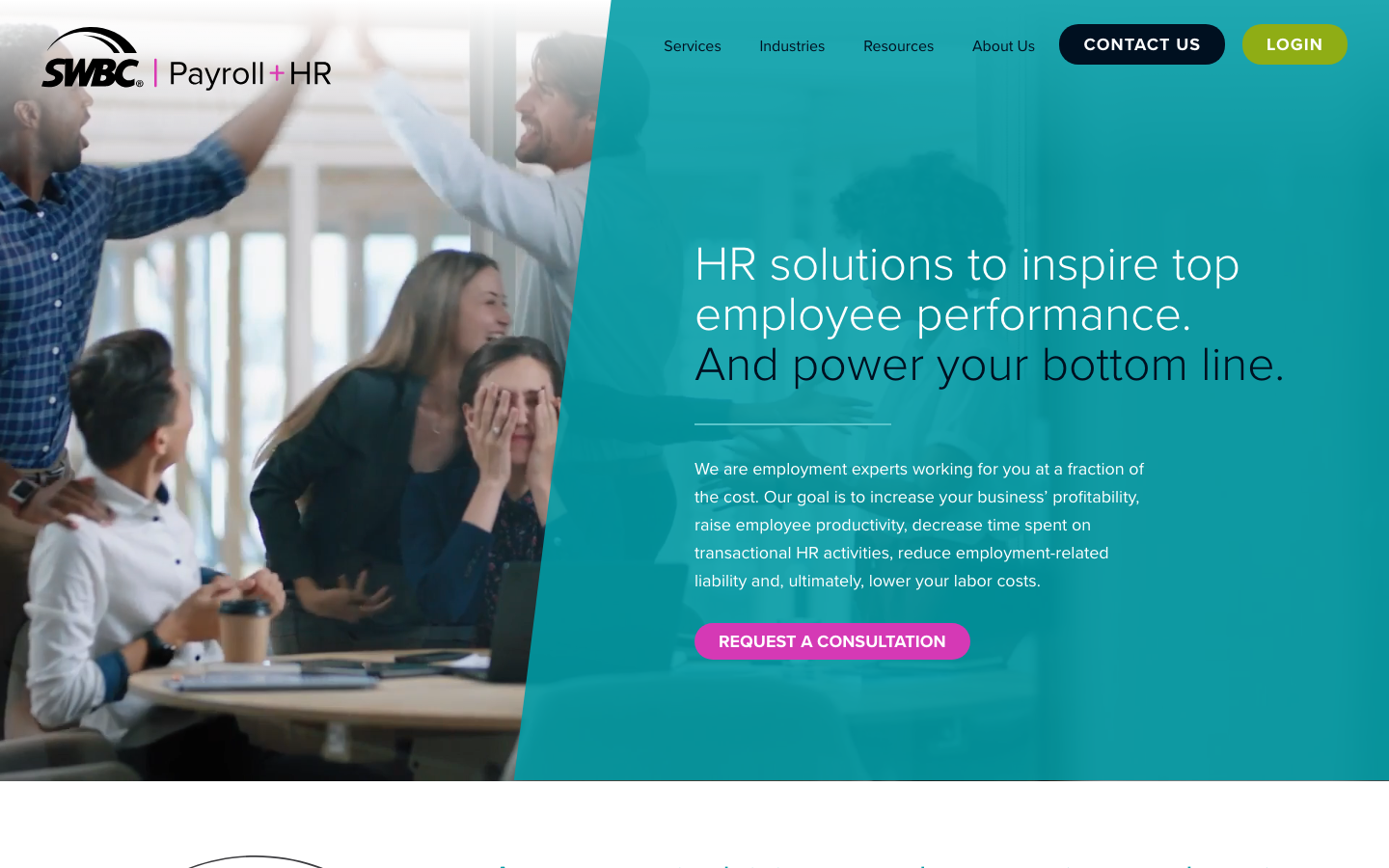
Texas PEO branded SWBC Payroll + HR
Company Description:
SWBC PEO, branded SWBC Payroll + HR, says it serves companies from 5 employees to 5,000. It states that it is IRS-certified and ESAC-accredited. The IRS roster names 3 SWBC Professional Employer Services LLC entities in Bulverde, Texas.
Key Specialty Area:
Certified PEO built to scale with headcount
Service Cost:
Quote after a consultation request
Top Advantages:
- IRS certification confirmed for 3 SWBC entities
- Compliance team that tracks new employment laws
- Recruiting and onboarding help as you hire
Scope of Services:
- HR, payroll, and employment tax services
- Benefits administration and HR technology
- Talent, risk and safety management
Our Verdict
Mid-sized Missouri companies expecting fast growth can stay with SWBC from 20 employees to several hundred.
Thrive PEO
Provider Type:
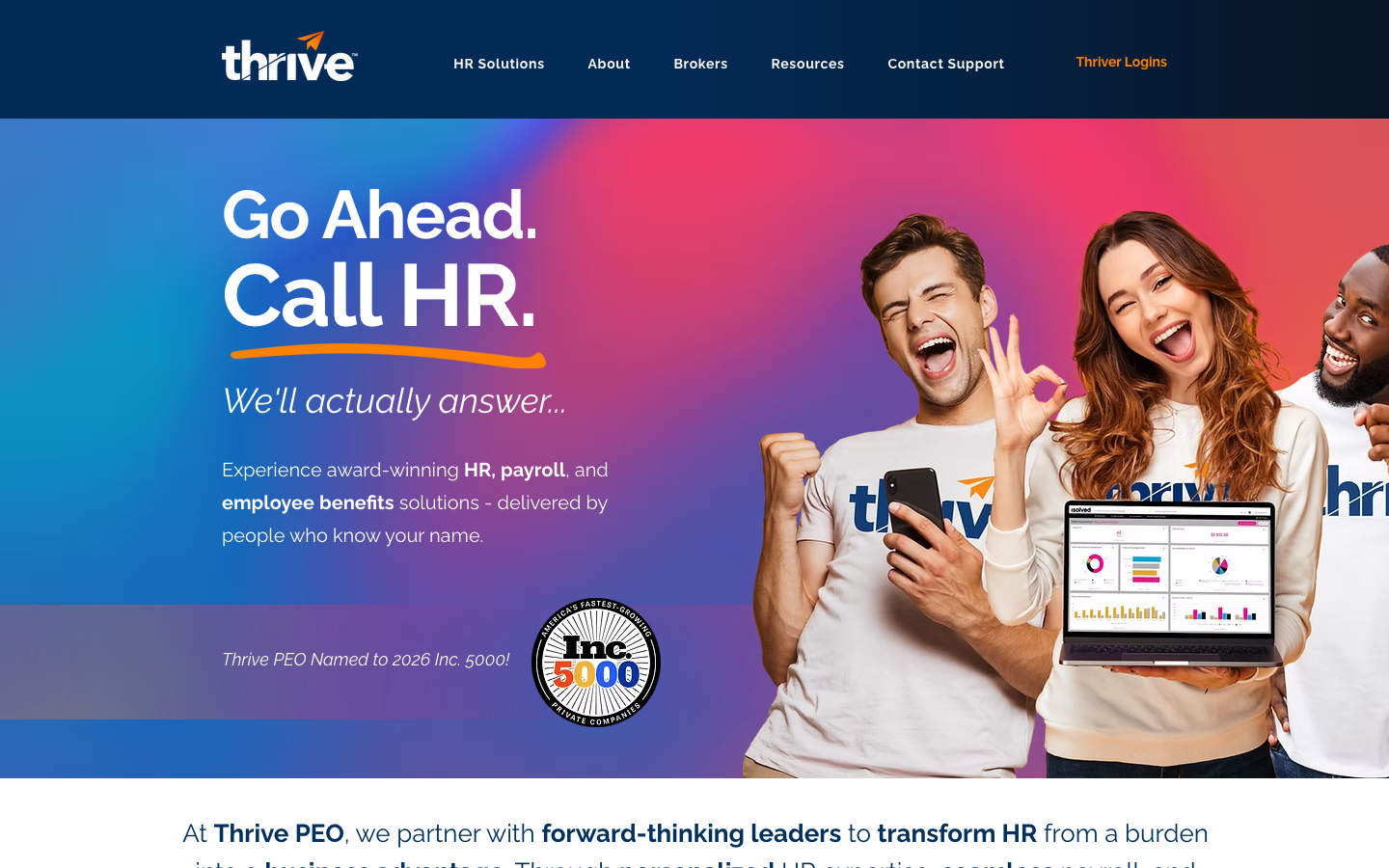
Regional PEO founded in Tulsa, Oklahoma
Company Description:
Thrive PEO was founded in Tulsa and was named to the 2026 Inc. 5000, per its site. It provides HR and compliance, payroll and tax processing, employee benefits, and pay-as-you-go workers’ comp, all run on the isolved People Cloud platform.
Key Specialty Area:
Comp premiums that track each payroll run
Service Cost:
Quote through a consultation request
Top Advantages:
- Comp premiums paid with each payroll, not upfront
- Isolv platform for HR, payroll, and benefits
- Safety programs and claims support
Scope of Services:
- Paycheck and tax processing on isolved
- Benefit packages and compliance guidance
- Workers’ comp, safety and risk services
Our Verdict
Southwest Missouri firms near Joplin with cash flow that swings by season may like comp costs that follow payroll.
True PEO

Provider Type:
Co-employer serving businesses across the United States
Company Description:
True PEO is led by PEO veterans with 100+ years of combined experience and says it serves businesses across the United States. Services span payroll, HR support, compliance and risk work, and workers’ comp. New clients usually meet it through a channel partner, such as a broker.
Key Specialty Area:
Broker-friendly PEO with in-house claims expertise
Service Cost:
Quote after a discovery meeting
Top Advantages:
- Nearly 5 decades of claims management experience, per True PEO
- Discovery meeting arranged through your broker or adviser
- Year-end support for tax forms and comp reporting
Scope of Services:
- Payroll administration and payroll tax
- HR services and compliance support
- Claims-focused comp and risk control
Our Verdict
Owners who already rely on an insurance broker can let that broker bring True PEO into the comparison.
How Much a Missouri Business Pays for PEO and Payroll Support
Co-employment fees come in 2 shapes: a set monthly charge for each worker, or a slice of total gross wages. Both are normally set by quote after a review of headcount, industry, and plan choices. Vendors offering payroll alone charge much less, usually per run or per head, though benefits and comp insurance then stay your job. Under Missouri state PEO rules, the provider pays registration fees of up to $500 at first and $250 at renewal.
With PEO services, Missouri clients typically get payroll and filings, plan administration, comp coverage, and an HR adviser for the fee. Health and comp premiums, 401(k) plan charges, and setup work usually show up as separate lines. Employer taxes stay on the bill too. Each worker’s first $9,000 of pay is taxed for UI at your DES-assigned rate, plus FICA and FUTA. Staff working in St. Louis also bring the 0.5% payroll expense tax. A fair comparison is total yearly spend per worker, premiums included, not the admin fee alone.
INSIGHT: What should the best Missouri PEO handle for you?
Missouri payroll looks simple until city taxes and new wage rules come into play, so ask how each provider handles the items below.
- Earnings tax: 1% in Kansas City and St. Louis, withheld by the employer (EY Tax News, May 2026).
- UI: first $9,000 of wages, with most new employers at 2.376% (DES, November 2026).
- Workers’ comp: required at 5 employees, or 1 in construction (DOLIR, November 2026).
Many St. Louis-area companies employ people who live or work across the Mississippi in Illinois, where wage, leave, and tax rules differ. Those staff are covered by the firms in my guide to PEO companies in Illinois.
Businesses in the Bootheel and the rest of southeast Missouri sometimes add staff in Tennessee, which has no state income tax on wages. Readers with that setup can turn to my review of PEO companies in Tennessee.
Questions Missouri Employers Ask About PEOs and Payroll
What should the best PEO company in Missouri do for a small business?
It should run every pay cycle under its own tax accounts and file the state, city, and federal returns that go with them. Your team should gain access to its group health and retirement plans, and usually to its workers’ comp program. Handbooks, onboarding forms, and leave records also shift to the provider. You keep decisions on recruiting, dismissals, and daily tasks. State law requires the contract to assign payroll and unemployment tax duties to the provider and to state which other duties you keep.
Do PEOs have to register in Missouri?
Yes. Sections 285.700 to 285.750, RSMo, bar any firm from offering co-employment in the state without registering with the Secretary of State, whatever name it uses. Registration comes in Full, Limited, and Group forms, renewed each year with a CPA-audited financial statement. The Limited option fits firms based elsewhere with no Missouri office and no direct local sales. They may cover 50 workers here at most. Unregistered operators face penalties of up to $1,000 per material violation. Check the published list before you sign anything.
When does a Missouri business need workers’ compensation?
The general trigger is 5 employees, while construction firms must insure from their very first worker. Part-time workers count toward the total, and so do family members who work in the business. Employers buy policies from private carriers or the state’s assigned risk pool, and approved firms may self-insure alone or in a group. Plenty of small companies simply use a co-employer’s policy. Confirm which policy covers your team before the contract starts, and keep proof of it with your payroll files.
Do Missouri employers have to offer paid sick leave?
Not under state law at the time of writing. Voters approved paid sick time through Proposition A in November 2024, but HB 567 repealed that requirement effective August 28, 2025. The same law also canceled the yearly inflation raises to the minimum wage due from 2027. Employers can still offer paid leave as a benefit. The federal FMLA guarantees unpaid, job-protected leave once a business has 50 or more employees. Review your handbook before you change an existing policy.
How much does a PEO cost in Missouri?
Expect either a per-worker monthly charge or a percentage of total wages. The quote follows a look at headcount, industry, and plan choices. Insurance premiums, comp premiums, and retirement plan charges usually appear as separate lines on the invoice. Unemployment tax, FICA, FUTA, and the St. Louis payroll expense tax apply under any setup. Payroll-only vendors cost less but leave benefits and comp insurance to you. Judge each offer by its full annual cost per employee.
What is the minimum wage in Missouri in 2026?
The state minimum wage has been $15.00 an hour since January 1, 2026. Tipped employees must receive at least $7.50 an hour in cash, and the employer tops up pay whenever tips leave total earnings below $15.00. Retail and service businesses with annual gross sales under $500,000 are exempt from the state rate, though the federal minimum may still apply. HB 567 ended the automatic inflation increases planned from 2027. Once a worker passes 40 hours in a week, the extra hours are paid at 1.5 times the base rate.

Helen is Anywherer’s Market Analyst & Content Researcher, with extensive experience in analyzing global employment markets and HR technology trends. She is skilled at turning complex market data into clear, well-researched insights that inform every piece of content. With a strong grasp of the EOR, PEO, and international hiring space, Helen plays a key role in keeping Anywherer’s research accurate, up to date, and genuinely useful for readers.