Paychex is a full-service payroll and HR company. Its quote-only pricing and reported extra charges lead some businesses to compare Paychex competitors. Paychex Flex is the company’s payroll and HR platform, while Paychex also provides PEO, insurance, and retirement services. Rippling combines payroll with HR, IT, and spend in one system. Gusto suits smaller companies that want published pricing without contacting sales first. ADP is the closest like-for-like option for companies that want a similar full-service payroll and HCM model at scale.
This guide looks at the main alternatives to Paychex and how they compare with Paychex for different business needs. I look at what each provider does better and where Paychex still has an advantage. The goal is not to argue against Paychex. Instead, I focus on which companies may need a different type of service, pricing model, or platform. The right choice depends on what you want to change and which parts of Paychex still work for your business.
Paychex has handled payroll tax filing since 1971 and now serves about 840,000 customers, including roughly 800,000 payroll clients. Its long history and local US service presence remain clear strengths. The best Paychex alternatives 2026 offer different advantages, but few match Paychex in scale and service range. The table below shows where each provider fits and how it compares with Paychex.

INSIGHT: Why is it so hard to find out what Paychex costs?

Paychex does not publish standard prices for its current payroll packages, while older prices still appear across third-party reviews.
- Five of the nine providers in this comparison publish at least some starting pricing on their own websites: Rippling, Gusto, OnPay, BambooHR, and Justworks. ADP, Paylocity, TriNet, and Paychex require a quote for the products compared here.
- Paychex does not publish standard prices, but Forbes Advisor obtained 2026 quotes directly from its sales team. For a 10-employee company, Forbes reports $43.93 + $1.44 per employee for Flex Select, $77.18 + $1.77 for Flex Pro, and $113 + $2.92 for Flex Enterprise. These are researched quotes, not public Paychex rates.
- The practical problem is comparison. A base fee plus a per-employee charge can cross a flat per-employee rate at a specific headcount. Without a current Paychex quote, you cannot calculate where that point falls.
Paychex Competitors Comparison Side-by-Side
What are alternatives to Paychex? The table below compares the main options with Paychex as the reference point. This Paychex competitors comparison looks beyond the advertised price. Pricing structure is often more useful because a base fee plus a per-employee charge changes as your team grows. It also makes it easier to compare published prices with providers that only offer custom quotes.
| Provider | Model | Published price | Pricing transparency | Best for | G2 |
|---|---|---|---|---|---|
| Paychex | Full-service payroll and HCM | Custom pricing | Quote only | Payroll with broader business services | 4.1 |
| ADP | Full-service payroll and HCM | Custom pricing | Quote only | Like-for-like Paychex replacement | 4.2 |
| BambooHR | HR-first with payroll add-on | Starting at $10/employee/month | Partial | HR-first small and midsize teams | 4.4 |
| Gusto | Payroll and HR software | Starting at $49/month + $6/person/month | Published | Small teams wanting clear pricing | 4.6 |
| Justworks | PEO with co-employment | Starting at $49/employee/month | Published | Small teams wanting PEO support | 4.6 |
| OnPay | Payroll and HR software | Starting at $49/month + $6/person/month | Published | Simple small-business payroll | 4.8 |
| Paylocity | Mid-market HCM | Custom pricing | Quote only | Mid-market payroll and HCM | 4.5 |
| Rippling | HR, IT and spend platform | Custom pricing | Partial | HR, IT, and spend consolidation | 4.8 |
| TriNet | PEO with co-employment | Custom pricing | Quote only | Outsourcing HR at larger scale | 4.2 |
As pricing is subject to change, we are listing prices as they stand in September 2026
Why Teams Shop Paychex Alternatives
Companies comparing the best Paychex competitors often start with cost. Some want clear pricing or simpler payroll. Others need a provider that fits their company size better or want to manage payroll, HR, and IT in one platform.
- Quote-only pricing. Paychex does not publish standard prices for most plans, so companies need to contact sales to learn what they will pay. Third-party estimates also vary by source, making their data difficult to use for budgeting. The final quote depends on factors such as company size, payroll needs, and the services selected.
- Charges outside the plan price. Some reviewers report extra Paychex charges beyond the regular plan cost. Forbes Advisor notes setup fees and additional charges for services such as year-end tax forms. NerdWallet also reports fees for certain payroll services and account changes. These costs can make the final price higher than the initial quote.
- The support change. Paychex support hours vary by service. Many support lines are available Monday through Friday, from 8 a.m. to 8 p.m. ET. Some Paychex pages still list 24/7 support for certain services, so availability depends on the type of support a customer needs.
- Exit terms. Some customer complaints report early termination fees and charges that continued after cancellation. These should not be treated as standard Paychex terms because they come from individual customer reports. Companies considering a switch should check their own contract for cancellation rules, notice periods, and any applicable fees.
- The rating split. Paychex gets very different feedback depending on the review platform. As of September 2026, it has 4.2/5 from more than 1,500 G2 reviews, compared with 1.3/5 from more than 700 Trustpilot reviews. The two scores show very different sides of the customer experience.
Paychex has handled payroll since 1971 and serves about 840,000 customers, including roughly 800,000 payroll clients. Its size supports a broad US service network and federal, state, and local payroll tax filing. Companies can also get payroll, HR, PEO, insurance, and retirement services from one provider. Paychex offers direct support for businesses that prefer working with a service team instead of relying mainly on software. The Paycor acquisition in 2025 also expanded its HCM offering for larger companies. For businesses that value one provider and personal support, Paychex remains a practical choice.
How I Compared These Paychex Alternatives
I compared these Paychex alternatives based on the costs, services, and contract terms that can affect a switch. I used the same criteria for alternatives to Paychex payroll HR services.
- Published pricing: Whether you can see a price before contacting sales.
- Pricing model: How base fees and per-employee charges change the cost as headcount grows.
- What is included: Which payroll and HR services come with the standard fee before add-ons.
- Company size: Whether the platform fits small, mid-sized, or larger businesses.
- Employment model: Whether the service involves co-employment rather than standard payroll.
- Ownership and exit: I excluded Paycor, SurePayroll, and Oasis because Paychex owns them, and also checked contract terms, notice periods, and exit fees.
Best Overall Paychex Alternative: Rippling
Rippling is a strong Paychex alternative for companies that want more than payroll. It brings HR, IT, and company spending into one platform, so businesses can manage more of their daily work in one place.
1. Rippling
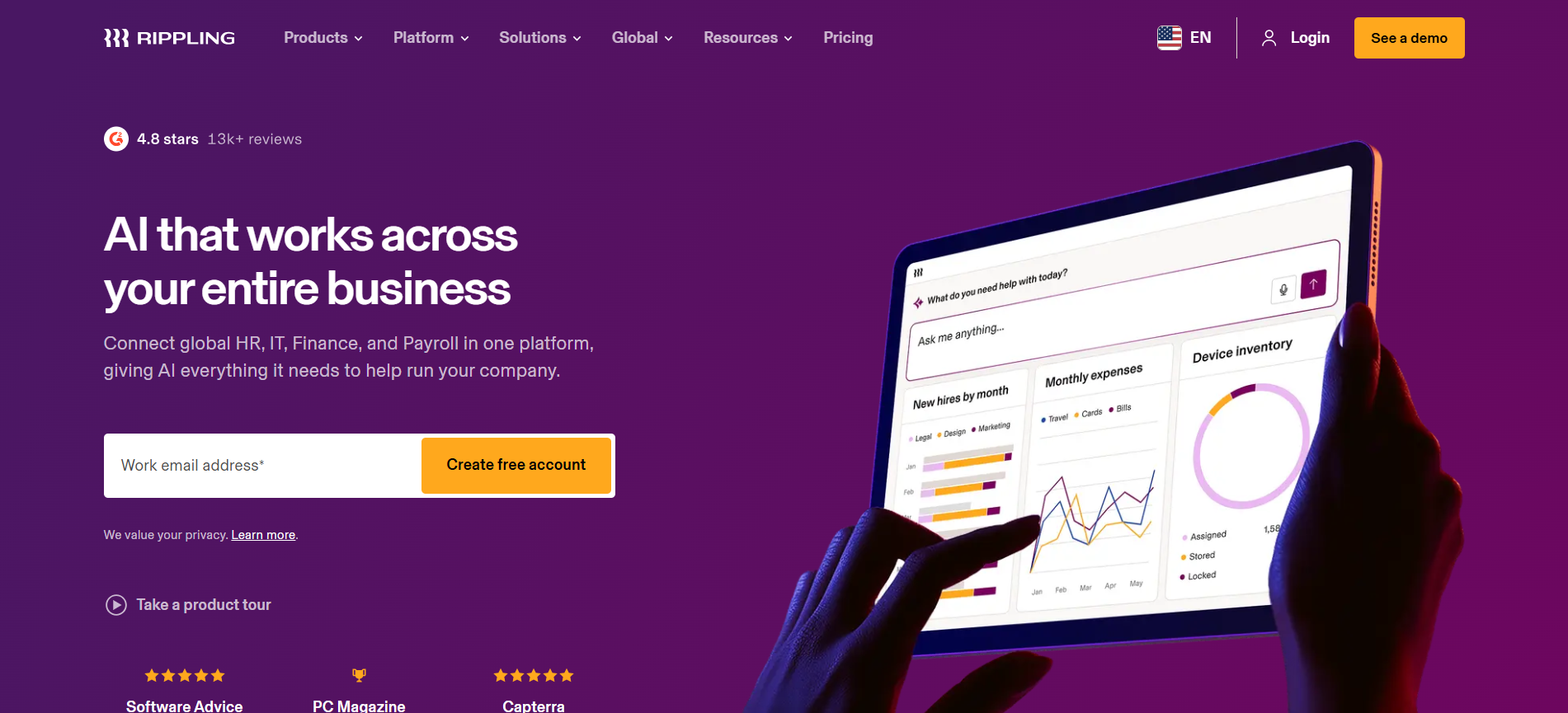
Rippling combines payroll with HR, IT, and spend management in one platform. Among the best Paychex competitors in HR and IT, it stands out for connecting employee data with devices, app access, expenses, and company cards. This makes it useful for companies that want to manage these functions in one system instead of several separate tools.
Rippling
What it does better than Paychex:
- Combines HR, IT, payroll, and spend management
- Manages employee devices and software access
- Connects corporate cards and expenses with employee data
- Offers more than 200 integrations listed on G2
Where Paychex still wins:
- Offers PEO services with co-employment
- Has a much longer US payroll track record
- Offers insurance and retirement services directly
- Better fits companies focused mainly on payroll and HR
Model:
HR, IT, and spend platform with payroll
Published price:
Custom pricing
Pricing transparency:
Partial
Co-employment:
No
Best for:
Consolidating HR, IT, and spend
G2:
4.8
Pick it over Paychex if:
You want payroll inside one system that also manages HR, employee devices, app access, and company spend.
Stick with Paychex if:
You mainly need payroll and HR services or want access to Paychex’s PEO, insurance, and retirement offerings.
Full-Service Payroll and HCM Alternatives to Paychex: ADP and Paylocity
ADP and Paylocity are close competitors to Paychex for companies that need payroll and HR tools. Among Paychex competitors payroll services, ADP serves companies of different sizes, while Paylocity focuses more on mid-sized businesses and HCM.
2. ADP
ADP is the closest like-for-like alternative to Paychex in this comparison. It offers full-service payroll and HCM (human capital management, software for managing payroll and broader HR processes). Among Paychex competitors HR solutions payroll, ADP follows a similar service model. Companies comparing ADP competitors may find Paychex similar in its service model. Like Paychex, ADP does not publish standard pricing for RUN Powered by ADP or ADP Workforce Now. That makes it a less convincing switch for companies leaving Paychex mainly because they want clearer pricing.
ADP
What it does better than Paychex:
- Serves businesses from small teams through large enterprises
- Offers deeper HCM tools for larger organizations
- Provides a wider range of workforce products
- Has a larger overall operating scale
Where Paychex still wins:
- Switching to ADP does not improve pricing transparency because both use quote-based pricing
- Paychex may fit smaller payroll-focused businesses better
- Keeps payroll, PEO, insurance, and retirement services under one company
- May suit companies that do not need ADP’s broader HCM tools
Model:
Full-service payroll and HCM
Published price:
Custom pricing
Pricing transparency:
Quote only
Co-employment:
– No for RUN and Workforce Now
– Available separately through ADP TotalSource
Best for:
Like-for-like Paychex replacement
G2:
4.2 (ADP Workforce Now)
Pick it over Paychex if:
You want a similar payroll model with broader HCM capabilities and more room to support a larger workforce
Stick with Paychex if:
Your main reason for switching is pricing transparency, since ADP also requires you to request a quote
3. Paylocity
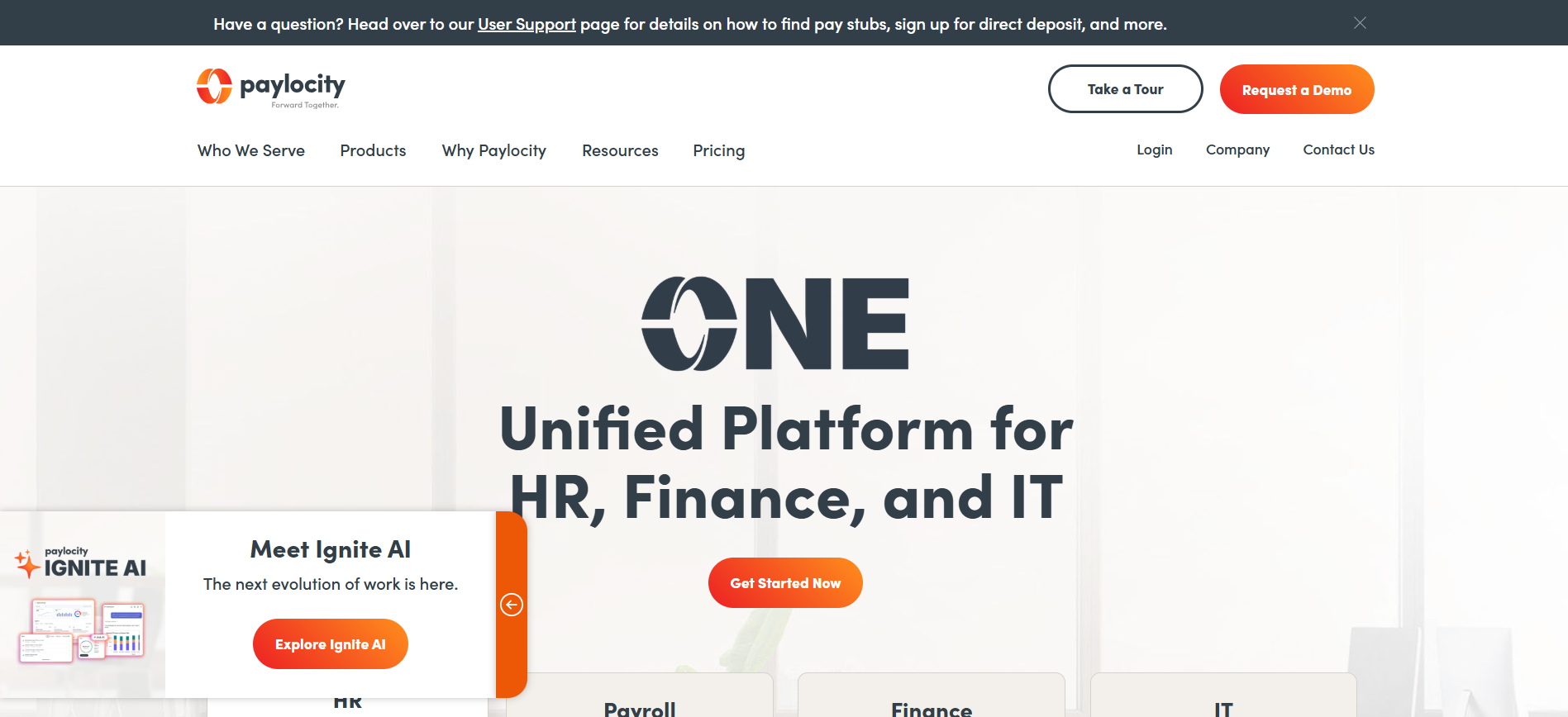
Paylocity takes a more mid-market HCM approach than Paychex, with payroll connected to HR, talent, workforce management, employee communication, and analytics. Among Paylocity Paychex competitors HR IT spend, it focuses more on HR than IT or spend management. Paylocity uses custom pricing and mainly serves mid-sized employers that need more HR depth than a payroll-first system provides.
Paylocity
What it does better than Paychex:
- Offers deeper mid-market HCM capabilities
- Provides stronger employee communication tools
- Connects workforce data with HR analytics
- Gives HR teams broader talent management tools
Where Paychex still wins:
- Better suited to payroll-first small businesses
- Offers PEO services with co-employment
- Provides insurance and retirement services
- Neither provider solves pricing opacity
Model:
Mid-market HCM
Published price:
Custom pricing
Pricing transparency:
Quote only
Co-employment:
No
Best for:
Mid-market HR and payroll teams
G2:
4.5
Pick it over Paychex if:
You need payroll alongside deeper HCM, workforce communication, and analytics tools for a growing mid-sized company
Stick with Paychex if:
You want a more payroll-focused service or need PEO, insurance, and retirement options from the same provider
Published-Pricing Paychex Alternatives for Smaller Teams: BambooHR, Gusto, and OnPay
BambooHR, Gusto, and OnPay give smaller teams more pricing information before they buy. Each takes a different approach, from HR-first software to straightforward payroll, giving companies simpler options than Paychex’s quote-based model.
4. Gusto
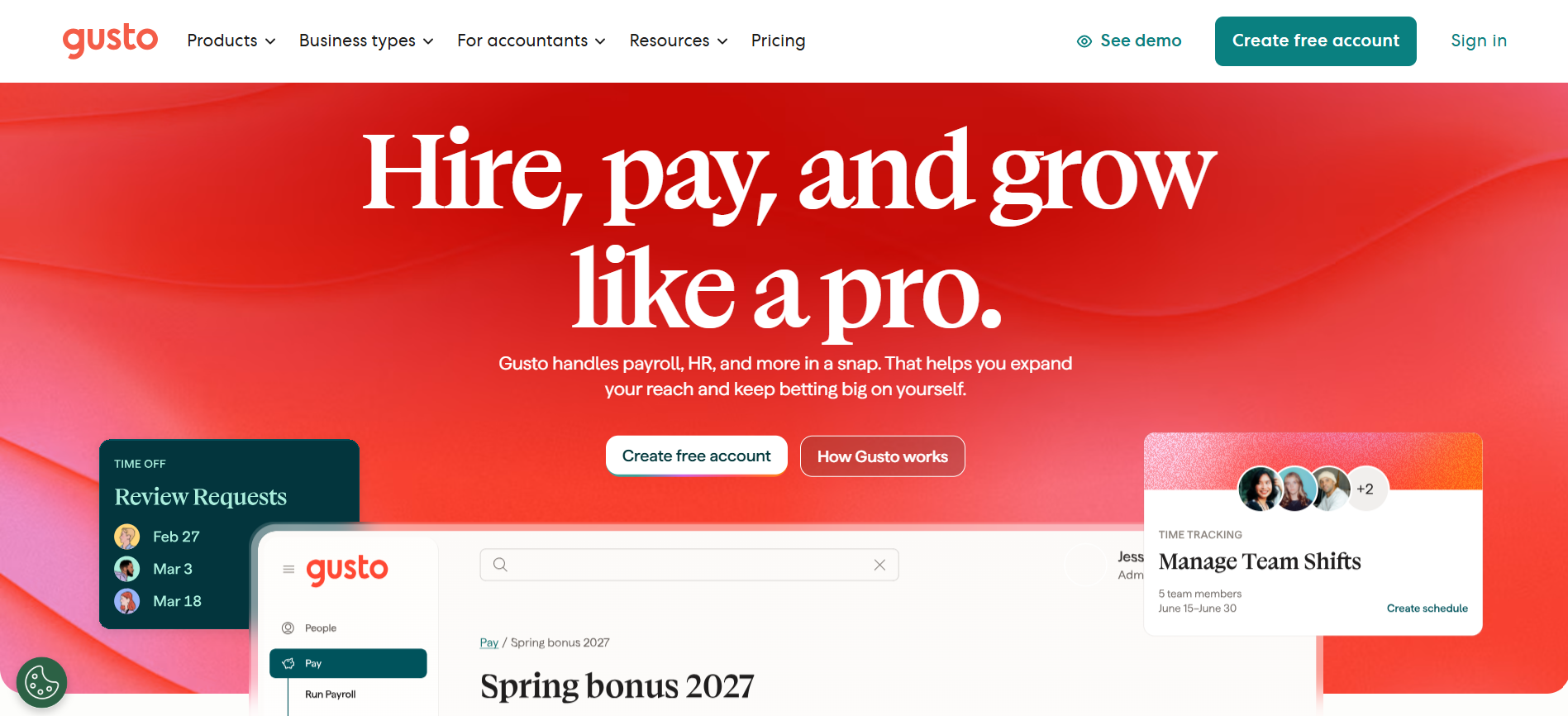
Gusto takes a simpler, software-first approach to payroll and HR than Paychex. It publishes its plan prices, so small businesses can see the starting cost without requesting a sales quote. Its plans cover payroll, tax filing, hiring, benefits, and HR tools, with higher tiers adding more support and workforce features.
Gusto
What it does better than Paychex:
- Publishes payroll pricing on its website
- Makes costs easier to compare before buying
- Earns a higher G2 user rating
- Fits smaller teams that prefer self-service software
Where Paychex still wins:
- Offers a wider range of HR services
- Provides PEO services with co-employment
- Offers business insurance and retirement services
- Better supports companies wanting more hands-on HR help
Model:
Payroll and HR software
Published price:
From $49 base fee plus $6 per person monthly
Pricing transparency:
Published
Co-employment:
No
Best for:
Small teams wanting clear pricing
G2:
4.6
Pick it over Paychex if:
You run a smaller team and want to see payroll pricing before speaking with sales
Stick with Paychex if:
You need broader HR services, PEO support, or more hands-on help alongside payroll
*As pricing is subject to change, we are listing prices as they stand in September 2026
5. OnPay
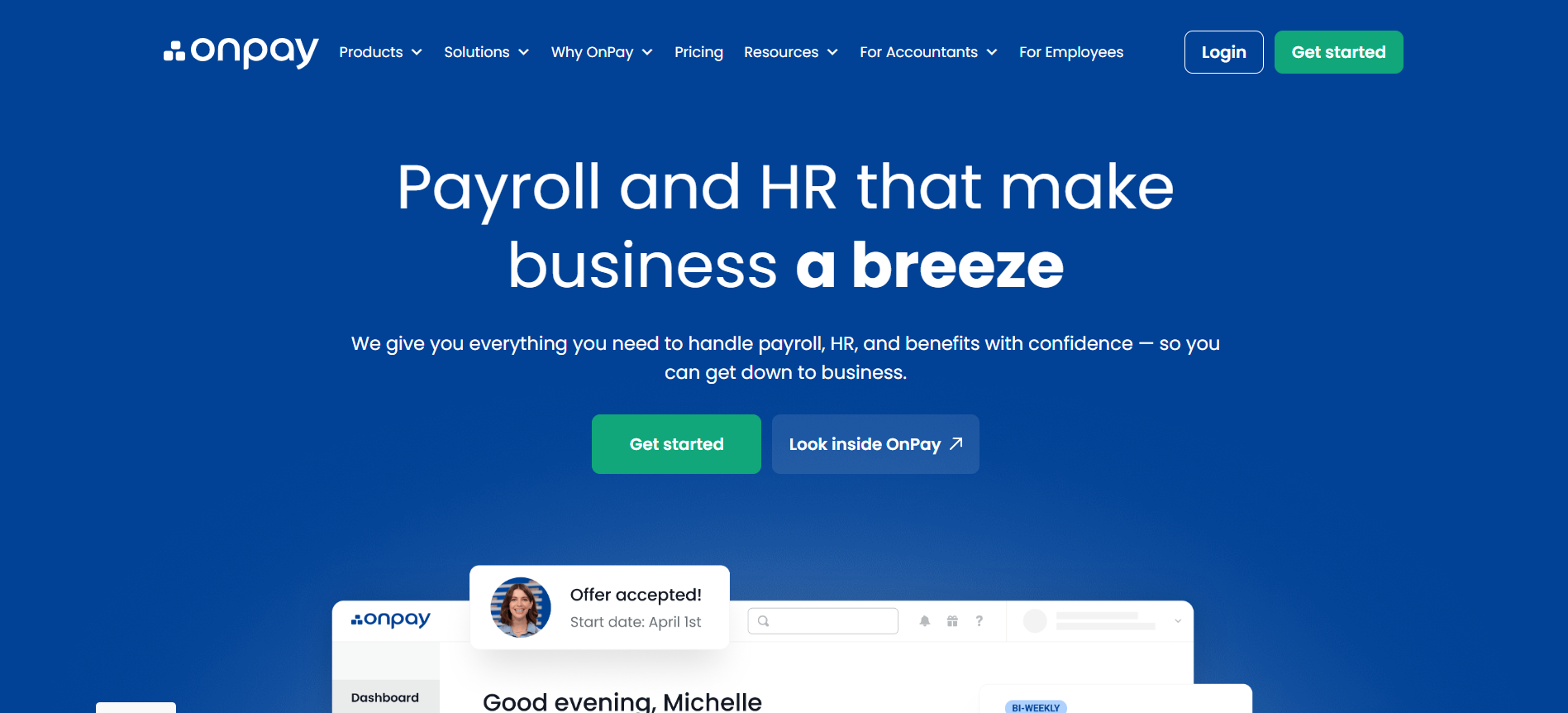
OnPay keeps payroll pricing simple with one main plan instead of a tiered product ladder. It publishes a price of $49 per month plus $6 per worker, which includes full-service payroll, tax filings, onboarding, and basic HR tools. This makes it a direct option for smaller companies that want predictable pricing without choosing between several payroll tiers.
OnPay
What it does better than Paychex:
- Publishes one clear payroll price
- Avoids a multi-tier payroll structure
- Includes unlimited payroll runs
- Does not charge cancellation fees
Where Paychex still wins:
- Offers more services for larger businesses
- Provides PEO services with co-employment
- Offers insurance and retirement services
- Gives growing companies more service options
Model:
Payroll and HR software
Published price:
$49 base fee plus $6 per worker monthly
Pricing transparency:
Published
Co-employment:
No
Best for:
Simple payroll for small businesses
G2:
4.8
Pick it over Paychex if:
You want one payroll plan with a published price instead of choosing between multiple service tiers
Stick with Paychex if:
You need a broader mix of payroll, HR, PEO, insurance, and retirement services
*As pricing is subject to change, we are listing prices as they stand in September 2026
6. BambooHR
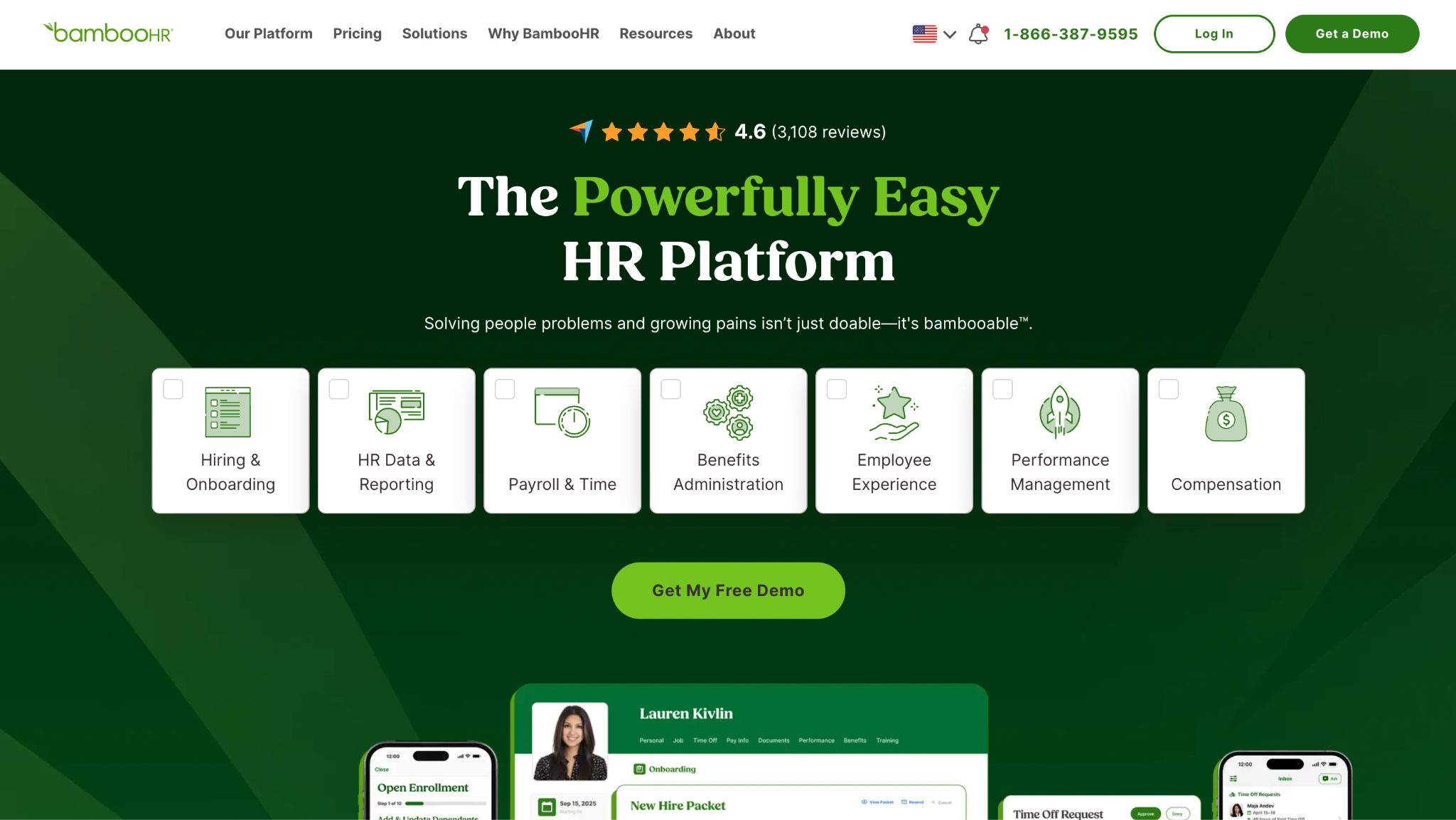
BambooHR starts from HR rather than payroll. Its platform centers on employee records, onboarding, time off, performance, and other HR tasks, with US payroll available as an add-on. BambooHR publishes starting prices for its Core and Pro plans, which gives buyers more visibility than Paychex’s quote-based approach.
BambooHR
What it does better than Paychex:
- Puts employee management at the center
- Offers a simpler HR-focused user experience
- Publishes starting prices for HR plans
- Stronger fit when HR drives the switch
Where Paychex still wins:
- Makes payroll a core part of its offering
- Provides PEO services with co-employment
- Offers insurance and retirement services
- Better fits payroll-first buying decisions
Model:
HR-first platform with payroll add-on
Published price:
Published HR plans; payroll priced separately
Pricing transparency:
Partial
Co-employment:
No
Best for:
HR-first small and midsize teams
G2:
4.4
Pick it over Paychex if:
Your main reason for switching is the HR experience rather than the payroll service itself
Stick with Paychex if:
Payroll is your main priority, and you want broader services such as PEO, insurance, and retirement support
Paychex PEO Alternatives: Justworks and TriNet
Justworks and TriNet are Paychex PEO alternatives for companies that want to outsource payroll, benefits, compliance, and other HR tasks. To understand how a PEO works, it helps to know that both use co-employment, where the PEO shares certain employer responsibilities with the client. They differ mainly in pricing, benefits, and the types of businesses they serve.
7. Justworks
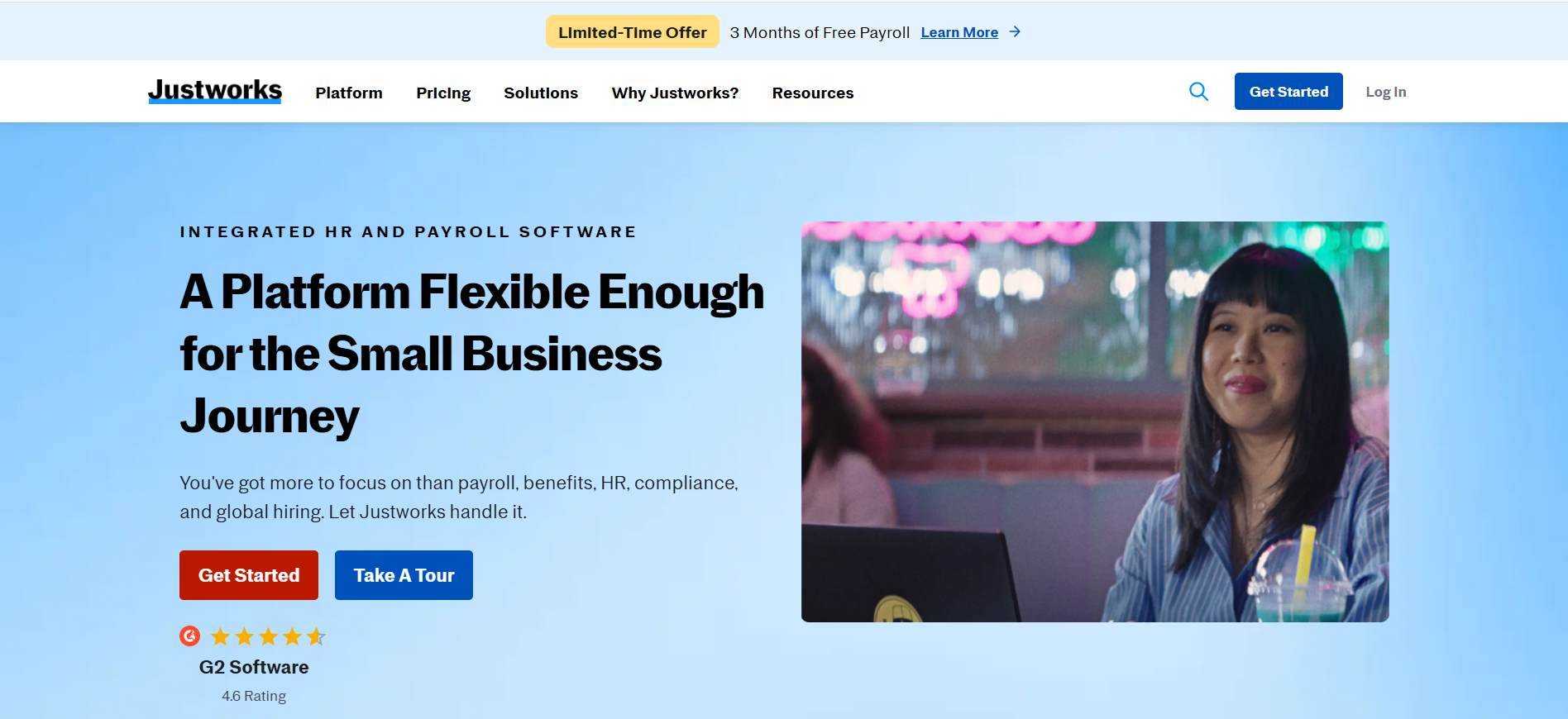
Justworks is structurally different from Paychex payroll because its core offering is a PEO, which shares employment responsibilities through co-employment. Companies comparing Justworks alternatives may prefer Paychex if they only need payroll. Justworks also publishes its PEO pricing: Basic is $79, and Plus is $109 per employee per month. That combination makes it particularly relevant to smaller teams that want more HR responsibility handled outside the company.
Justworks
What it does better than Paychex:
- Publishes clear PEO prices before a sales call
- Gives small teams access to group benefits
- Combines payroll with HR and compliance support
- Earns strong ratings from small-business users
Where Paychex still wins:
- Moves companies into a co-employment arrangement, which is a broader purchase than payroll alone
- Keeps payroll available without shared employer responsibilities
- Offers more flexibility between payroll and broader HR services
- Works for more company sizes and service needs
Model:
PEO
Published price:
From $79 PEPM (Basic)
Pricing transparency:
Published
Co-employment:
Yes
Best for:
Small teams wanting PEO support
G2:
4.6
Pick it over Paychex if:
You want a PEO with published pricing and are comfortable moving from payroll outsourcing to a co-employment model
Stick with Paychex if:
You want payroll and HR services without changing the employment relationship
*As pricing is subject to change, we are listing prices as they stand in September 2026
8. TriNet
TriNet is a PEO (Professional Employer Organization) for companies that want to outsource more of their HR function, not simply replace Paychex payroll. A PEO uses co-employment, where the provider shares certain employer responsibilities with the client. Among TriNet alternatives, Paychex offers a broader choice between payroll and PEO services. TriNet uses custom pricing based partly on company size.
TriNet
What it does better than Paychex:
- Puts full HR outsourcing at the center
- Provides access to large-company benefit plans
- Adds industry-specific HR expertise
- Processed $70 billion in payroll in 2025
Where Paychex still wins:
- Requires a different legal arrangement through co-employment, so companies seeking only payroll would be buying a broader service
- Keeps payroll separate from shared employer responsibilities
- Gives companies more choice over how much HR support they need
- Better fits businesses looking mainly for a payroll replacement
Model:
PEO
Published price:
Custom pricing
Pricing transparency:
Quote only
Co-employment:
Yes
Best for:
Outsourcing HR at a larger scale
G2:
4.2
Pick it over Paychex if:
You want to outsource more HR responsibility and gain access to PEO-sponsored benefits rather than simply change payroll platforms
Stick with Paychex if:
Your main goal is better payroll software or lower costs, since moving to a quote-based PEO is a different purchase
*As pricing is subject to change, we are listing prices as they stand in September 2026
Which Paychex Alternative Fits Your Use Case
Different TriNet alternatives work better for different business needs. I compared the options by cost, company size, customer support, HR model, technology needs, and international hiring plans.
Paychex Competitors HR and IT Spend
Rippling fits companies that want more than payroll. Among the best Paychex competitors in HR IT spend, it combines HR, IT, and spend management software, which means companies can manage employees, payroll, devices, software access, expenses, and company cards in one platform. This can help companies rely less on HR and IT systems.
Paychex Alternative for Mid-Size Companies
Paylocity and ADP fit companies that need more than basic payroll. At around 50 to 100 employees, businesses often need more advanced reporting, benefits, performance, and workforce tools. Paylocity focuses on mid-sized companies, while ADP serves businesses of all sizes.
Paychex Small Business Payroll Alternatives
Gusto and OnPay publish their payroll prices, unlike Paychex’s quote-based model. For companies comparing Paychex vs competitors for small business payroll, both let smaller businesses see the starting cost before contacting sales. Gusto combines payroll with benefits and HR tools for growing teams. OnPay keeps things straightforward with one payroll plan, making it a Paychex alternative for small business that wants clear pricing and fewer choices.
Paychex PEO Alternatives
Justworks and TriNet suit companies that want more HR support. Both provide payroll, benefits, HR, and compliance through a PEO model. This is different from buying payroll services because the PEO shares some employer responsibilities with the company.
Best Paychex Alternatives for Payroll
ADP and Gusto are alternatives to Paychex payroll services for companies that mainly want to replace Paychex payroll. ADP offers a similar full-service payroll model but requires a quote. Gusto publishes its prices and offers simpler payroll and HR tools for smaller companies.
Paychex Flex Alternatives
Paychex Flex is Paychex’s payroll and HR platform, not a company. Rippling, ADP, Paylocity, Gusto, and OnPay are among its main Paychex Flex competitors. They all provide payroll and HR tools but differ in pricing, workforce features, service levels, and the company sizes they support.
Paychex vs Competitors Payroll 2026
Paychex offers many services through one provider, from payroll and HR to benefits and retirement plans. So, who are Paychex competitors? ADP and Paylocity offer similar payroll and HR services, while Rippling focuses more on technology. Gusto and OnPay are simpler options with published pricing for smaller businesses.
When Paychex Is Still the Right Choice
Paychex can still work well for companies with complex multi-state payroll or unusual filing requirements. It also fits business owners who want one provider and a dedicated contact. Staying with Paychex may also make sense if you already use it for payroll, insurance, and retirement plans.
How to Switch From Paychex
Moving away from Paychex requires transferring both payroll processing and payroll tax filing to your new provider. Both providers need clear responsibility for each payroll period and filing, so the timing requires careful planning. The steps below cover the main points to check, but they are general and not tax or accounting advice.
- Check your Paychex contract. Review the contract term, required notice period, and any early termination fee before signing with another provider. Make sure these terms work with your planned switch date before signing a new contract.
- Decide who files each quarter. Make sure you know which provider will handle each payroll tax filing. This helps avoid missed or duplicate filings during the switch. This helps avoid missed filings or duplicate submissions.
- Choose the switch date carefully. Switching at the end of a quarter can simplify payroll tax reporting because one provider can complete the quarter’s filings before the new provider takes over. Companies with multi-state payroll or several tax jurisdictions may prefer a year-end switch.
- Export your payroll records. Download payroll registers, employee records, tax filings, and other important documents before your Paychex access ends. Keeping your own copies can make the transition easier if you need these records later.
- Confirm year-end forms. Make sure you know which provider will prepare W-2s and other year-end forms for wages already paid during the year.
- Run one payroll in parallel. Compare the results from Paychex and the new provider before the final cutover. Check wages, deductions, taxes, benefits, and employee details before moving payroll completely.
INSIGHT: Who files your payroll taxes during a switch?
Both providers can have filing responsibilities during a switch. The key difference is which wages and tax periods each provider handles.
- The employer generally remains responsible for federal employment taxes. The IRS states that outsourcing payroll does not normally remove the employer’s responsibility for tax deposits, payments, and filings. The exact responsibility can differ for certain third-party arrangements, such as CPEOs (Certified Professional Employer Organization).
- Quarter boundaries make the split easier to see. Form 941 reports wages and employment taxes by quarter. The IRS says wages belong to the quarter in which employees are actually paid. A mid-quarter switch can therefore leave payroll activity from the same quarter with both providers.
- The handover involves more than next month’s payroll. The important questions are who handles the current quarter’s filings and who issues year-end forms for wages already paid. The company’s accountant can confirm how these responsibilities apply to its specific switch.
FAQs on Paychex Alternatives
What are the best alternatives to Paychex?
The best choice depends on what you want to change. Rippling brings HR, IT, and spend into one system. Gusto publishes its pricing, while ADP most closely matches Paychex’s service model. Justworks takes a different route with PEO services for smaller teams.
Is Paychex Flex the same as Paychex?
No, Paychex Flex is the company’s payroll and HR platform, which businesses use to manage payroll, employees, benefits, and other HR tasks. Paychex is the company itself. Its services also include PEO services, business insurance, and retirement plans.
Is Paycor a Paychex competitor?
No, Paychex completed its acquisition of Paycor in April 2025, and Paycor now operates as a business unit within Paychex. SurePayroll, another small business payroll platform, is also owned by Paychex. Neither should be treated as an independent Paychex competitor.
What is the best Paychex alternative?
For most US companies with fewer than 100 employees that want published pricing, Gusto is a good Paychex alternative. Its payroll prices are available online. Larger companies may need more HCM, reporting, and workforce tools, so Paylocity or ADP may be a better fit.
What are the best Paychex alternatives for small business payroll?
For businesses with 5 to 50 employees, Gusto and OnPay are practical options with published pricing. Both start at a $49 monthly base fee plus $6 per employee. Gusto offers several plan levels, while OnPay keeps its core payroll pricing to one plan.
What are the alternatives to Paychex PEO?
This comparison includes Justworks and TriNet as alternatives to Paychex PEO. Both provide payroll, benefits, HR, and compliance support through co-employment. A PEO is a different purchase from standard payroll because the provider shares certain employer responsibilities with the client.
Can I switch payroll providers in the middle of the year?
Sure, but before switching, check your contract term and notice period. Confirm which provider will handle each quarter’s tax filings and who will issue year-end forms. See the How to Switch From Paychex section above for more details. This is general information, not tax advice.
Verdict: The Best TriNet Alternative for You
Among the best alternatives to Paychex, choose Rippling for HR and IT in one system, Gusto for published pricing, OnPay for simple small-business payroll, Paylocity for mid-market HCM, ADP for a similar full-service payroll model, Justworks for a small-team PEO, and TriNet for broader HR outsourcing. Paychex still works well for companies that want one vendor, a named service contact, and support with multi-state payroll tax filing. A Paychex alternative becomes more useful when pricing transparency is a priority, the platform no longer fits your workflows, or your company has outgrown its current payroll and HR setup.

Helen is Anywherer’s Market Analyst & Content Researcher, with extensive experience in analyzing global employment markets and HR technology trends. She is skilled at turning complex market data into clear, well-researched insights that inform every piece of content. With a strong grasp of the EOR, PEO, and international hiring space, Helen plays a key role in keeping Anywherer’s research accurate, up to date, and genuinely useful for readers.