Introduction
Remote work is now normal for many teams, not an exception. That brings freedom and flexibility, but also new problems: people feel isolated, lose connection with coworkers, or quietly burn out behind a screen. Global engagement levels are still low. Gallup reports that only about one in five employees worldwide feel engaged at work, while many feel detached or stressed. At the same time, teams with strong engagement show much better results, including higher profitability and lower turnover.
The difference is not motivation or personality. It is intentional practice. Remote teams that work well do a few things consistently: they communicate clearly, build trust, protect focus, and make people feel seen and supported. These are not abstract ideas for employee engagement. They are practical, repeatable behaviors backed by research and real-world experience.
This guide focuses on those behaviors. It explains what is employee engagement in a remote environment and shares proven, research-backed examples of employee engagement strategies that help distributed teams stay connected, productive, and resilient over time. The goal is simple: help you build a remote team that works well today and still wants to be here tomorrow.
What Employee Engagement Really Means in a Remote Workplace
Before we jump into employee engagement ideas for remote workers, it helps to clear up some confusion. Employee engagement in a remote workplace is not about being happy all the time, working longer hours, or showing up to every virtual activity. People can look productive on paper and still feel distant, unmotivated, or disconnected.
Real engagement shows up in how people feel about their work and their team. Engaged remote employees feel connected to others, understand why their work matters, and trust the people they work with. They have clarity about what is expected of them and feel there is space to grow over time. When that foundation is in place, energy and commitment follow naturally.
Think of engagement as energy plus commitment. A remote worker who feels seen, supported, and trusted will bring far more energy than someone who feels alone and replaceable.
17 Remote Employee Engagement Strategies
Use these remote employee engagement activities ideas as a menu. You do not need all 17 at once. Start with one or two, see what works, then add more.
1. Run Real 1:1s, Not Status Meetings
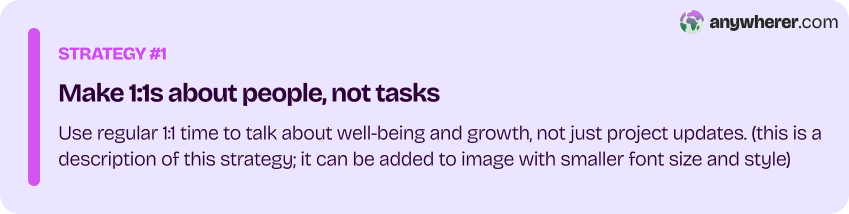
Many managers use 1:1 time only for task updates. Remote staff then never get space to talk about workload, motivation, or problems.
Why it works: A regular, honest 1:1 builds trust. People feel safe to share issues early instead of waiting until they are burnt out or ready to quit. That safety is one of the strongest strategies to increase employee engagement.
Common mistake to avoid: Do not turn the 1:1 into another stand-up. If you only talk about deadlines, people will save real concerns for later or never share them.
How to start: Book a 30-minute 1:1 every week or two with each direct report. Use a simple agenda:
- 10 minutes on how they feel and how life is going
- 10 minutes on progress and roadblocks
- 10 minutes on growth or long-term goals
2. Set Clear, Simple Expectations
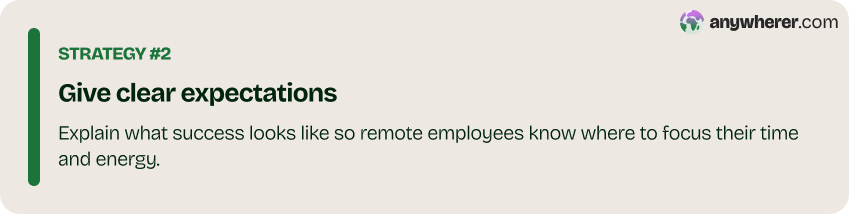
Remote staff often wonder: Am I doing enough? What does success look like? Confusion quickly kills engagement.
Why it works: Clarity removes stress. When people know their goals and understand priorities, they can focus. Clear expectations are one of the employee engagement strategy examples because they reduce guesswork and conflict.
Common mistake to avoid: Do not bury expectations inside long documents that nobody reads. If people need a translator to understand their goals, they will stop caring about them.
How to start: For each role, write one short page that covers: main responsibilities, 3–5 key goals for the next quarter, and how performance will be measured. Discuss this together, not top-down only.
3. Make Recognition a Daily Habit
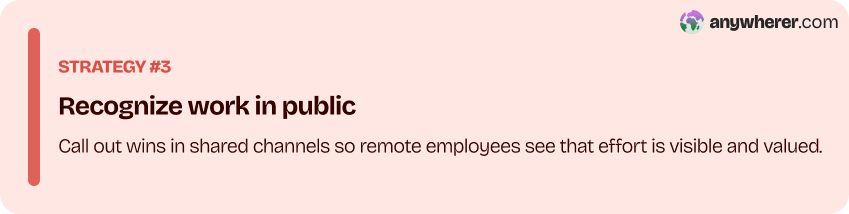
Remote workers often feel invisible. They send work into a void and rarely hear what landed well.
Why it works: Small, frequent recognition is one of the simplest ideas to improve employee engagement. It shows people that effort is seen, not just big wins. This builds motivation and loyalty.
Common mistake to avoid: Do not wait for yearly awards or big bonuses. By the time formal recognition arrives, the emotional impact is much weaker.
How to start: Pick one channel (Slack, Teams, email) and share one specific thank-you message every day or two. Mention what the person did and why it helped. Invite teammates to add their own shout-outs.
4. Design a Thoughtful Remote Onboarding
If onboarding is weak, new hires feel lost from day one. Remote workers cannot “soak up” culture in a hallway.
Why it works: A clear onboarding plan shows care. It helps new people build relationships early and reduces the risk of early turnover, which is a key part of employee engagement and retention strategies.
Common mistake to avoid: Do not flood new hires with 20 links and say “ping me if you need anything”. That often leads to hesitation and silence, not questions.
How to start: Create a simple 2-week onboarding checklist: key meetings, tools to access, documents to read, and a small first project. Assign a buddy who checks in a few times during those first weeks.
5. Use Async Communication, Not Just Meetings
Remote teams often copy office habits and put everything into calls. People then sit in video meetings all day and finish work at night.
Why it works: Async tools (docs, short videos, written updates) give people more control over their time. That freedom supports deep work and reduces meeting fatigue, which helps overall engagement and mental health.
Common mistake to avoid: Do not try to fully remove live meetings. Some topics still need real-time discussion, especially sensitive issues.
How to start: Pick one recurring meeting and test an async version. For example, send a written update in a shared doc. Ask people to comment by a set time, then only hold a short call if decisions are stuck.
6. Give People a Voice Through Surveys and Feedback Loops
You cannot guess how remote staff feel. You need structured feedback channels.
Why it works: Regular surveys and feedback sessions help you catch issues before they turn into burnout or resignations. They also show people that their voice matters, which is central to employee engagement best practices.
Common mistake to avoid: Do not run surveys and then ignore the results. Nothing kills trust faster than asking for input and doing nothing with it.
How to start: Run a short, anonymous pulse survey once a quarter. Ask about workload, clarity, relationships with managers, and sense of purpose. If you want help choosing tools, check our guide to best employee survey tools 2026 for practical options.
7. Invest in Manager Training for Remote Leadership
Many managers learned how to lead in an office. Remote work needs new skills.
Why it works: Remote managers must be strong in communication, coaching, and boundary setting. Training here is one of the most important strategies of employee engagement because managers shape daily experience more than any program.
Common mistake to avoid: Do not focus only on tools. Knowing how to use Zoom is not the same as knowing how to lead a difficult conversation online.
How to start: Pick 3 manager skills to improve this year: for example, giving feedback, running 1:1s, and handling conflict. Offer short workshops, peer practice sessions, and simple guides managers can reuse.
8. Create Social Rituals That Feel Natural
Teach managers how to communicate and support people they rarely see in person. Many inexpensive employee engagement ideas start here, because daily interactions matter more than tools or perks.
Why it works: Light, low-pressure social time helps people see coworkers as humans, not just names in a chat window. This sense of belonging supports mental health and reduces loneliness, which has become a major concern in many countries.
Common mistake to avoid: Do not force long, awkward “fun hours” where people feel trapped. If social time feels mandatory, it will drain energy instead of giving it.
How to start: Try short, optional rituals: a 15-minute coffee chat once a week, a monthly photo challenge, or a “show and tell” slot at the end of an existing team call.
9. Make Work Visible With Simple Progress Updates

In a remote setting, progress is easy to miss. People may do great work without anyone noticing.
Why it works: Shared progress updates help everyone see what is moving forward. This supports trust and reduces micromanagement. It also gives more chances to celebrate wins and spot blockers early.
Common mistake to avoid: Do not track every tiny task. Overly detailed tracking feels like surveillance and harms trust.
How to start: Use a simple weekly update format: each person shares what they completed, what is in progress, and where they feel blocked. Keep it short and focus on outcomes, not hours.
10. Build Clear Growth Paths for Remote Roles
Many remote workers fear they will be “out of sight, out of mind” for promotions.
Why it works: Clear growth paths and development plans show that remote employees have a future in the company. This is one of the strongest strategies on how to improve employee engagement because it connects today’s work with tomorrow’s opportunities.
Common mistake to avoid: Do not promise growth if the path is vague. Empty talk about “many opportunities” usually leads to frustration.
How to start: For each role, define possible next steps. Discuss with each person which path fits them. Agree on 2–3 skills or experiences they should build in the next six months and support them with training or stretch projects.
11. Support Healthy Boundaries and Workload
Remote work can blur lines between work and home. People often work longer days without noticing.
Why it works: Respecting rest time protects long-term performance. Studies link chronic stress and overwork to lower engagement and higher health risks. Good strategies for employee engagement always include realistic workloads and space to recover.
Common mistake to avoid: Do not praise constant overwork. When leaders celebrate late-night emails, the whole team learns that burnout is the norm.
How to start: Set clear norms for communication hours. Encourage people to turn off notifications outside those times. As a manager, model this by not sending non-urgent messages late at night or on weekends.
12. Use Peer Buddies and Mentors
Remote staff often miss the casual guidance they would get in an office.
Why it works: Buddy or mentor systems spread knowledge and reduce isolation. New hires get a safe place for “small questions,” and more senior staff can share experience. That builds both learning and connection.
Common mistake to avoid: Do not match people randomly and then ignore them. Without a simple structure, pairs may never meet after the first week.
How to start: Pair each new hire with someone who has at least six months in the company. Suggest a short call once a week for the first month, then less often if it feels natural.
13. Keep Meetings Short, Focused, and Inclusive
Remote meetings can drain energy fast if they are long and unclear.
Why it works: Well-run meetings give clarity and connection without stealing whole days. This supports employee engagement activities that feel purposeful, not random.
Common mistake to avoid: Do not invite everyone to every call. Huge meetings with no clear owner or timebox make people tune out.
How to start: For each recurring meeting, write a simple agenda, a time limit, and a list of truly needed people. Rotate who leads parts of the call so more voices are heard.
14. Share Context, Not Just Tasks
In remote teams, it is easy to give instructions without explaining the “why”.
Why it works: When people understand context, they can make better decisions on their own. That sense of ownership is a core part of the best employee engagement strategies.
Common mistake to avoid: Do not hide reasoning behind leadership decisions. Quiet changes create confusion and reduce trust.
How to start: When you assign work, include a short note: what problem this solves, who it helps, and how success will be judged. Share recordings or summaries from leadership meetings when possible.
15. Give People Real Autonomy
Micromanagement feels even worse over a screen.
Why it works: Autonomy tells people you trust them. Research shows that control over one’s work supports motivation and reduces burnout risk. This is an especially important employee engagement strategy, where you cannot watch people in an office.
Common mistake to avoid: Do not confuse autonomy with silence. You still need check-ins and shared goals, just not constant supervision.
How to start: Agree on clear outcomes and deadlines. Let people choose the path to get there. Check in on progress once or twice a week instead of asking for updates every hour.
16. Celebrate Team Wins Across Time Zones
When teams are spread out, celebrations often fall through the cracks.
Why it works: Shared wins give people a sense of progress. They see how their work fits into the bigger picture. That feeling is a strong employee engagement idea for remote teams.
Common mistake to avoid: Do not celebrate achievements only in one time zone. People in other regions will feel forgotten.
How to start: At the end of each sprint or month, share a simple “wins” post that highlights key achievements. If you run a live celebration, record a short recap so others can watch later.
17. Connect Engagement to Career and Pay Decisions
If engagement work never touches real decisions, people treat it as noise.
Why it works: When you link engagement data to promotions, training budgets, and team design, people see that feedback matters. This creates a loop where employee engagement strategies lead to visible change.
Common mistake to avoid: Do not punish honesty. If managers get in trouble whenever survey scores drop, they will push people to answer “the right way” instead of sharing the truth.
How to start: Review engagement feedback with managers twice a year. Ask each team to pick one improvement area and one experiment. Support them with time and resources, then check results in the next cycle.
Conclusion: Start Small, Then Keep Going
Remote engagement is not a single workshop or a new tool. It is how you run 1:1s, give feedback, design meetings, and talk about growth every week.
You do not need to roll out all 17 employee engagement ideas for remote teams at once. Pick one or two that feel most urgent for your team. Try a small experiment for a month. Share what you learn. Then add the next layer.
Engagement grows when people feel seen, trusted, and supported. That is true in an office. It is even more important when your team is spread across cities and time zones.
FAQs: Remote Employee Engagement Strategies
Why is employee engagement more challenging in remote teams?
Remote teams miss casual hallway chats and quick in-person check-ins. Misunderstandings are easier, and loneliness is more common. Studies from groups such as Gallup and the American Psychological Association show that many workers feel stressed or isolated, which makes engagement harder to maintain without intentional habits.
How can managers measure engagement in remote teams?
Managers can combine a few simple signals: short pulse surveys, 1:1 conversations, participation in meetings, and retention trends over time. Anonymous surveys are especially useful, since remote workers may hesitate to share concerns in public channels.
How often should remote teams work on engagement initiatives?
Engagement is not a quarterly event. Some actions, like 1:1s and recognition, should happen weekly. Others, such as surveys or bigger rituals, can follow a monthly or quarterly rhythm. The key is consistency. Small steps repeated often work better than rare, massive programs.
What are simple ways to improve engagement quickly?
Three fast moves can help: make 1:1s more personal, increase recognition of good work, and clarify short-term goals. None of these require new software. They rely on different conversations and habits. After that foundation is in place, you can add more structured employee engagement activities and programs.
Are virtual team-building activities enough to keep remote employees engaged?
No. Games and social events can help people feel closer, but they cannot fix unclear goals, unfair workloads, or weak management. Inexpensive remote employee engagement ideas that work long term always touch everyday work: feedback, growth, rest, and trust. Team-building is a useful layer, not the full answer.

Yaryna is our lead writer with over 8 years of experience in crafting clear, compelling, and insightful content. Specializing in global employment and EOR solutions, she simplifies complex concepts to help businesses expand their remote teams with confidence. With a strong background working alongside diverse product and software teams, Yaryna brings a tech-savvy perspective to her writing, delivering both in-depth analysis and valuable insights.